
제품 설명
제품 설명
structural carbon steel :45# with details in under sheet :
| Standard No. | Alloy No. | Chemical compositions(%) | ||||||
| 기음 | 크 | 망 | 니 | 피 | 에스 | Si | ||
| GB/T699-1999 | 45# | 0.42~0.50 | ≤0.25 | 0.50~0.80 | ≤0.25 | ≤0.035 | ≤0.035 | 0.17~0.37 |
| Mechanical Property |
Tensile Strength(Mpa) | Yeild Strength(Mpa) | Elongation(%) | Contraction of area Z(%) | ||||
| ≥600 | ≥355 | ≥16 | ≥40 | |||||
The correlation between properties and parameters-S45C (JIS)-SAE1045(Aisi)-SM45 of No. 45 steel(45 steel) was studied:
No. 45 steel is a carbon structural steel with 0.45% carboncontent. It is characterized by low price, good cutting performance, high hardness after quenching, good strength, toughness and wear resistance after quenching and temperingtreatment, is widely used in manufacturing structural partsand low-grade plastic mold. “45 steel” is a popular name, thesymbol is generally recorded as”45 #”. In fact GB standardsteel number is”45″, it is not a sequential number, read as”45steel” is not very accurate. Ingredient code 45 steels of similar designation are S45C (JIS) and 1045(Aisi) . In addition, ourcountry metallurgical technology standard has SM45 brandnumber to express the plastic mold use specially. Comparedwith 45 steel, SM45 has lower phosphorus and sulfur contentand better steel purity.
| Standards | YB/T 094 | AISI | JIS G4051 |
| Alloy No. | SM45 | 1045 | S45C |
| 기음 | 0.42-0.48 | 0.43-0.50 | 0.42-0.48 |
| Si | 0.17-0.37 | 0.15-0.35 | |
| 망 | 0.50-0.80 | 0.60-0.90 | 0.60-0.90 |
| 피 | <0.030 | <0.030 | <0.030 |
| 에스 | <0.035 | <0.035 | <0.035 |
Recommended process specification for heat treatment andhardness: quenching temperature 820 – 860″ C, water-oroil-cooled, hardness 250 HRC. Recommended tempering pro-cess specifcation: tempering temperature is 500 – 560″ C, aircooling, hardness is 25 – 33HRC. Tempering in this temperature range is the tempering treatment, Quenching and tempering make the strength, plasticity and toughness of 45 steelget a good balance, the comprehensive performance is good,can adapt to the alternating load environment. After quench-ing and tempering, the surface hardness of 45 steel is low anddoes not wear well. So commonly used quenching and tempering + surface quenching to improve the surface hardnessof parts.
| Tempering temperature | After quenching | Unit centigrade | |||||
| 200 | 300 | 400 | 500 | 550 | 600 | ||
| 경도 HRC |
57 | 55 | 50 | 41 | 33 | 26 | 22 |
| Mechanical properties (GB/T 699-1999) | |||
| Sample size | mm | 25 | |
| Heat treatments recommended | Normalizing | ºC | 850 |
| Quenching | ºC | 840 | |
| Tempering | ºC | 600 | |
| Mechanical properties | Tensile strongth | Mpa | ≥600 |
| Strong yield | Mpa | ≥355 | |
| Elongation | Mpa | ≥16 | |
| Section shrinkago | Mpa | ≥40 | |
| Impact | Mpa | ≥39 | |
| Hardness of delivery | HB | ≤229 | |
| HB | ≤197 | ||
Main Products
회사 소개
ZheJiang Xihu (West Lake) Dis. Equipment Manufacturing Co, Ltd., located in HangZhou City, ZheJiang Province, is a steel forging manufacturing enterprise specializing in the production of forged round steel, square steel, shaft forgings, ring forgings, cylinder forgings, and forging processing, heat treatment, mechanical processing, and finished parts processing. 0.75 tons to 30 tons of ingot steel can also be supplied. The company has a strong special steel supply channel as support, especially in the special steel forgings more resource advantages, products include “chromium-nick- el-molybdenum steel, bonded steel, carbon steel, stainless steel, spring steel, bearing steel, rolls and other series.”Our company can also ensure flaw detection at all levels according to customer requirements and provide quality certification documents.
Forging Equipment
The main equipment is 2000 tons of hydraulic press, ring rolling machine, 3 tons of forging hammer, 2 tons of forging hammer, 1 ton forging hammer, 750KG forging hammer, 30T heat treatment and temper- ing furnace, lathe, sawing machine and other more than 30 sets of equipment, which can produce
forgings weighing 20Kg-20000Kg. Products are not only widely used in domestic large locomotives, coal machines, petroleum machinery, shipbuilding and other industries, but also exported to Europe, South- east Asia, and other countries and regions, forging products using advanced production technology
“high-power electric CZPT (EF)furnace external refining (LF) vacuum degassing (VD) fast forging annealing (or normalizing) turning, Ensure chemical composition and mechanical property require-ments.
자주 묻는 질문
-
What is the difference between forging and casting?
Forging: It is the process of transforming a CZPT from 1 shape to another. Casting: It is the process of transforming a shapeless liquid metal into a CZPT with a shape. The so-called casting is the process of casting molten metal into a model to obtain a casting. The casting profession focuses on the metal melting process and the control of processes during the casting process. Forging is a plastic forming process in the CZPT state, which can be divided into hot processing and cold processing. Forgings include extrusion, drawing, roughening, punching, and so on. Casting is a CZPT liquid CZPT process, while forging is a CZPT to CZPT process where a CZPT can change its shape into another shape at high temperatures. There are still differences in the shape process and process of the two.
-
How to choose high-quality forgings?
In the quality inspection of forgings, there are mainly external observation methods and internal inspection methods. The appearance method, as the name suggests, is to observe the appearance of the product, such as the shape, geometric dimensions, surface condition, etc. of the forging, in order to understand whether it meets the standards and whether there are external defects. Specifically, it is to check whether the external dimensions of the forging meet the specifications and whether there are defects on the surface, such as cracks, wrinkles, bubbles, indentations, pits, impurities, scratches, etc. on the surface of the forging. Internal testing mainly involves analyzing the chemical composition, macroscopic and microscopic structures, and mechanical properties of forgings. This inspection process requires the use of specialized instruments for high magnification inspection, with the aim of checking for any phenomena such as fractures and shrinkage within the forging, as well as defects such as dendrites and white spots, disordered flow lines, and throughflow. It also includes the tensile strength, ductility, hardness, plasticity, and heat resistance temperature of the forging.
-
What are the characteristics of the forging process for blank forgings?
The forging process of circular forgings mainly consists of the following processes: pier roughening, elongation, punching, and expanding. The difference between free forging and ring rolling processes is mainly in the process of expanding holes. In the production of ring forgings, free forging is usually used to expand the hole with a horse screw, while ring rolling is mainly used to expand the hole with rolling.
/* January 22, 2571 19:08:37 */!function(){function s(e,r){var a,o={};try{e&&e.split(“,”).forEach(function(e,t){e&&(a=e.match(/(.*?):(.*)$/))&&1
| Processing Object: | Metal |
|---|---|
| Molding Style: | 단조 |
| Molding Technics: | Hot Forging |
| 애플리케이션: | Machinery Parts |
| 재료: | Steel |
| Heat Treatment: | Tempering |
| 샘플: |
US$ 1100/Ton
1 Ton(Min.Order) | |
|---|
| 맞춤 설정: |
사용 가능
| 맞춤형 요청 |
|---|
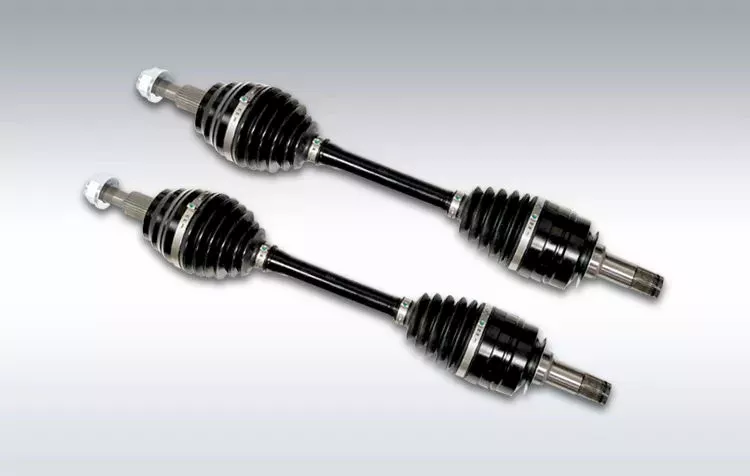
How do manufacturers ensure the compatibility of drive shafts with different equipment?
Manufacturers employ various strategies and processes to ensure the compatibility of drive shafts with different equipment. Compatibility refers to the ability of a drive shaft to effectively integrate and function within a specific piece of equipment or machinery. Manufacturers take into account several factors to ensure compatibility, including dimensional requirements, torque capacity, operating conditions, and specific application needs. Here’s a detailed explanation of how manufacturers ensure the compatibility of drive shafts:
1. Application Analysis:
Manufacturers begin by conducting a thorough analysis of the intended application and equipment requirements. This analysis involves understanding the specific torque and speed demands, operating conditions (such as temperature, vibration levels, and environmental factors), and any unique characteristics or constraints of the equipment. By gaining a comprehensive understanding of the application, manufacturers can tailor the design and specifications of the drive shaft to ensure compatibility.
2. Customization and Design:
Manufacturers often offer customization options to adapt drive shafts to different equipment. This customization involves tailoring the dimensions, materials, joint configurations, and other parameters to match the specific requirements of the equipment. By working closely with the equipment manufacturer or end-user, manufacturers can design drive shafts that align with the equipment’s mechanical interfaces, mounting points, available space, and other constraints. Customization ensures that the drive shaft fits seamlessly into the equipment, promoting compatibility and optimal performance.
3. Torque and Power Capacity:
Drive shaft manufacturers carefully determine the torque and power capacity of their products to ensure compatibility with different equipment. They consider factors such as the maximum torque requirements of the equipment, the expected operating conditions, and the safety margins necessary to withstand transient loads. By engineering drive shafts with appropriate torque ratings and power capacities, manufacturers ensure that the shaft can handle the demands of the equipment without experiencing premature failure or performance issues.
4. Material Selection:
Manufacturers choose materials for drive shafts based on the specific needs of different equipment. Factors such as torque capacity, operating temperature, corrosion resistance, and weight requirements influence material selection. Drive shafts may be made from various materials, including steel, aluminum alloys, or specialized composites, to provide the necessary strength, durability, and performance characteristics. The selected materials ensure compatibility with the equipment’s operating conditions, load requirements, and other environmental factors.
5. Joint Configurations:
Drive shafts incorporate joint configurations, such as universal joints (U-joints) or constant velocity (CV) joints, to accommodate different equipment needs. Manufacturers select and design the appropriate joint configuration based on factors such as operating angles, misalignment tolerances, and the desired level of smooth power transmission. The choice of joint configuration ensures that the drive shaft can effectively transmit power and accommodate the range of motion required by the equipment, promoting compatibility and reliable operation.
6. Quality Control and Testing:
Manufacturers implement stringent quality control processes and testing procedures to verify the compatibility of drive shafts with different equipment. These processes involve conducting dimensional inspections, material testing, torque and stress analysis, and performance testing under simulated operating conditions. By subjecting drive shafts to rigorous quality control measures, manufacturers can ensure that they meet the required specifications and performance criteria, guaranteeing compatibility with the intended equipment.
7. Compliance with Standards:
Manufacturers ensure that their drive shafts comply with relevant industry standards and regulations. Compliance with standards, such as ISO (International Organization for Standardization) or specific industry standards, provides assurance of quality, safety, and compatibility. Adhering to these standards helps manufacturers meet the expectations and requirements of equipment manufacturers and end-users, ensuring that the drive shafts are compatible and can be seamlessly integrated into different equipment.
8. Collaboration and Feedback:
Manufacturers often collaborate closely with equipment manufacturers, OEMs (Original Equipment Manufacturers), or end-users to gather feedback and incorporate their specific requirements into the drive shaft design and manufacturing processes. This collaborative approach ensures that the drive shafts are compatible with the intended equipment and meet the expectations of the end-users. By actively seeking input and feedback, manufacturers can continuously improve their products’ compatibility and performance.
In summary, manufacturers ensure the compatibility of drive shafts with different equipment through a combination of application analysis, customization, torque and power capacity considerations, material selection, joint configurations, quality control and testing, compliance with standards, and collaboration with equipment manufacturers and end-users. These efforts enable manufacturers to design and produce drive shafts that seamlessly integrate with various equipment, ensuring optimal performance, reliability, and compatibility in different applications.

How do drive shafts enhance the performance of automobiles and trucks?
Drive shafts play a significant role in enhancing the performance of automobiles and trucks. They contribute to various aspects of vehicle performance, including power delivery, traction, handling, and overall efficiency. Here’s a detailed explanation of how drive shafts enhance the performance of automobiles and trucks:
1. Power Delivery: Drive shafts are responsible for transmitting power from the engine to the wheels, enabling the vehicle to move forward. By efficiently transferring power without significant losses, drive shafts ensure that the engine’s power is effectively utilized, resulting in improved acceleration and overall performance. Well-designed drive shafts with minimal power loss contribute to the vehicle’s ability to deliver power to the wheels efficiently.
2. Torque Transfer: Drive shafts facilitate the transfer of torque from the engine to the wheels. Torque is the rotational force that drives the vehicle forward. High-quality drive shafts with proper torque conversion capabilities ensure that the torque generated by the engine is effectively transmitted to the wheels. This enhances the vehicle’s ability to accelerate quickly, tow heavy loads, and climb steep gradients, thereby improving overall performance.
3. Traction and Stability: Drive shafts contribute to the traction and stability of automobiles and trucks. They transmit power to the wheels, allowing them to exert force on the road surface. This enables the vehicle to maintain traction, especially during acceleration or when driving on slippery or uneven terrain. The efficient power delivery through the drive shafts enhances the vehicle’s stability by ensuring balanced power distribution to all wheels, improving control and handling.
4. Handling and Maneuverability: Drive shafts have an impact on the handling and maneuverability of vehicles. They help establish a direct connection between the engine and the wheels, allowing for precise control and responsive handling. Well-designed drive shafts with minimal play or backlash contribute to a more direct and immediate response to driver inputs, enhancing the vehicle’s agility and maneuverability.
5. Weight Reduction: Drive shafts can contribute to weight reduction in automobiles and trucks. Lightweight drive shafts made from materials such as aluminum or carbon fiber-reinforced composites reduce the overall weight of the vehicle. The reduced weight improves the power-to-weight ratio, resulting in better acceleration, handling, and fuel efficiency. Additionally, lightweight drive shafts reduce the rotational mass, allowing the engine to rev up more quickly, further enhancing performance.
6. Mechanical Efficiency: Efficient drive shafts minimize energy losses during power transmission. By incorporating features such as high-quality bearings, low-friction seals, and optimized lubrication, drive shafts reduce friction and minimize power losses due to internal resistance. This enhances the mechanical efficiency of the drivetrain system, allowing more power to reach the wheels and improving overall vehicle performance.
7. Performance Upgrades: Drive shaft upgrades can be popular performance enhancements for enthusiasts. Upgraded drive shafts, such as those made from stronger materials or with enhanced torque capacity, can handle higher power outputs from modified engines. These upgrades allow for increased performance, such as improved acceleration, higher top speeds, and better overall driving dynamics.
8. Compatibility with Performance Modifications: Performance modifications, such as engine upgrades, increased power output, or changes to the drivetrain system, often require compatible drive shafts. Drive shafts designed to handle higher torque loads or adapt to modified drivetrain configurations ensure optimal performance and reliability. They enable the vehicle to effectively harness the increased power and torque, resulting in improved performance and responsiveness.
9. Durability and Reliability: Robust and well-maintained drive shafts contribute to the durability and reliability of automobiles and trucks. They are designed to withstand the stresses and loads associated with power transmission. High-quality materials, appropriate balancing, and regular maintenance help ensure that drive shafts operate smoothly, minimizing the risk of failures or performance issues. Reliable drive shafts enhance the overall performance by providing consistent power delivery and minimizing downtime.
10. Compatibility with Advanced Technologies: Drive shafts are evolving in tandem with advancements in vehicle technologies. They are increasingly being integrated with advanced systems such as hybrid powertrains, electric motors, and regenerative braking. Drive shafts designed to work seamlessly with these technologies maximize their efficiency and performance benefits, contributing to improved overall vehicle performance.
In summary, drive shafts enhance the performance of automobiles and trucks by optimizing power delivery, facilitating torque transfer, improving traction and stability, enhancing handling and maneuverability, reducing weight, increasing mechanical efficiency, enabling compatibility with performance upgrades and advanced technologies, and ensuring durability and reliability. They play a crucial role in ensuring efficient power transmission, responsive acceleration, precise handling, and overall improved performance of vehicles.

구동축이란 무엇이며 차량 및 기계에서 어떤 역할을 합니까?
구동축(프로펠러 샤프트 또는 프로펠러 샤프트라고도 함)은 차량 및 기계에서 엔진의 회전력을 바퀴 또는 기타 구동 부품으로 전달하는 데 중요한 역할을 하는 기계 부품입니다. 자동차, 트럭, 오토바이, 농업용 또는 산업용 기계를 포함한 다양한 종류의 차량에 일반적으로 사용됩니다. 구동축이 무엇이며 어떻게 작동하는지에 대한 자세한 설명은 다음과 같습니다.
1. 정의 및 구성: 구동축은 엔진이나 동력원을 바퀴나 구동 부품을 연결하는 원통형 금속 튜브입니다. 일반적으로 강철이나 알루미늄으로 만들어지며, 하나 이상의 관형 부분으로 구성되고 각 끝에는 유니버설 조인트(U자형 조인트)가 있습니다. 이 유니버설 조인트는 엔진/변속기와 구동 바퀴 또는 부품 사이의 각도 움직임을 허용하고 정렬 불량을 보정합니다.
2. 동력 전달: 구동축의 주요 기능은 엔진이나 동력원에서 바퀴 또는 구동 부품으로 회전력을 전달하는 것입니다. 차량에서 구동축은 변속기 또는 기어박스의 출력축을 차동장치에 연결하고, 차동장치는 다시 바퀴로 동력을 전달합니다. 기계류에서는 구동축이 엔진이나 모터에서 펌프, 발전기 또는 기타 기계 시스템과 같은 다양한 구동 부품으로 동력을 전달합니다.
3. 토크 및 속도: 구동축은 토크와 회전 속도를 모두 전달하는 역할을 합니다. 토크는 엔진이나 동력원에서 발생하는 회전력이고, 회전 속도는 분당 회전수(RPM)입니다. 구동축은 과도한 비틀림이나 굽힘 없이 필요한 토크를 전달하고, 구동 부품의 효율적인 작동을 위해 원하는 회전 속도를 유지할 수 있어야 합니다.
4. 유연한 결합: 구동축의 유니버설 조인트는 엔진/변속기와 구동 휠 또는 구성 요소 사이의 각도 움직임과 정렬 불량을 보정할 수 있는 유연한 연결 장치 역할을 합니다. 차량의 서스펜션 시스템이 움직이거나 기계가 고르지 않은 지형에서 작동할 때, 구동축은 이러한 움직임에 맞춰 길이와 각도를 조절할 수 있어 원활한 동력 전달을 보장하고 구동계 구성 요소의 손상을 방지합니다.
5. 길이와 균형: 구동축의 길이는 엔진 또는 동력원과 구동 휠 또는 부품 사이의 거리에 따라 결정됩니다. 적절한 동력 전달을 보장하고 과도한 진동이나 굽힘을 방지하기 위해 구동축의 크기는 적절해야 합니다. 또한, 구동축은 진동과 회전 불균형을 최소화하기 위해 정밀하게 균형을 맞춰야 합니다. 진동과 불균형은 불편함을 유발하고 효율을 저하시키며 구동계 부품의 조기 마모로 이어질 수 있습니다.
6. 안전 고려 사항: 차량 및 기계의 구동축에는 적절한 안전 조치가 필요합니다. 차량의 경우, 구동축은 움직이는 부품과의 접촉을 방지하고 오작동이나 고장 발생 시 부상 위험을 줄이기 위해 보호 튜브 또는 하우징으로 둘러싸여 있는 경우가 많습니다. 또한, 기계의 노출된 구동축 주변에는 회전 부품과 관련된 잠재적 위험으로부터 작업자를 보호하기 위해 안전 덮개 또는 가드가 설치되는 것이 일반적입니다.
7. 유지보수 및 점검: 구동축의 정상적인 작동과 수명 연장을 위해서는 정기적인 유지보수 및 점검이 필수적입니다. 여기에는 유니버설 조인트의 마모, 손상 또는 과도한 유격 여부 확인, 구동축의 균열이나 변형 검사, 그리고 제조사 권장 사항에 따른 유니버설 조인트 윤활이 포함됩니다. 적절한 유지보수는 고장을 예방하고 최적의 성능을 보장하며 구동축의 수명을 연장하는 데 도움이 됩니다.
요약하자면, 구동축은 차량 및 기계에서 엔진 또는 동력원으로부터 바퀴 또는 구동 부품으로 회전력을 전달하는 기계 부품입니다. 구동축은 엔진/변속기와 구동 바퀴 또는 부품 사이를 견고하게 연결하는 동시에 유니버설 조인트를 사용하여 각도 운동을 허용하고 정렬 불량을 보정하는 기능을 합니다. 구동축은 동력 전달, 토크 및 속도 전달, 유연한 연결, 길이 및 균형 고려 사항, 안전 및 유지 보수 요구 사항 측면에서 중요한 역할을 합니다. 구동축이 제대로 작동하는 것은 차량 및 기계의 원활하고 효율적인 작동에 필수적입니다.


editor by CX 2024-03-07























