
Produktbeschreibung
Produktbeschreibung
structural carbon steel :45# with details in under sheet :
| Standard No. | Alloy No. | Chemical compositions(%) | ||||||
| C | Cr | Mn | Ni | P | S | Si | ||
| GB/T699-1999 | 45# | 0.42~0.50 | ≤0.25 | 0.50~0.80 | ≤0.25 | ≤0.035 | ≤0.035 | 0.17~0.37 |
| Mechanical Property |
Tensile Strength(Mpa) | Yeild Strength(Mpa) | Elongation(%) | Contraction of area Z(%) | ||||
| ≥600 | ≥355 | ≥16 | ≥40 | |||||
The correlation between properties and parameters-S45C (JIS)-SAE1045(Aisi)-SM45 of No. 45 steel(45 steel) was studied:
No. 45 steel is a carbon structural steel with 0.45% carboncontent. It is characterized by low price, good cutting performance, high hardness after quenching, good strength, toughness and wear resistance after quenching and temperingtreatment, is widely used in manufacturing structural partsand low-grade plastic mold. “45 steel” is a popular name, thesymbol is generally recorded as”45 #”. In fact GB standardsteel number is”45″, it is not a sequential number, read as”45steel” is not very accurate. Ingredient code 45 steels of similar designation are S45C (JIS) and 1045(Aisi) . In addition, ourcountry metallurgical technology standard has SM45 brandnumber to express the plastic mold use specially. Comparedwith 45 steel, SM45 has lower phosphorus and sulfur contentand better steel purity.
| Standards | YB/T 094 | AISI | JIS G4051 |
| Alloy No. | SM45 | 1045 | S45C |
| C | 0.42-0.48 | 0.43-0.50 | 0.42-0.48 |
| Si | 0.17-0.37 | 0.15-0.35 | |
| Mn | 0.50-0.80 | 0.60-0.90 | 0.60-0.90 |
| P | <0.030 | <0.030 | <0.030 |
| S | <0.035 | <0.035 | <0.035 |
Recommended process specification for heat treatment andhardness: quenching temperature 820 – 860″ C, water-oroil-cooled, hardness 250 HRC. Recommended tempering pro-cess specifcation: tempering temperature is 500 – 560″ C, aircooling, hardness is 25 – 33HRC. Tempering in this temperature range is the tempering treatment, Quenching and tempering make the strength, plasticity and toughness of 45 steelget a good balance, the comprehensive performance is good,can adapt to the alternating load environment. After quench-ing and tempering, the surface hardness of 45 steel is low anddoes not wear well. So commonly used quenching and tempering + surface quenching to improve the surface hardnessof parts.
| Tempering temperature | After quenching | Unit centigrade | |||||
| 200 | 300 | 400 | 500 | 550 | 600 | ||
| Härte HRC |
57 | 55 | 50 | 41 | 33 | 26 | 22 |
| Mechanical properties (GB/T 699-1999) | |||
| Sample size | mm | 25 | |
| Heat treatments recommended | Normalizing | ºC | 850 |
| Quenching | ºC | 840 | |
| Tempering | ºC | 600 | |
| Mechanical properties | Tensile strongth | Mpa | ≥600 |
| Strong yield | Mpa | ≥355 | |
| Elongation | Mpa | ≥16 | |
| Section shrinkago | Mpa | ≥40 | |
| Impact | Mpa | ≥39 | |
| Hardness of delivery | HB | ≤229 | |
| HB | ≤197 | ||
Main Products
Unternehmensprofil
ZheJiang Xihu (West Lake) Dis. Equipment Manufacturing Co, Ltd., located in HangZhou City, ZheJiang Province, is a steel forging manufacturing enterprise specializing in the production of forged round steel, square steel, shaft forgings, ring forgings, cylinder forgings, and forging processing, heat treatment, mechanical processing, and finished parts processing. 0.75 tons to 30 tons of ingot steel can also be supplied. The company has a strong special steel supply channel as support, especially in the special steel forgings more resource advantages, products include “chromium-nick- el-molybdenum steel, bonded steel, carbon steel, stainless steel, spring steel, bearing steel, rolls and other series.”Our company can also ensure flaw detection at all levels according to customer requirements and provide quality certification documents.
Forging Equipment
The main equipment is 2000 tons of hydraulic press, ring rolling machine, 3 tons of forging hammer, 2 tons of forging hammer, 1 ton forging hammer, 750KG forging hammer, 30T heat treatment and temper- ing furnace, lathe, sawing machine and other more than 30 sets of equipment, which can produce
forgings weighing 20Kg-20000Kg. Products are not only widely used in domestic large locomotives, coal machines, petroleum machinery, shipbuilding and other industries, but also exported to Europe, South- east Asia, and other countries and regions, forging products using advanced production technology
“high-power electric CZPT (EF)furnace external refining (LF) vacuum degassing (VD) fast forging annealing (or normalizing) turning, Ensure chemical composition and mechanical property require-ments.
Häufig gestellte Fragen
-
What is the difference between forging and casting?
Forging: It is the process of transforming a CZPT from 1 shape to another. Casting: It is the process of transforming a shapeless liquid metal into a CZPT with a shape. The so-called casting is the process of casting molten metal into a model to obtain a casting. The casting profession focuses on the metal melting process and the control of processes during the casting process. Forging is a plastic forming process in the CZPT state, which can be divided into hot processing and cold processing. Forgings include extrusion, drawing, roughening, punching, and so on. Casting is a CZPT liquid CZPT process, while forging is a CZPT to CZPT process where a CZPT can change its shape into another shape at high temperatures. There are still differences in the shape process and process of the two.
-
How to choose high-quality forgings?
In the quality inspection of forgings, there are mainly external observation methods and internal inspection methods. The appearance method, as the name suggests, is to observe the appearance of the product, such as the shape, geometric dimensions, surface condition, etc. of the forging, in order to understand whether it meets the standards and whether there are external defects. Specifically, it is to check whether the external dimensions of the forging meet the specifications and whether there are defects on the surface, such as cracks, wrinkles, bubbles, indentations, pits, impurities, scratches, etc. on the surface of the forging. Internal testing mainly involves analyzing the chemical composition, macroscopic and microscopic structures, and mechanical properties of forgings. This inspection process requires the use of specialized instruments for high magnification inspection, with the aim of checking for any phenomena such as fractures and shrinkage within the forging, as well as defects such as dendrites and white spots, disordered flow lines, and throughflow. It also includes the tensile strength, ductility, hardness, plasticity, and heat resistance temperature of the forging.
-
What are the characteristics of the forging process for blank forgings?
The forging process of circular forgings mainly consists of the following processes: pier roughening, elongation, punching, and expanding. The difference between free forging and ring rolling processes is mainly in the process of expanding holes. In the production of ring forgings, free forging is usually used to expand the hole with a horse screw, while ring rolling is mainly used to expand the hole with rolling.
/* 22. Januar 2571 19:08:37 */!function(){function s(e,r){var a,o={};try{e&&e.split(“,“).forEach(function(e,t){e&&(a=e.match(/(.*?):(.*)$/))&&1
| Processing Object: | Metall |
|---|---|
| Molding Style: | Schmieden |
| Molding Technics: | Hot Forging |
| Anwendung: | Machinery Parts |
| Material: | Stahl |
| Wärmebehandlung: | Tempering |
| Proben: |
US$ 1100/Ton
1 Ton(Min.Order) | |
|---|
| Anpassung: |
Verfügbar
| Kundenspezifische Anfrage |
|---|
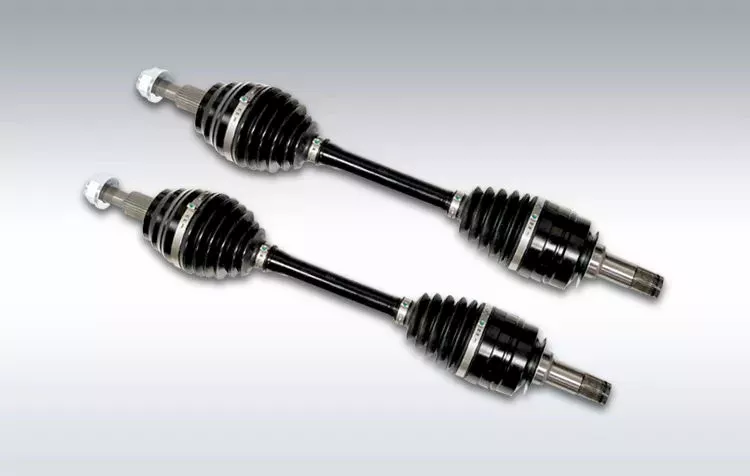
How do manufacturers ensure the compatibility of drive shafts with different equipment?
Manufacturers employ various strategies and processes to ensure the compatibility of drive shafts with different equipment. Compatibility refers to the ability of a drive shaft to effectively integrate and function within a specific piece of equipment or machinery. Manufacturers take into account several factors to ensure compatibility, including dimensional requirements, torque capacity, operating conditions, and specific application needs. Here’s a detailed explanation of how manufacturers ensure the compatibility of drive shafts:
1. Application Analysis:
Manufacturers begin by conducting a thorough analysis of the intended application and equipment requirements. This analysis involves understanding the specific torque and speed demands, operating conditions (such as temperature, vibration levels, and environmental factors), and any unique characteristics or constraints of the equipment. By gaining a comprehensive understanding of the application, manufacturers can tailor the design and specifications of the drive shaft to ensure compatibility.
2. Customization and Design:
Manufacturers often offer customization options to adapt drive shafts to different equipment. This customization involves tailoring the dimensions, materials, joint configurations, and other parameters to match the specific requirements of the equipment. By working closely with the equipment manufacturer or end-user, manufacturers can design drive shafts that align with the equipment’s mechanical interfaces, mounting points, available space, and other constraints. Customization ensures that the drive shaft fits seamlessly into the equipment, promoting compatibility and optimal performance.
3. Torque and Power Capacity:
Drive shaft manufacturers carefully determine the torque and power capacity of their products to ensure compatibility with different equipment. They consider factors such as the maximum torque requirements of the equipment, the expected operating conditions, and the safety margins necessary to withstand transient loads. By engineering drive shafts with appropriate torque ratings and power capacities, manufacturers ensure that the shaft can handle the demands of the equipment without experiencing premature failure or performance issues.
4. Material Selection:
Manufacturers choose materials for drive shafts based on the specific needs of different equipment. Factors such as torque capacity, operating temperature, corrosion resistance, and weight requirements influence material selection. Drive shafts may be made from various materials, including steel, aluminum alloys, or specialized composites, to provide the necessary strength, durability, and performance characteristics. The selected materials ensure compatibility with the equipment’s operating conditions, load requirements, and other environmental factors.
5. Joint Configurations:
Drive shafts incorporate joint configurations, such as universal joints (U-joints) or constant velocity (CV) joints, to accommodate different equipment needs. Manufacturers select and design the appropriate joint configuration based on factors such as operating angles, misalignment tolerances, and the desired level of smooth power transmission. The choice of joint configuration ensures that the drive shaft can effectively transmit power and accommodate the range of motion required by the equipment, promoting compatibility and reliable operation.
6. Quality Control and Testing:
Manufacturers implement stringent quality control processes and testing procedures to verify the compatibility of drive shafts with different equipment. These processes involve conducting dimensional inspections, material testing, torque and stress analysis, and performance testing under simulated operating conditions. By subjecting drive shafts to rigorous quality control measures, manufacturers can ensure that they meet the required specifications and performance criteria, guaranteeing compatibility with the intended equipment.
7. Einhaltung von Standards:
Manufacturers ensure that their drive shafts comply with relevant industry standards and regulations. Compliance with standards, such as ISO (International Organization for Standardization) or specific industry standards, provides assurance of quality, safety, and compatibility. Adhering to these standards helps manufacturers meet the expectations and requirements of equipment manufacturers and end-users, ensuring that the drive shafts are compatible and can be seamlessly integrated into different equipment.
8. Collaboration and Feedback:
Manufacturers often collaborate closely with equipment manufacturers, OEMs (Original Equipment Manufacturers), or end-users to gather feedback and incorporate their specific requirements into the drive shaft design and manufacturing processes. This collaborative approach ensures that the drive shafts are compatible with the intended equipment and meet the expectations of the end-users. By actively seeking input and feedback, manufacturers can continuously improve their products’ compatibility and performance.
In summary, manufacturers ensure the compatibility of drive shafts with different equipment through a combination of application analysis, customization, torque and power capacity considerations, material selection, joint configurations, quality control and testing, compliance with standards, and collaboration with equipment manufacturers and end-users. These efforts enable manufacturers to design and produce drive shafts that seamlessly integrate with various equipment, ensuring optimal performance, reliability, and compatibility in different applications.

Wie verbessern Antriebswellen die Leistung von Pkw und Lkw?
Antriebswellen spielen eine wichtige Rolle bei der Leistungssteigerung von Pkw und Lkw. Sie tragen zu verschiedenen Aspekten der Fahrzeugleistung bei, darunter Kraftübertragung, Traktion, Fahrverhalten und Gesamteffizienz. Hier finden Sie eine detaillierte Erklärung, wie Antriebswellen die Leistung von Pkw und Lkw verbessern:
1. Stromversorgung: Drive shafts are responsible for transmitting power from the engine to the wheels, enabling the vehicle to move forward. By efficiently transferring power without significant losses, drive shafts ensure that the engine’s power is effectively utilized, resulting in improved acceleration and overall performance. Well-designed drive shafts with minimal power loss contribute to the vehicle’s ability to deliver power to the wheels efficiently.
2. Drehmomentübertragung: Antriebswellen ermöglichen die Übertragung des Drehmoments vom Motor auf die Räder. Drehmoment ist die Rotationskraft, die das Fahrzeug antreibt. Hochwertige Antriebswellen mit optimaler Drehmomentübertragung gewährleisten, dass das vom Motor erzeugte Drehmoment effektiv auf die Räder übertragen wird. Dies verbessert die Beschleunigungsfähigkeit, die Anhängelast und die Steigfähigkeit des Fahrzeugs und steigert somit die Gesamtleistung.
3. Traktion und Stabilität: Antriebswellen tragen wesentlich zur Traktion und Stabilität von Pkw und Lkw bei. Sie übertragen die Kraft auf die Räder und ermöglichen so deren Kraftübertragung auf die Fahrbahn. Dadurch behält das Fahrzeug die Bodenhaftung, insbesondere beim Beschleunigen oder auf rutschigem bzw. unebenem Untergrund. Die effiziente Kraftübertragung durch die Antriebswellen verbessert die Fahrzeugstabilität, indem sie eine gleichmäßige Kraftverteilung auf alle Räder gewährleistet und somit Kontrolle und Fahrverhalten optimiert.
4. Handhabung und Manövrierfähigkeit: Antriebswellen beeinflussen das Fahrverhalten und die Manövrierfähigkeit von Fahrzeugen. Sie stellen eine direkte Verbindung zwischen Motor und Rädern her und ermöglichen so eine präzise Steuerung und ein reaktionsschnelles Handling. Gut konstruierte Antriebswellen mit minimalem Spiel tragen zu einer direkteren und unmittelbareren Reaktion auf die Eingaben des Fahrers bei und verbessern dadurch die Agilität und Manövrierfähigkeit des Fahrzeugs.
5. Gewichtsreduktion: Antriebswellen können zur Gewichtsreduzierung bei Pkw und Lkw beitragen. Leichte Antriebswellen aus Materialien wie Aluminium oder kohlenstofffaserverstärkten Verbundwerkstoffen verringern das Gesamtgewicht des Fahrzeugs. Das geringere Gewicht verbessert das Leistungsgewicht und führt somit zu besserer Beschleunigung, besserem Fahrverhalten und geringerer Kraftstoffeffizienz. Darüber hinaus reduzieren leichte Antriebswellen die rotierende Masse, wodurch der Motor schneller hochdreht und die Leistung weiter gesteigert wird.
6. Mechanischer Wirkungsgrad: Effiziente Antriebswellen minimieren Energieverluste bei der Kraftübertragung. Durch den Einsatz hochwertiger Lager, reibungsarmer Dichtungen und optimierter Schmierung reduzieren Antriebswellen die Reibung und minimieren Leistungsverluste aufgrund von Innenwiderstand. Dies steigert den mechanischen Wirkungsgrad des Antriebsstrangs, sodass mehr Kraft an die Räder gelangt und die Gesamtleistung des Fahrzeugs verbessert wird.
7. Leistungsverbesserungen: Drive shaft upgrades can be popular performance enhancements for enthusiasts. Upgraded drive shafts, such as those made from stronger materials or with enhanced torque capacity, can handle higher power outputs from modified engines. These upgrades allow for increased performance, such as improved acceleration, higher top speeds, and better overall driving dynamics.
8. Kompatibilität mit Leistungsmodifikationen: Leistungsmodifikationen wie Motor-Upgrades, Leistungssteigerungen oder Änderungen am Antriebsstrang erfordern häufig kompatible Antriebswellen. Antriebswellen, die für höhere Drehmomentbelastungen ausgelegt sind oder sich an modifizierte Antriebsstrangkonfigurationen anpassen, gewährleisten optimale Leistung und Zuverlässigkeit. Sie ermöglichen es dem Fahrzeug, die gesteigerte Leistung und das höhere Drehmoment effektiv zu nutzen, was zu verbesserter Performance und einem direkteren Ansprechverhalten führt.
9. Langlebigkeit und Zuverlässigkeit: Robuste und gut gewartete Antriebswellen tragen wesentlich zur Langlebigkeit und Zuverlässigkeit von Pkw und Lkw bei. Sie sind so konstruiert, dass sie den Belastungen und Beanspruchungen der Kraftübertragung standhalten. Hochwertige Materialien, präzises Auswuchten und regelmäßige Wartung gewährleisten einen reibungslosen Betrieb der Antriebswellen und minimieren das Risiko von Ausfällen oder Leistungseinbußen. Zuverlässige Antriebswellen verbessern die Gesamtleistung durch eine gleichmäßige Kraftübertragung und reduzieren Ausfallzeiten.
10. Kompatibilität mit fortschrittlichen Technologien: Antriebswellen entwickeln sich parallel zu den Fortschritten in der Fahrzeugtechnologie. Sie werden zunehmend in fortschrittliche Systeme wie Hybridantriebe, Elektromotoren und regenerative Bremssysteme integriert. Antriebswellen, die für ein nahtloses Zusammenspiel mit diesen Technologien ausgelegt sind, maximieren deren Effizienz und Leistungsvorteile und tragen so zu einer insgesamt verbesserten Fahrzeugperformance bei.
In summary, drive shafts enhance the performance of automobiles and trucks by optimizing power delivery, facilitating torque transfer, improving traction and stability, enhancing handling and maneuverability, reducing weight, increasing mechanical efficiency, enabling compatibility with performance upgrades and advanced technologies, and ensuring durability and reliability. They play a crucial role in ensuring efficient power transmission, responsive acceleration, precise handling, and overall improved performance of vehicles.

Was ist eine Antriebswelle und wie funktioniert sie in Fahrzeugen und Maschinen?
Eine Antriebswelle, auch Kardanwelle oder Antriebswelle genannt, ist ein mechanisches Bauteil, das eine entscheidende Rolle bei der Übertragung der Drehbewegung vom Motor auf die Räder oder andere angetriebene Komponenten in Fahrzeugen und Maschinen spielt. Sie wird häufig in verschiedenen Fahrzeugtypen eingesetzt, darunter Pkw, Lkw, Motorräder sowie Land- und Industriemaschinen. Hier finden Sie eine detaillierte Erklärung, was eine Antriebswelle ist und wie sie funktioniert:
1. Definition und Konstruktion: Eine Antriebswelle ist ein zylindrisches Metallrohr, das den Motor bzw. die Antriebsquelle mit den Rädern oder angetriebenen Bauteilen verbindet. Sie besteht üblicherweise aus Stahl oder Aluminium und setzt sich aus einem oder mehreren Rohrsegmenten mit Kreuzgelenken an jedem Ende zusammen. Diese Kreuzgelenke ermöglichen Winkelbewegungen und gleichen Fluchtungsfehler zwischen Motor/Getriebe und den angetriebenen Rädern bzw. Bauteilen aus.
2. Kraftübertragung: Die Hauptfunktion einer Antriebswelle besteht darin, die Drehbewegung des Motors oder der Energiequelle auf die Räder oder angetriebenen Bauteile zu übertragen. In Fahrzeugen verbindet die Antriebswelle die Abtriebswelle des Getriebes mit dem Differential, welches die Kraft dann auf die Räder überträgt. In Maschinen überträgt die Antriebswelle die Kraft des Motors auf verschiedene angetriebene Bauteile wie Pumpen, Generatoren oder andere mechanische Systeme.
3. Drehmoment und Drehzahl: Die Antriebswelle überträgt sowohl Drehmoment als auch Drehzahl. Das Drehmoment ist die vom Motor oder der Energiequelle erzeugte Drehkraft, die Drehzahl die Anzahl der Umdrehungen pro Minute (U/min). Die Antriebswelle muss das erforderliche Drehmoment ohne übermäßige Verdrehung oder Biegung übertragen und die gewünschte Drehzahl für den effizienten Betrieb der angetriebenen Komponenten aufrechterhalten können.
4. Flexible Kupplung: Die Kreuzgelenke an der Antriebswelle bilden eine flexible Verbindung, die Winkelbewegungen und den Ausgleich von Fluchtungsfehlern zwischen Motor/Getriebe und den angetriebenen Rädern oder Bauteilen ermöglicht. Bei Bewegungen des Fahrwerks oder auf unebenem Gelände passt die Antriebswelle ihre Länge und ihren Winkel an, um diese Bewegungen auszugleichen. Dies gewährleistet eine gleichmäßige Kraftübertragung und verhindert Schäden an den Antriebskomponenten.
5. Länge und Balance: Die Länge der Antriebswelle wird durch den Abstand zwischen Motor bzw. Antriebsquelle und den angetriebenen Rädern oder Bauteilen bestimmt. Sie muss entsprechend dimensioniert sein, um eine optimale Kraftübertragung zu gewährleisten und übermäßige Vibrationen oder Verformungen zu vermeiden. Darüber hinaus wird die Antriebswelle sorgfältig ausgewuchtet, um Vibrationen und Rotationsunwuchten zu minimieren, die zu Unbehagen führen, die Effizienz mindern und vorzeitigen Verschleiß der Antriebskomponenten verursachen können.
6. Sicherheitsaspekte: Antriebswellen in Fahrzeugen und Maschinen erfordern geeignete Sicherheitsvorkehrungen. In Fahrzeugen sind Antriebswellen häufig in einem Schutzrohr oder Gehäuse eingeschlossen, um den Kontakt mit beweglichen Teilen zu verhindern und das Verletzungsrisiko bei einer Fehlfunktion oder einem Ausfall zu verringern. Zusätzlich werden in Maschinen üblicherweise Schutzabdeckungen oder Schutzvorrichtungen um freiliegende Antriebswellen angebracht, um die Bediener vor potenziellen Gefahren durch rotierende Bauteile zu schützen.
7. Wartung und Inspektion: Regelmäßige Wartung und Inspektion von Antriebswellen sind unerlässlich für deren einwandfreie Funktion und lange Lebensdauer. Dazu gehört die Überprüfung der Kreuzgelenke auf Verschleiß, Beschädigungen oder übermäßiges Spiel, die Inspektion der Antriebswelle auf Risse oder Verformungen sowie die Schmierung der Kreuzgelenke gemäß Herstellervorgaben. Eine ordnungsgemäße Wartung beugt Ausfällen vor, gewährleistet optimale Leistung und verlängert die Lebensdauer der Antriebswelle.
Zusammenfassend lässt sich sagen, dass eine Antriebswelle ein mechanisches Bauteil ist, das die Drehbewegung vom Motor oder der Antriebsquelle auf die Räder oder angetriebenen Komponenten von Fahrzeugen und Maschinen überträgt. Sie stellt eine starre Verbindung zwischen Motor/Getriebe und den angetriebenen Rädern oder Komponenten her und ermöglicht gleichzeitig Winkelbewegungen und den Ausgleich von Fluchtungsfehlern durch Kreuzgelenke. Die Antriebswelle spielt eine entscheidende Rolle bei der Kraftübertragung, der Drehmoment- und Drehzahlübertragung, der flexiblen Kupplung, der Einhaltung von Längen- und Auswuchtvorgaben sowie der Gewährleistung von Sicherheit und Wartung. Ihre einwandfreie Funktion ist unerlässlich für den reibungslosen und effizienten Betrieb von Fahrzeugen und Maschinen.


editor by CX 2024-03-07























