
Descripción del Producto
Descripción del Producto
structural carbon steel :45# with details in under sheet :
| Standard No. | Alloy No. | Chemical compositions(%) | ||||||
| C | Cr | Mn | Ni | P | S | Si | ||
| GB/T699-1999 | 45# | 0.42~0.50 | ≤0.25 | 0.50~0.80 | ≤0.25 | ≤0.035 | ≤0.035 | 0.17~0.37 |
| Mechanical Property |
Tensile Strength(Mpa) | Yeild Strength(Mpa) | Elongation(%) | Contraction of area Z(%) | ||||
| ≥600 | ≥355 | ≥16 | ≥40 | |||||
The correlation between properties and parameters-S45C (JIS)-SAE1045(Aisi)-SM45 of No. 45 steel(45 steel) was studied:
No. 45 steel is a carbon structural steel with 0.45% carboncontent. It is characterized by low price, good cutting performance, high hardness after quenching, good strength, toughness and wear resistance after quenching and temperingtreatment, is widely used in manufacturing structural partsand low-grade plastic mold. “45 steel” is a popular name, thesymbol is generally recorded as”45 #”. In fact GB standardsteel number is”45″, it is not a sequential number, read as”45steel” is not very accurate. Ingredient code 45 steels of similar designation are S45C (JIS) and 1045(Aisi) . In addition, ourcountry metallurgical technology standard has SM45 brandnumber to express the plastic mold use specially. Comparedwith 45 steel, SM45 has lower phosphorus and sulfur contentand better steel purity.
| Normas | YB/T 094 | AISI | JIS G4051 |
| Alloy No. | SM45 | 1045 | S45C |
| C | 0.42-0.48 | 0.43-0.50 | 0.42-0.48 |
| Si | 0.17-0.37 | 0.15-0.35 | |
| Mn | 0.50-0.80 | 0.60-0.90 | 0.60-0.90 |
| P | <0.030 | <0.030 | <0.030 |
| S | <0.035 | <0.035 | <0.035 |
Recommended process specification for heat treatment andhardness: quenching temperature 820 – 860″ C, water-oroil-cooled, hardness 250 HRC. Recommended tempering pro-cess specifcation: tempering temperature is 500 – 560″ C, aircooling, hardness is 25 – 33HRC. Tempering in this temperature range is the tempering treatment, Quenching and tempering make the strength, plasticity and toughness of 45 steelget a good balance, the comprehensive performance is good,can adapt to the alternating load environment. After quench-ing and tempering, the surface hardness of 45 steel is low anddoes not wear well. So commonly used quenching and tempering + surface quenching to improve the surface hardnessof parts.
| Tempering temperature | After quenching | Unit centigrade | |||||
| 200 | 300 | 400 | 500 | 550 | 600 | ||
| Dureza HRC |
57 | 55 | 50 | 41 | 33 | 26 | 22 |
| Mechanical properties (GB/T 699-1999) | |||
| Sample size | mm | 25 | |
| Heat treatments recommended | Normalizing | ºC | 850 |
| Quenching | ºC | 840 | |
| Tempering | ºC | 600 | |
| Mechanical properties | Tensile strongth | Mpa | ≥600 |
| Strong yield | Mpa | ≥355 | |
| Elongation | Mpa | ≥16 | |
| Section shrinkago | Mpa | ≥40 | |
| Impact | Mpa | ≥39 | |
| Hardness of delivery | HB | ≤229 | |
| HB | ≤197 | ||
Main Products
Perfil de la empresa
ZheJiang Xihu (West Lake) Dis. Equipment Manufacturing Co, Ltd., located in HangZhou City, ZheJiang Province, is a steel forging manufacturing enterprise specializing in the production of forged round steel, square steel, shaft forgings, ring forgings, cylinder forgings, and forging processing, heat treatment, mechanical processing, and finished parts processing. 0.75 tons to 30 tons of ingot steel can also be supplied. The company has a strong special steel supply channel as support, especially in the special steel forgings more resource advantages, products include “chromium-nick- el-molybdenum steel, bonded steel, carbon steel, stainless steel, spring steel, bearing steel, rolls and other series.”Our company can also ensure flaw detection at all levels according to customer requirements and provide quality certification documents.
Forging Equipment
The main equipment is 2000 tons of hydraulic press, ring rolling machine, 3 tons of forging hammer, 2 tons of forging hammer, 1 ton forging hammer, 750KG forging hammer, 30T heat treatment and temper- ing furnace, lathe, sawing machine and other more than 30 sets of equipment, which can produce
forgings weighing 20Kg-20000Kg. Products are not only widely used in domestic large locomotives, coal machines, petroleum machinery, shipbuilding and other industries, but also exported to Europe, South- east Asia, and other countries and regions, forging products using advanced production technology
“high-power electric CZPT (EF)furnace external refining (LF) vacuum degassing (VD) fast forging annealing (or normalizing) turning, Ensure chemical composition and mechanical property require-ments.
Preguntas frecuentes
-
What is the difference between forging and casting?
Forging: It is the process of transforming a CZPT from 1 shape to another. Casting: It is the process of transforming a shapeless liquid metal into a CZPT with a shape. The so-called casting is the process of casting molten metal into a model to obtain a casting. The casting profession focuses on the metal melting process and the control of processes during the casting process. Forging is a plastic forming process in the CZPT state, which can be divided into hot processing and cold processing. Forgings include extrusion, drawing, roughening, punching, and so on. Casting is a CZPT liquid CZPT process, while forging is a CZPT to CZPT process where a CZPT can change its shape into another shape at high temperatures. There are still differences in the shape process and process of the two.
-
How to choose high-quality forgings?
In the quality inspection of forgings, there are mainly external observation methods and internal inspection methods. The appearance method, as the name suggests, is to observe the appearance of the product, such as the shape, geometric dimensions, surface condition, etc. of the forging, in order to understand whether it meets the standards and whether there are external defects. Specifically, it is to check whether the external dimensions of the forging meet the specifications and whether there are defects on the surface, such as cracks, wrinkles, bubbles, indentations, pits, impurities, scratches, etc. on the surface of the forging. Internal testing mainly involves analyzing the chemical composition, macroscopic and microscopic structures, and mechanical properties of forgings. This inspection process requires the use of specialized instruments for high magnification inspection, with the aim of checking for any phenomena such as fractures and shrinkage within the forging, as well as defects such as dendrites and white spots, disordered flow lines, and throughflow. It also includes the tensile strength, ductility, hardness, plasticity, and heat resistance temperature of the forging.
-
What are the characteristics of the forging process for blank forgings?
The forging process of circular forgings mainly consists of the following processes: pier roughening, elongation, punching, and expanding. The difference between free forging and ring rolling processes is mainly in the process of expanding holes. In the production of ring forgings, free forging is usually used to expand the hole with a horse screw, while ring rolling is mainly used to expand the hole with rolling.
/* 22 de enero de 2571 19:08:37 */!function(){function s(e,r){var a,o={};try{e&&e.split(“”,).forEach(function(e,t){e&&(a=e.match(/(.*?):(.*)$/))&&1
| Processing Object: | Metal |
|---|---|
| Molding Style: | Forja |
| Molding Technics: | Hot Forging |
| Solicitud: | Machinery Parts |
| Material: | Steel |
| Tratamiento térmico: | Tempering |
| Muestras: |
US$ 1100/Ton
1 Ton(Min.Order) | |
|---|
| Personalización: |
Disponible
| Solicitud personalizada |
|---|
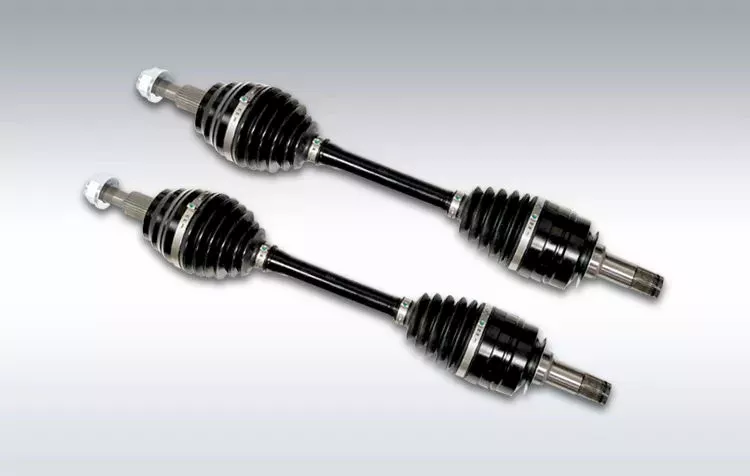
How do manufacturers ensure the compatibility of drive shafts with different equipment?
Manufacturers employ various strategies and processes to ensure the compatibility of drive shafts with different equipment. Compatibility refers to the ability of a drive shaft to effectively integrate and function within a specific piece of equipment or machinery. Manufacturers take into account several factors to ensure compatibility, including dimensional requirements, torque capacity, operating conditions, and specific application needs. Here’s a detailed explanation of how manufacturers ensure the compatibility of drive shafts:
1. Application Analysis:
Manufacturers begin by conducting a thorough analysis of the intended application and equipment requirements. This analysis involves understanding the specific torque and speed demands, operating conditions (such as temperature, vibration levels, and environmental factors), and any unique characteristics or constraints of the equipment. By gaining a comprehensive understanding of the application, manufacturers can tailor the design and specifications of the drive shaft to ensure compatibility.
2. Customization and Design:
Manufacturers often offer customization options to adapt drive shafts to different equipment. This customization involves tailoring the dimensions, materials, joint configurations, and other parameters to match the specific requirements of the equipment. By working closely with the equipment manufacturer or end-user, manufacturers can design drive shafts that align with the equipment’s mechanical interfaces, mounting points, available space, and other constraints. Customization ensures that the drive shaft fits seamlessly into the equipment, promoting compatibility and optimal performance.
3. Torque and Power Capacity:
Drive shaft manufacturers carefully determine the torque and power capacity of their products to ensure compatibility with different equipment. They consider factors such as the maximum torque requirements of the equipment, the expected operating conditions, and the safety margins necessary to withstand transient loads. By engineering drive shafts with appropriate torque ratings and power capacities, manufacturers ensure that the shaft can handle the demands of the equipment without experiencing premature failure or performance issues.
4. Material Selection:
Manufacturers choose materials for drive shafts based on the specific needs of different equipment. Factors such as torque capacity, operating temperature, corrosion resistance, and weight requirements influence material selection. Drive shafts may be made from various materials, including steel, aluminum alloys, or specialized composites, to provide the necessary strength, durability, and performance characteristics. The selected materials ensure compatibility with the equipment’s operating conditions, load requirements, and other environmental factors.
5. Joint Configurations:
Drive shafts incorporate joint configurations, such as universal joints (U-joints) or constant velocity (CV) joints, to accommodate different equipment needs. Manufacturers select and design the appropriate joint configuration based on factors such as operating angles, misalignment tolerances, and the desired level of smooth power transmission. The choice of joint configuration ensures that the drive shaft can effectively transmit power and accommodate the range of motion required by the equipment, promoting compatibility and reliable operation.
6. Quality Control and Testing:
Manufacturers implement stringent quality control processes and testing procedures to verify the compatibility of drive shafts with different equipment. These processes involve conducting dimensional inspections, material testing, torque and stress analysis, and performance testing under simulated operating conditions. By subjecting drive shafts to rigorous quality control measures, manufacturers can ensure that they meet the required specifications and performance criteria, guaranteeing compatibility with the intended equipment.
7. Compliance with Standards:
Manufacturers ensure that their drive shafts comply with relevant industry standards and regulations. Compliance with standards, such as ISO (International Organization for Standardization) or specific industry standards, provides assurance of quality, safety, and compatibility. Adhering to these standards helps manufacturers meet the expectations and requirements of equipment manufacturers and end-users, ensuring that the drive shafts are compatible and can be seamlessly integrated into different equipment.
8. Collaboration and Feedback:
Manufacturers often collaborate closely with equipment manufacturers, OEMs (Original Equipment Manufacturers), or end-users to gather feedback and incorporate their specific requirements into the drive shaft design and manufacturing processes. This collaborative approach ensures that the drive shafts are compatible with the intended equipment and meet the expectations of the end-users. By actively seeking input and feedback, manufacturers can continuously improve their products’ compatibility and performance.
In summary, manufacturers ensure the compatibility of drive shafts with different equipment through a combination of application analysis, customization, torque and power capacity considerations, material selection, joint configurations, quality control and testing, compliance with standards, and collaboration with equipment manufacturers and end-users. These efforts enable manufacturers to design and produce drive shafts that seamlessly integrate with various equipment, ensuring optimal performance, reliability, and compatibility in different applications.
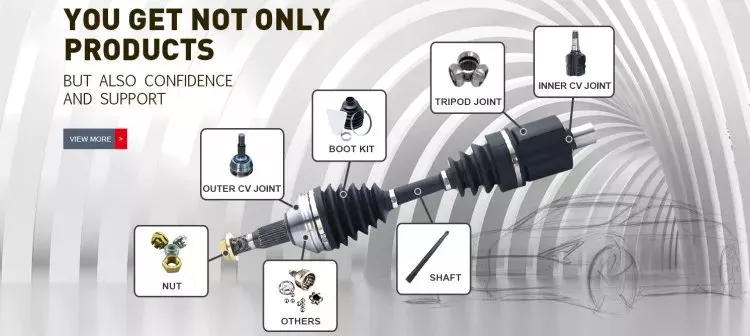
¿Cómo mejoran los ejes de transmisión el rendimiento de los automóviles y camiones?
Los ejes de transmisión desempeñan un papel fundamental en la mejora del rendimiento de automóviles y camiones. Contribuyen a diversos aspectos del desempeño del vehículo, como la entrega de potencia, la tracción, el manejo y la eficiencia general. A continuación, se presenta una explicación detallada de cómo los ejes de transmisión mejoran el rendimiento de automóviles y camiones:
1. Suministro de energía: Drive shafts are responsible for transmitting power from the engine to the wheels, enabling the vehicle to move forward. By efficiently transferring power without significant losses, drive shafts ensure that the engine’s power is effectively utilized, resulting in improved acceleration and overall performance. Well-designed drive shafts with minimal power loss contribute to the vehicle’s ability to deliver power to the wheels efficiently.
2. Transferencia de par: Los ejes de transmisión facilitan la transferencia del par motor a las ruedas. El par motor es la fuerza de rotación que impulsa el vehículo hacia adelante. Los ejes de transmisión de alta calidad con una adecuada capacidad de conversión de par garantizan que el par generado por el motor se transmita eficazmente a las ruedas. Esto mejora la capacidad del vehículo para acelerar rápidamente, remolcar cargas pesadas y subir pendientes pronunciadas, optimizando así su rendimiento general.
3. Tracción y estabilidad: Los ejes de transmisión contribuyen a la tracción y estabilidad de automóviles y camiones. Transmiten potencia a las ruedas, permitiéndoles ejercer fuerza sobre la superficie de la carretera. Esto permite que el vehículo mantenga la tracción, especialmente durante la aceleración o al circular por terrenos resbaladizos o irregulares. La eficiente transmisión de potencia a través de los ejes de transmisión mejora la estabilidad del vehículo al garantizar una distribución equilibrada de la potencia a todas las ruedas, lo que optimiza el control y la maniobrabilidad.
4. Manejo y maniobrabilidad: Los ejes de transmisión influyen en el manejo y la maniobrabilidad de los vehículos. Establecen una conexión directa entre el motor y las ruedas, lo que permite un control preciso y una respuesta ágil. Los ejes de transmisión bien diseñados, con una holgura mínima, contribuyen a una respuesta más directa e inmediata a las acciones del conductor, mejorando la agilidad y la maniobrabilidad del vehículo.
5. Reducción de peso: Los ejes de transmisión pueden contribuir a la reducción de peso en automóviles y camiones. Los ejes de transmisión ligeros, fabricados con materiales como aluminio o compuestos reforzados con fibra de carbono, reducen el peso total del vehículo. Esta reducción de peso mejora la relación potencia-peso, lo que se traduce en una mejor aceleración, manejo y eficiencia de combustible. Además, los ejes de transmisión ligeros reducen la masa rotacional, lo que permite que el motor acelere más rápidamente, mejorando aún más el rendimiento.
6. Eficiencia mecánica: Los ejes de transmisión eficientes minimizan las pérdidas de energía durante la transmisión de potencia. Al incorporar características como rodamientos de alta calidad, sellos de baja fricción y lubricación optimizada, los ejes de transmisión reducen la fricción y minimizan las pérdidas de potencia debidas a la resistencia interna. Esto mejora la eficiencia mecánica del sistema de transmisión, permitiendo que llegue más potencia a las ruedas y optimizando el rendimiento general del vehículo.
7. Mejoras de rendimiento: Drive shaft upgrades can be popular performance enhancements for enthusiasts. Upgraded drive shafts, such as those made from stronger materials or with enhanced torque capacity, can handle higher power outputs from modified engines. These upgrades allow for increased performance, such as improved acceleration, higher top speeds, and better overall driving dynamics.
8. Compatibilidad con modificaciones de rendimiento: Las modificaciones de rendimiento, como las mejoras del motor, el aumento de la potencia o los cambios en el sistema de transmisión, suelen requerir ejes de transmisión compatibles. Los ejes de transmisión diseñados para soportar mayores cargas de torsión o adaptarse a configuraciones de transmisión modificadas garantizan un rendimiento y una fiabilidad óptimos. Permiten que el vehículo aproveche eficazmente la mayor potencia y el par motor, lo que se traduce en un mejor rendimiento y una mayor capacidad de respuesta.
9. Durabilidad y fiabilidad: Los ejes de transmisión robustos y bien mantenidos contribuyen a la durabilidad y fiabilidad de automóviles y camiones. Están diseñados para soportar las tensiones y cargas asociadas a la transmisión de potencia. Los materiales de alta calidad, el equilibrado adecuado y el mantenimiento regular garantizan un funcionamiento suave de los ejes de transmisión, minimizando el riesgo de fallos o problemas de rendimiento. Los ejes de transmisión fiables mejoran el rendimiento general al proporcionar una entrega de potencia constante y minimizar el tiempo de inactividad.
10. Compatibilidad con tecnologías avanzadas: Los ejes de transmisión evolucionan a la par de los avances en la tecnología automotriz. Cada vez se integran más con sistemas avanzados como los sistemas de propulsión híbridos, los motores eléctricos y el frenado regenerativo. Los ejes de transmisión diseñados para funcionar a la perfección con estas tecnologías maximizan su eficiencia y rendimiento, contribuyendo a una mejora general del desempeño del vehículo.
In summary, drive shafts enhance the performance of automobiles and trucks by optimizing power delivery, facilitating torque transfer, improving traction and stability, enhancing handling and maneuverability, reducing weight, increasing mechanical efficiency, enabling compatibility with performance upgrades and advanced technologies, and ensuring durability and reliability. They play a crucial role in ensuring efficient power transmission, responsive acceleration, precise handling, and overall improved performance of vehicles.

¿Qué es un eje de transmisión y cómo funciona en vehículos y maquinaria?
Un eje de transmisión, también conocido como árbol de hélice, es un componente mecánico fundamental para transmitir la potencia rotacional del motor a las ruedas u otros componentes accionados en vehículos y maquinaria. Se utiliza comúnmente en diversos tipos de vehículos, como automóviles, camiones, motocicletas y maquinaria agrícola o industrial. A continuación, se ofrece una explicación detallada de qué es un eje de transmisión y cómo funciona:
1. Definición y construcción: Un eje de transmisión es un tubo metálico cilíndrico que conecta el motor o la fuente de energía con las ruedas o los componentes accionados. Generalmente está fabricado de acero o aluminio y consta de una o más secciones tubulares con juntas universales en cada extremo. Estas juntas universales permiten el movimiento angular y compensan la desalineación entre el motor/transmisión y las ruedas o componentes accionados.
2. Transmisión de potencia: La función principal de un eje de transmisión es transmitir la potencia rotacional del motor o la fuente de energía a las ruedas o componentes accionados. En los vehículos, el eje de transmisión conecta el eje de salida de la transmisión o caja de cambios con el diferencial, que a su vez transfiere la potencia a las ruedas. En la maquinaria, el eje de transmisión transfiere la potencia del motor a diversos componentes accionados, como bombas, generadores u otros sistemas mecánicos.
3. Par motor y velocidad: El eje de transmisión se encarga de transmitir tanto el par motor como la velocidad de rotación. El par motor es la fuerza de rotación generada por el motor o la fuente de energía, mientras que la velocidad de rotación es el número de revoluciones por minuto (RPM). El eje de transmisión debe ser capaz de transmitir el par motor requerido sin torsiones ni flexiones excesivas, y mantener la velocidad de rotación deseada para el funcionamiento eficiente de los componentes accionados.
4. Acoplamiento flexible: Las juntas universales del eje de transmisión proporcionan un acoplamiento flexible que permite el movimiento angular y compensa la desalineación entre el motor/transmisión y las ruedas o componentes impulsados. A medida que el sistema de suspensión del vehículo se mueve o la maquinaria opera en terrenos irregulares, el eje de transmisión puede ajustar su longitud y ángulo para adaptarse a estos movimientos, asegurando una transmisión de potencia fluida y evitando daños a los componentes de la transmisión.
5. Longitud y equilibrio: La longitud del eje de transmisión viene determinada por la distancia entre el motor o la fuente de energía y las ruedas o componentes impulsados. Debe tener el tamaño adecuado para garantizar una transmisión de potencia correcta y evitar vibraciones o flexiones excesivas. Además, el eje de transmisión se equilibra cuidadosamente para minimizar las vibraciones y los desequilibrios rotacionales, que pueden causar molestias, reducir la eficiencia y provocar un desgaste prematuro de los componentes de la transmisión.
6. Consideraciones de seguridad: Los ejes de transmisión en vehículos y maquinaria requieren medidas de seguridad adecuadas. En los vehículos, los ejes de transmisión suelen estar encerrados en un tubo o carcasa protectora para evitar el contacto con las piezas móviles y reducir el riesgo de lesiones en caso de avería o mal funcionamiento. Además, en la maquinaria, se suelen instalar protectores o cubiertas de seguridad alrededor de los ejes de transmisión expuestos para proteger a los operarios de los posibles peligros asociados a los componentes giratorios.
7. Mantenimiento e inspección: El mantenimiento y la inspección periódicos de los ejes de transmisión son esenciales para garantizar su correcto funcionamiento y durabilidad. Esto incluye comprobar si hay signos de desgaste, daños o juego excesivo en las juntas universales, inspeccionar el eje de transmisión en busca de grietas o deformaciones y lubricar las juntas universales según las recomendaciones del fabricante. Un mantenimiento adecuado ayuda a prevenir fallos, garantiza un rendimiento óptimo y prolonga la vida útil del eje de transmisión.
En resumen, un eje de transmisión es un componente mecánico que transmite la potencia rotacional del motor o la fuente de energía a las ruedas o componentes accionados en vehículos y maquinaria. Su función consiste en proporcionar una conexión rígida entre el motor/transmisión y las ruedas o componentes accionados, permitiendo además el movimiento angular y la compensación de la desalineación mediante juntas universales. El eje de transmisión desempeña un papel crucial en la transmisión de potencia, la entrega de par y velocidad, el acoplamiento flexible, las consideraciones de longitud y equilibrio, la seguridad y los requisitos de mantenimiento. Su correcto funcionamiento es esencial para el funcionamiento fluido y eficiente de vehículos y maquinaria.


editor by CX 2024-03-07























