
Описание продукта
Product Description:
Products: Forged Alloy Steel Drive Shaft for Tractors
Материал: 40CrMo
Масса: From 0.2kg-5kg
Packing: Wooden case
Min Order: 1000pcs
Customized Production: Available as per your drawings or sample
Company Name: HiHangZhou Precision Forging Technology Co., Ltd.
| Process | Die Forging | |
| Материал | Stainless Steel, Carbon Steel, Alloy Steel | |
| Масса | 0.1Kg~20Kg | |
| Heat Treatment | Quenching, Annealing,Tempering,Normalizing, Quenching and Tempering | |
| Testing instrument | composition testing | Spectrometer, Metallographic microscope |
| Performance testing | Hardness tester, Tensile testing machine | |
| Size Measuring | CMM,Micrometer, Vernier Caliper, Depth Caliper, feeler gauge | |
| Thread Gauge , Height Gauge | ||
| Шероховатость | Ra1.6~Ra6.3 | |
| Machining Equipment | CNC Center , CNC Machines, Turning, Drilling, Milling, boring machine,Grinding Machines, | |
| Wire EDM,Laser Cutting&Welding, Plasma Cutting &Welding, EDM etc. | ||
| Quality control | Sampling inspection of raw materials and semi-finished products, 100% Inspection of finished products | |
| Обработка поверхности | Shot Blast , Powder Coating, Polishing, Galvanized , Chrome Plated | |
| Production Capacity | 60000T / Years | |
| Время выполнения | Normally 30 – 45 Days. | |
| Payment Terms | T/T , L/C | |
| Material Standard | ASTM , AISI , DIN , BS, JIS, GB, | |
| Сертификация | ISO9001:2008, IATF16949:2016 | |
Products Quality Control
Quality control at HiHangZhou Precision Forging Technology Co., Ltd. involves thorough inspection and control of incoming materials, production processes, and finished products.
The quality control process includes:
- Analysis of incoming raw materials using a metallographic microscope to ensure the chemical composition meets production requirements.
- Timely sampling during production to ensure products are defect-free and to address any quality issues promptly.
- Utilization of a magnetic particle flaw detector in the final step of production to detect hidden cracks or defects in metal parts.
- Sampling of finished metal parts for mechanical performance tests, size measurement, and 100% manual surface quality inspection in the laboratory.
Below are pictures of the relevant testing equipment:
Quality Management System Control:
At HiHangZhou Precision Forging Technology Co., Ltd., we adhere to strict system management in accordance with ISO9001 and TS16949 quality standards. Our production site follows 5S lean production management to ensure efficiency and quality.
HiHangZhou Precision Forging Technology Co., Ltd.
Our Advantages:
- Brand: Our parent company, HiHangZhou Group, is a world-renowned high-end machinery manufacturing enterprise with 40 domestic subsidiaries and branches and 8 foreign manufacturing plants. We have a long-term experience and good reputation in cooperation with world-renowned enterprises.
- Technology: We have a complete production process and equipment research and development capabilities for ferrous metals forming. With over 25 years of production experience in forging equipment and casting equipment manufacturers, one-third of our company’s employees are technicians and R&D personnel, ensuring high-quality products are produced efficiently.
- Service: We provide custom and standard manufacturing services with multiple manufacturing process integrations. The quality and delivery of products are fully guaranteed, with quick and effective communication abilities.
- Culture: Our unique corporate culture unleashes the potential of individuals and provides strong vitality for the sustainable development of the company.
- Social Responsibility: Our company strictly implements low-carbon environmental protection, energy-saving, and emission-reduction production, making us a benchmark enterprise in the local region.
Company Culture
Our Vision
To become 1 of the leading companies.
Our Mission
To become a platform for employees to realize their dreams.
To become a transforming and upgrading pacemaker of Chinese enterprises.
To set national brands with pride.
Our Belief
We strive to build the company into an ideal platform for entrepreneurs to realize their self-worth and contribute to society.
Values
Improvement is innovation, everyone can innovate.
Innovation is inspired, and failures are tolerated.
Часто задаваемые вопросы
- Q: Are you a trading company or a manufacturer?
А: We are a manufacturer specializing in forging products, casting products, and machining capabilities. - Q: What series products do you offer?
А: We focus on forming processing of ferrous metals through casting, forging, and machining for various industries. - Q: Do you provide samples? Is it free?
А: Yes, we provide samples with customers covering the freight costs to show mutual cooperation sincerity. - Q: Is OEM available?
А: Yes, we offer OEM services. - Q: What’s your quality guarantee?
А: We prioritize continuous product quality improvement through strict control measures and certifications like ISO/TS16949 and SGS. - Q: How about the packing?
А: We typically use iron boxes or wooden cases, but can customize as per customer requirements. - Q: What is your minimum order quantity?
А: Minimum order quantity varies based on product features like material, weight, and construction. - Q: What is the lead time?
А: Lead time for new dies or molds and samples is 30-45 days, with large batch production within the same timeframe, subject to part complexity and quantity. - Q: What payment methods do you accept?
А: Payments can be made via T/T or L/C, with a 30% deposit in advance and 70% balance against the copy of B/L.
Сертификация
/* 22 января 2571 19:08:37 */!function(){function s(e,r){var a,o={};try{e&&e.split(“,).forEach(function(e,t){e&&(a=e.match(/(.*?):(.*)$/))&&1
| Processing Object: | Металл |
|---|---|
| Molding Style: | Ковка |
| Molding Technics: | Pressure Casting |
| Образцы: |
US$ 20 шт./шт.
1 штука (минимальный заказ) | Заказать образец |
|---|
| Настройка: |
Доступный
| Индивидуальный запрос |
|---|
.shipping-cost-tm .tm-status-off{background: none;padding:0;color: #1470cc}
|
Стоимость доставки:
Ориентировочная стоимость доставки за единицу товара. |
о стоимости доставки и предполагаемом времени доставки. |
|---|
| Способ оплаты: |
|
|---|---|
|
Первоначальный платеж Полная оплата |
| Валюта: | US$ |
|---|
| Возврат и возмещение средств: | Вы можете подать заявку на возврат средств в течение 30 дней после получения товаров. |
|---|
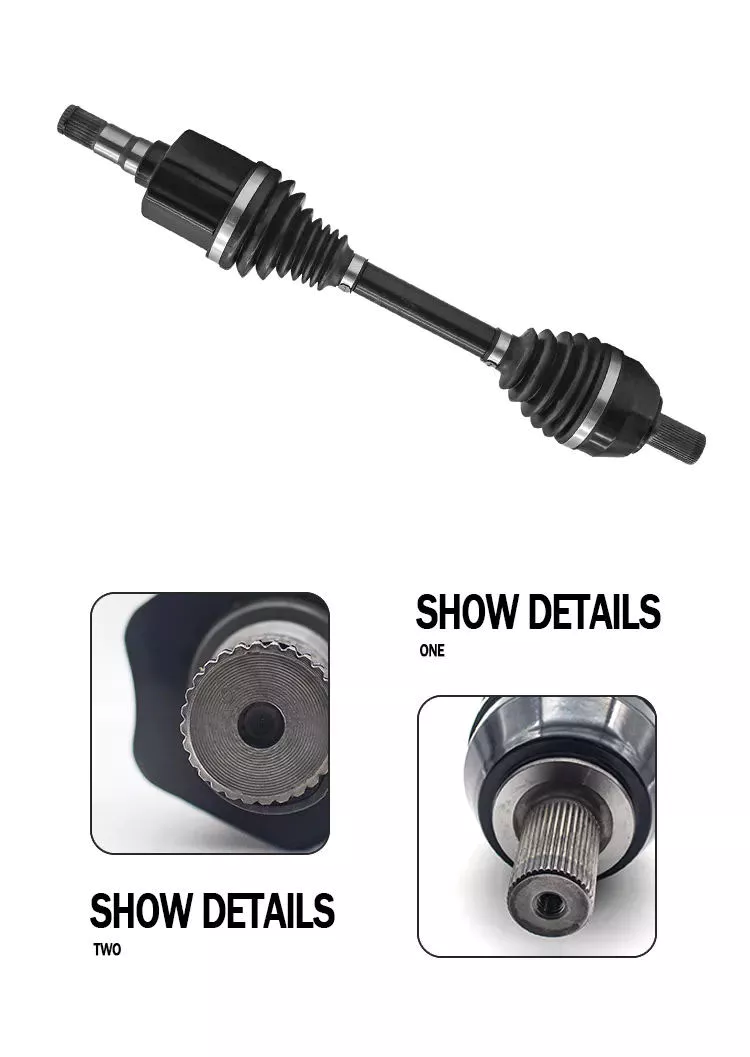
Are there any limitations or disadvantages associated with drive shafts?
While drive shafts are widely used and offer several advantages, they also have certain limitations and disadvantages that should be considered. Here’s a detailed explanation of the limitations and disadvantages associated with drive shafts:
1. Length and Misalignment Constraints:
Drive shafts have a maximum practical length due to factors such as material strength, weight considerations, and the need to maintain rigidity and minimize vibrations. Longer drive shafts can be prone to increased bending and torsional deflection, leading to reduced efficiency and potential driveline vibrations. Additionally, drive shafts require proper alignment between the driving and driven components. Misalignment can cause increased wear, vibrations, and premature failure of the drive shaft or its associated components.
2. Limited Operating Angles:
Drive shafts, especially those using U-joints, have limitations on operating angles. U-joints are typically designed to operate within specific angular ranges, and operating beyond these limits can result in reduced efficiency, increased vibrations, and accelerated wear. In applications requiring large operating angles, constant velocity (CV) joints are often used to maintain a constant speed and accommodate greater angles. However, CV joints may introduce higher complexity and cost compared to U-joints.
3. Maintenance Requirements:
Drive shafts require regular maintenance to ensure optimal performance and reliability. This includes periodic inspection, lubrication of joints, and balancing if necessary. Failure to perform routine maintenance can lead to increased wear, vibrations, and potential driveline issues. Maintenance requirements should be considered in terms of time and resources when using drive shafts in various applications.
4. Noise and Vibration:
Drive shafts can generate noise and vibrations, especially at high speeds or when operating at certain resonant frequencies. Imbalances, misalignment, worn joints, or other factors can contribute to increased noise and vibrations. These vibrations may affect the comfort of vehicle occupants, contribute to component fatigue, and require additional measures such as dampers or vibration isolation systems to mitigate their effects.
5. Weight and Space Constraints:
Drive shafts add weight to the overall system, which can be a consideration in weight-sensitive applications, such as automotive or aerospace industries. Additionally, drive shafts require physical space for installation. In compact or tightly packaged equipment or vehicles, accommodating the necessary drive shaft length and clearances can be challenging, requiring careful design and integration considerations.
6. Cost Considerations:
Drive shafts, depending on their design, materials, and manufacturing processes, can involve significant costs. Customized or specialized drive shafts tailored to specific equipment requirements may incur higher expenses. Additionally, incorporating advanced joint configurations, such as CV joints, can add complexity and cost to the drive shaft system.
7. Inherent Power Loss:
Drive shafts transmit power from the driving source to the driven components, but they also introduce some inherent power loss due to friction, bending, and other factors. This power loss can reduce overall system efficiency, particularly in long drive shafts or applications with high torque requirements. It is important to consider power loss when determining the appropriate drive shaft design and specifications.
8. Limited Torque Capacity:
While drive shafts can handle a wide range of torque loads, there are limits to their torque capacity. Exceeding the maximum torque capacity of a drive shaft can lead to premature failure, resulting in downtime and potential damage to other driveline components. It is crucial to select a drive shaft with sufficient torque capacity for the intended application.
Despite these limitations and disadvantages, drive shafts remain a widely used and effective means of power transmission in various industries. Manufacturers continuously work to address these limitations through advancements in materials, design techniques, joint configurations, and balancing processes. By carefully considering the specific application requirements and potential drawbacks, engineers and designers can mitigate the limitations and maximize the benefits of drive shafts in their respective systems.

Каким образом карданные валы влияют на эффективность привода транспортного средства и передачи мощности?
Карданные валы играют решающую роль в эффективности систем привода и передачи мощности транспортных средств. Они отвечают за передачу мощности от двигателя или источника энергии к колесам или приводным компонентам. Вот подробное объяснение того, как карданные валы влияют на эффективность систем привода и передачи мощности транспортных средств:
1. Передача энергии:
Карданные валы передают мощность от двигателя или источника энергии к колесам или приводным компонентам. Эффективно передавая вращательную энергию, карданные валы позволяют транспортному средству двигаться вперед или приводить в движение механизмы. Конструкция карданных валов обеспечивает минимальные потери мощности в процессе передачи, что максимизирует эффективность передачи мощности.
2. Преобразование крутящего момента:
Карданные валы преобразуют крутящий момент от двигателя или источника энергии к колесам или приводным компонентам. Преобразование крутящего момента необходимо для согласования характеристик мощности двигателя с требованиями транспортного средства или оборудования. Карданные валы с соответствующими возможностями преобразования крутящего момента обеспечивают оптимизацию мощности, передаваемой на колеса, для эффективного движения и производительности.
3. Шарниры равных угловых скоростей (ШРУС):
Во многих карданных валах используются шарниры равных угловых скоростей (ШРУС), которые помогают поддерживать постоянную скорость и эффективную передачу мощности, даже когда ведущие и ведомые компоненты находятся под разными углами. ШРУСы обеспечивают плавную передачу мощности и минимизируют вибрацию или потери мощности, которые могут возникнуть из-за изменения углов работы. Поддерживая постоянную скорость, карданные валы способствуют эффективной передаче мощности и улучшению общих характеристик автомобиля.
4. Легкая конструкция:
Эффективные карданные валы часто изготавливаются из легких материалов, таких как алюминий или композитные материалы. Легкая конструкция уменьшает вращающуюся массу карданного вала, что приводит к снижению инерции и повышению эффективности. Уменьшенная вращающаяся масса позволяет двигателю быстрее разгоняться и замедляться, что обеспечивает лучшую топливную экономичность и общие характеристики автомобиля.
5. Минимизация трения:
Эффективные приводные валы проектируются таким образом, чтобы минимизировать потери на трение при передаче мощности. В их конструкции используются такие элементы, как высококачественные подшипники, уплотнения с низким коэффициентом трения и надлежащая смазка, что снижает потери энергии, вызванные трением. Минимизируя трение, приводные валы повышают эффективность передачи мощности и максимизируют доступную мощность для привода или работы другого оборудования.
6. Сбалансированная и бесшумная работа:
В процессе производства приводные валы подвергаются динамической балансировке для обеспечения плавной и бесшумной работы. Дисбаланс приводного вала может привести к потерям мощности, повышенному износу и вибрациям, снижающим общую эффективность. Балансировка приводного вала позволяет ему вращаться равномерно, минимизируя вибрации и оптимизируя эффективность передачи мощности.
7. Техническое обслуживание и регулярный осмотр:
Надлежащее техническое обслуживание и регулярный осмотр приводных валов необходимы для поддержания их эффективности. Регулярная смазка, осмотр соединений и компонентов, а также своевременный ремонт или замена изношенных или поврежденных деталей помогают обеспечить оптимальную эффективность передачи мощности. Хорошо обслуживаемые приводные валы работают с минимальным трением, сниженными потерями мощности и повышенной общей эффективностью.
8. Интеграция с эффективными системами передачи:
Карданные валы работают в сочетании с эффективными трансмиссионными системами, такими как механические, автоматические или бесступенчатые трансмиссии. Эти трансмиссии помогают оптимизировать передачу мощности и передаточные числа в зависимости от условий движения и скорости автомобиля. Интегрируясь с эффективными трансмиссионными системами, карданные валы способствуют общей эффективности системы привода и передачи мощности автомобиля.
9. Аэродинамические аспекты:
В некоторых случаях карданные валы проектируются с учетом аэродинамических характеристик. Обтекаемые карданные валы, часто используемые в высокопроизводительных или электромобилях, минимизируют сопротивление воздуха и лобовое сопротивление, повышая общую эффективность автомобиля. Снижая аэродинамическое сопротивление, карданные валы способствуют эффективному движению и передаче мощности автомобиля.
10. Оптимизированная длина и конструкция:
Длина и конструкция карданных валов оптимизированы для минимизации потерь энергии. Чрезмерная длина карданного вала или неправильная конструкция могут привести к увеличению вращательной массы, возрастанию изгибающих напряжений и, как следствие, к потерям энергии. Оптимизация длины и конструкции позволяет максимально повысить эффективность передачи мощности и улучшить общую эффективность автомобиля.
В целом, карданные валы способствуют повышению эффективности привода и передачи мощности транспортных средств за счет эффективной передачи мощности, преобразования крутящего момента, использования шарниров равных угловых скоростей, облегченной конструкции, минимизации трения, сбалансированной работы, регулярного технического обслуживания, интеграции с эффективными трансмиссионными системами, аэродинамических соображений, а также оптимизированной длины и конструкции. Обеспечивая эффективную передачу мощности и минимизируя потери энергии, карданные валы играют важную роль в повышении общей эффективности и производительности транспортных средств и оборудования.
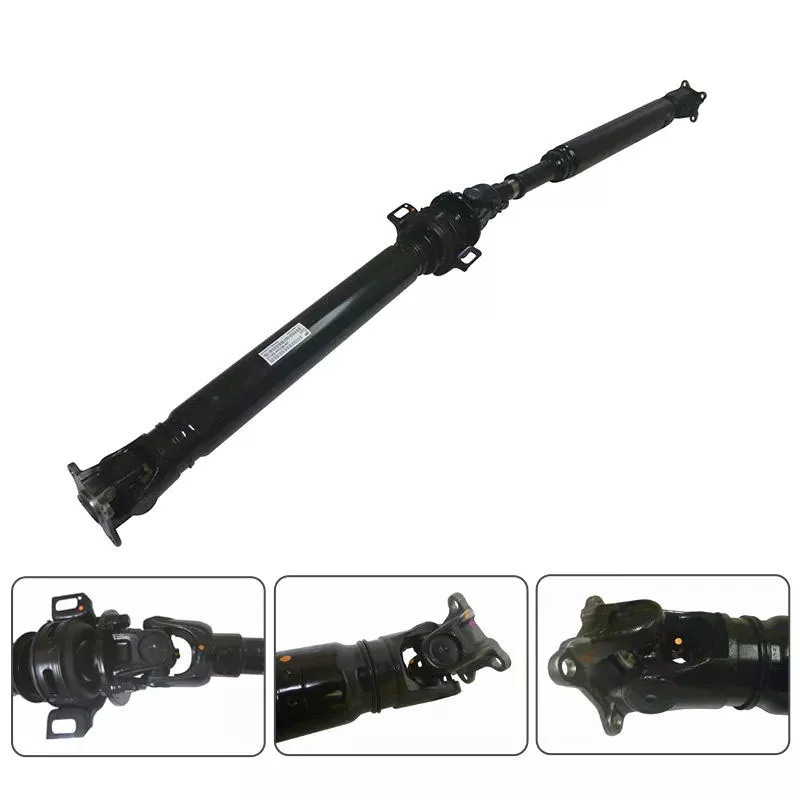
What benefits do drive shafts offer for different types of vehicles and equipment?
Drive shafts offer several benefits for different types of vehicles and equipment. They play a crucial role in power transmission and contribute to the overall performance, efficiency, and functionality of various systems. Here’s a detailed explanation of the benefits that drive shafts provide:
1. Efficient Power Transmission:
Drive shafts enable efficient power transmission from the engine or power source to the wheels or driven components. By connecting the engine or motor to the driven system, drive shafts efficiently transfer rotational power, allowing vehicles and equipment to perform their intended functions. This efficient power transmission ensures that the power generated by the engine is effectively utilized, optimizing the overall performance and productivity of the system.
2. Versatility:
Drive shafts offer versatility in their applications. They are used in various types of vehicles, including cars, trucks, motorcycles, and off-road vehicles. Additionally, drive shafts are employed in a wide range of equipment and machinery, such as agricultural machinery, construction equipment, industrial machinery, and marine vessels. The ability to adapt to different types of vehicles and equipment makes drive shafts a versatile component for power transmission.
3. Torque Handling:
Drive shafts are designed to handle high levels of torque. Torque is the rotational force generated by the engine or power source. Drive shafts are engineered to efficiently transmit this torque without excessive twisting or bending. By effectively handling torque, drive shafts ensure that the power generated by the engine is reliably transferred to the wheels or driven components, enabling vehicles and equipment to overcome resistance, such as heavy loads or challenging terrains.
4. Flexibility and Compensation:
Drive shafts provide flexibility and compensation for angular movement and misalignment. In vehicles, drive shafts accommodate the movement of the suspension system, allowing the wheels to move up and down independently. This flexibility ensures a constant power transfer even when the vehicle encounters uneven terrain. Similarly, in machinery, drive shafts compensate for misalignment between the engine or motor and the driven components, ensuring smooth power transmission and preventing excessive stress on the drivetrain.
5. Снижение веса:
Drive shafts contribute to weight reduction in vehicles and equipment. Compared to other forms of power transmission, such as belt drives or chain drives, drive shafts are typically lighter in weight. This reduction in weight helps improve fuel efficiency in vehicles and reduces the overall weight of equipment, leading to enhanced maneuverability and increased payload capacity. Additionally, lighter drive shafts contribute to a better power-to-weight ratio, resulting in improved performance and acceleration.
6. Durability and Longevity:
Drive shafts are designed to be durable and long-lasting. They are constructed using materials such as steel or aluminum, which offer high strength and resistance to wear and fatigue. Drive shafts undergo rigorous testing and quality control measures to ensure their reliability and longevity. Proper maintenance, including lubrication and regular inspections, further enhances their durability. The robust construction and long lifespan of drive shafts contribute to the overall reliability and cost-effectiveness of vehicles and equipment.
7. Safety:
Drive shafts incorporate safety features to protect operators and bystanders. In vehicles, drive shafts are often enclosed within a protective tube or housing, preventing contact with moving parts and reducing the risk of injury in the event of a failure. Similarly, in machinery, safety shields or guards are commonly installed around exposed drive shafts to minimize the potential hazards associated with rotating components. These safety measures ensure the well-being of individuals operating or working in proximity to vehicles and equipment.
In summary, drive shafts offer several benefits for different types of vehicles and equipment. They enable efficient power transmission, provide versatility in various applications, handle torque effectively, offer flexibility and compensation, contribute to weight reduction, ensure durability and longevity, and incorporate safety features. By providing these advantages, drive shafts enhance the performance, efficiency, reliability, and safety of vehicles and equipment across a wide range of industries.


editor by CX 2024-03-26























