
Descrição do produto
Descrição do produto:
Products: Forged Alloy Steel Drive Shaft for Tractors
Material: 40CrMo
Peso: From 0.2kg-5kg
Embalagem: Wooden case
Min Order: 1000pcs
Customized Production: Available as per your drawings or sample
Company Name: HiHangZhou Precision Forging Technology Co., Ltd.
| Processo | Die Forging | |
| Material | Stainless Steel, Carbon Steel, Alloy Steel | |
| Peso | 0.1Kg~20Kg | |
| Heat Treatment | Quenching, Annealing,Tempering,Normalizing, Quenching and Tempering | |
| Testing instrument | composition testing | Spectrometer, Metallographic microscope |
| Performance testing | Hardness tester, Tensile testing machine | |
| Size Measuring | CMM,Micrometer, Vernier Caliper, Depth Caliper, feeler gauge | |
| Thread Gauge , Height Gauge | ||
| Roughness | Ra1.6~Ra6.3 | |
| Machining Equipment | CNC Center , CNC Machines, Turning, Drilling, Milling, boring machine,Grinding Machines, | |
| Wire EDM,Laser Cutting&Welding, Plasma Cutting &Welding, EDM etc. | ||
| Quality control | Sampling inspection of raw materials and semi-finished products, 100% Inspection of finished products | |
| Tratamento de superfície | Shot Blast , Powder Coating, Polishing, Galvanized , Chrome Plated | |
| Production Capacity | 60000T / Years | |
| Lead Time | Normally 30 – 45 Days. | |
| Payment Terms | T/T , L/C | |
| Material Standard | ASTM , AISI , DIN , BS, JIS, GB, | |
| Certificação | ISO9001:2008, IATF16949:2016 | |
Products Quality Control
Quality control at HiHangZhou Precision Forging Technology Co., Ltd. involves thorough inspection and control of incoming materials, production processes, and finished products.
The quality control process includes:
- Analysis of incoming raw materials using a metallographic microscope to ensure the chemical composition meets production requirements.
- Timely sampling during production to ensure products are defect-free and to address any quality issues promptly.
- Utilization of a magnetic particle flaw detector in the final step of production to detect hidden cracks or defects in metal parts.
- Sampling of finished metal parts for mechanical performance tests, size measurement, and 100% manual surface quality inspection in the laboratory.
Below are pictures of the relevant testing equipment:
Quality Management System Control:
At HiHangZhou Precision Forging Technology Co., Ltd., we adhere to strict system management in accordance with ISO9001 and TS16949 quality standards. Our production site follows 5S lean production management to ensure efficiency and quality.
HiHangZhou Precision Forging Technology Co., Ltd.
Our Advantages:
- Brand: Our parent company, HiHangZhou Group, is a world-renowned high-end machinery manufacturing enterprise with 40 domestic subsidiaries and branches and 8 foreign manufacturing plants. We have a long-term experience and good reputation in cooperation with world-renowned enterprises.
- Technology: We have a complete production process and equipment research and development capabilities for ferrous metals forming. With over 25 years of production experience in forging equipment and casting equipment manufacturers, one-third of our company’s employees are technicians and R&D personnel, ensuring high-quality products are produced efficiently.
- Service: We provide custom and standard manufacturing services with multiple manufacturing process integrations. The quality and delivery of products are fully guaranteed, with quick and effective communication abilities.
- Culture: Our unique corporate culture unleashes the potential of individuals and provides strong vitality for the sustainable development of the company.
- Social Responsibility: Our company strictly implements low-carbon environmental protection, energy-saving, and emission-reduction production, making us a benchmark enterprise in the local region.
Company Culture
Our Vision
To become 1 of the leading companies.
Our Mission
To become a platform for employees to realize their dreams.
To become a transforming and upgrading pacemaker of Chinese enterprises.
To set national brands with pride.
Our Belief
We strive to build the company into an ideal platform for entrepreneurs to realize their self-worth and contribute to society.
Values
Improvement is innovation, everyone can innovate.
Innovation is inspired, and failures are tolerated.
Perguntas frequentes
- Q: Are you a trading company or a manufacturer?
UM: We are a manufacturer specializing in forging products, casting products, and machining capabilities. - Q: What series products do you offer?
UM: We focus on forming processing of ferrous metals through casting, forging, and machining for various industries. - Q: Do you provide samples? Is it free?
UM: Yes, we provide samples with customers covering the freight costs to show mutual cooperation sincerity. - Q: Is OEM available?
UM: Yes, we offer OEM services. - Q: What’s your quality guarantee?
UM: We prioritize continuous product quality improvement through strict control measures and certifications like ISO/TS16949 and SGS. - Q: How about the packing?
UM: We typically use iron boxes or wooden cases, but can customize as per customer requirements. - Q: What is your minimum order quantity?
UM: Minimum order quantity varies based on product features like material, weight, and construction. - Q: What is the lead time?
UM: Lead time for new dies or molds and samples is 30-45 days, with large batch production within the same timeframe, subject to part complexity and quantity. - Q: What payment methods do you accept?
UM: Payments can be made via T/T or L/C, with a 30% deposit in advance and 70% balance against the copy of B/L.
Certificação
/* 22 de janeiro de 2571 19:08:37 */!function(){function s(e,r){var a,o={};try{e&&e.split(“”,).forEach(function(e,t){e&&(a=e.match(/(.*?):(.*)$/))&&1
| Processing Object: | Metal |
|---|---|
| Molding Style: | Forjamento |
| Molding Technics: | Pressure Casting |
| Exemplos: |
US$ 20/Peça
1 unidade (pedido mínimo) | Solicitar amostra |
|---|
| Personalização: |
Disponível
| Solicitação personalizada |
|---|
.shipping-cost-tm .tm-status-off{background: none;padding:0;color: #1470cc}
|
Custo do frete:
Frete estimado por unidade. |
sobre o custo do frete e o prazo estimado de entrega. |
|---|
| Método de pagamento: |
|
|---|---|
|
Pagamento inicial Pagamento integral |
| Moeda: | US$ |
|---|
| Devoluções e reembolsos: | Você pode solicitar um reembolso em até 30 dias após o recebimento dos produtos. |
|---|
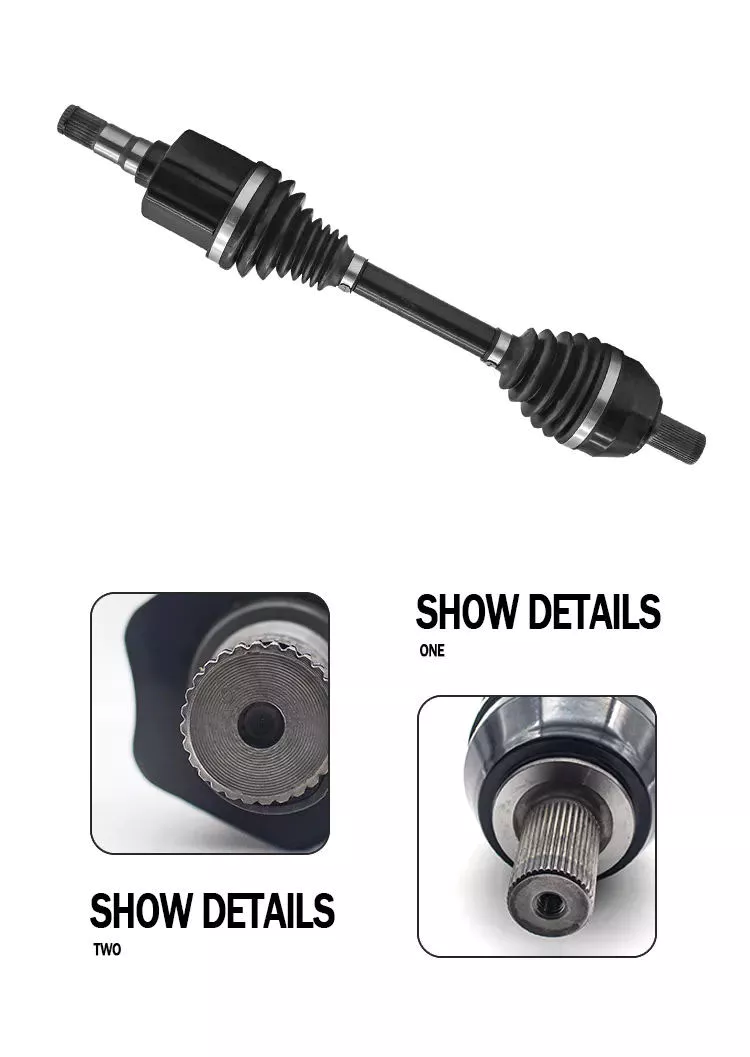
Are there any limitations or disadvantages associated with drive shafts?
While drive shafts are widely used and offer several advantages, they also have certain limitations and disadvantages that should be considered. Here’s a detailed explanation of the limitations and disadvantages associated with drive shafts:
1. Length and Misalignment Constraints:
Drive shafts have a maximum practical length due to factors such as material strength, weight considerations, and the need to maintain rigidity and minimize vibrations. Longer drive shafts can be prone to increased bending and torsional deflection, leading to reduced efficiency and potential driveline vibrations. Additionally, drive shafts require proper alignment between the driving and driven components. Misalignment can cause increased wear, vibrations, and premature failure of the drive shaft or its associated components.
2. Limited Operating Angles:
Drive shafts, especially those using U-joints, have limitations on operating angles. U-joints are typically designed to operate within specific angular ranges, and operating beyond these limits can result in reduced efficiency, increased vibrations, and accelerated wear. In applications requiring large operating angles, constant velocity (CV) joints are often used to maintain a constant speed and accommodate greater angles. However, CV joints may introduce higher complexity and cost compared to U-joints.
3. Maintenance Requirements:
Drive shafts require regular maintenance to ensure optimal performance and reliability. This includes periodic inspection, lubrication of joints, and balancing if necessary. Failure to perform routine maintenance can lead to increased wear, vibrations, and potential driveline issues. Maintenance requirements should be considered in terms of time and resources when using drive shafts in various applications.
4. Noise and Vibration:
Drive shafts can generate noise and vibrations, especially at high speeds or when operating at certain resonant frequencies. Imbalances, misalignment, worn joints, or other factors can contribute to increased noise and vibrations. These vibrations may affect the comfort of vehicle occupants, contribute to component fatigue, and require additional measures such as dampers or vibration isolation systems to mitigate their effects.
5. Weight and Space Constraints:
Drive shafts add weight to the overall system, which can be a consideration in weight-sensitive applications, such as automotive or aerospace industries. Additionally, drive shafts require physical space for installation. In compact or tightly packaged equipment or vehicles, accommodating the necessary drive shaft length and clearances can be challenging, requiring careful design and integration considerations.
6. Cost Considerations:
Drive shafts, depending on their design, materials, and manufacturing processes, can involve significant costs. Customized or specialized drive shafts tailored to specific equipment requirements may incur higher expenses. Additionally, incorporating advanced joint configurations, such as CV joints, can add complexity and cost to the drive shaft system.
7. Inherent Power Loss:
Drive shafts transmit power from the driving source to the driven components, but they also introduce some inherent power loss due to friction, bending, and other factors. This power loss can reduce overall system efficiency, particularly in long drive shafts or applications with high torque requirements. It is important to consider power loss when determining the appropriate drive shaft design and specifications.
8. Limited Torque Capacity:
While drive shafts can handle a wide range of torque loads, there are limits to their torque capacity. Exceeding the maximum torque capacity of a drive shaft can lead to premature failure, resulting in downtime and potential damage to other driveline components. It is crucial to select a drive shaft with sufficient torque capacity for the intended application.
Despite these limitations and disadvantages, drive shafts remain a widely used and effective means of power transmission in various industries. Manufacturers continuously work to address these limitations through advancements in materials, design techniques, joint configurations, and balancing processes. By carefully considering the specific application requirements and potential drawbacks, engineers and designers can mitigate the limitations and maximize the benefits of drive shafts in their respective systems.
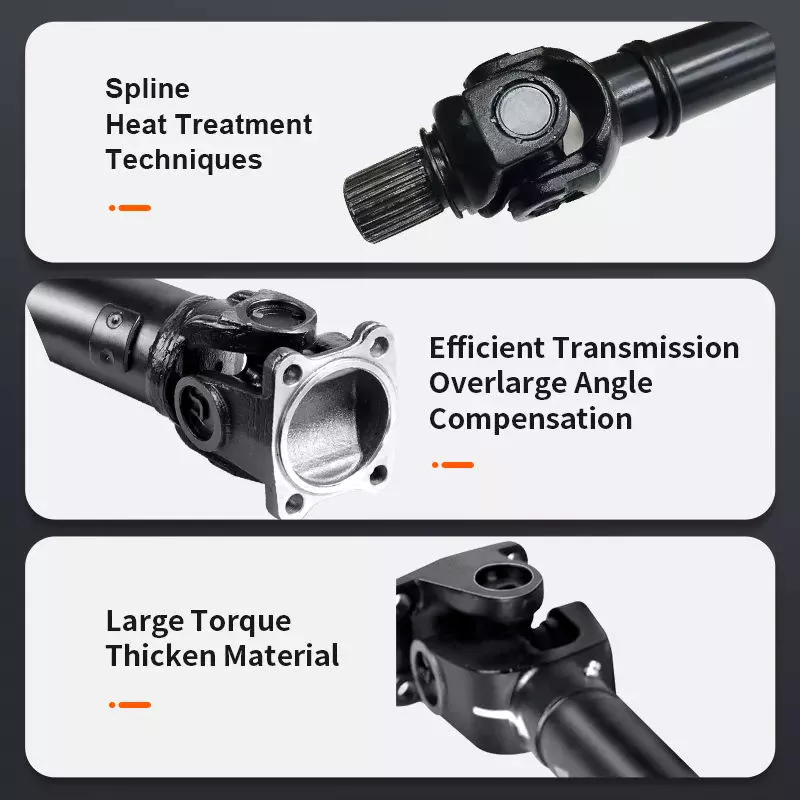
De que forma os eixos de transmissão contribuem para a eficiência da propulsão e transmissão de potência de um veículo?
Os eixos de transmissão desempenham um papel crucial na eficiência dos sistemas de propulsão e transmissão de potência dos veículos. Eles são responsáveis por transferir a potência do motor ou da fonte de energia para as rodas ou componentes acionados. Aqui está uma explicação detalhada de como os eixos de transmissão contribuem para a eficiência da propulsão e transmissão de potência dos veículos:
1. Transferência de energia:
Os eixos de transmissão transmitem a potência do motor ou da fonte de energia para as rodas ou componentes acionados. Ao transferir energia rotacional de forma eficiente, os eixos de transmissão permitem que o veículo se mova para a frente ou acione a máquina. O projeto e a construção dos eixos de transmissão garantem a mínima perda de potência durante o processo de transferência, maximizando a eficiência da transmissão de potência.
2. Conversão de Torque:
Os eixos de transmissão convertem o torque do motor ou da fonte de energia para as rodas ou componentes acionados. A conversão de torque é necessária para adequar as características de potência do motor às necessidades do veículo ou da máquina. Eixos de transmissão com capacidade de conversão de torque apropriada garantem que a potência fornecida às rodas seja otimizada para uma propulsão e um desempenho eficientes.
3. Juntas de Velocidade Constante (CV):
Muitos eixos de transmissão incorporam juntas homocinéticas (CV), que ajudam a manter uma velocidade constante e uma transmissão de potência eficiente, mesmo quando os componentes de acionamento e acionados estão em ângulos diferentes. As juntas homocinéticas permitem uma transferência de potência suave e minimizam a vibração ou as perdas de potência que podem ocorrer devido à mudança dos ângulos de operação. Ao manter a velocidade constante, os eixos de transmissão contribuem para uma transmissão de potência eficiente e para um melhor desempenho geral do veículo.
4. Construção leve:
Eixos de transmissão eficientes são frequentemente projetados com materiais leves, como alumínio ou materiais compósitos. A construção leve reduz a massa rotacional do eixo de transmissão, resultando em menor inércia e maior eficiência. A redução da massa rotacional permite que o motor acelere e desacelere mais rapidamente, proporcionando melhor economia de combustível e desempenho geral do veículo.
5. Atrito minimizado:
Eixos de transmissão eficientes são projetados para minimizar as perdas por atrito durante a transmissão de potência. Eles incorporam características como rolamentos de alta qualidade, vedações de baixo atrito e lubrificação adequada para reduzir as perdas de energia causadas pelo atrito. Ao minimizar o atrito, os eixos de transmissão aumentam a eficiência da transmissão de potência e maximizam a potência disponível para propulsão ou operação de outras máquinas.
6. Funcionamento equilibrado e livre de vibrações:
Os eixos de transmissão passam por balanceamento dinâmico durante o processo de fabricação para garantir uma operação suave e sem vibrações. Desbalanceamentos no eixo de transmissão podem levar a perdas de potência, aumento do desgaste e vibrações que reduzem a eficiência geral. Ao balancear o eixo de transmissão, ele gira uniformemente, minimizando vibrações e otimizando a eficiência da transmissão de potência.
7. Manutenção e Inspeção Regular:
A manutenção adequada e a inspeção regular dos eixos de transmissão são essenciais para manter sua eficiência. A lubrificação regular, a inspeção das juntas e componentes e o reparo ou substituição imediatos de peças desgastadas ou danificadas ajudam a garantir a máxima eficiência na transmissão de potência. Eixos de transmissão bem conservados operam com atrito mínimo, perdas de potência reduzidas e maior eficiência geral.
8. Integração com sistemas de transmissão eficientes:
Os eixos de transmissão funcionam em conjunto com sistemas de transmissão eficientes, como transmissões manuais, automáticas ou continuamente variáveis (CVT). Essas transmissões ajudam a otimizar a entrega de potência e as relações de marcha com base nas condições de direção e na velocidade do veículo. Ao se integrarem a sistemas de transmissão eficientes, os eixos de transmissão contribuem para a eficiência geral do sistema de propulsão e transmissão de potência do veículo.
9. Considerações aerodinâmicas:
Em alguns casos, os eixos de transmissão são projetados levando em consideração aspectos aerodinâmicos. Eixos de transmissão aerodinâmicos, frequentemente usados em veículos elétricos ou de alto desempenho, minimizam o arrasto e a resistência do ar para melhorar a eficiência geral do veículo. Ao reduzir o arrasto aerodinâmico, os eixos de transmissão contribuem para a propulsão e transmissão de potência eficientes do veículo.
10. Comprimento e design otimizados:
Os eixos de transmissão são projetados com comprimentos e formatos ideais para minimizar as perdas de energia. Um comprimento excessivo ou um projeto inadequado podem introduzir massa rotacional adicional, aumentar as tensões de flexão e resultar em perdas de energia. Ao otimizar o comprimento e o formato, os eixos de transmissão maximizam a eficiência da transmissão de potência e contribuem para uma melhoria na eficiência geral do veículo.
De forma geral, os eixos de transmissão contribuem para a eficiência da propulsão e transmissão de potência de veículos por meio da transferência eficaz de potência, conversão de torque, utilização de juntas homocinéticas, construção leve, minimização do atrito, operação balanceada, manutenção regular, integração com sistemas de transmissão eficientes, considerações aerodinâmicas e otimização de comprimento e design. Ao garantir a entrega eficiente de potência e minimizar as perdas de energia, os eixos de transmissão desempenham um papel significativo na melhoria da eficiência e do desempenho geral de veículos e máquinas.

What benefits do drive shafts offer for different types of vehicles and equipment?
Drive shafts offer several benefits for different types of vehicles and equipment. They play a crucial role in power transmission and contribute to the overall performance, efficiency, and functionality of various systems. Here’s a detailed explanation of the benefits that drive shafts provide:
1. Efficient Power Transmission:
Drive shafts enable efficient power transmission from the engine or power source to the wheels or driven components. By connecting the engine or motor to the driven system, drive shafts efficiently transfer rotational power, allowing vehicles and equipment to perform their intended functions. This efficient power transmission ensures that the power generated by the engine is effectively utilized, optimizing the overall performance and productivity of the system.
2. Versatilidade:
Drive shafts offer versatility in their applications. They are used in various types of vehicles, including cars, trucks, motorcycles, and off-road vehicles. Additionally, drive shafts are employed in a wide range of equipment and machinery, such as agricultural machinery, construction equipment, industrial machinery, and marine vessels. The ability to adapt to different types of vehicles and equipment makes drive shafts a versatile component for power transmission.
3. Torque Handling:
Drive shafts are designed to handle high levels of torque. Torque is the rotational force generated by the engine or power source. Drive shafts are engineered to efficiently transmit this torque without excessive twisting or bending. By effectively handling torque, drive shafts ensure that the power generated by the engine is reliably transferred to the wheels or driven components, enabling vehicles and equipment to overcome resistance, such as heavy loads or challenging terrains.
4. Flexibility and Compensation:
Drive shafts provide flexibility and compensation for angular movement and misalignment. In vehicles, drive shafts accommodate the movement of the suspension system, allowing the wheels to move up and down independently. This flexibility ensures a constant power transfer even when the vehicle encounters uneven terrain. Similarly, in machinery, drive shafts compensate for misalignment between the engine or motor and the driven components, ensuring smooth power transmission and preventing excessive stress on the drivetrain.
5. Redução de peso:
Drive shafts contribute to weight reduction in vehicles and equipment. Compared to other forms of power transmission, such as belt drives or chain drives, drive shafts are typically lighter in weight. This reduction in weight helps improve fuel efficiency in vehicles and reduces the overall weight of equipment, leading to enhanced maneuverability and increased payload capacity. Additionally, lighter drive shafts contribute to a better power-to-weight ratio, resulting in improved performance and acceleration.
6. Durability and Longevity:
Drive shafts are designed to be durable and long-lasting. They are constructed using materials such as steel or aluminum, which offer high strength and resistance to wear and fatigue. Drive shafts undergo rigorous testing and quality control measures to ensure their reliability and longevity. Proper maintenance, including lubrication and regular inspections, further enhances their durability. The robust construction and long lifespan of drive shafts contribute to the overall reliability and cost-effectiveness of vehicles and equipment.
7. Safety:
Drive shafts incorporate safety features to protect operators and bystanders. In vehicles, drive shafts are often enclosed within a protective tube or housing, preventing contact with moving parts and reducing the risk of injury in the event of a failure. Similarly, in machinery, safety shields or guards are commonly installed around exposed drive shafts to minimize the potential hazards associated with rotating components. These safety measures ensure the well-being of individuals operating or working in proximity to vehicles and equipment.
In summary, drive shafts offer several benefits for different types of vehicles and equipment. They enable efficient power transmission, provide versatility in various applications, handle torque effectively, offer flexibility and compensation, contribute to weight reduction, ensure durability and longevity, and incorporate safety features. By providing these advantages, drive shafts enhance the performance, efficiency, reliability, and safety of vehicles and equipment across a wide range of industries.


editor by CX 2024-03-26























