
Description du produit
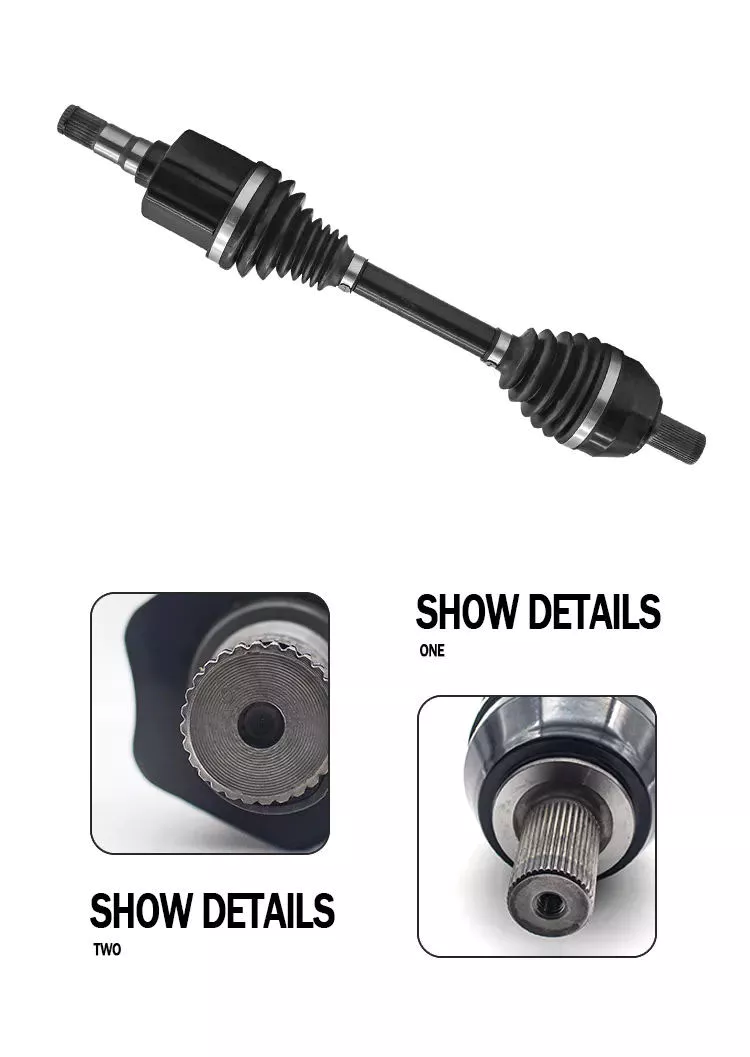
Product Description:
Products: Forged Alloy Steel Drive Shaft for Tractors
Matériel: 40CrMo
Weight: From 0.2kg-5kg
Packing: Wooden case
Min Order: 1000pcs
Customized Production: Available as per your drawings or sample
Company Name: HiHangZhou Precision Forging Technology Co., Ltd.
| Process | Die Forging | |
| Matériel | Stainless Steel, Carbon Steel, Alloy Steel | |
| Poids | 0.1Kg~20Kg | |
| Heat Treatment | Quenching, Annealing,Tempering,Normalizing, Quenching and Tempering | |
| Testing instrument | composition testing | Spectrometer, Metallographic microscope |
| Performance testing | Hardness tester, Tensile testing machine | |
| Size Measuring | CMM,Micrometer, Vernier Caliper, Depth Caliper, feeler gauge | |
| Thread Gauge , Height Gauge | ||
| Roughness | Ra1.6~Ra6.3 | |
| Machining Equipment | CNC Center , CNC Machines, Turning, Drilling, Milling, boring machine,Grinding Machines, | |
| Wire EDM,Laser Cutting&Welding, Plasma Cutting &Welding, EDM etc. | ||
| Quality control | Sampling inspection of raw materials and semi-finished products, 100% Inspection of finished products | |
| Traitement de surface | Shot Blast , Powder Coating, Polishing, Galvanized , Chrome Plated | |
| Production Capacity | 60000T / Years | |
| Lead Time | Normally 30 – 45 Days. | |
| Payment Terms | T/T , L/C | |
| Material Standard | ASTM , AISI , DIN , BS, JIS, GB, | |
| Certification | ISO9001:2008, IATF16949:2016 | |
Products Quality Control
Quality control at HiHangZhou Precision Forging Technology Co., Ltd. involves thorough inspection and control of incoming materials, production processes, and finished products.
The quality control process includes:
- Analysis of incoming raw materials using a metallographic microscope to ensure the chemical composition meets production requirements.
- Timely sampling during production to ensure products are defect-free and to address any quality issues promptly.
- Utilization of a magnetic particle flaw detector in the final step of production to detect hidden cracks or defects in metal parts.
- Sampling of finished metal parts for mechanical performance tests, size measurement, and 100% manual surface quality inspection in the laboratory.
Below are pictures of the relevant testing equipment:
Quality Management System Control:
At HiHangZhou Precision Forging Technology Co., Ltd., we adhere to strict system management in accordance with ISO9001 and TS16949 quality standards. Our production site follows 5S lean production management to ensure efficiency and quality.
HiHangZhou Precision Forging Technology Co., Ltd.
Our Advantages:
- Brand: Our parent company, HiHangZhou Group, is a world-renowned high-end machinery manufacturing enterprise with 40 domestic subsidiaries and branches and 8 foreign manufacturing plants. We have a long-term experience and good reputation in cooperation with world-renowned enterprises.
- Technology: We have a complete production process and equipment research and development capabilities for ferrous metals forming. With over 25 years of production experience in forging equipment and casting equipment manufacturers, one-third of our company’s employees are technicians and R&D personnel, ensuring high-quality products are produced efficiently.
- Service: We provide custom and standard manufacturing services with multiple manufacturing process integrations. The quality and delivery of products are fully guaranteed, with quick and effective communication abilities.
- Culture: Our unique corporate culture unleashes the potential of individuals and provides strong vitality for the sustainable development of the company.
- Social Responsibility: Our company strictly implements low-carbon environmental protection, energy-saving, and emission-reduction production, making us a benchmark enterprise in the local region.
Company Culture
Our Vision
To become 1 of the leading companies.
Our Mission
To become a platform for employees to realize their dreams.
To become a transforming and upgrading pacemaker of Chinese enterprises.
To set national brands with pride.
Our Belief
We strive to build the company into an ideal platform for entrepreneurs to realize their self-worth and contribute to society.
Values
Improvement is innovation, everyone can innovate.
Innovation is inspired, and failures are tolerated.
Foire aux questions
- Q: Are you a trading company or a manufacturer?
UN: We are a manufacturer specializing in forging products, casting products, and machining capabilities. - Q: What series products do you offer?
UN: We focus on forming processing of ferrous metals through casting, forging, and machining for various industries. - Q: Do you provide samples? Is it free?
UN: Yes, we provide samples with customers covering the freight costs to show mutual cooperation sincerity. - Q: Is OEM available?
UN: Yes, we offer OEM services. - Q: What’s your quality guarantee?
UN: We prioritize continuous product quality improvement through strict control measures and certifications like ISO/TS16949 and SGS. - Q: How about the packing?
UN: We typically use iron boxes or wooden cases, but can customize as per customer requirements. - Q: What is your minimum order quantity?
UN: Minimum order quantity varies based on product features like material, weight, and construction. - Q: What is the lead time?
UN: Lead time for new dies or molds and samples is 30-45 days, with large batch production within the same timeframe, subject to part complexity and quantity. - Q: What payment methods do you accept?
UN: Payments can be made via T/T or L/C, with a 30% deposit in advance and 70% balance against the copy of B/L.
Certification
/* 22 janvier 2571 19:08:37 */!function(){function s(e,r){var a,o={};try{e&&e.split(“,”).forEach(function(e,t){e&&(a=e.match(/(.*?):(.*)$/))&&1
| Processing Object: | Metal |
|---|---|
| Molding Style: | Forgeage |
| Molding Technics: | Pressure Casting |
| Exemples : |
US$ 20/Piece
1 pièce (commande minimale) | Commander un échantillon |
|---|
| Personnalisation : |
Disponible
| Demande personnalisée |
|---|
.shipping-cost-tm .tm-status-off{background: none;padding:0;color: #1470cc}
|
Frais d'expédition :
Frais de transport estimés par unité. |
concernant les frais de livraison et le délai de livraison estimé. |
|---|
| Mode de paiement: |
|
|---|---|
|
Paiement initial Paiement intégral |
| Devise: | US$ |
|---|
| Retours et remboursements : | Vous pouvez demander un remboursement jusqu'à 30 jours après la réception des produits. |
|---|
Existe-t-il des limitations ou des inconvénients liés aux arbres de transmission ?
Bien que les arbres de transmission soient largement utilisés et offrent plusieurs avantages, ils présentent également certaines limitations et certains inconvénients qu'il convient de prendre en compte. Voici une explication détaillée des limitations et des inconvénients associés aux arbres de transmission :
1. Contraintes de longueur et de désalignement :
Les arbres de transmission ont une longueur maximale pratique, limitée par des facteurs tels que la résistance des matériaux, le poids et la nécessité de maintenir la rigidité et de minimiser les vibrations. Des arbres de transmission plus longs peuvent être sujets à une flexion et une torsion accrues, ce qui réduit leur rendement et peut engendrer des vibrations dans la transmission. De plus, un alignement précis entre les éléments menant et mené est indispensable. Un mauvais alignement peut provoquer une usure accrue, des vibrations et une défaillance prématurée de l'arbre de transmission ou de ses composants.
2. Angles de fonctionnement limités :
Les arbres de transmission, notamment ceux utilisant des joints de cardan, présentent des limitations en termes d'angles de fonctionnement. Les joints de cardan sont généralement conçus pour fonctionner dans des plages angulaires spécifiques ; un fonctionnement au-delà de ces limites peut entraîner une baisse d'efficacité, une augmentation des vibrations et une usure accélérée. Dans les applications nécessitant de grands angles de fonctionnement, on utilise souvent des joints homocinétiques (ou joints CV) afin de maintenir une vitesse constante et de permettre des angles plus importants. Cependant, les joints CV peuvent s'avérer plus complexes et plus coûteux que les joints de cardan.
3. Exigences d'entretien :
Les arbres de transmission nécessitent un entretien régulier pour garantir des performances et une fiabilité optimales. Cet entretien comprend une inspection périodique, la lubrification des joints et, si nécessaire, un équilibrage. Un défaut d'entretien peut entraîner une usure accrue, des vibrations et d'éventuels problèmes de transmission. Les exigences d'entretien doivent être prises en compte en termes de temps et de ressources lors de l'utilisation d'arbres de transmission dans diverses applications.
4. Bruit et vibrations :
Les arbres de transmission peuvent générer du bruit et des vibrations, notamment à haute vitesse ou lorsqu'ils fonctionnent à certaines fréquences de résonance. Les déséquilibres, les défauts d'alignement, l'usure des joints ou d'autres facteurs peuvent contribuer à l'augmentation du bruit et des vibrations. Ces vibrations peuvent affecter le confort des occupants du véhicule, contribuer à la fatigue des composants et nécessiter des mesures supplémentaires telles que des amortisseurs ou des systèmes d'isolation des vibrations pour en atténuer les effets.
5. Contraintes de poids et d'espace :
Les arbres de transmission alourdissent le système, un facteur important à prendre en compte dans les applications où le poids est un critère essentiel, comme dans les secteurs automobile et aérospatial. De plus, leur installation nécessite de l'espace. Dans les équipements ou véhicules compacts ou à faible encombrement, il peut être difficile d'intégrer la longueur et les dégagements nécessaires à l'arbre de transmission, ce qui exige une conception et une intégration soignées.
6. Considérations relatives aux coûts :
Les arbres de transmission, selon leur conception, leurs matériaux et leurs procédés de fabrication, peuvent engendrer des coûts importants. Les arbres de transmission sur mesure ou spécialisés, adaptés aux exigences spécifiques d'un équipement, peuvent entraîner des dépenses encore plus élevées. De plus, l'intégration de configurations de joints avancées, telles que les joints homocinétiques, peut complexifier et renchérir le système d'arbre de transmission.
7. Perte de puissance inhérente :
Les arbres de transmission transmettent la puissance de la source motrice aux composants entraînés, mais ils introduisent également des pertes de puissance inhérentes dues au frottement, à la flexion et à d'autres facteurs. Ces pertes peuvent réduire le rendement global du système, notamment pour les arbres de transmission longs ou les applications exigeant un couple élevé. Il est donc important de prendre en compte ces pertes lors du choix de la conception et des spécifications appropriées d'un arbre de transmission.
8. Capacité de couple limitée :
Bien que les arbres de transmission puissent supporter une large gamme de couples, leur capacité de couple est limitée. Le dépassement de cette capacité maximale peut entraîner une défaillance prématurée, provoquant des arrêts de production et des dommages potentiels aux autres composants de la transmission. Il est donc essentiel de choisir un arbre de transmission dont la capacité de couple est suffisante pour l'application prévue.
Malgré ces limitations et inconvénients, les arbres de transmission demeurent un moyen de transmission de puissance largement utilisé et efficace dans divers secteurs industriels. Les fabricants s'efforcent constamment de remédier à ces limitations grâce à des progrès dans les matériaux, les techniques de conception, les configurations d'assemblage et les procédés d'équilibrage. En tenant compte des exigences spécifiques de l'application et des inconvénients potentiels, les ingénieurs et les concepteurs peuvent atténuer ces limitations et optimiser les avantages des arbres de transmission dans leurs systèmes respectifs.

How do drive shafts contribute to the efficiency of vehicle propulsion and power transmission?
Drive shafts play a crucial role in the efficiency of vehicle propulsion and power transmission systems. They are responsible for transferring power from the engine or power source to the wheels or driven components. Here’s a detailed explanation of how drive shafts contribute to the efficiency of vehicle propulsion and power transmission:
1. Power Transfer:
Drive shafts transmit power from the engine or power source to the wheels or driven components. By efficiently transferring rotational energy, drive shafts enable the vehicle to move forward or drive the machinery. The design and construction of drive shafts ensure minimal power loss during the transfer process, maximizing the efficiency of power transmission.
2. Torque Conversion:
Drive shafts can convert torque from the engine or power source to the wheels or driven components. Torque conversion is necessary to match the power characteristics of the engine with the requirements of the vehicle or machinery. Drive shafts with appropriate torque conversion capabilities ensure that the power delivered to the wheels is optimized for efficient propulsion and performance.
3. Constant Velocity (CV) Joints:
Many drive shafts incorporate Constant Velocity (CV) joints, which help maintain a constant speed and efficient power transmission, even when the driving and driven components are at different angles. CV joints allow for smooth power transfer and minimize vibration or power losses that may occur due to changing operating angles. By maintaining constant velocity, drive shafts contribute to efficient power transmission and improved overall vehicle performance.
4. Lightweight Construction:
Efficient drive shafts are often designed with lightweight materials, such as aluminum or composite materials. Lightweight construction reduces the rotational mass of the drive shaft, which results in lower inertia and improved efficiency. Reduced rotational mass enables the engine to accelerate and decelerate more quickly, allowing for better fuel efficiency and overall vehicle performance.
5. Minimized Friction:
Efficient drive shafts are engineered to minimize frictional losses during power transmission. They incorporate features such as high-quality bearings, low-friction seals, and proper lubrication to reduce energy losses caused by friction. By minimizing friction, drive shafts enhance power transmission efficiency and maximize the available power for propulsion or operating other machinery.
6. Balanced and Vibration-Free Operation:
Drive shafts undergo dynamic balancing during the manufacturing process to ensure smooth and vibration-free operation. Imbalances in the drive shaft can lead to power losses, increased wear, and vibrations that reduce overall efficiency. By balancing the drive shaft, it can spin evenly, minimizing vibrations and optimizing power transmission efficiency.
7. Maintenance and Regular Inspection:
Proper maintenance and regular inspection of drive shafts are essential for maintaining their efficiency. Regular lubrication, inspection of joints and components, and prompt repair or replacement of worn or damaged parts help ensure optimal power transmission efficiency. Well-maintained drive shafts operate with minimal friction, reduced power losses, and improved overall efficiency.
8. Integration with Efficient Transmission Systems:
Drive shafts work in conjunction with efficient transmission systems, such as manual, automatic, or continuously variable transmissions. These transmissions help optimize power delivery and gear ratios based on driving conditions and vehicle speed. By integrating with efficient transmission systems, drive shafts contribute to the overall efficiency of the vehicle propulsion and power transmission system.
9. Aerodynamic Considerations:
In some cases, drive shafts are designed with aerodynamic considerations in mind. Streamlined drive shafts, often used in high-performance or electric vehicles, minimize drag and air resistance to improve overall vehicle efficiency. By reducing aerodynamic drag, drive shafts contribute to the efficient propulsion and power transmission of the vehicle.
10. Optimized Length and Design:
Drive shafts are designed to have optimal lengths and designs to minimize energy losses. Excessive drive shaft length or improper design can introduce additional rotational mass, increase bending stresses, and result in energy losses. By optimizing the length and design, drive shafts maximize power transmission efficiency and contribute to improved overall vehicle efficiency.
Overall, drive shafts contribute to the efficiency of vehicle propulsion and power transmission through effective power transfer, torque conversion, utilization of CV joints, lightweight construction, minimized friction, balanced operation, regular maintenance, integration with efficient transmission systems, aerodynamic considerations, and optimized length and design. By ensuring efficient power delivery and minimizing energy losses, drive shafts play a significant role in enhancing the overall efficiency and performance of vehicles and machinery.

What benefits do drive shafts offer for different types of vehicles and equipment?
Drive shafts offer several benefits for different types of vehicles and equipment. They play a crucial role in power transmission and contribute to the overall performance, efficiency, and functionality of various systems. Here’s a detailed explanation of the benefits that drive shafts provide:
1. Efficient Power Transmission:
Drive shafts enable efficient power transmission from the engine or power source to the wheels or driven components. By connecting the engine or motor to the driven system, drive shafts efficiently transfer rotational power, allowing vehicles and equipment to perform their intended functions. This efficient power transmission ensures that the power generated by the engine is effectively utilized, optimizing the overall performance and productivity of the system.
2. Versatility:
Drive shafts offer versatility in their applications. They are used in various types of vehicles, including cars, trucks, motorcycles, and off-road vehicles. Additionally, drive shafts are employed in a wide range of equipment and machinery, such as agricultural machinery, construction equipment, industrial machinery, and marine vessels. The ability to adapt to different types of vehicles and equipment makes drive shafts a versatile component for power transmission.
3. Torque Handling:
Drive shafts are designed to handle high levels of torque. Torque is the rotational force generated by the engine or power source. Drive shafts are engineered to efficiently transmit this torque without excessive twisting or bending. By effectively handling torque, drive shafts ensure that the power generated by the engine is reliably transferred to the wheels or driven components, enabling vehicles and equipment to overcome resistance, such as heavy loads or challenging terrains.
4. Flexibility and Compensation:
Drive shafts provide flexibility and compensation for angular movement and misalignment. In vehicles, drive shafts accommodate the movement of the suspension system, allowing the wheels to move up and down independently. This flexibility ensures a constant power transfer even when the vehicle encounters uneven terrain. Similarly, in machinery, drive shafts compensate for misalignment between the engine or motor and the driven components, ensuring smooth power transmission and preventing excessive stress on the drivetrain.
5. Réduction du poids :
Drive shafts contribute to weight reduction in vehicles and equipment. Compared to other forms of power transmission, such as belt drives or chain drives, drive shafts are typically lighter in weight. This reduction in weight helps improve fuel efficiency in vehicles and reduces the overall weight of equipment, leading to enhanced maneuverability and increased payload capacity. Additionally, lighter drive shafts contribute to a better power-to-weight ratio, resulting in improved performance and acceleration.
6. Durability and Longevity:
Drive shafts are designed to be durable and long-lasting. They are constructed using materials such as steel or aluminum, which offer high strength and resistance to wear and fatigue. Drive shafts undergo rigorous testing and quality control measures to ensure their reliability and longevity. Proper maintenance, including lubrication and regular inspections, further enhances their durability. The robust construction and long lifespan of drive shafts contribute to the overall reliability and cost-effectiveness of vehicles and equipment.
7. Safety:
Drive shafts incorporate safety features to protect operators and bystanders. In vehicles, drive shafts are often enclosed within a protective tube or housing, preventing contact with moving parts and reducing the risk of injury in the event of a failure. Similarly, in machinery, safety shields or guards are commonly installed around exposed drive shafts to minimize the potential hazards associated with rotating components. These safety measures ensure the well-being of individuals operating or working in proximity to vehicles and equipment.
In summary, drive shafts offer several benefits for different types of vehicles and equipment. They enable efficient power transmission, provide versatility in various applications, handle torque effectively, offer flexibility and compensation, contribute to weight reduction, ensure durability and longevity, and incorporate safety features. By providing these advantages, drive shafts enhance the performance, efficiency, reliability, and safety of vehicles and equipment across a wide range of industries.


editor by CX 2024-03-26























