
Productbeschrijving
GOOD QUALITY AGRICULTURE MACHINE ACCESSORY PROPRLLER SHAFT TRACTOR PARTS TRANSMISSION SHAFT DRIVE AXLE POWER DRIVE SHAFT PTO SHAFT
Productbeschrijving
Our rotary PTO SHAFT is a powerful assistant in agricultural production, known for its high efficiency and durability. environment for CZPT cultivation.
Product Features:
High strength materials: The PTO SHAFT is made of high-strength materials, which have excellent durability and fatigue resistance and can be used for a long time.
Efficient farming: PTO SHAFT Labor-saving and easy to operate: using a rotary tiller for land plowing is easy and labor-saving, easy to operate, and suitable for various terrains.
Easy maintenance: The PTO SHAFT has a simple structure, low maintenance cost, and long service life.
Strong adaptability: Suitable for various types of soil, whether in paddy fields, dry fields, or mountainous areas, it can demonstrate excellent performance.
Usage :
Choose the appropriate model of PTO SHAFT according to the land conditions.
Install the PTO SHAFT on agricultural machinery.
Start agricultural machinery and start plowing the land.
Precautions :
Please read the product manual carefully before use.
Please use this product under safe conditions.
This product is only used for agricultural tillage and cannot be used for other purposes.
Gedetailleerde foto's
Productparameters
GOOD QUALITY AGRICULTURE MACHINE ACCESSORY PROPRLLER SHAFT TRACTOR PARTS TRANSMISSION SHAFT DRIVE AXLE POWER DRIVE SHAFT PTO SHAFT
Verpakking en verzending
Onze voordelen
1. High quality steel raw materials, suitable hardness, not easy to break or deform.
2. Automatic temperature control system used on both heating treatment and tempering, to guaratee the products heated evenly, the outside and interior have uniform structure, so as to get longer work life.
3.Precise and high strength moulds get precise shaping during thermo-forming.
4. Special gas used in tempering, to make up the chemical elements which lost during heating treatment, to double the work life than normal technology, proprietary heat treatment technology designed and developed by JIELIKE.
5. The whole product body and shape has been adjusted precisely by mechanics to pass the balance test both in static and moving states.
6. Products use electrostatic painting or brand water-based paint, environment-protective, to get excellent surface and long time rust-protective. And drying process is added for liquid painting to improve the quality of the paint adhesion to blade surface.
7. Automatic shot peening surface treatment, excellent appearance.
8. Provide OEM & ODM Service.
9. Provide customized products.
Klantenservice
We provide comprehensive after-sales service, including product consultation, user guidance, repair and maintenance, etc. If you encounter any problems during use, please feel free to contact us at any time.
| Type: | Shaft |
|---|---|
| Gebruik: | Tillage |
| Materiaal: | Koolstofstaal |
| Stroombron: | Diesel |
| Klantenservice na aankoop: | 12 Months |
| Garantie: | 12 Months |
| Aanpassing: |
Beschikbaar
| Aanvraag op maat |
|---|
How do drive shafts handle variations in speed and torque during operation?
Drive shafts are designed to handle variations in speed and torque during operation by employing specific mechanisms and configurations. These mechanisms allow the drive shafts to accommodate the changing demands of power transmission while maintaining smooth and efficient operation. Here’s a detailed explanation of how drive shafts handle variations in speed and torque:
1. Flexible Couplings:
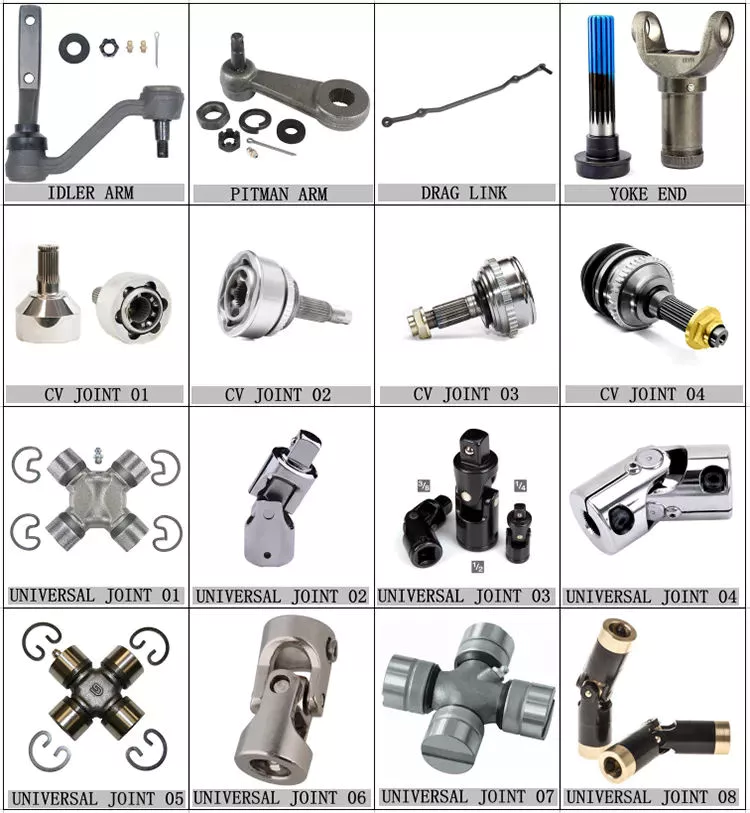
Drive shafts often incorporate flexible couplings, such as universal joints (U-joints) or constant velocity (CV) joints, to handle variations in speed and torque. These couplings provide flexibility and allow the drive shaft to transmit power even when the driving and driven components are not perfectly aligned. U-joints consist of two yokes connected by a cross-shaped bearing, allowing for angular movement between the drive shaft sections. This flexibility accommodates variations in speed and torque and compensates for misalignment. CV joints, which are commonly used in automotive drive shafts, maintain a constant velocity of rotation while accommodating changing operating angles. These flexible couplings enable smooth power transmission and reduce vibrations and wear caused by speed and torque variations.
2. Slip Joints:
In some drive shaft designs, slip joints are incorporated to handle variations in length and accommodate changes in distance between the driving and driven components. A slip joint consists of an inner and outer tubular section with splines or a telescoping mechanism. As the drive shaft experiences changes in length due to suspension movement or other factors, the slip joint allows the shaft to extend or compress without affecting the power transmission. By allowing axial movement, slip joints help prevent binding or excessive stress on the drive shaft during variations in speed and torque, ensuring smooth operation.
3. Balancing:
Drive shafts undergo balancing procedures to optimize their performance and minimize vibrations caused by speed and torque variations. Imbalances in the drive shaft can lead to vibrations, which not only affect the comfort of vehicle occupants but also increase wear and tear on the shaft and its associated components. Balancing involves redistributing mass along the drive shaft to achieve even weight distribution, reducing vibrations and improving overall performance. Dynamic balancing, which typically involves adding or removing small weights, ensures that the drive shaft operates smoothly even under varying speeds and torque loads.
4. Material Selection and Design:
The selection of materials and the design of drive shafts play a crucial role in handling variations in speed and torque. Drive shafts are typically made from high-strength materials, such as steel or aluminum alloys, chosen for their ability to withstand the forces and stresses associated with varying operating conditions. The diameter and wall thickness of the drive shaft are also carefully determined to ensure sufficient strength and stiffness. Additionally, the design incorporates considerations for factors such as critical speed, torsional rigidity, and resonance avoidance, which help maintain stability and performance during speed and torque variations.
5. Lubrication:
Proper lubrication is essential for drive shafts to handle variations in speed and torque. Lubricating the joints, such as U-joints or CV joints, reduces friction and heat generated during operation, ensuring smooth movement and minimizing wear. Adequate lubrication also helps prevent the binding of components, allowing the drive shaft to accommodate speed and torque variations more effectively. Regular lubrication maintenance is necessary to ensure optimal performance and extend the lifespan of the drive shaft.
6. System Monitoring:
Monitoring the performance of the drive shaft system is important to identify any issues related to variations in speed and torque. Unusual vibrations, noises, or changes in power transmission can indicate potential problems with the drive shaft. Regular inspections and maintenance checks allow for the early detection and resolution of issues, helping to prevent further damage and ensure the drive shaft continues to handle speed and torque variations effectively.
In summary, drive shafts handle variations in speed and torque during operation through the use of flexible couplings, slip joints, balancing procedures, appropriate material selection and design, lubrication, and system monitoring. These mechanisms and practices allow the drive shaft to accommodate misalignment, changes in length, and variations in power demands, ensuring efficient power transmission, smooth operation, and reduced wear and tear in various applications.

Can you provide real-world examples of vehicles and machinery that use drive shafts?
Drive shafts are widely used in various vehicles and machinery to transmit power from the engine or power source to the wheels or driven components. Here are some real-world examples of vehicles and machinery that utilize drive shafts:
1. Automobiles:
Drive shafts are commonly found in automobiles, especially those with rear-wheel drive or four-wheel drive systems. In these vehicles, the drive shaft transfers power from the transmission or transfer case to the rear differential or front differential, respectively. This allows the engine’s power to be distributed to the wheels, propelling the vehicle forward.
2. Trucks and Commercial Vehicles:
Drive shafts are essential components in trucks and commercial vehicles. They are used to transfer power from the transmission or transfer case to the rear axle or multiple axles in the case of heavy-duty trucks. Drive shafts in commercial vehicles are designed to handle higher torque loads and are often larger and more robust than those used in passenger cars.
3. Construction and Earthmoving Equipment:
Various types of construction and earthmoving equipment, such as excavators, loaders, bulldozers, and graders, rely on drive shafts for power transmission. These machines typically have complex drivetrain systems that use drive shafts to transfer power from the engine to the wheels or tracks, enabling them to perform heavy-duty tasks on construction sites or in mining operations.
4. Agricultural Machinery:
Agricultural machinery, including tractors, combines, and harvesters, utilize drive shafts to transmit power from the engine to the wheels or driven components. Drive shafts in agricultural machinery are often subjected to demanding conditions and may have additional features such as telescopic sections to accommodate variable distances between components.
5. Industrial Machinery:
Industrial machinery, such as manufacturing equipment, generators, pumps, and compressors, often incorporate drive shafts in their power transmission systems. These drive shafts transfer power from electric motors, engines, or other power sources to various driven components, enabling the machinery to perform specific tasks in industrial settings.
6. Marine Vessels:
In marine applications, drive shafts are commonly used to transmit power from the engine to the propeller in boats, ships, and other watercraft. Marine drive shafts are typically longer and designed to withstand the unique challenges posed by water environments, including corrosion resistance and appropriate sealing mechanisms.
7. Recreational Vehicles (RVs) and Motorhomes:
RVs and motorhomes often employ drive shafts as part of their drivetrain systems. These drive shafts transfer power from the transmission to the rear axle, allowing the vehicle to move and providing propulsion. Drive shafts in RVs may have additional features such as dampers or vibration-reducing components to enhance comfort during travel.
8. Off-Road and Racing Vehicles:
Off-road vehicles, such as SUVs, trucks, and all-terrain vehicles (ATVs), as well as racing vehicles, frequently utilize drive shafts. These drive shafts are designed to withstand the rigors of off-road conditions or high-performance racing, transmitting power efficiently to the wheels and ensuring optimal traction and performance.
9. Railway Rolling Stock:
In railway systems, drive shafts are employed in locomotives and some types of rolling stock. They transfer power from the locomotive’s engine to the wheels or propulsion system, enabling the train to move along the tracks. Railway drive shafts are typically much longer and may have additional features to accommodate the articulated or flexible nature of some train configurations.
10. Wind Turbines:
Large-scale wind turbines used for generating electricity incorporate drive shafts in their power transmission systems. The drive shafts transfer rotational energy from the turbine’s blades to the generator, where it is converted into electrical power. Drive shafts in wind turbines are designed to handle the significant torque and rotational forces generated by the wind.
These examples demonstrate the broad range of vehicles and machinery that rely on drive shafts for efficient power transmission and propulsion. Drive shafts are essential components in various industries, enabling the transfer of power from the source to the driven components, ultimately facilitating movement, operation, or the performance of specific tasks.
Kunt u de verschillende soorten aandrijfassen en hun specifieke toepassingen toelichten?
Aandrijfassen zijn er in verschillende soorten, elk ontworpen voor specifieke toepassingen en eisen. De keuze van de aandrijfas hangt af van factoren zoals het type voertuig of machine, de benodigde krachtoverbrenging, ruimtebeperkingen en bedrijfsomstandigheden. Hieronder volgt een uitleg van de verschillende soorten aandrijfassen en hun specifieke toepassingen:
1. Massieve as:
Een massieve as, ook wel een eendelige of massief stalen aandrijfas genoemd, is een enkele, ononderbroken as die van de motor of krachtbron naar de aangedreven componenten loopt. Het is een eenvoudig en robuust ontwerp dat in veel toepassingen wordt gebruikt. Massieve assen komen veel voor in voertuigen met achterwielaandrijving, waar ze de kracht van de transmissie naar de achteras overbrengen. Ze worden ook gebruikt in industriële machines, zoals pompen, generatoren en transportbanden, waar een rechte en stijve krachtoverbrenging vereist is.
2. Buisvormige as:
Buisvormige assen, ook wel holle assen genoemd, zijn aandrijfassen met een cilindrische, buisvormige structuur. Ze zijn geconstrueerd met een holle kern en zijn doorgaans lichter dan massieve assen. Buisvormige assen bieden voordelen zoals een lager gewicht, een verbeterde torsiestijfheid en een betere demping van trillingen. Ze worden gebruikt in diverse voertuigen, waaronder auto's, vrachtwagens en motorfietsen, maar ook in industriële apparatuur en machines. Buisvormige aandrijfassen worden veel gebruikt in voertuigen met voorwielaandrijving, waar ze de transmissie met de voorwielen verbinden.
3. Constant Velocity (CV) As:
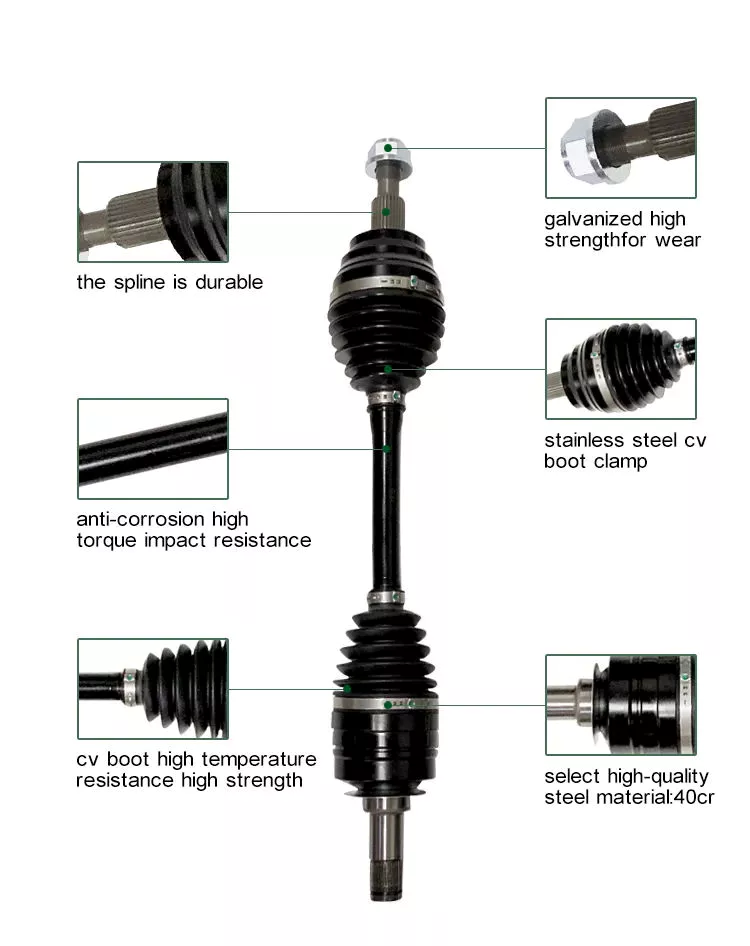
Homokinetische assen (CV-assen) zijn speciaal ontworpen om hoekbewegingen op te vangen en een constante snelheid te handhaven tussen de motor/transmissie en de aangedreven componenten. Ze zijn voorzien van homokinetische koppelingen aan beide uiteinden, die flexibiliteit en compensatie bieden voor veranderingen in de hoek. Homokinetische assen worden veel gebruikt in voertuigen met voorwielaandrijving en vierwielaandrijving, maar ook in terreinwagens en bepaalde zware machines. De homokinetische koppelingen zorgen voor een soepele krachtoverbrenging, zelfs wanneer de wielen draaien of de ophanging beweegt, waardoor trillingen worden verminderd en de algehele prestaties worden verbeterd.
4. Schuifkoppelingsas:
Schuifassen, ook wel telescopische assen genoemd, bestaan uit twee of meer buisvormige secties die in en uit elkaar kunnen schuiven. Dit ontwerp maakt lengteverstelling mogelijk, waardoor veranderingen in de afstand tussen de motor/transmissie en de aangedreven componenten kunnen worden opgevangen. Schuifassen worden veel gebruikt in voertuigen met een lange wielbasis of verstelbare veersystemen, zoals sommige vrachtwagens, bussen en campers. Door de flexibiliteit in lengte te bieden, zorgen schuifassen voor een constante krachtoverbrenging, zelfs wanneer het chassis van het voertuig beweegt of de geometrie van de ophanging verandert.
5. Dubbele cardanas:
Een dubbele cardanas, ook wel dubbele kruiskoppelingsas genoemd, is een type aandrijfas met twee kruiskoppelingen. Deze configuratie helpt trillingen te verminderen en de werkingshoeken van de koppelingen te minimaliseren, wat resulteert in een soepelere krachtoverbrenging. Dubbele cardanassen worden veel gebruikt in zware toepassingen, zoals vrachtwagens, terreinwagens en landbouwmachines. Ze zijn bijzonder geschikt voor toepassingen met hoge koppelvereisten en grote werkingshoeken, en bieden verbeterde duurzaamheid en prestaties.
6. Samengestelde schacht:
Aandrijfassen van composietmateriaal worden gemaakt van composietmaterialen zoals koolstofvezel of glasvezel, wat voordelen biedt zoals een lager gewicht, verbeterde sterkte en corrosiebestendigheid. Composiet aandrijfassen worden steeds vaker gebruikt in krachtige voertuigen, sportwagens en raceauto's, waar gewichtsvermindering en een verbeterde vermogen-gewichtsverhouding cruciaal zijn. De composietconstructie maakt een nauwkeurige afstemming van de stijfheid en dempingseigenschappen mogelijk, wat resulteert in verbeterde voertuigdynamiek en efficiëntie van de aandrijflijn.
7. Aftakas:
Aftakasassen (PTO-assen) zijn gespecialiseerde aandrijfassen die worden gebruikt in landbouwmachines en bepaalde industriële apparatuur. Ze zijn ontworpen om vermogen over te brengen van de motor of krachtbron naar diverse aanbouwdelen, zoals maaiers, balenpersen of pompen. Aftakasassen hebben doorgaans een spieverbinding aan het ene uiteinde voor de aansluiting op de krachtbron en een kruiskoppeling aan het andere uiteinde voor hoekbewegingen. Ze kenmerken zich door hun vermogen om hoge koppelwaarden over te brengen en hun compatibiliteit met een breed scala aan aangedreven werktuigen.
8. Scheepsas:
Scheepsassen, ook wel schroefassen of staartassen genoemd, zijn speciaal ontworpen voor schepen. Ze brengen de kracht van de motor over op de schroef, waardoor de voortstuwing mogelijk wordt. Scheepsassen zijn meestal lang en werken in een ruwe omgeving, blootgesteld aan water, corrosie en hoge koppelbelastingen. Ze zijn doorgaans gemaakt van roestvrij staal of andere corrosiebestendige materialen en zijn ontworpen om de zware omstandigheden in maritieme toepassingen te weerstaan.
Het is belangrijk om te weten dat de specifieke toepassingen van aandrijfassen kunnen variëren afhankelijk van de fabrikant van het voertuig of de apparatuur, evenals de specifieke ontwerp- en technische eisen. De bovenstaande voorbeelden illustreren gangbare toepassingen voor elk type aandrijfas, maar er kunnen aanvullende varianten en gespecialiseerde ontwerpen bestaan op basis van specifieke branchebehoeften en technologische ontwikkelingen.


editor by CX 2023-12-08























