
Opis produktu
GOOD QUALITY AGRICULTURE MACHINE ACCESSORY PROPRLLER SHAFT TRACTOR PARTS TRANSMISSION SHAFT DRIVE AXLE POWER DRIVE SHAFT PTO SHAFT
Opis produktu
Our rotary PTO SHAFT is a powerful assistant in agricultural production, known for its high efficiency and durability. environment for CZPT cultivation.
Product Features:
High strength materials: The PTO SHAFT is made of high-strength materials, which have excellent durability and fatigue resistance and can be used for a long time.
Efficient farming: PTO SHAFT Labor-saving and easy to operate: using a rotary tiller for land plowing is easy and labor-saving, easy to operate, and suitable for various terrains.
Easy maintenance: The PTO SHAFT has a simple structure, low maintenance cost, and long service life.
Strong adaptability: Suitable for various types of soil, whether in paddy fields, dry fields, or mountainous areas, it can demonstrate excellent performance.
Usage :
Choose the appropriate model of PTO SHAFT according to the land conditions.
Install the PTO SHAFT on agricultural machinery.
Start agricultural machinery and start plowing the land.
Precautions :
Please read the product manual carefully before use.
Please use this product under safe conditions.
This product is only used for agricultural tillage and cannot be used for other purposes.
Szczegółowe zdjęcia
Parametry produktu
GOOD QUALITY AGRICULTURE MACHINE ACCESSORY PROPRLLER SHAFT TRACTOR PARTS TRANSMISSION SHAFT DRIVE AXLE POWER DRIVE SHAFT PTO SHAFT
Opakowanie i wysyłka
Nasze atuty
1. High quality steel raw materials, suitable hardness, not easy to break or deform.
2. Automatic temperature control system used on both heating treatment and tempering, to guaratee the products heated evenly, the outside and interior have uniform structure, so as to get longer work life.
3.Precise and high strength moulds get precise shaping during thermo-forming.
4. Special gas used in tempering, to make up the chemical elements which lost during heating treatment, to double the work life than normal technology, proprietary heat treatment technology designed and developed by JIELIKE.
5. The whole product body and shape has been adjusted precisely by mechanics to pass the balance test both in static and moving states.
6. Products use electrostatic painting or brand water-based paint, environment-protective, to get excellent surface and long time rust-protective. And drying process is added for liquid painting to improve the quality of the paint adhesion to blade surface.
7. Automatic shot peening surface treatment, excellent appearance.
8. Provide OEM & ODM Service.
9. Provide customized products.
Serwis posprzedażowy
We provide comprehensive after-sales service, including product consultation, user guidance, repair and maintenance, etc. If you encounter any problems during use, please feel free to contact us at any time.
| Typ: | Shaft |
|---|---|
| Stosowanie: | Tillage |
| Tworzywo: | Stal węglowa |
| Źródło zasilania: | Diesel |
| Serwis posprzedażowy: | 12 Months |
| Gwarancja: | 12 Months |
| Personalizacja: |
Dostępny
| Spersonalizowane żądanie |
|---|
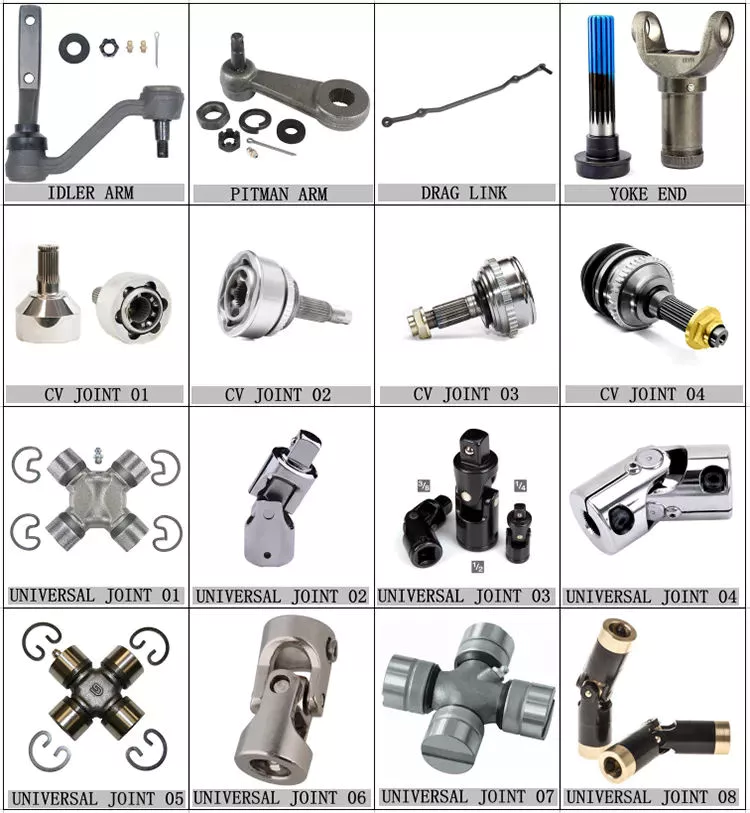
W jaki sposób wały napędowe radzą sobie ze zmianami prędkości i momentu obrotowego podczas pracy?
Wały napędowe są zaprojektowane tak, aby kompensować zmiany prędkości i momentu obrotowego podczas pracy poprzez zastosowanie specjalnych mechanizmów i konfiguracji. Mechanizmy te pozwalają im dostosowywać się do zmieniających się wymagań przenoszenia mocy, zapewniając jednocześnie płynną i wydajną pracę. Poniżej znajduje się szczegółowe wyjaśnienie, jak wały napędowe radzą sobie ze zmianami prędkości i momentu obrotowego:
1. Sprzęgła elastyczne:
Wały napędowe często zawierają sprzęgła elastyczne, takie jak przeguby krzyżakowe (U-joints) lub przeguby homokinetyczne (CV), aby kompensować wahania prędkości i momentu obrotowego. Sprzęgła te zapewniają elastyczność i pozwalają wału napędowemu przenosić moc nawet wtedy, gdy elementy napędzające i napędzane nie są idealnie współosiowe. Przeguby krzyżakowe składają się z dwóch jarzm połączonych łożyskiem krzyżowym, co umożliwia ruch kątowy między sekcjami wału napędowego. Ta elastyczność kompensuje wahania prędkości i momentu obrotowego oraz kompensuje niewspółosiowość. Przeguby homokinetyczne, powszechnie stosowane w samochodowych wałach napędowych, utrzymują stałą prędkość obrotową, dostosowując się do zmieniających się kątów pracy. Te sprzęgła elastyczne umożliwiają płynne przenoszenie mocy oraz redukują drgania i zużycie spowodowane wahaniami prędkości i momentu obrotowego.
2. Połączenia ślizgowe:
W niektórych konstrukcjach wałów napędowych stosuje się przeguby ślizgowe, aby kompensować zmiany długości i odległości między elementami napędzającymi i napędzanymi. Przegub ślizgowy składa się z wewnętrznej i zewnętrznej sekcji rurowej z wielowypustami lub mechanizmem teleskopowym. Wraz ze zmianą długości wału napędowego spowodowaną ruchem zawieszenia lub innymi czynnikami, przegub ślizgowy umożliwia jego wydłużenie lub ściśnięcie bez wpływu na przenoszenie mocy. Umożliwiając ruch osiowy, przeguby ślizgowe pomagają zapobiegać zakleszczaniu się lub nadmiernemu naprężeniu wału napędowego podczas zmian prędkości i momentu obrotowego, zapewniając płynną pracę.
3. Równoważenie:
Wały napędowe poddawane są procedurom wyważania w celu optymalizacji ich działania i minimalizacji drgań spowodowanych zmianami prędkości i momentu obrotowego. Brak wyważenia wału napędowego może prowadzić do drgań, które nie tylko wpływają na komfort jazdy, ale także zwiększają zużycie wału i jego podzespołów. Wyważanie polega na redystrybucji masy wzdłuż wału napędowego w celu uzyskania równomiernego rozkładu masy, redukcji drgań i poprawy ogólnej wydajności. Wyważanie dynamiczne, które zazwyczaj polega na dodawaniu lub usuwaniu niewielkich obciążników, zapewnia płynną pracę wału napędowego nawet przy zmiennych prędkościach i obciążeniach momentem obrotowym.
4. Dobór materiałów i projekt:
Dobór materiałów i konstrukcja wałów napędowych odgrywają kluczową rolę w adaptacji do zmian prędkości i momentu obrotowego. Wały napędowe są zazwyczaj wykonane z materiałów o wysokiej wytrzymałości, takich jak stal lub stopy aluminium, wybieranych ze względu na ich zdolność do wytrzymywania sił i naprężeń związanych ze zmiennymi warunkami pracy. Średnica i grubość ścianek wału napędowego są również starannie dobierane, aby zapewnić odpowiednią wytrzymałość i sztywność. Ponadto, konstrukcja uwzględnia takie czynniki, jak prędkość krytyczna, sztywność skrętna i unikanie rezonansu, które pomagają zachować stabilność i wydajność podczas zmian prędkości i momentu obrotowego.
5. Smarowanie:
Prawidłowe smarowanie jest niezbędne, aby wał napędowy radził sobie ze zmianami prędkości i momentu obrotowego. Smarowanie przegubów, takich jak przeguby krzyżakowe (CV) czy przeguby homokinetyczne (CV), zmniejsza tarcie i ciepło generowane podczas pracy, zapewniając płynny ruch i minimalizując zużycie. Odpowiednie smarowanie pomaga również zapobiegać zakleszczaniu się elementów, umożliwiając wałowi napędowemu skuteczniejsze dostosowywanie się do zmian prędkości i momentu obrotowego. Regularne smarowanie jest niezbędne dla zapewnienia optymalnej wydajności i wydłużenia żywotności wału napędowego.
6. Monitorowanie systemu:
Monitorowanie działania układu wału napędowego jest istotne dla identyfikacji wszelkich problemów związanych ze zmianami prędkości obrotowej i momentu obrotowego. Nietypowe wibracje, hałasy lub zmiany w przenoszeniu mocy mogą wskazywać na potencjalne problemy z wałem napędowym. Regularne inspekcje i przeglądy konserwacyjne pozwalają na wczesne wykrycie i rozwiązanie problemów, pomagając zapobiec dalszym uszkodzeniom i zapewnić, że wał napędowy nadal będzie skutecznie radził sobie ze zmianami prędkości obrotowej i momentu obrotowego.
Podsumowując, wały napędowe kompensują wahania prędkości i momentu obrotowego podczas pracy poprzez zastosowanie elastycznych sprzęgieł, przegubów ślizgowych, procedur wyważania, odpowiedniego doboru materiałów i konstrukcji, smarowania oraz monitorowania systemu. Te mechanizmy i praktyki pozwalają walizce napędowej kompensować niewspółosiowość, zmiany długości i wahania zapotrzebowania na moc, zapewniając efektywne przenoszenie mocy, płynną pracę i mniejsze zużycie w różnych zastosowaniach.

Can you provide real-world examples of vehicles and machinery that use drive shafts?
Drive shafts are widely used in various vehicles and machinery to transmit power from the engine or power source to the wheels or driven components. Here are some real-world examples of vehicles and machinery that utilize drive shafts:
1. Automobiles:
Drive shafts are commonly found in automobiles, especially those with rear-wheel drive or four-wheel drive systems. In these vehicles, the drive shaft transfers power from the transmission or transfer case to the rear differential or front differential, respectively. This allows the engine’s power to be distributed to the wheels, propelling the vehicle forward.
2. Trucks and Commercial Vehicles:
Drive shafts are essential components in trucks and commercial vehicles. They are used to transfer power from the transmission or transfer case to the rear axle or multiple axles in the case of heavy-duty trucks. Drive shafts in commercial vehicles are designed to handle higher torque loads and are often larger and more robust than those used in passenger cars.
3. Construction and Earthmoving Equipment:
Various types of construction and earthmoving equipment, such as excavators, loaders, bulldozers, and graders, rely on drive shafts for power transmission. These machines typically have complex drivetrain systems that use drive shafts to transfer power from the engine to the wheels or tracks, enabling them to perform heavy-duty tasks on construction sites or in mining operations.
4. Agricultural Machinery:
Agricultural machinery, including tractors, combines, and harvesters, utilize drive shafts to transmit power from the engine to the wheels or driven components. Drive shafts in agricultural machinery are often subjected to demanding conditions and may have additional features such as telescopic sections to accommodate variable distances between components.
5. Industrial Machinery:
Industrial machinery, such as manufacturing equipment, generators, pumps, and compressors, often incorporate drive shafts in their power transmission systems. These drive shafts transfer power from electric motors, engines, or other power sources to various driven components, enabling the machinery to perform specific tasks in industrial settings.
6. Marine Vessels:
In marine applications, drive shafts are commonly used to transmit power from the engine to the propeller in boats, ships, and other watercraft. Marine drive shafts are typically longer and designed to withstand the unique challenges posed by water environments, including corrosion resistance and appropriate sealing mechanisms.
7. Recreational Vehicles (RVs) and Motorhomes:
RVs and motorhomes often employ drive shafts as part of their drivetrain systems. These drive shafts transfer power from the transmission to the rear axle, allowing the vehicle to move and providing propulsion. Drive shafts in RVs may have additional features such as dampers or vibration-reducing components to enhance comfort during travel.
8. Off-Road and Racing Vehicles:
Off-road vehicles, such as SUVs, trucks, and all-terrain vehicles (ATVs), as well as racing vehicles, frequently utilize drive shafts. These drive shafts are designed to withstand the rigors of off-road conditions or high-performance racing, transmitting power efficiently to the wheels and ensuring optimal traction and performance.
9. Railway Rolling Stock:
In railway systems, drive shafts are employed in locomotives and some types of rolling stock. They transfer power from the locomotive’s engine to the wheels or propulsion system, enabling the train to move along the tracks. Railway drive shafts are typically much longer and may have additional features to accommodate the articulated or flexible nature of some train configurations.
10. Wind Turbines:
Large-scale wind turbines used for generating electricity incorporate drive shafts in their power transmission systems. The drive shafts transfer rotational energy from the turbine’s blades to the generator, where it is converted into electrical power. Drive shafts in wind turbines are designed to handle the significant torque and rotational forces generated by the wind.
These examples demonstrate the broad range of vehicles and machinery that rely on drive shafts for efficient power transmission and propulsion. Drive shafts are essential components in various industries, enabling the transfer of power from the source to the driven components, ultimately facilitating movement, operation, or the performance of specific tasks.
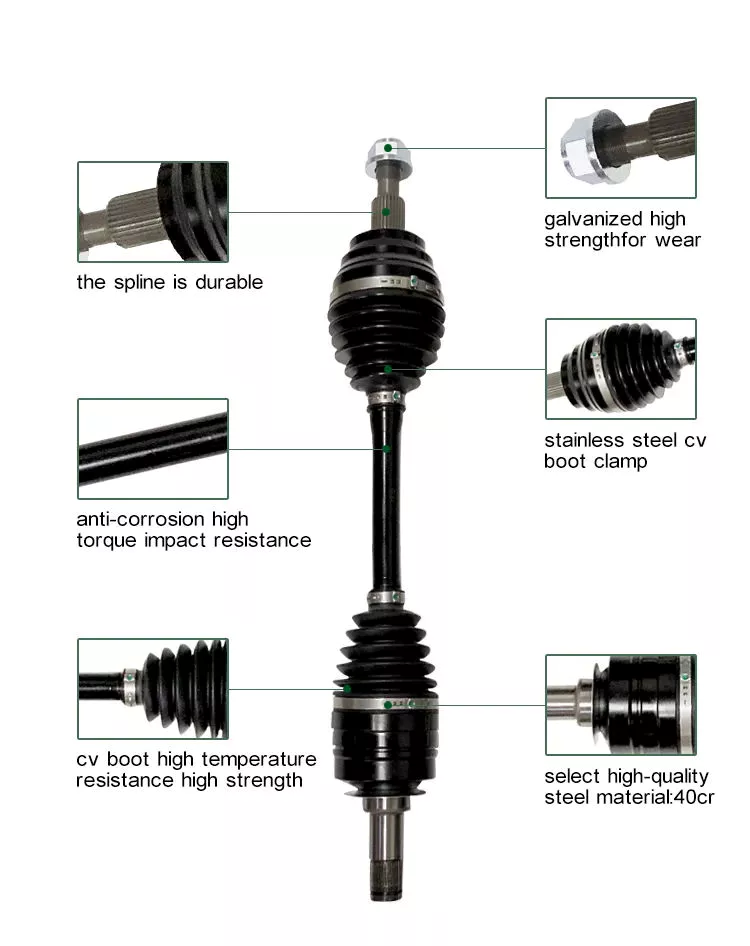
Can you explain the different types of drive shafts and their specific applications?
Drive shafts come in various types, each designed to suit specific applications and requirements. The choice of drive shaft depends on factors such as the type of vehicle or equipment, power transmission needs, space limitations, and operating conditions. Here’s an explanation of the different types of drive shafts and their specific applications:
1. Solid Shaft:
A solid shaft, also known as a one-piece or solid-steel drive shaft, is a single, uninterrupted shaft that runs from the engine or power source to the driven components. It is a simple and robust design used in many applications. Solid shafts are commonly found in rear-wheel-drive vehicles, where they transmit power from the transmission to the rear axle. They are also used in industrial machinery, such as pumps, generators, and conveyors, where a straight and rigid power transmission is required.
2. Tubular Shaft:
Tubular shafts, also called hollow shafts, are drive shafts with a cylindrical tube-like structure. They are constructed with a hollow core and are typically lighter than solid shafts. Tubular shafts offer benefits such as reduced weight, improved torsional stiffness, and better damping of vibrations. They find applications in various vehicles, including cars, trucks, and motorcycles, as well as in industrial equipment and machinery. Tubular drive shafts are commonly used in front-wheel-drive vehicles, where they connect the transmission to the front wheels.
3. Constant Velocity (CV) Shaft:
Constant Velocity (CV) shafts are specifically designed to handle angular movement and maintain a constant velocity between the engine/transmission and the driven components. They incorporate CV joints at both ends, which allow flexibility and compensation for changes in angle. CV shafts are commonly used in front-wheel-drive and all-wheel-drive vehicles, as well as in off-road vehicles and certain heavy machinery. The CV joints enable smooth power transmission even when the wheels are turned or the suspension moves, reducing vibrations and improving overall performance.
4. Slip Joint Shaft:
Slip joint shafts, also known as telescopic shafts, consist of two or more tubular sections that can slide in and out of each other. This design allows for length adjustment, accommodating changes in distance between the engine/transmission and the driven components. Slip joint shafts are commonly used in vehicles with long wheelbases or adjustable suspension systems, such as some trucks, buses, and recreational vehicles. By providing flexibility in length, slip joint shafts ensure a constant power transfer, even when the vehicle chassis experiences movement or changes in suspension geometry.
5. Double Cardan Shaft:
A double Cardan shaft, also referred to as a double universal joint shaft, is a type of drive shaft that incorporates two universal joints. This configuration helps to reduce vibrations and minimize the operating angles of the joints, resulting in smoother power transmission. Double Cardan shafts are commonly used in heavy-duty applications, such as trucks, off-road vehicles, and agricultural machinery. They are particularly suitable for applications with high torque requirements and large operating angles, providing enhanced durability and performance.
6. Composite Shaft:
Composite shafts are made from composite materials such as carbon fiber or fiberglass, offering advantages such as reduced weight, improved strength, and resistance to corrosion. Composite drive shafts are increasingly being used in high-performance vehicles, sports cars, and racing applications, where weight reduction and enhanced power-to-weight ratio are critical. The composite construction allows for precise tuning of stiffness and damping characteristics, resulting in improved vehicle dynamics and drivetrain efficiency.
7. PTO Shaft:
Power Take-Off (PTO) shafts are specialized drive shafts used in agricultural machinery and certain industrial equipment. They are designed to transfer power from the engine or power source to various attachments, such as mowers, balers, or pumps. PTO shafts typically have a splined connection at one end to connect to the power source and a universal joint at the other end to accommodate angular movement. They are characterized by their ability to transmit high torque levels and their compatibility with a range of driven implements.
8. Marine Shaft:
Marine shafts, also known as propeller shafts or tail shafts, are specifically designed for marine vessels. They transmit power from the engine to the propeller, enabling propulsion. Marine shafts are usually long and operate in a harsh environment, exposed to water, corrosion, and high torque loads. They are typically made of stainless steel or other corrosion-resistant materials and are designed to withstand the challenging conditions encountered in marine applications.
It’simportant to note that the specific applications of drive shafts may vary depending on the vehicle or equipment manufacturer, as well as the specific design and engineering requirements. The examples provided above highlight common applications for each type of drive shaft, but there may be additional variations and specialized designs based on specific industry needs and technological advancements.


editor by CX 2023-12-08























