
Description du produit
custom large aisi 4340 cast iron long mild steel rolling mill transmission propeller pto drive shaft
The drive shaft and the passive shaft shall be a pair of directly adjacent shafts connected by transmission pairs (gears, pulleys, sprockets, etc.). driving shaft is closer to the power source .on the contrary, the passive shaft is similar to the working shaft, it is mainly used in lathes, milling machines, fans, conveyors, injection molding machines, processing centers, steam turbines, drilling machines, hydraulic turbines, machinery industry, etc.
We are manufacture main shaft,transmission shaft, rotor shaft,propeller shaft,wind power shaft,passive shaft, support roller shaft,gear shaft,eccentric shaft,custom and oem are accepted.
|
Nom du produit |
OEM machining forged 42CrMo steel thread axis shaft |
||
|
Matériel |
ZG45,ZG42CrMo,35CrMo,ect |
||
|
Structure |
Casting or forging |
||
|
Process |
Lathing, milling,grinding |
||
|
Max.diameter |
2000mm |
||
|
Max.length |
8000mm |
||
|
Max.tolerance |
±0.3 |
||
|
Taper |
According to drawings |
||
|
Package |
Seaworthy packing |
||
|
Delivery time |
15-45 days |
||
|
Certification |
SGS,ISO |
||
process equipment list
| equipment | process part size | qty | model |
| gantry milling machine | 6000*2300*1600 | 1 | BX2571 |
| gantry milling machine | 3000*1200*800 | 1 | XQ2012 |
| CNC centre | 1000*600 | 1 | 1060 |
| CNC centre | 1300*700 | 1 | 1370 |
| CNC centre | 4300*2700 | 1 | 4370 |
| vertical milling machine | 1500 | 1 | X53T |
| gantry boring and milling | 1800*4000 | 1 | B**2018 |
| horizontal milling machine | 960*1200*1200 | 1 | TP *611B |
| horizontal lathe | dia300*3000 | 4 | CW6163E |
| saw machine | dia5—300 | 4 | |
| grinding machine | 1000*300 | 1 | M71304 |
| grinding macnine for outer dia | 1500*3200 | 1 | M1332B |
| gantry CNC centre | 4000*2700 | 1 | YR4571 |
| common lathe | dia20–1280,L 20–5000 | 6 | |
| common drilling machine | dia2–80 | 6 | |
| plasma cut machine | 4000*12000 | 1 | SXL-400 |
| arc welding machine | 2 | 500-2 | |
| co2 welding machine | 14 | 350 500 | |
| other common machine | common milling ,lathe , driling and milling machine etc | ||
FAQ
Q1: Are you a factory or trading company?
A:We are a factory and have more years manufacture and sales experience.
Q2: What is your sample policy?
A:We can supply the sample if we have , but the customers have to pay the sample cost and the courier cost.If sample quantity is more than our regular one, we will extra collect sample cost.
Q3: Can you produce according to the samples?
A:Yes, we can produce by your samples or technical drawings. We can build the molds.
Q4: What’s your delivery time?
A:For regular products, we keep them in stock. The specific delivery time depends on the items and the quantity of your order,usually15-20 days
Q5:What is your terms of payment?
A:T/T 30% as deposit, and 70% before delivery.
Q6:Do you test all your goods before delivery?
A:Yes, we have 100% test before delivery.
/* March 10, 2571 17:59:20 */!function(){function s(e,r){var a,o={};try{e&&e.split(“,”).forEach(function(e,t){e&&(a=e.match(/(.*?):(.*)$/))&&1
| Matériel: | Acier au carbone |
|---|---|
| Load: | Arbre de transmission |
| Stiffness & Flexibility: | Stiffness / Rigid Axle |
| Journal Diameter Dimensional Accuracy: | IT6-IT9 |
| Axis Shape: | Straight Shaft |
| Shaft Shape: | Stepped Shaft |
| Exemples : |
US$ 2000/Piece
1 pièce (commande minimale) | |
|---|
| Personnalisation : |
Disponible
| Demande personnalisée |
|---|
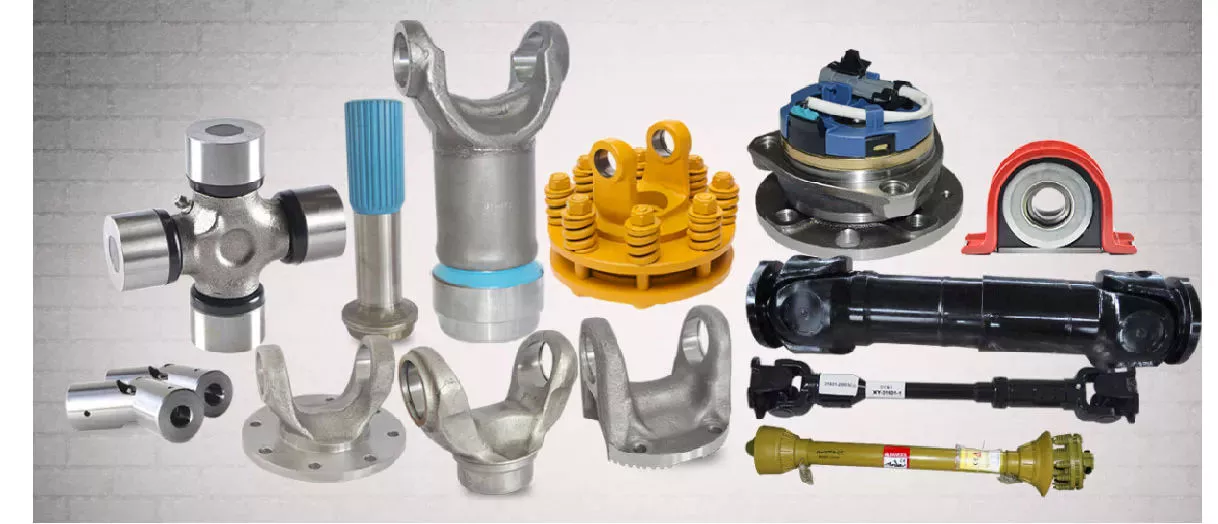
Are there variations in PTO shaft designs for different types of machinery?
Yes, there are variations in PTO (Power Take-Off) shaft designs to accommodate the specific requirements of different types of machinery. PTO shafts are highly versatile and adaptable components used to transfer power from a power source, such as a tractor or engine, to driven machinery or equipment. The design variations in PTO shafts are necessary to ensure compatibility, efficiency, and safety in various applications. Here’s a detailed explanation of the different PTO shaft designs for different types of machinery:
1. Standard PTO Shafts: Standard PTO shafts are the most common design and are widely used in a variety of applications. They typically consist of a solid steel shaft with a universal joint at each end. These universal joints allow for angular misalignment between the power source and the driven machinery. Standard PTO shafts are suitable for applications where the distance between the power source and the driven machinery remains relatively fixed. They are commonly used in agricultural implements, such as mowers, balers, tillers, and seeders, as well as in industrial applications.
2. Telescopic PTO Shafts: Telescopic PTO shafts feature a telescoping design that allows for length adjustment. These shafts consist of two or more concentric shafts that can slide within each other. Telescopic PTO shafts are beneficial in applications where the distance between the power source and the driven machinery varies. By adjusting the length of the shaft, operators can ensure proper power transmission without the risk of the shaft dragging on the ground or being too short to reach the equipment. Telescopic PTO shafts are commonly used in front-mounted implements, snow blowers, self-loading wagons, and other applications where the distance between the power source and the implement changes.
3. CV (Constant Velocity) PTO Shafts: CV PTO shafts incorporate Constant Velocity joints to accommodate misalignment and angular variations. These joints maintain a constant speed and torque transfer even when the driven machinery is at an angle relative to the power source. CV PTO shafts are beneficial in applications where the driven machinery requires flexibility and a wide range of movement. They are commonly used in articulated loaders, telescopic handlers, self-propelled sprayers, and other equipment that requires continuous power transmission while operating at various angles.
4. Gearbox Driven PTO Shafts: Some machinery requires specific speed or torque ratios between the power source and the driven equipment. In such cases, PTO shafts may incorporate gearbox systems. Gearbox driven PTO shafts allow for speed reduction or increase and can change the rotational direction if necessary. The gear ratios in the gearbox can be adjusted to match the speed and torque requirements of the driven machinery. These PTO shafts are commonly used in applications where the power source operates at a different speed or torque level than the equipment it drives, such as in certain industrial manufacturing processes and specialized machinery.
5. High-Torque PTO Shafts: Some heavy-duty machinery requires high torque levels for power transmission. High-torque PTO shafts are designed to handle these demanding applications. They are constructed with reinforced components, including larger diameter shafts and heavier-duty universal joints, to withstand the increased torque requirements. High-torque PTO shafts are commonly used in equipment such as wood chippers, crushers, and heavy-duty agricultural implements that require substantial power and torque for their operation.
6. Safety PTO Shafts: Safety is a crucial consideration when using PTO shafts. Safety PTO shafts incorporate mechanisms to reduce the risk of accidents and injuries. One common safety feature is the use of protective guards that cover the rotating shaft to prevent accidental contact. These guards are typically made of metal or plastic and are designed to shield the rotating components while allowing the necessary movement for power transmission. Safety PTO shafts are used in various applications where the risk of entanglement or accidental contact with the rotating shaft is high, such as in grass mowers, rotary cutters, and other equipment used in landscaping and agriculture.
These are some of the key variations in PTO shaft designs for different types of machinery. The specific design used depends on factors such as the application requirements, power source characteristics, torque levels, movement flexibility, and safety considerations. PTO shaft manufacturers offer a range of designs to ensure compatibility and efficient power transmission in diverse industries and applications.

Existe-t-il des limitations ou des inconvénients liés aux arbres de prise de force ?
Bien que les arbres de prise de force (PDF) offrent de nombreux avantages en termes de transmission de puissance et de polyvalence, ils présentent également certaines limitations et certains inconvénients. Il est important de prendre en compte ces facteurs lors de l'utilisation d'arbres de PDF afin de garantir un fonctionnement sûr et efficace. Voici une explication détaillée de certaines limitations et inconvénients associés aux arbres de PDF :
1. Risques pour la sécurité : L'un des principaux problèmes liés aux arbres de prise de force (PDF) est le risque potentiel pour la sécurité. Ces arbres tournent à grande vitesse et peuvent présenter un danger important s'ils ne sont pas correctement protégés ou manipulés. Un contact accidentel avec un arbre de PDF exposé ou insuffisamment protégé peut entraîner des blessures graves, telles que l'enchevêtrement, l'amputation, voire le décès. Il est donc essentiel de respecter les consignes de sécurité, de mettre en place des protections adéquates et de veiller à ce que les opérateurs soient bien formés aux bonnes pratiques de manipulation afin de limiter ces risques.
2. Entretien et lubrification : Les arbres de prise de force nécessitent un entretien et une lubrification réguliers pour garantir des performances optimales et une longue durée de vie. Les pièces mobiles, telles que les joints de cardan et les cannelures, doivent être inspectées, nettoyées et lubrifiées aux intervalles recommandés. Négliger l'entretien peut entraîner une usure prématurée, une baisse d'efficacité et des pannes potentielles. Des pratiques d'entretien appropriées, incluant des inspections régulières et une lubrification en temps voulu, sont essentielles pour éviter ces problèmes.
3. Alignement et angles : L'efficacité du transfert de puissance dépend de l'alignement et des angles précis des arbres de prise de force. Un mauvais alignement ou des angles excessifs entre la source d'énergie et la machine entraînée peuvent engendrer une usure et une contrainte accrues sur les composants, conduisant à une défaillance prématurée. Il est donc important de veiller à un alignement et à un réglage des angles corrects, à l'aide de coulisseaux réglables ou d'autres moyens, afin de prévenir toute contrainte excessive sur l'arbre de prise de force et les équipements associés.
4. Limitations de longueur : Les arbres de prise de force (PDF) présentent des limitations de longueur maximale et minimale dues à des contraintes techniques. Leur conception télescopique permet un certain réglage, mais l'extension ou la rétraction de l'arbre reste limitée. Si la distance entre la source d'énergie et la machine entraînée dépasse la longueur maximale ou est inférieure à la longueur minimale de l'arbre de PDF, des solutions alternatives ou des modifications peuvent s'avérer nécessaires. Dans certains cas, des composants supplémentaires, tels que des rallonges d'arbre de transmission ou des réducteurs, peuvent être requis pour compenser cette distance.
5. Compatibilité : Bien que les fabricants s'efforcent d'assurer la compatibilité, trouver l'arbre de prise de force adapté à une configuration d'équipement spécifique peut s'avérer complexe. En effet, certains équipements peuvent présenter des exigences particulières en matière de dimensions des cannelures, de couples admissibles ou de méthodes de connexion, qui ne sont pas toujours disponibles ou compatibles avec les arbres de prise de force standard. Une personnalisation peut alors être nécessaire pour résoudre ces problèmes de compatibilité, ce qui peut engendrer des coûts supplémentaires ou des délais de livraison plus longs.
6. Bruit et vibrations : Les prises de force en fonctionnement peuvent générer un bruit et des vibrations importants, surtout à haut régime. Cela peut s'avérer gênant pour les opérateurs et nécessiter des mesures supplémentaires pour réduire le bruit ou amortir les vibrations. Des vibrations excessives peuvent également affecter les performances et la durée de vie de la prise de force et des équipements qui y sont raccordés. L'installation d'amortisseurs de vibrations ou l'utilisation d'accouplements flexibles peuvent contribuer à atténuer ces problèmes.
7. Limites de puissance : Les arbres de prise de force (PDF) ont des limites de puissance spécifiques liées à leur conception, leurs matériaux et leurs composants. Le dépassement de ces limites peut entraîner une usure prématurée, des défaillances de composants, voire la rupture de l'arbre. Il est essentiel de comprendre et de respecter les puissances nominales recommandées pour les arbres de PDF afin de garantir un fonctionnement sûr et fiable. Dans certains cas, il peut être nécessaire d'opter pour un arbre de PDF de plus grande capacité ou d'ajouter des composants de transmission de puissance pour répondre à des besoins en puissance supérieurs.
8. Installation et désinstallation complexes : L'installation et la dépose des arbres de prise de force peuvent s'avérer complexes, notamment dans les espaces restreints ou lors de la manipulation d'équipements lourds. Elles peuvent nécessiter l'alignement des cannelures, la mise en place des accouplements et le verrouillage des mécanismes. Des techniques d'installation ou de dépose incorrectes peuvent endommager l'arbre ou l'équipement associé. Une formation adéquate, la manipulation appropriée des équipements et le respect des consignes du fabricant sont essentiels pour simplifier et garantir l'installation et la dépose en toute sécurité des arbres de prise de force.
Malgré ces limitations et inconvénients, les arbres de prise de force restent des composants essentiels et largement utilisés pour la transmission de puissance dans divers secteurs industriels. En tenant compte de ces aspects et en appliquant des mesures de sécurité, des pratiques de maintenance et des procédures d'alignement appropriées, les inconvénients potentiels des arbres de prise de force peuvent être efficacement atténués, permettant ainsi un fonctionnement sûr et efficace.

Which industries commonly use PTO shafts for power transmission?
PTO shafts (Power Take-Off shafts) are widely used in various industries where power transmission is required to drive machinery and equipment. Their versatility, efficiency, and compatibility with different types of machinery make them valuable components in several sectors. Here’s a detailed explanation of the industries that commonly use PTO shafts for power transmission:
1. Agriculture: The agricultural industry extensively relies on PTO shafts for power transmission. Tractors equipped with PTOs are commonly used to drive a wide range of agricultural implements and machinery. PTO-driven equipment includes mowers, balers, tillers, seeders, sprayers, grain augers, harvesters, and many more. PTO shafts allow for the efficient transfer of power from the tractor’s engine to these implements, enabling various agricultural operations such as cutting, baling, tilling, planting, spraying, and harvesting. The agricultural sector heavily depends on PTO shafts to enhance productivity and streamline farming processes.
2. Construction and Earthmoving: In the construction and earthmoving industry, PTO shafts find applications in machinery used for excavation, grading, and material handling. PTO-driven equipment such as backhoes, loaders, excavators, trenchers, and stump grinders utilize PTO shafts to transfer power from the prime movers, typically hydraulic systems, to drive the necessary attachments. These attachments require the high torque and power provided by PTO shafts to perform tasks like digging, loading, trenching, and grinding. PTO shafts allow for versatile and efficient power transmission in construction and earthmoving operations.
3. Forestry: The forestry industry utilizes PTO shafts for power transmission in various logging and timber processing equipment. PTO-driven machinery such as wood chippers, sawmills, log splitters, and debarkers rely on PTO shafts to transfer power from tractors or dedicated power units to perform tasks like chipping, sawing, splitting, and debarking wood. PTO shafts provide the necessary power and torque to drive the cutting and processing mechanisms, enabling efficient and productive forestry operations.
4. Landscaping and Groundskeeping: PTO shafts play a crucial role in the landscaping and groundskeeping industry. Equipment like lawn mowers, rotary cutters, flail mowers, and aerators utilize PTO shafts to transfer power from tractors or dedicated power units to drive the cutting or grooming mechanisms. PTO shafts enable efficient power transmission, allowing operators to maintain lawns, parks, golf courses, and other outdoor spaces with precision and productivity.
5. Mining and Quarrying: PTO shafts have applications in the mining and quarrying industry, particularly in equipment used for material extraction, crushing, and screening. PTO-driven machinery such as crushers, screeners, and conveyors rely on PTO shafts to transfer power from engines or motors to drive the crushing and screening mechanisms, as well as the material handling systems. PTO shafts provide the necessary power and torque to process and transport bulk materials effectively in mining and quarrying operations.
6. Industrial Manufacturing: PTO shafts are utilized in various industrial manufacturing processes that require power transmission to drive specific machinery and equipment. Industries such as food processing, textile manufacturing, paper production, and chemical processing may use PTO-driven machinery for tasks like mixing, blending, cutting, extruding, and conveying. PTO shafts enable efficient power transfer to these machines, ensuring smooth and reliable operation in industrial manufacturing settings.
7. Utilities and Infrastructure Maintenance: PTO shafts find applications in utilities and infrastructure maintenance operations. Equipment like street sweepers, sewer cleaners, road maintenance machines, and drain augers utilize PTO shafts to transfer power from trucks or dedicated power units to perform tasks like sweeping, cleaning, and maintenance of roads, sewers, and other public infrastructure. PTO shafts enable efficient power transmission, ensuring effective and reliable operation of these utility and maintenance machines.
8. Others: PTO shafts are also used in several other industries and sectors where power transmission is required. This includes applications in the transportation industry for powering refrigeration units, fuel pumps, and hydraulic systems in trucks and trailers. PTO shafts also find applications in the marine industry for powering winches, pumps, and other equipment on boats and ships.
In summary, PTO shafts are commonly used in a wide range of industries for power transmission. These industries include agriculture, construction and earthmoving, forestry, landscaping and groundskeeping, mining and quarrying, industrial manufacturing, utilities and infrastructure maintenance, transportation, and marine sectors. PTO shafts play a critical rolein enhancing productivity, enabling efficient operation of machinery, and facilitating various tasks in these industries.

editor by CX 2024-02-20























