
Tuotekuvaus
1
Products
Name: Agricultural Machinery and Tractors Spare Parts Forged Alloy Steel Drive Shaft Tractor PTO
Material: 40CrMo
Weight: From .2kg-5kg
Packing: wooden case
Min order: 1000pcs
Customized production is available as your drawings or sample.
| Käsitellä | Die Forging | |
| Materiaali | Stainless Steel, Carbon Steel, Alloy Steel | |
| Paino | 0.1Kg~20Kg | |
| Lämpökäsittely | Quenching, Annealing,Tempering,Normalizing, Quenching and Tempering | |
| Testing instrument | composition testing | Spectrometer, Metallographic microscope |
| Performance testing | Hardness tester, Tensile testing machine | |
| Size Measuring | CMM,Micrometer, Vernier Caliper, Depth Caliper, feeler gauge | |
| Thread Gauge , Height Gauge | ||
| Roughness | Ra1.6~Ra6.3 | |
| Machining Equipment | CNC Center , CNC Machines, Turning, Drilling, Milling, boring machine,Grinding Machines, | |
| Wire EDM,Laser Cutting&Welding, Plasma Cutting &Welding, EDM etc. | ||
| Quality control | Sampling inspection of raw materials and semi-finished products, 100% Inspection of finished products | |
| Pintakäsittely | Shot Blast , Powder Coating, Polishing, Galvanized , Chrome Plated | |
| Production Capacity | 60000T / Years | |
| Lead Time | Normally 30 – 45 Days. | |
| Payment Terms | T/T , L/C | |
| Material Standard | ASTM , AISI , DIN , BS, JIS, GB, | |
| Sertifiointi | ISO9001:2008, IATF16949:2016 | |
Certificates
2
Products Quality Control
Quality control involve the inspection and control of incoming materials, production processes, and finished products.
The quality control process includes,
1 First of all, the incoming raw materials with random sampling are analyzed by metallographic microscope to ensure that the chemical composition meets the production requirements
2 Then In the production process, there are QC staffs timely sampling ensure that the products are free of defects in the manufacturing process, and to coordinate and handle any abnormal quality issues may be occurred.
3 The final step of production process is magnetic particle flaw detector of the metal parts to detect it’s hidden crack or other defects.
4 All the finished metal parts is sampled in proportion and sent to the laboratory for various mechanical performance tests and size measurement, and the surface quality is manually 100% inspected.
The relevant testing equipment pictures are as following:
3
Quality Management System Control :
We strictly carry out system management accordance with iso9001 and ts16949 quality standards. And 5S lean production management is implemented on the production site.
The production management site as following:
4
Our Advantages:
Merkki
Our parent company, HiHangZhou Group, is a world-renowned high-end machinery manufacturing enterprise with 40 domestic subsidiaries and branches and 8 foreign manufacturing plants. Has long-term experience and good reputation in cooperation with world-renowned enterprises.
Technology
We have a complete production process and equipment research and development capabilities for ferrous metals forming. More than 25 years of production experience in forging equipment and casting equipment manufacturers, make us more thoroughly get all the performance of each equipment. One-third of our company’s employees are technician and R&D personnel, ensuring that high-quality products are produced with high efficiency.
Service
We can provide custom and standard manufacturing services with multiple manufacturing process integrations. The quality and delivery of products can be fully guaranteed, and the ability to communicate quickly and effectively.
Culture
The unique corporate culture can give full play to the potential of individuals and provide a strong vitality for the sustainable development of the company.
Social responsibility
Our company strictly implements low-carbon environmental protection, energy-saving and emission-reduction production, and is a benchmark enterprise in local region.
5
Company Culture
Our Vision
To become 1 of the leading companies
Our Mission
To become a platform for employees to realize their dream
To become 1 of the transforming and upgrading pacemaker of Chinese enterprises
To set the national brands with pride
Our Belief
Strive to build the company into an ideal platform for entrepreneurs to realize their self-worth and contribute to the society
Values
Improvement is innovation, everyone can innovate
innovation inspired and failures tolerated
6
Usein kysytyt kysymykset
1.
Q: Are you a trading company or a manufacturer?
A: Obviously we are a manufacturer of forging products, casting products and also have a high level of machining capabilities.
2.
Q: What series products do your have?
A: We are mainly engaged in forming processing of ferrous metals, including processing by casting , forging and machining. As you know, such machinery parts can be observed in various industries of equipment manufacturing.
3
Q: Do you provide samples? is it free?
A: Yes, we commonly provide samples according to the traditional practice, but we also need customers to provide a freight pay-by-account number to show mutual CZPT of cooperation.
4
Q: Is OEM available?
A: Yes, OEM is available.
5
Q: What’s your quality guarantee?
A: We insist that the survival of the company should depend on the products quality continuous improvement, without which we cannot survive for long. We carry out strictly product quality control for every process from incoming materials, production process to finished products via advanced detection instrument and equipment. We also invite independent third parties to certify our quality and management systems. Till now we have passed ISO/TS16949 and SGS certification .
6
Q. How about the Packing?
A: We usually use the iron box, or wooden case, also it can be customized according to customer’s demands.
7
Q: What is your minimum order quantity?
A: Yes, we require all international orders to have an minimum order quantity. The quantity is up to the exact products feature or property such as the material, weight, construction etc.
8
Q: What is the lead time?
A: Generally our forging products and casting products need to make new dies or molds, the time of making new dies or molds and samples within 30-45 days, and the large batch production time within 30-45 days. it’s also according to the parts structural complexity and quantity.
9
Q: What kinds of payment methods do you accept?
A: You can make the payment by T/T or L/C. 30% deposit in advance, 70% balance against the copy of B/L.
/* March 10, 2571 17:59:20 */!function(){function s(e,r){var a,o={};try{e&&e.split(“,”).forEach(function(e,t){e&&(a=e.match(/(.*?):(.*)$/))&&1
| Processing Object: | Metalli |
|---|---|
| Molding Style: | Taonta |
| Molding Technics: | Pressure Casting |
| Sovellus: | Agricultural Machinery Parts |
| Materiaali: | Steel |
| Heat Treatment: | Tempering |
| Samples: |
US$ 20/Piece
1 Piece(Min.Order) | |
|---|
| Mukauttaminen: |
Saatavilla
| Mukautettu pyyntö |
|---|
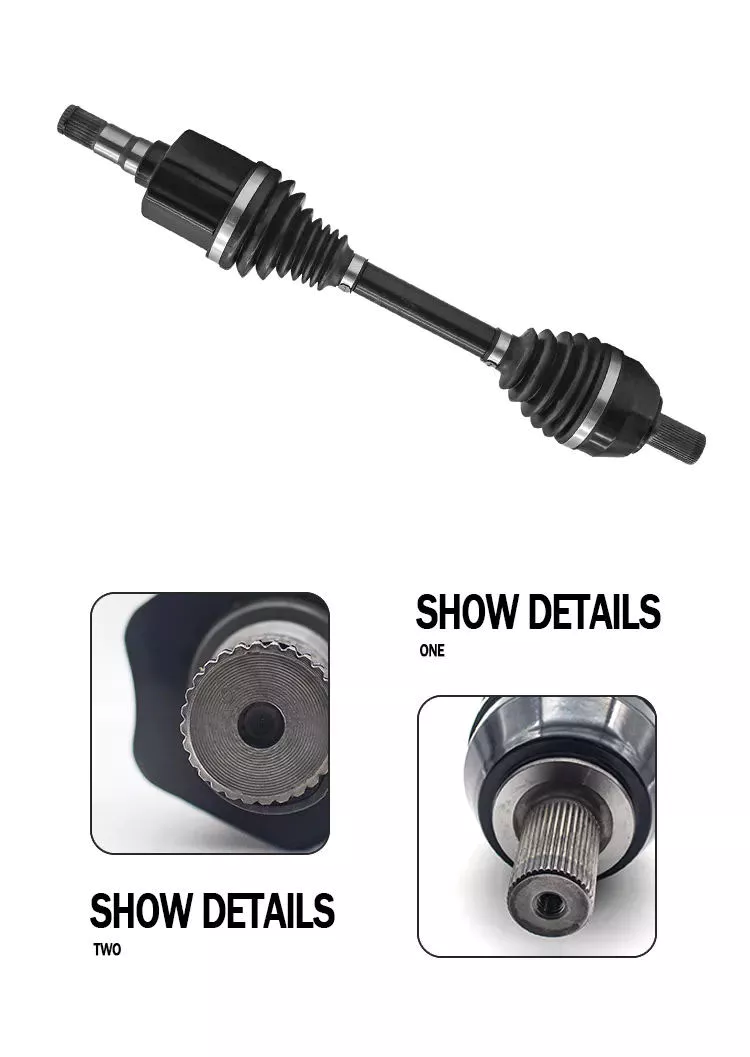
Are there any limitations or disadvantages associated with drive shafts?
While drive shafts are widely used and offer several advantages, they also have certain limitations and disadvantages that should be considered. Here’s a detailed explanation of the limitations and disadvantages associated with drive shafts:
1. Length and Misalignment Constraints:
Drive shafts have a maximum practical length due to factors such as material strength, weight considerations, and the need to maintain rigidity and minimize vibrations. Longer drive shafts can be prone to increased bending and torsional deflection, leading to reduced efficiency and potential driveline vibrations. Additionally, drive shafts require proper alignment between the driving and driven components. Misalignment can cause increased wear, vibrations, and premature failure of the drive shaft or its associated components.
2. Limited Operating Angles:
Drive shafts, especially those using U-joints, have limitations on operating angles. U-joints are typically designed to operate within specific angular ranges, and operating beyond these limits can result in reduced efficiency, increased vibrations, and accelerated wear. In applications requiring large operating angles, constant velocity (CV) joints are often used to maintain a constant speed and accommodate greater angles. However, CV joints may introduce higher complexity and cost compared to U-joints.
3. Maintenance Requirements:
Drive shafts require regular maintenance to ensure optimal performance and reliability. This includes periodic inspection, lubrication of joints, and balancing if necessary. Failure to perform routine maintenance can lead to increased wear, vibrations, and potential driveline issues. Maintenance requirements should be considered in terms of time and resources when using drive shafts in various applications.
4. Noise and Vibration:
Drive shafts can generate noise and vibrations, especially at high speeds or when operating at certain resonant frequencies. Imbalances, misalignment, worn joints, or other factors can contribute to increased noise and vibrations. These vibrations may affect the comfort of vehicle occupants, contribute to component fatigue, and require additional measures such as dampers or vibration isolation systems to mitigate their effects.
5. Weight and Space Constraints:
Drive shafts add weight to the overall system, which can be a consideration in weight-sensitive applications, such as automotive or aerospace industries. Additionally, drive shafts require physical space for installation. In compact or tightly packaged equipment or vehicles, accommodating the necessary drive shaft length and clearances can be challenging, requiring careful design and integration considerations.
6. Cost Considerations:
Drive shafts, depending on their design, materials, and manufacturing processes, can involve significant costs. Customized or specialized drive shafts tailored to specific equipment requirements may incur higher expenses. Additionally, incorporating advanced joint configurations, such as CV joints, can add complexity and cost to the drive shaft system.
7. Inherent Power Loss:
Drive shafts transmit power from the driving source to the driven components, but they also introduce some inherent power loss due to friction, bending, and other factors. This power loss can reduce overall system efficiency, particularly in long drive shafts or applications with high torque requirements. It is important to consider power loss when determining the appropriate drive shaft design and specifications.
8. Limited Torque Capacity:
While drive shafts can handle a wide range of torque loads, there are limits to their torque capacity. Exceeding the maximum torque capacity of a drive shaft can lead to premature failure, resulting in downtime and potential damage to other driveline components. It is crucial to select a drive shaft with sufficient torque capacity for the intended application.
Despite these limitations and disadvantages, drive shafts remain a widely used and effective means of power transmission in various industries. Manufacturers continuously work to address these limitations through advancements in materials, design techniques, joint configurations, and balancing processes. By carefully considering the specific application requirements and potential drawbacks, engineers and designers can mitigate the limitations and maximize the benefits of drive shafts in their respective systems.
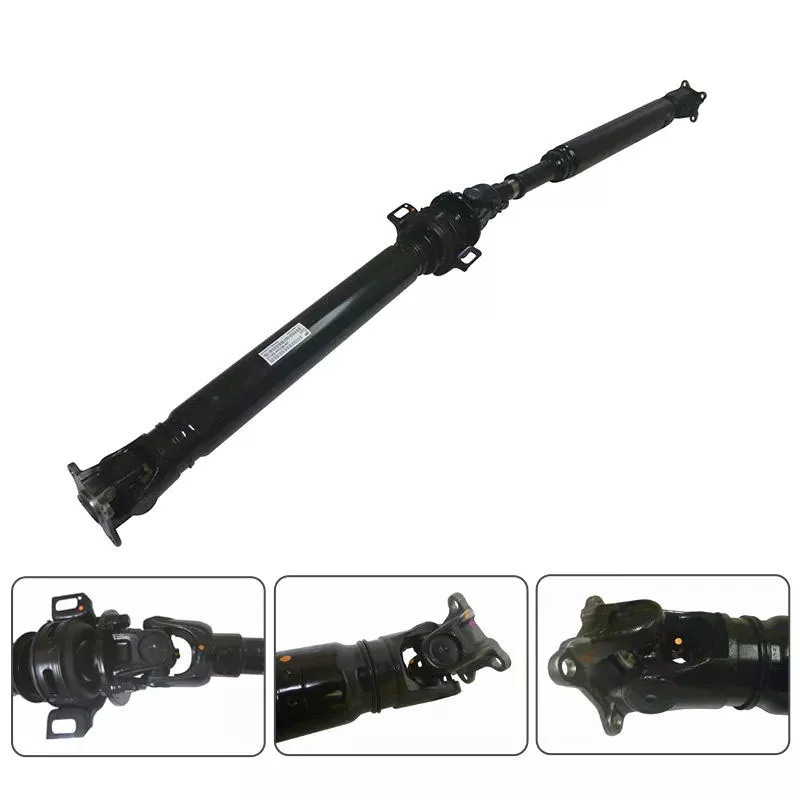
Can you provide real-world examples of vehicles and machinery that use drive shafts?
Drive shafts are widely used in various vehicles and machinery to transmit power from the engine or power source to the wheels or driven components. Here are some real-world examples of vehicles and machinery that utilize drive shafts:
1. Automobiles:
Drive shafts are commonly found in automobiles, especially those with rear-wheel drive or four-wheel drive systems. In these vehicles, the drive shaft transfers power from the transmission or transfer case to the rear differential or front differential, respectively. This allows the engine’s power to be distributed to the wheels, propelling the vehicle forward.
2. Trucks and Commercial Vehicles:
Drive shafts are essential components in trucks and commercial vehicles. They are used to transfer power from the transmission or transfer case to the rear axle or multiple axles in the case of heavy-duty trucks. Drive shafts in commercial vehicles are designed to handle higher torque loads and are often larger and more robust than those used in passenger cars.
3. Construction and Earthmoving Equipment:
Various types of construction and earthmoving equipment, such as excavators, loaders, bulldozers, and graders, rely on drive shafts for power transmission. These machines typically have complex drivetrain systems that use drive shafts to transfer power from the engine to the wheels or tracks, enabling them to perform heavy-duty tasks on construction sites or in mining operations.
4. Agricultural Machinery:
Agricultural machinery, including tractors, combines, and harvesters, utilize drive shafts to transmit power from the engine to the wheels or driven components. Drive shafts in agricultural machinery are often subjected to demanding conditions and may have additional features such as telescopic sections to accommodate variable distances between components.
5. Industrial Machinery:
Industrial machinery, such as manufacturing equipment, generators, pumps, and compressors, often incorporate drive shafts in their power transmission systems. These drive shafts transfer power from electric motors, engines, or other power sources to various driven components, enabling the machinery to perform specific tasks in industrial settings.
6. Marine Vessels:
In marine applications, drive shafts are commonly used to transmit power from the engine to the propeller in boats, ships, and other watercraft. Marine drive shafts are typically longer and designed to withstand the unique challenges posed by water environments, including corrosion resistance and appropriate sealing mechanisms.
7. Recreational Vehicles (RVs) and Motorhomes:
RVs and motorhomes often employ drive shafts as part of their drivetrain systems. These drive shafts transfer power from the transmission to the rear axle, allowing the vehicle to move and providing propulsion. Drive shafts in RVs may have additional features such as dampers or vibration-reducing components to enhance comfort during travel.
8. Off-Road and Racing Vehicles:
Off-road vehicles, such as SUVs, trucks, and all-terrain vehicles (ATVs), as well as racing vehicles, frequently utilize drive shafts. These drive shafts are designed to withstand the rigors of off-road conditions or high-performance racing, transmitting power efficiently to the wheels and ensuring optimal traction and performance.
9. Railway Rolling Stock:
In railway systems, drive shafts are employed in locomotives and some types of rolling stock. They transfer power from the locomotive’s engine to the wheels or propulsion system, enabling the train to move along the tracks. Railway drive shafts are typically much longer and may have additional features to accommodate the articulated or flexible nature of some train configurations.
10. Wind Turbines:
Large-scale wind turbines used for generating electricity incorporate drive shafts in their power transmission systems. The drive shafts transfer rotational energy from the turbine’s blades to the generator, where it is converted into electrical power. Drive shafts in wind turbines are designed to handle the significant torque and rotational forces generated by the wind.
These examples demonstrate the broad range of vehicles and machinery that rely on drive shafts for efficient power transmission and propulsion. Drive shafts are essential components in various industries, enabling the transfer of power from the source to the driven components, ultimately facilitating movement, operation, or the performance of specific tasks.
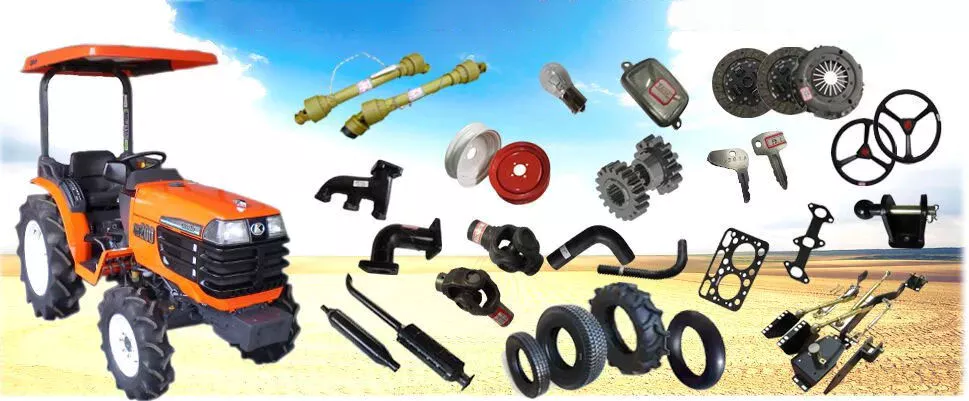
Onko erityyppisten koneiden vetoakselien rakenteissa eroja?
Kyllä, vetoakselien rakenteissa on eroja, jotka vastaavat erityyppisten koneiden erityisvaatimuksia. Vetoakselin rakenteeseen vaikuttavat tekijät, kuten sovellus, voimansiirtotarpeet, tilarajoitukset, käyttöolosuhteet ja käytettyjen komponenttien tyyppi. Tässä on selitys siitä, miten vetoakselien rakenteet voivat vaihdella erityyppisissä koneissa:
1. Autoteollisuuden sovellukset:
Autoteollisuudessa kardaanien mallit voivat vaihdella ajoneuvon kokoonpanon mukaan. Takavetoisissa ajoneuvoissa käytetään tyypillisesti yksi- tai kaksiosaista kardaania, joka yhdistää vaihteiston tai jakovaihteiston taka-tasauspyörästöön. Etuvetoisissa ajoneuvoissa käytetään usein erilaista mallia, jossa kardaani yhdistetään vakionopeusniveliin voiman siirtämiseksi etupyörille. Nelivetoisissa ajoneuvoissa voi olla useita kardaaneja voiman jakamiseksi kaikille pyörille. Pituus, halkaisija, materiaali ja niveltyypit voivat vaihdella ajoneuvon rakenteen ja vääntömomenttivaatimusten mukaan.
2. Teollisuuskoneet:
Teollisuuskoneiden vetoakselien suunnittelu riippuu käyttökohteesta ja voimansiirtovaatimuksista. Valmistuskoneissa, kuten kuljettimissa, puristimissa ja pyörivissä laitteissa, vetoakselit on suunniteltu siirtämään tehoa tehokkaasti koneen sisällä. Niissä voi olla joustavat nivelet tai ne voivat käyttää uritettua tai kiilattua liitosta linjausvirheiden kompensoimiseksi tai helpon purkamisen mahdollistamiseksi. Vetoakselin mitat, materiaalit ja vahvikkeet valitaan koneen vääntömomentin, nopeuden ja käyttöolosuhteiden perusteella.
3. Maatalous ja maanviljely:
Maatalouskoneet, kuten traktorit, puimurit ja puimurit, tarvitsevat usein vetoakseleita, jotka kestävät suuria vääntömomentteja ja vaihtelevia käyttökulmia. Nämä vetoakselit on suunniteltu siirtämään voimaa moottorista lisälaitteisiin ja työkoneisiin, kuten ruohonleikkureihin, paalaimiin, jyrsimiin ja puimureihin. Niissä voi olla teleskooppiosia säädettävien pituuksien mahdollistamiseksi, joustavia niveliä käytön aikaisten linjausvirheiden kompensoimiseksi ja suojalevyjä, jotka estävät sotkeutumisen satoon tai roskiin.
4. Rakennus- ja raskaskalusto:
Rakennus- ja raskaskoneet, kuten kaivinkoneet, kuormaajat, puskutraktorit ja nosturit, vaativat kestäviä vetoakseleita, jotka pystyvät siirtämään voimaa vaativissa olosuhteissa. Näillä vetoakseleilla on usein suurempi halkaisija ja paksummat seinät suurten vääntömomenttien käsittelemiseksi. Niissä voi olla ristiniveliä tai vakiovakioniveliä käyttökulmien mukauttamiseksi ja iskujen ja tärinän vaimentamiseksi. Tämän luokan vetoakseleissa voi olla myös lisävahvikkeita, jotka kestävät rakentamiseen ja kaivamiseen liittyviä ankaria ympäristöjä ja raskaita sovelluksia.
5. Meri- ja merenkulkusovellukset:
Merikäyttöön tarkoitetut vetoakselit on erityisesti suunniteltu kestämään meriveden korroosiota aiheuttavia vaikutuksia ja meripropulsiojärjestelmissä esiintyviä suuria vääntömomenttikuormia. Merikäyttöön tarkoitetut vetoakselit on tyypillisesti valmistettu ruostumattomasta teräksestä tai muista korroosionkestävistä materiaaleista. Niissä voi olla joustavia kytkimiä tai vaimennuslaitteita tärinän vähentämiseksi ja linjausvirheiden vaikutusten lieventämiseksi. Merikäyttöön tarkoitettujen vetoakselien suunnittelussa otetaan huomioon myös sellaiset tekijät kuin akselin pituus, halkaisija ja tukilaakerit, jotta varmistetaan luotettava voimansiirto merialuksissa.
6. Kaivos- ja louhintalaitteet:
Kaivosteollisuudessa vetoakseleita käytetään raskaissa koneissa ja laitteissa, kuten kaivoskuorma-autoissa, kaivinkoneissa ja porauslautoissa. Näiden vetoakseleiden on kestettävä erittäin suuria vääntömomentteja ja ankaria käyttöolosuhteita. Kaivoskäyttöön tarkoitetuissa vetoakseleissa on usein suurempi halkaisija, paksummat seinämät ja erikoismateriaalit, kuten seosteräs tai komposiittimateriaalit. Niissä voi olla murrosniveliä tai vakiovakioniveliä käyttökulmien käsittelemiseksi, ja ne on suunniteltu kestämään hankausta ja kulumista.
Nämä esimerkit korostavat erityyppisten koneiden vetoakselien suunnittelun vaihteluita. Suunnittelussa otetaan huomioon tekijät, kuten tehovaatimukset, käyttöolosuhteet, tilarajoitukset, linjaustarpeet sekä koneen tai teollisuuden erityisvaatimukset. Räätälöimällä vetoakselin suunnittelu kunkin sovelluksen ainutlaatuisiin vaatimuksiin voidaan saavuttaa optimaalinen voimansiirron hyötysuhde ja luotettavuus.


editor by CX 2024-02-23























