
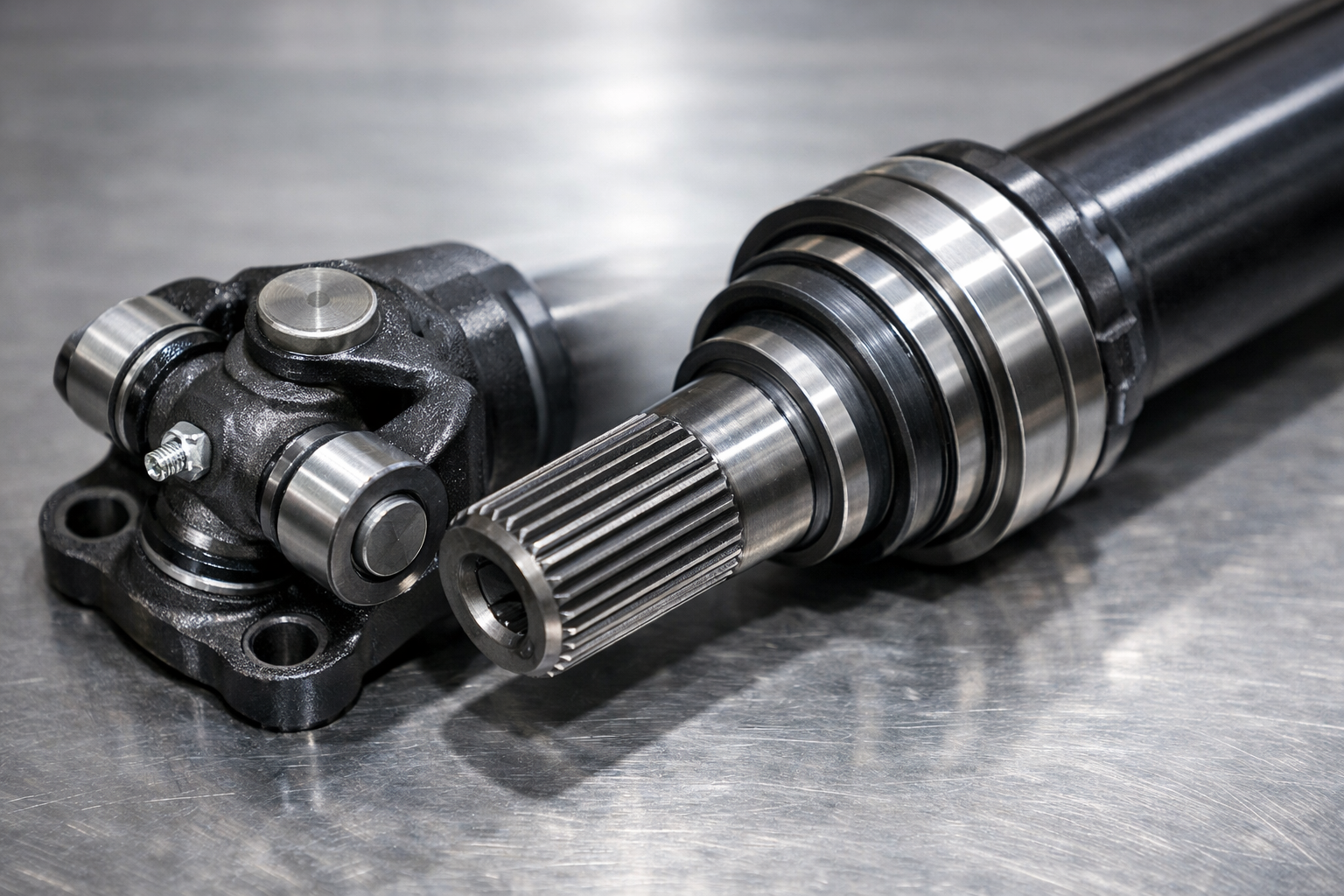
Executive Summary: Precision Synchronization Experts in Printing and Textiles
In the continuous production environments of the printing and textile industries, industrial universal drive shafts play the role of “synchronization guardians.” Their core value lies in low backlash transmission, dust and moisture protection, and efficient synchronization, thereby ensuring product quality from printing to textiles. Based on research into industrial drive shaft applications, this field particularly emphasizes high-speed torque transmission of 10-200 kNm, with a global market growth rate of 2.2%. Precision equipment under the Japanese JIS standard focuses on low backlash, while the German DIN standard emphasizes the durability of textiles; drive shafts can reduce defect rates by 25%.
Strategic Background: Precision-Intensive Printing and Textiles
Printing and textiles are precision-intensive fields where drive shafts strategically support high-speed continuous operations. From the global input SOP perspective, this is akin to testing “high-rotation” logic but with a greater emphasis on low noise. Strategically, it highlights G6.3 balancing to enhance efficiency.
Core Parameter Dimensions Table
The following table summarizes core parameters for drive shafts in printing and textile industries, based on torque calculations and printing parameters from market research.
| Parameter Dimension | Typical Specification Requirements | Engineering Significance |
|---|---|---|
| Torque Capacity | High-speed (10-200 kNm) | Ensures printing and textiles, peak considering pulsation (K=1.5-2.5) |
| Service Factor | K=1.5-2.5 | Absorbs speed loads, based on JIS calculations |
| Angular Deviation | 3-8° | Compensates roller misalignment, similar to precision adaptation |
| Speed | 1,000-5,000 RPM | Supports high-speed machines, G6.3 balancing prevents vibration |
| Material | High-precision alloy | Dust and corrosion resistant, coating improves durability |
| Lifespan | L10h >30,000 hours | Based on fatigue torque T_dw calculation, for continuous operation |
| Balance Grade | G6.3 | Prevents backlash defects, compliant with German DIN standards |
| Protection Grade | IP54 | Resistant to paper dust and moisture, similar to pump protection |
Printing Presses: Drive Shaft Application Depth Analysis
Executive Summary
Printing presses are core equipment for continuous printing, where universal drive shafts drive rollers to achieve synchronized paper printing. This scenario requires G6.3 balancing and torque of 10-200 kNm. In the global market, Japan leads in precision printing applications, with drive shafts improving print quality by 25%.
Strategic Background
In newspaper/packaging printing, drive shafts serve as “synchronization roller bridges,” adapting to high-speed rotation. Here, the strategy emphasizes low backlash to reduce color discrepancies (documents highlight vibration risks).
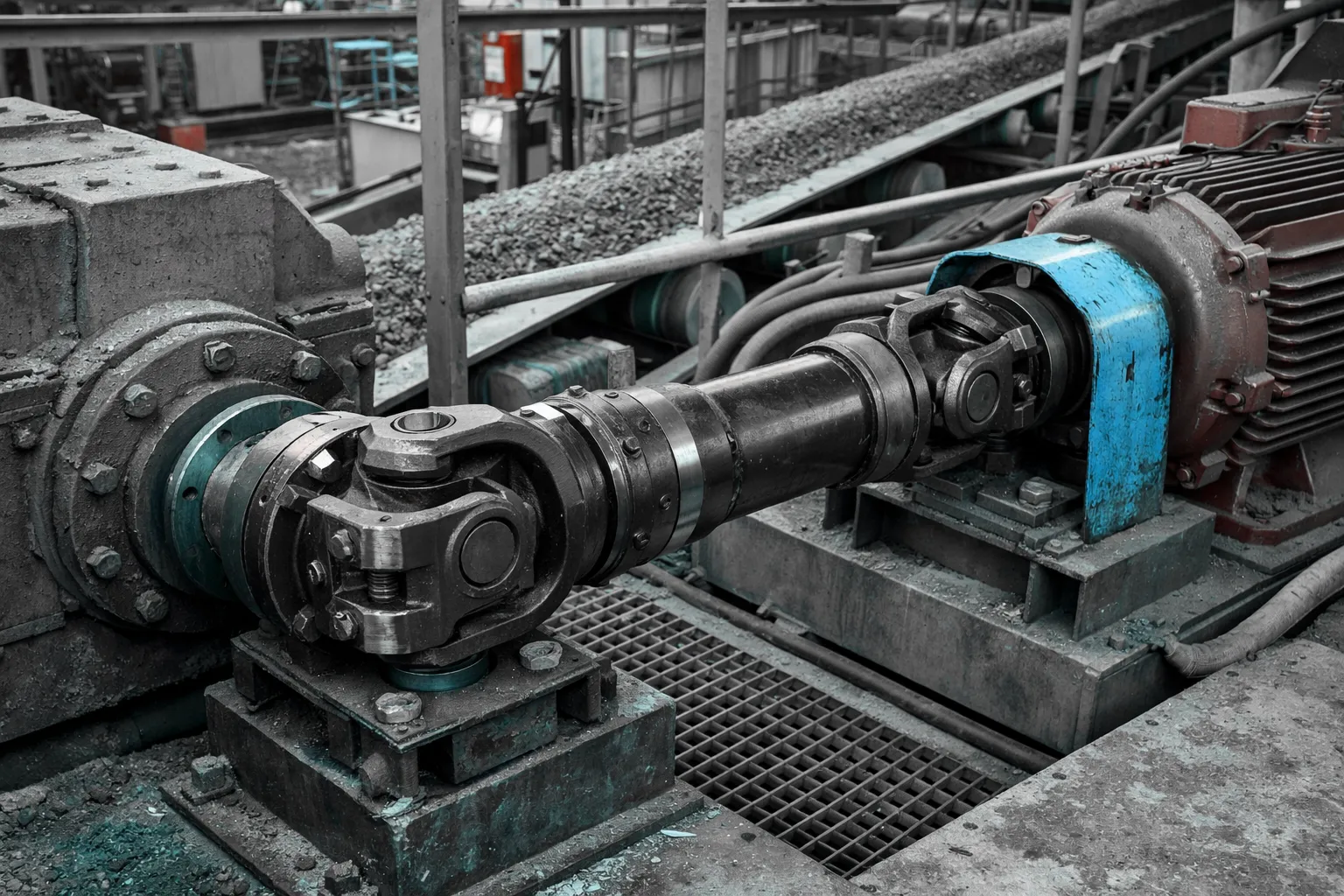
Core Parameter Dimensions
- Torque Capacity: 10-200 kNm, peak based on speed calculations.
- Service Factor: K=1.5-2.5, for printing loads.
- Angular Deviation: 3-8° dynamic changes.
- Speed: 1,000-5,000 RPM.
- Material: High-precision alloy, coated, hardness HRC 52-58.
- Lifespan: L10h >30,000 hours, based on high-speed fatigue calculations.
- Balance Grade: G6.3, to prevent vibration.
Operating Condition Analysis
High-speed rotation generates centrifugal force, paper dust erosion, and high synchronization demands lead to backlash risks.
Configuration Requirements
G6.3 dynamic balancing prevents color discrepancies; low-backlash design for synchronization.
Maintenance Guide
Monthly balance checks, quarterly major backlash overhauls; IoT monitors speed changes for failure prediction.
Safety and Compliance
Compliant with JIS precision equipment, torque control prevents paper breaks.
Trends and Challenges
Digital printing reduces shaft dependency, but coating low-noise debates persist.
Global Case
Japanese Komori printing machines use JIS standard shafts, torque 150 kNm.
By UK PTO-Drive-Shafts.com Co., Ltd. | Email: [email protected] | Address: Bury St Edmunds, Suffolk IP32 7LX, UK























