
540 RPM vs 1000 RPM PTO: What’s the Difference and Which Do You Need?
A practical engineering guide for agricultural and industrial operators across the UK — covering torque ratings, implement compatibility, safety, and smart selection strategy.
🔧 Expert Level
🇬🇧 UK Market
Need a custom PTO shaft for your application?
Ever Power engineers are ready to size and specify the right solution.
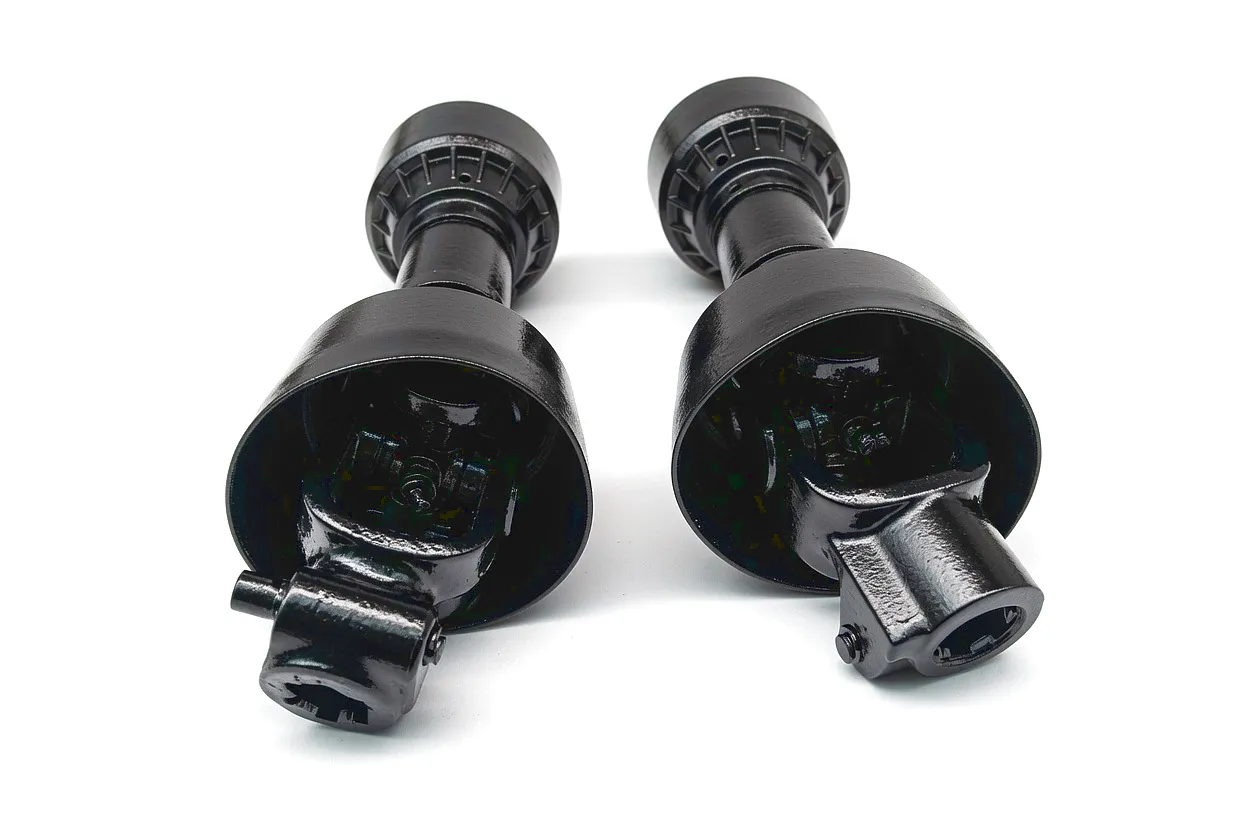 Walk into any agricultural depot from Lincolnshire to Lancashire and you’ll encounter the same debate: 540 or 1000 RPM? For operators running modern high-horsepower tractors across the rolling farmland of the East Midlands, or managing heavy cultivation equipment on the clay soils of Yorkshire, this question carries real operational and financial weight. The answer is never as simple as picking the bigger number. Both PTO shaft speeds have been developed to address fundamentally different demands, and matching the wrong speed to the wrong implement can result in mechanical failure, safety incidents, and costly downtime. This article cuts through the marketing noise to give you a thorough, technically grounded comparison — drawing on engineering principles, UK industry standards, and real-world application data — so you can make a confident, informed decision before placing your next order.
Whether you’re a farm manager in Shropshire looking to replace worn universal joints, a plant hire business in Birmingham sourcing driveline components for a large fleet, or an OEM design engineer in Sheffield specifying shafts for a new compact implement range, the principles covered here apply directly to your decisions. Understanding how rotational speed interacts with torque, shaft diameter, yoke design, and overrun clutch behaviour will transform how you evaluate PTO drive shafts — and help you avoid the expensive mismatches that trip up even experienced operators.
Understanding the PTO System: A Foundation for the Comparison
What a PTO Shaft Actually Does
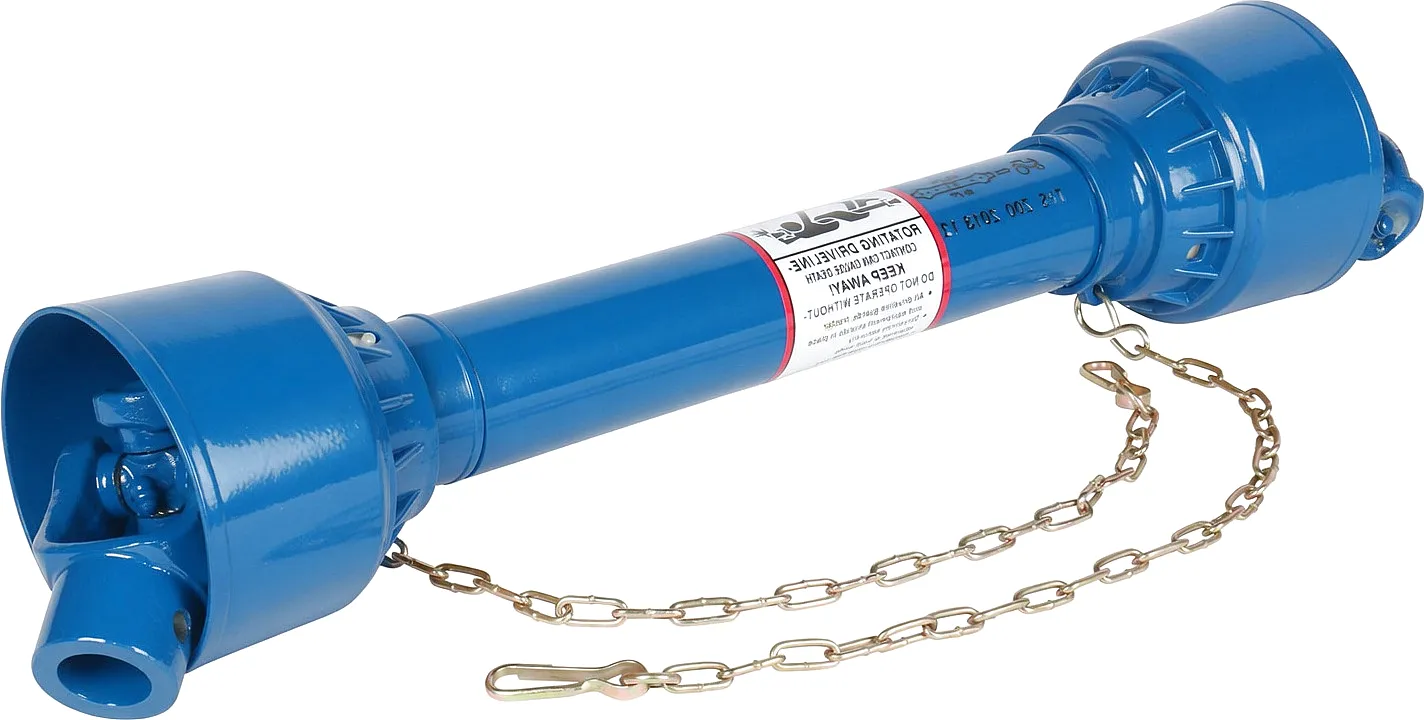
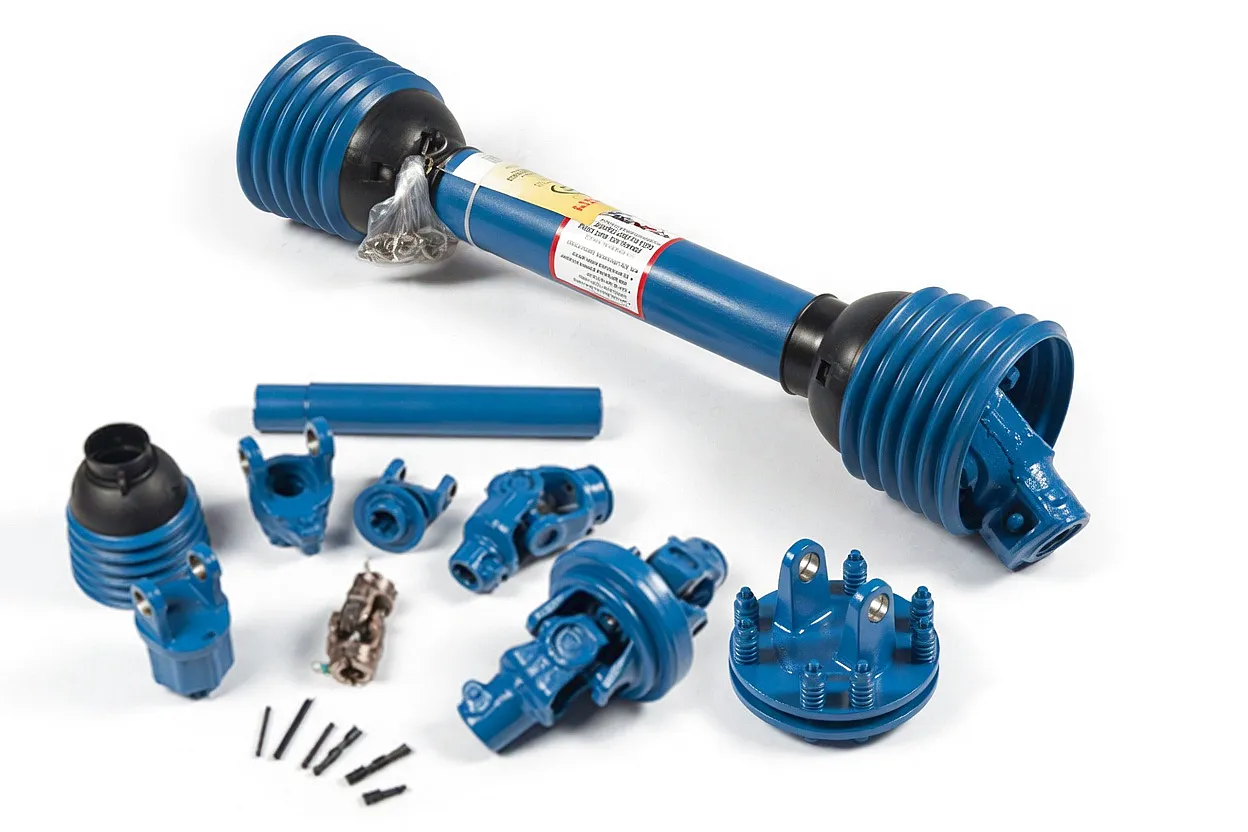
A Power Take-Off (PTO) shaft is the rotating mechanical link that transfers engine power from a tractor or prime mover to an attached implement or piece of equipment. Standardised under ISO 500 and complementary BS standards referenced across UK agricultural procurement, PTO shafts are engineered to transmit torque at defined rotational speeds — allowing a tractor’s gearbox to drive mowers, balers, pumps, wood chippers, spreaders, and hundreds of other machines without a separate power source. The PTO stub on a standard Category 1 or Category 2 tractor presents a 6-spline or 21-spline output shaft, and the drive shaft that connects tractor to implement must match this interface precisely. The drive shaft assembly typically incorporates two or more universal joints (Cardan joints), an extendable sliding tube section for length adjustment, a protective shield compliant with CE marking requirements, and in many modern designs, a torque-limiting clutch or overrun clutch to protect the driveline from shock loads.
The Two Global Standards
Two dominant speed standards define the global PTO landscape. The 540 RPM standard — also written as 540 rev/min — was the original internationally agreed speed, and it remains ubiquitous on compact tractors, mid-range utility models, and all older equipment manufactured before the widespread adoption of the 1000 RPM standard in the 1980s and 90s. The 1000 RPM standard emerged to meet the power demands of larger tractors and more mechanically intensive implements. Alongside these two primary speeds, a 540E (Economy) variant operates at 540 RPM output but draws that speed from a higher engine RPM setting to achieve better fuel efficiency — and a 1000E variant follows the same principle at the higher speed range. Understanding where these standards sit in the horsepower continuum is the first step in making the right selection for your operation.
The Core Technical Differences Explained
- 6-spline shaft (1-3/8 inch diameter)
- Designed for tractors up to ~80 HP
- Compact, lightweight equipment
- Slower rotational speed = higher torque per revolution
- Older implement compatibility
- Lower driveline stress at equivalent power
- 21-spline shaft (1-3/8 or 1-3/4 inch)
- Designed for tractors above 80 HP
- High-demand implements and heavy machinery
- Higher rotational speed = more power at lower torque
- Smooth operation on power-hungry applications
- Better suited to continuous heavy-duty cycles
Torque, Power, and the Physics Behind the Numbers
The relationship between torque, speed, and power is at the heart of this comparison. Power (in kilowatts or horsepower) is the product of torque and rotational speed: P = T × ω, where ω represents angular velocity in radians per second. What this means in practical terms is that for the same amount of power being delivered, a shaft spinning at 1000 RPM carries roughly 46% less torque than a shaft spinning at 540 RPM. This is a significant engineering advantage for large implements — it means smaller-diameter cross-journals, lighter yokes, and reduced bending loads on shafts that may be operating at considerable angles. However, for implements that inherently require high torque at lower speeds — such as heavy post-hole borers, large wood splitters, or deep-tine cultivators working in heavy soils — the 540 RPM standard delivers the torque multiplication naturally.
The practical consequence of this physics plays out every day in fields across Herefordshire, Northumberland, and the Scottish Borders. A 100 HP tractor operating at full load through a 540 RPM PTO is generating approximately 979 Nm of torque at the shaft. The same tractor through a 1000 RPM PTO produces the same power output but at only 528 Nm of torque — meaning all the downstream components in the implement’s own gearbox experience dramatically lower stress. For OEM designers, this opens the door to lighter, cheaper internal components in implements. For farm managers, it translates to longer service life and reduced maintenance intervals on implements used day-in, day-out.
Shaft diameter is another critical variable that changes between the two standards. A 540 RPM shaft typically uses the 1-3/8 inch (35mm) 6-spline profile, while 1000 RPM applications use either the 1-3/8 inch 21-spline or the larger 1-3/4 inch (45mm) 20-spline profile for very high-power applications above 150 HP. Attempting to run a 540-rated shaft at 1000 RPM without proper redesign of the shaft assembly — increasing cross-journal size, selecting higher-grade alloy steel, and verifying yoke geometry — creates a dangerous failure risk that no operator or procurement manager should accept.
Technical & Performance Specifications Comparison Table
| Parameter | 540 RPM Standard | 1000 RPM Standard |
|---|---|---|
| PTO Speed | 540 rev/min | 1000 rev/min |
| Typical Tractor HP Range | 20 – 80 HP | 80 – 400+ HP |
| Standard Shaft Diameter | 1-3/8 in (35 mm) | 1-3/8 in (35 mm) / 1-3/4 in (45 mm) |
| Spline Count | 6 splines | 21 splines (or 20 splines for 1-3/4 in) |
| Max Torque Capacity (typical) | Up to 1,200 Nm | Up to 3,500+ Nm |
| Torque at 50 kW Output | ~ 885 Nm | ~ 477 Nm |
| Standard Operating Angle (max continuous) | 15° – 20° | 10° – 15° |
| Cross-Journal Size (typical) | 27 × 74 mm | 30 × 92 mm / 35 × 106.5 mm |
| Shaft Material | 20CrMnTi / 42CrMo4 alloy steel | 42CrMo4 / 34CrNiMo6 alloy steel |
| Yoke Material | Forged carbon steel or malleable iron | Forged alloy steel (heat-treated) |
| Overrun Clutch | Optional / Application-dependent | Strongly recommended (standard on many OEM builds) |
| Surface Treatment | Case hardening / Phosphate coating | Induction hardening / Nitrocarburising / Chrome plating |
| Applicable ISO Standard | ISO 500 / EN 12750 | ISO 500 / EN 12750 |
| Typical Applications | Mowers, spreaders, small balers, post borers, PTO pumps | Large balers, forage harvesters, slurry tankers, high-output mowers, industrial equipment |
How a PTO Shaft Works: The Engineering Mechanism
Cardan (Universal) Joint Operation
The universal joint — also known as the Cardan joint or U-joint — is the rotational pivot that allows two shafts to transmit torque at an angle. It consists of a cross-shaped journal (the spider) whose four arms fit into bearing cups in the yoke forks on each end. As the driving shaft rotates, the spider transmits motion to the driven shaft through the bearing cups, allowing for misalignment between the two shaft centrelines. At 540 RPM, the cyclic velocity variation inherent in single U-joint configurations (the second-order harmonic effect) is more manageable. At 1000 RPM, this velocity variation becomes more pronounced, which is why many high-speed agricultural drivelines use double Cardan (constant velocity) joints at the tractor end to smooth out the rotational irregularities and reduce vibration in the cab — a feature increasingly standard on large UK farm machinery.
Sliding Tube and Telescoping Action
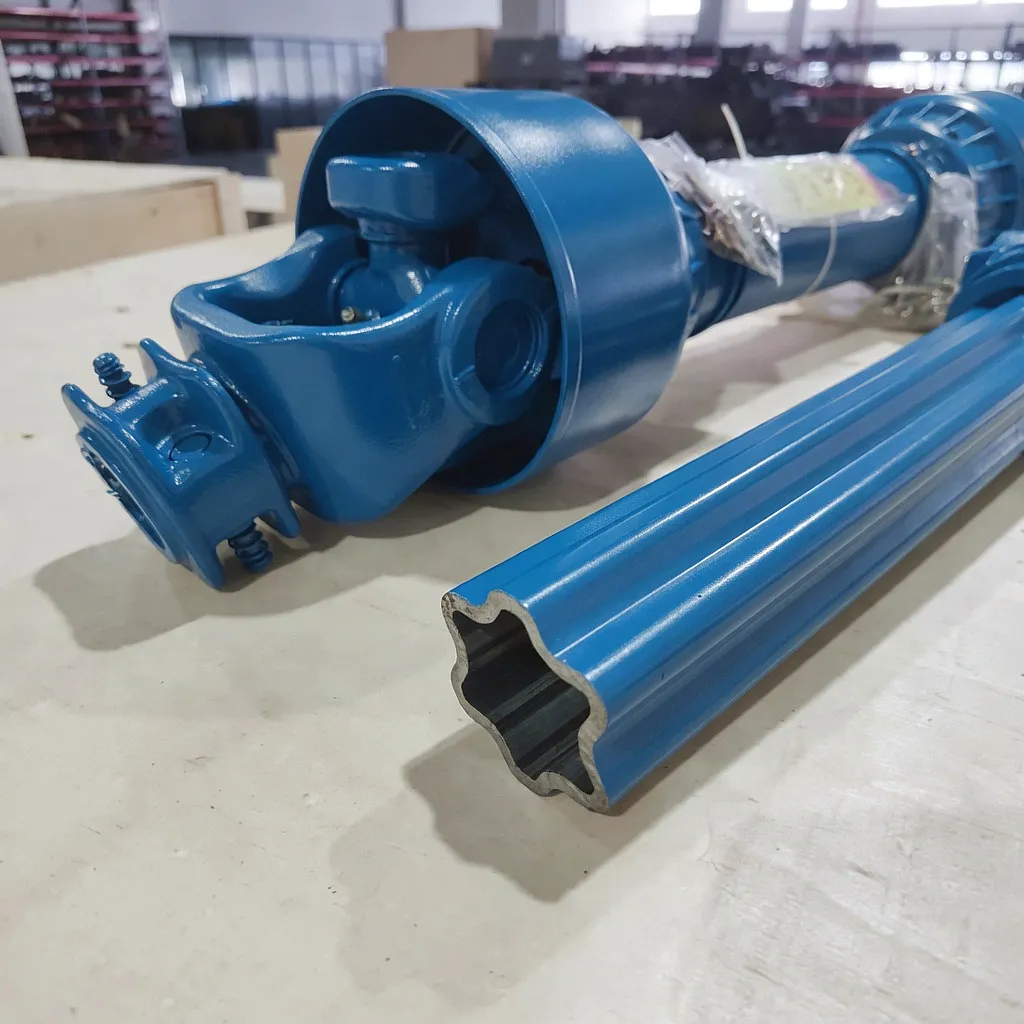
The telescoping element of a PTO shaft — comprising an inner profile tube sliding within an outer profile tube, typically in a lemon, star, or bell-crank cross-section — accommodates the change in distance between tractor and implement as the linkage moves up and down or the vehicle turns. This sliding action must transmit full torque at any extended length while maintaining alignment and avoiding binding. At 540 RPM, the sliding surfaces experience lower surface velocity, generating less heat and friction. At 1000 RPM, the surface velocity is nearly doubled, placing greater demands on the tube material, surface finish, and lubrication. High-speed 1000 RPM drivelines typically use wider-section profiles with closer manufacturing tolerances — often machined to h7/H8 fit pairs — to prevent backlash-induced vibration that would compromise both driveline life and operator comfort on modern ROPS-equipped cabs.
Overrun Clutch and Torque Limiters
An overrun clutch — also called a freewheel clutch — is a one-way mechanical device fitted at the implement end of the driveline that allows the implement to continue rotating faster than the tractor’s PTO when the tractor decelerates suddenly or the PTO is disengaged. This is critical for implements with high rotational inertia, such as flail mowers, rotary spreaders, and large drum mowers. Without an overrun clutch, the stored kinetic energy in the implement’s rotating mass would back-drive the tractor’s PTO system, creating dangerous shockloads that can shear shafts, strip splines, and damage gearboxes. At 1000 RPM, the kinetic energy stored in fast-spinning implements is substantially higher (kinetic energy scales with the square of velocity), making overrun clutch selection even more critical. Torque limiters — either friction disc or ratchet-type — add a complementary layer of protection by slipping at a preset torque value when blockages or sudden overloads occur.
Materials Science: What Goes Into a High-Performance PTO Shaft
42CrMo4 Alloy Steel
The workhorse material for high-performance PTO shafts. This chrome-molybdenum alloy delivers tensile strength of 900–1,100 MPa after quench-and-temper treatment, with excellent fatigue resistance under torsional loading. It machines cleanly and accepts induction hardening for spline surfaces — achieving 58–62 HRC surface hardness while retaining a tough core. Preferred for 1000 RPM drivelines where cyclic stress is severe.
20CrMnTi Carburising Steel
A carburising grade widely used for PTO shaft tubes and yokes in the 540 RPM range. Case depths of 0.8–1.2 mm with surface hardness of 56–62 HRC provide excellent wear resistance at spline interfaces while the core remains at 30–45 HRC for impact toughness. Cost-effective for high-volume production of standard agricultural driveline components where material yield is a commercial priority.
34CrNiMo6 Premium Grade
For the most demanding 1000 RPM applications — continuous heavy-duty forage harvesting, high-output industrial pump drives, large-format balers working in the fields of East Anglia — 34CrNiMo6 provides tensile strength up to 1,200 MPa with superior toughness due to the nickel content. Its combination of deep hardenability and high notch impact energy makes it the preferred choice when total cost of ownership justifies the premium over standard 42CrMo4.
Surface Treatments & Coatings
Beyond base material, surface engineering dramatically extends service life. Phosphate-and-oil coating provides basic corrosion protection and lubrication retention on sliding tubes. Nitrocarburising (Ferritic Nitrocarburising / QPQ process) creates a 10–25 µm compound layer offering exceptional wear and corrosion resistance without dimensional change — ideal for splines and tube bores. Chrome plating on journal bearing areas reduces friction and provides wear reserve in high-cycle applications such as dairy farm PTO pump drives operating continuously through long Scottish winters.
Application Scenarios Across UK Industry
Agricultural Grassland Management
Compact and mid-range tractor-mounted mowers used across the dairy and beef farms of Cumbria, Staffordshire, and Pembrokeshire typically operate at 540 RPM. Disc mowers, drum mowers, side-delivery rakes, and single-rotor tedders all fall within the power and speed requirements of the 540 standard. Their gear train designs have evolved specifically around 540 RPM input, and fitting them to a 1000 RPM source without a proper speed-reduction gearbox would cause catastrophic overspeed failure within minutes.
High-Output Arable Cultivation
Large round balers, combination balers, and self-loading forage wagons serving the grain and combinable crop farms of Lincolnshire, East Yorkshire, and the Norfolk Broads require the higher input speed of 1000 RPM PTO drive shafts. Their feed systems, flywheel drives, and hydraulic charge pumps are designed to receive power at 1000 RPM, and the higher shaft speed allows all the internal gearing to be sized more compactly — reducing overall machine weight and improving transport clearances on UK roads.
Industrial Slurry & Pump Systems
PTO-driven slurry tankers are ubiquitous across the mixed farming districts of the West Midlands and the intensive livestock areas of Devon and Somerset. Modern high-output tankers with impeller pumps capable of moving 8,000–12,000 litres per minute require sustained 1000 RPM shaft input to generate sufficient hydraulic head. The continuous duty cycle makes material selection and lubrication interval critical — Ever Power’s sealed-for-life bearing caps have proven particularly effective in reducing field maintenance burden on UK agri-contractors running multi-tanker fleets.
Wood Processing & Biomass
PTO-driven wood chippers, log splitters, and biomass shredders used extensively in the forestry estates of Scotland, Wales, and Northern England are overwhelmingly 540 RPM applications. The high torque requirement of these machines — particularly at start-up when the rotor inertia must be overcome — aligns naturally with the 540 RPM standard. The lower shaft speed also gives operators more responsive control over feed rate, which is important for safe operation when hand-feeding material into the chipper throat. CE safety guards on these machines are specifically designed around 540 RPM shaft geometry.
Construction & Plant Hire
The plant hire and civil engineering sectors — particularly active around Birmingham’s infrastructure growth corridor and the ongoing development projects in the Sheffield City Region — make extensive use of 1000 RPM PTO shafts on compactor attachments, hydraulic breaker packs, and ground-engagement tools. Contractor-grade driveline assemblies in this sector must handle the shock loading of hard-rock applications and the demanding duty cycles of multi-shift site operation. Ever Power’s heavy-duty series with premium torque limiters has become a preferred specification among several major UK plant hire companies.
Industrial Generator & Pump Drives
PTO-driven generators are essential emergency power assets for UK utilities, water treatment works, and NHS estate management teams. Standard generator sets designed for 50 Hz output require the alternator to spin at either 1500 RPM or 3000 RPM — both of which can be achieved via internal gearing from either 540 or 1000 RPM PTO input. The choice between the two depends on the prime mover available and the gearing ratio feasibility. Water pumping applications for drainage of agricultural land in the Somerset Levels and the Fens similarly span both speed standards depending on pump size and required flow rate.
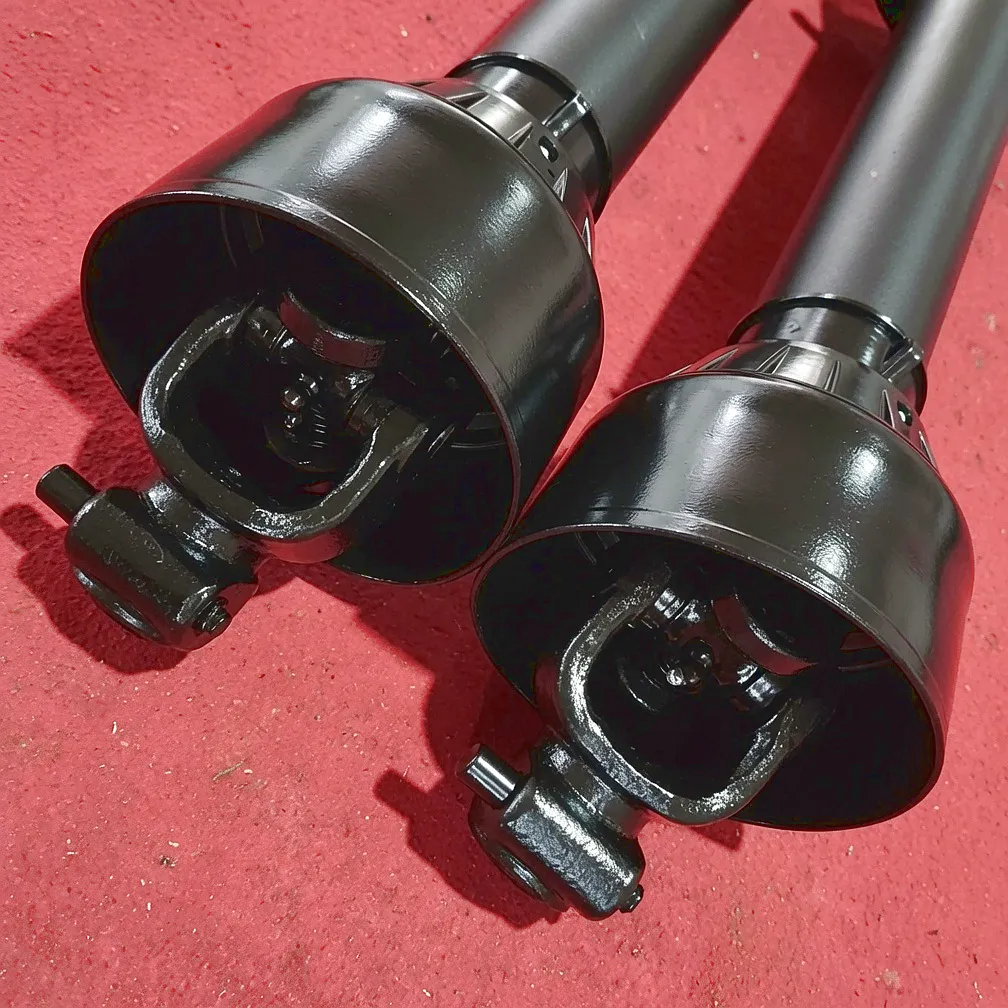
Core Product Advantages of Modern PTO Drive Shafts
High Torque Transmission Efficiency
Modern PTO shaft assemblies achieve mechanical efficiency above 97% under rated load conditions through precision-ground spline fits and low-friction sealed needle-roller bearings at each cross-journal. This minimises power loss in the driveline and reduces heat buildup during sustained operation — critical for UK contractors working long shifts during tight harvest windows.
Wide Angular Compensation
Two-joint and wide-angle (CV) PTO shafts can accommodate operating angles of 25°–80° depending on the joint type, enabling tractor-implement combinations that would have been mechanically impossible a generation ago. Wide-angle joints on front-mounted implements are particularly valuable on UK hillside and contour farming operations where offset angles are unavoidable.
Integrated Safety Systems
Compliant CE-marked protective guards, torque-limiting clutches, and overrun freewheels are integrated into the shaft assembly as a unified safety system — meeting UK Health and Safety Executive (HSE) requirements for rotating driveline machinery under PUWER 1998 without requiring separate guard purchases or retrofit fitting work.
Vibration Damping & Smooth Running
Dynamic balancing of completed shaft assemblies to G6.3 or better (per ISO 1940) dramatically reduces vibration transmission to the tractor cab and implement frame. This extends bearing life in both the shaft and the implement gearbox, reduces operator fatigue during long working days, and prevents the fretting corrosion at spline interfaces that shortens unbalanced shaft life.
Extended Service Intervals
High-capacity grease nipples on cross-journals, sealed sliding tube sections, and corrosion-resistant surface treatments combine to push routine regreasing intervals from the legacy 8-hour schedule out to 50–100 hours on modern premium shafts — a transformative improvement for UK contractors who cannot afford extended downtime during the short British harvest season.
Custom Length & Configuration
Non-standard shaft lengths, bespoke yoke interfaces, dual-speed compatibility (540/1000 combo shafts), and custom clutch calibration are all achievable through specialist manufacturers — allowing OEM designers and fleet managers to specify exact-fit drivelines that eliminate the compromises of catalogue selections and optimise the driveline geometry for their specific tractor-implement combination.
Which Do You Need? A Practical Decision Guide
The most reliable method for determining the correct PTO speed for your application is to check the implement manufacturer’s specification plate and the tractor’s PTO output standard — but many operators face situations where the documentation is incomplete, the equipment is second-hand, or they’re sourcing a replacement shaft for a modified machine. In those cases, the following decision logic applies consistently across most agricultural and industrial scenarios encountered across the UK.
| Indicator | Choose 540 RPM | Choose 1000 RPM |
|---|---|---|
| Tractor Engine Power | Under 80 HP | 80 HP and above |
| Stub Spline Count | 6 splines (1-3/8 in) | 21 splines (or 20 splines 1-3/4 in) |
| Implement Type | Mowers, spreaders, post borers, small balers | Large balers, harvesters, slurry tankers, industrial drives |
| Equipment Age | Pre-1990 machinery | Post-1990 high-output machinery |
| Duty Cycle | Intermittent / seasonal | Continuous / commercial |
| Operating Angle | Up to 20° acceptable | Keep below 15° or use CV joint |
Ever Power: Precision Manufacturing for the World’s Most Demanding Driveline Applications
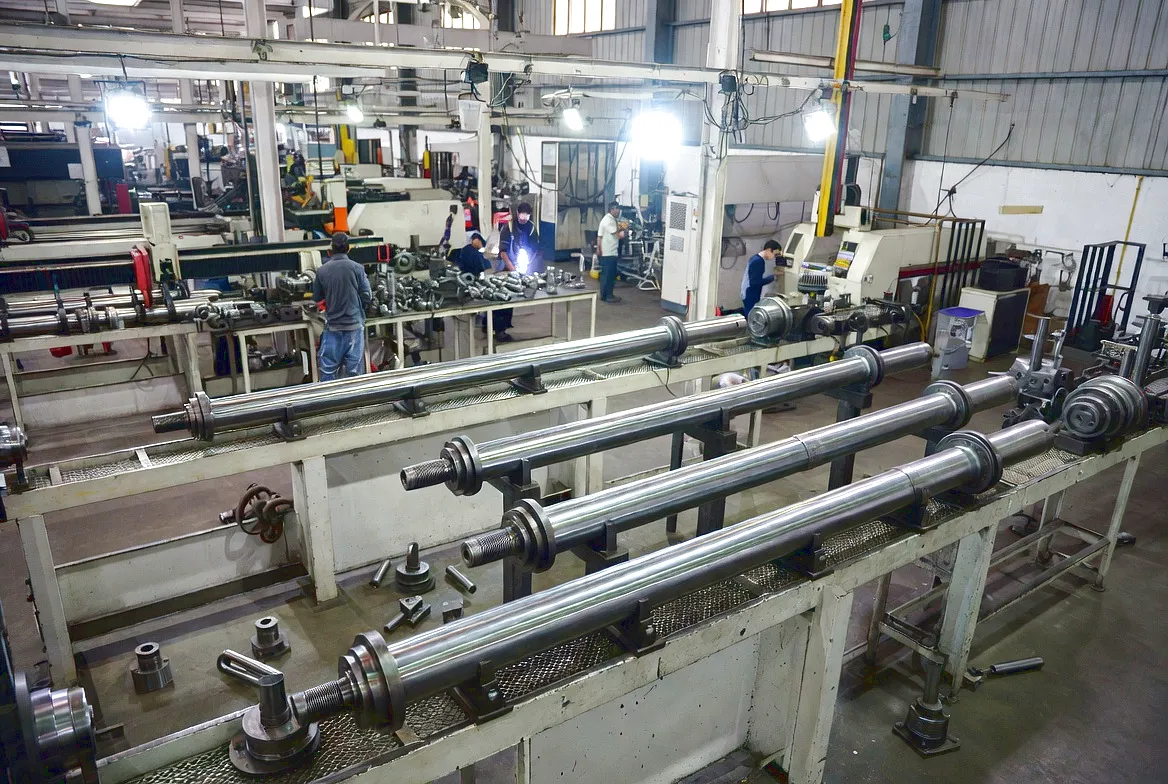
Ever Power has spent decades building a reputation for engineering precision and reliable delivery across the global driveline components market. Our manufacturing facility operates across 28,000 square metres of covered production space equipped with CNC turning centres, gear hobbing machines, induction hardening lines, and automated quality inspection stations. Every PTO shaft that leaves our facility — whether a standard catalogue item or a fully bespoke design — is subject to 100% dimensional inspection, dynamic balancing verification, and torque proof-test before despatch. This is not a documentation exercise; it is a physical gate that catches defects before they reach the field.
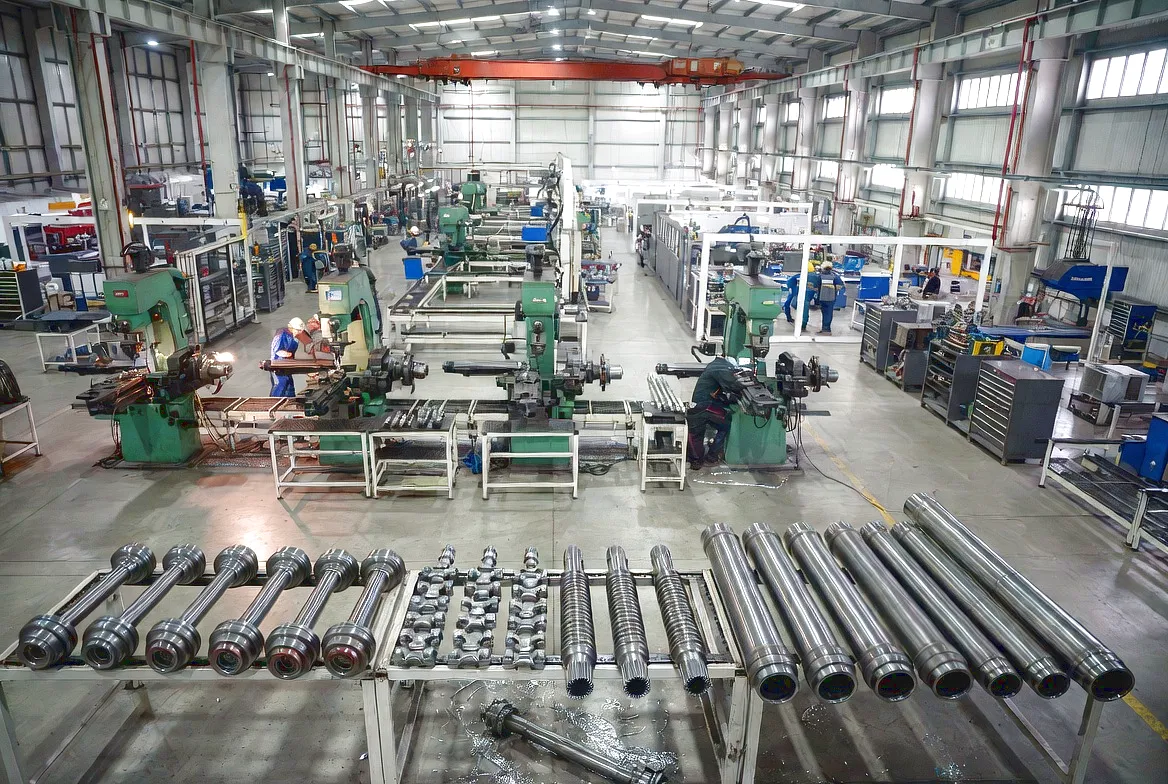
Our customisation capability is genuinely comprehensive. UK OEM customers in sectors ranging from agricultural implement manufacturing in the East Midlands to specialist plant hire equipment development in the West Midlands Automotive Corridor have come to us with engineering briefs that other suppliers declined as too complex. Our response is always to engage the application engineering team, model the driveline geometry, calculate the fatigue life under the proposed duty cycle, and return a verified proposal — usually within 5 working days. Non-standard yoke bores, modified clutch engagement torques, dual-speed compatibility, custom tube profiles, and bespoke shaft lengths are all within our standard production capability, not exceptions requiring months of tooling investment.
Customer Success Story: Yorkshire Agricultural Contracting
Eliminating Seasonal Driveline Failures on a Multi-Tractor Contracting Fleet
Pennine Arable Services Ltd, a well-established agricultural contracting business based near Harrogate in North Yorkshire, was experiencing a pattern of PTO shaft failures that was costing them significant revenue during the critical autumn harvesting and cultivation season. Operating a mixed fleet of eight tractors ranging from 90 HP to 240 HP, their drivelines served everything from large-area baling on the Yorkshire Wolds to deep-tine subsoiling on the heavy gault clay soils of the Vale of Pickering. The failures were concentrated on their 1000 RPM baling and forage harvesting shafts — specifically at the tube profile section, where fretting wear was accelerating beyond acceptable limits, and at the overrun clutch, which was slipping inconsistently and failing to disengage cleanly on rapid PTO cutout.
Their fleet manager contacted Ever Power’s UK sales support team in early spring, before the season began, providing the full tractor-implement specification list, observed failure modes, and working condition data including typical operating angles and estimated daily PTO hours. Ever Power’s application engineers conducted a complete driveline audit, identifying three root causes: undersized tube profiles relative to the actual torque demand on the highest-power pairings, overrun clutch spring rates calibrated for lighter implements, and inadequate lubrication intervals specified in the operator manual for the continuous-duty contracting application.
Ever Power supplied a complete set of custom-specified 1000 RPM PTO shafts for the baling and harvesting fleet, featuring uprated bell-section tube profiles, ratchet-type torque limiters recalibrated to 1,800 Nm slip torque (up from the standard 1,400 Nm), and sealed-for-life bearing cups at every cross-journal to extend the regreasing interval to match the contracting operation’s maintenance schedule. The entire fleet went through the following harvest season without a single driveline failure — a first in the business’s recent history. The estimated saving in downtime costs, emergency shaft hire, and lost contracting income was calculated at over £18,000 in the first season alone.
What Our Customers Say
“We switched to Ever Power’s custom 1000 RPM shafts on our large square baler fleet after two seasons of frustrating failures with our previous supplier. The torque limiter calibration they specified has been spot on — not a single unwanted slip during peak work, and we’ve had no shaft replacements in eighteen months of heavy contracting. The technical advice from their engineers before we placed the order was as valuable as the product itself.”
Fleet Manager, Pennine Arable Services Ltd · Harrogate, North Yorkshire
“As a plant hire operator running PTO-driven attachments on nine machines in and around Birmingham, I needed a supplier who could match non-standard yoke specifications and deliver reliably on short notice. Ever Power turned around custom quotes faster than any UK distributor I’ve dealt with, and when we needed an emergency replacement mid-contract, they air-freighted the shaft within 48 hours. That level of responsiveness is exactly what our business needs.”
Operations Director, Midlands Plant Hire Ltd · Birmingham
“We’re OEM designers specifying PTO drivelines for a new compact implement range. The challenge was achieving the right 540 RPM shaft geometry within a very tight implement envelope — shorter than standard, with an unusual implement-end yoke bore. Ever Power came back with a fully validated design within four working days, including calculated fatigue life data that we could include in our CE technical file. The shaft’s dimensional quality on receipt was immaculate — exactly what the drawings showed.”
Chief Engineer, Precision Implements (Sheffield) Ltd · Sheffield, South Yorkshire
Frequently Asked Questions
Questions UK operators are actually asking — answered directly.
What is the actual difference between a 540 RPM and a 1000 RPM PTO shaft, and does that difference really matter for a small farm in the UK?
Yes, it matters substantially — even for smaller operations. The difference is fundamentally about rotational speed: a 540 RPM PTO shaft spins at 540 revolutions per minute while a 1000 RPM shaft spins at 1,000 rev/min. This changes the torque characteristics, the spline interface, and the type of implements that can be safely connected. Connecting an implement designed for one speed to a tractor outputting the other speed — without appropriate speed-change gearing — will result in either severe overspeed (at best causing vibration and premature wear, at worst immediate gear failure) or under-speed (reducing performance and potentially stalling). For a small farm in the UK, the vast majority of compact tractor implements — mowers, spreaders, small balers — are designed for 540 RPM, so this is the standard you will most frequently need.
How can I tell whether my tractor here in the UK has a 540 RPM or a 1000 RPM PTO output just by looking at it?
The quickest method is to count the splines on the tractor’s PTO stub shaft (the short rotating shaft that protrudes from the rear of the tractor when the guard cap is removed). Six splines on a 1-3/8 inch shaft indicates a 540 RPM output. Twenty-one splines on a 1-3/8 inch shaft indicates 1000 RPM. If the stub is larger — 1-3/4 inch — and has 20 splines, that’s a high-power 1000 RPM output for tractors typically above 150 HP. Most modern UK tractors also have a label or decal near the PTO engagement lever indicating the output speed, and it will be recorded in the tractor’s operator manual. If you have a dual-speed PTO (selectable 540/1000), there will be a selector switch or lever in the cab.
Where can I find a reliable UK supplier who can give me a price or quote on custom 1000 RPM PTO shafts for agricultural equipment in the Midlands?
Ever Power is an established B2B supplier of PTO drive shafts serving customers across the UK including the agricultural and plant hire sectors in the Midlands. We handle custom specifications including non-standard lengths, modified yoke profiles, and recalibrated clutch assemblies. You can request a quote directly by emailing [email protected] — our application engineers will typically respond with a technical proposal and pricing within 5 working days. For orders where speed is critical, we also offer an expedited quotation and despatch service.
What does it actually cost to replace a PTO drive shaft in the UK, and what factors push the price up or down when I ask for a quote?
PTO shaft pricing in the UK varies widely based on several factors: the speed standard (1000 RPM shafts with 21-spline interfaces and premium materials typically cost more than basic 540 RPM assemblies), overall length, the type of clutch or overrun protection fitted, the shaft profile tube size, and whether the order is for a standard catalogue configuration or a bespoke item. A basic 540 RPM shaft for a compact tractor mower might be sourced for under £100 through agricultural merchants. A heavy-duty 1000 RPM assembly with ratchet torque limiter and wide-angle CV joint for a commercial contracting application will be substantially more. Custom-designed shafts for OEM applications are priced individually based on engineering input and production volumes. Contact us for specific pricing relevant to your requirements.
When should I use an overrun clutch on a 1000 RPM PTO driveline, and what happens if I skip this component on a flail mower in Sheffield?
You should use an overrun clutch whenever the implement connected to your 1000 RPM PTO has significant rotating mass — flail mowers, rotary spreaders, and similar machines store substantial kinetic energy in their flywheels or rotors. When the tractor slows down or the PTO is disengaged, that stored energy must go somewhere; without an overrun clutch, it back-drives through the driveline, generating violent shock loads that can shear shaft tubes, strip yoke splines, and damage the tractor’s PTO gearbox. In Sheffield or anywhere in the UK, operating a commercial flail mower without an overrun clutch on the driveline is not just mechanically reckless — it potentially conflicts with the machinery’s CE marking requirements and your obligations under UK machinery safety regulations.
Which PTO shaft speed should I choose for a wood chipper used on a forestry estate in Scotland, and who makes the most reliable components for this application?
For a PTO-driven wood chipper used on a Scottish forestry estate, you will almost certainly require a 540 RPM shaft. Wood chippers are designed around 540 RPM input because this speed provides the high torque needed to overcome the intermittent shock loads of material feed — particularly hardwood species — while the lower rotational speed makes the driveline easier to control and the overrun clutch more manageable during start-stop feeding cycles. The 540 RPM standard also aligns with the mid-range tractors (60–100 HP) typically used for chipper work in woodland environments where larger machines cannot manoeuvre. For reliable components in this application, Ever Power offers sealed-for-life bearing cup variants and high-spec shaft materials that perform well in the outdoor exposure conditions common to Scottish forestry work.
How do I calculate the correct PTO shaft length I need for my tractor and implement combination, and what happens if I get this measurement wrong?
Correct shaft length is calculated by measuring the distance between the tractor PTO stub yoke face and the implement input yoke face with the implement connected and lowered to the working position. From this measurement, you need to verify that the telescoping tube has sufficient overlap (at minimum, 1/3 of the inner tube length must remain inside the outer tube at maximum extension) while also ensuring the shaft cannot bottom out (compress fully) at the shortest working position. A shaft that is too short will pull apart in operation, potentially violently; one that is too long will bottom out and push against the implement, generating bending loads and potentially damaging the tractor PTO bearing. If you send Ever Power your tractor model, implement model, and linkage category, our engineers can calculate the recommended shaft assembly length and advise on the appropriate telescoping range.
Ready to Specify the Right PTO Shaft for Your Operation?
Whether you need a standard 540 RPM replacement or a fully engineered 1000 RPM custom assembly, Ever Power’s technical team is ready to help. Trusted by agricultural contractors and industrial operators across the UK.
Get a Quote — [email protected]
edit by gzl























