
Agricultural Engineering · UK Edition 2025
PTO Shaft for Round Baler:
Complete Selection, Installation & Maintenance Guide for UK Farmers & Contractors
From the rolling hay meadows of Yorkshire to the wind-swept silage fields of Aberdeenshire — precision-engineered PTO drive shafts that keep your baling season on schedule, season after season.
pto-drive-shafts.com › Blog › PTO Shaft for Round Baler — UK Guide
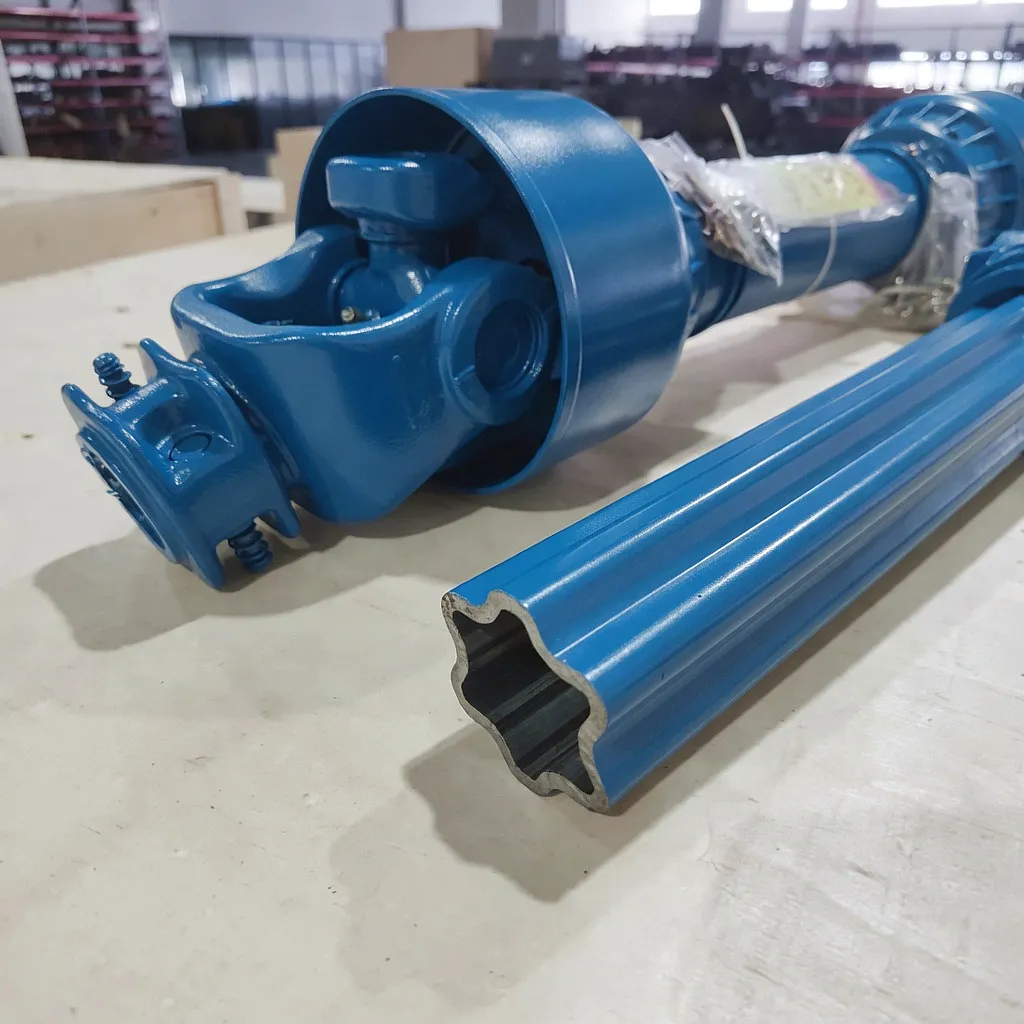 Every baling season across Great Britain — from the vast arable expanses of Lincolnshire and Norfolk to the steep livestock pastures of the Scottish Borders — the round baler stands as one of the most intensively worked machines on any farm. And at the mechanical heart of that machine, transferring raw rotational power from the tractor’s power take-off to the baling mechanism, sits a single critical component that most operators only notice when it fails: the PTO shaft for round baler. Specify it correctly, install it properly, and it will run for thousands of hectares without drawing attention to itself. Miss the specification, skip the pre-season check, or fit the wrong protection system for your terrain, and a shattered shaft mid-harvest can cost you not just the component itself but entire days of irreplaceable field time, a weather window that won’t return, and crop still lying in the swath while your machinery stands idle.
This guide has been compiled by the engineering team at pto-drive-shafts.com, drawing on more than 18 years of designing, manufacturing, and supplying PTO shafts to agricultural machinery users across the United Kingdom and throughout Europe. We cover the full picture: how a round baler PTO shaft functions under load, how to select the correct series and protection system for your specific combination of tractor, baler model, and terrain, what the critical installation parameters are, and how a structured seasonal maintenance routine extends service life dramatically. Whether you operate a single New Holland BR7060 on a family farm in Shropshire or manage a fleet of Claas Rollant machines from a contracting base in the East Midlands, the engineering principles and selection criteria discussed here apply directly and practically to your operation.
British farming presents a distinct set of demands that differentiate it from continental European and North American agriculture: field sizes range from sub-hectare upland paddocks to 100+ hectare prairie-scale arable blocks; ground conditions shift between extreme wet and firm dry within a single week; and many farms operate mixed fleets spanning vintage British machines, modern German and Italian-built balers, and North American-origin equipment. Our engineering team has accounted for all of this. What follows is not a generic distributor catalogue overview — it is technical guidance from people who manufacture these components every working day and have visited UK farms to understand precisely what the conditions demand.
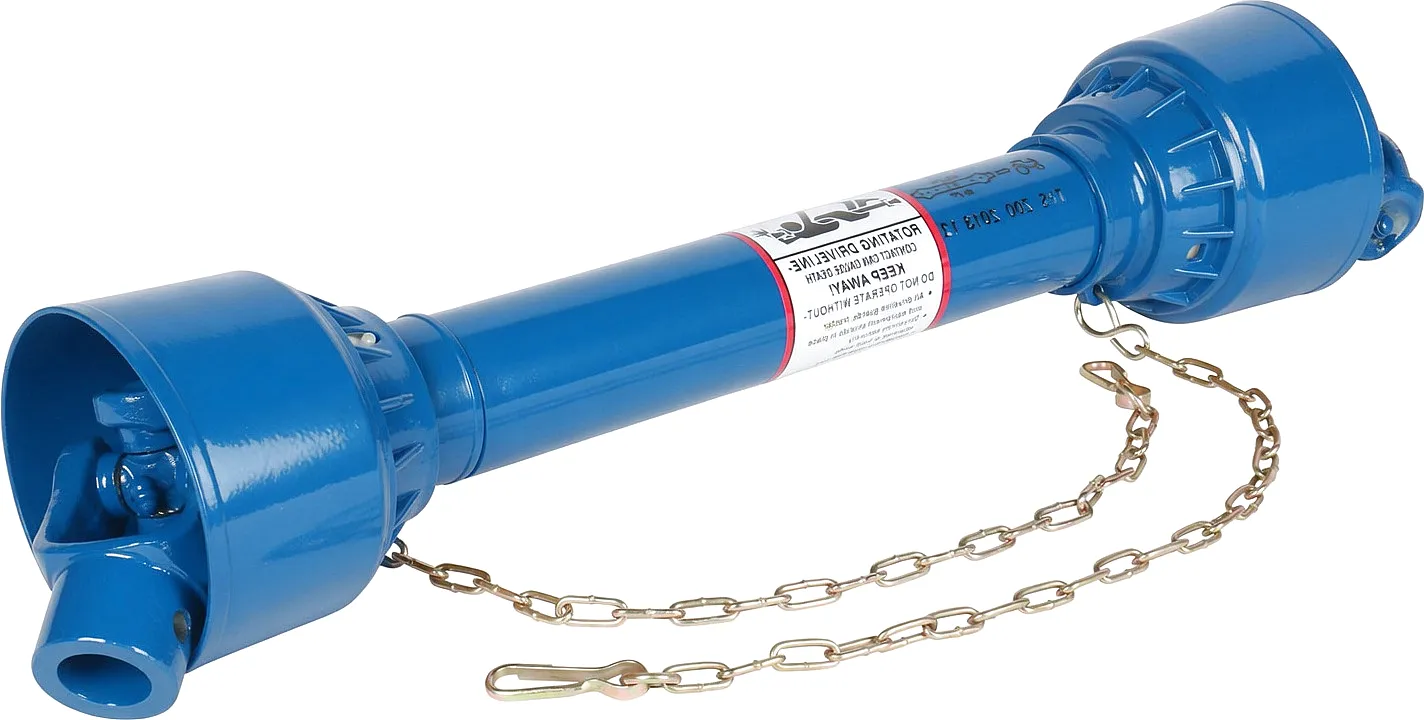
Series 7 heavy-duty PTO shaft with double-cam torque limiter and wide-angle joint kit — designed for high-density round balers at 540/1000 RPM on varied UK terrain.
Engineering Principles: How a Round Baler PTO Shaft Transmits Power Under Real Field Conditions
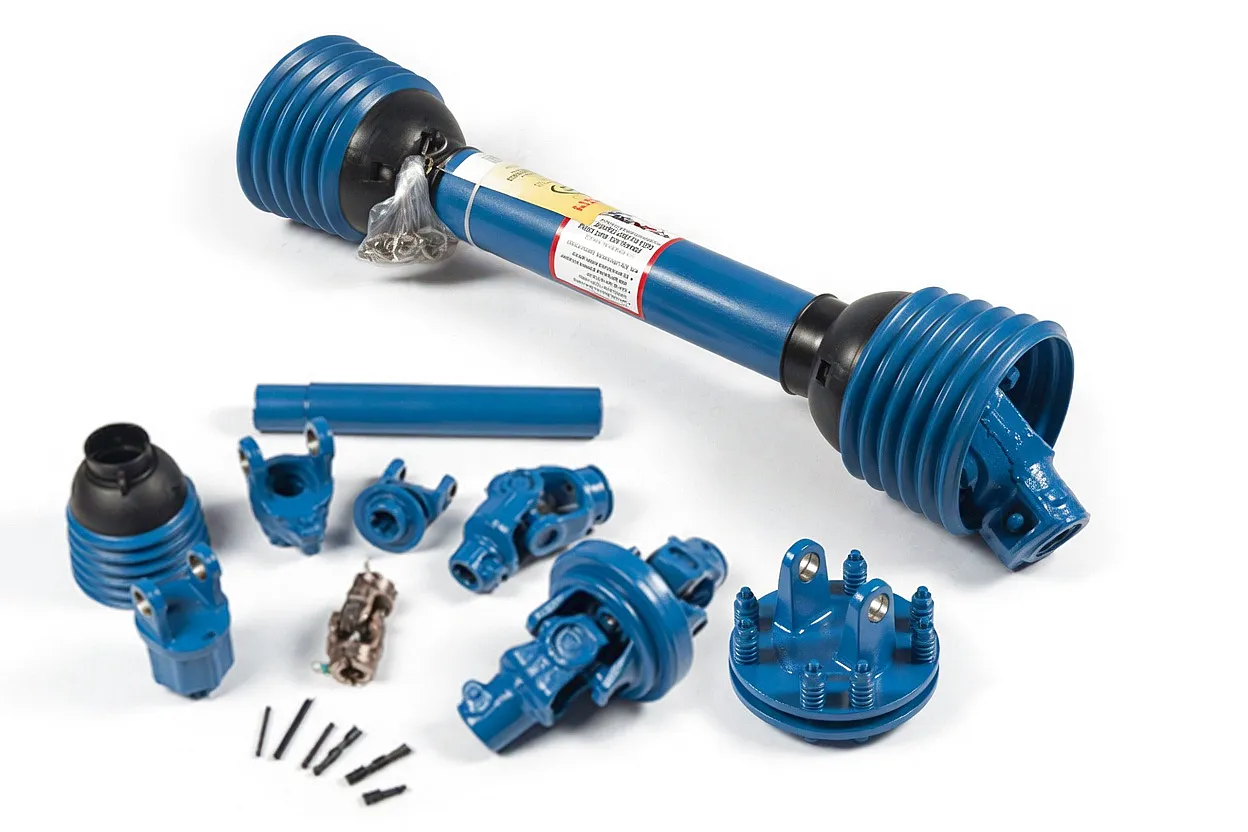 A round baler PTO shaft transmits rotational power from the tractor’s power take-off output stub — at either 540 RPM or 1000 RPM depending on your tractor and baler configuration — through a telescoping tubular assembly connected by universal joints at each end, delivering that power to the baler’s main input gearbox. The mechanical challenge involved is considerably more complex than that bare description suggests. The shaft must simultaneously accommodate continuous changes in operating angle as the baler pitches and rolls over uneven field surfaces (typically 0–25° for UK conditions), constant axial variation in length as the implement geometry changes during headland turns and field undulations, and violent shock loading that occurs every single time a new wad of crop enters the baler pickup and the flywheel experiences a sudden impulse load from the fresh material. These three demands — angular misalignment, axial movement, and shock tolerance — must all be addressed simultaneously by a shaft assembly that may weigh less than 20 kg.
The core architecture consists of two Cardan universal joints, one at each end of the assembly, connected by an inner and outer telescoping tube manufactured in a profiled cross-section — most commonly a six-spline star, lemon, or triangle profile depending on the torque series. The universal joints convert angular misalignment into smooth rotation, the Cardan joint geometry cancelling the velocity variation that would otherwise occur at any operating angle above zero. The telescoping profile tube absorbs the continuous length changes, while the profile geometry — rather than a smooth bore — transmits torque between the two halves without keys or fasteners, relying purely on the mated cross-section geometry. For round balers, which carry significant flywheel mass in their drive mechanism, the entire shaft assembly must be engineered to handle not just the rated continuous torque but also the peak instantaneous torque spikes that real field operation generates.
Overload protection is built into the shaft itself — not as an afterthought but as an integral engineering decision. For round balers operating across the UK’s diverse terrain, foreign matter ingestion through the pickup is an ever-present risk: field stones are universal, stray baler twine from previous seasons is common, and wire from old fencing occasionally enters the crop stream. When this happens, the instantaneous torque spike at the baler input shaft can reach five to eight times the rated operating torque in under one tenth of a second. Without a purpose-designed overload device at the PTO shaft level, that spike travels instantly back through the driveline into the baler’s main gearbox and the tractor’s PTO gearbox — both of which represent repair costs an order of magnitude higher than the shaft itself.
540 RPM — Economy PTO
Standard operating speed for fixed-chamber and smaller variable-chamber balers below 1.5 m diameter. More common on tractors under 100 hp, widely fitted across mixed and livestock farms in Wales, Scotland, and the South-West. At 540 RPM the shaft turns more slowly, generating higher torque for the same power output — heavier shaft components are therefore required compared to 1000 RPM systems of equivalent power rating.
1000 RPM — High-Speed PTO
Used on larger variable-chamber and high-capacity fixed-chamber balers driven by modern tractors above 120 hp. The higher shaft speed reduces torque for equivalent power, enabling smaller, lighter shaft diameters — but demands precision-balanced components to avoid resonance-induced vibration at operating speed. All our Series 6, 7, and 8 shafts are dynamically balanced as standard at the full 1000 RPM rating.
Technical Specifications: Full Round Baler PTO Shaft Range
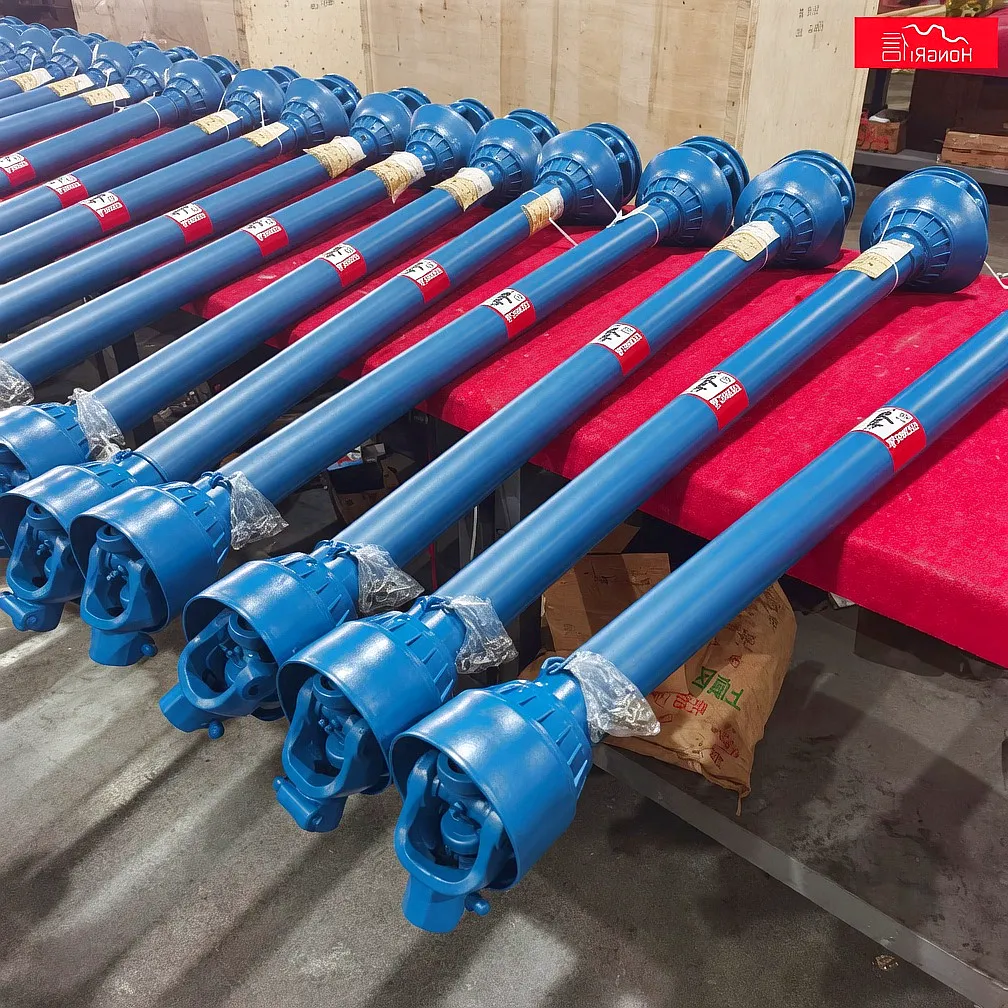 Our PTO shafts for round balers are produced across five engineered series, each matched to a specific power band and baler size category. The rated torque figures in the table below represent continuous-duty capacity under standard operating conditions at ambient temperature. Peak (momentary) torque capacity is typically 2.5 times the continuous rating, which is the relevant figure for evaluating overload protection settings. Shaft lengths shown are standard collapsed lengths; custom telescoping ranges are manufactured to order. All series are available in both 540 RPM and 1000 RPM configurations unless indicated otherwise.
| Series | Rated Torque | Max Speed | Tractor Spline | Tube Profile | Protection | Baler Application |
|---|---|---|---|---|---|---|
| Series 4 | 500 Nm | 540 RPM | 1-3/8″ 6-spline | Lemon / Star | Shear bolt | Compact fixed-chamber (<1.2 m) |
| Series 5 | 800 Nm | 540 / 1000 RPM | 1-3/8″ 6-spline | Star / Lemon | Slip clutch | Mid-size variable chamber (1.2–1.5 m) |
| Series 6 | 1,200 Nm | 540 / 1000 RPM | 1-3/4″ 6-spline | Star / Triangle | Friction clutch | Standard variable chamber (1.5 m) |
| Series 7 | 1,800 Nm | 1000 RPM | 1-3/4″ 20-spline | Triangle / Star | Friction + overrunning freewheel | Large variable chamber / high-density |
| Series 8 | 2,500 Nm | 1000 RPM | 1-3/4″ 20-spline | Triangle / Quick-release | Double-cam torque limiter | Extra-large baler / contractor fleet |
All PTO shafts CE-marked and UKCA-compliant. Custom lengths, spline profiles, and protection combinations manufactured on request. Contact: [email protected]
Materials & Construction: The Engineering Detail Behind Every Component
Alloy Steel Profile Tubes
Profile tubes are cold-drawn from 20CrMnTi or 42CrMo4 alloy steel — the same specification used in European OEM driveline components. Cold-drawing produces consistent wall thickness within ±0.15 mm, critical for vibration balance at 1000 RPM. Sliding surfaces are induction-hardened to a minimum depth of 0.8 mm (surface hardness 58–62 HRC) while maintaining a tough, impact-resistant core through controlled tempering. This dual hardness profile resists the abrasive wear that destroys cheaper mild-steel tubes within a single season.
Drop-Forged Universal Joints
Yokes and cross journals (spiders) are drop-forged from C45 medium-carbon steel or 40Cr alloy for higher-series applications. Forging — rather than casting — produces a continuous, aligned grain structure through the component geometry, which significantly increases fatigue life under the reversed bending loads that a working PTO shaft experiences at every rotation cycle. Cross journal needle bearing assemblies are sealed and pre-packed to ISO VG 460 specification, providing extended service intervals even in the heavy-moisture environments typical of British baling conditions.
UV-Stabilised HDPE Guard System
The outer guard is injection-moulded from UV-stabilised high-density polyethylene with cold-impact additives. Standard PE guards become brittle and crack at temperatures below 5°C — routine conditions across Scotland, northern England, and Wales well into the spring baling season. Our HDPE formulation retains flexibility and impact resistance to -30°C, meeting EN ISO 4254-1 agricultural machinery safety requirements for the UK and EU markets. The guard mounts on low-friction bearings at each end, remaining fully stationary regardless of shaft operating speed, preventing the wrap-in hazard that is the leading cause of serious PTO shaft-related injuries in British agriculture.
Corrosion Protection System
All steel components receive zinc-phosphate conversion coating followed by two-component epoxy primer and polyurethane topcoat — a specification taken directly from agricultural OEM driveline suppliers. In the salt-laden coastal environments found across Wales, the South-West peninsula, and much of Scotland’s coastline, this system provides corrosion protection that outlasts standard powder-coat finishes by a significant margin. Powder coat, whilst visually acceptable, has a tendency to crack at stone-chip impact sites and allow moisture undercutting at the chip boundary — a process that accelerates dramatically in the mineral-rich mud coating that UK farm implements accumulate routinely.
6 Engineering Advantages That Separate Our Round Baler PTO Shafts from the Competition
OEM-Grade Precision Manufacturing
Every PTO shaft passes through a 12-point quality inspection before despatch, including dynamic balance testing at full operating speed. Our dimensional tolerances match the specifications published by Kverneland, Claas, and New Holland for their own replacement driveline components. UK farms and contractors can fit our shafts in the vast majority of applications without any field adjustment — the component simply fits and functions correctly from the first use.
Complete Protection System Range
From basic shear bolt protection on compact balers to sophisticated double-cam friction clutches with integrated overrunning freewheels for high-output commercial machines, we supply the complete spectrum of overload protection technologies. Each protection type is available with independently adjustable torque settings calibrated to match your specific baler model’s input shaft rating — not a generic factory default that may be 30% under or over your actual requirement.
Fast UK Delivery on Stock Items
We maintain UK-based stock holdings of the most commonly specified Series 5, 6, and 7 PTO shafts in both 540 and 1000 RPM configurations. Standard catalogue orders within the UK typically despatch within 48 hours, reaching most mainland British postcodes the following working day. For custom-length or non-standard profile shafts, our manufacturing lead time of 7–14 working days is significantly shorter than most European-based competitors serving the British market.
CE Certification & UKCA Compliance
All our PTO drive shafts are CE-marked and manufactured in full conformance with EN ISO 5676 (PTO shaft dimensions and connection geometry), EN ISO 4254-1 (agricultural machinery safety requirements), and the EU Machinery Directive 2006/42/EC. For UK customers requiring UKCA documentation following the changes post-2021, we provide full compliance packs on request. Certification documentation is not a chargeable extra — it is part of every commercial order.
Cross-Reference Database: 2,000+ Models
Our engineering team maintains a cross-reference database spanning over 2,000 agricultural machinery models and their corresponding PTO shaft specifications. Before you confirm an order, send us your baler make, model, year, and tractor PTO stub configuration and we will verify the exact shaft specification required. This verification step eliminates costly mis-ordering — and the time lost waiting for a correct replacement while your baler stands idle during the season’s best weather.
18 Years of Agricultural Engineering
Founded by engineers with hands-on backgrounds in agricultural machinery design and manufacture, our team has been solving PTO shaft challenges since the early 2000s. We have supplied driveline components to farms and contracting businesses in Lincolnshire, Yorkshire, the East Midlands, East Anglia, Scotland, Wales, and Northern Ireland — accumulating direct, specific knowledge of the operating conditions, machinery fleets, and terrain characteristics that define British agriculture across its enormous regional diversity.
Choosing the Right Overload Protection for Your Round Baler & UK Terrain
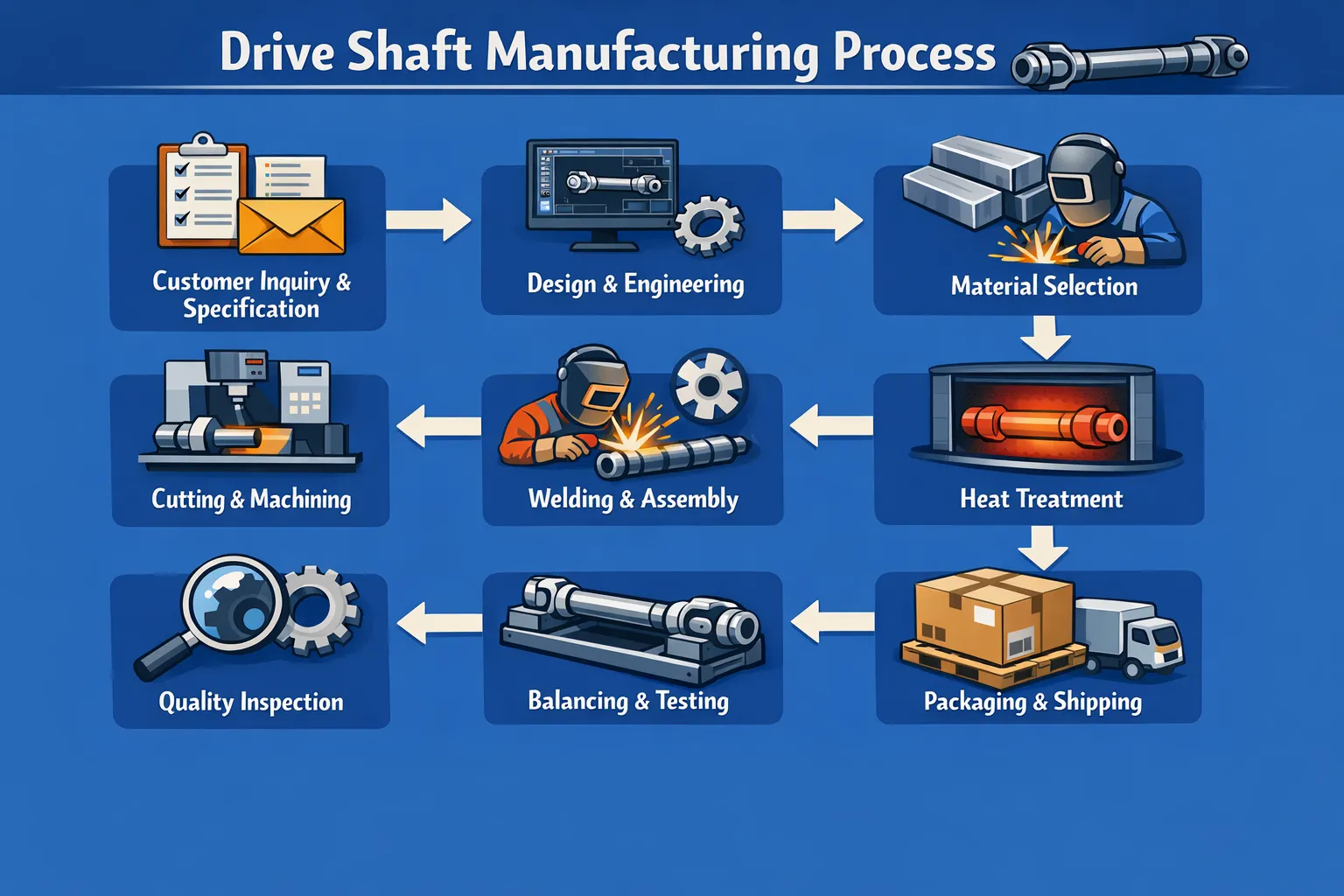 Round balers are more vulnerable to sudden overload events than almost any other PTO-driven implement. The combination of significant flywheel inertia, a rapidly filling chamber, and highly unpredictable crop density means the overload protection built into your PTO drive shaft is effectively the insurance policy for the entire driveline. The comparison table below covers the four main protection technologies across our round baler shaft range, with specific observations relevant to British field conditions.
| Protection Type | Response | Re-Engagement | Torque Setting | Ideal Application | UK Suitability |
|---|---|---|---|---|---|
| Shear Bolt | Instantaneous | Manual bolt replacement | Fixed by bolt grade | Low-output, low-risk operations | ⚠ Limited — downtime per event |
| Slip Clutch | Fast slip on overload | Automatic | Adjustable spring pressure | Mid-duty variable chamber balers | ✓ Good — South-West / silage |
| Friction Clutch | Very fast, precise | Automatic re-engage | Precisely adjustable (Nm) | High-output commercial balers | ✓✓ Excellent — arable contractors |
| Double-Cam Torque Limiter | Instantaneous | Auto re-engage at zero speed | Pre-set / adjustable | Heavy-duty, high-value drivetrains | ✓✓ Ideal — Scottish/Welsh uplands |
Where Our Round Baler PTO Shafts Are Working Right Now Across the UK
🌾 East Anglian Arable Operations
The vast, level fields of Norfolk, Suffolk, Cambridgeshire, and Lincolnshire host some of the UK’s most intensive round baling operations during the straw harvest. Dual-driver baler operation running 14–16 hours per day generates friction clutch heat loads that eliminate cheaper protection systems rapidly. Our Series 7 and 8 shafts with ventilated friction clutches are routinely specified for East Anglian contracting fleets — the ventilated clutch design dissipates heat consistently without torque drift even through the longest working days of the British harvest calendar. The predictable flat terrain in this region also means shaft angle variation is minimal, extending universal joint service life compared to hilly UK farming areas.
🏔 Scottish & Welsh Upland Livestock Farms
Rocky, steeply sloping terrain across the Scottish Highlands, Borders, Aberdeenshire, and the Welsh uplands creates the most demanding possible operating conditions for a round baler PTO shaft. Consistent working angles of 15–25°, frequent rock impacts through the pickup, and the characteristically short, weather-driven silage windows make double-cam torque limiters with overrunning freewheels the only rational choice here. They re-engage automatically after an impact overload without requiring the operator to stop — a critical advantage when a narrow weather window means every lost hour has direct commercial consequences. Low-temperature grease packages and cold-weather HDPE guards are specified as standard for Scottish upland applications.
🚜 Yorkshire & Midlands Contracting Fleets
Agricultural contractors operating multi-machine fleets across Yorkshire, Lincolnshire, Nottinghamshire, and the East Midlands require not just a reliable PTO shaft but an equally reliable supply chain behind it. A machine working away from base during peak season cannot wait a week for a replacement shaft. Our standing UK stock of Series 5, 6, and 7 configurations means a replacement can be at a breakdown location the following day. Our fleet pricing structure for contractors supplying 5 or more machines with identical shaft specifications represents measurable savings against OEM replacement pricing — contact our commercial team at [email protected] for a fleet supply agreement.
🌿 South-West Mixed & Silage Farms
The high-moisture grass crops of Devon, Cornwall, Somerset, and Dorset generate different shaft stress patterns compared to dry-straw arable operations. Wet silage baling demands consistent shaft torque transmitted smoothly over extended periods rather than spike management, making slip-clutch-protected Series 5 and 6 PTO drive shafts the optimal choice for this region. The extended year-round baling season driven by multiple silage cuts also makes long-term corrosion protection particularly valuable — our full epoxy-polyurethane coating system justifies its modest additional cost across a full season in the South-West’s reliably damp climate. Year-round availability of our stock in the UK means even mid-winter silage baling breakdowns can be resolved quickly.
Customer Success Story
Hargreaves Agricultural Contracting · Thirsk, North Yorkshire · Established 2009
The Challenge
Hargreaves Agricultural Contracting operates a fleet of four round balers across mixed arable and livestock farms covering the Vale of York and the fringes of the North Yorkshire Moors National Park. Their two Claas Rollant 454 variable-chamber balers were consuming OEM PTO shafts at an unsustainable rate — roughly one shaft per machine per season. Operating on the undulating terrain where productive arable fields transition into moorland fringe meant shaft operating angles regularly approaching the upper design limit. The OEM friction clutch settings were proving too conservative for the contractor’s high-output working pattern, causing repeated nuisance slippage that overheated and prematurely destroyed friction discs. Across the four-machine fleet, annual shaft and clutch replacement costs had reached approximately £4,800 — a significant overhead eating directly into contract profitability on an already competitive market.
Our Engineering Solution
Our engineering team performed a complete driveline analysis using the Claas Rollant 454 input shaft specifications, the operator’s Fendt 720 Vario tractors, and detailed information about the field terrain and working patterns supplied by James Hargreaves directly. We specified Series 7 PTO shafts with double-cam torque limiters pre-set to 1,650 Nm — appropriate to the baler’s input shaft rating with a calibrated safety margin that avoided nuisance triggering under normal high-output conditions. Wide-angle universal joint kits were fitted at the tractor end to accommodate the articulation angles on moorland-edge fields without any sacrifice in operating smoothness. A bespoke telescoping range was specified to prevent over-compression on steep descending headlands. We additionally provided the operators with a written technical briefing covering correct connection procedure and the single most common installation error — connecting the shaft before engaging tractor PTO, which destroys the lock mechanism within weeks.
Measured Results
Eighteen months after converting the entire fleet to our Series 7 PTO shafts, Hargreaves had recorded zero shaft-related field breakdowns across all four machines. Annual replacement costs fell from £4,800 to £1,100 — a saving of over £3,700 per year on a direct like-for-like comparison. Operator time lost to roadside repairs fell to zero, which in itself freed significant labour capacity during the peak season. In the second full season after the conversion, the business was able to accept an additional 340 hectares of baling contracts — work that was previously declined due to the risk of machine unreliability damaging the contracting business’s reputation with established farm customers. James Hargreaves described the switch to our specification as “the single most cost-effective engineering decision we have made in five years of running this contracting business.”
What UK Farmers & Contractors Say About Our PTO Shafts
“
We run three New Holland BR7060 balers across Lincolnshire arable farms. The Series 6 PTO shafts from pto-drive-shafts.com have been completely faultless through two full harvest seasons — over 8,000 hectares of straw combined. When we needed a non-standard collapsed length, the engineering team had the specification confirmed and the shaft despatched inside a week. That kind of responsiveness is genuinely rare from a driveline supplier.
Robert T. — Agricultural Contractor, Lincolnshire
“
Our Claas Rollant 255 shed a shaft mid-silage on a Wednesday afternoon — an absolute nightmare timing-wise. I ordered a Series 6 slip-clutch replacement on Wednesday evening and it arrived at our farm near Ludlow by Friday morning. Our farm manager had it fitted and the baler running again before lunchtime. The quality is on a par with the original OEM part, and the price was less than half what the main dealer wanted for a factory replacement. Genuinely can’t fault it.
Sarah M. — Farm Manager, Shropshire
“
We run a sheep and beef farm in the Scottish Borders — steep ground, rocky, proper challenging conditions. The Series 7 double-cam shaft with the wide-angle kit on the Kverneland UN1855 has been running for two full seasons without a single issue. What really stood out before I ordered was that the technical team called me back to go through setting the torque limiter correctly for our terrain. That kind of pre-sale engineering support is something you just don’t get from catalogue distributors.
Alistair F. — Mixed Livestock Farm, Scottish Borders
Custom PTO Shaft Manufacturing: Built to Your Exact Specification
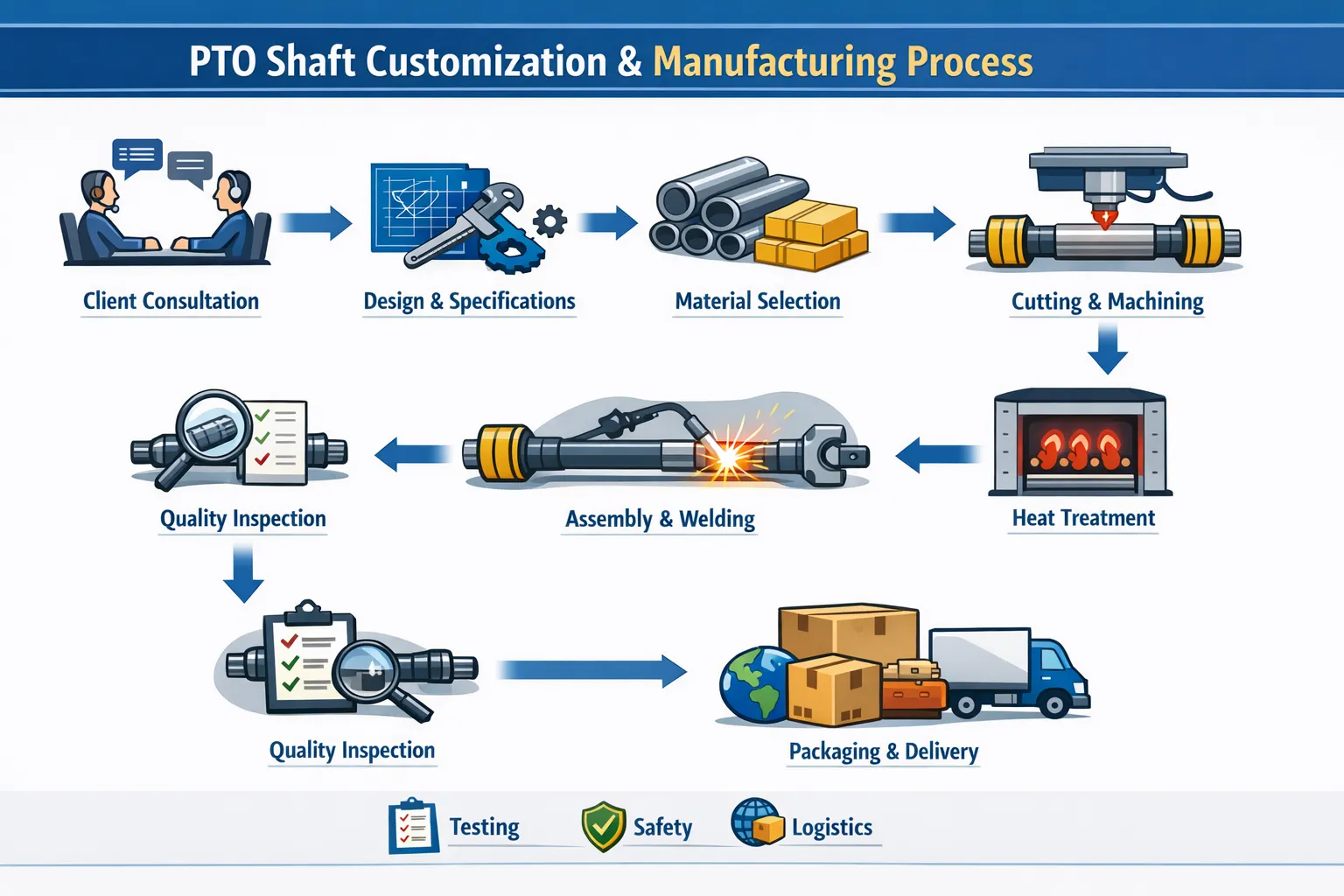
Our production facility operates 14 CNC machining centres, 4 robotic welding lines, induction hardening equipment, and a dedicated quality laboratory with full CMM coordinate measuring capability. We are not a distributor repackaging imported stock — we manufacture from billet and cold-drawn tube, which is what allows us to produce custom PTO shaft specifications that no catalogue product can accommodate. This manufacturing depth is what UK customers with unusual applications, specialist implements, or fleet standardisation requirements need, and it is what our OEM and trade account customers return to us for year after year.
📐 Custom Lengths
Non-catalogue collapsed and extended lengths for unusual tractor-implement geometry, vintage machinery combinations, or homemade implements. We regularly supply non-standard lengths for specialist crop processing equipment where no off-the-shelf solution exists.
🔩 Custom Spline Profiles
Beyond standard ASAE S201 inch splines — metric DIN 5480 profiles for continental OEM equipment, square and hexagonal bore configurations for older British and American machinery, and non-standard bore diameters machined to any specification with full CMM verification.
⚙ Custom Torque Settings
Friction clutches and torque limiters factory-calibrated to any specification between 500 and 3,500 Nm. Each custom protection device is dynamically tested on our calibrated torque test bench with a certificate before despatch, not adjusted by feel on the workshop floor.
🎨 OEM Branding & Colours
Custom colour coating, branded component marking, and private-label documentation for OEM customers and machinery manufacturers who need to supply PTO shafts under their own product range. Minimum order quantities apply — contact our commercial team for OEM supply agreement terms.
Supplying British Agriculture: From English Arable Counties to Scottish Hill Farms
The United Kingdom handles approximately 17 million tonnes of hay and silage annually, with round baler technology accounting for the majority of that harvest by both volume and logistical convenience. From the intensive beef and dairy operations of Cumbria and Cheshire to the large-scale cereal straw baling enterprises of Kent and East Anglia, the PTO shaft connecting tractor and baler carries the mechanical load of an entire harvest operation. Understanding the specific demands of British farming — wet springs that compress working windows, enormous variation in field size and terrain between regions, the coexistence of modern 250 hp machines and vintage 50 hp tractors on smaller mixed farms, and the high-intensity commercial contracting culture in the lowland arable belt — is what allows us to recommend the right shaft rather than the nearest standard stocked product.
We supply agricultural merchants, machinery dealers, and direct farm and contracting customers throughout England, Scotland, Wales, and Northern Ireland. Our distribution network maintains partner relationships in the key agricultural counties — Lincolnshire, Norfolk, Suffolk, Yorkshire, Devon, Aberdeenshire, Carmarthenshire, County Down, and others — ensuring next-day availability to most UK postcodes during the peak baling season. Our telephone line connects directly to the engineering team, not a general customer service queue, which means the person answering your call about shaft specification has the technical background to give you a correct answer rather than reading from a catalogue.
For UK agricultural merchants considering adding PTO shaft supply to their parts range, we offer trade account pricing, co-branded technical support materials, and volume arrangements that are accessible to independent rural merchants rather than requiring the major-distributor purchase commitments typical of OEM supply channels. If you supply agricultural machinery parts to farms and contractors in your region, we welcome a discussion about joining our UK trade network — contact us at [email protected].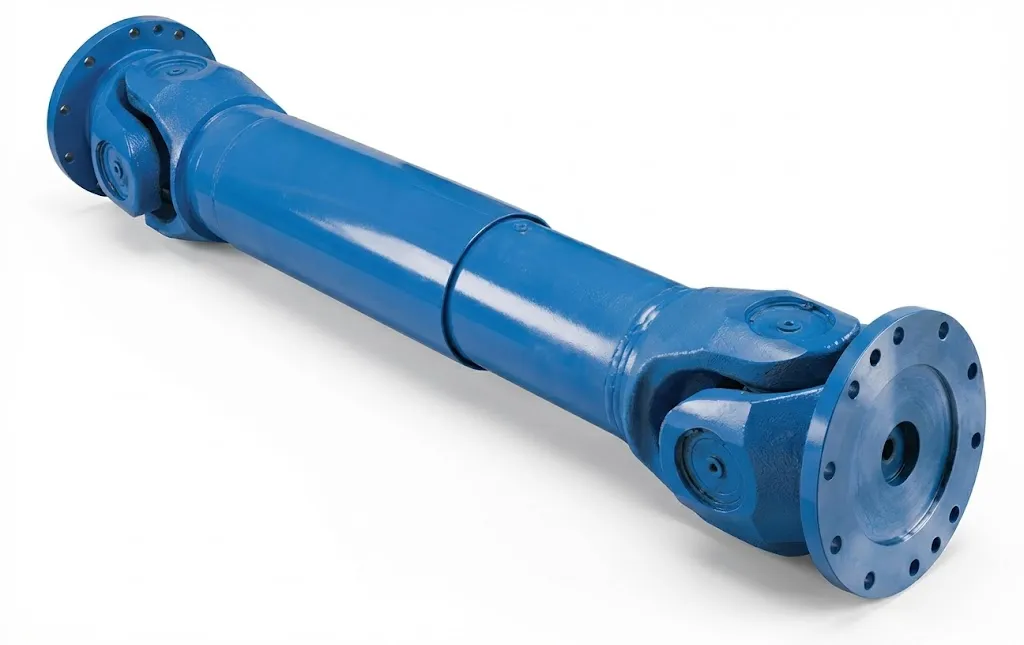
Installation & Maintenance: The Critical Points Every UK Baler Operator Needs to Know
Operating Angle: Never Exceed 25°
Standard universal joints operate within 0–8° continuously and must not exceed 25° under any working condition. On sloping fields — common across the Welsh borders, the Pennines, and the Scottish Lowlands — the operating angle changes as you drive across the face of a slope. Always check the maximum angle with the baler at its full range of pitch positions, not just the static park angle. Exceeding the design angle accelerates needle bearing wear dramatically and introduces velocity variation at the output yoke that generates fatigue loading in the baler’s input shaft bearings.
Telescoping Overlap: 1/3 Minimum Always
The telescoping tubes must maintain overlap of at least one-third of the inner tube’s working length at every operating geometry — and must not reach full compression at any position. Mark the tubes with a painted line before the season to monitor overlap in the field without stopping. Inadequate overlap concentrates bending stress at the transition between the inner tube end and the outer tube bore — this is the single most common cause of catastrophic mid-field PTO shaft failure and is entirely preventable through correct specification and monitoring.
Greasing Schedule for UK Conditions
Cross journal bearings require greasing every 8 operating hours during active baling — practically, this means once per day during peak hay and silage season. In particularly wet operating conditions — standard in Wales, western Scotland, Cumbria, and the South-West — increase to every 6 hours. Use lithium-complex EP2 grease; a specifically water-resistant formulation is worthwhile in persistently damp environments. Grease until fresh grease emerges at the bearing seal faces, then wipe away the expelled grease to prevent it attracting grit and contaminating the joint. Profile tubes require greasing every 20 operating hours.
Pre-Season Inspection Checklist
Before each baling season: check radial play in all four cross journal positions (0.1 mm maximum acceptable); inspect profile tubes for scoring, corrosion pits, or step wear at the tube junction; verify guard chain security and confirm the guard rotates freely; check that the slip clutch or torque limiter engages at the rated torque specification, not below it due to spring fatigue; confirm all spline connection locking clips are present and correctly seated. This 15-minute inspection before the season eliminates the majority of in-season failures that arrive at the worst possible moment in the worst possible location.
Frequently Asked Questions: PTO Shaft for Round Baler
Ready to Order the Right Round Baler PTO Shaft?
Send us your baler make and model, tractor PTO configuration, and any unusual application details. Our engineering team confirms the correct specification — including custom requirements — and provides a written quotation, usually within the same working day.
pto-drive-shafts.com · Agricultural PTO Shaft Specialists · CE & UKCA Certified · Serving UK Farms & Contractors Since 2006 · edit by gzl























