
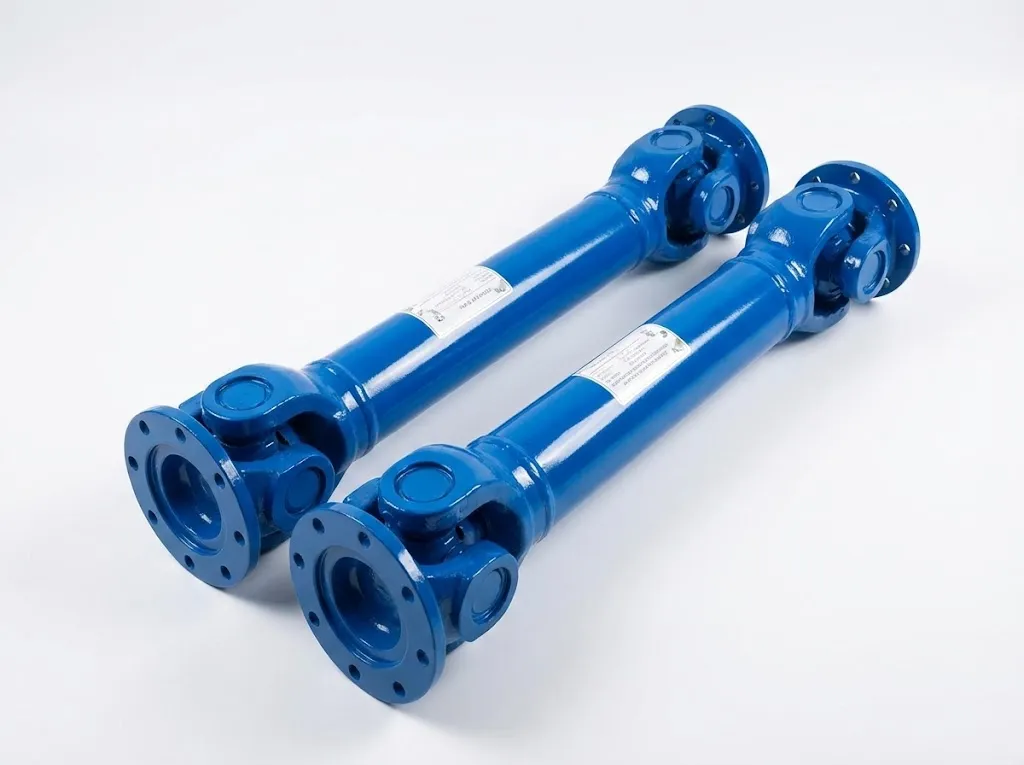
Unlike photovoltaic arrays or wind turbines, hydroelectric power operates in a mechanically extreme realm defined by “brute force physics.” The drive shaft (often referred to as the turbine main shaft in the UK hydroelectric industry) is not merely a connecting rod; it is a critical rotating component that must convert the immense kinetic energy of water into stable electrical energy for transmission to the power grid.
The Physics of Torque Density
In the Scottish Highlands and Welsh valleys, high-head hydroelectric power plants are dominant, thus imposing unique demands on the mechanical properties of the shafts. The turbines operate at very low speeds, typically between 50 and 300 revolutions per minute. According to the power formula P = T × ω, maintaining high megawatt-level power output at such low angular velocities requires transmitting torques in the order of meganewton-meters (MNm).
Taking a typical 800-megawatt pumped-storage power plant in North Wales as an example, the torque load on its shaft is hundreds of times higher than that encountered in aerospace applications. This necessitates the use of large forgings for the shafts, typically exceeding 1.5 meters in diameter, designed not only to transmit power but also to withstand immense hydraulic thrust and the weight of the rotating components.
Runaway Speed: The Critical Safety Margin
Our engineering team prioritizes “Runaway Speed” (nmax) in every shaft design. In the event of a grid load rejection (Load Shedding) where the guide vanes or Kaplan blades fail to close, the turbine will accelerate uncontrollably driven by the full hydraulic head.
- Acceleration Factor: The shaft must withstand speeds of 1.75 to 2.5 times the nominal speed.
- Centrifugal Stress: As stress scales with the square of velocity, the centrifugal forces acting on the shaft flanges and coupling bolts increase exponentially.
- Survival Standard: Per BS EN 60041 and internal safety protocols, our shafts are engineered to survive this condition for a minimum of 15 minutes without plastic deformation, ensuring the integrity of the station structure even when control systems fail.
Material Metallurgy & Corrosion Resistance
British waters, particularly in peaty highland regions, can be acidic. Furthermore, tidal lagoon projects face saline intrusion. Standard carbon steels are insufficient. We utilize advanced metallurgy to ensure a 50-year service life.
The 17-4 PH Standard
For the most demanding application environments, we utilize standardized 17-4 PH (precipitation-hardening) stainless steel.
This martensitic stainless steel has a yield strength (after H1150 heat treatment >1000 MPa) far exceeding that of standard 316L stainless steel, while also possessing excellent cavitation resistance—cavitation being a common cause of failure at the rotor blade-to-shaft connection. The multi-directional forging process aligns the grain structure with the principal stress direction, eliminating internal voids that could become initiation points for fatigue cracks.
Engineering Specification Breakdown (Series H-700/800)
The following data represents our manufacturing capabilities for medium-to-large hydro applications.
| Parameter ID | Technical Characteristic | Specification / Value | Standard / Notes |
|---|---|---|---|
| TS-01 | Nominal Torque Capacity (Tn) | 50 kNm – 5.2 MNm | Calculated at Service Factor 2.5 |
| TS-02 | Shaft Diameter Range | 300mm – 1800mm | Solid or Hollow Forging |
| TS-03 | Max Length (Single Piece) | 12,500 mm | Longer spans via flange coupling |
| TS-04 | Material Grade A | 42CrMo4 (EN19) | Quenched & Tempered |
| TS-05 | Material Grade B (Marine) | 17-4 PH Stainless | Precipitation Hardened |
| TS-06 | Yield Strength (Re) | > 850 MPa | Depending on Heat Treatment |
| TS-07 | Tensile Strength (Rm) | 1000 – 1200 MPa | – |
| TS-08 | Impact Energy (KV) | > 45 J at -20°C | Charpy V-Notch Test |
| TS-09 | Fatigue Limit (Bending) | 420 MPa | Rotating Bending Test |
| TS-10 | Torsional Stiffness | 3.5 x 10^8 Nm/rad | Customizable per stiffness matrix |
| TS-11 | Critical Speed (1st Order) | > 1.3 x Runaway Speed | Lateral Analysis Required |
| TS-12 | Dynamic Balance Quality | G 2.5 / G 1.0 | ISO 1940-1 |
| TS-13 | Flange Type | Integral Forged / Hirth Serration | Face Key connections available |
| TS-14 | Coupling Bolts | Superbolt® or Hydraulic Fitted | Expansion Sleeve Bolts |
| TS-15 | Surface Roughness (Journal) | Ra < 0.4 µm | Grinding & Superfinishing |
| TS-16 | Surface Coating (Optional) | HVOF Ceramic / Tungsten Carbide | For bearing journals |
| TS-17 | Corrosion Protection | Marine Grade Epoxy / Zinc Spray | Non-mating surfaces |
| TS-18 | Non-Destructive Testing | UT (100% Volumetric) | EN 10228-3 Class 4 |
| TS-19 | Magnetic Particle Inspection | 100% Surface | EN 10228-1 Class 4 |
| TS-20 | Shaft Straightness | 0.05mm / 1000mm | Laser aligned |
| TS-21 | Operating Temperature | -20°C to +80°C | Ambient variations |
| TS-22 | Runaway Speed Tolerance | 265% Nominal | Duration > 15 mins |
| TS-23 | Axial Thrust Capacity | Up to 450 Tonnes | Via integrated thrust collar |
| TS-24 | Lubrication Interface | Oil Injection Channels | For hydraulic dismounting |
| TS-25 | Bore for Pitch Control | Central hollow bore (100-300mm) | For Kaplan blade control rods |
| TS-26 | Main Bearing Fit | Interference / Taper Sleeve | 1:30 or 1:50 Taper |
| TS-27 | Design Life | 50 Years / 200,000 Hours | Infinite Fatigue Life Design |
| TS-28 | Weight (Approx) | 2,500 kg – 45,000 kg | Dependent on size |
| TS-29 | Certification | Lloyd’s Register / DNV Type Approval | Upon request |
| TS-30 | Manufacturing Lead Time | 12 – 20 Weeks | Includes forging & testing |
Regional Application & UK Regulatory Context
The topography of the UK dictates specific requirements for turbine shafts. In the Scottish Highlands (for example, power generation projects near Fort William), high-head Pelton turbines require shafts with extremely high torsional stiffness to prevent resonance frequencies from coinciding with blade impact frequencies. Conversely, low-head power generation projects in the Severn Estuary or Trent Valley utilize Kaplan turbines, whose shafts must be able to accommodate complex internal mechanical structures for blade angle adjustment.
Compliance with HSE & British Standards
All rotating machinery supplied by UK pto-drive-shafts.com adheres to:
- PUWER (Provision and Use of Work Equipment Regulations 1998): Ensuring the shaft guarding and maintenance access meets UK safety laws.
- BS EN 10088-3: Technical delivery conditions for stainless steel forgings.
- The Supply of Machinery (Safety) Regulations 2008: Full CE/UKCA marking documentation provided.
Replacement & Retrofit Compatibility
Many UK hydro plants built in the 1950s and 60s operate on legacy equipment. We specialize in reverse-engineering and manufacturing drop-in replacement shafts for aging turbines originally supplied by other manufacturers.
Our engineering team has successfully drafted and manufactured replacement shafts compatible with interfaces found on:
- Voith Hydro™ legacy units
- Andritz™ Hydro turbines
- GKN™ industrial drivelines
- Gilbert Gilkes & Gordon™ systems
*Disclaimer: All manufacturer names, trademarks, and part numbers listed above (Voith, Andritz, GKN, Gilkes) are used solely for identification and compatibility reference purposes. UK pto-drive-shafts.com Co.,Ltd. is an independent manufacturer and is not affiliated with, endorsed by, or sponsored by these trademark holders. Our parts are aftermarket replacements engineered to meet or exceed OEM specifications.
Integrated Drive Solutions: Speed Increaser Gearboxes
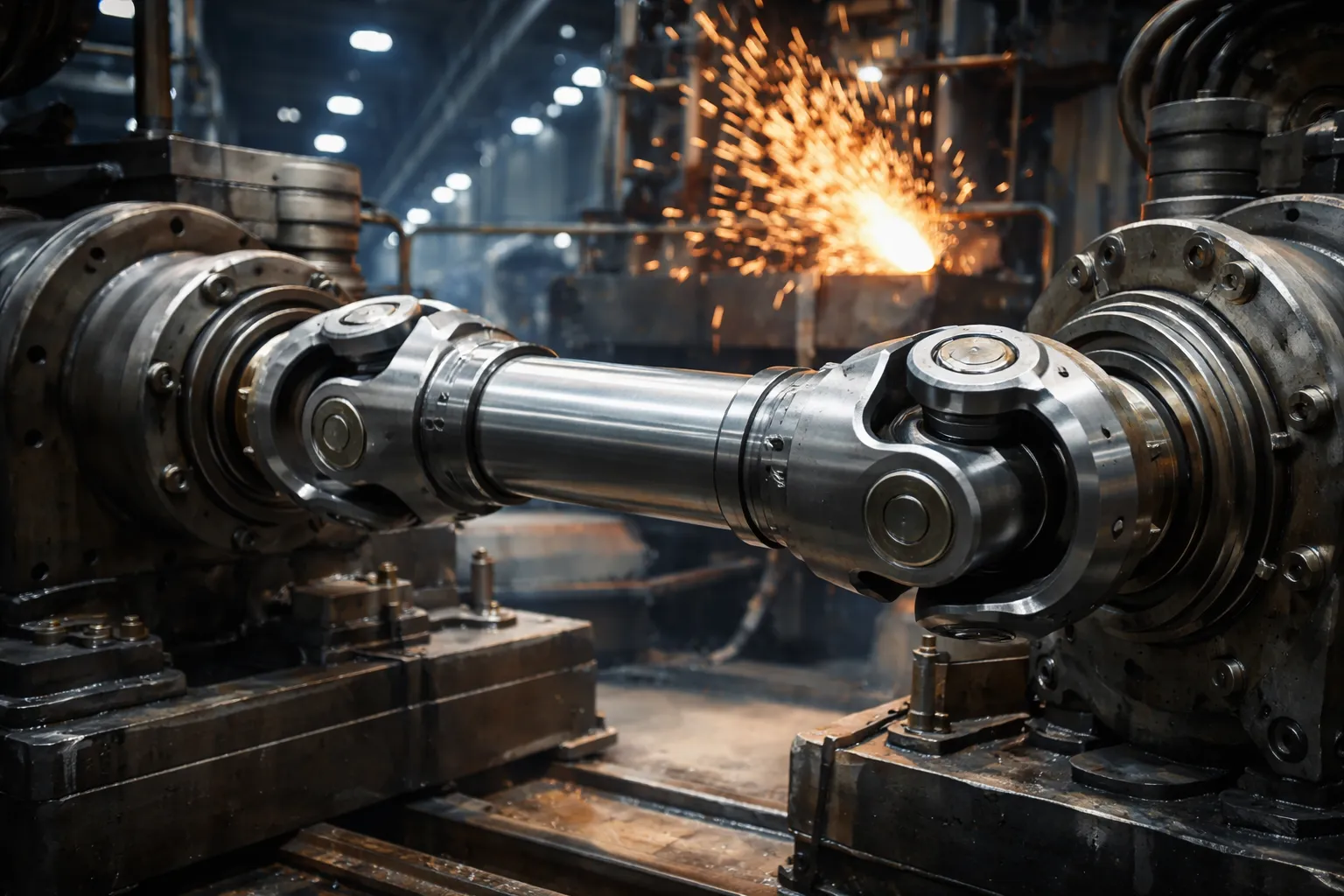
In many low-head run-of-river applications (such as those on the Thames or Weirs), the turbine RPM (often < 60 RPM) is too low for standard 4-pole or 6-pole generators. The drive shaft must connect to a heavy-duty Speed Increaser Gearbox.
We manufacture and supply industrial gearboxes specifically matched to our shafting systems to ensure driveline harmonic stability.
Planetary & Parallel Shaft Gearboxes for Hydro
Our “Hydro-Drive” gearbox series offers:
- High Efficiency (>98.5%): Essential for maximizing Feed-in Tariff (FiT) or Smart Export Guarantee (SEG) revenue.
- Reinforced Bearings: Output shafts equipped with reinforced tapered roller bearings to absorb any residual axial thrust not handled by the turbine thrust bearing.
- Condition Monitoring Ready: Pre-drilled ports for vibration sensors and oil particle counters, essential for remote sites in the Highlands.
Whether you require a parallel shaft helical unit for a horizontal Francis turbine or a vertical planetary unit for a Kaplan pit turbine, our gearboxes are calculated to match the Service Factor of the drive shaft, preventing the “weakest link” scenario in the drivetrain.
Other Accessories Available: Hydraulic Couplings, Shear Pin Safety Hubs (for blockage protection), and Intermediate Steady Bearings.
Engineer’s Log: The “Singing” Shaft of Inverness
Project Location: Private Hydro Scheme, near Inverness, Scotland.
Issue: A 1.2MW Francis turbine was experiencing severe vibration at 85% load. The operator reported a loud “humming” or “singing” noise that was vibrating the control room floor. Previous consultants suspected the generator alignment.
Our Diagnosis: Upon site deployment, our team utilized Motion Amplification Cameras. We discovered the existing drive shaft—a hollow tube design from the 1980s—had a natural torsional frequency that coincided exactly with the blade passing frequency of the runner at 85% gate opening. This resonance was causing micro-cracking at the keyway.
The Fix: We engineered a replacement solid forged shaft using 42CrMo4 steel. By changing from hollow to solid and slightly altering the diameter, we shifted the natural frequency of the shaft safely away from the turbine’s operating harmonics.
Result: Vibration levels dropped from 4.5 mm/s to 0.8 mm/s. The station has run at full capacity for 18 months with zero downtime. “The silence is the best part,” the site manager remarked.
Installation & Maintenance Insights
Frequently Asked Questions
Q: How do you handle logistics for 6-meter shafts to remote UK sites?
A: We work with specialized haulage firms experienced in navigating narrow track roads in Wales and Scotland. We provide bespoke transport cradles that prevent brinelling of the bearings during transit.
Q: Can you refurbish an existing shaft instead of replacing it?
A: Yes. We offer submerged arc welding (SAW) and HVOF spraying to restore worn journal surfaces, followed by precision grinding to original tolerances. This is often a cost-effective solution for vintage riveted turbines.
Q: What happens if debris blocks the turbine?
A: We recommend installing a Shear Pin Coupling or a Torque Limiter between the shaft and gearbox. This acts as a mechanical fuse, snapping instantly to disconnect the inertia of the generator from the blocked turbine, saving the expensive shaft and runner from twisting.
Recent Industry Updates
Pumped Storage Investment in Scotland: With the UK government’s push for long-duration energy storage, retrofitting older pumped hydro stations is a priority. We are currently prototyping composite fiber shafts for auxiliary cooling pumps to reduce weight and maintenance.
Environment Agency Regulations: New fish-friendly turbine designs operate at variable speeds. This requires shafts capable of handling a wider range of frequencies without resonance issues. Our Series H-800 Variable Speed Shafts are designed specifically for this new operating regime.
Ready to Optimize Your Power Transmission?
From the Highlands to the Cornish coast, our engineers are ready to assist with calculations, site measurements, and custom manufacturing.
UK pto-drive-shafts.com Co.,Ltd.
Address: Bury St Edmunds, Suffolk IP32 7LX, UK
Email: [email protected]
© 2026 UK pto-drive-shafts.com Co.,Ltd. All Rights Reserved. | edited by gzl
edit by gzl























