
Engineering precision for Bridge Cranes, Gantry Systems, and Heavy Lifting Operations
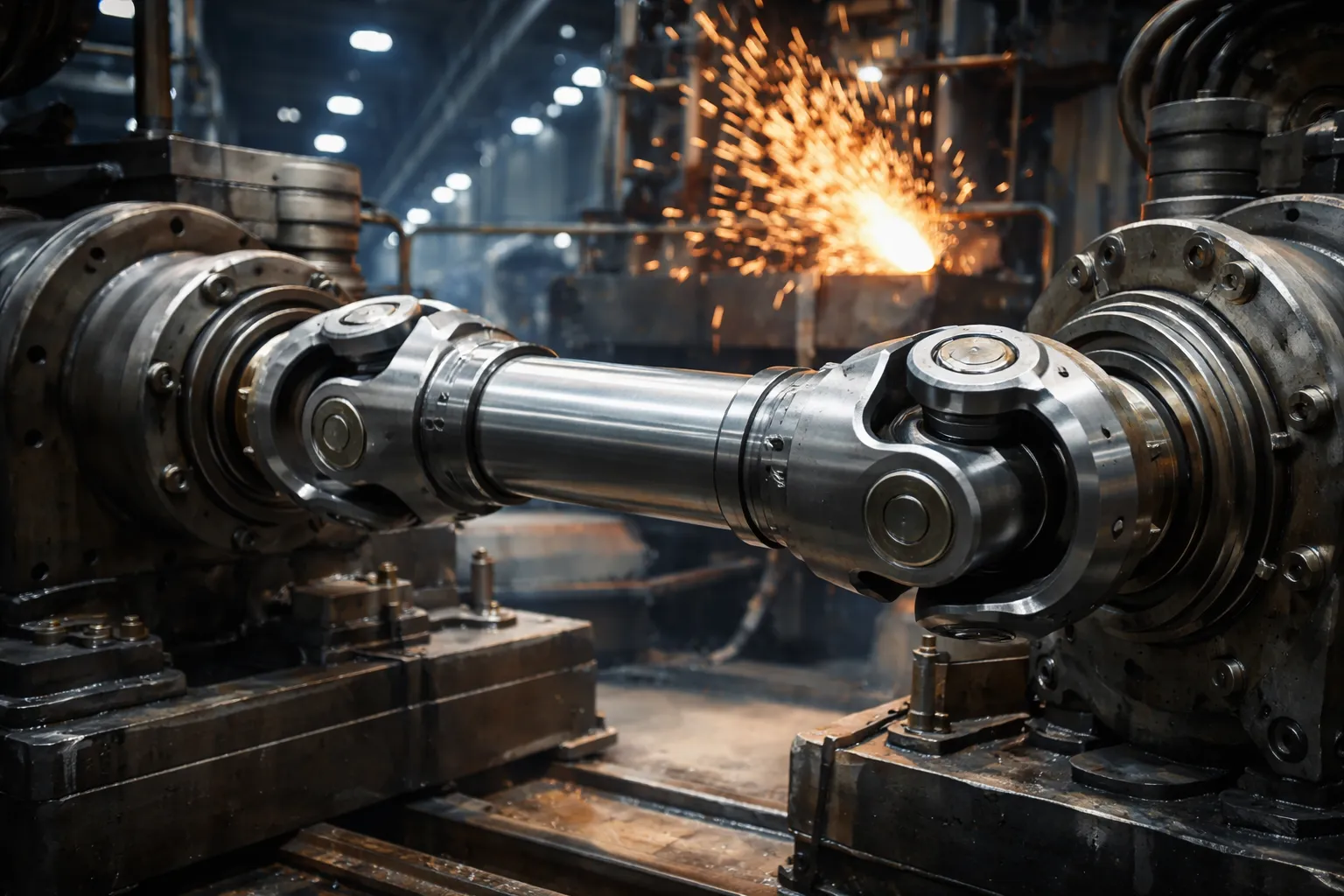
Engineering Context: The “Floating” Necessity in Heavy Lifting
In heavy machinery manufacturing areas in Sheffield or the bustling port of Felixstowe, overhead cranes are central to operations. However, a persistent engineering challenge for these “long travel” (LT) mechanisms is the dynamic nature of the bridge structure itself. When a steel mill crane lifts a 100-ton ladle of molten steel, the main beam doesn’t simply bear the weight; it also bends. This elastic deformation (bending upwards and downwards) alters the geometry between the gearbox output and the wheel input.
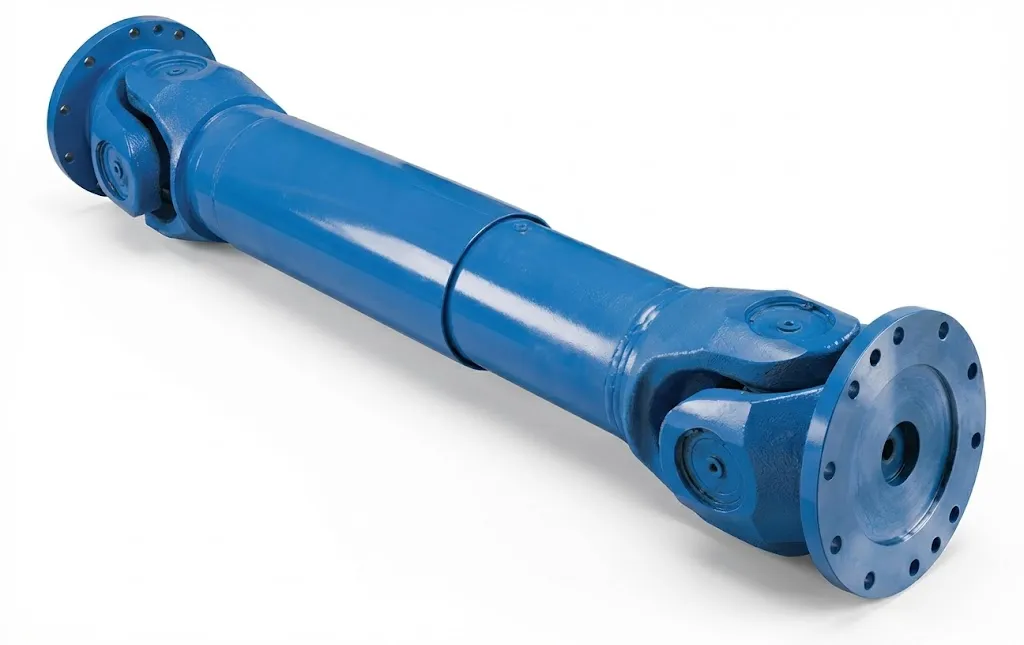
I remember a modernization project we did in 2018 at a foundry in the West Midlands. They were using an old rigid coupling system on a crane from the 1980s. Every time the crane lifted near its maximum load, the vibration in the cab was very noticeable. They had to replace the half-shaft every six months. The problem wasn’t the strength of the shaft, but its rigidity. We replaced the rigid system with a double universal joint floating shaft arrangement. The universal joints were able to absorb the 2.5-degree misalignment caused by beam deflection, completely solving the vibration problem. The key wasn’t making it stronger, but making it smarter.The “floating shaft” was the key to solving this problem. Unlike a supported shaft, it doesn’t have an intermediate bearing fixed to the crane structure. It is completely suspended between the gearbox and the wheelset, allowing the shaft to freely swing and extend as the crane bridge deforms under load or twists due to track misalignment (tilting).
Core Technical Analysis: Mechanism of the Floating Shaft
The traditional “Centralized Drive” system, common in UK manufacturing halls, utilizes a single motor-gearbox unit mounted centrally on the bridge. This ensures synchronous movement of both end carriages. However, the mechanical link—the floating shaft—must perform three distinct kinematic duties simultaneously:
- Torque Transmission: Delivering high starting torque to overcome the inertia of a fully loaded crane.
- Angular Compensation: Accommodating the angle changes (
\alpha) as the bridge bends. - Length Compensation: As the bridge bends downwards, the hypotenuse distance changes. The shaft must telescope (plunge) to prevent axial loading on the gearbox bearings.
The Hollow Tube Advantage
For spans exceeding 20 metres, solid shafts become liabilities due to their own weight causing “whirling” or critical speed vibration. We utilise Large Diameter Thin-Wall Hollow Tubes tailored from high-grade structural steel. This increases the polar moment of inertia ($J$) while reducing mass, pushing the critical speed well above the operational RPM of the crane.
Technical Parameters & Material Specifications
Below is a generated specification matrix for our Heavy-Duty Crane Series (H-Series). These parameters are engineered to meet ISO 1940-1 balancing standards suitable for UK industrial applications.
| Parameter ID | Specification / Description | Unit / Value |
|---|---|---|
| UK-SPEC-001 | Nominal Torque (Tn) | 25,000 Nm |
| UK-SPEC-002 | Fatigue Torque (Tdw) | 18,500 Nm |
| UK-SPEC-003 | Maximum Articulation Angle | 15 Degrees |
| UK-SPEC-004 | Flange Diameter (D) | 285 mm |
| UK-SPEC-005 | Tube Diameter (dt) | 160 mm |
| UK-SPEC-006 | Wall Thickness (s) | 8.5 mm |
| UK-SPEC-007 | Material (Yoke) | 42CrMo4 (Forged) |
| UK-SPEC-008 | Material (Tube) | St52-3 DIN 2391 |
| UK-SPEC-009 | Spline Type | Involute DIN 5480 |
| UK-SPEC-010 | Telescopic Stroke (Ls) | +120mm / -40mm |
| UK-SPEC-011 | Closed Length (Lmin) | 1,850 mm |
| UK-SPEC-012 | Dynamic Balancing Grade | G 6.3 @ 1500 RPM |
| UK-SPEC-013 | Painting Specification | Epoxy Primer + PU Topcoat (RAL 5010) |
| UK-SPEC-014 | Cross Assembly Lubrication | Lithium Complex EP2 (Centralized option available) |
| UK-SPEC-015 | Operating Temperature Range | -25°C to +80°C |
| UK-SPEC-016 | Torsional Stiffness | 3.45 x 10^5 Nm/rad |
| UK-SPEC-017 | Fastener Grade | 10.9 Geomet Coated |
| UK-SPEC-018 | Bearing Life (L10) | > 5,000 Hours |
| UK-SPEC-019 | Safety Factor (Yield) | 2.5:1 |
| UK-SPEC-020 | Flange Connection Pattern | DIN / ISO 7646 compliant |
| UK-SPEC-021 | Swing Diameter | 260 mm |
| UK-SPEC-022 | Weight (Approx.) | 145 kg |
| UK-SPEC-023 | Hardness (Bearing Cups) | 60-62 HRC |
| UK-SPEC-024 | Seal Type | Double Lip Nitrile Rubber (NBR) |
| UK-SPEC-025 | Axial Force under Load | < 2.5 kN |
| UK-SPEC-026 | Welding Certification | EN 15085-2 CL1 |
| UK-SPEC-027 | NDT Requirement | 100% Magnetic Particle on Welds |
| UK-SPEC-028 | Maintenance Interval | 500 Hours (Re-grease) |
UK Industrial Scene: Adapting to Local Extremes
The United Kingdom’s industrial landscape offers diverse challenges for powertrain components. From the humid, saline environment of the North Sea offshore bases in Aberdeen to the dusty, heat-intensive environment of steel processing in Scunthorpe, a “one-size-fits-all” shaft simply fails.
Corrosion Resistance for Coastal Cranes
For customers operating gantry cranes in Southampton or Liverpool, standard paint coatings are insufficient. Salt spray accelerates crevice corrosion at the universal joints. For these specific UK coastal applications, we utilize a proprietary marine-grade coating system (C5-M ISO 12944) and offer optional stainless steel grease lines to prevent seizing during maintenance.
Regulatory Compliance: LOLER & PUWER
Safety in the UK is non-negotiable. All our lifting application shafts are designed to support client compliance with:
- LOLER 1998 (Lifting Operations and Lifting Equipment Regulations): Ensuring the
The “3-Point” Inspection Check
- Backlash Test: With the brakes locked, rotate the shaft by hand. Any rotational play suggests spline wear or cross-bearing fatigue.
- Bolt Torque Verification: Flange bolts on crane shafts are subjected to reversing shear loads. Use a calibrated torque wrench to check 10% of bolts monthly.
- Visual Alignment: Watch the shaft while the crane travels. If the shaft “wobbles” visibly, the tube may have sustained impact damage or the balance weights have detached.
FAQ: Expert Answers for UK Plant Managers
Q: Can I replace a solid shaft with a floating hollow shaft on my existing crane?
A: Yes, and it is often recommended. Converting to a hollow floating shaft reduces the dead weight on the bridge and protects the gearbox from bridge deflection forces. We just need the flange-to-flange distance and the motor power to engineer the retrofit.
Q: What grease should we use for outdoor cranes in the UK winter?
A: Standard Lithium grease can harden at near-zero temperatures, causing “channelling” where the rollers run dry. For UK outdoor gantries, we recommend a Lithium Complex grease with a synthetic base oil, rated for -30°C to +120°C.
Q: Do you provide on-site measurements in the UK?
A: While our primary manufacturing is streamlined for export, we have a network of partner engineers across the UK (from Bristol to Glasgow) who can assist with verification measurements for critical projects.
Ready to Upgrade Your Crane’s Drivetrain?
Don’t let bridge deflection destroy your gearboxes. Contact our engineering team for a consultation on floating shaft retrofits.
UK pto-drive-shafts.com Co.,Ltd.
Address: Bury St Edmunds, Suffolk IP32 7LX, UK
Email: [email protected]
edit by gzl























