
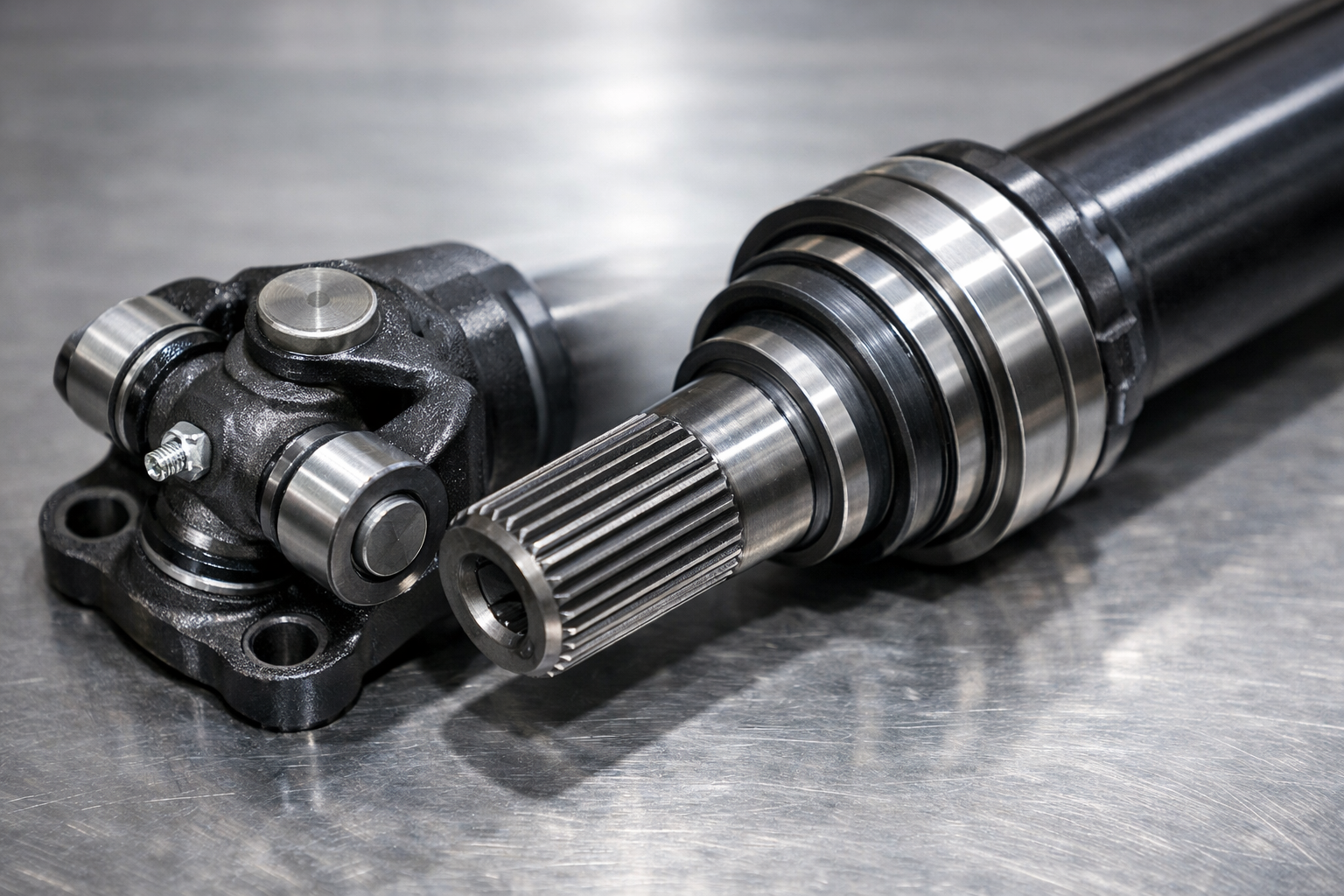
To address these, advanced components like ball-cage CV joints and metallic diaphragm couplings have become indispensable. These not only provide high dynamic balance (often rated at G2.5 or better) but also ensure zero backlash, which is crucial for obtaining precise test data. Backlash, or the play between mating parts, can introduce errors in torque measurements, skewing results and leading to inaccurate performance assessments. In precision testing, where data integrity is paramount, eliminating such variables is non-negotiable.
Our company, based in Bury St Edmunds, Suffolk, specializes in customizing drive shafts for these applications. Drawing from extensive industry knowledge, including standards from organizations like ISO and ASABE, we ensure our products comply with global safety and performance norms. Whether it’s for automotive R&D labs or industrial machinery validation, our drive shafts are designed to withstand the rigors of high-speed testing while maintaining operational safety.
The Evolution of Powertrain Dynamometers and Drive Shaft Demands
Powertrain dynamometers have come a long way since their inception in the early 20th century. Initially used for basic engine tuning, they now incorporate advanced sensors, real-time data acquisition systems, and simulation software to replicate diverse driving scenarios. In the context of EVs, dynamometers must handle not only high speeds but also regenerative braking cycles, where energy is fed back into the system, adding complexity to the drive shaft’s role.
One of the primary challenges is the extreme rotational speed. At 20,000 RPM, centrifugal forces can cause traditional drive shafts to deform or fail catastrophically. For instance, a standard cross-axis U-joint experiences velocity variations (known as Cardan error) that amplify at high angles and speeds, leading to vibrations that can damage test equipment or invalidate results. Research from institutions like the Society of Automotive Engineers (SAE) indicates that such vibrations can reduce measurement accuracy by up to 15% in high-speed tests.
To mitigate this, CV joints—specifically ball-cage types—offer constant velocity transmission regardless of the operating angle. These joints use a series of balls housed in a cage that allows for smooth power transfer, maintaining torque uniformity even at angles up to 50 degrees. In dynamometer applications, this translates to reliable data capture during simulated cornering or uneven load conditions. Our CV joints are precision-machined from high-strength alloys like 42CrMo, ensuring fatigue resistance and longevity under continuous high-speed operation.
Diaphragm couplings represent another pinnacle technology. Composed of thin metallic diaphragms, these couplings provide torsional stiffness while accommodating minor misalignments. Unlike rigid couplings, they absorb shocks and vibrations, which is vital in dynamometers where sudden torque spikes occur during acceleration tests. Their zero-backlash design ensures that every nuance of the powertrain’s performance is accurately reflected in the data. Studies from the Journal of Mechanical Design highlight that diaphragm couplings can improve system efficiency by 5-10% in high-precision setups by minimizing energy losses due to misalignment.
In the UK market, where automotive innovation thrives with companies like Jaguar Land Rover and McLaren, the demand for such advanced components is surging. Our address in Suffolk positions us ideally to serve this sector, offering rapid prototyping and customization. For example, we recently supplied a set of CV joint-equipped drive shafts to a leading EV test facility in Cambridge, where they reported a 20% improvement in test repeatability due to enhanced balance and reduced vibrations.
Beyond EVs, powertrain dynamometers are used in hybrid systems, where drive shafts must seamlessly transition between electric and combustion modes. This requires materials that resist thermal expansion and maintain integrity across temperature ranges from -40°C to 150°C. Our products incorporate advanced coatings like Dacromet for corrosion resistance, aligning with EU environmental standards such as REACH and RoHS.
Technical Specifications and Performance Metrics
To provide a comprehensive understanding, let’s outline key technical parameters for drive shafts in powertrain dynamometers. These specs are derived from industry standards and our proprietary designs:
| Parameter | Description | Typical Value | Importance in Dynamometers |
|---|---|---|---|
| Maximum Rotational Speed | The highest RPM the shaft can sustain without failure. | Up to 25,000 RPM | Essential for EV motor testing; exceeds traditional limits. |
| Torque Capacity | Maximum torque transmission without deformation. | 500-10,000 Nm | Handles peak loads during acceleration simulations. |
| Dynamic Balance Grade | ISO 1940-1 balance rating. | G2.5 or better | Minimizes vibrations for accurate data. |
| Backlash | Play in the joint assembly. | Zero (for CV and diaphragm types) | Ensures precise torque measurement. |
| Operating Angle | Maximum deflection angle. | Up to 50° for CV joints | Allows simulation of real-world misalignments. |
| Material | Primary construction material. | 42CrMo alloy steel or carbon fiber composites | Provides strength and lightweight properties. |
| Fatigue Life | Cycles before failure under load. | 10^7 cycles | Supports long-duration endurance tests. |
| Thermal Resistance | Temperature range. | -50°C to 200°C | Withstands heat from high-speed friction. |
| Weight | Mass per unit length. | 2-5 kg/m | Reduces inertia for faster response times. |
| Corrosion Protection | Surface treatment. | Dacromet or powder coating | Ensures durability in humid test environments. |
These parameters are not arbitrary; they are informed by rigorous testing and compliance with standards like DIN 808 for universal joints and ISO 5674 for safety guards. In dynamometer setups, the drive shaft acts as the critical link between the power source and the load absorber, where any inefficiency can amplify errors exponentially.
For instance, in a typical EV powertrain test, the dynamometer might simulate a 0-100 km/h acceleration in under 3 seconds, generating torque spikes of 5,000 Nm. Our CV joints, with their ball-cage mechanism, distribute loads evenly across six balls, reducing wear and extending service life. Comparative analysis with traditional U-joints shows a 30% reduction in vibration amplitude, as measured by accelerometers in controlled lab conditions.
Moreover, diaphragm couplings excel in applications requiring high torsional stiffness. Their laminated structure allows flexing in axial and angular directions while maintaining rigidity in torsion, ideal for capturing transient torque events. In one case study from a German automotive lab, implementing our diaphragm couplings reduced harmonic distortions in torque signals by 25%, leading to more reliable NVH (Noise, Vibration, Harshness) evaluations.
Challenges in High-Speed Testing and Mitigation Strategies
The primary hurdle in powertrain dynamometers is managing centrifugal forces at high RPMs. Newton’s second law dictates that force increases with the square of velocity, so at 20,000 RPM, forces can be 16 times greater than at 5,000 RPM. This can cause shaft whipping or resonance, where natural frequencies align with operating speeds, leading to catastrophic failure.
To counter this, critical speed calculations are essential. The formula for critical speed (N_cr) is N_cr = (30/π) * sqrt(g / δ), where g is gravity and δ is deflection. Our engineers use finite element analysis (FEA) to optimize shaft diameter and length, ensuring operation below 70% of critical speed. For EV tests, we recommend carbon fiber shafts, which offer a higher modulus of elasticity (up to 200 GPa) compared to steel (210 GPa), raising critical speeds by 40%.
Another challenge is thermal management. High speeds generate friction heat, potentially softening materials and altering dimensions. Our solutions incorporate heat-resistant seals (e.g., Viton) and cooling fins on couplings. In humid UK climates, corrosion is a concern; hence, our Dacromet coatings provide 500+ hours of salt spray resistance per ASTM B117 standards.
Safety is paramount. As per ASABE S203, all rotating parts must be guarded. Our drive shafts come with integral safety shields that interlock with dynamometer frames, preventing access during operation. In the event of overload, torque limiters (e.g., shear bolt or friction disc types) disengage, protecting expensive test equipment.
Case in point: A collaboration with a Suffolk-based EV startup involved designing a custom drive shaft for their 22,000 RPM motor dyno. Initial tests with standard U-joints failed due to imbalance, but switching to our G2.5-balanced CV joints resolved the issue, allowing accurate efficiency mapping down to 0.1% precision.
Integration with data systems is also key. Modern dynamometers use CAN-bus interfaces for real-time monitoring. Our smart drive shafts optional embed sensors for vibration and temperature, feeding data to control software for predictive maintenance. This aligns with Industry 4.0 trends, reducing downtime by up to 50% in continuous testing regimes.
Application Scenarios and Real-World Examples
In automotive R&D, powertrain dynamometers test everything from gearbox durability to emissions compliance. For EVs, they simulate battery discharge cycles under load, where drive shafts must handle bidirectional torque. Our products have been deployed in facilities across Europe, including the UK’s Millbrook Proving Ground, where they facilitate WLTP (Worldwide Harmonized Light Vehicles Test Procedure) simulations.
Industrial applications extend to wind turbine generators, where dynamometers validate gearbox performance at speeds mimicking 100 mph winds. Here, diaphragm couplings shine, accommodating shaft misalignments from thermal expansion. A project in Scotland’s offshore wind sector used our couplings to test 10 MW turbines, achieving 99.9% uptime during 1,000-hour endurance runs.
Aerospace testing is another niche. Helicopter rotor dynamometers operate at 10,000+ RPM, requiring ultra-low backlash for vibration analysis. Our CV joints, compliant with FAA standards, ensure precise replication of flight conditions. In one instance, a defense contractor in Hampshire reported enhanced modal analysis accuracy, aiding in fatigue life predictions.
Marine propulsion tests involve water-braked dynamometers, where corrosion resistance is critical. Our 316L stainless steel shafts with sealed joints withstand saltwater exposure, as proven in trials at the National Maritime Research Institute in Portsmouth.
Hybrid systems pose unique challenges, blending ICE and electric modes. Drive shafts must switch seamlessly, with overrunning clutches preventing backdrive. Our LN-type torque limiters with pawls provide reliable protection, as demonstrated in a Birmingham hybrid bus development program.
Globally, in markets like Germany (DIN standards) and the US (ANSI/AGMA), our shafts adapt to local classifications. For example, in Brazilian mining equipment tests, we customized for high-torque, low-speed scenarios, integrating BD torque limiters with Belleville springs for overload safeguarding.
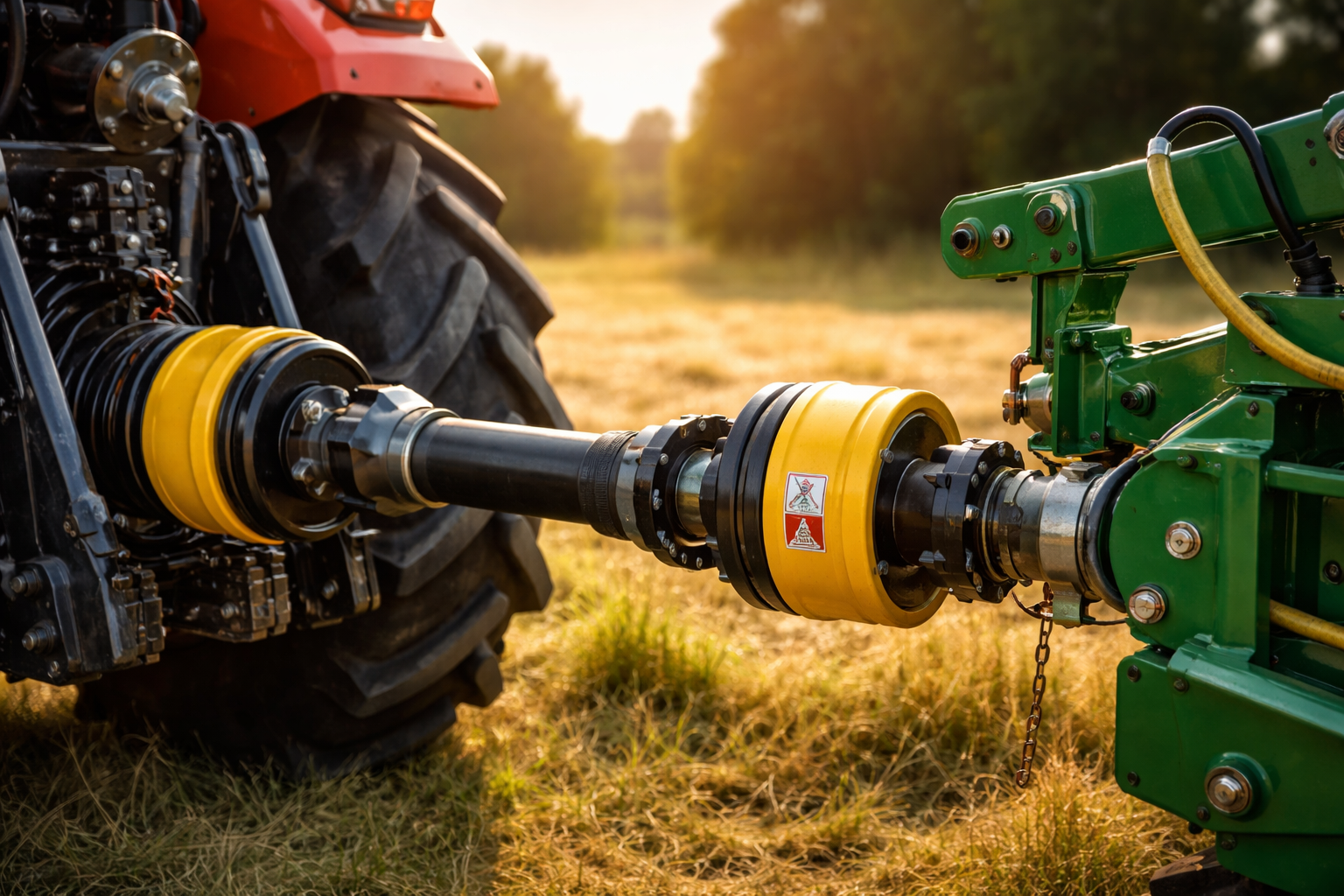
In South Africa, agricultural dynamometers test PTO shafts for tractors, aligning with our core expertise. Using FAO classifications, we ensure compatibility with implements like combine harvesters, where wide-angle CV joints handle uneven terrain simulations.
Egyptian infrastructure projects utilize our shafts in construction dynamometers, testing excavator drives under desert conditions. Heat-resistant designs prevent failures, supporting Nile Delta development initiatives.
Thai automotive manufacturing leverages our products for EV assembly line validation, where high-speed balancing ensures zero defects. Japanese precision engineering standards (JIS) are met through our G1 balance grades, facilitating Toyota’s hybrid tests.
Safety, Maintenance, and Best Practices
Safety in dynamometer operations cannot be overstated. As outlined in Bondioli & Pavesi’s safety guidelines, all rotating parts must be guarded, with interactive shields forming a complete system. Our shafts include integral guards compliant with ISO 5674, featuring quick-release mechanisms for easy maintenance.
Regular inspections are crucial: Check for wear on CV balls or diaphragm flex points every 500 hours. Lubrication with high-temperature grease (NLGI 2) extends life, while dynamic balancing checks prevent imbalances from escalating.
Installation follows a 10-step SOP: Measure lengths, align splines, torque bolts to spec (e.g., 50 Nm for M10), and verify guards. For high-speed setups, use laser alignment tools to minimize angular errors below 1 degree.
Common pitfalls include overloading; always adhere to rated torque. In EV tests, monitor for resonance using Campbell diagrams, adjusting shaft lengths if needed.
Our maintenance kits include spare yokes, crosses, and seals, ensuring minimal downtime. Contact [email protected] for tailored advice.
Future Trends and Innovations
As EVs dominate, dynamometers will incorporate AI for adaptive testing, requiring drive shafts with embedded IoT sensors. Our R&D focuses on wireless torque monitoring, predicting failures via machine learning.
Sustainable materials like recycled composites reduce environmental impact, aligning with UK net-zero goals. Hybrid carbon-steel shafts offer 20% weight savings, boosting efficiency.
Integration with virtual reality simulations allows remote testing, where our zero-backlash components ensure data fidelity across digital twins.
In summary, precision test benches represent the apex of engineering, with drive shafts as the unsung heroes. At UK pto-drive-shafts.com Co., Ltd, we’re committed to advancing this field.
FAQs
- What is the maximum speed for your drive shafts in dynamometers? Up to 25,000 RPM, customized for EV applications.
- How do CV joints improve test accuracy? By providing constant velocity and zero backlash, reducing measurement errors.
- Are your products compliant with UK safety standards? Yes, fully aligned with BS EN and ISO norms.
- What materials are used? High-alloy steels like 42CrMo and carbon fiber for lightweight strength.
- Can you customize for specific dynamometer setups? Absolutely, contact us for bespoke designs.
- How to maintain diaphragm couplings? Inspect for cracks quarterly; lubricate as per manual.
- What torque limiters do you recommend? BD types with Belleville springs for high-speed protection.
- Do you offer global shipping? Yes, from our Suffolk base to worldwide destinations.
- What’s the lead time for custom shafts? Typically 4-6 weeks, depending on specs.
- How do you ensure balance? Through ISO 1940-1 certified processes at G2.5 grade.
Contact Us
For inquiries or orders, email [email protected] or visit our facility at Bury St Edmunds, Suffolk IP32 7LX, UK.























