
Mô tả sản phẩm
XINMEI CNC MACHINING–YOUR ONE-STOP CUSTMIZED MACHINING SERVICES
Hồ sơ công ty
| Inspection Devices For Quality Control |
Overview
| Who we are | 8+ Years Experienced and Professional Factory for One-Stop CNC Machining Services |
| What we do | CNC Machining Services: CNC Milling Parts CNC Turning Parts CNC Grinding Parts Auto Lathe Parts Stamping Metal Parts |
| What is important | 1. Price above is not final order price which need to re-calculate CZPT your detailed requirements. 2. Please provide your detailed drawings CAD/DXF/STP rough drawings for engineer team to involve and come up with processing and quotes. 3. Sample is always needed for confirmation before mass production. 4. To cancel the order is not supported once confirmed due to its customization. |
| Why Choose us |
1. 8+ years professional CNC Machining services 2. Experienced engineering team 3. Competitive factory price 4. Bubble bags+ Carton packaging for no scratches, fast & safe delivery 5. Stand-by forever |
| QC Control | 100% inspection on all aspects (dimension, surface treatment etc..) |
| Testing/Inspection Devices | MMD-100b Profilemeter/Video Measuring Machine/CNC Vision Measuring Machine Sinpo CZPT 300C Three Dimensional/Calipers/Micrometer/Altimeter/Pin Gauge/Inside Micrometer/Roughness Tester etc. |
Mô tả sản phẩm
| Tên sản phẩm | Custom Lathe Parts Automotive Accessories Stainless Steel Precise CNC Machining Car Drive Shafts |
| Processing | CNC Machining, Drilling, Turning, Milling, Grinding, Stamping etc.. |
| Sự đối đãi | Polishing, Sandblasting, Anodizing, Electroplating, Electrophoresis, Spraying, Silk printing, Laser Spraying/Etching etc. |
| Vật liệu | Aluminum/Alloy/Steel/Iron/Brass/all metals |
| Tolerance | ±0.01 mm |
| Drawing | CAD/DXF/STP/rough drawings |
| Service | All Customized CNC Machining Services |
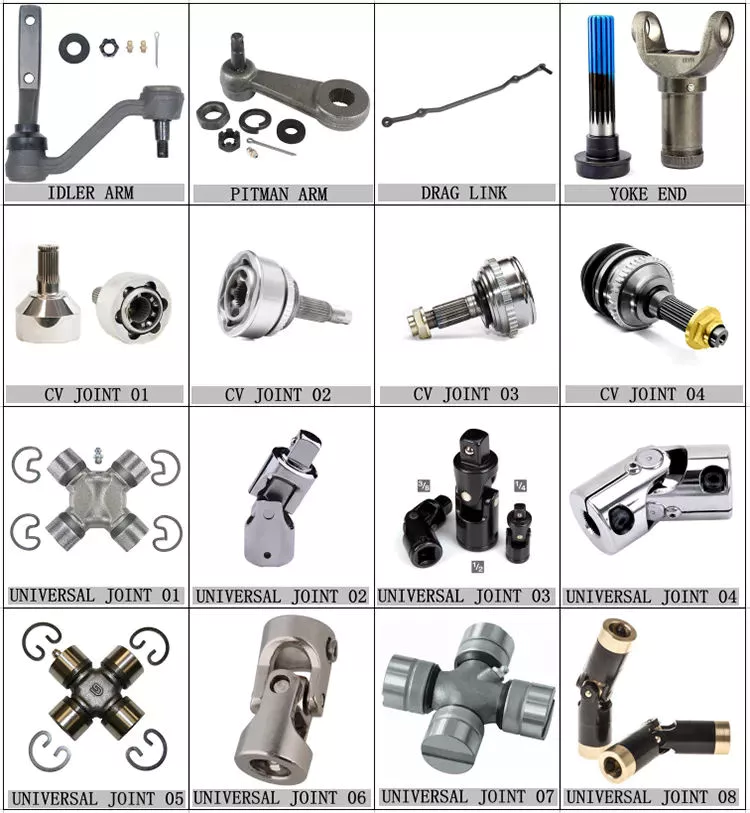
Product Types
For more products, please click here
Câu hỏi thường gặp
| Q1: Are you a factory or trading company? | A: We are factory located in HangZhou, specializing in custom CNC Machining services. |
| Q2. Can you produce according to samples if no drawing? |
A: Yes, we have professional engineer to work out drawings according to your sample. |
| Q3. How long can i get reply? |
A: We will reply within few minutes in working times and within 24 hours in holidays. |
| Q4: What is your sample policy? |
A: Sample cost will be charged for customization but will refund in mass order. |
| Q5: What is the lead time for both sampling and production? |
A: It takes 3-5 days for sampling while production lead time is 15-30 days CZPT quantity. |
| Q6: What is your payment terms? |
A: We accept 50% as deposit and 50% balance before shipment. |
| Q7: What is your MOQ? |
A: 1000 pcs above is suggested for customization with molding. |
Any concerns, please feel free to contact us! Thank you! /* Ngày 22 tháng 1 năm 2571 19:08:37 */!function(){function s(e,r){var a,o={};try{e&&e.split(“,”).forEach(function(e,t){e&&(a=e.match(/(.*?):(.*)$/))&&1
| Standard Or Nonstandard: | Nonstandard |
|---|---|
| Shaft Hole: | 8-24 |
| Torque: | Customized |
| Bore Diameter: | Customized |
| Structure: | Rigid |
| Vật liệu: | Stainless Steel |
| Mẫu: |
US$ 10/Piece
1 chiếc (Số lượng đặt tối thiểu) | |
|---|
| Tùy chỉnh: |
Có sẵn
| Yêu cầu tùy chỉnh |
|---|
How do drive shafts handle variations in speed and torque during operation?
Drive shafts are designed to handle variations in speed and torque during operation by employing specific mechanisms and configurations. These mechanisms allow the drive shafts to accommodate the changing demands of power transmission while maintaining smooth and efficient operation. Here’s a detailed explanation of how drive shafts handle variations in speed and torque:
1. Khớp nối mềm:
Drive shafts often incorporate flexible couplings, such as universal joints (U-joints) or constant velocity (CV) joints, to handle variations in speed and torque. These couplings provide flexibility and allow the drive shaft to transmit power even when the driving and driven components are not perfectly aligned. U-joints consist of two yokes connected by a cross-shaped bearing, allowing for angular movement between the drive shaft sections. This flexibility accommodates variations in speed and torque and compensates for misalignment. CV joints, which are commonly used in automotive drive shafts, maintain a constant velocity of rotation while accommodating changing operating angles. These flexible couplings enable smooth power transmission and reduce vibrations and wear caused by speed and torque variations.
2. Slip Joints:
In some drive shaft designs, slip joints are incorporated to handle variations in length and accommodate changes in distance between the driving and driven components. A slip joint consists of an inner and outer tubular section with splines or a telescoping mechanism. As the drive shaft experiences changes in length due to suspension movement or other factors, the slip joint allows the shaft to extend or compress without affecting the power transmission. By allowing axial movement, slip joints help prevent binding or excessive stress on the drive shaft during variations in speed and torque, ensuring smooth operation.
3. Balancing:
Drive shafts undergo balancing procedures to optimize their performance and minimize vibrations caused by speed and torque variations. Imbalances in the drive shaft can lead to vibrations, which not only affect the comfort of vehicle occupants but also increase wear and tear on the shaft and its associated components. Balancing involves redistributing mass along the drive shaft to achieve even weight distribution, reducing vibrations and improving overall performance. Dynamic balancing, which typically involves adding or removing small weights, ensures that the drive shaft operates smoothly even under varying speeds and torque loads.
4. Material Selection and Design:
The selection of materials and the design of drive shafts play a crucial role in handling variations in speed and torque. Drive shafts are typically made from high-strength materials, such as steel or aluminum alloys, chosen for their ability to withstand the forces and stresses associated with varying operating conditions. The diameter and wall thickness of the drive shaft are also carefully determined to ensure sufficient strength and stiffness. Additionally, the design incorporates considerations for factors such as critical speed, torsional rigidity, and resonance avoidance, which help maintain stability and performance during speed and torque variations.
5. Lubrication:
Proper lubrication is essential for drive shafts to handle variations in speed and torque. Lubricating the joints, such as U-joints or CV joints, reduces friction and heat generated during operation, ensuring smooth movement and minimizing wear. Adequate lubrication also helps prevent the binding of components, allowing the drive shaft to accommodate speed and torque variations more effectively. Regular lubrication maintenance is necessary to ensure optimal performance and extend the lifespan of the drive shaft.
6. System Monitoring:
Monitoring the performance of the drive shaft system is important to identify any issues related to variations in speed and torque. Unusual vibrations, noises, or changes in power transmission can indicate potential problems with the drive shaft. Regular inspections and maintenance checks allow for the early detection and resolution of issues, helping to prevent further damage and ensure the drive shaft continues to handle speed and torque variations effectively.
In summary, drive shafts handle variations in speed and torque during operation through the use of flexible couplings, slip joints, balancing procedures, appropriate material selection and design, lubrication, and system monitoring. These mechanisms and practices allow the drive shaft to accommodate misalignment, changes in length, and variations in power demands, ensuring efficient power transmission, smooth operation, and reduced wear and tear in various applications.

Bạn có thể cung cấp các ví dụ thực tế về các loại xe và máy móc sử dụng trục truyền động không?
Trục truyền động được sử dụng rộng rãi trong nhiều loại xe cộ và máy móc để truyền lực từ động cơ hoặc nguồn năng lượng đến bánh xe hoặc các bộ phận được dẫn động. Dưới đây là một số ví dụ thực tế về các loại xe cộ và máy móc sử dụng trục truyền động:
1. Ô tô:
Trục truyền động thường được tìm thấy trong ô tô, đặc biệt là những xe có hệ dẫn động cầu sau hoặc dẫn động bốn bánh. Trong những loại xe này, trục truyền động truyền lực từ hộp số hoặc hộp phân phối lực đến bộ vi sai cầu sau hoặc bộ vi sai cầu trước tương ứng. Điều này cho phép công suất của động cơ được phân bổ đến các bánh xe, đẩy xe tiến về phía trước.
2. Xe tải và xe thương mại:
Trục truyền động là bộ phận thiết yếu trong xe tải và xe thương mại. Chúng được sử dụng để truyền công suất từ hộp số hoặc hộp phân phối lực đến trục sau hoặc nhiều trục trong trường hợp xe tải hạng nặng. Trục truyền động trong xe thương mại được thiết kế để chịu tải mô-men xoắn cao hơn và thường lớn hơn và chắc chắn hơn so với trục truyền động được sử dụng trong xe hơi chở khách.
3. Thiết bị xây dựng và san lấp mặt đất:
Nhiều loại thiết bị xây dựng và san lấp mặt đất, chẳng hạn như máy xúc, máy chất tải, máy ủi và máy san gạt, đều dựa vào trục truyền động để truyền lực. Những máy móc này thường có hệ thống truyền động phức tạp sử dụng trục truyền động để truyền lực từ động cơ đến bánh xe hoặc xích, cho phép chúng thực hiện các công việc nặng nhọc tại các công trường xây dựng hoặc trong các hoạt động khai thác mỏ.
4. Máy móc nông nghiệp:
Các loại máy móc nông nghiệp, bao gồm máy kéo, máy gặt đập liên hợp và máy thu hoạch, sử dụng trục truyền động để truyền công suất từ động cơ đến bánh xe hoặc các bộ phận được dẫn động. Trục truyền động trong máy móc nông nghiệp thường phải chịu điều kiện khắc nghiệt và có thể có thêm các tính năng bổ sung như các đoạn thu gọn để phù hợp với khoảng cách thay đổi giữa các bộ phận.
5. Máy móc công nghiệp:
Các loại máy móc công nghiệp, chẳng hạn như thiết bị sản xuất, máy phát điện, máy bơm và máy nén khí, thường tích hợp trục truyền động trong hệ thống truyền lực của chúng. Các trục truyền động này truyền năng lượng từ động cơ điện, động cơ đốt trong hoặc các nguồn năng lượng khác đến các bộ phận được dẫn động khác nhau, cho phép máy móc thực hiện các nhiệm vụ cụ thể trong môi trường công nghiệp.
6. Tàu thuyền:
Trong các ứng dụng hàng hải, trục truyền động thường được sử dụng để truyền công suất từ động cơ đến chân vịt trong thuyền, tàu và các phương tiện thủy khác. Trục truyền động hàng hải thường dài hơn và được thiết kế để chịu được những thách thức đặc thù của môi trường nước, bao gồm khả năng chống ăn mòn và các cơ chế làm kín phù hợp.
7. Xe du lịch (RV) và nhà di động:
Xe RV và xe nhà di động thường sử dụng trục truyền động như một phần của hệ thống truyền động. Các trục truyền động này truyền lực từ hộp số đến trục sau, cho phép xe di chuyển và tạo lực đẩy. Trục truyền động trong xe RV có thể có thêm các tính năng như bộ giảm chấn hoặc các bộ phận giảm rung để tăng sự thoải mái trong suốt hành trình.
8. Xe địa hình và xe đua:
Các loại xe địa hình, chẳng hạn như SUV, xe tải và xe địa hình đa dụng (ATV), cũng như các loại xe đua, thường sử dụng trục truyền động. Các trục truyền động này được thiết kế để chịu được những điều kiện khắc nghiệt của địa hình gồ ghề hoặc các cuộc đua hiệu suất cao, truyền lực hiệu quả đến các bánh xe và đảm bảo lực kéo và hiệu suất tối ưu.
9. Phương tiện vận chuyển đường sắt:
Trong hệ thống đường sắt, trục truyền động được sử dụng trong đầu máy xe lửa và một số loại toa xe. Chúng truyền công suất từ động cơ của đầu máy đến bánh xe hoặc hệ thống đẩy, cho phép đoàn tàu di chuyển dọc theo đường ray. Trục truyền động đường sắt thường dài hơn nhiều và có thể có thêm các tính năng để phù hợp với tính chất khớp nối hoặc linh hoạt của một số cấu hình tàu hỏa.
10. Tuabin gió:
Các tuabin gió quy mô lớn dùng để sản xuất điện năng đều tích hợp trục truyền động vào hệ thống truyền tải điện của chúng. Trục truyền động truyền năng lượng quay từ các cánh quạt của tuabin đến máy phát điện, nơi năng lượng này được chuyển đổi thành điện năng. Trục truyền động trong tuabin gió được thiết kế để chịu được mô-men xoắn và lực quay đáng kể do gió tạo ra.
Những ví dụ này minh họa phạm vi rộng lớn của các loại xe cộ và máy móc dựa vào trục truyền động để truyền tải năng lượng và vận hành hiệu quả. Trục truyền động là bộ phận thiết yếu trong nhiều ngành công nghiệp, cho phép truyền tải năng lượng từ nguồn đến các bộ phận được dẫn động, cuối cùng tạo điều kiện thuận lợi cho chuyển động, hoạt động hoặc thực hiện các nhiệm vụ cụ thể.
How do drive shafts contribute to transferring rotational power in various applications?
Drive shafts play a crucial role in transferring rotational power from the engine or power source to the wheels or driven components in various applications. Whether it’s in vehicles or machinery, drive shafts enable efficient power transmission and facilitate the functioning of different systems. Here’s a detailed explanation of how drive shafts contribute to transferring rotational power:
1. Vehicle Applications:
In vehicles, drive shafts are responsible for transmitting rotational power from the engine to the wheels, enabling the vehicle to move. The drive shaft connects the gearbox or transmission output shaft to the differential, which further distributes the power to the wheels. As the engine generates torque, it is transferred through the drive shaft to the wheels, propelling the vehicle forward. This power transfer allows the vehicle to accelerate, maintain speed, and overcome resistance, such as friction and inclines.
2. Machinery Applications:
In machinery, drive shafts are utilized to transfer rotational power from the engine or motor to various driven components. For example, in industrial machinery, drive shafts may be used to transmit power to pumps, generators, conveyors, or other mechanical systems. In agricultural machinery, drive shafts are commonly employed to connect the power source to equipment such as harvesters, balers, or irrigation systems. Drive shafts enable these machines to perform their intended functions by delivering rotational power to the necessary components.
3. Power Transmission:
Drive shafts are designed to transmit rotational power efficiently and reliably. They are capable of transferring substantial amounts of torque from the engine to the wheels or driven components. The torque generated by the engine is transmitted through the drive shaft without significant power losses. By maintaining a rigid connection between the engine and the driven components, drive shafts ensure that the power produced by the engine is effectively utilized in performing useful work.
4. Khớp nối linh hoạt:
One of the key functions of drive shafts is to provide a flexible coupling between the engine/transmission and the wheels or driven components. This flexibility allows the drive shaft to accommodate angular movement and compensate for misalignment between the engine and the driven system. In vehicles, as the suspension system moves or the wheels encounter uneven terrain, the drive shaft adjusts its length and angle to maintain a constant power transfer. This flexibility helps prevent excessive stress on the drivetrain components and ensures smooth power transmission.
5. Torque and Speed Transmission:
Drive shafts are responsible for transmitting both torque and rotational speed. Torque is the rotational force generated by the engine or power source, while rotational speed is the number of revolutions per minute (RPM). Drive shafts must be capable of handling the torque requirements of the application without excessive twisting or bending. Additionally, they need to maintain the desired rotational speed to ensure the proper functioning of the driven components. Proper design, material selection, and balancing of the drive shafts contribute to efficient torque and speed transmission.
6. Length and Balance:
The length and balance of drive shafts are critical factors in their performance. The length of the drive shaft is determined by the distance between the engine or power source and the driven components. It should be appropriately sized to avoid excessive vibrations or bending. Drive shafts are carefully balanced to minimize vibrations and rotational imbalances, which can affect the overall performance, comfort, and longevity of the drivetrain system.
7. Safety and Maintenance:
Drive shafts require proper safety measures and regular maintenance. In vehicles, drive shafts are often enclosed within a protective tube or housing to prevent contact with moving parts, reducing the risk of injury. Safety shields or guards may also be installed around exposed drive shafts in machinery to protect operators from potential hazards. Regular maintenance includes inspecting the drive shaft for wear, damage, or misalignment, and ensuring proper lubrication of the U-joints. These measures help prevent failures, ensure optimal performance, and extend the service life of the drive shaft.
In summary, drive shafts play a vital role in transferring rotational power in various applications. Whether in vehicles or machinery, drive shafts enable efficient power transmission from the engine or power source to the wheels or driven components. They provide a flexible coupling, handle torque and speed transmission, accommodate angular movement, and contribute to the safety and maintenance of the system. By effectively transferring rotational power, drive shafts facilitate the functioning and performance of vehicles and machinery in numerous industries.


editor by CX 2024-04-29























