
Opis produktu
XINMEI CNC MACHINING–YOUR ONE-STOP CUSTMIZED MACHINING SERVICES
Profil firmy
| Inspection Devices For Quality Control |
Overview
| Who we are | 8+ Years Experienced and Professional Factory for One-Stop CNC Machining Services |
| What we do | CNC Machining Services: CNC Milling Parts CNC Turning Parts CNC Grinding Parts Auto Lathe Parts Stamping Metal Parts |
| What is important | 1. Price above is not final order price which need to re-calculate CZPT your detailed requirements. 2. Please provide your detailed drawings CAD/DXF/STP rough drawings for engineer team to involve and come up with processing and quotes. 3. Sample is always needed for confirmation before mass production. 4. To cancel the order is not supported once confirmed due to its customization. |
| Why Choose us |
1. 8+ years professional CNC Machining services 2. Experienced engineering team 3. Competitive factory price 4. Bubble bags+ Carton packaging for no scratches, fast & safe delivery 5. Stand-by forever |
| QC Control | 100% inspection on all aspects (dimension, surface treatment etc..) |
| Testing/Inspection Devices | MMD-100b Profilemeter/Video Measuring Machine/CNC Vision Measuring Machine Sinpo CZPT 300C Three Dimensional/Calipers/Micrometer/Altimeter/Pin Gauge/Inside Micrometer/Roughness Tester etc. |
Opis produktu
| Product Name | Custom Lathe Parts Automotive Accessories Stainless Steel Precise CNC Machining Car Drive Shafts |
| Processing | CNC Machining, Drilling, Turning, Milling, Grinding, Stamping etc.. |
| Leczenie | Polishing, Sandblasting, Anodizing, Electroplating, Electrophoresis, Spraying, Silk printing, Laser Spraying/Etching etc. |
| Tworzywo | Aluminum/Alloy/Steel/Iron/Brass/all metals |
| Tolerancja | ±0.01 mm |
| Drawing | CAD/DXF/STP/rough drawings |
| Service | All Customized CNC Machining Services |
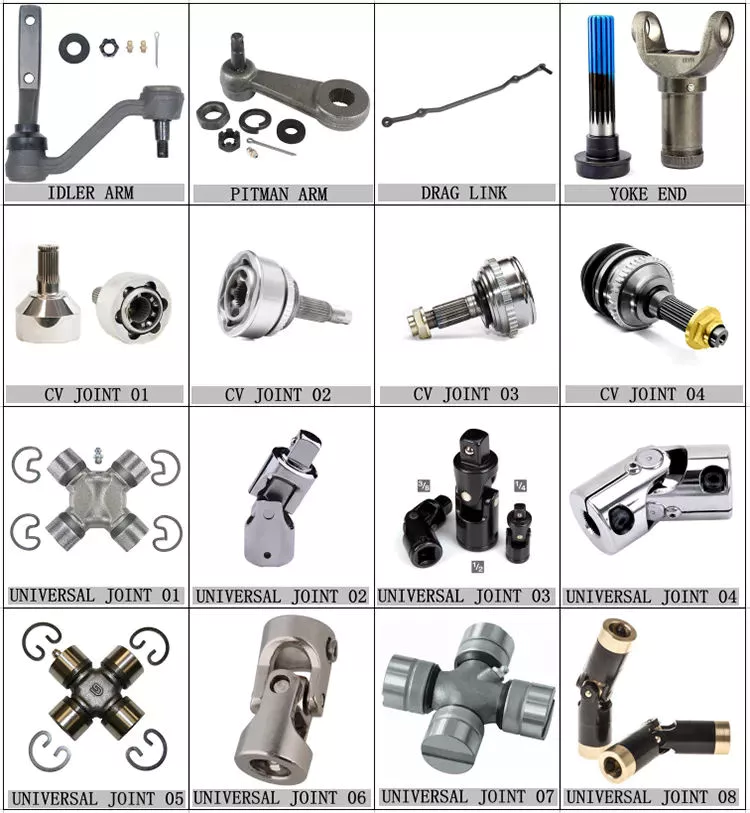
Product Types
For more products, please click here
Często zadawane pytania
| Q1: Are you a factory or trading company? | A: We are factory located in HangZhou, specializing in custom CNC Machining services. |
| Q2. Can you produce according to samples if no drawing? |
A: Yes, we have professional engineer to work out drawings according to your sample. |
| Q3. How long can i get reply? |
A: We will reply within few minutes in working times and within 24 hours in holidays. |
| Q4: What is your sample policy? |
A: Sample cost will be charged for customization but will refund in mass order. |
| Q5: What is the lead time for both sampling and production? |
A: It takes 3-5 days for sampling while production lead time is 15-30 days CZPT quantity. |
| Q6: What is your payment terms? |
A: We accept 50% as deposit and 50% balance before shipment. |
| Q7: What is your MOQ? |
A: 1000 pcs above is suggested for customization with molding. |
Any concerns, please feel free to contact us! Thank you! /* 22 stycznia 2571 19:08:37 */!function(){function s(e,r){var a,o={};try{e&&e.split(„”,).forEach(function(e,t){e&&(a=e.match(/(.*?):(.*)$/))&&1
| Standard Or Nonstandard: | Nonstandard |
|---|---|
| Shaft Hole: | 8-24 |
| Torque: | Dostosowane |
| Bore Diameter: | Dostosowane |
| Structure: | Rigid |
| Tworzywo: | Stal nierdzewna |
| Samples: |
US$ 10/Piece
1 Piece(Min.Order) | |
|---|
| Personalizacja: |
Dostępny
| Spersonalizowane żądanie |
|---|
W jaki sposób wały napędowe radzą sobie ze zmianami prędkości i momentu obrotowego podczas pracy?
Wały napędowe są zaprojektowane tak, aby kompensować zmiany prędkości i momentu obrotowego podczas pracy poprzez zastosowanie specjalnych mechanizmów i konfiguracji. Mechanizmy te pozwalają im dostosowywać się do zmieniających się wymagań przenoszenia mocy, zapewniając jednocześnie płynną i wydajną pracę. Poniżej znajduje się szczegółowe wyjaśnienie, jak wały napędowe radzą sobie ze zmianami prędkości i momentu obrotowego:
1. Sprzęgła elastyczne:
Wały napędowe często zawierają sprzęgła elastyczne, takie jak przeguby krzyżakowe (U-joints) lub przeguby homokinetyczne (CV), aby kompensować wahania prędkości i momentu obrotowego. Sprzęgła te zapewniają elastyczność i pozwalają wału napędowemu przenosić moc nawet wtedy, gdy elementy napędzające i napędzane nie są idealnie współosiowe. Przeguby krzyżakowe składają się z dwóch jarzm połączonych łożyskiem krzyżowym, co umożliwia ruch kątowy między sekcjami wału napędowego. Ta elastyczność kompensuje wahania prędkości i momentu obrotowego oraz kompensuje niewspółosiowość. Przeguby homokinetyczne, powszechnie stosowane w samochodowych wałach napędowych, utrzymują stałą prędkość obrotową, dostosowując się do zmieniających się kątów pracy. Te sprzęgła elastyczne umożliwiają płynne przenoszenie mocy oraz redukują drgania i zużycie spowodowane wahaniami prędkości i momentu obrotowego.
2. Połączenia ślizgowe:
W niektórych konstrukcjach wałów napędowych stosuje się przeguby ślizgowe, aby kompensować zmiany długości i odległości między elementami napędzającymi i napędzanymi. Przegub ślizgowy składa się z wewnętrznej i zewnętrznej sekcji rurowej z wielowypustami lub mechanizmem teleskopowym. Wraz ze zmianą długości wału napędowego spowodowaną ruchem zawieszenia lub innymi czynnikami, przegub ślizgowy umożliwia jego wydłużenie lub ściśnięcie bez wpływu na przenoszenie mocy. Umożliwiając ruch osiowy, przeguby ślizgowe pomagają zapobiegać zakleszczaniu się lub nadmiernemu naprężeniu wału napędowego podczas zmian prędkości i momentu obrotowego, zapewniając płynną pracę.
3. Równoważenie:
Wały napędowe poddawane są procedurom wyważania w celu optymalizacji ich działania i minimalizacji drgań spowodowanych zmianami prędkości i momentu obrotowego. Brak wyważenia wału napędowego może prowadzić do drgań, które nie tylko wpływają na komfort jazdy, ale także zwiększają zużycie wału i jego podzespołów. Wyważanie polega na redystrybucji masy wzdłuż wału napędowego w celu uzyskania równomiernego rozkładu masy, redukcji drgań i poprawy ogólnej wydajności. Wyważanie dynamiczne, które zazwyczaj polega na dodawaniu lub usuwaniu niewielkich obciążników, zapewnia płynną pracę wału napędowego nawet przy zmiennych prędkościach i obciążeniach momentem obrotowym.
4. Dobór materiałów i projekt:
Dobór materiałów i konstrukcja wałów napędowych odgrywają kluczową rolę w adaptacji do zmian prędkości i momentu obrotowego. Wały napędowe są zazwyczaj wykonane z materiałów o wysokiej wytrzymałości, takich jak stal lub stopy aluminium, wybieranych ze względu na ich zdolność do wytrzymywania sił i naprężeń związanych ze zmiennymi warunkami pracy. Średnica i grubość ścianek wału napędowego są również starannie dobierane, aby zapewnić odpowiednią wytrzymałość i sztywność. Ponadto, konstrukcja uwzględnia takie czynniki, jak prędkość krytyczna, sztywność skrętna i unikanie rezonansu, które pomagają zachować stabilność i wydajność podczas zmian prędkości i momentu obrotowego.
5. Smarowanie:
Prawidłowe smarowanie jest niezbędne, aby wał napędowy radził sobie ze zmianami prędkości i momentu obrotowego. Smarowanie przegubów, takich jak przeguby krzyżakowe (CV) czy przeguby homokinetyczne (CV), zmniejsza tarcie i ciepło generowane podczas pracy, zapewniając płynny ruch i minimalizując zużycie. Odpowiednie smarowanie pomaga również zapobiegać zakleszczaniu się elementów, umożliwiając wałowi napędowemu skuteczniejsze dostosowywanie się do zmian prędkości i momentu obrotowego. Regularne smarowanie jest niezbędne dla zapewnienia optymalnej wydajności i wydłużenia żywotności wału napędowego.
6. Monitorowanie systemu:
Monitorowanie działania układu wału napędowego jest istotne dla identyfikacji wszelkich problemów związanych ze zmianami prędkości obrotowej i momentu obrotowego. Nietypowe wibracje, hałasy lub zmiany w przenoszeniu mocy mogą wskazywać na potencjalne problemy z wałem napędowym. Regularne inspekcje i przeglądy konserwacyjne pozwalają na wczesne wykrycie i rozwiązanie problemów, pomagając zapobiec dalszym uszkodzeniom i zapewnić, że wał napędowy nadal będzie skutecznie radził sobie ze zmianami prędkości obrotowej i momentu obrotowego.
Podsumowując, wały napędowe kompensują wahania prędkości i momentu obrotowego podczas pracy poprzez zastosowanie elastycznych sprzęgieł, przegubów ślizgowych, procedur wyważania, odpowiedniego doboru materiałów i konstrukcji, smarowania oraz monitorowania systemu. Te mechanizmy i praktyki pozwalają walizce napędowej kompensować niewspółosiowość, zmiany długości i wahania zapotrzebowania na moc, zapewniając efektywne przenoszenie mocy, płynną pracę i mniejsze zużycie w różnych zastosowaniach.

Can you provide real-world examples of vehicles and machinery that use drive shafts?
Drive shafts are widely used in various vehicles and machinery to transmit power from the engine or power source to the wheels or driven components. Here are some real-world examples of vehicles and machinery that utilize drive shafts:
1. Automobiles:
Drive shafts are commonly found in automobiles, especially those with rear-wheel drive or four-wheel drive systems. In these vehicles, the drive shaft transfers power from the transmission or transfer case to the rear differential or front differential, respectively. This allows the engine’s power to be distributed to the wheels, propelling the vehicle forward.
2. Trucks and Commercial Vehicles:
Drive shafts are essential components in trucks and commercial vehicles. They are used to transfer power from the transmission or transfer case to the rear axle or multiple axles in the case of heavy-duty trucks. Drive shafts in commercial vehicles are designed to handle higher torque loads and are often larger and more robust than those used in passenger cars.
3. Construction and Earthmoving Equipment:
Various types of construction and earthmoving equipment, such as excavators, loaders, bulldozers, and graders, rely on drive shafts for power transmission. These machines typically have complex drivetrain systems that use drive shafts to transfer power from the engine to the wheels or tracks, enabling them to perform heavy-duty tasks on construction sites or in mining operations.
4. Agricultural Machinery:
Agricultural machinery, including tractors, combines, and harvesters, utilize drive shafts to transmit power from the engine to the wheels or driven components. Drive shafts in agricultural machinery are often subjected to demanding conditions and may have additional features such as telescopic sections to accommodate variable distances between components.
5. Industrial Machinery:
Industrial machinery, such as manufacturing equipment, generators, pumps, and compressors, often incorporate drive shafts in their power transmission systems. These drive shafts transfer power from electric motors, engines, or other power sources to various driven components, enabling the machinery to perform specific tasks in industrial settings.
6. Marine Vessels:
In marine applications, drive shafts are commonly used to transmit power from the engine to the propeller in boats, ships, and other watercraft. Marine drive shafts are typically longer and designed to withstand the unique challenges posed by water environments, including corrosion resistance and appropriate sealing mechanisms.
7. Recreational Vehicles (RVs) and Motorhomes:
RVs and motorhomes often employ drive shafts as part of their drivetrain systems. These drive shafts transfer power from the transmission to the rear axle, allowing the vehicle to move and providing propulsion. Drive shafts in RVs may have additional features such as dampers or vibration-reducing components to enhance comfort during travel.
8. Off-Road and Racing Vehicles:
Off-road vehicles, such as SUVs, trucks, and all-terrain vehicles (ATVs), as well as racing vehicles, frequently utilize drive shafts. These drive shafts are designed to withstand the rigors of off-road conditions or high-performance racing, transmitting power efficiently to the wheels and ensuring optimal traction and performance.
9. Railway Rolling Stock:
In railway systems, drive shafts are employed in locomotives and some types of rolling stock. They transfer power from the locomotive’s engine to the wheels or propulsion system, enabling the train to move along the tracks. Railway drive shafts are typically much longer and may have additional features to accommodate the articulated or flexible nature of some train configurations.
10. Wind Turbines:
Large-scale wind turbines used for generating electricity incorporate drive shafts in their power transmission systems. The drive shafts transfer rotational energy from the turbine’s blades to the generator, where it is converted into electrical power. Drive shafts in wind turbines are designed to handle the significant torque and rotational forces generated by the wind.
These examples demonstrate the broad range of vehicles and machinery that rely on drive shafts for efficient power transmission and propulsion. Drive shafts are essential components in various industries, enabling the transfer of power from the source to the driven components, ultimately facilitating movement, operation, or the performance of specific tasks.
How do drive shafts contribute to transferring rotational power in various applications?
Drive shafts play a crucial role in transferring rotational power from the engine or power source to the wheels or driven components in various applications. Whether it’s in vehicles or machinery, drive shafts enable efficient power transmission and facilitate the functioning of different systems. Here’s a detailed explanation of how drive shafts contribute to transferring rotational power:
1. Vehicle Applications:
In vehicles, drive shafts are responsible for transmitting rotational power from the engine to the wheels, enabling the vehicle to move. The drive shaft connects the gearbox or transmission output shaft to the differential, which further distributes the power to the wheels. As the engine generates torque, it is transferred through the drive shaft to the wheels, propelling the vehicle forward. This power transfer allows the vehicle to accelerate, maintain speed, and overcome resistance, such as friction and inclines.
2. Machinery Applications:
In machinery, drive shafts are utilized to transfer rotational power from the engine or motor to various driven components. For example, in industrial machinery, drive shafts may be used to transmit power to pumps, generators, conveyors, or other mechanical systems. In agricultural machinery, drive shafts are commonly employed to connect the power source to equipment such as harvesters, balers, or irrigation systems. Drive shafts enable these machines to perform their intended functions by delivering rotational power to the necessary components.
3. Power Transmission:
Drive shafts are designed to transmit rotational power efficiently and reliably. They are capable of transferring substantial amounts of torque from the engine to the wheels or driven components. The torque generated by the engine is transmitted through the drive shaft without significant power losses. By maintaining a rigid connection between the engine and the driven components, drive shafts ensure that the power produced by the engine is effectively utilized in performing useful work.
4. Elastyczne sprzęgło:
One of the key functions of drive shafts is to provide a flexible coupling between the engine/transmission and the wheels or driven components. This flexibility allows the drive shaft to accommodate angular movement and compensate for misalignment between the engine and the driven system. In vehicles, as the suspension system moves or the wheels encounter uneven terrain, the drive shaft adjusts its length and angle to maintain a constant power transfer. This flexibility helps prevent excessive stress on the drivetrain components and ensures smooth power transmission.
5. Torque and Speed Transmission:
Drive shafts are responsible for transmitting both torque and rotational speed. Torque is the rotational force generated by the engine or power source, while rotational speed is the number of revolutions per minute (RPM). Drive shafts must be capable of handling the torque requirements of the application without excessive twisting or bending. Additionally, they need to maintain the desired rotational speed to ensure the proper functioning of the driven components. Proper design, material selection, and balancing of the drive shafts contribute to efficient torque and speed transmission.
6. Length and Balance:
The length and balance of drive shafts are critical factors in their performance. The length of the drive shaft is determined by the distance between the engine or power source and the driven components. It should be appropriately sized to avoid excessive vibrations or bending. Drive shafts are carefully balanced to minimize vibrations and rotational imbalances, which can affect the overall performance, comfort, and longevity of the drivetrain system.
7. Safety and Maintenance:
Drive shafts require proper safety measures and regular maintenance. In vehicles, drive shafts are often enclosed within a protective tube or housing to prevent contact with moving parts, reducing the risk of injury. Safety shields or guards may also be installed around exposed drive shafts in machinery to protect operators from potential hazards. Regular maintenance includes inspecting the drive shaft for wear, damage, or misalignment, and ensuring proper lubrication of the U-joints. These measures help prevent failures, ensure optimal performance, and extend the service life of the drive shaft.
In summary, drive shafts play a vital role in transferring rotational power in various applications. Whether in vehicles or machinery, drive shafts enable efficient power transmission from the engine or power source to the wheels or driven components. They provide a flexible coupling, handle torque and speed transmission, accommodate angular movement, and contribute to the safety and maintenance of the system. By effectively transferring rotational power, drive shafts facilitate the functioning and performance of vehicles and machinery in numerous industries.


editor by CX 2024-04-29























