
Mô tả sản phẩm
| Tên sản phẩm | Pins (Female thread guide pins, Male thread guide pins, Self-clinching guide pins, Self-clinching pilot pins, Thin panel guide pins) |
| Design/Size | According to customer’s drawing or sample |
| Xử lý bề mặt | Zinc Plated (Yellow,Clear,Blue,Black), Anodize(Black, Gold, Natural), Copper Red, Copper Yellow, Sandblast and Anodize, Nickel Flash, Chrome Flash, Nickel Electroless, Tin Flash, Passivaton, Electro Painting etc. |
| Ứng dụng | Healthcare, automotive, electronics, communications, telecommunications, shipbuilding, aviation & traditional manufacturing |
| Customized Products Lead time |
3-7 working days for samples generally, mass production as per detail qty after samples approval |
| Test Equipment | Automatic screening machine, Nut sorter, 2D Projector,Vicker Hardness Tester, Calipers, Pin Gauge,Salt Spray Test Machine,ROHS & Film thickness test machine, Push/Tensile machine, Installation Machine, Torquemeter, Magnifier |
| Shipping | By sea, by air, International Express(DHL,FedEx,TNT,UPS) |
| Packing | Inner-Plastic bag+Outer-Standard Carton Box or according to customers’ requirements |
| For more information visit: dgchangjun | |
Product Image
Dịch vụ của chúng tôi
1. Professional Manufacturer: All of our Fastener are designed and manufactured according to Buyers’ pecification and performance.
2. Quality is guaranteed: Durability testing and critical technical design to enhance fasteners Lifetime.
3. Cost effective: Competitive prices with professional factory supply perfect fastening solution with more than 15 years experiences to solve your problem, wide range of parts selection.
4. Customized Ideal Fasteners: Customized services according to the samples and drawings Offered
About Us
HangZhou Changjun Industrial Co.,Ltd was founded in 2006, and is located in HangZhou City,ZheJiang , Province, China.It is a professional high-precision hardware processing factory integrating R&D,production and sales,provide customers a variety of high quality fasteners.
Changjun provides the customers with one-stop OEM/ODM solution for hardware fields.
Our service includes high-precision machining, drawing design for new sample, non-standard special-shaped turning parts,personalized product customization and so on.
As far, our featured fastener products cover Medical parts,Auto parts,Communication parts,IT parts,Optical parts,Automation parts etc.
Changjun has strong technical strength, rich engineering experience and advanced machining equipment. We have 25 set CNC series machines including CNC machining center,CNC lathe,CNC Automatic Core Walking Machine,And also have 62 precision automatic lathe.
We have a perfect modern testing system.Our testing laboratory have more than 18 kinds of testing instrument and equipment,fully guaranteeing product quality and performance and quick service.
After year of development,Changjun has a lot of core invention patents and various certificates of honor,certified by
ISO9001:2015,ISO14001:2015,ISO13485:2016,IATF16949:2016.
The perfect and mature quality management system ensures the quality of products and enhance the competitiveness of the company in the CNC precision processing industry.Step by Step as always!Better service to customers, make Changjun from excellent to excellent.
Certificate
Customer Visit
Câu hỏi thường gặp
Q1:Can I get a sample before mass production?
A1: We can provide free sample if we have this in stock, as long as you afford the freight. If no stock,we can produce for you after get sample fee. lead time: 5-7 working days.
Q2:What is the lead time of the mass production?
A2: Normally 7-15 working days, it depends on the quantity.
Q3:How to guarantee the Quality of Industrial Parts?
A3: We have been in fastener field over 10 years with full experience. And there are 5 checks in the whole processing, We have IQC (incoming quality control), IPQCS (in process quality control section), FQC (final quality control) , OQC (out-going quality control) and full inspection to control each process of industrial parts production.
Q4:What are our machining equipment?
A4:CNC milling machines, CNC turning machines, stamping machines,grinding machines,automatic lathe machines, tapping machines, grinding machines,screw machines, cutting machines and so on.
Q5:Will my drawing be safe after you get it?
A5: Yes, we will not release your design to third party unless with your permission.
| Vật liệu: | Stainless Steel |
|---|---|
| Customized: | Customized |
| International Standard: | DIN, ANSI, GB, JIS, Bsw, GOST |
| Quality Control: | 100% Inspection Berore Shipment |
| Certificate: | ISO9001, ISO14001, ISO13485, SGS, IATF16949 |
| Color: | Yellow, Red, Silver, Gold, Blue, Black, Natural |
| Mẫu: |
US$ 1/Piece
1 chiếc (Số lượng đặt tối thiểu) | |
|---|
| Tùy chỉnh: |
Có sẵn
| Yêu cầu tùy chỉnh |
|---|
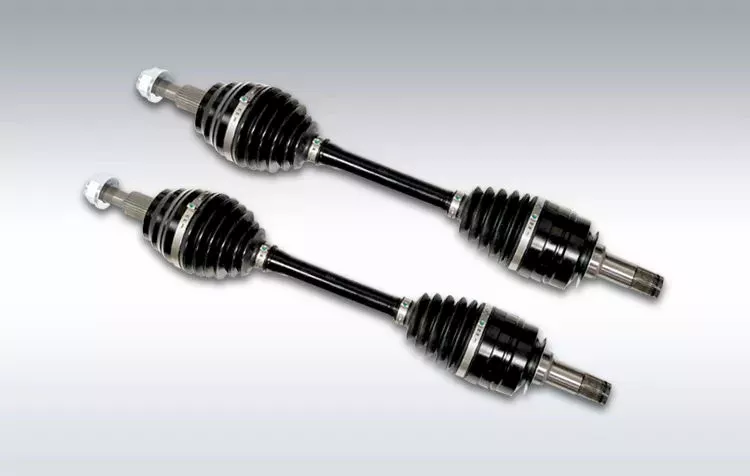
How do manufacturers ensure the compatibility of drive shafts with different equipment?
Manufacturers employ various strategies and processes to ensure the compatibility of drive shafts with different equipment. Compatibility refers to the ability of a drive shaft to effectively integrate and function within a specific piece of equipment or machinery. Manufacturers take into account several factors to ensure compatibility, including dimensional requirements, torque capacity, operating conditions, and specific application needs. Here’s a detailed explanation of how manufacturers ensure the compatibility of drive shafts:
1. Application Analysis:
Manufacturers begin by conducting a thorough analysis of the intended application and equipment requirements. This analysis involves understanding the specific torque and speed demands, operating conditions (such as temperature, vibration levels, and environmental factors), and any unique characteristics or constraints of the equipment. By gaining a comprehensive understanding of the application, manufacturers can tailor the design and specifications of the drive shaft to ensure compatibility.
2. Customization and Design:
Manufacturers often offer customization options to adapt drive shafts to different equipment. This customization involves tailoring the dimensions, materials, joint configurations, and other parameters to match the specific requirements of the equipment. By working closely with the equipment manufacturer or end-user, manufacturers can design drive shafts that align with the equipment’s mechanical interfaces, mounting points, available space, and other constraints. Customization ensures that the drive shaft fits seamlessly into the equipment, promoting compatibility and optimal performance.
3. Torque and Power Capacity:
Drive shaft manufacturers carefully determine the torque and power capacity of their products to ensure compatibility with different equipment. They consider factors such as the maximum torque requirements of the equipment, the expected operating conditions, and the safety margins necessary to withstand transient loads. By engineering drive shafts with appropriate torque ratings and power capacities, manufacturers ensure that the shaft can handle the demands of the equipment without experiencing premature failure or performance issues.
4. Material Selection:
Manufacturers choose materials for drive shafts based on the specific needs of different equipment. Factors such as torque capacity, operating temperature, corrosion resistance, and weight requirements influence material selection. Drive shafts may be made from various materials, including steel, aluminum alloys, or specialized composites, to provide the necessary strength, durability, and performance characteristics. The selected materials ensure compatibility with the equipment’s operating conditions, load requirements, and other environmental factors.
5. Joint Configurations:
Drive shafts incorporate joint configurations, such as universal joints (U-joints) or constant velocity (CV) joints, to accommodate different equipment needs. Manufacturers select and design the appropriate joint configuration based on factors such as operating angles, misalignment tolerances, and the desired level of smooth power transmission. The choice of joint configuration ensures that the drive shaft can effectively transmit power and accommodate the range of motion required by the equipment, promoting compatibility and reliable operation.
6. Quality Control and Testing:
Manufacturers implement stringent quality control processes and testing procedures to verify the compatibility of drive shafts with different equipment. These processes involve conducting dimensional inspections, material testing, torque and stress analysis, and performance testing under simulated operating conditions. By subjecting drive shafts to rigorous quality control measures, manufacturers can ensure that they meet the required specifications and performance criteria, guaranteeing compatibility with the intended equipment.
7. Compliance with Standards:
Manufacturers ensure that their drive shafts comply with relevant industry standards and regulations. Compliance with standards, such as ISO (International Organization for Standardization) or specific industry standards, provides assurance of quality, safety, and compatibility. Adhering to these standards helps manufacturers meet the expectations and requirements of equipment manufacturers and end-users, ensuring that the drive shafts are compatible and can be seamlessly integrated into different equipment.
8. Collaboration and Feedback:
Manufacturers often collaborate closely with equipment manufacturers, OEMs (Original Equipment Manufacturers), or end-users to gather feedback and incorporate their specific requirements into the drive shaft design and manufacturing processes. This collaborative approach ensures that the drive shafts are compatible with the intended equipment and meet the expectations of the end-users. By actively seeking input and feedback, manufacturers can continuously improve their products’ compatibility and performance.
In summary, manufacturers ensure the compatibility of drive shafts with different equipment through a combination of application analysis, customization, torque and power capacity considerations, material selection, joint configurations, quality control and testing, compliance with standards, and collaboration with equipment manufacturers and end-users. These efforts enable manufacturers to design and produce drive shafts that seamlessly integrate with various equipment, ensuring optimal performance, reliability, and compatibility in different applications.
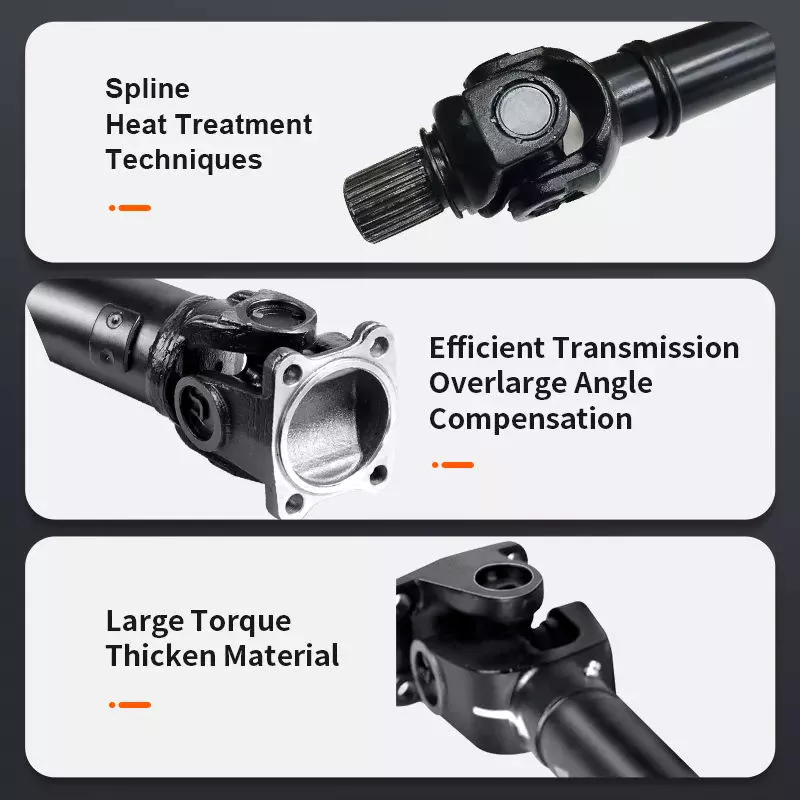
How do drive shafts contribute to the efficiency of vehicle propulsion and power transmission?
Drive shafts play a crucial role in the efficiency of vehicle propulsion and power transmission systems. They are responsible for transferring power from the engine or power source to the wheels or driven components. Here’s a detailed explanation of how drive shafts contribute to the efficiency of vehicle propulsion and power transmission:
1. Power Transfer:
Drive shafts transmit power from the engine or power source to the wheels or driven components. By efficiently transferring rotational energy, drive shafts enable the vehicle to move forward or drive the machinery. The design and construction of drive shafts ensure minimal power loss during the transfer process, maximizing the efficiency of power transmission.
2. Torque Conversion:
Drive shafts can convert torque from the engine or power source to the wheels or driven components. Torque conversion is necessary to match the power characteristics of the engine with the requirements of the vehicle or machinery. Drive shafts with appropriate torque conversion capabilities ensure that the power delivered to the wheels is optimized for efficient propulsion and performance.
3. Constant Velocity (CV) Joints:
Many drive shafts incorporate Constant Velocity (CV) joints, which help maintain a constant speed and efficient power transmission, even when the driving and driven components are at different angles. CV joints allow for smooth power transfer and minimize vibration or power losses that may occur due to changing operating angles. By maintaining constant velocity, drive shafts contribute to efficient power transmission and improved overall vehicle performance.
4. Lightweight Construction:
Efficient drive shafts are often designed with lightweight materials, such as aluminum or composite materials. Lightweight construction reduces the rotational mass of the drive shaft, which results in lower inertia and improved efficiency. Reduced rotational mass enables the engine to accelerate and decelerate more quickly, allowing for better fuel efficiency and overall vehicle performance.
5. Minimized Friction:
Efficient drive shafts are engineered to minimize frictional losses during power transmission. They incorporate features such as high-quality bearings, low-friction seals, and proper lubrication to reduce energy losses caused by friction. By minimizing friction, drive shafts enhance power transmission efficiency and maximize the available power for propulsion or operating other machinery.
6. Balanced and Vibration-Free Operation:
Drive shafts undergo dynamic balancing during the manufacturing process to ensure smooth and vibration-free operation. Imbalances in the drive shaft can lead to power losses, increased wear, and vibrations that reduce overall efficiency. By balancing the drive shaft, it can spin evenly, minimizing vibrations and optimizing power transmission efficiency.
7. Maintenance and Regular Inspection:
Proper maintenance and regular inspection of drive shafts are essential for maintaining their efficiency. Regular lubrication, inspection of joints and components, and prompt repair or replacement of worn or damaged parts help ensure optimal power transmission efficiency. Well-maintained drive shafts operate with minimal friction, reduced power losses, and improved overall efficiency.
8. Integration with Efficient Transmission Systems:
Drive shafts work in conjunction with efficient transmission systems, such as manual, automatic, or continuously variable transmissions. These transmissions help optimize power delivery and gear ratios based on driving conditions and vehicle speed. By integrating with efficient transmission systems, drive shafts contribute to the overall efficiency of the vehicle propulsion and power transmission system.
9. Aerodynamic Considerations:
In some cases, drive shafts are designed with aerodynamic considerations in mind. Streamlined drive shafts, often used in high-performance or electric vehicles, minimize drag and air resistance to improve overall vehicle efficiency. By reducing aerodynamic drag, drive shafts contribute to the efficient propulsion and power transmission of the vehicle.
10. Optimized Length and Design:
Drive shafts are designed to have optimal lengths and designs to minimize energy losses. Excessive drive shaft length or improper design can introduce additional rotational mass, increase bending stresses, and result in energy losses. By optimizing the length and design, drive shafts maximize power transmission efficiency and contribute to improved overall vehicle efficiency.
Overall, drive shafts contribute to the efficiency of vehicle propulsion and power transmission through effective power transfer, torque conversion, utilization of CV joints, lightweight construction, minimized friction, balanced operation, regular maintenance, integration with efficient transmission systems, aerodynamic considerations, and optimized length and design. By ensuring efficient power delivery and minimizing energy losses, drive shafts play a significant role in enhancing the overall efficiency and performance of vehicles and machinery.

Trục truyền động là gì và nó hoạt động như thế nào trong xe cộ và máy móc?
Trục truyền động, còn được gọi là trục chân vịt hoặc trục truyền động, là một bộ phận cơ khí đóng vai trò quan trọng trong việc truyền công suất quay từ động cơ đến bánh xe hoặc các bộ phận dẫn động khác trong xe cộ và máy móc. Nó thường được sử dụng trong nhiều loại phương tiện, bao gồm ô tô, xe tải, xe máy và máy móc nông nghiệp hoặc công nghiệp. Dưới đây là giải thích chi tiết về trục truyền động là gì và cách thức hoạt động của nó:
1. Định nghĩa và cấu trúc: Trục truyền động là một ống kim loại hình trụ nối động cơ hoặc nguồn năng lượng với bánh xe hoặc các bộ phận được dẫn động. Nó thường được làm bằng thép hoặc nhôm và bao gồm một hoặc nhiều đoạn ống với các khớp nối vạn năng (khớp chữ U) ở mỗi đầu. Các khớp nối chữ U này cho phép chuyển động góc và bù trừ sự lệch trục giữa động cơ/hộp số và bánh xe hoặc các bộ phận được dẫn động.
2. Truyền động: Chức năng chính của trục truyền động là truyền công suất quay từ động cơ hoặc nguồn năng lượng đến bánh xe hoặc các bộ phận được dẫn động. Trong xe cộ, trục truyền động kết nối trục đầu ra của hộp số với bộ vi sai, sau đó bộ vi sai truyền công suất đến bánh xe. Trong máy móc, trục truyền động truyền công suất từ động cơ đến các bộ phận được dẫn động khác nhau như bơm, máy phát điện hoặc các hệ thống cơ khí khác.
3. Mô-men xoắn và tốc độ: Trục truyền động có nhiệm vụ truyền cả mô-men xoắn và tốc độ quay. Mô-men xoắn là lực quay do động cơ hoặc nguồn năng lượng tạo ra, trong khi tốc độ quay là số vòng quay mỗi phút (RPM). Trục truyền động phải có khả năng truyền mô-men xoắn cần thiết mà không bị xoắn hoặc uốn quá mức và duy trì tốc độ quay mong muốn để các bộ phận được dẫn động hoạt động hiệu quả.
4. Khớp nối linh hoạt: Các khớp chữ U trên trục truyền động cung cấp một khớp nối linh hoạt cho phép chuyển động góc và bù trừ sự lệch trục giữa động cơ/hộp số và các bánh xe hoặc các bộ phận được dẫn động. Khi hệ thống treo của xe di chuyển hoặc máy móc hoạt động trên địa hình không bằng phẳng, trục truyền động có thể điều chỉnh chiều dài và góc của nó để phù hợp với những chuyển động này, đảm bảo truyền tải năng lượng trơn tru và ngăn ngừa hư hỏng các bộ phận của hệ thống truyền động.
5. Chiều dài và sự cân bằng: Chiều dài trục truyền động được xác định bởi khoảng cách giữa động cơ hoặc nguồn năng lượng và các bánh xe hoặc bộ phận được dẫn động. Trục truyền động phải có kích thước phù hợp để đảm bảo truyền tải năng lượng hiệu quả và tránh rung động hoặc uốn cong quá mức. Ngoài ra, trục truyền động được cân bằng cẩn thận để giảm thiểu rung động và mất cân bằng quay, những yếu tố có thể gây khó chịu, giảm hiệu suất và dẫn đến mài mòn sớm các bộ phận của hệ thống truyền động.
6. Các lưu ý về an toàn: Trục truyền động trong xe cộ và máy móc cần có các biện pháp an toàn thích hợp. Trong xe cộ, trục truyền động thường được bao bọc trong ống hoặc vỏ bảo vệ để ngăn tiếp xúc với các bộ phận chuyển động và giảm nguy cơ chấn thương trong trường hợp trục trặc hoặc hỏng hóc. Ngoài ra, các tấm chắn hoặc bộ phận bảo vệ an toàn thường được lắp đặt xung quanh các trục truyền động hở trong máy móc để bảo vệ người vận hành khỏi các mối nguy hiểm tiềm ẩn liên quan đến các bộ phận quay.
7. Bảo trì và kiểm tra: Việc bảo dưỡng và kiểm tra định kỳ trục truyền động là rất cần thiết để đảm bảo chúng hoạt động tốt và bền lâu. Điều này bao gồm kiểm tra các dấu hiệu mài mòn, hư hỏng hoặc độ rơ quá mức ở các khớp chữ U, kiểm tra trục truyền động xem có vết nứt hoặc biến dạng nào không, và bôi trơn các khớp chữ U theo khuyến cáo của nhà sản xuất. Bảo dưỡng đúng cách giúp ngăn ngừa hỏng hóc, đảm bảo hiệu suất tối ưu và kéo dài tuổi thọ của trục truyền động.
Tóm lại, trục truyền động là một bộ phận cơ khí truyền công suất quay từ động cơ hoặc nguồn năng lượng đến bánh xe hoặc các bộ phận được dẫn động trong xe cộ và máy móc. Nó hoạt động bằng cách tạo ra kết nối chắc chắn giữa động cơ/hộp số và bánh xe hoặc các bộ phận được dẫn động, đồng thời cho phép chuyển động góc và bù sai lệch thông qua việc sử dụng các khớp chữ U. Trục truyền động đóng vai trò quan trọng trong việc truyền công suất, phân phối mô-men xoắn và tốc độ, khớp nối linh hoạt, các vấn đề về chiều dài và cân bằng, an toàn và yêu cầu bảo trì. Hoạt động đúng cách của nó là điều cần thiết cho sự vận hành trơn tru và hiệu quả của xe cộ và máy móc.


editor by CX 2023-10-09























