
Описание продукта
Описание продукта
1.We are manufacturer of cv drive shaft,cv axle, cv joint and cv boot, we have more than 20-years experience in producing and selling auto parts.
2.We have strict quality control, the quality of our products is very good.
3.We are professional in different market around the world.
4.The reviews our customers given us are very positive, we have confidence in our products.
5.OEM/ODM is available, meet your requirements well.
6.Large warehouse, huge stocks!!! friendly for those customers who want some quantity.
7.Ship products out very fastly, we have stock.
| Название продукта | Drive shaft | Материал | 42CrMo alloy steel |
| Car fitment |
Chevrolet |
Гарантия | 12 months |
| Модель | Epica 2.0 | Place of origin | ZHangZhoug, China |
| year | 2007-2009 | MOQ | 4 PCS |
| OE number | C-GM053-8H | Delivery time | 1-7 days |
| OEM/ODM | Да | Бренд | GJF |
| Packing size | 72*23.5*23.5 | Payment | L/C,T/T,western Union,Cash,PayPal |
| Sample service | Depends on the situation of stock | Масса | 8.2088KG |
Подробные фотографии
Customer Review
Упаковка и доставка
Часто задаваемые вопросы
/* 22 января 2571 19:08:37 */!function(){function s(e,r){var a,o={};try{e&&e.split(“,).forEach(function(e,t){e&&(a=e.match(/(.*?):(.*)$/))&&1
| Послепродажное обслуживание: | 12 месяцев |
|---|---|
| Состояние: | Новый |
| Axle Number: | 1 |
| Приложение: | Car |
| Сертификация: | ASTM, CE, DIN, ISO |
| Материал: | Alloy |
| Образцы: |
US$ 32/Piece
1 штука (минимальный заказ) | |
|---|
| Настройка: |
Доступный
| Индивидуальный запрос |
|---|

How do manufacturers ensure the compatibility of drive shafts with different equipment?
Manufacturers employ various strategies and processes to ensure the compatibility of drive shafts with different equipment. Compatibility refers to the ability of a drive shaft to effectively integrate and function within a specific piece of equipment or machinery. Manufacturers take into account several factors to ensure compatibility, including dimensional requirements, torque capacity, operating conditions, and specific application needs. Here’s a detailed explanation of how manufacturers ensure the compatibility of drive shafts:
1. Application Analysis:
Manufacturers begin by conducting a thorough analysis of the intended application and equipment requirements. This analysis involves understanding the specific torque and speed demands, operating conditions (such as temperature, vibration levels, and environmental factors), and any unique characteristics or constraints of the equipment. By gaining a comprehensive understanding of the application, manufacturers can tailor the design and specifications of the drive shaft to ensure compatibility.
2. Customization and Design:
Manufacturers often offer customization options to adapt drive shafts to different equipment. This customization involves tailoring the dimensions, materials, joint configurations, and other parameters to match the specific requirements of the equipment. By working closely with the equipment manufacturer or end-user, manufacturers can design drive shafts that align with the equipment’s mechanical interfaces, mounting points, available space, and other constraints. Customization ensures that the drive shaft fits seamlessly into the equipment, promoting compatibility and optimal performance.
3. Torque and Power Capacity:
Drive shaft manufacturers carefully determine the torque and power capacity of their products to ensure compatibility with different equipment. They consider factors such as the maximum torque requirements of the equipment, the expected operating conditions, and the safety margins necessary to withstand transient loads. By engineering drive shafts with appropriate torque ratings and power capacities, manufacturers ensure that the shaft can handle the demands of the equipment without experiencing premature failure or performance issues.
4. Material Selection:
Manufacturers choose materials for drive shafts based on the specific needs of different equipment. Factors such as torque capacity, operating temperature, corrosion resistance, and weight requirements influence material selection. Drive shafts may be made from various materials, including steel, aluminum alloys, or specialized composites, to provide the necessary strength, durability, and performance characteristics. The selected materials ensure compatibility with the equipment’s operating conditions, load requirements, and other environmental factors.
5. Joint Configurations:
Drive shafts incorporate joint configurations, such as universal joints (U-joints) or constant velocity (CV) joints, to accommodate different equipment needs. Manufacturers select and design the appropriate joint configuration based on factors such as operating angles, misalignment tolerances, and the desired level of smooth power transmission. The choice of joint configuration ensures that the drive shaft can effectively transmit power and accommodate the range of motion required by the equipment, promoting compatibility and reliable operation.
6. Quality Control and Testing:
Manufacturers implement stringent quality control processes and testing procedures to verify the compatibility of drive shafts with different equipment. These processes involve conducting dimensional inspections, material testing, torque and stress analysis, and performance testing under simulated operating conditions. By subjecting drive shafts to rigorous quality control measures, manufacturers can ensure that they meet the required specifications and performance criteria, guaranteeing compatibility with the intended equipment.
7. Соответствие стандартам:
Manufacturers ensure that their drive shafts comply with relevant industry standards and regulations. Compliance with standards, such as ISO (International Organization for Standardization) or specific industry standards, provides assurance of quality, safety, and compatibility. Adhering to these standards helps manufacturers meet the expectations and requirements of equipment manufacturers and end-users, ensuring that the drive shafts are compatible and can be seamlessly integrated into different equipment.
8. Collaboration and Feedback:
Manufacturers often collaborate closely with equipment manufacturers, OEMs (Original Equipment Manufacturers), or end-users to gather feedback and incorporate their specific requirements into the drive shaft design and manufacturing processes. This collaborative approach ensures that the drive shafts are compatible with the intended equipment and meet the expectations of the end-users. By actively seeking input and feedback, manufacturers can continuously improve their products’ compatibility and performance.
In summary, manufacturers ensure the compatibility of drive shafts with different equipment through a combination of application analysis, customization, torque and power capacity considerations, material selection, joint configurations, quality control and testing, compliance with standards, and collaboration with equipment manufacturers and end-users. These efforts enable manufacturers to design and produce drive shafts that seamlessly integrate with various equipment, ensuring optimal performance, reliability, and compatibility in different applications.

Can you provide real-world examples of vehicles and machinery that use drive shafts?
Drive shafts are widely used in various vehicles and machinery to transmit power from the engine or power source to the wheels or driven components. Here are some real-world examples of vehicles and machinery that utilize drive shafts:
1. Automobiles:
Drive shafts are commonly found in automobiles, especially those with rear-wheel drive or four-wheel drive systems. In these vehicles, the drive shaft transfers power from the transmission or transfer case to the rear differential or front differential, respectively. This allows the engine’s power to be distributed to the wheels, propelling the vehicle forward.
2. Trucks and Commercial Vehicles:
Drive shafts are essential components in trucks and commercial vehicles. They are used to transfer power from the transmission or transfer case to the rear axle or multiple axles in the case of heavy-duty trucks. Drive shafts in commercial vehicles are designed to handle higher torque loads and are often larger and more robust than those used in passenger cars.
3. Construction and Earthmoving Equipment:
Various types of construction and earthmoving equipment, such as excavators, loaders, bulldozers, and graders, rely on drive shafts for power transmission. These machines typically have complex drivetrain systems that use drive shafts to transfer power from the engine to the wheels or tracks, enabling them to perform heavy-duty tasks on construction sites or in mining operations.
4. Agricultural Machinery:
Agricultural machinery, including tractors, combines, and harvesters, utilize drive shafts to transmit power from the engine to the wheels or driven components. Drive shafts in agricultural machinery are often subjected to demanding conditions and may have additional features such as telescopic sections to accommodate variable distances between components.
5. Industrial Machinery:
Industrial machinery, such as manufacturing equipment, generators, pumps, and compressors, often incorporate drive shafts in their power transmission systems. These drive shafts transfer power from electric motors, engines, or other power sources to various driven components, enabling the machinery to perform specific tasks in industrial settings.
6. Marine Vessels:
In marine applications, drive shafts are commonly used to transmit power from the engine to the propeller in boats, ships, and other watercraft. Marine drive shafts are typically longer and designed to withstand the unique challenges posed by water environments, including corrosion resistance and appropriate sealing mechanisms.
7. Recreational Vehicles (RVs) and Motorhomes:
RVs and motorhomes often employ drive shafts as part of their drivetrain systems. These drive shafts transfer power from the transmission to the rear axle, allowing the vehicle to move and providing propulsion. Drive shafts in RVs may have additional features such as dampers or vibration-reducing components to enhance comfort during travel.
8. Off-Road and Racing Vehicles:
Off-road vehicles, such as SUVs, trucks, and all-terrain vehicles (ATVs), as well as racing vehicles, frequently utilize drive shafts. These drive shafts are designed to withstand the rigors of off-road conditions or high-performance racing, transmitting power efficiently to the wheels and ensuring optimal traction and performance.
9. Railway Rolling Stock:
In railway systems, drive shafts are employed in locomotives and some types of rolling stock. They transfer power from the locomotive’s engine to the wheels or propulsion system, enabling the train to move along the tracks. Railway drive shafts are typically much longer and may have additional features to accommodate the articulated or flexible nature of some train configurations.
10. Wind Turbines:
Large-scale wind turbines used for generating electricity incorporate drive shafts in their power transmission systems. The drive shafts transfer rotational energy from the turbine’s blades to the generator, where it is converted into electrical power. Drive shafts in wind turbines are designed to handle the significant torque and rotational forces generated by the wind.
These examples demonstrate the broad range of vehicles and machinery that rely on drive shafts for efficient power transmission and propulsion. Drive shafts are essential components in various industries, enabling the transfer of power from the source to the driven components, ultimately facilitating movement, operation, or the performance of specific tasks.
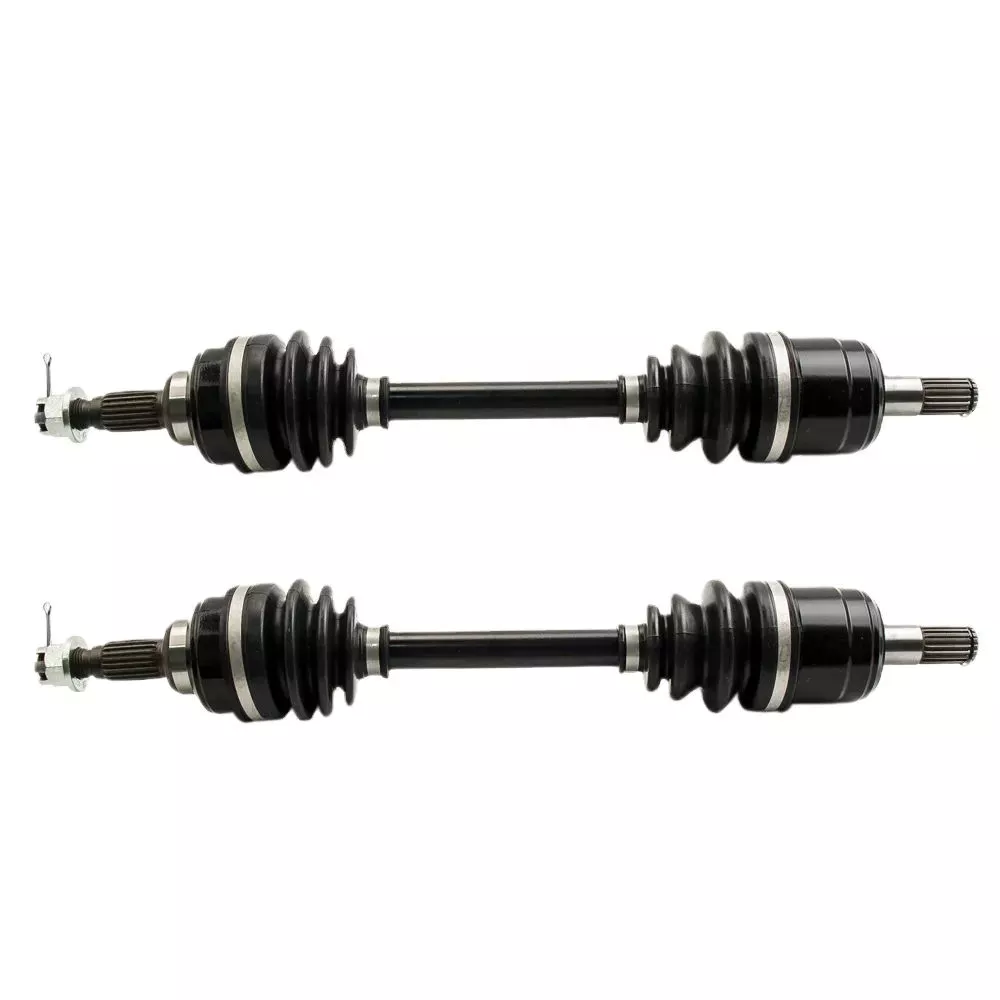
Что такое карданный вал и как он функционирует в транспортных средствах и механизмах?
Карданный вал, также известный как гребной вал или карданный вал, — это механический компонент, играющий важнейшую роль в передаче вращательной мощности от двигателя к колесам или другим приводным компонентам в транспортных средствах и механизмах. Он широко используется в различных типах транспортных средств, включая автомобили, грузовики, мотоциклы, а также сельскохозяйственную и промышленную технику. Вот подробное объяснение того, что такое карданный вал и как он функционирует:
1. Определение и построение: Карданный вал — это цилиндрическая металлическая трубка, соединяющая двигатель или источник энергии с колёсами или приводными компонентами. Обычно он изготавливается из стали или алюминия и состоит из одной или нескольких трубчатых секций с карданными шарнирами (U-образными шарнирами) на каждом конце. Эти карданные шарниры обеспечивают угловое перемещение и компенсацию несоосности между двигателем/трансмиссией и приводными колёсами или компонентами.
2. Передача энергии: Основная функция карданного вала — передача вращательной мощности от двигателя или источника питания к колесам или приводным компонентам. В транспортных средствах карданный вал соединяет выходной вал трансмиссии или коробки передач с дифференциалом, который затем передает мощность на колеса. В машинах карданный вал передает мощность от двигателя или мотора к различным приводным компонентам, таким как насосы, генераторы или другие механические системы.
3. Крутящий момент и скорость: Приводной вал отвечает за передачу как крутящего момента, так и скорости вращения. Крутящий момент — это вращательная сила, создаваемая двигателем или источником энергии, а скорость вращения — это число оборотов в минуту (об/мин). Приводной вал должен быть способен передавать требуемый крутящий момент без чрезмерного скручивания или изгиба и поддерживать желаемую скорость вращения для эффективной работы приводимых в движение компонентов.
4. Гибкая связь: Карданные шарниры на карданном валу обеспечивают гибкое соединение, позволяющее осуществлять угловые перемещения и компенсировать несоосность между двигателем/трансмиссией и ведущими колесами или компонентами. При движении подвески автомобиля или работе оборудования на неровной местности карданный вал может изменять свою длину и угол наклона для компенсации этих перемещений, обеспечивая плавную передачу мощности и предотвращая повреждение компонентов трансмиссии.
5. Длина и баланс: Длина карданного вала определяется расстоянием между двигателем или источником энергии и ведущими колесами или компонентами. Он должен быть соответствующего размера, чтобы обеспечить надлежащую передачу мощности и избежать чрезмерных вибраций или изгиба. Кроме того, карданный вал тщательно балансируется для минимизации вибраций и дисбаланса вращения, которые могут вызывать дискомфорт, снижать эффективность и приводить к преждевременному износу компонентов трансмиссии.
6. Вопросы безопасности: В транспортных средствах и механизмах приводные валы требуют надлежащих мер безопасности. В транспортных средствах приводные валы часто заключены в защитную трубу или корпус, чтобы предотвратить контакт с движущимися частями и снизить риск травм в случае неисправности или поломки. Кроме того, вокруг открытых приводных валов в механизмах обычно устанавливаются защитные экраны или ограждения для защиты операторов от потенциальных опасностей, связанных с вращающимися компонентами.
7. Техническое обслуживание и осмотр: Регулярное техническое обслуживание и осмотр карданных валов необходимы для обеспечения их надлежащего функционирования и долговечности. Это включает в себя проверку на наличие признаков износа, повреждений или чрезмерного люфта в карданных шарнирах, осмотр карданного вала на наличие трещин или деформаций, а также смазку карданных шарниров в соответствии с рекомендациями производителя. Правильное техническое обслуживание помогает предотвратить поломки, обеспечивает оптимальную производительность и продлевает срок службы карданного вала.
Вкратце, карданный вал — это механический компонент, передающий вращательную мощность от двигателя или источника энергии к колесам или приводным компонентам в транспортных средствах и механизмах. Он обеспечивает жесткое соединение между двигателем/трансмиссией и приводными колесами или компонентами, а также позволяет осуществлять угловые перемещения и компенсацию несоосности с помощью карданных шарниров. Карданный вал играет решающую роль в передаче мощности, крутящего момента и скорости, гибкой муфте, учете длины и балансировки, безопасности и требованиях к техническому обслуживанию. Его правильное функционирование необходимо для плавной и эффективной работы транспортных средств и механизмов.


editor by CX 2024-04-25























