
Descriere produs
Descriere produs
1.We are manufacturer of cv drive shaft,cv axle, cv joint and cv boot, we have more than 20-years experience in producing and selling auto parts.
2. Avem un control strict al calității, calitatea produselor noastre este foarte bună.
3. Suntem profesioniști pe diferite piețe din întreaga lume.
4. Recenziile clienților noștri sunt foarte pozitive, avem încredere în produsele noastre.
5. OEM/ODM este disponibil, îndeplinește bine cerințele dumneavoastră.
6.Large warehouse, huge stocks!!! friendly for those customers who want small quantity.
7. Expediem produsele foarte repede, avem stoc.
| Nume produs | Arbore de transmisie | Material | Oțel aliat 42CrMo |
| Compatibilitate auto | Mitsubishi | Garanție | 12 months |
| Model | M3 BM 1.5 AT 2014 | Place of origin | ZHangZhoug, China |
| Marca | GJF | MOQ | 4 bucăți |
| Număr OE | C-MZ087-8H | Delivery time | 1-7 zile |
| OEM/ODM | Da | Marca | GJF |
| Dimensiunea ambalajului | 72*23.5*23.5 | Plată | Acreditare credit, transfer bancar, Western Union, numerar, PayPal |
| Serviciu de mostre | Depinde de situația stocului | Greutate | 6.1KG |
Fotografii detaliate
Recenzie client
Ambalare și expediere
FAQ
/* March 10, 2571 17:59:20 */!function(){function s(e,r){var a,o={};try{e&&e.split(“,”).forEach(function(e,t){e&&(a=e.match(/(.*?):(.*)$/))&&1
| Serviciu post-vânzare: | 12 luni |
|---|---|
| Stare: | Nou |
| Număr ax: | 1 |
| Aplicație: | Car |
| Certification: | ASTM, CE, DIN, ISO |
| Material: | Alloy |
| Mostre: |
US$ 35/Piece
1 bucată (comandă minimă) | |
|---|
| Personalizare: |
Disponibil
| Cerere personalizată |
|---|
How do drive shafts handle variations in speed and torque during operation?
Drive shafts are designed to handle variations in speed and torque during operation by employing specific mechanisms and configurations. These mechanisms allow the drive shafts to accommodate the changing demands of power transmission while maintaining smooth and efficient operation. Here’s a detailed explanation of how drive shafts handle variations in speed and torque:
1. Flexible Couplings:
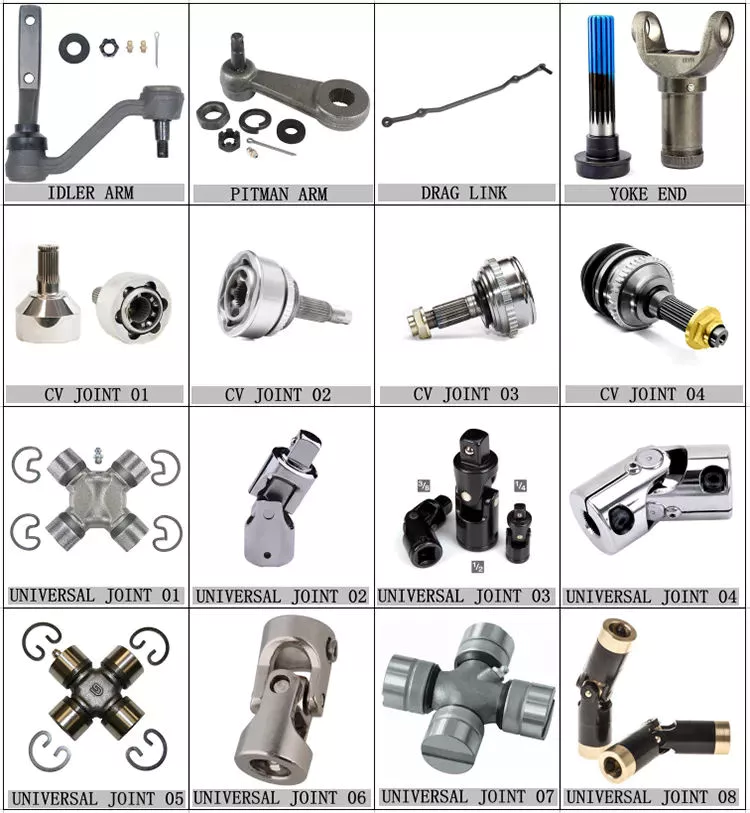
Drive shafts often incorporate flexible couplings, such as universal joints (U-joints) or constant velocity (CV) joints, to handle variations in speed and torque. These couplings provide flexibility and allow the drive shaft to transmit power even when the driving and driven components are not perfectly aligned. U-joints consist of two yokes connected by a cross-shaped bearing, allowing for angular movement between the drive shaft sections. This flexibility accommodates variations in speed and torque and compensates for misalignment. CV joints, which are commonly used in automotive drive shafts, maintain a constant velocity of rotation while accommodating changing operating angles. These flexible couplings enable smooth power transmission and reduce vibrations and wear caused by speed and torque variations.
2. Slip Joints:
In some drive shaft designs, slip joints are incorporated to handle variations in length and accommodate changes in distance between the driving and driven components. A slip joint consists of an inner and outer tubular section with splines or a telescoping mechanism. As the drive shaft experiences changes in length due to suspension movement or other factors, the slip joint allows the shaft to extend or compress without affecting the power transmission. By allowing axial movement, slip joints help prevent binding or excessive stress on the drive shaft during variations in speed and torque, ensuring smooth operation.
3. Balancing:
Drive shafts undergo balancing procedures to optimize their performance and minimize vibrations caused by speed and torque variations. Imbalances in the drive shaft can lead to vibrations, which not only affect the comfort of vehicle occupants but also increase wear and tear on the shaft and its associated components. Balancing involves redistributing mass along the drive shaft to achieve even weight distribution, reducing vibrations and improving overall performance. Dynamic balancing, which typically involves adding or removing small weights, ensures that the drive shaft operates smoothly even under varying speeds and torque loads.
4. Material Selection and Design:
The selection of materials and the design of drive shafts play a crucial role in handling variations in speed and torque. Drive shafts are typically made from high-strength materials, such as steel or aluminum alloys, chosen for their ability to withstand the forces and stresses associated with varying operating conditions. The diameter and wall thickness of the drive shaft are also carefully determined to ensure sufficient strength and stiffness. Additionally, the design incorporates considerations for factors such as critical speed, torsional rigidity, and resonance avoidance, which help maintain stability and performance during speed and torque variations.
5. Lubrication:
Proper lubrication is essential for drive shafts to handle variations in speed and torque. Lubricating the joints, such as U-joints or CV joints, reduces friction and heat generated during operation, ensuring smooth movement and minimizing wear. Adequate lubrication also helps prevent the binding of components, allowing the drive shaft to accommodate speed and torque variations more effectively. Regular lubrication maintenance is necessary to ensure optimal performance and extend the lifespan of the drive shaft.
6. System Monitoring:
Monitoring the performance of the drive shaft system is important to identify any issues related to variations in speed and torque. Unusual vibrations, noises, or changes in power transmission can indicate potential problems with the drive shaft. Regular inspections and maintenance checks allow for the early detection and resolution of issues, helping to prevent further damage and ensure the drive shaft continues to handle speed and torque variations effectively.
In summary, drive shafts handle variations in speed and torque during operation through the use of flexible couplings, slip joints, balancing procedures, appropriate material selection and design, lubrication, and system monitoring. These mechanisms and practices allow the drive shaft to accommodate misalignment, changes in length, and variations in power demands, ensuring efficient power transmission, smooth operation, and reduced wear and tear in various applications.

Puteți oferi exemple din lumea reală de vehicule și utilaje care utilizează arbori de transmisie?
Arborii de transmisie sunt utilizați pe scară largă în diverse vehicule și utilaje pentru a transmite puterea de la motor sau sursa de alimentare la roți sau componentele acționate. Iată câteva exemple din lumea reală de vehicule și utilaje care utilizează arbori de transmisie:
1. Automobile:
Arborii de transmisie se găsesc frecvent în automobile, în special în cele cu sisteme de tracțiune spate sau integrală. La aceste vehicule, arborele de transmisie transferă puterea de la transmisie sau cutia de transfer la diferențialul spate sau, respectiv, la diferențialul față. Acest lucru permite distribuirea puterii motorului către roți, propulsând vehiculul înainte.
2. Camioane și vehicule comerciale:
Arborii de transmisie sunt componente esențiale în camioane și vehicule comerciale. Aceștia sunt utilizați pentru a transfera puterea de la transmisie sau cutia de transfer la puntea spate sau la mai multe punți în cazul camioanelor grele. Arborii de transmisie din vehiculele comerciale sunt proiectați să suporte sarcini de cuplu mai mari și sunt adesea mai mari și mai robusti decât cei utilizați în autoturisme.
3. Utilaje de construcții și terasamente:
Diverse tipuri de echipamente de construcții și terasamente, cum ar fi excavatoarele, încărcătoarele, buldozerele și nivelatoarele, se bazează pe arbori de transmisie pentru transmiterea puterii. Aceste mașini au de obicei sisteme complexe de transmisie care utilizează arbori de transmisie pentru a transfera puterea de la motor la roți sau șenile, permițându-le să efectueze sarcini grele pe șantierele de construcții sau în operațiunile miniere.
4. Mașini agricole:
Mașinile agricole, inclusiv tractoarele, combinele și combinele de recoltat, utilizează arbori de transmisie pentru a transmite puterea de la motor la roți sau componentele acționate. Arborii de transmisie din utilajele agricole sunt adesea supuși unor condiții solicitante și pot avea caracteristici suplimentare, cum ar fi secțiuni telescopice, pentru a se adapta distanțelor variabile dintre componente.
5. Utilaje industriale:
Mașinile industriale, cum ar fi echipamentele de producție, generatoarele, pompele și compresoarele, încorporează adesea arbori de transmisie în sistemele lor de transmisie a puterii. Acești arbori de transmisie transferă puterea de la motoare electrice, motoare sau alte surse de alimentare către diverse componente acționate, permițând mașinilor să îndeplinească sarcini specifice în medii industriale.
6. Nave maritime:
În aplicațiile marine, arborii de transmisie sunt utilizați în mod obișnuit pentru a transmite puterea de la motor la elice în bărci, nave și alte ambarcațiuni. Arborii de transmisie marini sunt de obicei mai lungi și proiectați pentru a rezista provocărilor unice reprezentate de mediile acvatice, inclusiv rezistența la coroziune și mecanismele de etanșare adecvate.
7. Vehicule de agrement (RV-uri) și autorulote:
Rulotele și autorulotele folosesc adesea arbori de transmisie ca parte a sistemelor lor de transmisie. Acești arbori de transmisie transferă puterea de la transmisie la puntea spate, permițând vehiculului să se miște și asigurând propulsia. Arborii de transmisie din rulote pot avea caracteristici suplimentare, cum ar fi amortizoare sau componente de reducere a vibrațiilor, pentru a spori confortul în timpul călătoriei.
8. Vehicule off-road și de curse:
Vehiculele off-road, cum ar fi SUV-urile, camioanele și vehiculele de teren accidentat (ATV-urile), precum și vehiculele de curse, utilizează frecvent arbori de transmisie. Acești arbori de transmisie sunt proiectați să reziste rigorilor condițiilor off-road sau curselor de înaltă performanță, transmițând eficient puterea către roți și asigurând o tracțiune și performanță optime.
9. Material rulant feroviar:
În sistemele feroviare, arborii de transmisie sunt utilizați în locomotive și în unele tipuri de material rulant. Aceștia transferă puterea de la motorul locomotivei la roți sau la sistemul de propulsie, permițând trenului să se deplaseze pe șine. Arborii de transmisie ai căilor ferate sunt de obicei mult mai lungi și pot avea caracteristici suplimentare pentru a se adapta naturii articulate sau flexibile a unor configurații de tren.
10. Turbine eoliene:
Turbinele eoliene de mari dimensiuni utilizate pentru generarea de energie electrică încorporează arbori de transmisie în sistemele lor de transmisie a puterii. Arborii de transmisie transferă energia de rotație de la palele turbinei la generator, unde este convertită în energie electrică. Arborii de transmisie din turbinele eoliene sunt proiectați pentru a gestiona cuplul semnificativ și forțele de rotație generate de vânt.
Aceste exemple demonstrează gama largă de vehicule și utilaje care se bazează pe arbori de transmisie pentru o transmisie eficientă a puterii și a propulsiei. Arborii de transmisie sunt componente esențiale în diverse industrii, permițând transferul de putere de la sursă la componentele acționate, facilitând în cele din urmă mișcarea, funcționarea sau îndeplinirea unor sarcini specifice.

How do drive shafts handle variations in length and torque requirements?
Drive shafts are designed to handle variations in length and torque requirements in order to efficiently transmit rotational power. Here’s an explanation of how drive shafts address these variations:
Length Variations:
Drive shafts are available in different lengths to accommodate varying distances between the engine or power source and the driven components. They can be custom-made or purchased in standardized lengths, depending on the specific application. In situations where the distance between the engine and the driven components is longer, multiple drive shafts with appropriate couplings or universal joints can be used to bridge the gap. These additional drive shafts effectively extend the overall length of the power transmission system.
Additionally, some drive shafts are designed with telescopic sections. These sections can be extended or retracted, allowing for adjustments in length to accommodate different vehicle configurations or dynamic movements. Telescopic drive shafts are commonly used in applications where the distance between the engine and the driven components may change, such as in certain types of trucks, buses, and off-road vehicles.
Torque Requirements:
Drive shafts are engineered to handle varying torque requirements based on the power output of the engine or power source and the demands of the driven components. The torque transmitted through the drive shaft depends on factors such as the engine power, load conditions, and the resistance encountered by the driven components.
Manufacturers consider torque requirements when selecting the appropriate materials and dimensions for drive shafts. Drive shafts are typically made from high-strength materials, such as steel or aluminum alloys, to withstand the torque loads without deformation or failure. The diameter, wall thickness, and design of the drive shaft are carefully calculated to ensure it can handle the expected torque without excessive deflection or vibration.
In applications with high torque demands, such as heavy-duty trucks, industrial machinery, or performance vehicles, drive shafts may have additional reinforcements. These reinforcements can include thicker walls, cross-sectional shapes optimized for strength, or composite materials with superior torque-handling capabilities.
Furthermore, drive shafts often incorporate flexible joints, such as universal joints or constant velocity (CV) joints. These joints allow for angular misalignment and compensate for variations in the operating angles between the engine, transmission, and driven components. They also help absorb vibrations and shocks, reducing stress on the drive shaft and enhancing its torque-handling capacity.
In summary, drive shafts handle variations in length and torque requirements through customizable lengths, telescopic sections, appropriate materials and dimensions, and the inclusion of flexible joints. By carefully considering these factors, drive shafts can efficiently and reliably transmit power while accommodating the specific needs of different applications.


editor by CX 2024-02-12























