
Penerangan Produk
Penerangan Produk
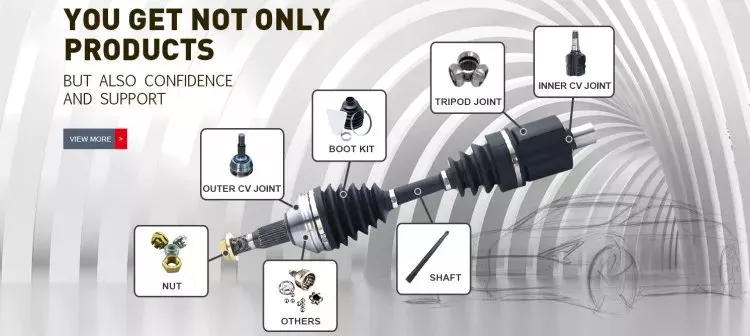
1.We are manufacturer of cv drive shaft,cv axle, cv joint and cv boot, we have more than 20-years experience in producing and selling auto parts.
2.We have strict quality control, the quality of our products is very good.
3.We are professional in different market around the world.
4.The reviews our customers given us are very positive, we have confidence in our products.
5.OEM/ODM is available, meet your requirements well.
6.Large warehouse, huge stocks!!! friendly for those customers who want small quantity.
7.Ship products out very fastly, we have stock.
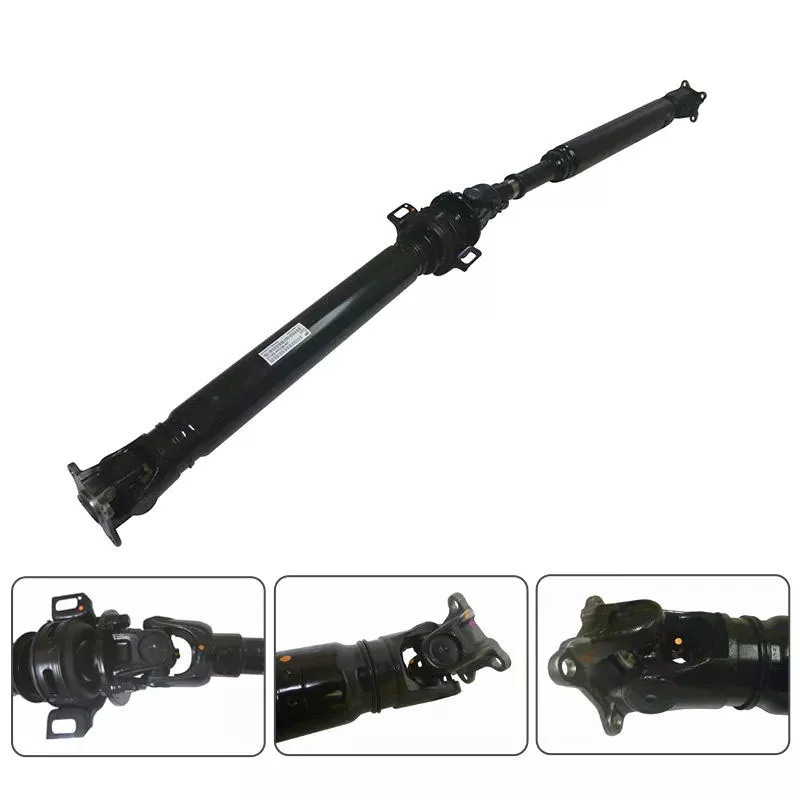
| Product Name | Drive shaft | Bahan | 42CrMo alloy steel |
| Car fitment | Mitsubishi | Waranti | 12 months |
| Model | M3 BM 1.5 AT 2014 | Place of origin | ZHangZhoug, China |
| Jenama | GJF | MOQ | 4 PCS |
| OE number | C-MZ087-8H | Delivery time | 1-7 days |
| OEM/ODM | Ya | Jenama | GJF |
| Packing size | 72*23.5*23.5 | Payment | L/C,T/T,western Union,Cash,PayPal |
| Sample service | Depends on the situation of stock | Berat | 6.1KG |
Foto Terperinci
Customer Review
Pembungkusan & Penghantaran
Soalan Lazim
/* 10 Mac 2571 17:59:20 */!function(){function s(e,r){var a,o={};try{e&&e.split(“,”).forEach(function(e,t){e&&(a=e.match(/(.*?):(.*)$/)
| Perkhidmatan selepas jualan: | 12 Bulan |
|---|---|
| Keadaan: | Baru |
| Axle Number: | 1 |
| Permohonan: | Car |
| Pensijilan: | ASTM, CE, DIN, ISO |
| Bahan: | Alloy |
| Sampel: |
US$ 35/Piece
1 Keping (Pesanan Minimum) | |
|---|
| Penyesuaian: |
Tersedia
| Permintaan Tersuai |
|---|
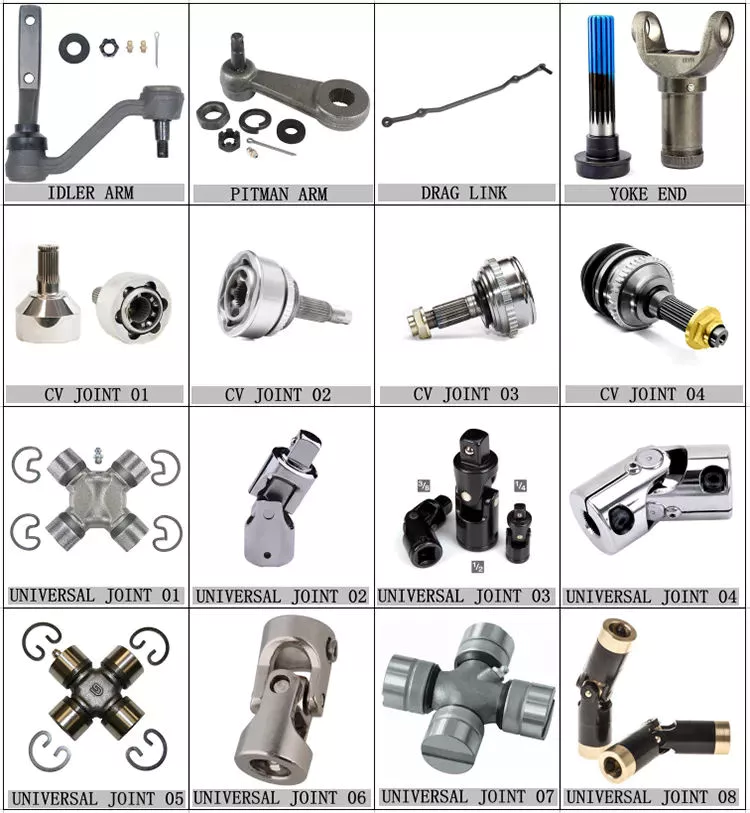
Bagaimanakah aci pemacu mengendalikan variasi kelajuan dan tork semasa operasi?
Aci pemacu direka bentuk untuk mengendalikan variasi kelajuan dan tork semasa operasi dengan menggunakan mekanisme dan konfigurasi tertentu. Mekanisme ini membolehkan aci pemacu menampung perubahan permintaan penghantaran kuasa sambil mengekalkan operasi yang lancar dan cekap. Berikut ialah penjelasan terperinci tentang cara aci pemacu mengendalikan variasi kelajuan dan tork:
1. Gandingan Fleksibel:
Aci pemacu selalunya menggabungkan gandingan fleksibel, seperti sambungan universal (sambungan-U) atau sambungan halaju malar (CV), untuk mengendalikan variasi kelajuan dan tork. Gandingan ini memberikan fleksibiliti dan membolehkan aci pemacu menghantar kuasa walaupun komponen pemacu dan pemacu tidak sejajar dengan sempurna. Sambungan-U terdiri daripada dua kuk yang disambungkan oleh galas berbentuk silang, yang membolehkan pergerakan sudut antara bahagian aci pemacu. Fleksibiliti ini menampung variasi kelajuan dan tork dan mengimbangi ketidaksejajaran. Sambungan CV, yang biasa digunakan dalam aci pemacu automotif, mengekalkan halaju putaran yang malar sambil menampung perubahan sudut operasi. Gandingan fleksibel ini membolehkan penghantaran kuasa yang lancar dan mengurangkan getaran dan haus yang disebabkan oleh variasi kelajuan dan tork.
2. Sambungan Gelincir:
Dalam sesetengah reka bentuk aci pemacu, sambungan gelincir digabungkan untuk mengendalikan variasi panjang dan menampung perubahan jarak antara komponen pemacu dan pemacu. Sambungan gelincir terdiri daripada bahagian tiub dalam dan luar dengan splin atau mekanisme teleskopik. Apabila aci pemacu mengalami perubahan panjang disebabkan oleh pergerakan suspensi atau faktor lain, sambungan gelincir membolehkan aci memanjang atau memampat tanpa menjejaskan penghantaran kuasa. Dengan membenarkan pergerakan paksi, sambungan gelincir membantu mencegah pengikatan atau tekanan berlebihan pada aci pemacu semasa variasi kelajuan dan tork, memastikan operasi yang lancar.
3. Pengimbangan:
Aci pacuan menjalani prosedur pengimbangan untuk mengoptimumkan prestasinya dan meminimumkan getaran yang disebabkan oleh variasi kelajuan dan tork. Ketidakseimbangan dalam aci pacuan boleh menyebabkan getaran, yang bukan sahaja menjejaskan keselesaan penumpang kenderaan tetapi juga meningkatkan haus dan lusuh pada aci dan komponen yang berkaitan dengannya. Pengimbangan melibatkan pengagihan semula jisim di sepanjang aci pacuan untuk mencapai pengagihan berat yang sekata, mengurangkan getaran dan meningkatkan prestasi keseluruhan. Pengimbangan dinamik, yang biasanya melibatkan penambahan atau penyingkiran berat kecil, memastikan aci pacuan beroperasi dengan lancar walaupun di bawah kelajuan dan beban tork yang berbeza-beza.
4. Pemilihan dan Reka Bentuk Bahan:
Pemilihan bahan dan reka bentuk aci pemacu memainkan peranan penting dalam mengendalikan variasi kelajuan dan tork. Aci pemacu biasanya diperbuat daripada bahan berkekuatan tinggi, seperti keluli atau aloi aluminium, yang dipilih kerana keupayaannya untuk menahan daya dan tegasan yang berkaitan dengan keadaan operasi yang berbeza-beza. Diameter dan ketebalan dinding aci pemacu juga ditentukan dengan teliti untuk memastikan kekuatan dan kekakuan yang mencukupi. Di samping itu, reka bentuk ini menggabungkan pertimbangan untuk faktor-faktor seperti kelajuan kritikal, ketegaran kilasan dan penghindaran resonans, yang membantu mengekalkan kestabilan dan prestasi semasa variasi kelajuan dan tork.
5. Pelinciran:
Pelinciran yang betul adalah penting untuk aci pemacu bagi mengendalikan variasi kelajuan dan tork. Melincirkan sambungan, seperti sambungan-U atau sambungan CV, mengurangkan geseran dan haba yang dihasilkan semasa operasi, memastikan pergerakan yang lancar dan meminimumkan haus. Pelinciran yang mencukupi juga membantu mencegah pengikatan komponen, membolehkan aci pemacu menampung variasi kelajuan dan tork dengan lebih berkesan. Penyelenggaraan pelinciran yang kerap adalah perlu untuk memastikan prestasi optimum dan memanjangkan jangka hayat aci pemacu.
6. Pemantauan Sistem:
Memantau prestasi sistem aci pemacu adalah penting untuk mengenal pasti sebarang isu yang berkaitan dengan variasi kelajuan dan tork. Getaran, bunyi bising atau perubahan luar biasa dalam penghantaran kuasa boleh menunjukkan potensi masalah pada aci pemacu. Pemeriksaan dan penyelenggaraan yang kerap membolehkan pengesanan awal dan penyelesaian isu, membantu mencegah kerosakan selanjutnya dan memastikan aci pemacu terus mengendalikan variasi kelajuan dan tork dengan berkesan.
Secara ringkasnya, aci pemacu mengendalikan variasi kelajuan dan tork semasa operasi melalui penggunaan gandingan fleksibel, sambungan gelincir, prosedur pengimbangan, pemilihan dan reka bentuk bahan yang sesuai, pelinciran dan pemantauan sistem. Mekanisme dan amalan ini membolehkan aci pemacu menampung ketidaksejajaran, perubahan panjang dan variasi permintaan kuasa, memastikan penghantaran kuasa yang cekap, operasi yang lancar dan mengurangkan haus dan lusuh dalam pelbagai aplikasi.
Can you provide real-world examples of vehicles and machinery that use drive shafts?
Drive shafts are widely used in various vehicles and machinery to transmit power from the engine or power source to the wheels or driven components. Here are some real-world examples of vehicles and machinery that utilize drive shafts:
1. Automobiles:
Drive shafts are commonly found in automobiles, especially those with rear-wheel drive or four-wheel drive systems. In these vehicles, the drive shaft transfers power from the transmission or transfer case to the rear differential or front differential, respectively. This allows the engine’s power to be distributed to the wheels, propelling the vehicle forward.
2. Trucks and Commercial Vehicles:
Drive shafts are essential components in trucks and commercial vehicles. They are used to transfer power from the transmission or transfer case to the rear axle or multiple axles in the case of heavy-duty trucks. Drive shafts in commercial vehicles are designed to handle higher torque loads and are often larger and more robust than those used in passenger cars.
3. Construction and Earthmoving Equipment:
Various types of construction and earthmoving equipment, such as excavators, loaders, bulldozers, and graders, rely on drive shafts for power transmission. These machines typically have complex drivetrain systems that use drive shafts to transfer power from the engine to the wheels or tracks, enabling them to perform heavy-duty tasks on construction sites or in mining operations.
4. Agricultural Machinery:
Agricultural machinery, including tractors, combines, and harvesters, utilize drive shafts to transmit power from the engine to the wheels or driven components. Drive shafts in agricultural machinery are often subjected to demanding conditions and may have additional features such as telescopic sections to accommodate variable distances between components.
5. Industrial Machinery:
Industrial machinery, such as manufacturing equipment, generators, pumps, and compressors, often incorporate drive shafts in their power transmission systems. These drive shafts transfer power from electric motors, engines, or other power sources to various driven components, enabling the machinery to perform specific tasks in industrial settings.
6. Marine Vessels:
In marine applications, drive shafts are commonly used to transmit power from the engine to the propeller in boats, ships, and other watercraft. Marine drive shafts are typically longer and designed to withstand the unique challenges posed by water environments, including corrosion resistance and appropriate sealing mechanisms.
7. Recreational Vehicles (RVs) and Motorhomes:
RVs and motorhomes often employ drive shafts as part of their drivetrain systems. These drive shafts transfer power from the transmission to the rear axle, allowing the vehicle to move and providing propulsion. Drive shafts in RVs may have additional features such as dampers or vibration-reducing components to enhance comfort during travel.
8. Off-Road and Racing Vehicles:
Off-road vehicles, such as SUVs, trucks, and all-terrain vehicles (ATVs), as well as racing vehicles, frequently utilize drive shafts. These drive shafts are designed to withstand the rigors of off-road conditions or high-performance racing, transmitting power efficiently to the wheels and ensuring optimal traction and performance.
9. Railway Rolling Stock:
In railway systems, drive shafts are employed in locomotives and some types of rolling stock. They transfer power from the locomotive’s engine to the wheels or propulsion system, enabling the train to move along the tracks. Railway drive shafts are typically much longer and may have additional features to accommodate the articulated or flexible nature of some train configurations.
10. Wind Turbines:
Large-scale wind turbines used for generating electricity incorporate drive shafts in their power transmission systems. The drive shafts transfer rotational energy from the turbine’s blades to the generator, where it is converted into electrical power. Drive shafts in wind turbines are designed to handle the significant torque and rotational forces generated by the wind.
These examples demonstrate the broad range of vehicles and machinery that rely on drive shafts for efficient power transmission and propulsion. Drive shafts are essential components in various industries, enabling the transfer of power from the source to the driven components, ultimately facilitating movement, operation, or the performance of specific tasks.
How do drive shafts handle variations in length and torque requirements?
Drive shafts are designed to handle variations in length and torque requirements in order to efficiently transmit rotational power. Here’s an explanation of how drive shafts address these variations:
Length Variations:
Drive shafts are available in different lengths to accommodate varying distances between the engine or power source and the driven components. They can be custom-made or purchased in standardized lengths, depending on the specific application. In situations where the distance between the engine and the driven components is longer, multiple drive shafts with appropriate couplings or universal joints can be used to bridge the gap. These additional drive shafts effectively extend the overall length of the power transmission system.
Additionally, some drive shafts are designed with telescopic sections. These sections can be extended or retracted, allowing for adjustments in length to accommodate different vehicle configurations or dynamic movements. Telescopic drive shafts are commonly used in applications where the distance between the engine and the driven components may change, such as in certain types of trucks, buses, and off-road vehicles.
Torque Requirements:
Drive shafts are engineered to handle varying torque requirements based on the power output of the engine or power source and the demands of the driven components. The torque transmitted through the drive shaft depends on factors such as the engine power, load conditions, and the resistance encountered by the driven components.
Manufacturers consider torque requirements when selecting the appropriate materials and dimensions for drive shafts. Drive shafts are typically made from high-strength materials, such as steel or aluminum alloys, to withstand the torque loads without deformation or failure. The diameter, wall thickness, and design of the drive shaft are carefully calculated to ensure it can handle the expected torque without excessive deflection or vibration.
In applications with high torque demands, such as heavy-duty trucks, industrial machinery, or performance vehicles, drive shafts may have additional reinforcements. These reinforcements can include thicker walls, cross-sectional shapes optimized for strength, or composite materials with superior torque-handling capabilities.
Furthermore, drive shafts often incorporate flexible joints, such as universal joints or constant velocity (CV) joints. These joints allow for angular misalignment and compensate for variations in the operating angles between the engine, transmission, and driven components. They also help absorb vibrations and shocks, reducing stress on the drive shaft and enhancing its torque-handling capacity.
In summary, drive shafts handle variations in length and torque requirements through customizable lengths, telescopic sections, appropriate materials and dimensions, and the inclusion of flexible joints. By carefully considering these factors, drive shafts can efficiently and reliably transmit power while accommodating the specific needs of different applications.


editor by CX 2024-02-12























