
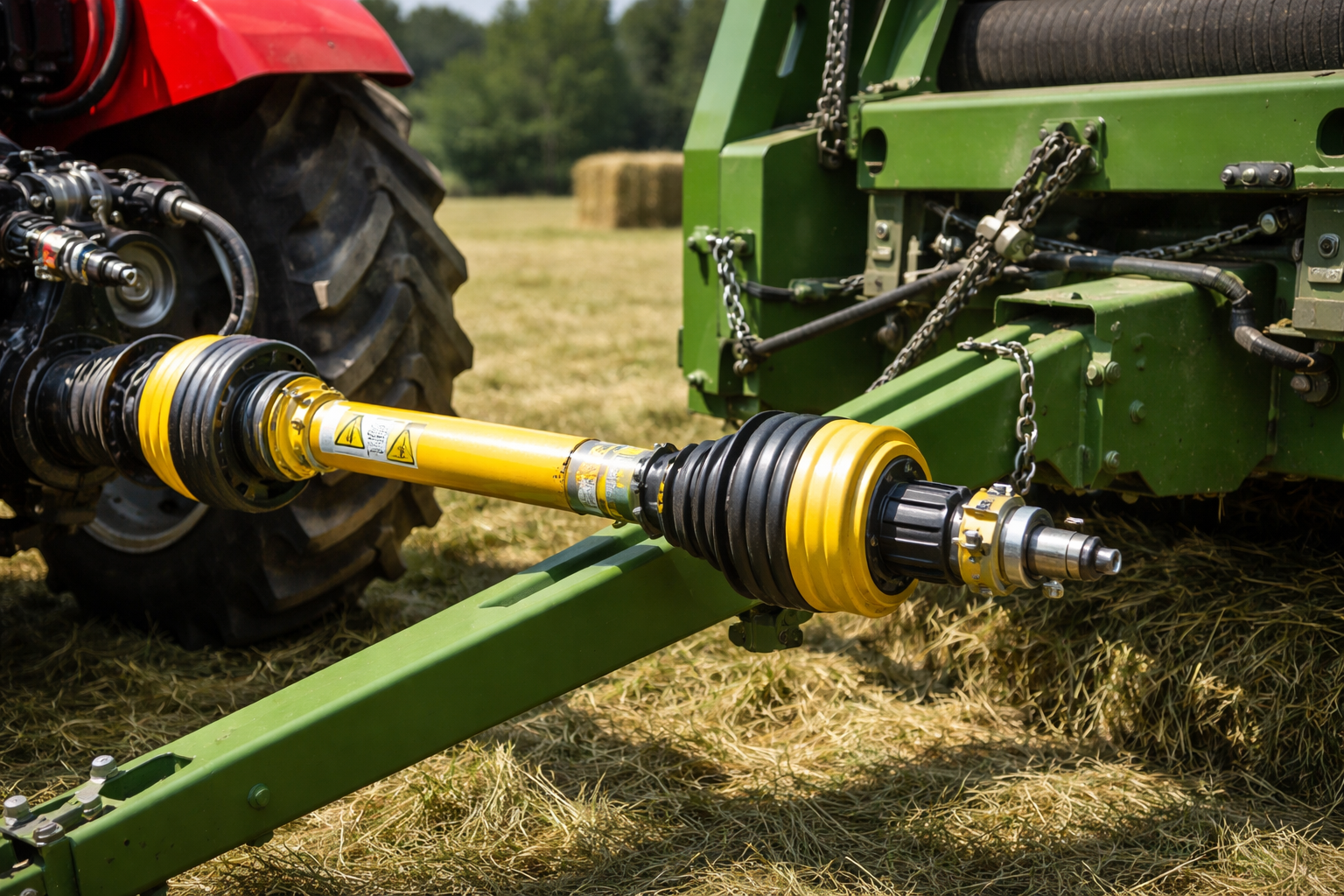
Introduction to Universal Shafts in Renewable Energy
Renewable energy systems, such as solar photovoltaic installations and wind turbines, rely on precise mechanical drives to convert natural forces into usable electrical energy. Universal joints provide the necessary flexibility to handle misalignment, vibration, and variable loads while maintaining high torque transmission. In solar trackers, they enable synchronized movement of panels; in wind turbines, they buffer stresses in the drivetrain. With the global pursuit of net-zero emissions, these components must withstand extreme weather, dust, and continuous operation with minimal maintenance.
Our company, UK pto-drive-shafts.com Co., Ltd., located at St Edmunds, Bury, Suffolk, UK (IP32 7LX), provides custom solutions to meet these challenges. Our shafts are manufactured using advanced materials such as high-strength carbon steel and corrosion-resistant coatings, ensuring stable operation in a wide range of climates, from arid deserts to offshore winds. For any custom requirements, please contact us at [email protected].
The development of renewable energy has highlighted the need for long-life, low-maintenance components. Traditional rigid couplings are prone to failure under dynamic loads, while universal joints can absorb angular misalignments of up to 45 degrees, thereby reducing wear on the connecting machinery. This not only extends the service life of the equipment but also minimizes downtime, which is especially critical for energy projects where every hour of operation is vital.
This article will delve into specific applications: solar photovoltaic tracking systems and wind turbine drive systems. We will combine industry standards with the expertise of pto-drive-shafts.com Ltd. in the UK to introduce equipment definitions, operational challenges, configuration requirements, and practical application benefits.
Solar Photovoltaic Tracking Systems: Precision in Motion
Equipment Definition and Role of Universal Shafts
Solar photovoltaic (PV) trackers are mechanical systems used in large-scale photovoltaic (PV) power plants to ensure that solar panels always follow the sun’s trajectory, increasing power generation by up to 25% compared to fixed installations. Typically, a single motor drives multiple rows of panels via a long drive shaft, ensuring synchronized rotation. Universal joints connect these components to accommodate slight misalignments caused by terrain changes or thermal expansion.
In typical configurations, trackers employ a horizontal single-axis or dual-axis mechanism. The universal joint acts as the backbone, transmitting the low-speed torque of the drive motor to the panel array. Without a universal joint, rigid connections can lead to jamming or failure under uneven loads. Products from pto-drive-shafts.com Ltd. in the UK are optimized for such systems, featuring dustproof, sealed bearings and a torque range from 500 Nm to 5000 Nm, suitable for arrays hundreds of meters long.
A key advantage is its ability to handle angular misalignment. For example, in hilly terrain, solar panels may not align perfectly, resulting in misalignments of up to 15 degrees. Universal joints mitigate this, preventing excessive stress on the motor and gears. This is especially important for utility-scale farms, as downtime can result in thousands of dollars in lost power generation.
Depth Analysis of Operational Conditions
Low speed and high synchronization are hallmarks of solar trackers. Solar panels track the sun by slowly rotating at approximately 45 degrees per day, but multiple rows of panels must move in sync to avoid shading or mechanical stress. The gimbal ensures zero backlash, maintaining precise angular consistency. Any gap can lead to asynchrony, reducing efficiency by 5-10% over time.
Wind loads are another challenge. Large panels act like sails, generating significant drag in gusts up to 150 km/h. During sudden strong winds, the shaft experiences peak reverse torque, reaching up to 200% of its rated load. Our shafts employ shear pins or torque limiters to prevent overload and automatically disengage when a threshold is exceeded.
Outdoor environments place even greater demands on durability. Desert regions experience extreme daytime temperatures (up to 60°C) and nighttime temperatures (-10°C), resulting in thermal cycling that can fatigue materials. Dust and sand abrade surfaces, while rain in humid regions causes corrosion. Universal shafts must be equipped with IP67-rated seals and UV-resistant coatings to meet the typical 25-year lifespan requirements of solar projects.
For example, in the Mojave Desert: a 100 MW power plant using our shafts experienced no failures for five years, even during sandstorms. The key lies in our hot-dip galvanizing process, which effectively prevents rust and ensures smooth operation.
Configuration Requirements for Optimal Performance
Corrosion resistance is paramount. We recommend high-strength carbon steel with hot-dip galvanizing or Dacromet coating for rust prevention. For harsh environments, stainless steel shafts offer a longer service life. These treatments ensure the shafts can withstand UV radiation and chemicals such as acid rain.
Torque redundancy is crucial. While the base torque may be 1000 Nm, a safety factor of 1.5–2.0 should be included in the design to account for wind impacts. Multi-stage shafts with intermediate torque limiters isolate faults and prevent cascading failures across rows. This modular design simplifies maintenance in remote areas.
Safety and maintenance features include ISO 5674 compliant guards to protect rotating parts from accidental contact. Long-life grease lubrication and dust covers minimize maintenance needs—typically requiring only annual inspections. Shafts from pto-drive-shafts.com Ltd. in the UK feature convenient locking mechanisms for quick installation, reducing labor costs in large solar power plants.
Integration with smart monitoring is on the rise. Sensors embedded in the shaft system can track vibration and temperature, transmitting the data to an IoT platform for predictive maintenance. This aligns with the Industry 4.0 trend in the renewable energy sector and is expected to reduce operating costs by 20%.
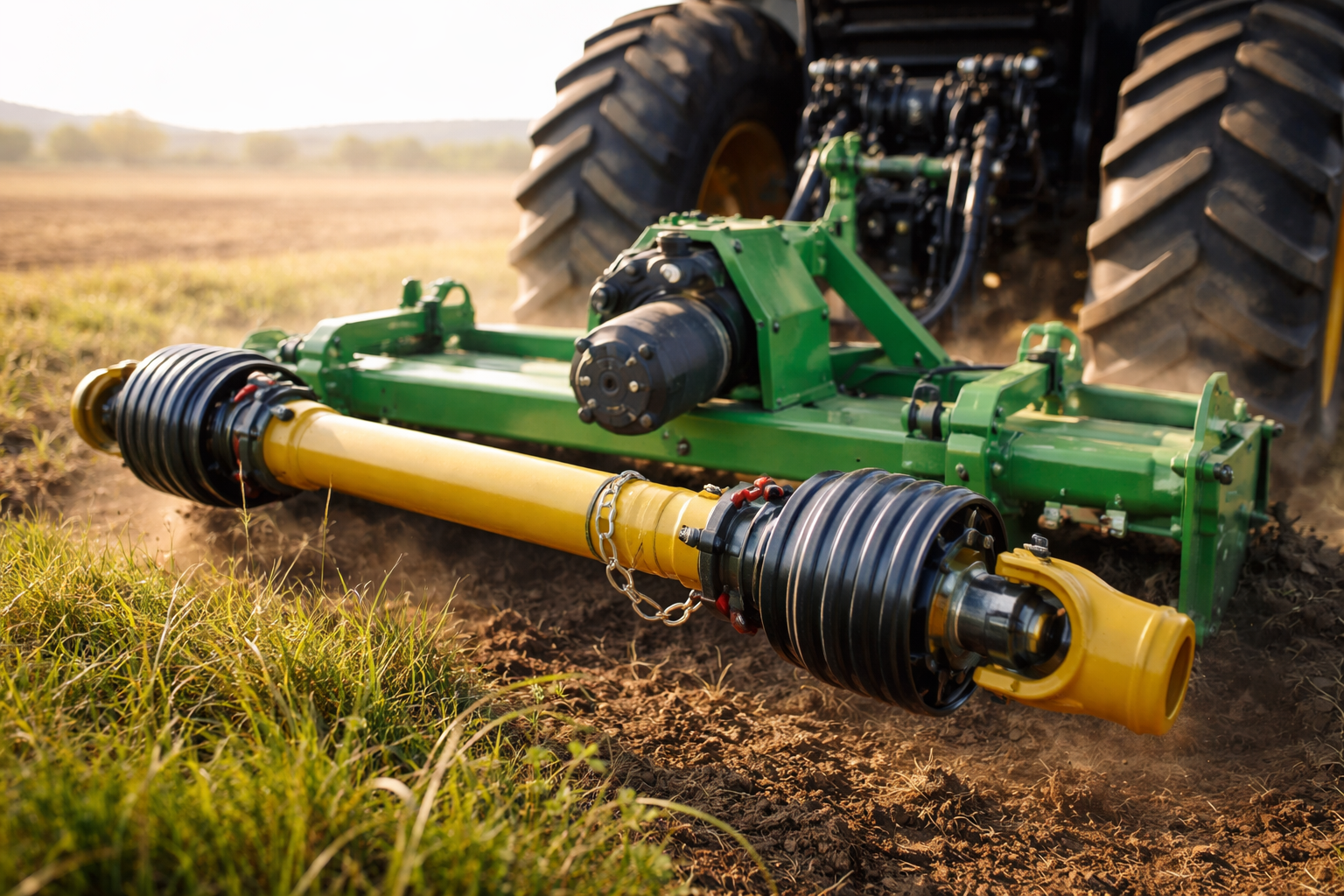
Wind Turbine Drivetrains: Handling Extreme Loads
Equipment Definition and Integration of Universal Shafts
Wind turbines convert the kinetic energy of wind into electrical energy through a transmission system consisting of a rotor hub, main shaft, gearbox, and generator. In large units (3 MW and above), the main shaft transmits enormous torque at low speeds (10-20 rpm). While some designs employ direct drive, many use universal joints or flexible couplings between the main shaft and gearbox to absorb misalignment errors.
In this case, universal joints, often in the form of a universal joint or a composite flexible coupling, are used to buffer non-torsional loads such as bending moments generated by blade forces. Pto-drive-shafts.com Ltd. in the UK offers high-torque models with torque up to 10,000 kNm, forged from alloy steel, suitable for both offshore and onshore applications.
The complexity of the transmission system stems from the turbine’s size: blades exceeding 75 meters generate enormous leverage. Universal joints prevent these forces from damaging the gearbox, as gearbox replacement at altitudes above 100 meters is costly.
In-Depth Operational Challenges
Ultra-high torque is a primary requirement. A 3 MW wind turbine generates thousands of kilonewton-meters of torque at rated wind speeds, with peak torque even higher during gusts. The shafting must withstand over 10^8 fatigue cycles over 20 years, as well as variable loads from turbulence.
Misalignment and bending are unavoidable. Tower swaying under wind loads can cause angular deviations of 0.5–2 degrees, while the weight of the blades generates overturning moments. Rigid connections transmit these moments to bearings, accelerating wear. Flexible universal joints can isolate vibrations, extending gearbox life by up to 50%.
Maintaining long service life under harsh conditions is crucial. In marine environments, the nacelle experiences temperature fluctuations (-40°C to +50°C), humidity, and salt spray. Maintenance is logistically challenging, therefore the shafting must be maintenance-free and feature lifelong sealed lubrication.
A real-world example: In the North Sea, our composite flexible couplings reduced vibration-induced failures by 30% in a 5 MW unit, demonstrating their resistance to corrosive marine air.
Advanced Configuration Demands
Flexible coupling designs dominate modern turbines. We use carbon fiber diaphragms or elastomeric elements to transmit torque while absorbing misalignments. These reduce peak loads on gearboxes, improving overall system dynamics.
High fatigue strength requires premium materials like 42CrMo4 alloy steel, forged and non-destructively tested (ultrasonic, X-ray) for flaws. Cross bearings in cardan shafts undergo shot peening for enhanced endurance.
Environmental resistance includes stainless steel or heavy-duty coatings for salt spray protection. Cold-climate variants maintain ductility at low temperatures. Our designs emphasize zero-maintenance, with grease reservoirs lasting the turbine’s 20-year life.
Emerging trends involve hybrid shafts with sensors for real-time monitoring, integrating with turbine SCADA systems to predict failures and optimize performance.

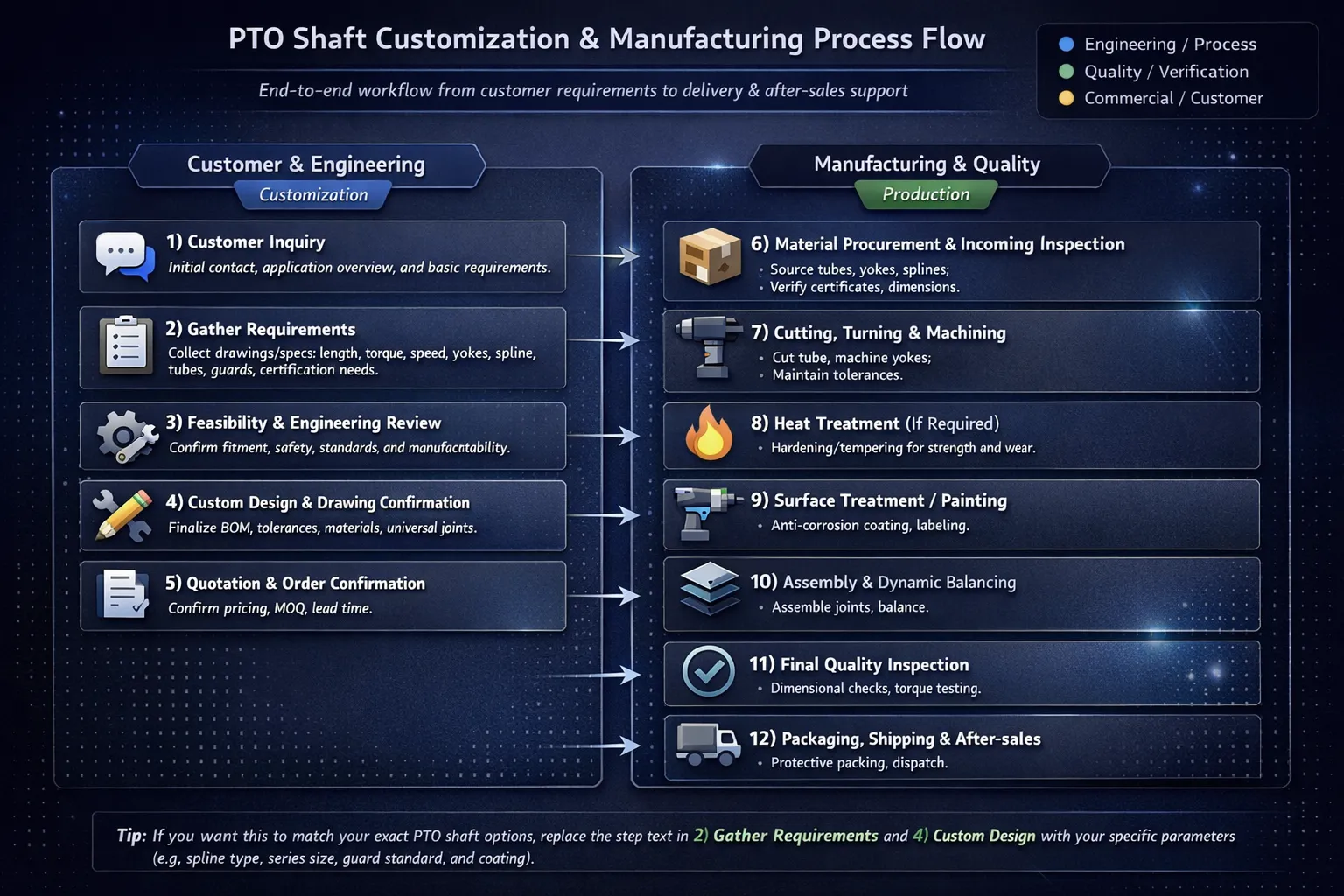
Image 3: Our flexible universal shaft being installed in a wind turbine, engineered for extreme fatigue resistance.
Benefits and Future Trends in Renewable Energy Transmission
Universal shafts enhance renewable system efficiency by reducing energy losses through smooth power transfer. In solar trackers, they boost yield by ensuring optimal panel alignment; in wind turbines, they protect drivetrains from premature failure, lowering LCOE (Levelized Cost of Energy).
Sustainability is key: Our shafts use recyclable materials and designs that minimize lubrication waste. As renewables scale, demand for lightweight, high-strength composites will rise, enabling larger turbines and trackers.
Challenges include scaling for multi-GW farms and adapting to extreme climates like Arctic winds or equatorial heat. Innovations like self-healing coatings and AI-optimized designs are on the horizon.
At UK pto-drive-shafts.com Co.,Ltd., we’re committed to advancing these technologies. Our R&D focuses on zero-emission manufacturing and shafts compliant with EU renewable directives.
Neem contact met ons op voor oplossingen op maat.
Ready to optimize your renewable energy project? Reach out to UK pto-drive-shafts.com Co.,Ltd. at [email protected] or visit us at Bury St Edmunds, Suffolk IP32 7LX, UK.























