
Productbeschrijving
RV Series Worm Drive Gearbox Hollow Shaft Output
RV Series
Including RV / NMRV / NRV.
Main Characteristic of RV Series Worm Gearbox
RV series worm gear reducer is a new-generation product developed by CZPT on the basis of perfecting WJ series products with a compromise of advanced technology both at home and abroad.
1. High-quality aluminum alloy, light in weight and non-rusting.
2. Large in output torque.
3. Smooth running and low noise,durable in dreadful conditions.
4. High radiation efficiency.
5. Good-looking appearance, durable in service life and small volume.
6. Suitable for omnibearing installation.
Main Materials of RV Series Worm Gearbox
1. Housing: die-cast aluminum alloy(frame size: 571 to 090), cast iron(frame size: 110 to 150).
2. Worm: 20Crm, carbonization quencher heat treatment makes the surface hardness of worm gears up to 56-62 HRX, retain carbonization layer’s thickness between 0.3 and 0.5mm after precise grinding.
3. Worm Wheel: wearable stannum bronze alloy.
| SPEED RATIO | 7.5~100 |
| OUTPUT TORQUE | <1050NM |
| IN POWER | 0.09-11KW |
| MOUNTING TYPE | FOOT-MOUNTED FLANGE-MOUNTED |
| When working, great load capacity, stable running, low noise with high efficiency. | |||||||
| Gear Box’s Usage Field | |||||||
| 1 | Metallurgie | 11 | Agitator | ||||
| 2 | Mine | 12 | Rotary weeder | ||||
| 3 | Machine | 13 | Metallurgie | ||||
| 4 | Energy | 14 | Compressor | ||||
| 5 | Transmission | 15 | Petroleum industry | ||||
| 6 | Water Conserbancy | 16 | Air Compressor | ||||
| 7 | Tomacco | 17 | Crusher | ||||
| 8 | Medical | 18 | Materialen | ||||
| 9 | Packing | 19 | Electronics | ||||
| 10 | Chemical industry | 20 | Textile indutry | ||||
| … | … | ||||||
| Power | 0.06kw | 0.09kw | 0.12kw | 0.18kw | 0.25kw | 0.37kw | 0.55kw |
| 0.75kw | 1.1kw | 1.5kw | 2.2kw | 3kw | 4kw | 5.5kw | |
| 7.5kw | 11kw | 15kw | |||||
| Torque | 2.6N.m-3000N.m | ||||||
| Ratio | 7.5-100, the double gearbox is more | ||||||
| Kleur | Blue, Silver or as customers’ need | ||||||
| Materiaal | Iron or Aluminium | ||||||
| Packing | Carton with Plywood Case or as clients’ requirement | ||||||
| Type | RV571 | RV030 | RV040 | RV050 | RV063 | RV075 | RV090 |
| Gewicht | 0.7kg | 1.3kg | 2.3kg | 3.5kg | 6.2kg | 9kg | 13kg |
| Type | RV110 | RV130 | RV150 | ||||
| Gewicht | 35kg | 60kg | 84kg | ||||
| Mounting Methods | Foot Installation | Flange Installation | |||||
| For various mortor or double input/output shafts can be equipped | |||||||
Product picture:
Structuur:
Certificate:
Packing & Delivery:
Our company :
AOKMAN was founded in 1982, which has more than 36 years in R & D and manufacturing of gearboxes, gears, shaft, motor and spare parts.
We can offer the proper solution for uncountable applications. Our products are widely used in the ranges of metallurgical, steel, mining, pulp and paper, sugar and alcohol market and various other types of machines with a strong presence in the international market.
AOKMAN has become a reliable supplier, able to supply high quality gearboxes.With 36 years experience, we assure you the utmost reliability and security for both product and services.
Customer visiting:
Veelgestelde vragen:
1.Q:What kinds of gearbox can you produce for us?
A:Main products of our company: UDL series speed variator,RV series worm gear reducer, ATA series shaft mounted gearbox, X,B series gear reducer,
P series planetary gearbox and R, S, K, and F series helical-tooth reducer, more
than 1 hundred models and thousands of specifications
2.Q:Can you make as per custom drawing?
A: Yes, we offer customized service for customers.
3.Q:What is your terms of payment ?
A: 30% Advance payment by T/T after signing the contract.70% before delivery
4.Q:What is your MOQ?
A: 1 Set
Contact:
Welcome you contace me if you are interested in our product.
Our team will support any need you might have.
| Sollicitatie: | Machinery, Industry |
|---|---|
| Function: | Speed Changing, Speed Reduction |
| Layout: | Orthogonal |
| Hardheid: | Hardened |
| Installation: | Horizontal Type |
| Step: | Single-Step |
| Aanpassing: |
Beschikbaar
| Aanvraag op maat |
|---|
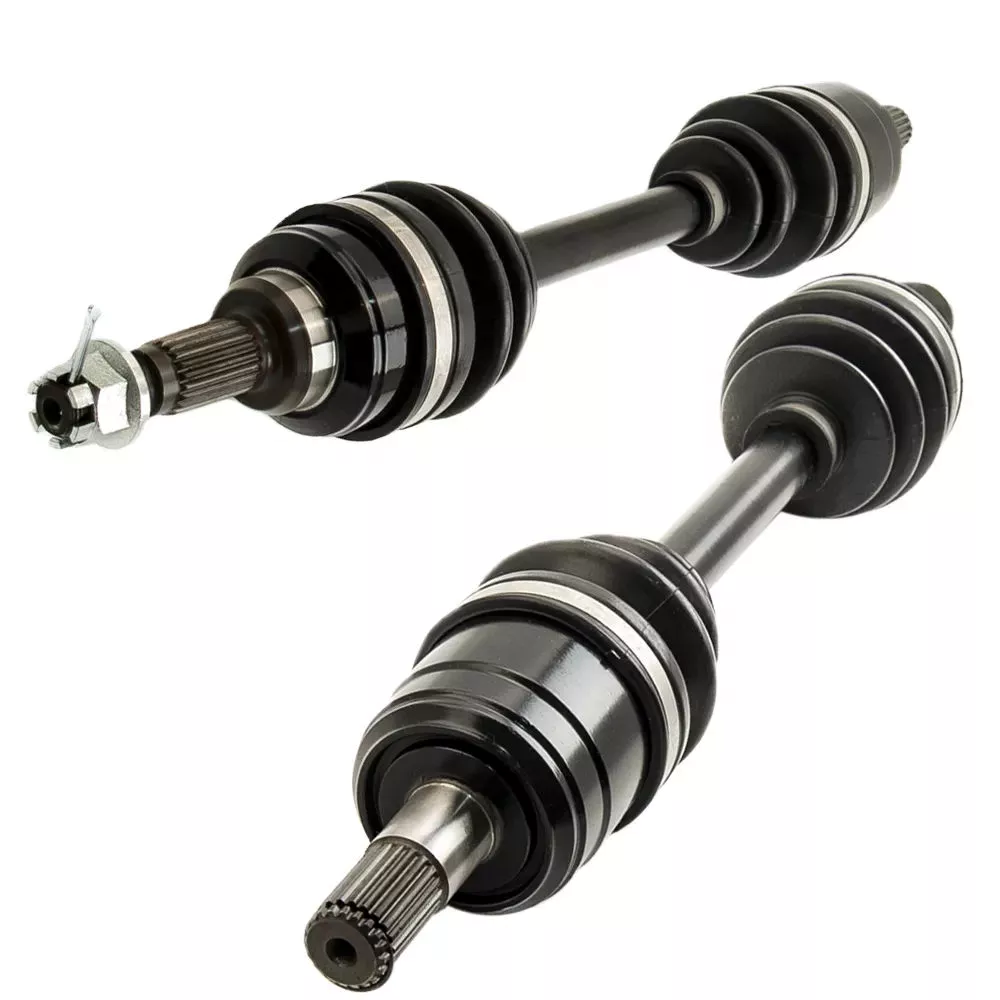
How do drive shafts ensure efficient power transfer while maintaining balance?
Drive shafts employ various mechanisms to ensure efficient power transfer while maintaining balance. Efficient power transfer refers to the ability of the drive shaft to transmit rotational power from the source (such as an engine) to the driven components (such as wheels or machinery) with minimal energy loss. Balancing, on the other hand, involves minimizing vibrations and eliminating any uneven distribution of mass that can cause disturbances during operation. Here’s an explanation of how drive shafts achieve both efficient power transfer and balance:
1. Material Selection:
The material selection for drive shafts is crucial for maintaining balance and ensuring efficient power transfer. Drive shafts are commonly made from materials such as steel or aluminum alloys, chosen for their strength, stiffness, and durability. These materials have excellent dimensional stability and can withstand the torque loads encountered during operation. By using high-quality materials, drive shafts can minimize deformation, flexing, and imbalances that could compromise power transmission and generate vibrations.
2. Design Considerations:
The design of the drive shaft plays a significant role in both power transfer efficiency and balance. Drive shafts are engineered to have appropriate dimensions, including diameter and wall thickness, to handle the anticipated torque loads without excessive deflection or vibration. The design also considers factors such as the length of the drive shaft, the number and type of joints (such as universal joints or constant velocity joints), and the use of balancing weights. By carefully designing the drive shaft, manufacturers can achieve optimal power transfer efficiency while minimizing the potential for imbalance-induced vibrations.
3. Balancing Techniques:
Balance is crucial for drive shafts as any imbalance can cause vibrations, noise, and accelerated wear. To maintain balance, drive shafts undergo various balancing techniques during the manufacturing process. Static and dynamic balancing methods are employed to ensure that the mass distribution along the drive shaft is uniform. Static balancing involves adding counterweights at specific locations to offset any weight imbalances. Dynamic balancing is performed by spinning the drive shaft at high speeds and measuring any vibrations. If imbalances are detected, additional adjustments are made to achieve a balanced state. These balancing techniques help minimize vibrations and ensure smooth operation of the drive shaft.
4. Universal Joints and Constant Velocity Joints:
Drive shafts often incorporate universal joints (U-joints) or constant velocity (CV) joints to accommodate misalignment and maintain balance during operation. U-joints are flexible joints that allow for angular movement between shafts. They are typically used in applications where the drive shaft operates at varying angles. CV joints, on the other hand, are designed to maintain a constant velocity of rotation and are commonly used in front-wheel-drive vehicles. By incorporating these joints, drive shafts can compensate for misalignment, reduce stress on the shaft, and minimize vibrations that can negatively impact power transfer efficiency and balance.
5. Maintenance and Inspection:
Regular maintenance and inspection of drive shafts are essential for ensuring efficient power transfer and balance. Periodic checks for wear, damage, or misalignment can help identify any issues that may affect the drive shaft’s performance. Lubrication of the joints and proper tightening of fasteners are also critical for maintaining optimal operation. By adhering to recommended maintenance procedures, any imbalances or inefficiencies can be addressed promptly, ensuring continued efficient power transfer and balance.
In summary, drive shafts ensure efficient power transfer while maintaining balance through careful material selection, thoughtful design considerations, balancing techniques, and the incorporation of flexible joints. By optimizing these factors, drive shafts can transmit rotational power smoothly and reliably, minimizing energy losses and vibrations that can impact performance and longevity.
Hoe gaan aandrijfassen om met variaties in belasting en trillingen tijdens gebruik?
Aandrijfassen zijn ontworpen om variaties in belasting en trillingen tijdens gebruik op te vangen door middel van diverse mechanismen en eigenschappen. Deze mechanismen zorgen voor een soepele krachtoverbrenging, minimaliseren trillingen en behouden de structurele integriteit van de aandrijfas. Hieronder volgt een gedetailleerde uitleg over hoe aandrijfassen variaties in belasting en trillingen opvangen:
1. Materiaalkeuze en ontwerp:
Aandrijfassen worden doorgaans gemaakt van materialen met een hoge sterkte en stijfheid, zoals staallegeringen of composietmaterialen. Bij de materiaalkeuze en het ontwerp wordt rekening gehouden met de verwachte belastingen en bedrijfsomstandigheden van de toepassing. Door geschikte materialen te gebruiken en het ontwerp te optimaliseren, kunnen aandrijfassen de verwachte variaties in belasting weerstaan zonder overmatige doorbuiging of vervorming.
2. Koppelcapaciteit:
Aandrijfassen worden ontworpen met een specifiek koppelvermogen dat overeenkomt met de verwachte belastingen. Het koppelvermogen houdt rekening met factoren zoals het vermogen van de aandrijfbron en de koppelvereisten van de aangedreven componenten. Door een aandrijfas met voldoende koppelvermogen te kiezen, kunnen variaties in belasting worden opgevangen zonder de limieten van de aandrijfas te overschrijden en het risico op defecten of schade te minimaliseren.
3. Dynamische balans:
Tijdens het productieproces kunnen aandrijfassen dynamisch gebalanceerd worden. Onevenwichtigheden in de aandrijfas kunnen trillingen veroorzaken tijdens gebruik. Door middel van balanceren worden strategisch gewichten toegevoegd of verwijderd om ervoor te zorgen dat de aandrijfas gelijkmatig draait en trillingen tot een minimum worden beperkt. Dynamisch balanceren helpt de effecten van belastingvariaties te verminderen en de kans op overmatige trillingen in de aandrijfas te verkleinen.
4. Dempers en trillingsbeheersing:
Aandrijfassen kunnen dempers of trillingsbeheersingsmechanismen bevatten om trillingen verder te minimaliseren. Deze apparaten zijn doorgaans ontworpen om trillingen te absorberen of af te voeren die kunnen ontstaan door belastingvariaties of andere factoren. Dempers kunnen de vorm hebben van torsiedempers, rubberen isolatoren of andere trillingsabsorberende elementen die strategisch langs de aandrijfas zijn geplaatst. Door trillingen te beheersen en te dempen, zorgen aandrijfassen voor een soepele werking en verbeteren ze de algehele systeemprestaties.
5. Homokinetische koppelingen:
Homokinetische koppelingen (CV-koppelingen) worden vaak gebruikt in aandrijfassen om variaties in de werkingshoek op te vangen en een constante snelheid te handhaven. CV-koppelingen zorgen ervoor dat de aandrijfas kracht kan overbrengen, zelfs wanneer de aandrijvende en aangedreven componenten zich onder verschillende hoeken bevinden. Door variaties in de werkingshoek op te vangen, helpen CV-koppelingen de impact van belastingvariaties te minimaliseren en potentiële trillingen te verminderen die kunnen ontstaan door veranderingen in de geometrie van de aandrijflijn.
6. Smering en onderhoud:
Een goede smering en regelmatig onderhoud zijn essentieel voor aandrijfassen om belasting- en trillingsvariaties effectief op te vangen. Smering helpt wrijving tussen bewegende onderdelen te verminderen, waardoor slijtage en warmteontwikkeling worden geminimaliseerd. Regelmatig onderhoud, inclusief inspectie en smering van de verbindingen, zorgt ervoor dat de aandrijfas in optimale conditie blijft, waardoor het risico op storingen of prestatievermindering als gevolg van belastingvariaties wordt verkleind.
7. Structurele stijfheid:
Aandrijfassen zijn ontworpen met voldoende structurele stijfheid om buig- en torsiekrachten te weerstaan. Deze stijfheid draagt bij aan de integriteit van de aandrijfas bij wisselende belastingen. Door doorbuiging te minimaliseren en de structurele integriteit te behouden, kan de aandrijfas effectief vermogen overbrengen en wisselende belastingen opvangen zonder dat dit ten koste gaat van de prestaties of overmatige trillingen veroorzaakt.
8. Regelsystemen en terugkoppeling:
In sommige toepassingen kunnen aandrijfassen zijn uitgerust met besturingssystemen die parameters zoals koppel, snelheid en trillingen actief bewaken en aanpassen. Deze besturingssystemen gebruiken sensoren en feedbackmechanismen om variaties in belasting of trillingen te detecteren en realtime aanpassingen te maken om de prestaties te optimaliseren. Door actief om te gaan met variaties in belasting en trillingen, kunnen aandrijfassen zich aanpassen aan veranderende bedrijfsomstandigheden en een soepele werking behouden.
Samenvattend kunnen aandrijfassen variaties in belasting en trillingen tijdens bedrijf opvangen door zorgvuldige materiaalkeuze en ontwerp, overwegingen met betrekking tot het koppelvermogen, dynamische balancering, integratie van dempers en trillingsbeheersingsmechanismen, gebruik van homokinetische koppelingen, juiste smering en onderhoud, structurele stijfheid en, in sommige gevallen, besturingssystemen en feedbackmechanismen. Door deze kenmerken en mechanismen te integreren, zorgen aandrijfassen voor een betrouwbare en efficiënte krachtoverbrenging en minimaliseren ze de impact van belastingvariaties en trillingen op de algehele systeemprestaties.

How do drive shafts handle variations in length and torque requirements?
Drive shafts are designed to handle variations in length and torque requirements in order to efficiently transmit rotational power. Here’s an explanation of how drive shafts address these variations:
Length Variations:
Drive shafts are available in different lengths to accommodate varying distances between the engine or power source and the driven components. They can be custom-made or purchased in standardized lengths, depending on the specific application. In situations where the distance between the engine and the driven components is longer, multiple drive shafts with appropriate couplings or universal joints can be used to bridge the gap. These additional drive shafts effectively extend the overall length of the power transmission system.
Additionally, some drive shafts are designed with telescopic sections. These sections can be extended or retracted, allowing for adjustments in length to accommodate different vehicle configurations or dynamic movements. Telescopic drive shafts are commonly used in applications where the distance between the engine and the driven components may change, such as in certain types of trucks, buses, and off-road vehicles.
Torque Requirements:
Drive shafts are engineered to handle varying torque requirements based on the power output of the engine or power source and the demands of the driven components. The torque transmitted through the drive shaft depends on factors such as the engine power, load conditions, and the resistance encountered by the driven components.
Manufacturers consider torque requirements when selecting the appropriate materials and dimensions for drive shafts. Drive shafts are typically made from high-strength materials, such as steel or aluminum alloys, to withstand the torque loads without deformation or failure. The diameter, wall thickness, and design of the drive shaft are carefully calculated to ensure it can handle the expected torque without excessive deflection or vibration.
In applications with high torque demands, such as heavy-duty trucks, industrial machinery, or performance vehicles, drive shafts may have additional reinforcements. These reinforcements can include thicker walls, cross-sectional shapes optimized for strength, or composite materials with superior torque-handling capabilities.
Furthermore, drive shafts often incorporate flexible joints, such as universal joints or constant velocity (CV) joints. These joints allow for angular misalignment and compensate for variations in the operating angles between the engine, transmission, and driven components. They also help absorb vibrations and shocks, reducing stress on the drive shaft and enhancing its torque-handling capacity.
In summary, drive shafts handle variations in length and torque requirements through customizable lengths, telescopic sections, appropriate materials and dimensions, and the inclusion of flexible joints. By carefully considering these factors, drive shafts can efficiently and reliably transmit power while accommodating the specific needs of different applications.


editor by CX 2023-09-28























