
Productbeschrijving
D20A-6 bulldozer spare parts final drive shaft 103-27-31311 10G-27-21311
Productparameters
| part name |
schacht |
| part number | 103-27-31311 |
| MOQ | 1 piece |
| quality | high-quality |
Gedetailleerde foto's
Bedrijfsprofiel
Shanbo Construction Machinery Equipment (ZheJiang ) Co., Ltd. is located in HangZhou, ZheJiang , the hometown of construction machinery manufacturing, with a registered capital of 50 million yuan. It is a leading domestic construction equipment manufacturer integrating R&D, manufacturing and sales. It mainly produces and sells Excavators, bulldozers, construction machinery.
The factory is located in the Economic Development Zone of HangZhou City, ZheJiang Province, covering an area of about 40,000 square meters, with more than 100 employees. The new factory consists of parts warehouse, forging workshop, assembly workshop, testing area and office building. The annual production capacity can reach 2000 units to meet the needs of domestic and international markets. With the strong technical support of Shanbo R&D team, Shanbo machinery is manufactured in strict accordance with international quality and safety standards, which can cope with the most extreme weather conditions and complex terrains. One year or 2000 hours long-term warranty and high-quality after-sales service provide customers with the best experience.
Today, our company’s products are exported to more than 50 countries and regions around the world.
Our Service
Customer Visit
Certificeringen
Veelgestelde vragen
1. Who are we?
We are based in ZheJiang , China. Since 2011, we have sold to Southeast Asia, South America, East Asia, Africa, North America, South Asia, Eastern Europe, Western Europe, Middle East, Oceania, Central America, Northern Europe, Southern Europe and the domestic market. There are about 11-50 people in total in our office.
2. How can we guarantee the quality?
Always have pre-production samples before mass production;
Always carry out final inspection before shipment;
3. What can you buy from us?
Excavator parts, construction machinery parts, excavators, bulldozers, loaders, graders and other earthwork engineering machinery and equipment
4. What services can we provide?
Accepted delivery terms: FOB, CFR, CIF;
Accepted payment currencies: USD, EUR, CAD;
Accepted payment methods: T/T, L/C, D/P D/A;
Languages spoken: English, Chinese, Spanish, Russian
Verpakking en verzending
/* March 10, 2571 17:59:20 */!function(){function s(e,r){var a,o={};try{e&&e.split(“,”).forEach(function(e,t){e&&(a=e.match(/(.*?):(.*)$/))&&1
| Klantenservice na aankoop: | 24 Hours *7 Days Service |
|---|---|
| Garantie: | 6 Months |
| Type: | Shaft |
| Voorbeelden: |
US$ 180/Piece
1 stuk (minimale bestelling) | Bestel een proefmonster |
|---|
| Aanpassing: |
Beschikbaar
| Aanvraag op maat |
|---|
.shipping-cost-tm .tm-status-off{background: none;padding:0;color: #1470cc}
|
Verzendkosten:
Geschatte vrachtkosten per eenheid. |
Informatie over verzendkosten en geschatte levertijd. |
|---|
| Betaalmethode: |
|
|---|---|
|
Aanbetaling Volledige betaling |
| Munteenheid: | US$ |
|---|
| Retourneren en terugbetalingen: | Je kunt tot 30 dagen na ontvangst van de producten een terugbetaling aanvragen. |
|---|
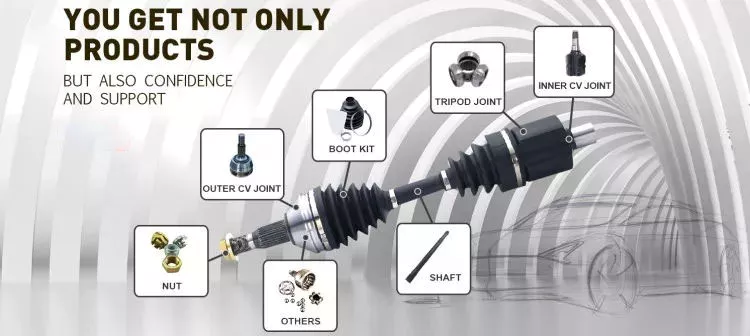
How do drive shafts ensure efficient power transfer while maintaining balance?
Drive shafts employ various mechanisms to ensure efficient power transfer while maintaining balance. Efficient power transfer refers to the ability of the drive shaft to transmit rotational power from the source (such as an engine) to the driven components (such as wheels or machinery) with minimal energy loss. Balancing, on the other hand, involves minimizing vibrations and eliminating any uneven distribution of mass that can cause disturbances during operation. Here’s an explanation of how drive shafts achieve both efficient power transfer and balance:
1. Material Selection:
The material selection for drive shafts is crucial for maintaining balance and ensuring efficient power transfer. Drive shafts are commonly made from materials such as steel or aluminum alloys, chosen for their strength, stiffness, and durability. These materials have excellent dimensional stability and can withstand the torque loads encountered during operation. By using high-quality materials, drive shafts can minimize deformation, flexing, and imbalances that could compromise power transmission and generate vibrations.
2. Design Considerations:
The design of the drive shaft plays a significant role in both power transfer efficiency and balance. Drive shafts are engineered to have appropriate dimensions, including diameter and wall thickness, to handle the anticipated torque loads without excessive deflection or vibration. The design also considers factors such as the length of the drive shaft, the number and type of joints (such as universal joints or constant velocity joints), and the use of balancing weights. By carefully designing the drive shaft, manufacturers can achieve optimal power transfer efficiency while minimizing the potential for imbalance-induced vibrations.
3. Balancing Techniques:
Balance is crucial for drive shafts as any imbalance can cause vibrations, noise, and accelerated wear. To maintain balance, drive shafts undergo various balancing techniques during the manufacturing process. Static and dynamic balancing methods are employed to ensure that the mass distribution along the drive shaft is uniform. Static balancing involves adding counterweights at specific locations to offset any weight imbalances. Dynamic balancing is performed by spinning the drive shaft at high speeds and measuring any vibrations. If imbalances are detected, additional adjustments are made to achieve a balanced state. These balancing techniques help minimize vibrations and ensure smooth operation of the drive shaft.
4. Universal Joints and Constant Velocity Joints:
Drive shafts often incorporate universal joints (U-joints) or constant velocity (CV) joints to accommodate misalignment and maintain balance during operation. U-joints are flexible joints that allow for angular movement between shafts. They are typically used in applications where the drive shaft operates at varying angles. CV joints, on the other hand, are designed to maintain a constant velocity of rotation and are commonly used in front-wheel-drive vehicles. By incorporating these joints, drive shafts can compensate for misalignment, reduce stress on the shaft, and minimize vibrations that can negatively impact power transfer efficiency and balance.
5. Maintenance and Inspection:
Regular maintenance and inspection of drive shafts are essential for ensuring efficient power transfer and balance. Periodic checks for wear, damage, or misalignment can help identify any issues that may affect the drive shaft’s performance. Lubrication of the joints and proper tightening of fasteners are also critical for maintaining optimal operation. By adhering to recommended maintenance procedures, any imbalances or inefficiencies can be addressed promptly, ensuring continued efficient power transfer and balance.
In summary, drive shafts ensure efficient power transfer while maintaining balance through careful material selection, thoughtful design considerations, balancing techniques, and the incorporation of flexible joints. By optimizing these factors, drive shafts can transmit rotational power smoothly and reliably, minimizing energy losses and vibrations that can impact performance and longevity.

Can you provide real-world examples of vehicles and machinery that use drive shafts?
Drive shafts are widely used in various vehicles and machinery to transmit power from the engine or power source to the wheels or driven components. Here are some real-world examples of vehicles and machinery that utilize drive shafts:
1. Automobiles:
Drive shafts are commonly found in automobiles, especially those with rear-wheel drive or four-wheel drive systems. In these vehicles, the drive shaft transfers power from the transmission or transfer case to the rear differential or front differential, respectively. This allows the engine’s power to be distributed to the wheels, propelling the vehicle forward.
2. Trucks and Commercial Vehicles:
Drive shafts are essential components in trucks and commercial vehicles. They are used to transfer power from the transmission or transfer case to the rear axle or multiple axles in the case of heavy-duty trucks. Drive shafts in commercial vehicles are designed to handle higher torque loads and are often larger and more robust than those used in passenger cars.
3. Construction and Earthmoving Equipment:
Various types of construction and earthmoving equipment, such as excavators, loaders, bulldozers, and graders, rely on drive shafts for power transmission. These machines typically have complex drivetrain systems that use drive shafts to transfer power from the engine to the wheels or tracks, enabling them to perform heavy-duty tasks on construction sites or in mining operations.
4. Agricultural Machinery:
Agricultural machinery, including tractors, combines, and harvesters, utilize drive shafts to transmit power from the engine to the wheels or driven components. Drive shafts in agricultural machinery are often subjected to demanding conditions and may have additional features such as telescopic sections to accommodate variable distances between components.
5. Industrial Machinery:
Industrial machinery, such as manufacturing equipment, generators, pumps, and compressors, often incorporate drive shafts in their power transmission systems. These drive shafts transfer power from electric motors, engines, or other power sources to various driven components, enabling the machinery to perform specific tasks in industrial settings.
6. Marine Vessels:
In marine applications, drive shafts are commonly used to transmit power from the engine to the propeller in boats, ships, and other watercraft. Marine drive shafts are typically longer and designed to withstand the unique challenges posed by water environments, including corrosion resistance and appropriate sealing mechanisms.
7. Recreational Vehicles (RVs) and Motorhomes:
RVs and motorhomes often employ drive shafts as part of their drivetrain systems. These drive shafts transfer power from the transmission to the rear axle, allowing the vehicle to move and providing propulsion. Drive shafts in RVs may have additional features such as dampers or vibration-reducing components to enhance comfort during travel.
8. Off-Road and Racing Vehicles:
Off-road vehicles, such as SUVs, trucks, and all-terrain vehicles (ATVs), as well as racing vehicles, frequently utilize drive shafts. These drive shafts are designed to withstand the rigors of off-road conditions or high-performance racing, transmitting power efficiently to the wheels and ensuring optimal traction and performance.
9. Railway Rolling Stock:
In railway systems, drive shafts are employed in locomotives and some types of rolling stock. They transfer power from the locomotive’s engine to the wheels or propulsion system, enabling the train to move along the tracks. Railway drive shafts are typically much longer and may have additional features to accommodate the articulated or flexible nature of some train configurations.
10. Wind Turbines:
Large-scale wind turbines used for generating electricity incorporate drive shafts in their power transmission systems. The drive shafts transfer rotational energy from the turbine’s blades to the generator, where it is converted into electrical power. Drive shafts in wind turbines are designed to handle the significant torque and rotational forces generated by the wind.
These examples demonstrate the broad range of vehicles and machinery that rely on drive shafts for efficient power transmission and propulsion. Drive shafts are essential components in various industries, enabling the transfer of power from the source to the driven components, ultimately facilitating movement, operation, or the performance of specific tasks.
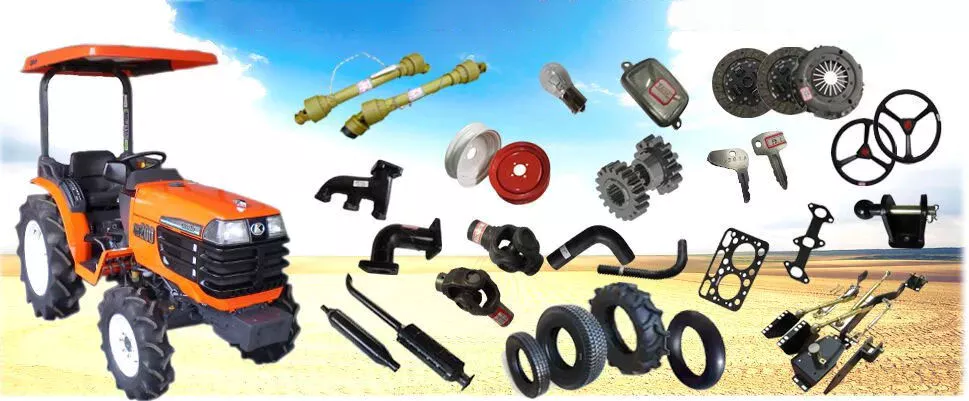
Zijn er variaties in het ontwerp van aandrijfassen voor verschillende soorten machines?
Ja, er bestaan variaties in het ontwerp van aandrijfassen om te voldoen aan de specifieke eisen van verschillende soorten machines. Het ontwerp van een aandrijfas wordt beïnvloed door factoren zoals de toepassing, de behoefte aan krachtoverbrenging, ruimtebeperkingen, bedrijfsomstandigheden en het type aangedreven componenten. Hieronder volgt een uitleg over hoe aandrijfasontwerpen kunnen variëren voor verschillende soorten machines:
1. Toepassingen in de automobielindustrie:
In de auto-industrie kunnen aandrijfassen variëren afhankelijk van de configuratie van het voertuig. Achterwielaangedreven voertuigen gebruiken doorgaans een aandrijfas uit één of twee delen, die de transmissie of tussenbak verbindt met het achterdifferentieel. Voorwielaangedreven voertuigen gebruiken vaak een ander ontwerp, waarbij een aandrijfas in combinatie met homokinetische koppelingen (CV-koppelingen) de kracht overbrengt naar de voorwielen. Vierwielaangedreven voertuigen kunnen meerdere aandrijfassen hebben om de kracht over alle wielen te verdelen. De lengte, diameter, het materiaal en de soorten koppelingen kunnen verschillen op basis van de lay-out van het voertuig en de koppelvereisten.
2. Industriële machines:
Het ontwerp van aandrijfassen voor industriële machines hangt af van de specifieke toepassing en de eisen aan de krachtoverbrenging. In productiemachines, zoals transportbanden, persen en roterende apparatuur, zijn aandrijfassen ontworpen om de kracht efficiënt binnen de machine over te brengen. Ze kunnen flexibele verbindingen bevatten of gebruikmaken van een spie- of sleutelverbinding om uitlijningsfouten op te vangen of eenvoudige demontage mogelijk te maken. De afmetingen, materialen en versterking van de aandrijfas worden gekozen op basis van het koppel, de snelheid en de bedrijfsomstandigheden van de machine.
3. Landbouw en veeteelt:
Landbouwmachines, zoals tractoren, maaidorsers en oogstmachines, vereisen vaak aandrijfassen die bestand zijn tegen hoge koppelbelastingen en variërende werkhoeken. Deze aandrijfassen zijn ontworpen om de kracht van de motor over te brengen op aanbouwdelen en werktuigen, zoals maaiers, balenpersen, grondfrezen en oogstmachines. Ze kunnen telescopische secties bevatten voor verstelbare lengtes, flexibele verbindingen om uitlijningsfouten tijdens gebruik te compenseren en beschermende afschermingen om te voorkomen dat ze verstrikt raken in gewassen of ander vuil.
4. Bouw en zwaar materieel:
Bouw- en zwaar materieel, waaronder graafmachines, laders, bulldozers en kranen, vereisen robuuste aandrijfassen die in staat zijn om kracht over te brengen onder veeleisende omstandigheden. Deze aandrijfassen hebben vaak een grotere diameter en dikkere wanden om hoge koppelbelastingen aan te kunnen. Ze kunnen zijn voorzien van kruiskoppelingen of homokinetische koppelingen om de werkhoeken te compenseren en schokken en trillingen op te vangen. Aandrijfassen in deze categorie kunnen ook extra verstevigingen hebben om bestand te zijn tegen de zware omstandigheden en toepassingen die kenmerkend zijn voor bouw- en graafwerkzaamheden.
5. Maritieme toepassingen:
Aandrijfassen voor maritieme toepassingen zijn specifiek ontworpen om de corrosieve effecten van zeewater en de hoge koppelbelastingen in scheepsaandrijfsystemen te weerstaan. Scheepsaandrijfassen worden doorgaans gemaakt van roestvrij staal of andere corrosiebestendige materialen. Ze kunnen flexibele koppelingen of dempingsmechanismen bevatten om trillingen te verminderen en de effecten van verkeerde uitlijning te beperken. Bij het ontwerp van scheepsaandrijfassen wordt ook rekening gehouden met factoren zoals aslengte, diameter en steunlagers om een betrouwbare krachtoverbrenging in schepen te garanderen.
6. Mijnbouw- en winningsapparatuur:
In de mijnbouw worden aandrijfassen gebruikt in zware machines en apparatuur zoals mijnbouwvrachtwagens, graafmachines en boorinstallaties. Deze aandrijfassen moeten bestand zijn tegen extreem hoge koppelbelastingen en zware bedrijfsomstandigheden. Aandrijfassen voor mijnbouwtoepassingen hebben vaak een grotere diameter, dikkere wanden en zijn vervaardigd van speciale materialen zoals gelegeerd staal of composietmaterialen. Ze kunnen zijn voorzien van kruiskoppelingen of homokinetische koppelingen om de werkhoeken te kunnen overbruggen en zijn ontworpen om slijtage te weerstaan.
Deze voorbeelden illustreren de variaties in aandrijfasontwerpen voor verschillende soorten machines. Bij het ontwerp wordt rekening gehouden met factoren zoals vermogensbehoefte, bedrijfsomstandigheden, ruimtebeperkingen, uitlijningseisen en de specifieke eisen van de machine of industrie. Door het ontwerp van de aandrijfas af te stemmen op de unieke eisen van elke toepassing, kunnen optimale efficiëntie en betrouwbaarheid van de krachtoverbrenging worden bereikt.


editor by CX 2024-01-26























