
Productbeschrijving
As a professional manufacturer for propeller shaft, we have +8/8822 0571 8
45710-S10-A01
12344543
27111-SC571
936-571
45710-S9A-E01
936-911
27111-AJ13D
936-034
45710-S9A-J01
936-916
27101-84C00
for MITSUBISHI/NISSAN
for TOYOTA
CARDONE
OE
CARDONE
OE
65-3009
MR580626
65-5007
37140-35180
65-6000
3401A571
65-9842
37140-35040
65-9480
37000-JM14A
65-5571
37100-3D250
65-9478
37000-S3805
65-5030
37100-34120
65-6004
37000-S4203
65-9265
37110-3D070
65-6571
37041-90062
65-9376
37110-35880
936-262
37041-90014
65-5571
37110-3D220
938-030
37300-F3600
65-5571
37100-34111
936-363
37000-7C002
65-5018
37110-3D060
938-200
37000-7C001
65-5012
37100-5712
for KOREA CAR
for HYUNDAI/KIA
CARDONE
OE
CARDONE
OE
65-3502
49571-H1031
936-211
49100-3E450
65-3503
49300-2S000
936-210
49100-3E400
65-3500
49300-0L000
936-200
49300-2P500
| Klantenservice na aankoop: | 1 jaar |
|---|---|
| Voorwaarde: | Nieuw |
| Color: | Black |
| Certificering: | ISO, IATF |
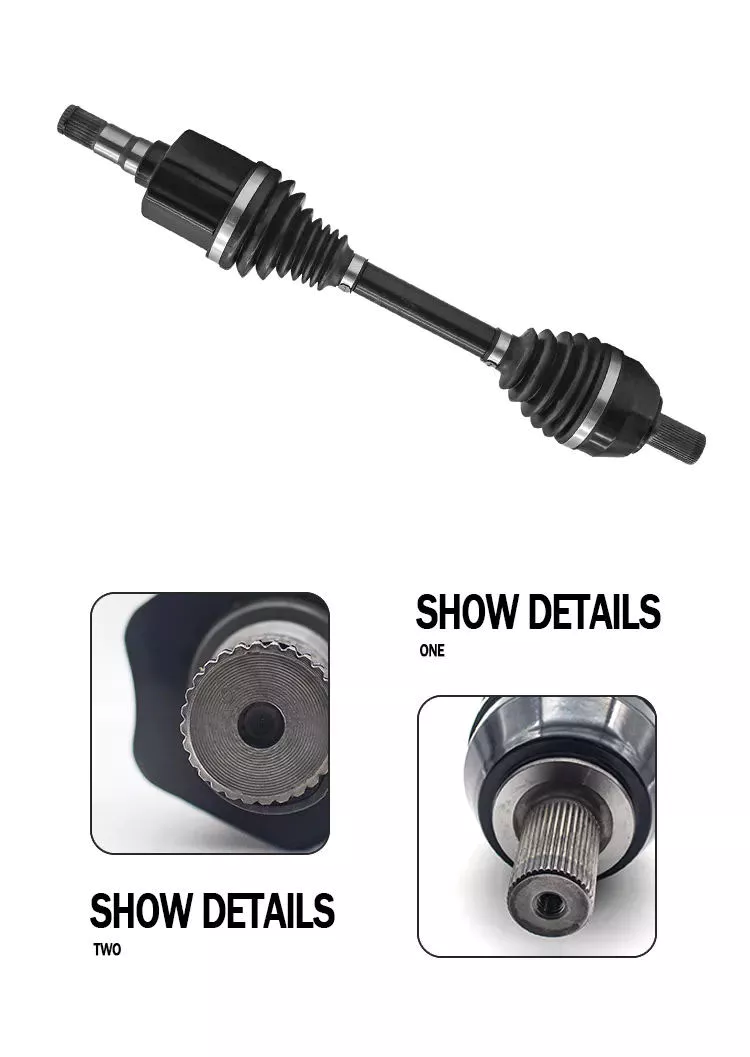
| Type: | Propeller Shaft/Drive Shaft |
| Application Brand: | Mercedes Benz |
| Voorbeelden: |
US$ 300/Piece
1 stuk (minimale bestelling) | |
|---|
| Aanpassing: |
Beschikbaar
| Aanvraag op maat |
|---|
Are there any limitations or disadvantages associated with drive shafts?
While drive shafts are widely used and offer several advantages, they also have certain limitations and disadvantages that should be considered. Here’s a detailed explanation of the limitations and disadvantages associated with drive shafts:
1. Length and Misalignment Constraints:
Drive shafts have a maximum practical length due to factors such as material strength, weight considerations, and the need to maintain rigidity and minimize vibrations. Longer drive shafts can be prone to increased bending and torsional deflection, leading to reduced efficiency and potential driveline vibrations. Additionally, drive shafts require proper alignment between the driving and driven components. Misalignment can cause increased wear, vibrations, and premature failure of the drive shaft or its associated components.
2. Limited Operating Angles:
Drive shafts, especially those using U-joints, have limitations on operating angles. U-joints are typically designed to operate within specific angular ranges, and operating beyond these limits can result in reduced efficiency, increased vibrations, and accelerated wear. In applications requiring large operating angles, constant velocity (CV) joints are often used to maintain a constant speed and accommodate greater angles. However, CV joints may introduce higher complexity and cost compared to U-joints.
3. Maintenance Requirements:
Drive shafts require regular maintenance to ensure optimal performance and reliability. This includes periodic inspection, lubrication of joints, and balancing if necessary. Failure to perform routine maintenance can lead to increased wear, vibrations, and potential driveline issues. Maintenance requirements should be considered in terms of time and resources when using drive shafts in various applications.
4. Noise and Vibration:
Drive shafts can generate noise and vibrations, especially at high speeds or when operating at certain resonant frequencies. Imbalances, misalignment, worn joints, or other factors can contribute to increased noise and vibrations. These vibrations may affect the comfort of vehicle occupants, contribute to component fatigue, and require additional measures such as dampers or vibration isolation systems to mitigate their effects.
5. Weight and Space Constraints:
Drive shafts add weight to the overall system, which can be a consideration in weight-sensitive applications, such as automotive or aerospace industries. Additionally, drive shafts require physical space for installation. In compact or tightly packaged equipment or vehicles, accommodating the necessary drive shaft length and clearances can be challenging, requiring careful design and integration considerations.
6. Cost Considerations:
Drive shafts, depending on their design, materials, and manufacturing processes, can involve significant costs. Customized or specialized drive shafts tailored to specific equipment requirements may incur higher expenses. Additionally, incorporating advanced joint configurations, such as CV joints, can add complexity and cost to the drive shaft system.
7. Inherent Power Loss:
Drive shafts transmit power from the driving source to the driven components, but they also introduce some inherent power loss due to friction, bending, and other factors. This power loss can reduce overall system efficiency, particularly in long drive shafts or applications with high torque requirements. It is important to consider power loss when determining the appropriate drive shaft design and specifications.
8. Limited Torque Capacity:
While drive shafts can handle a wide range of torque loads, there are limits to their torque capacity. Exceeding the maximum torque capacity of a drive shaft can lead to premature failure, resulting in downtime and potential damage to other driveline components. It is crucial to select a drive shaft with sufficient torque capacity for the intended application.
Despite these limitations and disadvantages, drive shafts remain a widely used and effective means of power transmission in various industries. Manufacturers continuously work to address these limitations through advancements in materials, design techniques, joint configurations, and balancing processes. By carefully considering the specific application requirements and potential drawbacks, engineers and designers can mitigate the limitations and maximize the benefits of drive shafts in their respective systems.

Hoe dragen aandrijfassen bij aan de efficiëntie van de voertuigaandrijving en de krachtoverbrenging?
Aandrijfassen spelen een cruciale rol in de efficiëntie van voertuigaandrijving en krachtoverbrengingssystemen. Ze zijn verantwoordelijk voor het overbrengen van vermogen van de motor of krachtbron naar de wielen of aangedreven onderdelen. Hieronder volgt een gedetailleerde uitleg over hoe aandrijfassen bijdragen aan de efficiëntie van voertuigaandrijving en krachtoverbrenging:
1. Krachtoverdracht:
Aandrijfassen brengen de kracht van de motor of krachtbron over naar de wielen of aangedreven onderdelen. Door rotatie-energie efficiënt over te brengen, zorgen aandrijfassen ervoor dat het voertuig vooruit kan rijden of de machine kan aandrijven. Het ontwerp en de constructie van aandrijfassen garanderen minimaal energieverlies tijdens het overdrachtsproces, waardoor de efficiëntie van de krachtoverbrenging wordt gemaximaliseerd.
2. Koppelomzetting:
Aandrijfassen zetten het koppel van de motor of krachtbron om naar de wielen of aangedreven componenten. Koppelomzetting is noodzakelijk om de vermogenskarakteristieken van de motor af te stemmen op de eisen van het voertuig of de machine. Aandrijfassen met de juiste koppelomzettingsmogelijkheden zorgen ervoor dat het vermogen dat naar de wielen wordt overgebracht, wordt geoptimaliseerd voor efficiënte aandrijving en prestaties.
3. Homokinetische koppelingen (CV-koppelingen):
Veel aandrijfassen zijn voorzien van homokinetische koppelingen (CV-koppelingen), die helpen een constante snelheid en efficiënte krachtoverbrenging te handhaven, zelfs wanneer de aandrijvende en aangedreven componenten zich onder verschillende hoeken bevinden. Homokinetische koppelingen zorgen voor een soepele krachtoverdracht en minimaliseren trillingen of vermogensverlies die kunnen optreden als gevolg van veranderende werkhoeken. Door een constante snelheid te handhaven, dragen aandrijfassen bij aan een efficiënte krachtoverbrenging en verbeterde algehele voertuigprestaties.
4. Lichtgewicht constructie:
Efficiënte aandrijfassen worden vaak ontworpen met lichtgewicht materialen, zoals aluminium of composietmaterialen. Een lichtgewicht constructie vermindert de roterende massa van de aandrijfas, wat resulteert in een lagere inertie en een verbeterde efficiëntie. Een lagere roterende massa zorgt ervoor dat de motor sneller kan accelereren en decelereren, wat leidt tot een lager brandstofverbruik en betere algehele voertuigprestaties.
5. Minimale wrijving:
Efficiënte aandrijfassen zijn ontworpen om wrijvingsverliezen tijdens krachtoverbrenging te minimaliseren. Ze bevatten kenmerken zoals hoogwaardige lagers, wrijvingsarme afdichtingen en adequate smering om energieverliezen door wrijving te verminderen. Door wrijving te minimaliseren, verbeteren aandrijfassen de efficiëntie van de krachtoverbrenging en maximaliseren ze het beschikbare vermogen voor aandrijving of het aandrijven van andere machines.
6. Evenwichtige en trillingsvrije werking:
Aandrijfassen worden tijdens het productieproces dynamisch gebalanceerd om een soepele en trillingsvrije werking te garanderen. Onevenwichtigheden in de aandrijfas kunnen leiden tot vermogensverlies, verhoogde slijtage en trillingen die de algehele efficiëntie verminderen. Door de aandrijfas te balanceren, kan deze gelijkmatig draaien, waardoor trillingen worden geminimaliseerd en de efficiëntie van de krachtoverbrenging wordt geoptimaliseerd.
7. Onderhoud en regelmatige inspectie:
Goed onderhoud en regelmatige inspectie van aandrijfassen zijn essentieel voor het behoud van hun efficiëntie. Regelmatig smeren, inspectie van verbindingen en componenten, en snelle reparatie of vervanging van versleten of beschadigde onderdelen dragen bij aan een optimale krachtoverbrenging. Goed onderhouden aandrijfassen werken met minimale wrijving, minder vermogensverlies en een verbeterde algehele efficiëntie.
8. Integratie met efficiënte transmissiesystemen:
Aandrijfassen werken samen met efficiënte transmissiesystemen, zoals handgeschakelde, automatische of continu variabele transmissies. Deze transmissies helpen de vermogensafgifte en de overbrengingsverhoudingen te optimaliseren op basis van de rijomstandigheden en de voertuigsnelheid. Door de integratie met efficiënte transmissiesystemen dragen aandrijfassen bij aan de algehele efficiëntie van het aandrijf- en krachtoverbrengingssysteem van het voertuig.
9. Aerodynamische overwegingen:
In sommige gevallen worden aandrijfassen ontworpen met aerodynamische overwegingen in het achterhoofd. Gestroomlijnde aandrijfassen, die vaak worden gebruikt in krachtige of elektrische voertuigen, minimaliseren de luchtweerstand en verbeteren zo de algehele efficiëntie van het voertuig. Door de aerodynamische weerstand te verminderen, dragen aandrijfassen bij aan een efficiënte aandrijving en krachtoverbrenging van het voertuig.
10. Geoptimaliseerde lengte en ontwerp:
Aandrijfassen worden ontworpen met optimale lengtes en constructies om energieverliezen te minimaliseren. Een te lange aandrijfas of een onjuist ontwerp kan leiden tot extra roterende massa, verhoogde buigspanningen en energieverliezen. Door de lengte en het ontwerp te optimaliseren, maximaliseren aandrijfassen de efficiëntie van de krachtoverbrenging en dragen ze bij aan een verbeterde algehele voertuigefficiëntie.
Over het algemeen dragen aandrijfassen bij aan de efficiëntie van de voertuigvoortstuwing en krachtoverbrenging door effectieve krachtoverdracht, koppelomzetting, gebruik van homokinetische koppelingen, lichtgewicht constructie, minimale wrijving, gebalanceerde werking, regelmatig onderhoud, integratie met efficiënte transmissiesystemen, aerodynamische overwegingen en geoptimaliseerde lengte en ontwerp. Door een efficiënte krachtoverbrenging te garanderen en energieverliezen te minimaliseren, spelen aandrijfassen een belangrijke rol in het verbeteren van de algehele efficiëntie en prestaties van voertuigen en machines.

What benefits do drive shafts offer for different types of vehicles and equipment?
Drive shafts offer several benefits for different types of vehicles and equipment. They play a crucial role in power transmission and contribute to the overall performance, efficiency, and functionality of various systems. Here’s a detailed explanation of the benefits that drive shafts provide:
1. Efficient Power Transmission:
Drive shafts enable efficient power transmission from the engine or power source to the wheels or driven components. By connecting the engine or motor to the driven system, drive shafts efficiently transfer rotational power, allowing vehicles and equipment to perform their intended functions. This efficient power transmission ensures that the power generated by the engine is effectively utilized, optimizing the overall performance and productivity of the system.
2. Versatility:
Drive shafts offer versatility in their applications. They are used in various types of vehicles, including cars, trucks, motorcycles, and off-road vehicles. Additionally, drive shafts are employed in a wide range of equipment and machinery, such as agricultural machinery, construction equipment, industrial machinery, and marine vessels. The ability to adapt to different types of vehicles and equipment makes drive shafts a versatile component for power transmission.
3. Torque Handling:
Drive shafts are designed to handle high levels of torque. Torque is the rotational force generated by the engine or power source. Drive shafts are engineered to efficiently transmit this torque without excessive twisting or bending. By effectively handling torque, drive shafts ensure that the power generated by the engine is reliably transferred to the wheels or driven components, enabling vehicles and equipment to overcome resistance, such as heavy loads or challenging terrains.
4. Flexibility and Compensation:
Drive shafts provide flexibility and compensation for angular movement and misalignment. In vehicles, drive shafts accommodate the movement of the suspension system, allowing the wheels to move up and down independently. This flexibility ensures a constant power transfer even when the vehicle encounters uneven terrain. Similarly, in machinery, drive shafts compensate for misalignment between the engine or motor and the driven components, ensuring smooth power transmission and preventing excessive stress on the drivetrain.
5. Weight Reduction:
Drive shafts contribute to weight reduction in vehicles and equipment. Compared to other forms of power transmission, such as belt drives or chain drives, drive shafts are typically lighter in weight. This reduction in weight helps improve fuel efficiency in vehicles and reduces the overall weight of equipment, leading to enhanced maneuverability and increased payload capacity. Additionally, lighter drive shafts contribute to a better power-to-weight ratio, resulting in improved performance and acceleration.
6. Durability and Longevity:
Drive shafts are designed to be durable and long-lasting. They are constructed using materials such as steel or aluminum, which offer high strength and resistance to wear and fatigue. Drive shafts undergo rigorous testing and quality control measures to ensure their reliability and longevity. Proper maintenance, including lubrication and regular inspections, further enhances their durability. The robust construction and long lifespan of drive shafts contribute to the overall reliability and cost-effectiveness of vehicles and equipment.
7. Safety:
Drive shafts incorporate safety features to protect operators and bystanders. In vehicles, drive shafts are often enclosed within a protective tube or housing, preventing contact with moving parts and reducing the risk of injury in the event of a failure. Similarly, in machinery, safety shields or guards are commonly installed around exposed drive shafts to minimize the potential hazards associated with rotating components. These safety measures ensure the well-being of individuals operating or working in proximity to vehicles and equipment.
In summary, drive shafts offer several benefits for different types of vehicles and equipment. They enable efficient power transmission, provide versatility in various applications, handle torque effectively, offer flexibility and compensation, contribute to weight reduction, ensure durability and longevity, and incorporate safety features. By providing these advantages, drive shafts enhance the performance, efficiency, reliability, and safety of vehicles and equipment across a wide range of industries.


editor by CX 2023-10-06























