
What Is a PTO Shaft and How Does It Work?
The Mechanical Principle
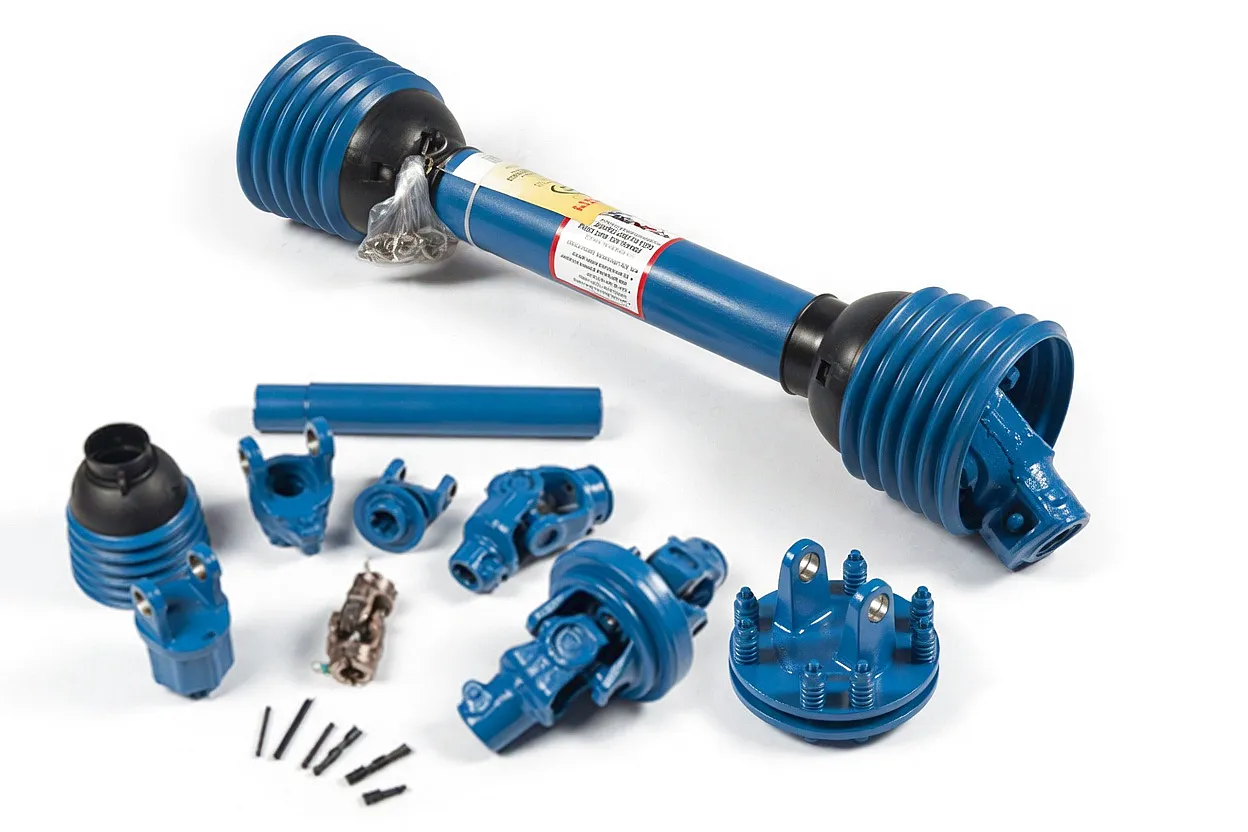
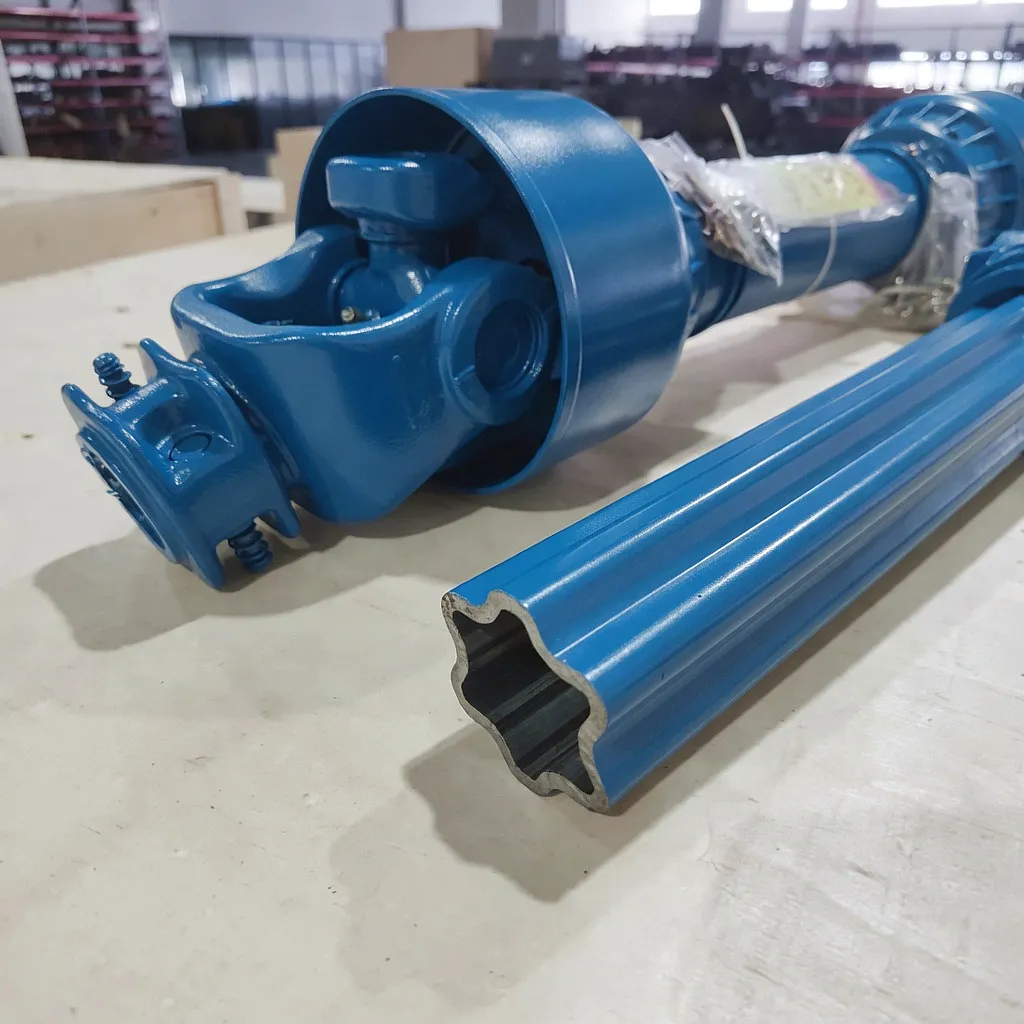
A Power Take-Off (PTO) shaft is a rotating mechanical linkage that transfers rotational energy from a tractor or engine power source to an attached implement or machine. The PTO shaft operates by coupling directly to the tractor’s gearbox output, spinning at either 540 RPM or 1,000 RPM depending on the application class. This rotational force is then transmitted through the splined shaft, universal joints, and outer tube assembly to the driven implement — which might be a muck spreader, a baler, a rotary cutter, a generator, or an industrial pump. The genius of the design lies in its ability to accommodate angular displacement and length variation between the tractor PTO stub and the implement’s input shaft, allowing the equipment to flex and articulate during operation. Universal joints — typically manufactured in sets of two — compensate for angular misalignment of up to around 15–25 degrees, making continuous power transmission possible even as the tractor turns or the ground undulates beneath it.
Core Materials
The structural integrity of a PTO shaft depends entirely on the quality and precision of the materials used in its manufacture. The inner shaft — the component that physically carries torque — is typically constructed from high-grade alloy steel, most commonly 20CrMnTi case-hardened steel or 45# medium carbon steel, both of which offer an excellent balance of tensile strength and toughness. The outer tube, which telescopes over the inner shaft to accommodate length changes, is manufactured from seamless cold-drawn steel tubing, ensuring uniform wall thickness and eliminating stress concentration points. Universal joint yokes and crosses are forged rather than cast, providing superior grain flow and fatigue resistance. Safety guards, where fitted — and they must always be fitted in operational environments — are typically made from HDPE (High-Density Polyethylene) for its combination of impact resistance, low friction, and resistance to agricultural chemicals and UV exposure. Precision-machined grease nipples and retention clips complete the assembly, ensuring that lubrication can be maintained across the full service life of the shaft.
Why PTO Safety Is a Non-Negotiable Priority
A PTO shaft rotating at 540 RPM completes nine full revolutions every second. At 1,000 RPM, this rises to over sixteen revolutions per second. Entanglement incidents — where clothing, hair, or limbs contact an unguarded shaft — can occur within a fraction of a second and frequently result in severe degloving, fractures, or amputation. In the UK, the HSE (Health and Safety Executive) consistently identifies PTO-related incidents as among the most severe machinery injuries recorded across the agricultural sector.
The relationship between rotational speed and injury severity is not linear — it is catastrophic. Beyond the raw rotational figures, the energy stored in a PTO drive shaft system during operation is immense. When an operator’s clothing or body part contacts a rotating PTO shaft, the physics are unforgiving: within milliseconds, the shaft wraps clothing tightly around itself, drawing the person in with a force that no human can resist. The UK agricultural sector accounts for a disproportionate share of fatal workplace accidents nationally, and PTO entanglement is a recurrent contributing factor identified in HSE fatality reports. Operators working in regions like Yorkshire, Shropshire, and Herefordshire — where agricultural machinery use is extremely dense — are statistically more exposed to this risk than the national average. The regulatory framework surrounding PTO operation in the UK is robust, but regulations only protect people when they are applied by knowledgeable, conscientious operators and properly maintained equipment.
The Ten Essential PTO Safety Rules
The following rules are not merely best-practice recommendations — they reflect the current legal requirements under PUWER 1998 and the HSE’s operational guidelines for powered mechanical equipment. Every operator, regardless of experience level, should treat these as inviolable commitments.
Always Fit and Inspect the Guard
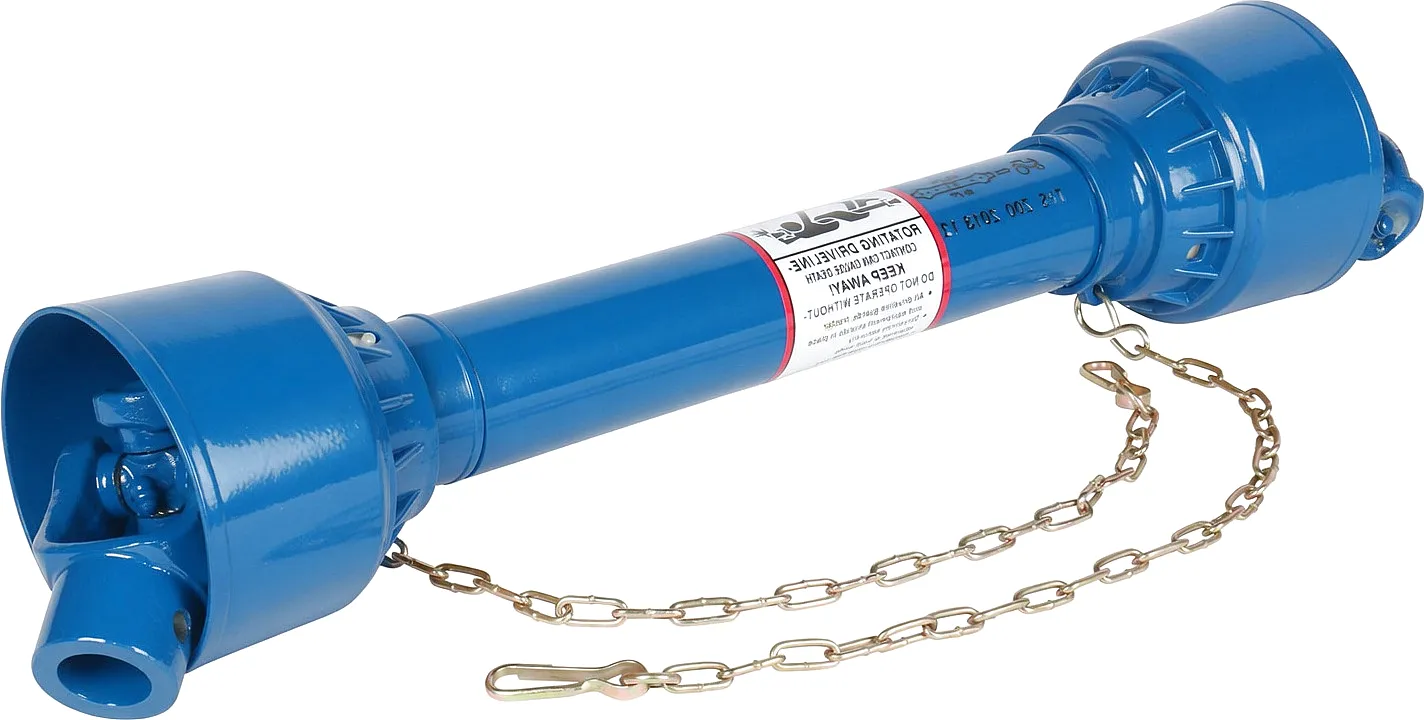
Never operate a PTO shaft without its full protective guard assembly in place. The guard must cover the full length of the rotating shaft including the universal joints at both ends. Before each shift, visually inspect the guard for cracks, missing retention chains, or damage to the cone sections. A guard that cannot rotate freely around the shaft — indicating a seized bearing — must be replaced before use. Under UK regulations, an unguarded PTO shaft in a working environment constitutes an immediate reportable hazard. This single rule prevents a significant proportion of all PTO-related injuries recorded annually by the HSE, and it costs nothing beyond a few seconds of attention before work begins.
Disengage Before Approaching
The PTO must be disengaged, the tractor engine switched off, and the system confirmed to have come to a complete stop before any person approaches the shaft, the implement connection, or any driven component. This is especially important when clearing blockages — a reflex tug to clear a jam in a still-spinning shaft is one of the most common circumstances surrounding entanglement incidents. Operators must cultivate the habit of counting to ten after disengagement before approaching, allowing residual inertia to dissipate fully. At sites in Yorkshire and Lancashire where arable operations run continuously during harvest season, fatigue-driven shortcuts during clearing operations are a documented risk factor that supervisors must actively monitor and address.
Wear Close-Fitting Clothing
Loose clothing — oversized jackets, scarves, baggy trousers, dangling straps — presents a severe entanglement risk around any rotating component, and PTO shafts are particularly dangerous due to their exposed length and high rotational speed. Operators must wear close-fitting, snug-cuffed work clothing with no loose ends. Long hair must be tied and secured beneath a hat or cap. This requirement applies regardless of weather conditions: it is not acceptable to add a loosely-tied jacket over PPE for warmth and then approach PTO-driven equipment. Machinery dealerships in counties like Lincolnshire and Norfolk report that awareness of clothing risks has improved in recent years, but incidents still occur, particularly among seasonal workers with limited formal machinery training.
Match the Shaft to the Application
Using a PTO shaft rated below the torque or angular demands of the application is a safety risk disguised as a cost saving. Overloading a shaft that is undersized for the driven implement can cause catastrophic shear failures, whipping of the failed shaft, or sudden seizure of the universal joints — all of which create immediate danger for the operator and bystanders. Reputable suppliers such as Ever Power provide detailed torque ratings, RPM ranges, and maximum operating angle specifications for every shaft in their range, making it straightforward to select the correct component. Always verify the implement’s input shaft spline size, the required power class, and the typical operating angle before placing an order. A correctly matched PTO shaft not only operates safely but also delivers longer service life and fewer maintenance interruptions.
Maintain Correct Operating Angles
Every PTO shaft has a maximum permissible operating angle — typically stated in the product documentation as a peak continuous operating angle (e.g., 25 degrees) and a maximum momentary deflection angle (e.g., 35 degrees). Operating beyond these angles does not simply degrade performance; it causes accelerated wear on universal joint crosses and bearings, generates dangerous vibration, and can result in sudden joint failure mid-operation. During implement hitching, ensure that the tractor PTO stub and the implement input shaft are positioned as close to in-line as practicable. When working on slopes common to upland farming regions of Wales and Northern England, the operating angle should be actively monitored. Always select a shaft that provides sufficient angular capacity for your typical working terrain, and never attempt to compensate for a shaft that is too short or too long by increasing the working angle beyond specification.
Grease Joints at the Correct Intervals
A dry universal joint is a failing universal joint. Inadequate lubrication causes bearing cups and cross journals to run hot, accelerating wear, increasing vibration, and eventually causing catastrophic seizure. The frequency of re-greasing depends on operating conditions — in typical agricultural use, every eight hours of operation is a baseline figure, though manufacturer guidance always takes precedence. Use the grade of grease specified in the documentation — NLGI Grade 2 multi-purpose grease is common — and pump grease into the nipple until fresh grease visibly purges at the bearing seals, confirming the old, degraded grease has been displaced. In high-dust environments such as those encountered during cereal harvesting in Cambridgeshire or root crop operations in Nottinghamshire, intervals should be shortened accordingly. Operators who build greasing into their pre-start and end-of-day routines rarely encounter joint failures in service.
Check Shaft Length Before Engagement
A PTO shaft that is too short can pull apart under the extension of a tight turn, leaving a spinning stub shaft exposed and the implement undriven. A shaft that is too long will bottom out on the inner tube overlap at full compression, creating a rigid link that transmits shocks directly into the tractor PTO housing — a common cause of gearbox damage. Before connecting any shaft, measure or verify the working length both at full compression and full extension, and confirm that sufficient overlap remains in both directions. As a practical rule of thumb, the inner and outer tubes should overlap by at least one-third of the total tube length at the longest working position. This check is especially critical when using a single PTO shaft interchangeably between implements of different mounting heights, which is common practice at UK agricultural contracting businesses serving multiple farm clients across a season.
Secure the Quick-Release Collar Fully
The quick-release collar on a PTO yoke is designed for ease of connection, but it is just as capable of facilitating accidental disconnection if not properly engaged. After inserting the yoke onto the tractor PTO stub or the implement input shaft, pull firmly outward on the shaft to confirm the locking mechanism has engaged. A shaft that appears connected but is not fully seated can disengage during operation — often with violent consequences as the freed shaft flails. Some operators check engagement by attempting to rotate the shaft by hand against the locking pins; any detectable axial movement under pull-test force indicates incomplete engagement. Given that many UK farms and industrial sites use PTOs to drive heavy-duty equipment — from silage wagons to industrial wood chippers — incomplete engagement under high-torque conditions is a serious hazard that a three-second pull-test can entirely prevent.
Install an Overrun Clutch Where Required
High-inertia implements — including flail mowers, heavy rotors, and flywheel-equipped baling machinery — store enormous rotational energy during operation. When the tractor PTO is disengaged suddenly while the implement rotor is still spinning rapidly, this stored energy can reverse-drive back through the PTO shaft into the tractor gearbox. The result can be sudden and severe PTO gearbox damage or, in extreme cases, structural failure of the shaft itself. An overrun clutch (also called a freewheel clutch), fitted at the implement input end of the PTO shaft, prevents reverse drive-back by allowing the shaft to spin freely in the overrun direction. For any implement with significant flywheel mass, the use of an overrun clutch is not merely recommended — it should be considered a standard specification. Ever Power manufactures overrun clutch shafts rated to match the full range of common implement classes used across UK operations.
Replace Worn or Damaged Shafts Promptly
A PTO shaft showing signs of wear — excessive joint play, corrosion on the tube surface, cracked guard sections, damaged splines, or bent tube geometry — must be removed from service immediately and either refurbished or replaced. Operating a mechanically compromised shaft is both a safety risk and a false economy: the cost of a shaft failure during operation, including potential implement damage, tractor gearbox repair, and injury liability, vastly exceeds the cost of a replacement shaft. Regular inspection — ideally monthly in continuous-use applications — is the professional standard. UK-based procurement teams and fleet maintenance managers should maintain a replacement schedule aligned with operating hours, not simply visual condition checks, because internal bearing wear may not be apparent until a failure occurs. Sourcing replacements from a proven supplier like Ever Power ensures accurate compatibility and consistent component quality.
PTO Shaft Technical & Performance Parameters
The table below provides indicative technical parameters for the Ever Power standard PTO shaft range. Custom specifications are available on request — including non-standard spline sizes, extended torque ratings, and special tube materials for corrosive or high-temperature environments. All parameters should be verified against the specific part datasheet for your selected product.
| Parameter | Light Duty | Medium Duty | Heavy Duty | Industrial HD |
|---|---|---|---|---|
| Max Torque (Nm) | Up to 500 | 500 – 1,200 | 1,200 – 3,500 | 3,500 – 8,000+ |
| Speed (RPM) | 540 / 1,000 | 540 / 1,000 | 540 / 1,000 | Aangepast |
| Max Operating Angle | 25° | 25° | 20° | 15° – 20° |
| Shaft Material | 45# Carbon Steel | 20CrMnTi Alloy | 20CrMnTi Alloy | Special Alloy |
| Guard Type | HDPE Cone | HDPE Full | HDPE Full | Steel / HDPE |
| Spline Options (Z x M) | 6 x 1.75 in | 6 x 1.75 / 1-3/8 in | 1-3/8 in / 1-3/4 in | Aangepast |
| Overrun Clutch Option | Optional | Optional | Standard | Standard |
| Grease Interval (hrs) | 8 – 10 | 8 | 6 – 8 | 4 – 6 |
| Oppervlaktebehandeling | Paint / Zinc | Zinc Phosphate | Zinc Phosphate | Custom Coating |
Industrial and Agricultural Application Scenarios
The PTO shaft is one of the most versatile mechanical interfaces in the UK’s industrial and agricultural ecosystem. From the grain-growing flatlands of East Anglia to the steel-making heritage sites of Sheffield, the PTO drive shaft connects power sources to productive equipment across an extraordinary range of applications.
Arable Farming
PTO shafts power seed drills, fertiliser spreaders, rotary cultivators, and combine harvester headers. Lincolnshire and East Anglia operations demand high-duty shafts with reliable overrun clutches given the continuous, high-RPM working cycles involved in cereal production.
Livestock & Forage
Muck spreaders, flail mowers, round balers, and silage wagons serving dairy and beef operations in Wales, Devon, and Yorkshire depend on medium-to-heavy PTO shafts that can absorb shock loading from uneven material flow while maintaining guard integrity in muddy conditions.
Generator Drive
Tractor-driven PTO generators provide emergency and standby power on farms, event sites, and construction projects across the UK. This application demands extremely precise speed regulation and shaft balance to prevent vibration that could damage sensitive electrical equipment — an area where precision-manufactured PTO shafts offer a clear advantage over lower-grade alternatives.
Construction & Civil Engineering
Auger drives, compactors, concrete mixers, and road planing equipment used across Birmingham’s infrastructure programmes and construction sites nationwide utilise industrial-grade PTO shafts rated for heavy shock loading and extended duty cycles. Hardened spline profiles and special coatings are often specified for the abrasive environments common to civil engineering work.
Pumping & Water Management
PTO-driven centrifugal and positive displacement pumps serve irrigation systems, flood response operations, and slurry management applications across the UK. Somerset and the Fens — areas regularly managed for water risk — use trailer-mounted PTO pump units requiring shafts that maintain performance through extended low-speed pumping operations with minimal vibration.
Forestry & Biomass
Wood chippers, stump grinders, log splitters, and biomass shredders used extensively across Forestry England operations and private woodland management in the Lake District and Scottish Borders require high-shock-rated PTO shafts with reinforced yokes and friction clutches to protect against sudden jam conditions during hardwood processing.
Ever Power: Manufacturing Excellence & Custom Solutions
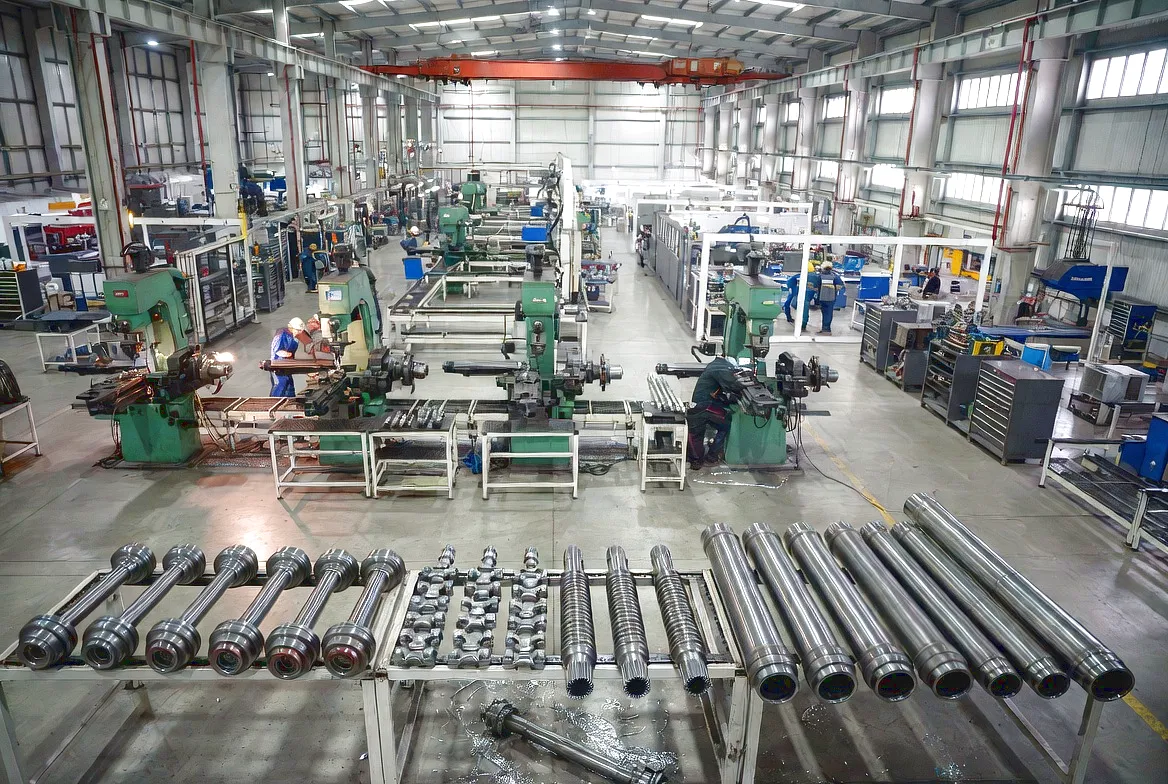
Ever Power has built a reputation for precision-engineered PTO shafts that exceed the demands of UK industrial and agricultural professionals. Our manufacturing facility runs to ISO 9001 certified processes, integrating CNC turning and grinding centres, automated heat treatment lines, and dedicated quality inspection stations to ensure every shaft leaving the facility meets or surpasses its design specification. The spline profiles on Ever Power shafts are machined to DIN 9611 tolerances as standard, guaranteeing that fit and function are consistent across every batch — a characteristic that procurement teams at major agricultural dealerships in Yorkshire, Shropshire, and the East Midlands regularly cite as a decisive advantage when approving us as a preferred supplier.
Where Ever Power differentiates itself most clearly is in customisation capability. Standard catalogued products cover the vast majority of agricultural and light-industrial requirements, but many UK buyers — particularly equipment OEMs based in Birmingham’s manufacturing corridor, specialist machinery builders in Sheffield, and bespoke agricultural vehicle producers across the Midlands — require PTO shafts engineered to unique specifications. Ever Power’s applications engineering team handles non-standard requests including extended torque ratings, custom tube lengths, non-DIN spline profiles, corrosion-resistant coatings for marine or chemical environments, and modified guard geometries to suit unusual implement configurations. Lead times for custom production are competitive with off-the-shelf alternatives from less capable suppliers, and our supply chain management ensures consistent raw material quality and stock availability even during peak seasonal demand periods.
Customer Success Story: Sheffield Industrial Contractor
Reducing Downtime by 68% for a Sheffield-Based Heavy Equipment Hire Fleet
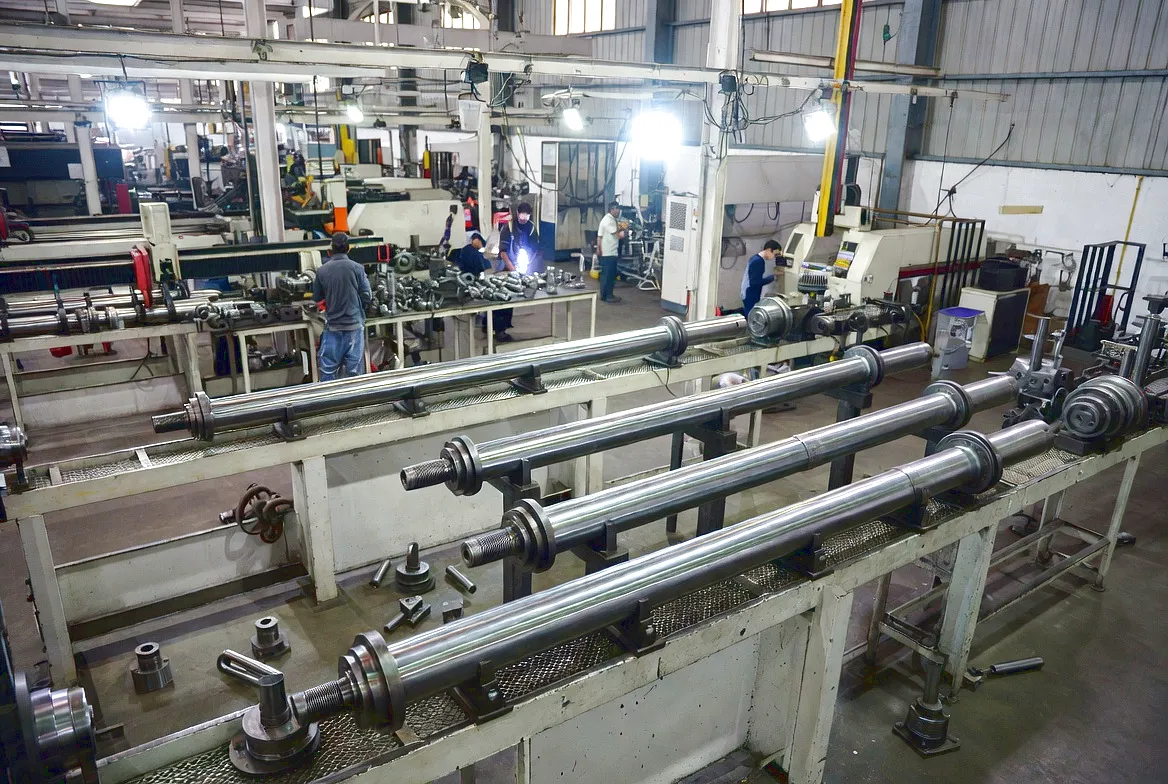 Hartfield Plant Hire operates a fleet of over 40 tractor-mounted implements serving construction and infrastructure projects across the South Yorkshire region, with particular concentration around Sheffield’s ongoing urban regeneration corridors and the M1 motorway improvement schemes. The company was experiencing persistent problems with premature PTO shaft failures — primarily universal joint collapse and guard cracking — on the heavy-duty auger drives and hydraulic rock-breaker adaptors that form the core of their hire fleet’s commercial offering.
Working with Ever Power’s applications team, Hartfield’s maintenance director identified two root causes. The shafts previously sourced from a lower-cost supplier were rated to the nominal torque figure of the implements but offered no safety margin for the shock loading characteristic of percussive ground-breaking work. Compounding this, the guard retaining chains were undersized, allowing the guards to migrate and contact rotating components during operation. Ever Power specified a custom heavy-duty shaft series with 40% additional torque capacity, reinforced yoke castings, and a bespoke guard retention system using captive stainless steel links rated for the working environment.
After twelve months of operation with the Ever Power custom shafts across the fleet, Hartfield reported a reduction in PTO-related maintenance downtime of approximately 68%, and zero guard-related safety incidents — compared to three recorded in the preceding twelve-month period. The ROI calculation presented by the maintenance director to the company’s board showed that the investment in quality shafts paid back within approximately four months of deployment, with ongoing savings thereafter from reduced labour, spare parts, and equipment idle time.
What UK Customers Say About Ever Power PTO Shafts
“We’ve been running Ever Power heavy-duty shafts on our auger fleet for just over a year now, and the difference in reliability is stark. The custom torque specification matched our ground conditions in Sheffield perfectly, and the guard retention system hasn’t given us a single issue. Our maintenance costs on PTO components dropped to a level we hadn’t seen since the early days of the business.”
“As a large-scale arable operation in Lincolnshire, we go through PTO-assen hard during drilling and harvest. The medium-duty range from Ever Power handles our seed drill and spreader combinations without complaint, and the 1,000 RPM rating on the overrun clutch variants has saved our tractor gearboxes from the kind of reversal shock we used to see every season. Genuinely impressed by the build quality and the lead times.”
“We build bespoke forestry attachments from our workshop in Telford, and finding a PTO shaft supplier who can work to our non-standard spline and length requirements has always been a headache. Ever Power’s applications engineering team turned around a custom specification in three days and had product on our floor within the agreed lead time. The shaft quality is exactly what the documentation promised. We’ve moved all our PTO sourcing to them.”
Veelgestelde vragen
Real questions from UK equipment operators, buyers, and maintenance professionals.























