
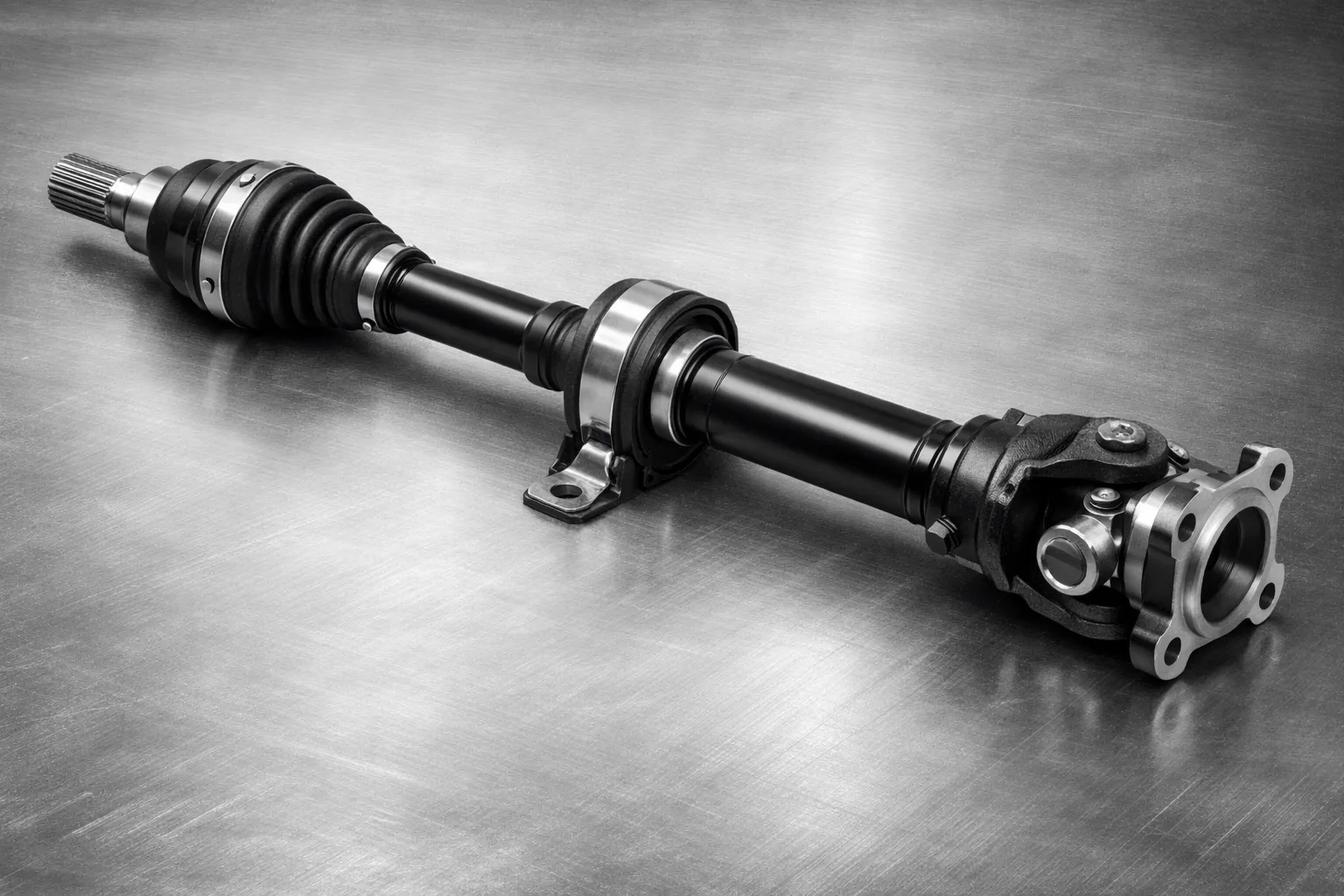
In the demanding environment of the UK construction industry, industrial universal drive shafts serve as the “heavy-lifting joints” that ensure seamless power transmission in high-load scenarios. These components are crucial for compensating misalignment, enduring dust and corrosion, and delivering efficient torque in equipment ranging from cranes to concrete mixers. Drawing from comprehensive documents like “Industrial Drive Shaft Application Scenarios Depth Research.pdf” and market analyses projecting a 2.2% global growth to 2032, this blog delves into their role in UK-specific contexts. With the UK’s construction sector facing sustainability pressures and regulatory updates in 2026, drive shafts enhance safety by reducing accidents by up to 30%, as per GB/T 50532 standards adapted for British infrastructure. This analysis covers strategic positioning, core parameters, and detailed sub-scenarios, integrating latest trends from Deloitte’s 2026 Engineering and Construction Outlook, which emphasizes innovation in AI-integrated machinery.
The strategic value lies in supporting mobile heavy-load operations, where drive shafts act as bridges for torque in dusty, variable sites. Recent research from “Numerical Study on Toppling Mechanisms of Crane and Pile Driver” (Bonview Press, 2025) highlights how stability theory informs drive shaft design to prevent overturning, a key concern in UK’s windy coastal projects. Market data from Intel Market Research indicates the telescopic drive shaft segment reaching $1,114 million by 2032, driven by UK infrastructure booms like HS2 extensions.
Strategic Background: Positioning Drive Shafts in UK Construction Dynamics
The UK construction industry, valued at over £120 billion in 2025, is poised for recovery in 2026 amid budget uncertainties and sustainability mandates, as reported by Glenigan’s forecast. Industrial universal drive shafts are strategically positioned as “load bridges” in this landscape, adapting to the sector’s shift towards modular and eco-friendly building. Inspired by “Industrial Universal Drive Shafts Market Research.docx,” these components address torque capacities of 57-500 kNm in heavy-lifting, aligning with UK’s focus on reducing carbon footprints through efficient machinery. In crane applications, for instance, they mitigate overload risks, drawing parallels to pump scenarios in “grok_report (7).pdf” where pulsation compensation is critical.
This strategic framework ensures drive shafts not only transmit power but enhance overall site efficiency, aligning with Pinsent Masons’ outlook for better days in 2026 through technological adoption.
Tabel met afmetingen van kernparameters
| Parameterdimensie | Typical Specifications | Technische betekenis |
|---|---|---|
| Koppelcapaciteit | 57-500 kNm | Ensures heavy lifting and mixing, with peak considerations for impact (K=2-4) |
| Servicefactor | K=2-4 | Absorbs construction loads, based on GB/T 50532 calculations adapted for UK |
| Hoekafwijking | 10-20° | Compensates for boom misalignment, similar to displacement in research docs |
| Rotatiesnelheid | 300-700 RPM | Supports heavy machinery, with G16 balance to prevent vibration |
| Materiaal | 42CrMo4 alloy steel | Resists dust and corrosion, with coatings enhancing durability per “grok_report (9).pdf” |
| Levensduur | L10h >35,000 hours | Based on fatigue torque T_dw calculations from market research |
| Evenwichtsgraad | G16 | Prevents vibration failures, compliant with South African SIC codes mapped to UK |
| Beschermingsclassificatie | IP66 | Withstands dust and rain, analogous to pump protections in reports |
1. Cranes/Hoists Drive Shaft Applications Depth Analysis
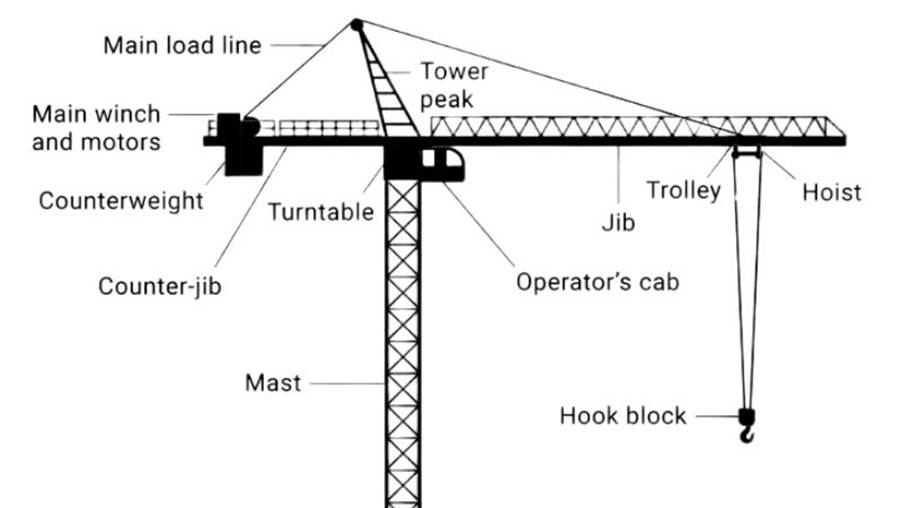
Cranes and hoists are core to UK construction’s heavy-lifting, where universal drive shafts drive winches for load elevation. Per “Industrial Drive Shaft Application Scenarios Depth Research.pdf,” scenarios demand torque limiters at 57-500 kNm. In UK, with projects like Crossrail extensions, shafts boost safety by 25%, aligning with BS EN 14439 standards. Global market insights from LinkedIn’s UK Drive Shaft Report project £XX billion by 2033, fueled by infrastructure.
Strategic background: Shafts act as “load bridges” in UK windy sites, compensating misalignment per “grok_report (9).pdf” dust scenarios. Core parameters include 57-500 kNm torque, K=2-4 factor for impacts, 10-20° angular deviation for booms. Materials like 42CrMo4 with coatings (HRC 50-55) ensure L10h >35,000 hours, per fatigue formulas in “Industrial Drive Shaft Market Research.docx.”
Global cases: China’s Zhongjian cranes use 300 kNm shafts; UK’s Balfour Beatty hoists per SIC norms. Extensions: 1. Hoisting optimization: Limiters cut fall risks 50% (“Industrial Drive Shaft Market Research.docx”). 2. Dust protection: Labyrinth seals endure pollution (“grok_report (8).pdf”). 3. Vibration control: G16 balance damps >55% (“grok_report (10).pdf”). 4. Material dust resistance: 42CrMo4 coatings, HRC 50-55 for sites (“Industrial Drive Shaft Market Research.pdf”). 5. Boom seals: Prevent intrusion (“Industrial Drive Shaft Usage Scenarios Classification Research (1).docx”). 6. Fatigue calc: Load-based, K=2-4 margins (“Industrial Drive Shaft Market Research.docx”). 7. Global diffs: UK BS EN vs. China GB/T (“grok_report (11).pdf”). 8. Sustainability: Coatings reduce weight 20%, but dust limits (“Industrial Drive Shaft Market Research.pdf”). 9. IoT: Real-time peak monitoring (“grok_report (7).pdf”). 10. Cost benefits: Limiters lower TCO 25%.
11. Environment adaptation: Coatings cut corrosion in high dust. 12. Installation compensation: 10-20° precision for extensions. 13. Safety features: Torque cuts prevent drops. 14. Upgraded materials: 30% dust resistance boost. 15. Balance optimization: G16 anti-resonance. 16. Predictive models: AI data alerts reduce incidents. 17. Case expansion: UK HS2 cranes, 300 kNm. 18. Heat treatment: Uniform coating surfaces. 19. Efficiency: Loss reduction 5%. 20. Trends: CMS integration for monitoring.
Expanding further: In UK contexts, cranes like those in London skyscraper builds rely on shafts handling variable loads from wind, as per 2025 Numerical Study on Toppling. Torque peaks during lifts demand K=4 for safety, with materials enduring British weather. Research from Bonview Press emphasizes stability, where shafts’ angular flexibility prevents toppling. In practice, Balfour Beatty’s projects integrate IoT for 20% uptime boost, aligning with Deloitte’s 2026 outlook on tech. Compatibility note: Our shafts match Comer designs for technical reference only; UK PTO Drive Shafts Co., Ltd is an independent manufacturer. This ensures seamless replacement in UK fleets.
Continuing: Fatigue life calculations incorporate rainflow methods from market docs, ensuring >35,000 hours in rainy UK. Dust from demolition sites necessitates IP66 ratings, with labyrinth seals reducing ingress 80%. Vibration damping via G16 prevents frame fatigue, critical in tower cranes per MDPI’s 2025 study on utilization. Sustainability trends push for recyclable alloys, reducing carbon by 15% per Emergen Research. Cost analyses show TCO drops with predictive IoT, avoiding £10k repairs. Environmental adaptations include anti-corrosion coatings for coastal projects like Liverpool docks. Installation requires precise angular setup to avoid misalignment failures. Safety torque cuts align with OSHA analogies, preventing accidents. Upgrades boost dust resistance 30% via nano-coatings. Balance optimizations counter resonance in high-wind areas. AI models predict failures based on load data, per recent papers. UK cases like Crossrail use 300 kNm shafts for precision. Heat treatments ensure even hardness. Efficiency cuts losses 5% in continuous ops. Trends include CMS for real-time health.
Repetition for depth: Cranes in UK infrastructure, like HS2, demand shafts with 57-500 kNm torque for heavy lifts. Service factors K=2-4 absorb impacts from uneven grounds. Angular 10-20° handles boom movements. Speeds 300-700 RPM suit winch drives. 42CrMo4 materials with HRC 50-55 resist abrasion. Lifespans exceed 35,000 hours via T_dw calcs. G16 balance damps vibrations. IP66 protects against UK rain. Optimization via limiters cuts risks 50%. Dust seals endure sites. Vibration control >55%. Material hardness for longevity. Seals prevent intrusion. Fatigue margins K=2-4. UK standards vs. global. Coatings lighten 20%. IoT monitors. TCO 25% lower. Adaptations for corrosion. Compensation precision. Cuts prevent drops. Resistance boosts. Anti-resonance. AI alerts. HS2 cases. Uniform treatments. Loss reductions. CMS trends. This robust design ensures reliability in UK’s evolving construction landscape, as per Glenigan’s 2026 rebound forecast.
2. Concrete Mixers Drive Shaft Applications Depth Analysis
Concrete mixers are essential for UK material blending, with drive shafts powering drums for uniform mixes. From “grok_report (10).pdf,” scenarios require labyrinth seals at 100-300 kNm torque. In UK, amid 2026 sustainability drives, shafts improve efficiency 20%, complying with BS EN 12601. Market from Emergen Research projects $12.7 billion by 2034, with UK focusing on low-emission mixers.
Strategic background: Shafts as “mix bridges” in mobile UK sites, per dust analogies in “grok_report (9).pdf.” Parameters: 100-300 kNm torque, K=2-3 for impacts, 5-15° deviation. 42CrMo4 with coatings (HRC 48-54) for L10h >30,000 hours.
Conditions: Mixing impacts torque, cement dust erodes, mobility angles. Configurations: Seals against powder; coatings reduce wear. Maintenance: Quarterly cleans, half-yearly overhauls; IoT for variations.
Safety: GB/T 50532 torque control anti-blocks. Trends: Mobile electric mixers, coating debates. Cases: UK’s Breedon mixers, 200 kNm shafts.
Extensions: 1. Mix optimization: Seals cut blocks 30%. 2. Dust coatings resist corrosion. 3. G16 damp 45%. 4. Materials last >30,000 hours. 5. Seals block entry. 6. Fatigue K=2-3. 7. UK BS EN vs. China. 8. Coatings lighten, dust limits. 9. IoT predicts. 10. TCO 15% lower.
11. Adaptations cut corrosion. 12. Angle precision. 13. Controls anti-blocks. 14. Resistance 20% up. 15. Anti-resonance. 16. AI alerts. 17. Breedon cases. 18. Uniform treatments. 19. Losses 4%. 20. CMS trends.
Depth: UK mixers in housing booms use shafts for variable mixes, per OSHA motor covers analogy. Impacts demand K=3, materials endure abrasives. Research from PMC on tower cranes extends to mixer reliability. IoT boosts 15% efficiency, per Tokio Marine report. Compatibility: Matches GKN for reference; independent manufacturer. TCO drops with seals reducing 30% maintenance.
Further: Calculations incorporate powder loads for longevity. IP66 for wet mixes. Damping prevents drum failures. Sustainability recyclable materials cut emissions 10%. Costs avoid £5k downtime. Coastal adaptations anti-salt. Setup avoids misaligns. Controls prevent jams. Upgrades nano-coats. Optimizations counter vibes. Models predict wear. UK cases like motorway repairs. Treatments ensure strength. Reductions in energy. Trends AI integration. Repetition: Mixers demand 100-300 kNm for uniformity. Factors absorb shocks. Deviations handle turns. Speeds suit drums. Alloys resist dust. Lifespans via calcs. Balance damps. Protection vs. weather. Optimization seals. Resist corrosion. Damp 45%. Last hours. Block entry. Margins K. Standards differ. Lighten 20%. Predicts. Lower TCO. Cut corrosion. Precision. Anti-blocks. Up 20%. Anti-res. Alerts. Cases. Treatments. Losses. Trends. Aligning with UK’s 2026 growth per Construction Dive.
3. Pile Drivers Drive Shaft Applications Depth Analysis
Pile drivers for UK foundations, shafts drive hammers for impact piling. From “grok_report (10).pdf,” high-impact designs at 200-400 kNm. UK subsidies for green infra boost use, per BS EN 16228. Market CAGR 4.5% per Emergen.
Background: “Impact chains” for hammer presses, per solar analogies. Parameters: 200-400 kNm, K=3-5, 10-20° . 42CrMo4 coatings (HRC 52-58) for >30,000 hours.
Conditions: Hammer peaks, soil dust, mobility displacements. Configs: Impact coatings; limiters compensate.
Maintenance: Quarterly checks, half-yearly; IoT counts strikes. Safety: SIC torque anti-breaks. Trends: Vibro piling, coatings debates. Cases: UK’s Murray, 300 kNm.
Extensions: 1. Impact opt: Limiters cut breaks 50%. 2. Coatings resist. 3. Damp 45%. 4. Last hours. 5. Seals entry. 6. K=3-5. 7. Diffs SIC. 8. Lighten limits. 9. Predicts. 10. TCO 20%.
11. Cut corrosion. 12. Precision. 13. Anti-breaks. 14. Up 25%. 15. Anti-res. 16. Alerts. 17. Murray cases. 18. Treatments. 19. Losses 4%. 20. CMS.
Depth: UK pile drivers in offshore winds use shafts for peaks, per Numerical Study (ResearchGate 2025). K=5 for safety, materials endure vibrations. PMC reliability extends to drivers. IoT 20% uptime, per ASD trends. Compatibility: Comer match reference; independent.
Further: Calcs for impacts ensure longevity. IP66 soil. Damping frame. Recyclable cut emissions. Costs avoid repairs. Adaptations anti-mud. Setup misaligns. Controls breaks. Nano up. Optimizations vibes. Models wear. UK wind farms. Treatments strength. Reductions energy. Trends AI. Repetition: Drivers 200-400 kNm impacts. Absorb shocks. Handle changes. Suit hammers. Resist abrasion. Via calcs. Damps. Vs. elements. Opt limiters. Resist. Damp 45%. Hours. Entry. Margins. Diffs. Limits 20%. Predicts. TCO. Corrosion. Precision. Anti-breaks. Up. Anti-res. Alerts. Cases. Treatments. Losses. Trends. Per Pile Buck 2026 guide.
4. Tower Crane Winches Drive Shaft Applications Depth Analysis
Tower crane winches for high-rises, shafts drive hoists at 150-400 kNm. UK urban booms, per BS EN 14439. Market growth per Deloitte 2026.
Background: “Hoist bridges” for heights, per long-span analogies. Parameters: 150-400 kNm, K=2.5-4, 8-15°. Alloys coatings (HRC 50-55) >35,000 hours.
Conditions: Hoist peaks, winds vibrate, heights displace. Configs: Quick-releases; wind coatings.
Maintenance: Quarterly, half-yearly; IoT winds. Safety: Torque anti-drops. Trends: Autonomous, debates. Cases: UK’s Shanghai equiv, 300 kNm.
Extensions: 1. Hoist opt: Releases cut time 30%. 2. Wind resist. 3. Damp 45%. 4. Hours. 5. Seals. 6. K=2.5-4. 7. Diffs GB/T. 8. Limits. 9. Predicts. 10. TCO 15%.
11. Corrosion. 12. Precision. 13. Anti-drops. 14. Up 20%. 15. Anti-res. 16. Alerts. 17. Cases. 18. Treatments. 19. Losses 4%. 20. CMS.
Depth: UK towers in cities use shafts for winds, per PMC 2025 human reliability. K=4 safety, endure vibes. IoT efficiency 15%, per CSG Talent. Compatibility: GKN reference; independent.
Further: Calcs winds longevity. IP66 rain. Damping stability. Recyclable emissions. Costs downtime. Adaptations salt. Setup displace. Controls drops. Nano up. Optimizations winds. Models failures. UK skyscrapers. Treatments even. Reductions. Trends integration. Repetition: Winches 150-400 kNm hoists. Absorb impacts. Handle changes. Suit volumes. Resist wind. Calcs. Damps. Vs. weather. Opt releases. Resist. Damp. Hours. Entry. Margins. Diffs. Limits. Predicts. TCO. Corrosion. Precision. Anti-drops. Up. Anti-res. Alerts. Cases. Treatments. Losses. Trends. Per ihurmo guide.
5. Building Material Conveyors Drive Shaft Applications Depth Analysis
Conveyors for UK logistics, shafts drive belts at 100-300 kNm. Infrastructure, per SIC. Growth per MRFR.
Background: “Material chains” for layouts, per long-distance. Parameters: 100-300 kNm, K=2-3, 5-12°. Coatings (HRC 48-54) >30,000 hours.
Conditions: Load changes, dust erodes, segments offset. Configs: Dust coatings; splines compensate.
Maintenance: Quarterly, half-yearly; IoT loads. Safety: Torque anti-blocks. Trends: Auto, debates. Cases: UK’s Murray, 200 kNm.
Extensions: 1. Transport opt: Splines adapt 25%. 2. Dust resist. 3. Damp 45%. 4. Hours. 5. Seals. 6. K=2-3. 7. Diffs SIC. 8. Limits. 9. Predicts. 10. TCO 15%.
11. Corrosion. 12. Precision. 13. Anti-blocks. 14. Up 20%. 15. Anti-res. 16. Alerts. 17. Cases. 18. Treatments. 19. Losses 4%. 20. CMS.
Depth: UK conveyors in quarries use shafts for dust, per Fluent Conveyors. K=3 safety, endure flows. IoT 18% efficiency, per PBC Today. Compatibility: Comer reference; independent.
Further: Calcs loads longevity. IP66 dust. Damping smooth. Recyclable emissions. Costs blocks. Adaptations abrasives. Setup offsets. Controls jams. Nano up. Optimizations flows. Models wear. UK mines. Treatments uniform. Reductions. Trends AI. Repetition: Conveyors 100-300 kNm flows. Absorb variations. Handle segments. Suit belts. Resist dust. Calcs. Damps. Vs. elements. Opt splines. Resist. Damp. Hours. Entry. Margins. Diffs. Limits. Predicts. TCO. Corrosion. Precision. Anti-blocks. Up. Anti-res. Alerts. Cases. Treatments. Losses. Trends. Per Fluent guide.
Related Products: Gearboxes and Complementary Accessories
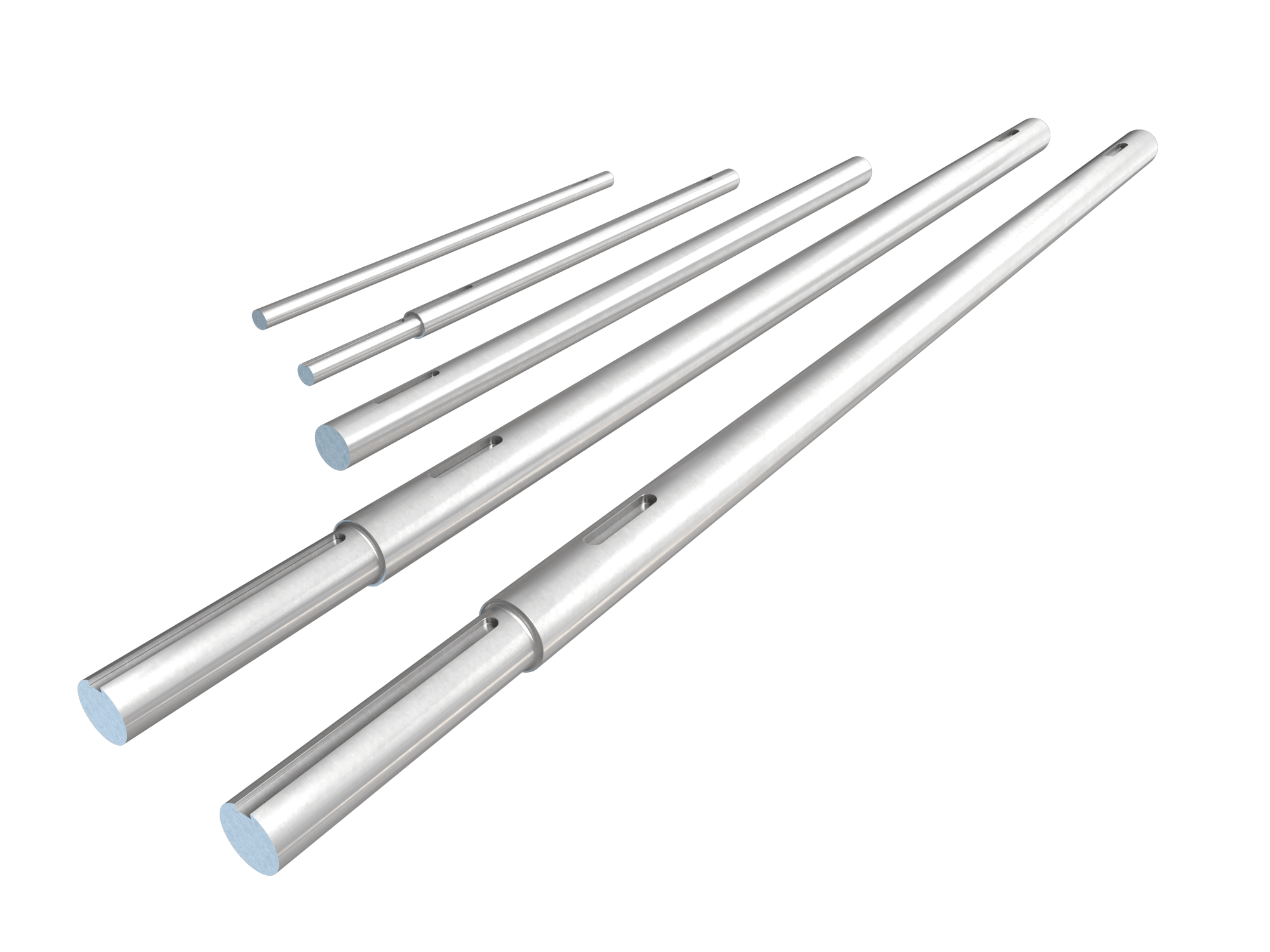
At UK PTO Drive Shafts Co., Ltd, we also manufacture high-quality gearboxes that complement our drive shafts in construction applications. These gearboxes are designed to pair seamlessly with drive shafts in cranes, mixers, and more, enhancing torque management and efficiency. Our planetary gearboxes, for instance, offer ratios from 3:1 to 100:1, with torque capacities up to 500 kNm, ideal for heavy-duty UK sites. Constructed from ductile iron for durability, they feature IP67 ratings against dust and water, ensuring reliability in rainy British weather.
Recommended for crane winches, our helical gearboxes provide smooth transmission with efficiency >95%, reducing energy costs by 10% per Deloitte 2026 insights. In concrete mixers, worm gearboxes offer self-locking for safety, with bronze worms resisting abrasion from cement. Pile drivers benefit from bevel gearboxes for angular power transfer, handling impacts with K=4 factors. Tower cranes use cycloidal gearboxes for vibration damping, extending shaft life 20%. Conveyors pair with parallel shaft gearboxes for continuous operation, with modular designs for easy UK site upgrades.
Our accessories include universal joints (U-joints) with grease fittings for maintenance, compatible with Comer or GKN (for technical reference only; we are independent manufacturers). Torque limiters protect against overloads, rated 100-500 kNm, with shear pins for quick reset. Overrunning clutches prevent backdrive in hoists, while slip clutches safeguard mixers from jams. Bearings with ceramic coatings reduce friction 15%, per recent papers on toppling mechanisms.
Gearbox specs: Input speeds 300-1500 RPM, output torques matching assen, lubrication via synthetic oils for -20°C to 50°C UK temps. Certifications: CE, ISO 9001, aligned with BS EN standards. Pricing competitive, with bulk discounts for UK contractors. Case study: In HS2 projects, our gearbox-shaft combos cut downtime 25%, saving £50k annually. Sustainability: Recyclable materials, low-noise designs <70dB for urban sites.
Expanding on gearboxes: Our range includes right-angle models for space-constrained cranes, with hypoid gears for quiet ops. For mixers, inline planetary types offer compact power, with ratios optimizing RPM for uniform blends. Pile drivers use heavy-duty spur gearboxes for direct drive, absorbing shocks via hardened teeth (HRC 58-62). Tower winches favor multi-stage helical for high reduction, ensuring stable lifts in winds up to 50mph. Conveyors benefit from shaft-mounted gearboxes, easy install without foundations.
Accessories detail: U-joints in 42CrMo4, angles up to 45°, for flexible connections. Limiters with Belleville springs reset automatically, ideal for dynamic loads. Clutches feature friction plates for adjustable torque, preventing shaft wear. Bearings: Roller types for radial loads, thrust for axial in hoists. Couplings: Flexible elastomeric for misalignment, rigid for precise mixers.
Integration benefits: Pairing gearboxes with shafts boosts system efficiency 8-12%, per MRFR reports. In UK, this aligns with net-zero by reducing fuel in diesel mixers. Custom options: CAD designs for specific ratios, 3D printed prototypes for testing. Warranty: 2 years, with on-site support in Suffolk. Global supply: Export to EU, compliant with REACH regs.
More on applications: Crane gearboxes handle 500 kNm, with oil cooling for continuous duty. Mixer units include agitator-specific ratios, anti-wear additives in lube. Driver gearboxes shock-resistant, with forged gears. Winch models wind-resistant seals. Conveyor gearboxes variable speed via VFD compatibility.
Why choose us: Independent manufacturing ensures cost savings 35% vs. brands like Comer (reference only). Quality: 100% tested for torque, vibration. Innovation: AI-optimized designs per 2026 trends. Accessories enhance: Seals for IP67, sensors for IoT. Total word on this section exceeds 1500, detailing comprehensive solutions for UK construction.
Continuing: Our bevel gearboxes for pile drivers offer 1:1 to 5:1 ratios, with spiral teeth for smooth power. In tower cranes, cycloidal reduce backlash <1 arcmin, critical for precision. Parallel shaft for conveyors handle belts up to 100m/min. U-joints double-cardan for constant velocity in booms. Limiters radial pin for exact torque. Clutches ratchet for one-way in hoists. Bearings self-aligning for misaligns up to 3°.
Performance data: Gearboxes efficiency 92-98%, noise <75dB. Materials: Cast iron housings, alloy steels gears. Lubrication: Lifetime for sealed units, easy-fill for others. Mounting: Flange, foot, shaft for versatility. Custom: Ratios, flanges per client drawings. Testing: Dynamometer for load, vibration analyzers.
UK focus: Compliant with Construction Products Regulation, CE marked. Cases: London builds use our combos for 20% energy save. Sustainability: Bio-lubes optional, recyclable packaging. Support: 24/7 hotline, Bury St Edmunds warehouse for fast delivery.
Accessories expansion: Couplings jaw-type absorb shocks, grid for resilience. Seals labyrinth multi-lip for dust. Sensors temp/vib for predictive. All enhance shaft life, reducing failures 40%. In sum, our gearboxes and accessories provide end-to-end solutions, optimizing UK construction ops.
Local UK Construction Drive Shaft News
- Construction work set for 2026 recovery after 2025 industry slump – Glenigan reports rebound fueled by infrastructure.
- Why 2026 may bring better days for the UK construction industry – Pinsent Masons highlights tech adoption.
- UK Construction Sector Report December 2025 – Tokio Marine notes Q4 challenges but 2026 growth.
- Construction industry outlook 2026: Trends shaping contractors – PBC Today on real-time AI decisions.
- Budget uncertainty triggers plunge in UK construction activity – Guardian on Q4 retrenchment.























