
Productbeschrijving
Productbeschrijving
Product name: Auto Parts Metal Driving Shaft Axle Drive shaft Joint Drive Axle Shaft For SAIC CZPT T60 OEM C05713
OEM Number: C05713
Application: For SAIC CZPT T60
| Car Fitment | Model | Year |
|---|---|---|
| MAXUS (SAIC MOTOR) | T60 Pickup | 2016- |
Package: Original genuine packing, Brand packing, Neutral packing with parts number label
MOQ:1 PC
Delivery time:1-7days
Place: HangZhou China
TIPS: The adaptation of parts is very complex, you need to provide chassis VIN number or car details {model, capacity, year of production (not buy) year} to customer service, and according to the customer service recommend to choose the appropriate type.
Gedetailleerde foto's
Verpakking en verzending
Shipping by Sea: containers goods,
Sample order by air: China Post, aliexpress standard shipping, E-pocket, EMS,UPS,TNT,DHL,Fedex, etc
Bedrijfsprofiel
Onze voordelen
1. One-stop service to supply all jac motors spare parts (JAC motors j2 j3 j4 j5 j6, s2 /T40,s3/ T5 ,s5/ T6 ,JAC refine ,JAC sunray ,JAC pickup T6 T8,JAC Truck … )
SAIC MG, CZPT Parts, CZPT spare parts
Chery, Changan, BYD, CZPT GWM, Brillance, Geely, Xihu (West Lake) Dis.feng spare parts
Mercedes Benz Parts,
Gates Auto Parts, Phc Parts
2. MOQ: 1PC
3. We will reply you for your inquiry in 24 hours.
4. after sending, we will track the products for you once every 2 days, until you get the products. When you got the goods, and give us a feedback.If you have any questions about the problem, contact with us, we will offer the solve way for you.
Veelgestelde vragen
Vraag 1. Wat zijn uw verpakkingsvoorwaarden?
A: Generally, we pack our goods in neutral boxes, original OE cartons or brands AQBP packages
Q2. how to do the order if your need parts have not in this shop?
A: if in this shop has no the parts you need, please tell us, and we will find it from our big warehouse, take photos and send price to you.
Q3. how much you should pay money if buy some items together?
A: after buying some items together, there will be different shipping fees and different goods price, so we can discuss how to do the best shipping way.
Q4. How about your delivery time?
A: Generally, it will take 30 to 60 days after receiving your advance payment. The specific delivery time depends on shipping way and different countries.
Q5. Can you produce according to the samples?
A: Yes, we can produce by your samples or technical drawings. We can build the molds and fixtures.
Q6: How do you make our business long-term and good relationship?
A:1. We keep good quality and competitive price to ensure our customers benefit;
2. We respect every customer as our friend and we sincerely do business and make friends with them, no matter where they come from.
/* 22 januari 2571 19:08:37 */!function(){function s(e,r){var a,o={};try{e&&e.split(“,”).forEach(function(e,t){e&&(a=e.match(/(.*?):(.*)$/))&&1
| Voorwaarde: | Nieuw |
|---|---|
| Color: | Black |
| Type: | Front Drive Axle Shaft |
| Aanpassing: |
Beschikbaar
| Aanvraag op maat |
|---|
.shipping-cost-tm .tm-status-off{background: none;padding:0;color: #1470cc}
|
Verzendkosten:
Geschatte vrachtkosten per eenheid. |
Informatie over verzendkosten en geschatte levertijd. |
|---|
| Betaalmethode: |
|
|---|---|
|
Aanbetaling Volledige betaling |
| Munteenheid: | US$ |
|---|
| Retourneren en terugbetalingen: | Je kunt tot 30 dagen na ontvangst van de producten een terugbetaling aanvragen. |
|---|
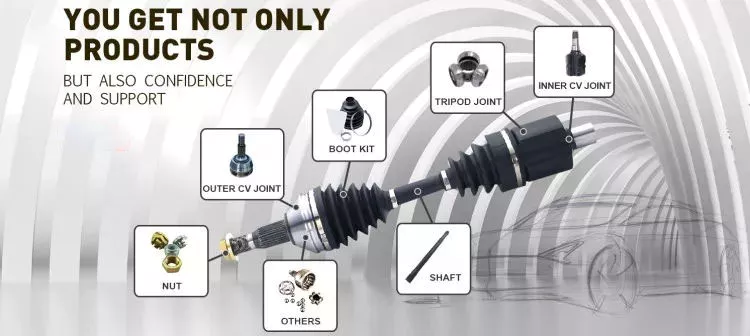
How do drive shafts ensure efficient power transfer while maintaining balance?
Drive shafts employ various mechanisms to ensure efficient power transfer while maintaining balance. Efficient power transfer refers to the ability of the drive shaft to transmit rotational power from the source (such as an engine) to the driven components (such as wheels or machinery) with minimal energy loss. Balancing, on the other hand, involves minimizing vibrations and eliminating any uneven distribution of mass that can cause disturbances during operation. Here’s an explanation of how drive shafts achieve both efficient power transfer and balance:
1. Material Selection:
The material selection for drive shafts is crucial for maintaining balance and ensuring efficient power transfer. Drive shafts are commonly made from materials such as steel or aluminum alloys, chosen for their strength, stiffness, and durability. These materials have excellent dimensional stability and can withstand the torque loads encountered during operation. By using high-quality materials, drive shafts can minimize deformation, flexing, and imbalances that could compromise power transmission and generate vibrations.
2. Design Considerations:
The design of the drive shaft plays a significant role in both power transfer efficiency and balance. Drive shafts are engineered to have appropriate dimensions, including diameter and wall thickness, to handle the anticipated torque loads without excessive deflection or vibration. The design also considers factors such as the length of the drive shaft, the number and type of joints (such as universal joints or constant velocity joints), and the use of balancing weights. By carefully designing the drive shaft, manufacturers can achieve optimal power transfer efficiency while minimizing the potential for imbalance-induced vibrations.
3. Balancing Techniques:
Balance is crucial for drive shafts as any imbalance can cause vibrations, noise, and accelerated wear. To maintain balance, drive shafts undergo various balancing techniques during the manufacturing process. Static and dynamic balancing methods are employed to ensure that the mass distribution along the drive shaft is uniform. Static balancing involves adding counterweights at specific locations to offset any weight imbalances. Dynamic balancing is performed by spinning the drive shaft at high speeds and measuring any vibrations. If imbalances are detected, additional adjustments are made to achieve a balanced state. These balancing techniques help minimize vibrations and ensure smooth operation of the drive shaft.
4. Universal Joints and Constant Velocity Joints:
Drive shafts often incorporate universal joints (U-joints) or constant velocity (CV) joints to accommodate misalignment and maintain balance during operation. U-joints are flexible joints that allow for angular movement between shafts. They are typically used in applications where the drive shaft operates at varying angles. CV joints, on the other hand, are designed to maintain a constant velocity of rotation and are commonly used in front-wheel-drive vehicles. By incorporating these joints, drive shafts can compensate for misalignment, reduce stress on the shaft, and minimize vibrations that can negatively impact power transfer efficiency and balance.
5. Maintenance and Inspection:
Regular maintenance and inspection of drive shafts are essential for ensuring efficient power transfer and balance. Periodic checks for wear, damage, or misalignment can help identify any issues that may affect the drive shaft’s performance. Lubrication of the joints and proper tightening of fasteners are also critical for maintaining optimal operation. By adhering to recommended maintenance procedures, any imbalances or inefficiencies can be addressed promptly, ensuring continued efficient power transfer and balance.
In summary, drive shafts ensure efficient power transfer while maintaining balance through careful material selection, thoughtful design considerations, balancing techniques, and the incorporation of flexible joints. By optimizing these factors, drive shafts can transmit rotational power smoothly and reliably, minimizing energy losses and vibrations that can impact performance and longevity.

How do drive shafts enhance the performance of automobiles and trucks?
Drive shafts play a significant role in enhancing the performance of automobiles and trucks. They contribute to various aspects of vehicle performance, including power delivery, traction, handling, and overall efficiency. Here’s a detailed explanation of how drive shafts enhance the performance of automobiles and trucks:
1. Power Delivery: Drive shafts are responsible for transmitting power from the engine to the wheels, enabling the vehicle to move forward. By efficiently transferring power without significant losses, drive shafts ensure that the engine’s power is effectively utilized, resulting in improved acceleration and overall performance. Well-designed drive shafts with minimal power loss contribute to the vehicle’s ability to deliver power to the wheels efficiently.
2. Torque Transfer: Drive shafts facilitate the transfer of torque from the engine to the wheels. Torque is the rotational force that drives the vehicle forward. High-quality drive shafts with proper torque conversion capabilities ensure that the torque generated by the engine is effectively transmitted to the wheels. This enhances the vehicle’s ability to accelerate quickly, tow heavy loads, and climb steep gradients, thereby improving overall performance.
3. Traction and Stability: Drive shafts contribute to the traction and stability of automobiles and trucks. They transmit power to the wheels, allowing them to exert force on the road surface. This enables the vehicle to maintain traction, especially during acceleration or when driving on slippery or uneven terrain. The efficient power delivery through the drive shafts enhances the vehicle’s stability by ensuring balanced power distribution to all wheels, improving control and handling.
4. Handling and Maneuverability: Drive shafts have an impact on the handling and maneuverability of vehicles. They help establish a direct connection between the engine and the wheels, allowing for precise control and responsive handling. Well-designed drive shafts with minimal play or backlash contribute to a more direct and immediate response to driver inputs, enhancing the vehicle’s agility and maneuverability.
5. Weight Reduction: Drive shafts can contribute to weight reduction in automobiles and trucks. Lightweight drive shafts made from materials such as aluminum or carbon fiber-reinforced composites reduce the overall weight of the vehicle. The reduced weight improves the power-to-weight ratio, resulting in better acceleration, handling, and fuel efficiency. Additionally, lightweight drive shafts reduce the rotational mass, allowing the engine to rev up more quickly, further enhancing performance.
6. Mechanical Efficiency: Efficient drive shafts minimize energy losses during power transmission. By incorporating features such as high-quality bearings, low-friction seals, and optimized lubrication, drive shafts reduce friction and minimize power losses due to internal resistance. This enhances the mechanical efficiency of the drivetrain system, allowing more power to reach the wheels and improving overall vehicle performance.
7. Performance Upgrades: Drive shaft upgrades can be popular performance enhancements for enthusiasts. Upgraded drive shafts, such as those made from stronger materials or with enhanced torque capacity, can handle higher power outputs from modified engines. These upgrades allow for increased performance, such as improved acceleration, higher top speeds, and better overall driving dynamics.
8. Compatibility with Performance Modifications: Performance modifications, such as engine upgrades, increased power output, or changes to the drivetrain system, often require compatible drive shafts. Drive shafts designed to handle higher torque loads or adapt to modified drivetrain configurations ensure optimal performance and reliability. They enable the vehicle to effectively harness the increased power and torque, resulting in improved performance and responsiveness.
9. Durability and Reliability: Robust and well-maintained drive shafts contribute to the durability and reliability of automobiles and trucks. They are designed to withstand the stresses and loads associated with power transmission. High-quality materials, appropriate balancing, and regular maintenance help ensure that drive shafts operate smoothly, minimizing the risk of failures or performance issues. Reliable drive shafts enhance the overall performance by providing consistent power delivery and minimizing downtime.
10. Compatibility with Advanced Technologies: Drive shafts are evolving in tandem with advancements in vehicle technologies. They are increasingly being integrated with advanced systems such as hybrid powertrains, electric motors, and regenerative braking. Drive shafts designed to work seamlessly with these technologies maximize their efficiency and performance benefits, contributing to improved overall vehicle performance.
In summary, drive shafts enhance the performance of automobiles and trucks by optimizing power delivery, facilitating torque transfer, improving traction and stability, enhancing handling and maneuverability, reducing weight, increasing mechanical efficiency, enabling compatibility with performance upgrades and advanced technologies, and ensuring durability and reliability. They play a crucial role in ensuring efficient power transmission, responsive acceleration, precise handling, and overall improved performance of vehicles.
Zijn er variaties in het ontwerp van aandrijfassen voor verschillende soorten machines?
Ja, er bestaan variaties in het ontwerp van aandrijfassen om te voldoen aan de specifieke eisen van verschillende soorten machines. Het ontwerp van een aandrijfas wordt beïnvloed door factoren zoals de toepassing, de behoefte aan krachtoverbrenging, ruimtebeperkingen, bedrijfsomstandigheden en het type aangedreven componenten. Hieronder volgt een uitleg over hoe aandrijfasontwerpen kunnen variëren voor verschillende soorten machines:
1. Toepassingen in de automobielindustrie:
In de auto-industrie kunnen aandrijfassen variëren afhankelijk van de configuratie van het voertuig. Achterwielaangedreven voertuigen gebruiken doorgaans een aandrijfas uit één of twee delen, die de transmissie of tussenbak verbindt met het achterdifferentieel. Voorwielaangedreven voertuigen gebruiken vaak een ander ontwerp, waarbij een aandrijfas in combinatie met homokinetische koppelingen (CV-koppelingen) de kracht overbrengt naar de voorwielen. Vierwielaangedreven voertuigen kunnen meerdere aandrijfassen hebben om de kracht over alle wielen te verdelen. De lengte, diameter, het materiaal en de soorten koppelingen kunnen verschillen op basis van de lay-out van het voertuig en de koppelvereisten.
2. Industriële machines:
Het ontwerp van aandrijfassen voor industriële machines hangt af van de specifieke toepassing en de eisen aan de krachtoverbrenging. In productiemachines, zoals transportbanden, persen en roterende apparatuur, zijn aandrijfassen ontworpen om de kracht efficiënt binnen de machine over te brengen. Ze kunnen flexibele verbindingen bevatten of gebruikmaken van een spie- of sleutelverbinding om uitlijningsfouten op te vangen of eenvoudige demontage mogelijk te maken. De afmetingen, materialen en versterking van de aandrijfas worden gekozen op basis van het koppel, de snelheid en de bedrijfsomstandigheden van de machine.
3. Landbouw en veeteelt:
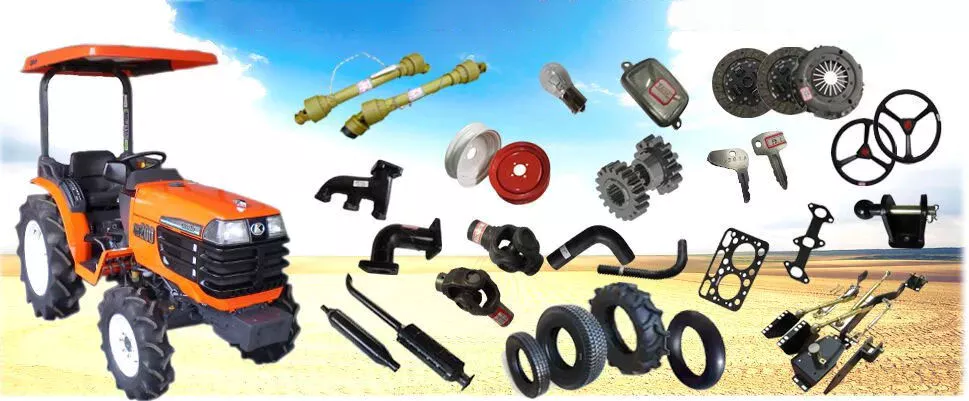
Landbouwmachines, zoals tractoren, maaidorsers en oogstmachines, vereisen vaak aandrijfassen die bestand zijn tegen hoge koppelbelastingen en variërende werkhoeken. Deze aandrijfassen zijn ontworpen om de kracht van de motor over te brengen op aanbouwdelen en werktuigen, zoals maaiers, balenpersen, grondfrezen en oogstmachines. Ze kunnen telescopische secties bevatten voor verstelbare lengtes, flexibele verbindingen om uitlijningsfouten tijdens gebruik te compenseren en beschermende afschermingen om te voorkomen dat ze verstrikt raken in gewassen of ander vuil.
4. Bouw en zwaar materieel:
Bouw- en zwaar materieel, waaronder graafmachines, laders, bulldozers en kranen, vereisen robuuste aandrijfassen die in staat zijn om kracht over te brengen onder veeleisende omstandigheden. Deze aandrijfassen hebben vaak een grotere diameter en dikkere wanden om hoge koppelbelastingen aan te kunnen. Ze kunnen zijn voorzien van kruiskoppelingen of homokinetische koppelingen om de werkhoeken te compenseren en schokken en trillingen op te vangen. Aandrijfassen in deze categorie kunnen ook extra verstevigingen hebben om bestand te zijn tegen de zware omstandigheden en toepassingen die kenmerkend zijn voor bouw- en graafwerkzaamheden.
5. Maritieme toepassingen:
Aandrijfassen voor maritieme toepassingen zijn specifiek ontworpen om de corrosieve effecten van zeewater en de hoge koppelbelastingen in scheepsaandrijfsystemen te weerstaan. Scheepsaandrijfassen worden doorgaans gemaakt van roestvrij staal of andere corrosiebestendige materialen. Ze kunnen flexibele koppelingen of dempingsmechanismen bevatten om trillingen te verminderen en de effecten van verkeerde uitlijning te beperken. Bij het ontwerp van scheepsaandrijfassen wordt ook rekening gehouden met factoren zoals aslengte, diameter en steunlagers om een betrouwbare krachtoverbrenging in schepen te garanderen.
6. Mijnbouw- en winningsapparatuur:
In de mijnbouw worden aandrijfassen gebruikt in zware machines en apparatuur zoals mijnbouwvrachtwagens, graafmachines en boorinstallaties. Deze aandrijfassen moeten bestand zijn tegen extreem hoge koppelbelastingen en zware bedrijfsomstandigheden. Aandrijfassen voor mijnbouwtoepassingen hebben vaak een grotere diameter, dikkere wanden en zijn vervaardigd van speciale materialen zoals gelegeerd staal of composietmaterialen. Ze kunnen zijn voorzien van kruiskoppelingen of homokinetische koppelingen om de werkhoeken te kunnen overbruggen en zijn ontworpen om slijtage te weerstaan.
Deze voorbeelden illustreren de variaties in aandrijfasontwerpen voor verschillende soorten machines. Bij het ontwerp wordt rekening gehouden met factoren zoals vermogensbehoefte, bedrijfsomstandigheden, ruimtebeperkingen, uitlijningseisen en de specifieke eisen van de machine of industrie. Door het ontwerp van de aandrijfas af te stemmen op de unieke eisen van elke toepassing, kunnen optimale efficiëntie en betrouwbaarheid van de krachtoverbrenging worden bereikt.


editor by CX 2024-04-25























