
Өнім сипаттамасы
1
Products
Name: Die forging farm equipment clutch & driveline drive shaft front slip yoke
Material: 40CrMo
Weight: From .2kg-5kg
Packing: wooden case
Min order: 1000pcs
Customized production is available as your drawings or sample.
| Process | Die Forging | ||||||
| Материал | Stainless Steel, Carbon Steel, Alloy Steel | ||||||
| Салмақ | 0.1Kg~20Kg | ||||||
| Heat Treatment | Quenching, Annealing,Tempering,Normalizing, Quenching and Tempering | ||||||
| Testing instrument | composition testing | Spectrometer, Metallographic microscope | |||||
| Performance testing | Hardness tester, Tensile testing machine | ||||||
| Size Measuring | CMM,Micrometer, Vernier Caliper, Depth Caliper, feeler gauge | ||||||
| Thread Gauge , Height Gauge | |||||||
| Roughness | Ra1.6~Ra6.3 | ||||||
| Machining Equipment | CNC Center , CNC Machines, Turning, Drilling, Milling, boring machine,Grinding Machines, | ||||||
| Wire EDM,Laser Cutting&Welding, Plasma Cutting &Welding, EDM etc. | |||||||
| Quality control | Sampling inspection of raw materials and semi-finished products, 100% Inspection of finished products | ||||||
| Беттік өңдеу | Shot Blast , Powder Coating, Polishing, Galvanized , Chrome Plated | ||||||
| 60000T / Years | |||||||
| Тоқтау | Normally 30 – 45 Days. | ||||||
| Payment Terms | T/T , L/C | ||||||
| Material Standard | ASTM , AISI , DIN , BS, JIS, GB, | ||||||
| Сертификаттау | ISO9001:2008, IATF16949:2016 | ||||||
2
Products Quality Control
Quality control involve the inspection and control of incoming materials, production processes, and finished products.
The quality control process includes,
1 First of all, the incoming raw materials with random sampling are analyzed by metallographic microscope to ensure that the chemical composition meets the production requirements
2 Then In the production process, there are QC staffs timely sampling ensure that the products are free of defects in the manufacturing process, and to coordinate and handle any abnormal quality issues may be occurred.
3 The final step of production process is magnetic particle flaw detector of the metal parts to detect it’s hidden crack or other defects.
4 All the finished metal parts is sampled in proportion and sent to the laboratory for various mechanical performance tests and size measurement, and the surface quality is manually 100% inspected.
The relevant testing equipment pictures are as following:
3
Quality Management System Control:
We strictly carry out system management accordance with iso9001 and ts16949 quality standards. And 5S lean production management is implemented on the production site.
The production management site as following:
4
Our Advantages:
Бренд
Our parent company, HiHangZhou Group, is a world-renowned high-end machinery manufacturing enterprise with 40 domestic subsidiaries and branches and 8 foreign manufacturing plants. Has long-term experience and good reputation in cooperation with world-renowned enterprises.
Technology
We have a complete production process and equipment research and development capabilities for ferrous metals forming. More than 25 years of production experience in forging equipment and casting equipment manufacturers, make us more thoroughly get all the performance of each equipment. One-third of our company’s employees are technician and R&D personnel, ensuring that high-quality products are produced with high efficiency.
Service
We can provide custom and standard manufacturing services with multiple manufacturing process integrations. The quality and delivery of products can be fully guaranteed, and the ability to communicate quickly and effectively.
Culture
The unique corporate culture can give full play to the potential of individuals and provide a strong vitality for the sustainable development of the company.
Social responsibility
Our company strictly implements low-carbon environmental protection, energy-saving and emission-reduction production, and is a benchmark enterprise in local region.
5
Company Culture
Our Vision
To become 1 of the leading companies
Our Mission
To become a platform for employees to realize their dream
To become 1 of the transforming and upgrading pacemaker of Chinese enterprises
To set the national brands with pride
Our Belief
Strive to build the company into an ideal platform for entrepreneurs to realize their self-worth and contribute to the society
Values
Improvement is innovation, everyone can innovate
innovation inspired and failures tolerated
6
Жиі қойылатын сұрақтар
1.
Q: Are you a trading company or a manufacturer?
A: Obviously we are a manufacturer of forging products, casting products and also have a high level of machining capabilities.
2.
Q: What series products do your have?
A: We are mainly engaged in forming processing of ferrous metals, including processing by casting , forging and machining. As you know, such machinery parts can be observed in various industries of equipment manufacturing.
3
Q: Do you provide samples? is it free?
A: Yes, we commonly provide samples according to the traditional practice, but we also need customers to provide a freight pay-by-account number to show mutual CZPT of cooperation.
4
Q: Is OEM available?
A: Yes, OEM is available.
5
Q: What’s your quality guarantee?
A: We insist that the survival of the company should depend on the products quality continuous improvement, without which we cannot survive for long. We carry out strictly product quality control for every process from incoming materials, production process to finished products via advanced detection instrument and equipment. We also invite independent third parties to certify our quality and management systems. Till now we have passed ISO/TS16949 and SGS certification .
6
Q. How about the Packing?
A: We usually use the iron box, or wooden case, also it can be customized according to customer’s demands.
7
Q: What is your minimum order quantity?
A: Yes, we require all international orders to have an minimum order quantity. The quantity is up to the exact products feature or property such as the material, weight, construction etc.
8
Q: What is the lead time?
A: Generally our forging products and casting products need to make new dies or molds, the time of making new dies or molds and samples within 30-45 days, and the large batch production time within 30-45 days. it’s also according to the parts structural complexity and quantity.
9
Q: What kinds of payment methods do you accept?
A: You can make the payment by T/T or L/C. 30% deposit in advance, 70% balance against the copy of B/L.
Сертификаттау
| Processing Object: | Metal |
|---|---|
| Molding Style: | соғу |
| Molding Technics: | Pressure Casting |
| Қолдану: | Agricultural Machinery Parts |
| Материал: | Steel |
| Heat Treatment: | Tempering |
| Үлгілер: |
US$ 20 дана
1 дана (ең аз тапсырыс) | |
|---|
| Теңшеу: |
Қолжетімді
| Теңшелген сұраныс |
|---|
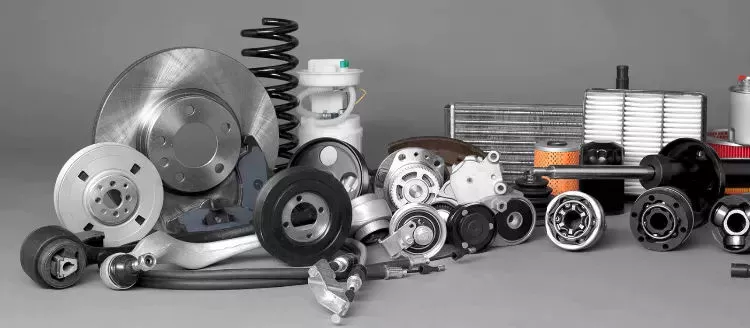
Can drive shafts be adapted for use in both automotive and industrial settings?
Yes, drive shafts can be adapted for use in both automotive and industrial settings. While there may be some differences in design and specifications based on the specific application requirements, the fundamental principles and functions of drive shafts remain applicable in both contexts. Here’s a detailed explanation:
1. Power Transmission:
Drive shafts serve the primary purpose of transmitting rotational power from a power source, such as an engine or motor, to driven components, which can be wheels, machinery, or other mechanical systems. This fundamental function applies to both automotive and industrial settings. Whether it’s delivering power to the wheels of a vehicle or transferring torque to industrial machinery, the basic principle of power transmission remains the same for drive shafts in both contexts.
2. Design Considerations:
While there may be variations in design based on specific applications, the core design considerations for drive shafts are similar in both automotive and industrial settings. Factors such as torque requirements, operating speeds, length, and material selection are taken into account in both cases. Automotive drive shafts are typically designed to accommodate the dynamic nature of vehicle operation, including variations in speed, angles, and suspension movement. Industrial drive shafts, on the other hand, may be designed for specific machinery and equipment, taking into consideration factors such as load capacity, operating conditions, and alignment requirements. However, the underlying principles of ensuring proper dimensions, strength, and balance are essential in both automotive and industrial drive shaft designs.
3. Material Selection:
The material selection for drive shafts is influenced by the specific requirements of the application, whether in automotive or industrial settings. In automotive applications, drive shafts are commonly made from materials such as steel or aluminum alloys, chosen for their strength, durability, and ability to withstand varying operating conditions. In industrial settings, drive shafts may be made from a broader range of materials, including steel, stainless steel, or even specialized alloys, depending on factors such as load capacity, corrosion resistance, or temperature tolerance. The material selection is tailored to meet the specific needs of the application while ensuring efficient power transfer and durability.
4. Joint Configurations:
Both automotive and industrial drive shafts may incorporate various joint configurations to accommodate the specific requirements of the application. Universal joints (U-joints) are commonly used in both contexts to allow for angular movement and compensate for misalignment between the drive shaft and driven components. Constant velocity (CV) joints are also utilized, particularly in automotive drive shafts, to maintain a constant velocity of rotation and accommodate varying operating angles. These joint configurations are adapted and optimized based on the specific needs of automotive or industrial applications.
5. Maintenance and Service:
While maintenance practices may vary between automotive and industrial settings, the importance of regular inspection, lubrication, and balancing remains crucial in both cases. Both automotive and industrial drive shafts benefit from periodic maintenance to ensure optimal performance, identify potential issues, and prolong the lifespan of the drive shafts. Lubrication of joints, inspection for wear or damage, and balancing procedures are common maintenance tasks for drive shafts in both automotive and industrial applications.
6. Customization and Adaptation:
Drive shafts can be customized and adapted to meet the specific requirements of various automotive and industrial applications. Manufacturers often offer drive shafts with different lengths, diameters, and joint configurations to accommodate a wide range of vehicles or machinery. This flexibility allows for the adaptation of drive shafts to suit the specific torque, speed, and dimensional requirements of different applications, whether in automotive or industrial settings.
In summary, drive shafts can be adapted for use in both automotive and industrial settings by considering the specific requirements of each application. While there may be variations in design, materials, joint configurations, and maintenance practices, the fundamental principles of power transmission, design considerations, and customization options remain applicable in both contexts. Drive shafts play a crucial role in both automotive and industrial applications, enabling efficient power transfer and reliable operation in a wide range of mechanical systems.
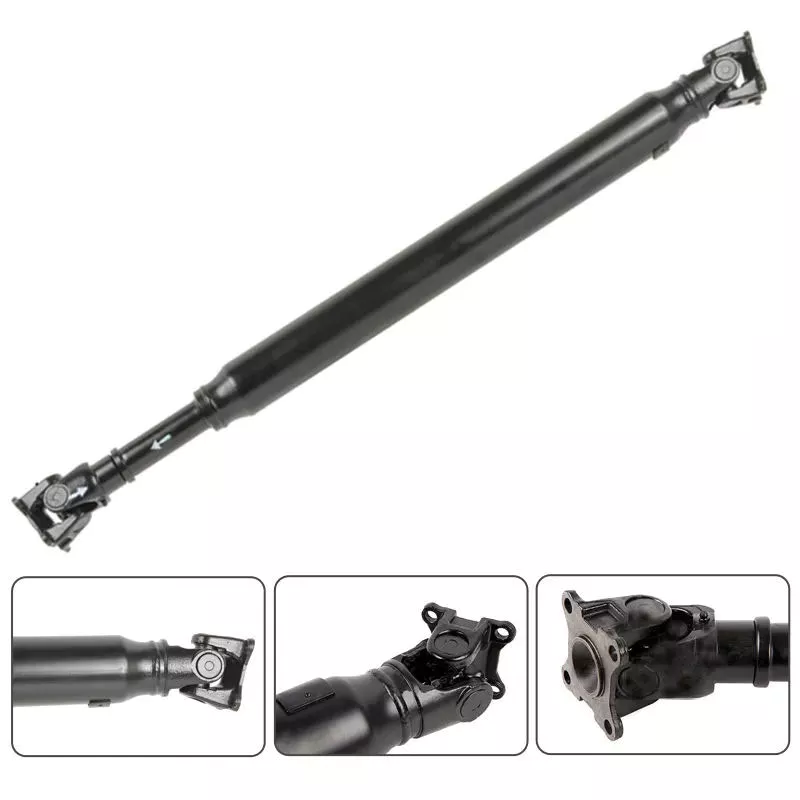
Жетек біліктерін көлік құралының немесе жабдықтың нақты талаптарына сәйкес реттеуге бола ма?
Иә, жетек біліктерін көліктің немесе жабдықтың нақты талаптарына сәйкес келтіруге болады. Теңшеу өндірушілерге белгілі бір көлікте немесе жабдықта үйлесімділікті және оңтайлы өнімділікті қамтамасыз ету үшін жетек білігінің дизайнын, өлшемдерін, материалдарын және басқа параметрлерін бейімдеуге мүмкіндік береді. Жетек біліктерін қалай теңшеуге болатыны туралы егжей-тегжейлі түсініктеме берілген:
1. Өлшемді теңшеу:
Жетек біліктерін көлік құралының немесе жабдықтың өлшемдік талаптарына сәйкестендіруге болады. Бұған нақты қолданыстағы дұрыс орнату мен саңылауларды қамтамасыз ету үшін жалпы ұзындықты, диаметрді және сплайн конфигурациясын реттеу кіреді. Өлшемдерін реттеу арқылы жетек білігін ешқандай кедергісіз немесе шектеусіз жетек жүйесімен біркелкі біріктіруге болады.
2. Материалды таңдау:
Жетек біліктеріне арналған материалдарды таңдау көлік құралының немесе жабдықтың нақты талаптарына негізделіп реттелуі мүмкін. Беріктік, салмақ және төзімділікті оңтайландыру үшін болат қорытпалары, алюминий қорытпалары немесе мамандандырылған композиттер сияқты әртүрлі материалдарды таңдауға болады. Материалды таңдауды айналу моментіне, жылдамдығына және пайдалану жағдайларына сәйкес келтіруге болады, бұл жетек білігінің сенімділігі мен ұзақ мерзімділігін қамтамасыз етеді.
3. Біріктіру конфигурациясы:
Жетек біліктерін көлік құралының немесе жабдықтың нақты талаптарына сәйкестендіру үшін әртүрлі қосылыс конфигурацияларымен теңшеуге болады. Мысалы, әмбебап қосылыстар (U-тәрізді қосылыстар) төменгі жұмыс бұрыштары және орташа момент талаптары бар қолданбаларға жарамды болуы мүмкін, ал тұрақты жылдамдық (CV) қосылыстары көбінесе жоғары жұмыс бұрыштары мен тегіс қуат берілісін қажет ететін қолданбаларда қолданылады. Қосылыс конфигурациясын таңдау жұмыс бұрышы, момент сыйымдылығы және қажетті өнімділік сипаттамалары сияқты факторларға байланысты.
4. Айналдыру моменті және қуат сыйымдылығы:
Теңшеу жетек біліктерін нақты көлік құралына немесе жабдыққа сәйкес келетін айналу моменті мен қуат сыйымдылығымен жобалауға мүмкіндік береді. Өндірушілер жетек білігінің оңтайлы айналу моменті мен қуат сыйымдылығын анықтау үшін айналу моментінің талаптарын, жұмыс жағдайларын және қолданудың қауіпсіздік шегін талдай алады. Бұл жетек білігінің мезгілсіз істен шығуына немесе өнімділік мәселелеріне тап болмай қажетті жүктемелерді көтере алатынын қамтамасыз етеді.
5. Тепе-теңдік және дірілді басқару:
Жетек біліктерін дәл теңдестіру және дірілді бақылау шараларымен теңшеуге болады. Жетек білігіндегі теңгерімсіздіктер дірілге, тозудың жоғарылауына және жетек сызығының ықтимал мәселелеріне әкелуі мүмкін. Өндіріс процесінде динамикалық теңдестіру әдістерін қолдану арқылы өндірушілер дірілді азайтып, бірқалыпты жұмыс істеуді қамтамасыз ете алады. Сонымен қатар, дірілді одан әрі азайту және жүйенің жалпы өнімділігін арттыру үшін жетек білігінің дизайнына діріл демпферлерін немесе оқшаулау жүйелерін біріктіруге болады.
6. Интеграция және орнатуға қатысты ескеретін жайттар:
Жетек біліктерін теңшеу нақты көлік құралының немесе жабдықтың интеграциясы мен бекіту талаптарын ескереді. Өндірушілер жетек білігінің жетек жүйесіне біркелкі сәйкес келуін қамтамасыз ету үшін көлік құралын немесе жабдықты жобалаушылармен тығыз жұмыс істейді. Бұған көлік құралында немесе жабдықта жетек білігінің дұрыс туралануы мен орнатылуын қамтамасыз ету үшін бекіту нүктелерін, интерфейстерді және саңылауларды бейімдеу кіреді.
7. Ынтымақтастық және кері байланыс:
Өндірушілер көбінесе көлік өндірушілерімен, OEM-дермен (түпнұсқа жабдық өндірушілері) немесе соңғы пайдаланушылармен бірлесіп, кері байланыс жинайды және олардың нақты талаптарын жетек білігін теңшеу процесіне енгізеді. Өндірушілер белсенді түрде кіріс және кері байланыс алу арқылы нақты қажеттіліктерді шеше алады, өнімділікті оңтайландыра алады және көлікпен немесе жабдықпен үйлесімділікті қамтамасыз ете алады. Бұл бірлескен тәсіл теңшеу процесін жақсартады және қолданбаның нақты талаптарына сәйкес келетін жетек біліктерін жасауға әкеледі.
8. Стандарттарға сәйкестік:
Жетек біліктерін тиісті салалық стандарттар мен ережелерге сәйкес жобалауға болады. ISO (Халықаралық стандарттау ұйымы) немесе нақты салалық стандарттар сияқты стандарттарға сәйкестік, жеке жетек біліктерінің сапа, қауіпсіздік және өнімділік талаптарына сәйкес келуін қамтамасыз етеді. Осы стандарттарды сақтау жетек біліктерінің үйлесімді екеніне және нақты көлік құралына немесе жабдыққа біркелкі интеграцияланатынына кепілдік береді.
Қысқаша айтқанда, жетек біліктерін өлшемдік теңшеу, материалды таңдау, қосылыс конфигурациясы, айналу моменті мен қуат сыйымдылығын оңтайландыру, теңгерім және дірілді басқару, интеграциялау және орнату мәселелері, мүдделі тараптармен ынтымақтастық және салалық стандарттарға сәйкестік арқылы көлік құралының немесе жабдықтың нақты талаптарына сәйкес теңшеуге болады. Теңшеу жетек біліктерін қолданбаның қажеттіліктеріне дәл бейімдеуге мүмкіндік береді, үйлесімділікті, сенімділікті және оңтайлы өнімділікті қамтамасыз етеді.

How do drive shafts handle variations in length and torque requirements?
Drive shafts are designed to handle variations in length and torque requirements in order to efficiently transmit rotational power. Here’s an explanation of how drive shafts address these variations:
Length Variations:
Drive shafts are available in different lengths to accommodate varying distances between the engine or power source and the driven components. They can be custom-made or purchased in standardized lengths, depending on the specific application. In situations where the distance between the engine and the driven components is longer, multiple drive shafts with appropriate couplings or universal joints can be used to bridge the gap. These additional drive shafts effectively extend the overall length of the power transmission system.
Additionally, some drive shafts are designed with telescopic sections. These sections can be extended or retracted, allowing for adjustments in length to accommodate different vehicle configurations or dynamic movements. Telescopic drive shafts are commonly used in applications where the distance between the engine and the driven components may change, such as in certain types of trucks, buses, and off-road vehicles.
Torque Requirements:
Drive shafts are engineered to handle varying torque requirements based on the power output of the engine or power source and the demands of the driven components. The torque transmitted through the drive shaft depends on factors such as the engine power, load conditions, and the resistance encountered by the driven components.
Manufacturers consider torque requirements when selecting the appropriate materials and dimensions for drive shafts. Drive shafts are typically made from high-strength materials, such as steel or aluminum alloys, to withstand the torque loads without deformation or failure. The diameter, wall thickness, and design of the drive shaft are carefully calculated to ensure it can handle the expected torque without excessive deflection or vibration.
In applications with high torque demands, such as heavy-duty trucks, industrial machinery, or performance vehicles, drive shafts may have additional reinforcements. These reinforcements can include thicker walls, cross-sectional shapes optimized for strength, or composite materials with superior torque-handling capabilities.
Furthermore, drive shafts often incorporate flexible joints, such as universal joints or constant velocity (CV) joints. These joints allow for angular misalignment and compensate for variations in the operating angles between the engine, transmission, and driven components. They also help absorb vibrations and shocks, reducing stress on the drive shaft and enhancing its torque-handling capacity.
In summary, drive shafts handle variations in length and torque requirements through customizable lengths, telescopic sections, appropriate materials and dimensions, and the inclusion of flexible joints. By carefully considering these factors, drive shafts can efficiently and reliably transmit power while accommodating the specific needs of different applications.


editor by CX 2023-10-07























