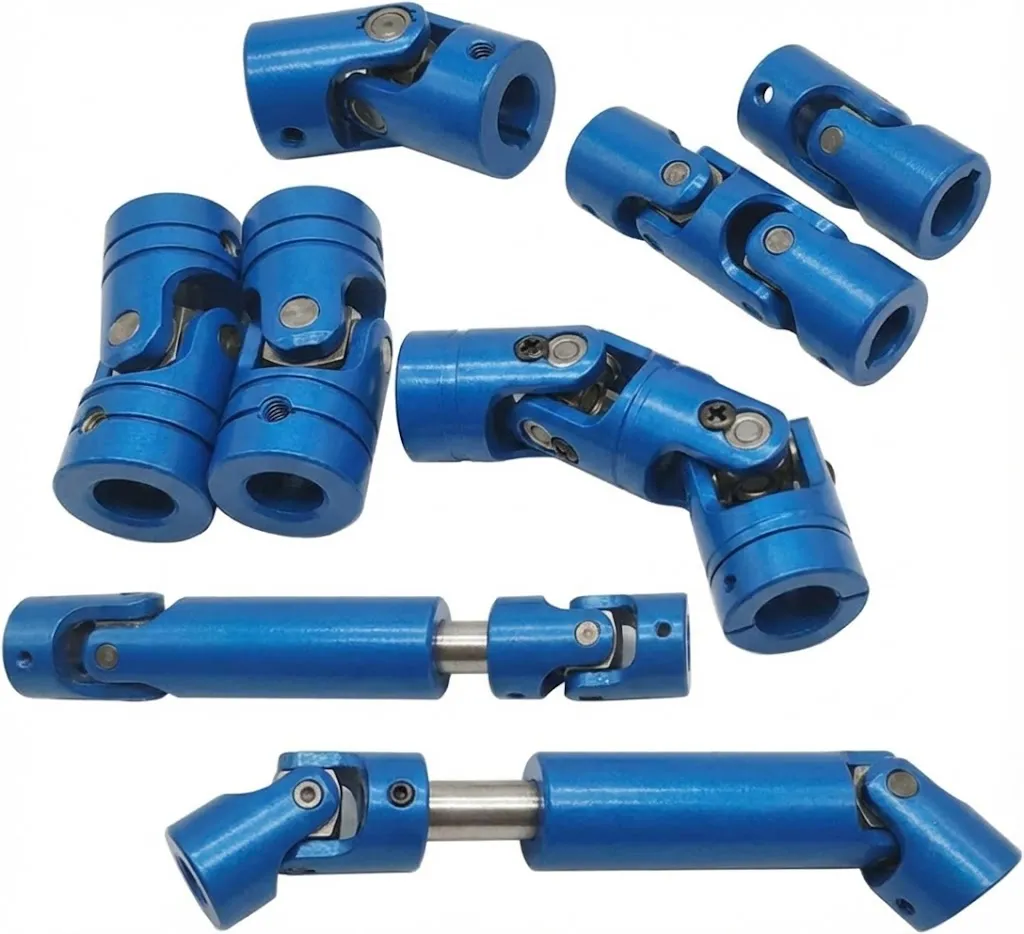
From the Desk of the Chief Engineer: The “Saltwater Reality Check”
I recall a project near the Orkney Islands in 2019. A client was using a prototype tidal turbine that employed a standard industrial universal joint, protected only by basic marine grease. They assumed the IP67 rating on paper would be sufficient. However, this proved not to be the case. Within just three months, the hydrostatic pressure at a depth of 40 meters, combined with the constant abrasive action of suspended sand particles, caused the seals to fail completely. The cross-shaft journals were severely damaged by chloride corrosion and were beyond repair.
This failure taught us a valuable lesson, one often overlooked in data sheets: the marine environment doesn’t care about your laboratory test results. Since then, we at UK pto-drive-shafts.com Co.,Ltd (pto-drive-shafts.com Ltd.) have completely redesigned our subsea equipment. We upgraded the standard seals to double-lip mechanical face seals and changed the material of critical exposed components from coated carbon steel to duplex stainless steel 2205. This is more than just manufacturing; it’s engineering designed to ensure the equipment functions reliably in harsh environments.
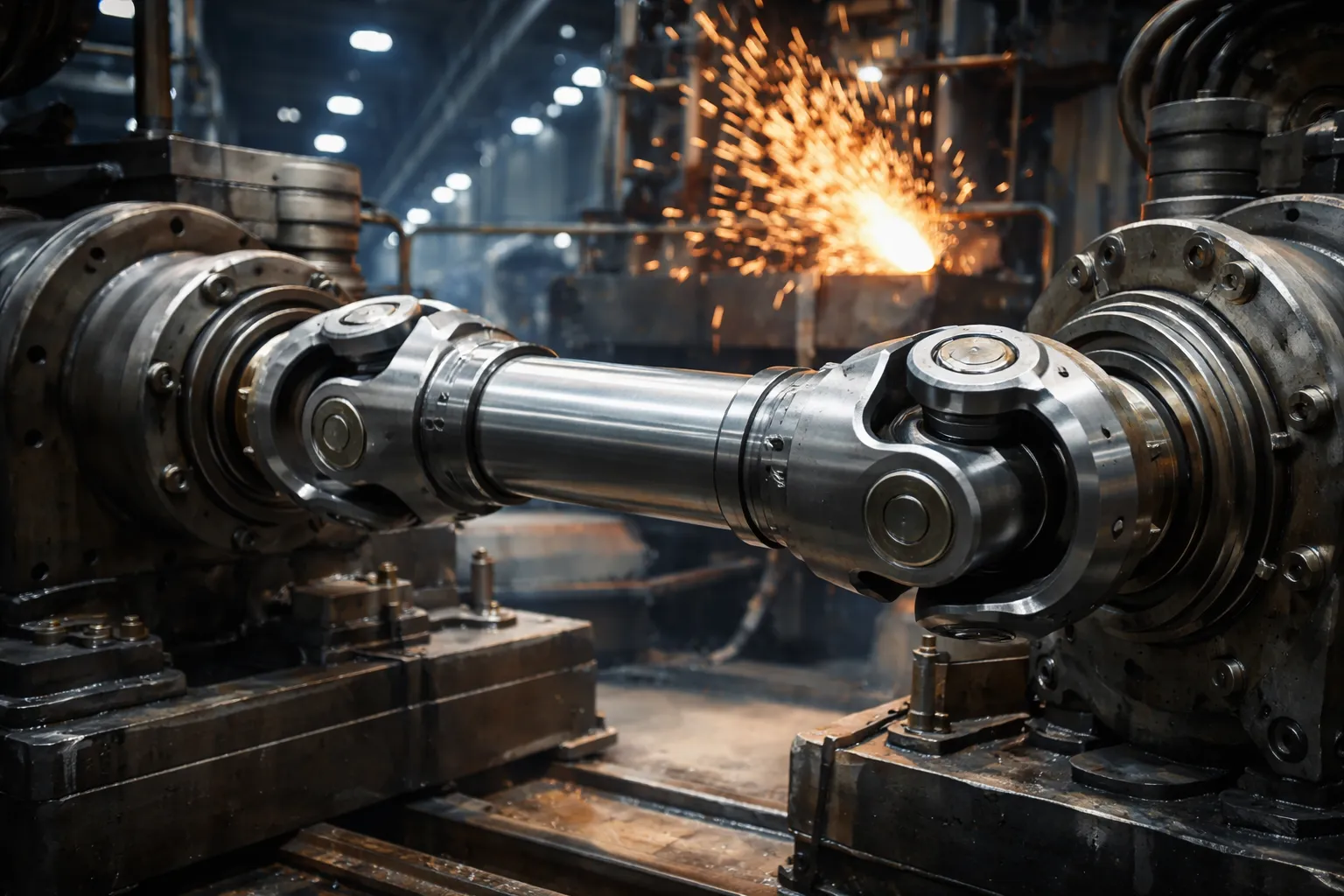
Ocean Energy: The Survival Challenge of Deep Sea Environments
Ocean energy, including tidal and wave energy, represents the cutting edge of renewable energy generation in the UK and globally. Unlike wind or solar power, water has an energy density 800 times greater than air, meaning that the drive shafts operating in these environments face “extreme” challenges. They must transmit enormous torque in a highly corrosive, biologically active electrolyte solution—seawater.
Core Mechanical Equipment Analysis
Tidal Stream Turbines
Often described as “underwater wind turbines,” these units typically feature a horizontal axis design. The drive shaft here serves as the critical link between the slow-rotating underwater impeller hub and the gearbox or generator housed within the nacelle.
- Torque Characteristics: While rotational speeds are low (often 10-20 RPM), the torque requirements are immense due to the density of water. Shafts must handle torque loads capable of exceeding 16,000 kNm in heavy-duty applications.
- Dynamic Loading: The cyclic nature of tides creates predictable but heavy fatigue cycles that must be calculated into the L10 lifespan of the universal joints.
Wave Energy Converters (WEC)
WECs come in various morphologies, including Point Absorbers and Oscillating Water Columns. The drive shaft function here is distinct; it often translates the reciprocating Heave (vertical) and Pitch (tilting) motions of the waves into rotary motion for the Power Take-Off (PTO) system.
- Motion Profile: Unlike the continuous rotation of turbines, WEC shafts endure violent, bi-directional load changes. The oscillating nature requires zero-backlash designs to prevent shock loading during direction reversals.
Offshore Auxiliary Equipment
Beyond generation, the UK offshore sector relies on robust auxiliary machinery. This includes Anchor Winches, Jack-up Systems for maintenance vessels, and propulsion thrusters for Remotely Operated Vehicles (ROVs). Here, reliability is not just about efficiency; it is a safety-critical requirement.
Extreme Operating Conditions: Corrosion and Impact
The Corrosive Environment
Seawater is a relentless enemy of ferrous metals. Rich in chloride ions, it acts as a strong electrolyte that breaks down passive oxide films on standard steels, leading to rapid pitting and crevice corrosion.
Biofouling Factor: In waters around the UK, such as the Bristol Channel or the North Sea, marine growth (barnacles, algae) attaches to static and slow-moving parts. This biofouling can compromise seal integrity, increase rotational resistance, and accelerate Microbially Induced Corrosion (MIC).
Material Strategy:
Standard steel is obsolete here. We mandate the use of AISI 316L Stainless Steel for housings and Duplex Stainless Steel (e.g., 2205) for stress-bearing yokes and crosses. For extreme longevity, we integrate sacrificial anodes or Impressed Current Cathodic Protection (ICCP) compatibility into the shaft design.
Submersible Sealing & Protection
For a tidal unit operating 50 meters down, a simple lip seal is insufficient against hydrostatic pressure.
- Mechanical Face Seals: We utilize tungsten-carbide or silicon-carbide mechanical face seals that use the water pressure to maintain the seal face, ensuring zero ingress.
- Boot Covers: The universal joint cross is encapsulated in a specialized polymer or rubber boot, filled with waterproof, biodegradable marine grease. This creates a physical barrier, totally isolating the articulation points from abrasive sand and salt.
Load Characteristics: The Power of Water
Wave Loading: The stochastic (random) nature of waves results in severe torque pulsations. A shaft might run at 40% load for minutes, only to be hit by a 300% shock load from a rogue wave. Our design process utilizes Rainflow Counting algorithms to predict fatigue life under these non-linear spectrum loading conditions, ensuring the shaft doesn’t fail prematurely due to fatigue accumulation.
🇬🇧 UK Offshore Engineering Context & Compliance
As a Suffolk-based entity, we understand the specific demands of the UK’s marine energy sector. Whether you are testing at the European Marine Energy Centre (EMEC) in Orkney or deploying commercial rigs in the Irish Sea, compliance is non-negotiable.
- DNV-ST-0378: Our lifting and transmission components for offshore and platform use are designed in accordance with DNV standards for safety and reliability.
- Supply of Machinery (Safety) Regulations 2008: All our drive assemblies come with full technical files and UKCA marking compliance documentation.
- Local Support: From our base in Bury St Edmunds, we provide rapid engineering support to major hubs like Aberdeen, Lowestoft, and Pembroke Dock.
Technical Specifications: Marine Drive Shaft Parameters
The following table outlines the technical capabilities of our “Ocean-Series” drive shafts. Note: These are engineered parameters; custom solutions are available for specific project requirements.
| Параметр идентификаторы | Техникалық сипаттама | Metric / Value | Ескертпелер |
|---|---|---|---|
| TS-001 | Номиналды айналу моменті | 50 kNm – 16,300 kNm | Серияларға негізделген масштабталатын |
| TS-002 | Peak Shock Load Capacity | 3.5x Nominal | For Wave Impact |
| TS-003 | Max. Rotation Angle | 25° (Standard) / 45° (Wide) | Айналдыру жылдамдығына тәуелді |
| TS-004 | Бұралу қаттылығы | 1.85 x 10^6 Nm/rad | High Rigidity Series |
| TS-005 | Сплайн материалы | 34CrNiMo6 + Rilsan Coating | Anti-fretting |
| TS-006 | Мойынтірек материалы | Duplex Stainless Steel 2205 | PREN > 35 |
| TS-007 | Cross Journal Material | 18CrNiMo7-6 Carburized | HRC 60-62 |
| TS-008 | Тығыздау рейтингі | IP68 (Submersible) | Tested to 100m depth |
| TS-009 | Жұмыс температурасының диапазоны | -30°C-тан +80°C-қа дейін | North Sea Compatible |
| TS-010 | Майлау түрі | Calcium Sulfonate Complex | Water Washout Resistant |
| TS-011 | Тығыздағыш материалы | Viton (FKM) / NBR | UV & Chemical Resistant |
| TS-012 | Сапаны теңестіру | G6.3 / G2.5 (ISO 1940) | For High Speed PTOs |
| TS-013 | Length Compensation | Up to 400mm | Telescopic Slip |
| TS-014 | Фланец стандарты | DIN 15450 / SAE J624 | Custom Drilling Available |
| TS-015 | Fatigue Life (L10h) | > 50,000 Hours | Үздіксіз міндет |
| TS-016 | Беттік өңдеу | HVOF Ceramic / Nickel Plating | On Carbon Steel Variants |
| TS-017 | Бекіткіш дәрежесі | A4-80 Stainless Steel | High Tensile Marine |
| TS-018 | Тиімділік | > 98.5% | At Full Load |
| TS-019 | Breakaway Torque | Adjustable Clutch Option | Шамадан тыс жүктемеден қорғау |
| TS-020 | Техникалық қызмет көрсету аралығы | Semi-Permanent / 5 Years | Sealed for Life Options |
| TS-021 | Тербелмелі диаметр | 180mm – 1200mm | Size Dependent |
| TS-022 | Retracted Length | Теңшелетін | Min 450mm |
| TS-023 | Осьтік күш сыйымдылығы | up to 500 kN | Thrust handling |
| TS-024 | Діріл демпфері | Optional Composite Tube | Carbon Fiber |
| TS-025 | Salt Spray Test | > 2000 Hours (ASTM B117) | No Red Rust |
| TS-026 | Biofouling Resistance | Cu-Ni Coating Option | Anti-Marine Growth |
| TS-027 | Қосылым түрі | Keyed / Shrink Disc / Hirth | Hirth for High Shock |
| TS-028 | Кепілдік | 24 ай | Standard Marine |
| TS-029 | Documentation | 3.1 Material Certs | Traceability |
| TS-030 | Шығу тегі | Engineered in UK/China | Global Supply Chain |
Key Features of Marine-Grade Cardan Shafts
- Inverted Slip Design: Unlike agricultural shafts where the spline is exposed, our marine shafts use an inverted slip design where the splined section is housed internally within the tube, completely shielded from seawater and sediment.
- Sacrificial Anode Integration: We design mounting points on the flange yokes for zinc or aluminum anodes, providing active galvanic protection to the shaft assembly.
- Nitrotec® Surface Treatment: For components where stainless steel is not feasible due to tensile requirements, we utilize nitrocarburizing treatments which offer corrosion resistance superior to chrome plating while maintaining surface hardness.
Facing a specific marine engineering challenge?
Whether you are designing a new tidal turbine prototype or retrofitting a jack-up vessel, our engineers are ready to assist.