
製品説明
product/gOhtldeWncUG/China-Factory-Supply-Hard-Chrome-Plated-Gcr15-S45c-Material-Induction-Hardness-Linear-Shaft.html High Hardness HRC62-65 Drive Shaft Gcr15 (SUJ2) Material Transmission Shaft Hard Chrome Plated Round Bars Linear Shaft
製品説明
Linear Shaft is the guiding effect of sliding bearing, which can make the products of linear motion.
The necessary conditions required by the linear motion system is: Simple design, the best performance, low maintenance cost, using the selected durable material, high-frequency heat treatment, the accurate outside
Diameter size, roundness, really straight and surface treatment, etc.
Linear Shaft (Linear rod; Steel bar; Optical axis)
|
Model No. |
WCS CZPT WC SF series 3mm, 4mm, 5mm, 6mm, 8mm, 10mm, 12mm, 13mm, 16mm, 20mm, |
|
材料 |
45# steel,GCR15,SUS440C |
|
OEM & ODM |
Yes |
|
Hardened layer thickness |
0.8mm-3mm
|
|
Length |
0-6000mm (If you need above 6000mm, we can anti-connect for you) |
|
Precision |
G6 H6 G7 H7 customized |
|
Roughness |
Within 1.5μm |
|
Straightness |
Not excess 1.5μm of 100mm (Rmax) |
|
OEM & ODM |
We are Professional bearing manufactory in China, the bearing of High Quality can be OEM & Customized |
Linear Shaft Application:
1. CZPT shaft
Generally applicable to industrial robots, as a professional measuring instruments, medical equipment, precision machine tools, aircraft shaft, pneumatic mandrel movement part.
2. Hollow shaft
With its weight to reduce equipment, simplify the structure of the advantages, you can then wear the internal measurement of wire, compressed air, can also add lubricants and hydraulic oil.
3. Stainless steel shaft
It’s generally suitable for use as a part of the measurement in the presence of chemicals such as chemicals, seawater and other
Substances.
Special machining shafts are finely finished after heat treatment with hard chrome plating for all types of automation equipment.
Special Machining for Linear Shaft:
1. For the Length
We can offer linear shaft with diameterφ5mm-φ150mm. Maxium length up to 6000mm.
When you are special requirements on length, we can meet your machining requirements with different length.
When you request above 6000mm, we can anti-connect for you.
2. For Special Processing
When you have special requirements on machining. Such as threading, coaxial holes drilled and tapped, radial holes drilled and tapped, reduced shaft diameter etc, we can machine for you, and these special machines are finished after heat treatment and hard chromic so that ensure the precision of product.
Send us your detailed sketch or blue print for propmt quotation and action, you should be satisfied with our service.
Packing
1.Pipe
/* 2571 年 3 月 10 日 17:59:20 */!function(){function s(e,r){var a,o={};try{e&&e.split(“,”).forEach(function(e,t){e&&(a=e.match(/(.*?):(.*)$/))&&1
| Feature: | Linear Shaft |
|---|---|
| 関数: | Ordinary |
| Flange Shape: | Circular |
| Shape: | Circular |
| Series: | 3mm-150mm |
| 材料: | Bearing Steel |
| カスタマイズ: |
利用可能
| カスタマイズされたリクエスト |
|---|
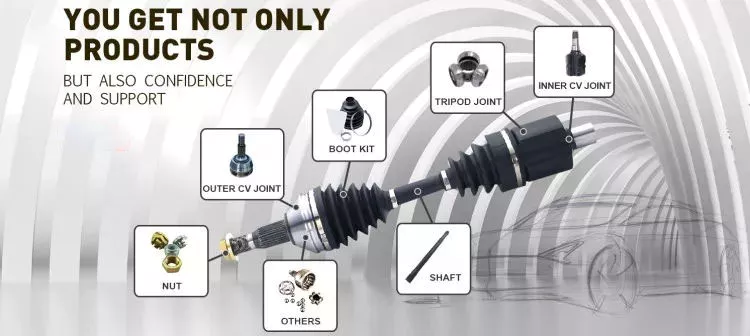
How do drive shafts ensure efficient power transfer while maintaining balance?
Drive shafts employ various mechanisms to ensure efficient power transfer while maintaining balance. Efficient power transfer refers to the ability of the drive shaft to transmit rotational power from the source (such as an engine) to the driven components (such as wheels or machinery) with minimal energy loss. Balancing, on the other hand, involves minimizing vibrations and eliminating any uneven distribution of mass that can cause disturbances during operation. Here’s an explanation of how drive shafts achieve both efficient power transfer and balance:
1. Material Selection:
The material selection for drive shafts is crucial for maintaining balance and ensuring efficient power transfer. Drive shafts are commonly made from materials such as steel or aluminum alloys, chosen for their strength, stiffness, and durability. These materials have excellent dimensional stability and can withstand the torque loads encountered during operation. By using high-quality materials, drive shafts can minimize deformation, flexing, and imbalances that could compromise power transmission and generate vibrations.
2. Design Considerations:
The design of the drive shaft plays a significant role in both power transfer efficiency and balance. Drive shafts are engineered to have appropriate dimensions, including diameter and wall thickness, to handle the anticipated torque loads without excessive deflection or vibration. The design also considers factors such as the length of the drive shaft, the number and type of joints (such as universal joints or constant velocity joints), and the use of balancing weights. By carefully designing the drive shaft, manufacturers can achieve optimal power transfer efficiency while minimizing the potential for imbalance-induced vibrations.
3. Balancing Techniques:
Balance is crucial for drive shafts as any imbalance can cause vibrations, noise, and accelerated wear. To maintain balance, drive shafts undergo various balancing techniques during the manufacturing process. Static and dynamic balancing methods are employed to ensure that the mass distribution along the drive shaft is uniform. Static balancing involves adding counterweights at specific locations to offset any weight imbalances. Dynamic balancing is performed by spinning the drive shaft at high speeds and measuring any vibrations. If imbalances are detected, additional adjustments are made to achieve a balanced state. These balancing techniques help minimize vibrations and ensure smooth operation of the drive shaft.
4. Universal Joints and Constant Velocity Joints:
Drive shafts often incorporate universal joints (U-joints) or constant velocity (CV) joints to accommodate misalignment and maintain balance during operation. U-joints are flexible joints that allow for angular movement between shafts. They are typically used in applications where the drive shaft operates at varying angles. CV joints, on the other hand, are designed to maintain a constant velocity of rotation and are commonly used in front-wheel-drive vehicles. By incorporating these joints, drive shafts can compensate for misalignment, reduce stress on the shaft, and minimize vibrations that can negatively impact power transfer efficiency and balance.
5. Maintenance and Inspection:
Regular maintenance and inspection of drive shafts are essential for ensuring efficient power transfer and balance. Periodic checks for wear, damage, or misalignment can help identify any issues that may affect the drive shaft’s performance. Lubrication of the joints and proper tightening of fasteners are also critical for maintaining optimal operation. By adhering to recommended maintenance procedures, any imbalances or inefficiencies can be addressed promptly, ensuring continued efficient power transfer and balance.
In summary, drive shafts ensure efficient power transfer while maintaining balance through careful material selection, thoughtful design considerations, balancing techniques, and the incorporation of flexible joints. By optimizing these factors, drive shafts can transmit rotational power smoothly and reliably, minimizing energy losses and vibrations that can impact performance and longevity.

ドライブシャフトを使用している車両や機械の実例を挙げてもらえますか?
ドライブシャフトは、エンジンや動力源から車輪や駆動部品に動力を伝達するために、様々な車両や機械で広く使用されています。以下に、ドライブシャフトを使用している実際の車両や機械の例をいくつか示します。
1. 自動車:
ドライブシャフトは、特に後輪駆動または四輪駆動システムを搭載した自動車によく見られます。これらの車両では、ドライブシャフトはトランスミッションまたはトランスファーケースから、それぞれリアディファレンシャルまたはフロントディファレンシャルに動力を伝達します。これにより、エンジンの動力が車輪に分配され、車両が前進します。
2. トラックおよび商用車:
ドライブシャフトは、トラックや商用車において不可欠な部品です。トランスミッションまたはトランスファーケースから後車軸、あるいは大型トラックの場合は複数の車軸へ動力を伝達するために使用されます。商用車のドライブシャフトは、より高いトルク負荷に対応できるように設計されており、乗用車に使用されるものよりも大型で頑丈な場合が多いです。
3. 建設機械および土木機械:
掘削機、ローダー、ブルドーザー、グレーダーなど、さまざまな種類の建設機械や土木機械は、動力伝達にドライブシャフトを使用しています。これらの機械は通常、複雑な駆動系システムを備えており、ドライブシャフトを使ってエンジンから車輪や履帯に動力を伝達することで、建設現場や鉱山作業において重作業を行うことができます。
4. 農業機械:
トラクター、コンバイン、収穫機などの農業機械は、エンジンから車輪や駆動部品に動力を伝達するために駆動軸を使用します。農業機械の駆動軸は過酷な条件下にさらされることが多く、部品間の距離を可変にするために伸縮式セクションなどの追加機能が備えられている場合があります。
5. 産業機械:
製造装置、発電機、ポンプ、コンプレッサーなどの産業機械は、動力伝達システムに駆動軸を組み込んでいることが多い。これらの駆動軸は、電動モーター、エンジン、その他の動力源から様々な駆動部品に動力を伝達し、産業現場において機械が特定の作業を実行できるようにする。
6. 船舶:
船舶用途では、ドライブシャフトは一般的に、ボート、船舶、その他の水上艇において、エンジンからプロペラへ動力を伝達するために使用されます。船舶用ドライブシャフトは通常、より長く、耐腐食性や適切なシール機構など、水環境特有の課題に耐えられるように設計されています。
7. レクリエーション用車両(RV)およびモーターホーム:
キャンピングカーやモーターホームでは、駆動系の一部としてドライブシャフトがよく用いられます。これらのドライブシャフトは、トランスミッションから後輪車軸に動力を伝達し、車両の走行と推進力を生み出します。キャンピングカーのドライブシャフトには、走行中の快適性を高めるために、ダンパーや振動低減部品などの追加機能が備わっている場合もあります。
8. オフロード車およびレーシングカー:
SUV、トラック、全地形対応車(ATV)などのオフロード車やレーシングカーでは、ドライブシャフトが頻繁に使用されます。これらのドライブシャフトは、オフロード走行や高性能レースの過酷な条件に耐えられるように設計されており、効率的に動力を車輪に伝達し、最適なトラクションとパフォーマンスを確保します。
9. 鉄道車両:
鉄道システムでは、機関車や一部の車両に駆動軸が用いられます。駆動軸は機関車のエンジンから車輪または推進システムに動力を伝達し、列車が線路に沿って走行できるようにします。鉄道用の駆動軸は通常、非常に長く、一部の列車の構成における関節式または柔軟な構造に対応するための追加機能が備わっている場合があります。
10. 風力タービン:
発電に用いられる大型風力タービンは、動力伝達システムに駆動軸を組み込んでいる。駆動軸はタービンのブレードから発電機へ回転エネルギーを伝達し、発電機で電気エネルギーに変換される。風力タービンの駆動軸は、風によって発生する大きなトルクと回転力に耐えられるよう設計されている。
これらの例は、効率的な動力伝達と推進のために駆動軸に依存する車両や機械の幅広い範囲を示しています。駆動軸は様々な産業において不可欠な部品であり、動力源から駆動される部品への動力伝達を可能にし、最終的には移動、操作、または特定の作業の遂行を容易にします。

How do drive shafts handle variations in length and torque requirements?
Drive shafts are designed to handle variations in length and torque requirements in order to efficiently transmit rotational power. Here’s an explanation of how drive shafts address these variations:
Length Variations:
Drive shafts are available in different lengths to accommodate varying distances between the engine or power source and the driven components. They can be custom-made or purchased in standardized lengths, depending on the specific application. In situations where the distance between the engine and the driven components is longer, multiple drive shafts with appropriate couplings or universal joints can be used to bridge the gap. These additional drive shafts effectively extend the overall length of the power transmission system.
Additionally, some drive shafts are designed with telescopic sections. These sections can be extended or retracted, allowing for adjustments in length to accommodate different vehicle configurations or dynamic movements. Telescopic drive shafts are commonly used in applications where the distance between the engine and the driven components may change, such as in certain types of trucks, buses, and off-road vehicles.
Torque Requirements:
Drive shafts are engineered to handle varying torque requirements based on the power output of the engine or power source and the demands of the driven components. The torque transmitted through the drive shaft depends on factors such as the engine power, load conditions, and the resistance encountered by the driven components.
Manufacturers consider torque requirements when selecting the appropriate materials and dimensions for drive shafts. Drive shafts are typically made from high-strength materials, such as steel or aluminum alloys, to withstand the torque loads without deformation or failure. The diameter, wall thickness, and design of the drive shaft are carefully calculated to ensure it can handle the expected torque without excessive deflection or vibration.
In applications with high torque demands, such as heavy-duty trucks, industrial machinery, or performance vehicles, drive shafts may have additional reinforcements. These reinforcements can include thicker walls, cross-sectional shapes optimized for strength, or composite materials with superior torque-handling capabilities.
Furthermore, drive shafts often incorporate flexible joints, such as universal joints or constant velocity (CV) joints. These joints allow for angular misalignment and compensate for variations in the operating angles between the engine, transmission, and driven components. They also help absorb vibrations and shocks, reducing stress on the drive shaft and enhancing its torque-handling capacity.
In summary, drive shafts handle variations in length and torque requirements through customizable lengths, telescopic sections, appropriate materials and dimensions, and the inclusion of flexible joints. By carefully considering these factors, drive shafts can efficiently and reliably transmit power while accommodating the specific needs of different applications.


editor by CX 2024-01-31























