
The Core Challenge: The Battle Between Continuity and Reliability
The core challenge in the paper industry lies in “continuity.” Modern high-speed paper machines, once started, typically require continuous operation for months without downtime for maintenance. This operating mode places extremely high demands on the fatigue life of equipment components.
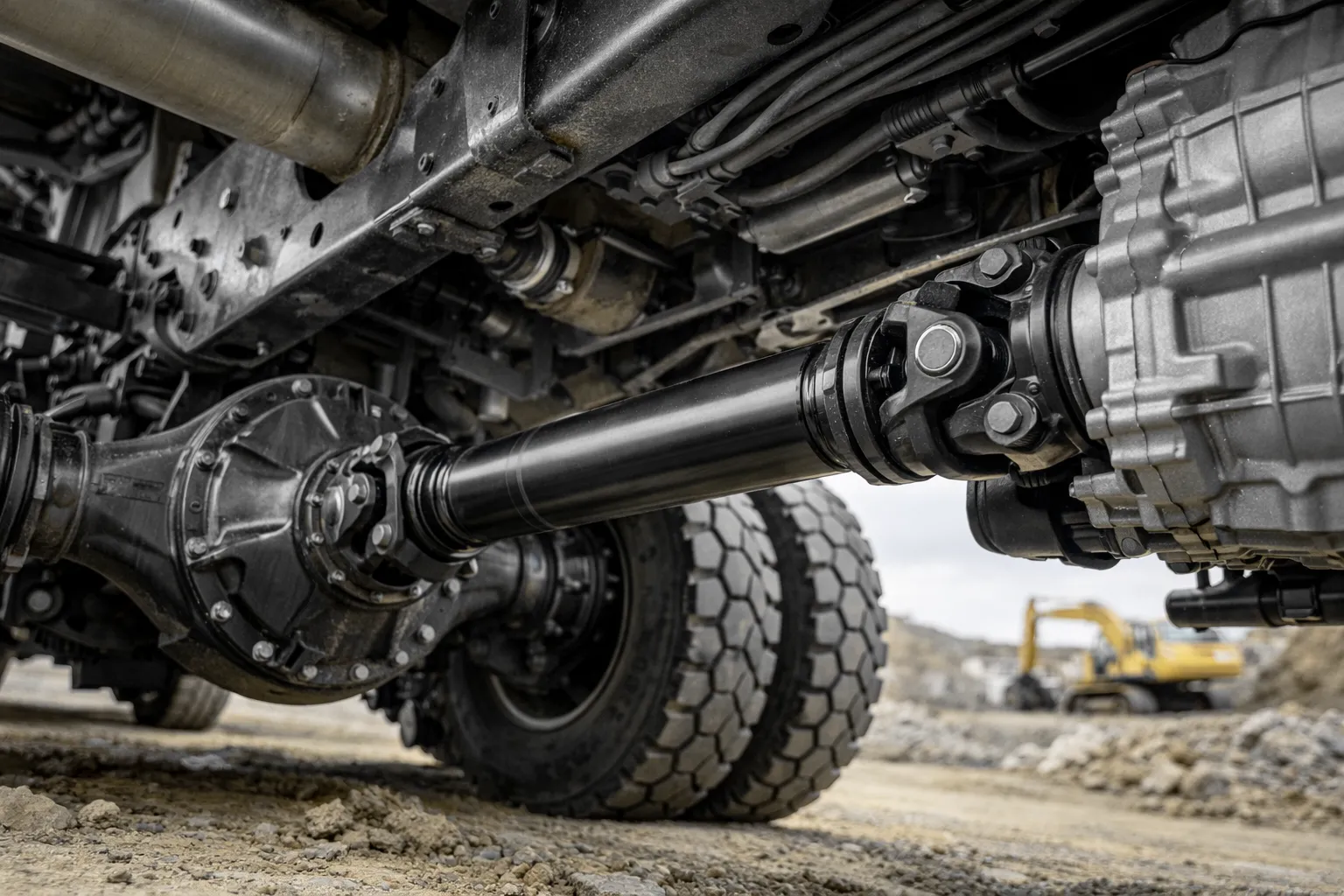
In this context, the drive shaft’s role is not merely to connect the power source (motor/gearbox) and the driven equipment (rollers/rotors); it also acts as a “fuse,” ensuring the system remains stable under harsh conditions. If the selection or design of the universal shaft fails to meet the requirements for long lifespan and moisture resistance, frequent replacements will become a logistical nightmare for the factory. UK-based pto-drive-shafts.com Ltd. addresses these challenges through precision engineering and materials science.
Calenders & Dryer Drives: Precision in the “Sauna”
The Dryer Section and post-processing stages (such as Calenders) are critical for paper formation, directly determining the physical strength and surface quality of the final product. The transmission systems in this area face a unique set of environmental and operational challenges.
Equipment Definition & Functionality
Calenders: Their primary function is to improve the flatness, gloss, and smoothness of the paper surface through immense mechanical pressure and friction. Calender rolls, often composed of alternating hard metal and soft rolls, are driven at high speeds via cardan shafts.
Dryer Drives: This is the most massive section of a paper machine, consisting of dozens or even hundreds of large-diameter steam-heated drying cylinders. The paper web wraps tightly around the cylinder surface, evaporating moisture through thermal conduction. These cylinders are typically driven in groups, where universal shafts distribute power from the main drive shaft or motors to each individual cylinder.
Deep Dive: Why Standard Shafts Fail
A. The Limits of Continuous Operation
Paper machines run 24/7, often at full load. In drive shaft design theory, we use $L_{10h}$ to represent the rated bearing life. For standard industrial applications, a lifespan of 5,000 to 10,000 hours might suffice. However, in the dryer section, UK pto-drive-shafts.com Co.,Ltd. recommends and adheres to a standard of $L_{10h} > 50,000$ hours. This means that even under non-stop operation, the universal joint bearings must function for several years without requiring replacement. Achieving this requires top-tier bearing steel and precise heat treatment processes.
B. The High Temperature & High Humidity “Sauna”
The dryer section is effectively an industrial sauna. High-temperature steam is piped into the cylinders, raising the ambient temperature (often exceeding 100°C). Simultaneously, moisture evaporating from the paper web saturates the air. This combination is lethal for standard components:
- Lubrication Failure: Standard greases thin out and run off at high temperatures or oxidize and degrade, leading to dry grinding in bearings.
- Corrosion Risk: When steam condenses, moisture penetrates poorly sealed universal joints, causing needle bearings to rust and pit, eventually leading to catastrophic seizure.
- Chemical Attack: In the calender area, paper additives (sizing agents, coating fluids) can vaporize or splash, corroding the shaft surface.
Advanced Configuration Requirements
To combat these harsh conditions, specific technical configurations are mandatory to ensure long-term stability:
1. Precision Dynamic Balancing
Modern paper machines operate at incredibly high line speeds (some exceeding 2000 m/min). At these velocities, any minor imbalance in the drive shaft is amplified into severe centrifugal vibration.
- Consequences: Driveline vibration causes fluctuations in paper tension, leading to web tracking issues, wrinkling, or even web breaks (requiring costly downtime to re-thread the paper). Vibration also accelerates bearing wear and damages motor mounts.
- 解決: Universal shafts must undergo rigorous dynamic balancing. We require a balancing grade of at least G6.3 (ISO 1940 standard), and for ultra-high-speed machines, even G2.5. This involves not just weight correction but strict control over tube concentricity and weld quality.
2. Intelligent Lubrication & Maintenance-Free Design
Given the vast number of dryer cylinders and their location inside enclosed, hot hoods, manual greasing is dangerous and impractical.
- Centralized Lubrication Integration: High-end drive shaft designs allow the universal shaft’s grease points to be connected to the paper machine’s central automatic lubrication system. This ensures a constant flow of fresh lubricant to flush out contaminants and dissipate heat.
- Maintenance-Free Technology: This is the prevailing trend. UK pto-drive-shafts.com Co.,Ltd. utilizes specialized sealing technologies and long-life high-temperature synthetic greases to create “sealed-for-life” universal joints. This may include maintenance-free bearings or composite sliding components, significantly reducing operational expenditure (OPEX) for the mill.
Pulpers: The Violent Aesthetics of Shock & Corrosion
If the dryer section is a marathon of endurance, the pulping section is a mixed martial arts fight. Pulpers are responsible for breaking down dry pulp sheets, broke (waste paper), or recycled bales into fiber slurry. They are the “throat” of the papermaking process.
Equipment Definition & Mechanics
A pulper is typically a massive tank equipped with a large rotor (similar to a giant blender blade). The rotor is driven by a high-power motor via a universal drive shaft located at the bottom. As the rotor spins, it generates intense hydraulic shear and mechanical tearing forces to dissociate solid paper stock into a fibrous suspension.
Deep Dive: More Than Just Rotation
A. Severe Shock Loads
Pulping is not a smooth, laminar process. When operators drop bales of pulp or tightly compressed waste paper into the vat, the rotor encounters instantaneous, massive resistance. This is particularly acute when large, unbroken clumps jam between the rotor vanes and the extraction plate.
- Overload Phenomena: This resistance spike acts like an electrical short circuit, manifesting mechanically as a severe torque overload.
- Service Factor (K): During selection calculations, the service factor for pulper drive shafts is typically set at K=2–3 or higher. This means if the motor’s rated torque is 1000Nm, the shaft must be engineered to withstand 2000–3000Nm of instantaneous shock without plastic deformation or fracture.
B. Complex Corrosive Environment
The pulp slurry is not clean water; it is a chemical cocktail. Depending on the process, the liquid may contain bleaches (chlorides), acids, alkalis, and various abrasive contaminants from recycled paper.
- Wet Operation: Although the ドライブシャフト is usually external to the tank, leakage, wash-down spray, and the general humidity of the wet end mean the shaft operates in a perpetually “wet” condition.
- Electrochemical Corrosion: If sealing is compromised, ion-rich slurry entering the universal joint cross kit will trigger rapid electrochemical corrosion, leading to bearing spalling and failure.
Strategic Protective Configurations
To survive the “violent and dirty” environment of a pulper, UK pto-drive-shafts.com Co.,Ltd. deploys targeted protective measures:
1. Armor-Like Protective Coatings
Standard carbon steel shafts will rust rapidly in a pulper environment. We implement multi-layered protection:
- Stainless Steel: For critical small components or extreme corrosion zones, we utilize 304 or 316L stainless steel for the universal joints themselves.
- Specialized Spraying: For larger drive shafts, the tube and joint surfaces undergo corrosion-resistant treatments, such as Epoxy Coating or Electroless Nickel Plating. These coatings effectively isolate the metal substrate from slurry and moisture.
- Fastener Protection: All connecting bolts and flange faces are treated (e.g., Dacromet coating) and secured with anti-loosening measures to prevent vibration-induced detachment.
2. Vertical Mounting Support Structures
Many vertical hydrapulpers have motors mounted above or to the side, or the drive shaft is arranged vertically to drive the bottom rotor. This Vertical Installation introduces a specific physical problem:
- The Gravity Effect: The weight of the long shaft itself (plus the friction of the telescopic spline) rests entirely on the lower universal joint or the motor bearings. If the universal joint is not designed to handle Axial Loads, the cross-end face will grind against the bearing cap, causing overheating and failure.
- Engineering Solution: The UK pto-drive-shafts.com Co.,Ltd. engineering approach involves integrating a Thrust Bearing or a dedicated support structure into the driveline. By adding a support point in the intermediate shaft or at the lower end to carry the shaft’s weight, the universal joint is “liberated” from axial loads, allowing it to focus solely on torque transmission. This is crucial for extending the life of vertical drive systems.
Powering the Paper Industry
The drive systems of pulp and paper machinery are a complex field integrating mechanical engineering, materials science, and tribology. From the 50,000-hour service life requirement in the drying section to the ability to withstand three times the impact load in the pulper; from G6.3 high-speed balancing to specialized coatings resistant to acid and alkali corrosion, every technical detail directly impacts the final efficiency of the production line.
pto-drive-shafts.com Ltd. (UK) understands the pain points of paper mill companies. We offer more than just drive shafts; we provide a complete solution designed to ensure production continuity and reduce maintenance costs. With advanced British manufacturing processes, a rigorous quality control system, and a deep understanding of paper mill conditions, our products demonstrate superior performance even in the most demanding environments.
Choosing the right drive shaft means choosing peace of mind and efficiency for your production line. Whether it’s a new project or an upgrade of existing equipment, we are always ready to provide professional technical support.
UK pto-drive-shafts.com Co.,Ltd。
住所: ベリー・セント・エドマンズ、サフォーク州 IP32 7LX、英国
メールアドレス: [email protected]
Website: www.pto-drive-shafts.com























