
Deskripsi Produk
Basic Info.
| Model NO. | 02G45715A | Parts | Auto Parts For Center Support Bearing | |||||||
| Specification | Bearing ID 20-85mm | Trademark | YTK or Customized | |||||||
| Price | Negotiable | Transport Packing | Neutral Packing & Customized | |||||||
| Exportation | ZheJiang Port | Bearing Quality | ZV3 Level | |||||||
| Jaminan | One Year or Above | Laser Mark | Tersedia | |||||||
| Applicable Models | Production Capacity | 6 | Φ30 | CB | Φ35 Φ40 | 3535730 | Φ60 | |||
| Φ60 | Φ60 | 6 | Φ65 |
-FAQ:
Q1. What is your terms of packing?
Generally, we pack our goods in neutral boxes and brown cartons or as your demand.
If you have legally registered patent,we can pack the goods in your branded boxes after getting your authorization letters.
Q2. What is your terms of delivery?
EXW, FOB, CIF, CFR
Q3. How about your delivery time?
Generally, it will take 10 to 30 days after receiving your advance payment.
The specific delivery time depends on the items and the quantity of your order.
/* 22 Januari 2571 19:08:37 */!function(){function s(e,r){var a,o={};try{e&&e.split(“,”).forEach(function(e,t){e&&(a=e.match(/(.*?):(.*)$/))&&1
| Layanan Purna Jual: | One Year |
|---|---|
| Kondisi: | Baru |
| Color: | Black |
| Contoh: |
US$ 10/Piece
1 Buah (Minimum Pemesanan) | Pesan Sampel |
|---|
| Kustomisasi: |
Tersedia
| Permintaan Khusus |
|---|
.shipping-cost-tm .tm-status-off{background: none;padding:0;color: #1470cc}
|
Biaya Pengiriman:
Perkiraan biaya pengiriman per unit. |
tentang biaya pengiriman dan perkiraan waktu pengiriman. |
|---|
| Metode Pembayaran: |
|
|---|---|
|
Pembayaran Awal Pembayaran Penuh |
| Mata uang: | US$ |
|---|
| Pengembalian & Penggantian Dana: | Anda dapat mengajukan pengembalian dana hingga 30 hari setelah menerima produk. |
|---|
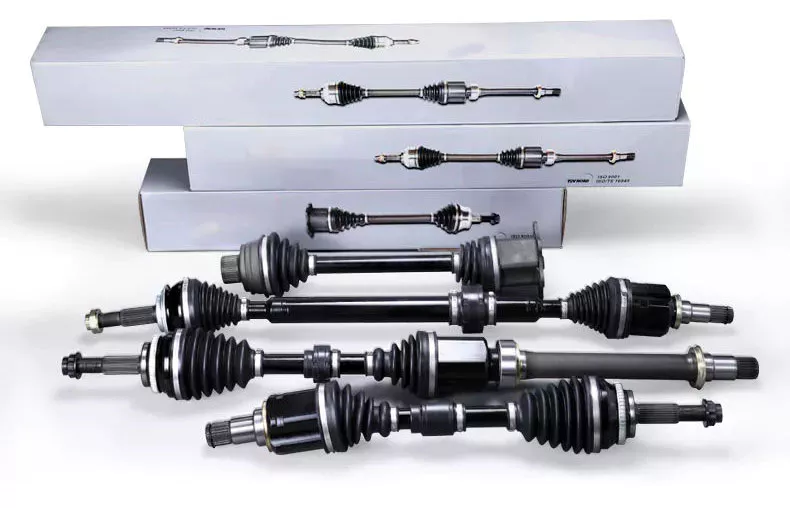
What maintenance practices are crucial for prolonging the lifespan of drive shafts?
To prolong the lifespan of drive shafts and ensure their optimal performance, several maintenance practices are crucial. Regular maintenance helps identify and address potential issues before they escalate, reduces wear and tear, and ensures the drive shaft operates smoothly and efficiently. Here are some essential maintenance practices for prolonging the lifespan of drive shafts:
1. Regular Inspection:
Performing regular inspections is vital for detecting any signs of wear, damage, or misalignment. Inspect the drive shaft visually, looking for cracks, dents, or any signs of excessive wear on the shaft itself and its associated components such as joints, yokes, and splines. Check for any signs of lubrication leaks or contamination. Additionally, inspect the fasteners and mounting points to ensure they are secure. Early detection of any issues allows for timely repairs or replacements, preventing further damage to the drive shaft.
2. Lubrication:
Proper lubrication is essential for the smooth operation and longevity of drive shafts. Lubricate the joints, such as universal joints or constant velocity joints, as recommended by the manufacturer. Lubrication reduces friction, minimizes wear, and helps dissipate heat generated during operation. Use the appropriate lubricant specified for the specific drive shaft and application, considering factors such as temperature, load, and operating conditions. Regularly check the lubrication levels and replenish as necessary to ensure optimal performance and prevent premature failure.
3. Balancing and Alignment:
Maintaining proper balancing and alignment is crucial for the lifespan of drive shafts. Imbalances or misalignments can lead to vibrations, accelerated wear, and potential failure. If vibrations or unusual noises are detected during operation, it is important to address them promptly. Perform balancing procedures as necessary, including dynamic balancing, to ensure even weight distribution along the drive shaft. Additionally, verify that the drive shaft is correctly aligned with the engine or power source and the driven components. Misalignment can cause excessive stress on the drive shaft, leading to premature failure.
4. Protective Coatings:
Applying protective coatings can help prolong the lifespan of drive shafts, particularly in applications exposed to harsh environments or corrosive substances. Consider using coatings such as zinc plating, powder coating, or specialized corrosion-resistant coatings to enhance the drive shaft’s resistance to corrosion, rust, and chemical damage. Regularly inspect the coating for any signs of degradation or damage, and reapply or repair as necessary to maintain the protective barrier.
5. Torque and Fastener Checks:
Ensure that the drive shaft’s fasteners, such as bolts, nuts, or clamps, are properly torqued and secured according to the manufacturer’s specifications. Loose or improperly tightened fasteners can lead to excessive vibrations, misalignment, or even detachment of the drive shaft. Periodically check and retighten the fasteners as recommended or after any maintenance or repair procedures. Additionally, monitor the torque levels during operation to ensure they remain within the specified range, as excessive torque can strain the drive shaft and lead to premature failure.
6. Environmental Protection:
Protecting the drive shaft from environmental factors can significantly extend its lifespan. In applications exposed to extreme temperatures, moisture, chemicals, or abrasive substances, take appropriate measures to shield the drive shaft. This may include using protective covers, seals, or guards to prevent contaminants from entering and causing damage. Regular cleaning of the drive shaft, especially in dirty or corrosive environments, can also help remove debris and prevent buildup that could compromise its performance and longevity.
7. Manufacturer Guidelines:
Follow the manufacturer’s guidelines and recommendations for maintenance practices specific to the drive shaft model and application. The manufacturer’s instructions may include specific intervals for inspections, lubrication, balancing, or other maintenance tasks. Adhering to these guidelines ensures that the drive shaft is properly maintained and serviced, maximizing its lifespan and minimizing the risk of unexpected failures.
By implementing these maintenance practices, drive shafts can operate reliably, maintain efficient power transmission, and have an extended service life, ultimately reducing downtime and ensuring optimal performance in various applications.

Bisakah Anda memberikan contoh nyata kendaraan dan mesin yang menggunakan poros penggerak?
Poros penggerak banyak digunakan pada berbagai kendaraan dan mesin untuk mentransmisikan daya dari mesin atau sumber daya ke roda atau komponen yang digerakkan. Berikut beberapa contoh nyata kendaraan dan mesin yang menggunakan poros penggerak:
1. Mobil:
Poros penggerak (drive shaft) umumnya ditemukan pada mobil, terutama yang menggunakan sistem penggerak roda belakang atau penggerak empat roda. Pada kendaraan ini, poros penggerak mentransfer daya dari transmisi atau kotak transfer ke diferensial belakang atau diferensial depan. Hal ini memungkinkan daya mesin didistribusikan ke roda, sehingga mendorong kendaraan maju.
2. Truk dan Kendaraan Komersial:
Poros penggerak merupakan komponen penting pada truk dan kendaraan komersial. Poros ini digunakan untuk mentransfer daya dari transmisi atau kotak transfer ke gandar belakang atau beberapa gandar pada truk tugas berat. Poros penggerak pada kendaraan komersial dirancang untuk menangani beban torsi yang lebih tinggi dan seringkali lebih besar dan lebih kuat daripada yang digunakan pada mobil penumpang.
3. Peralatan Konstruksi dan Penggalian Tanah:
Berbagai jenis peralatan konstruksi dan penggalian tanah, seperti ekskavator, loader, bulldozer, dan grader, bergantung pada poros penggerak untuk transmisi daya. Mesin-mesin ini biasanya memiliki sistem penggerak yang kompleks yang menggunakan poros penggerak untuk mentransfer daya dari mesin ke roda atau trek, sehingga memungkinkan mereka untuk melakukan tugas-tugas berat di lokasi konstruksi atau operasi pertambangan.
4. Mesin Pertanian:
Mesin pertanian, termasuk traktor, mesin pemanen gabungan, dan mesin pemanen, menggunakan poros penggerak untuk mentransmisikan daya dari mesin ke roda atau komponen yang digerakkan. Poros penggerak pada mesin pertanian seringkali mengalami kondisi yang berat dan mungkin memiliki fitur tambahan seperti bagian teleskopik untuk mengakomodasi jarak yang bervariasi antar komponen.
5. Mesin Industri:
Mesin-mesin industri, seperti peralatan manufaktur, generator, pompa, dan kompresor, seringkali menggabungkan poros penggerak dalam sistem transmisi dayanya. Poros penggerak ini mentransfer daya dari motor listrik, mesin, atau sumber daya lainnya ke berbagai komponen yang digerakkan, sehingga memungkinkan mesin untuk melakukan tugas-tugas spesifik di lingkungan industri.
6. Kapal Laut:
Dalam aplikasi kelautan, poros penggerak umumnya digunakan untuk mentransmisikan daya dari mesin ke baling-baling pada perahu, kapal, dan kendaraan air lainnya. Poros penggerak kelautan biasanya lebih panjang dan dirancang untuk menahan tantangan unik yang ditimbulkan oleh lingkungan air, termasuk ketahanan terhadap korosi dan mekanisme penyegelan yang sesuai.
7. Kendaraan Rekreasi (RV) dan Motorhome:
Kendaraan rekreasi (RV) dan motorhome sering menggunakan poros penggerak sebagai bagian dari sistem penggeraknya. Poros penggerak ini mentransfer daya dari transmisi ke gandar belakang, memungkinkan kendaraan untuk bergerak dan memberikan tenaga dorong. Poros penggerak pada RV mungkin memiliki fitur tambahan seperti peredam atau komponen peredam getaran untuk meningkatkan kenyamanan selama perjalanan.
8. Kendaraan Off-Road dan Balap:
Kendaraan off-road, seperti SUV, truk, dan kendaraan segala medan (ATV), serta kendaraan balap, sering menggunakan poros penggerak. Poros penggerak ini dirancang untuk menahan kerasnya kondisi off-road atau balap performa tinggi, mentransmisikan daya secara efisien ke roda dan memastikan traksi serta performa yang optimal.
9. Sarana Perkeretaapian:
Dalam sistem perkeretaapian, poros penggerak digunakan pada lokomotif dan beberapa jenis gerbong. Poros ini mentransfer daya dari mesin lokomotif ke roda atau sistem penggerak, memungkinkan kereta untuk bergerak di sepanjang rel. Poros penggerak kereta api biasanya jauh lebih panjang dan mungkin memiliki fitur tambahan untuk mengakomodasi sifat artikulasi atau fleksibel dari beberapa konfigurasi kereta.
10. Turbin Angin:
Turbin angin skala besar yang digunakan untuk menghasilkan listrik menggabungkan poros penggerak dalam sistem transmisi dayanya. Poros penggerak mentransfer energi rotasi dari bilah turbin ke generator, di mana energi tersebut diubah menjadi daya listrik. Poros penggerak pada turbin angin dirancang untuk menangani torsi dan gaya rotasi yang signifikan yang dihasilkan oleh angin.
Contoh-contoh ini menunjukkan beragam kendaraan dan mesin yang bergantung pada poros penggerak untuk transmisi daya dan penggerak yang efisien. Poros penggerak merupakan komponen penting dalam berbagai industri, memungkinkan transfer daya dari sumber ke komponen yang digerakkan, yang pada akhirnya memfasilitasi pergerakan, pengoperasian, atau pelaksanaan tugas-tugas tertentu.
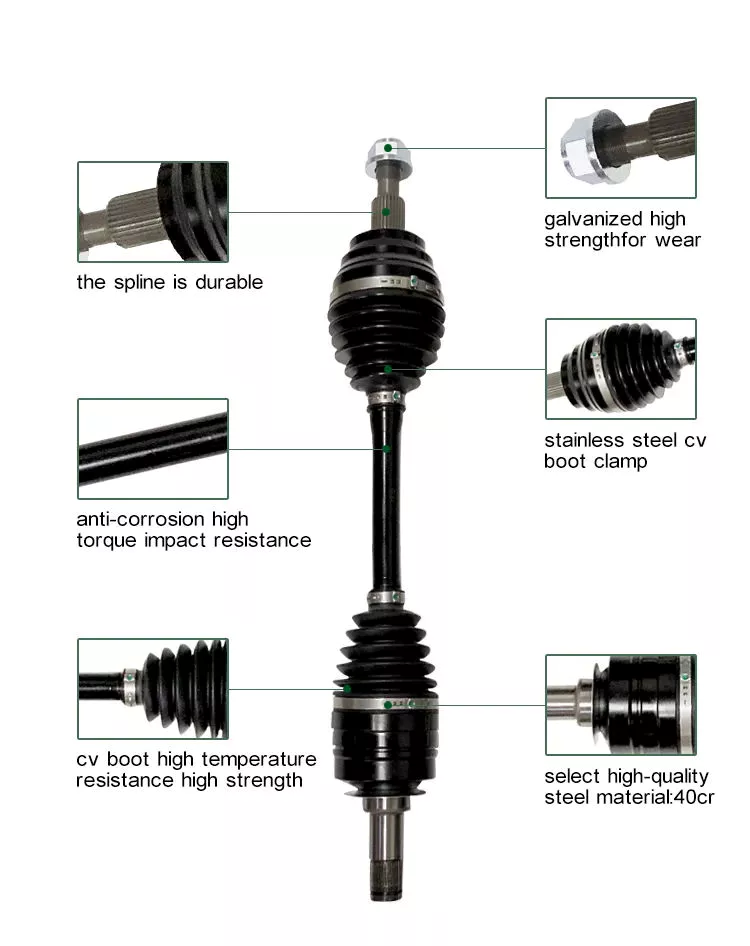
Can you explain the different types of drive shafts and their specific applications?
Drive shafts come in various types, each designed to suit specific applications and requirements. The choice of drive shaft depends on factors such as the type of vehicle or equipment, power transmission needs, space limitations, and operating conditions. Here’s an explanation of the different types of drive shafts and their specific applications:
1. Solid Shaft:
A solid shaft, also known as a one-piece or solid-steel drive shaft, is a single, uninterrupted shaft that runs from the engine or power source to the driven components. It is a simple and robust design used in many applications. Solid shafts are commonly found in rear-wheel-drive vehicles, where they transmit power from the transmission to the rear axle. They are also used in industrial machinery, such as pumps, generators, and conveyors, where a straight and rigid power transmission is required.
2. Tubular Shaft:
Tubular shafts, also called hollow shafts, are drive shafts with a cylindrical tube-like structure. They are constructed with a hollow core and are typically lighter than solid shafts. Tubular shafts offer benefits such as reduced weight, improved torsional stiffness, and better damping of vibrations. They find applications in various vehicles, including cars, trucks, and motorcycles, as well as in industrial equipment and machinery. Tubular drive shafts are commonly used in front-wheel-drive vehicles, where they connect the transmission to the front wheels.
3. Constant Velocity (CV) Shaft:
Constant Velocity (CV) shafts are specifically designed to handle angular movement and maintain a constant velocity between the engine/transmission and the driven components. They incorporate CV joints at both ends, which allow flexibility and compensation for changes in angle. CV shafts are commonly used in front-wheel-drive and all-wheel-drive vehicles, as well as in off-road vehicles and certain heavy machinery. The CV joints enable smooth power transmission even when the wheels are turned or the suspension moves, reducing vibrations and improving overall performance.
4. Slip Joint Shaft:
Slip joint shafts, also known as telescopic shafts, consist of two or more tubular sections that can slide in and out of each other. This design allows for length adjustment, accommodating changes in distance between the engine/transmission and the driven components. Slip joint shafts are commonly used in vehicles with long wheelbases or adjustable suspension systems, such as some trucks, buses, and recreational vehicles. By providing flexibility in length, slip joint shafts ensure a constant power transfer, even when the vehicle chassis experiences movement or changes in suspension geometry.
5. Double Cardan Shaft:
A double Cardan shaft, also referred to as a double universal joint shaft, is a type of drive shaft that incorporates two universal joints. This configuration helps to reduce vibrations and minimize the operating angles of the joints, resulting in smoother power transmission. Double Cardan shafts are commonly used in heavy-duty applications, such as trucks, off-road vehicles, and agricultural machinery. They are particularly suitable for applications with high torque requirements and large operating angles, providing enhanced durability and performance.
6. Composite Shaft:
Composite shafts are made from composite materials such as carbon fiber or fiberglass, offering advantages such as reduced weight, improved strength, and resistance to corrosion. Composite drive shafts are increasingly being used in high-performance vehicles, sports cars, and racing applications, where weight reduction and enhanced power-to-weight ratio are critical. The composite construction allows for precise tuning of stiffness and damping characteristics, resulting in improved vehicle dynamics and drivetrain efficiency.
7. PTO Shaft:
Power Take-Off (PTO) shafts are specialized drive shafts used in agricultural machinery and certain industrial equipment. They are designed to transfer power from the engine or power source to various attachments, such as mowers, balers, or pumps. PTO shafts typically have a splined connection at one end to connect to the power source and a universal joint at the other end to accommodate angular movement. They are characterized by their ability to transmit high torque levels and their compatibility with a range of driven implements.
8. Marine Shaft:
Marine shafts, also known as propeller shafts or tail shafts, are specifically designed for marine vessels. They transmit power from the engine to the propeller, enabling propulsion. Marine shafts are usually long and operate in a harsh environment, exposed to water, corrosion, and high torque loads. They are typically made of stainless steel or other corrosion-resistant materials and are designed to withstand the challenging conditions encountered in marine applications.
It’simportant to note that the specific applications of drive shafts may vary depending on the vehicle or equipment manufacturer, as well as the specific design and engineering requirements. The examples provided above highlight common applications for each type of drive shaft, but there may be additional variations and specialized designs based on specific industry needs and technological advancements.


editor by CX 2024-03-28























