
Tuotekuvaus
Basic Info.
| Model NO. | 02G45715A | Parts | Auto Parts For Center Support Bearing | |||||||
| Tekniset tiedot | Bearing ID 20-85mm | Trademark | YTK or Customized | |||||||
| Price | Negotiable | Transport Packing | Neutral Packing & Customized | |||||||
| Exportation | ZheJiang Port | Bearing Quality | ZV3 Level | |||||||
| Takuu | One Year or Above | Laser Mark | Saatavilla | |||||||
| Applicable Models | Production Capacity | 6 | Φ30 | CB | Φ35 Φ40 | 3535730 | Φ60 | |||
| Φ60 | Φ60 | 6 | Φ65 |
-FAQ:
Q1. Mitkä ovat pakkausehtosi?
Generally, we pack our goods in neutral boxes and brown cartons or as your demand.
If you have legally registered patent,we can pack the goods in your branded boxes after getting your authorization letters.
Q2. What is your terms of delivery?
EXW, FOB, CIF, CFR
Q3. How about your delivery time?
Generally, it will take 10 to 30 days after receiving your advance payment.
The specific delivery time depends on the items and the quantity of your order.
/* 22. tammikuuta 2571 19:08:37 */!function(){function s(e,r){var a,o={};try{e&&e.split(“,”).forEach(function(e,t){e&&(a=e.match(/(.*?):(.*))&TP6T/)
| Myynnin jälkeinen palvelu: | Yksi vuosi |
|---|---|
| Kunto: | Uusi |
| Color: | Black |
| Samples: |
US$ 10/Piece
1 Piece(Min.Order) | Order Sample |
|---|
| Mukauttaminen: |
Saatavilla
| Mukautettu pyyntö |
|---|
.shipping-cost-tm .tm-status-off{tausta: ei mitään;täyte:0;väri: #1470cc}
|
Toimituskulut:
Arvioitu rahti yksikköä kohden. |
toimituskuluista ja arvioidusta toimitusajasta. |
|---|
| Maksutapa: |
|
|---|---|
|
Ensimmäinen maksu Täysi maksu |
| Valuutta: | US$ |
|---|
| Palautus ja hyvitykset: | Voit hakea hyvitystä 30 päivän kuluessa tuotteiden vastaanottamisesta. |
|---|
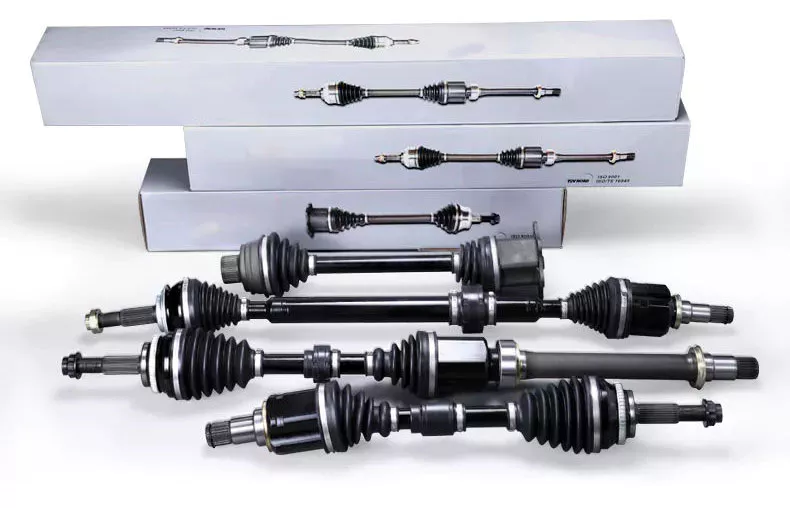
Mitkä huoltotoimenpiteet ovat ratkaisevan tärkeitä vetoakselien käyttöiän pidentämiseksi?
Vetoakseleiden käyttöiän pidentämiseksi ja niiden optimaalisen suorituskyvyn varmistamiseksi useat huoltotoimenpiteet ovat ratkaisevan tärkeitä. Säännöllinen huolto auttaa tunnistamaan ja korjaamaan mahdolliset ongelmat ennen kuin ne pahenevat, vähentää kulumista ja varmistaa, että vetoakseli toimii sujuvasti ja tehokkaasti. Tässä on joitakin tärkeitä huoltotoimenpiteitä vetoakseleiden käyttöiän pidentämiseksi:
1. Säännöllinen tarkastus:
Säännöllisten tarkastusten suorittaminen on elintärkeää kulumisen, vaurioiden tai linjausvirheiden havaitsemiseksi. Tarkasta vetoakseli silmämääräisesti halkeamien, kolhujen tai muiden liiallisen kulumisen merkkejä itse akselissa ja siihen liittyvissä osissa, kuten nivelissä, haarukoissa ja urituksissa. Tarkista mahdolliset voiteluvuoto- tai likaantumismerkit. Tarkista myös kiinnikkeet ja kiinnityspisteet varmistaaksesi, että ne ovat tukevasti kiinni. Ongelmien varhainen havaitseminen mahdollistaa oikea-aikaiset korjaukset tai vaihdot, mikä estää vetoakselin lisävauriot.
2. Voitelu:
Oikea voitelu on välttämätöntä vetoakselien sujuvan toiminnan ja pitkän käyttöiän kannalta. Voitele nivelet, kuten murrosnivelet tai vakionopeusnivelet, valmistajan suositusten mukaisesti. Voitelu vähentää kitkaa, minimoi kulumisen ja auttaa haihduttamaan käytön aikana syntyvää lämpöä. Käytä kyseiselle vetoakselille ja sovellukselle määritettyä sopivaa voiteluainetta ottaen huomioon tekijät, kuten lämpötila, kuormitus ja käyttöolosuhteet. Tarkista voitelutasot säännöllisesti ja lisää tarvittaessa optimaalisen suorituskyvyn varmistamiseksi ja ennenaikaisten vikaantumisten estämiseksi.
3. Tasapainotus ja linjaus:
Oikean tasapainotuksen ja linjauksen ylläpitäminen on ratkaisevan tärkeää vetoakselien käyttöiän kannalta. Epätasapaino tai linjausvirheet voivat johtaa tärinään, kiihtyneeseen kulumiseen ja mahdollisiin rikkoutumiseen. Jos käytön aikana havaitaan tärinää tai epätavallisia ääniä, on tärkeää puuttua niihin viipymättä. Suorita tarvittaessa tasapainotustoimenpiteitä, mukaan lukien dynaaminen tasapainotus, varmistaaksesi tasaisen painonjakauman vetoakselille. Tarkista lisäksi, että vetoakseli on oikein linjassa moottorin tai voimanlähteen ja käytettyjen komponenttien kanssa. Linjausvirhe voi aiheuttaa liiallista rasitusta vetoakselille, mikä johtaa ennenaikaiseen rikkoutumiseen.
4. Suojaavat pinnoitteet:
Suojapinnoitteiden käyttö voi auttaa pidentämään vetoakselien käyttöikää, erityisesti sovelluksissa, jotka altistuvat ankarille ympäristöille tai syövyttäville aineille. Harkitse pinnoitteiden, kuten sinkkipinnoituksen, jauhemaalauksen tai erikoistuneiden korroosionkestävien pinnoitteiden käyttöä parantaaksesi vetoakselin kestävyyttä korroosiota, ruostetta ja kemiallisia vaurioita vastaan. Tarkista pinnoite säännöllisesti mahdollisten heikkenemisen tai vaurioiden varalta ja levitä tai korjaa se tarvittaessa suojakerroksen ylläpitämiseksi.
5. Vääntömomentin ja kiinnittimien tarkistukset:
Varmista, että vetoakselin kiinnikkeet, kuten pultit, mutterit tai puristimet, on kiristetty asianmukaisesti ja kiinnitetty valmistajan ohjeiden mukaisesti. Löysät tai väärin kiristetyt kiinnikkeet voivat johtaa liialliseen tärinään, linjausvirheeseen tai jopa vetoakselin irtoamiseen. Tarkista ja kiristä kiinnikkeet säännöllisesti suositusten mukaisesti tai huolto- tai korjaustoimenpiteiden jälkeen. Lisäksi seuraa vääntömomenttitasoja käytön aikana varmistaaksesi, että ne pysyvät määritellyllä alueella, sillä liiallinen vääntömomentti voi rasittaa vetoakselia ja johtaa ennenaikaiseen vikaantumiseen.
6. Ympäristönsuojelu:
Vetoakselin suojaaminen ympäristötekijöiltä voi pidentää merkittävästi sen käyttöikää. Äärimmäisille lämpötiloille, kosteudelle, kemikaaleille tai hankaaville aineille altistuvissa sovelluksissa on ryhdyttävä asianmukaisiin toimenpiteisiin vetoakselin suojaamiseksi. Tähän voi kuulua suojakansien, tiivisteiden tai suojien käyttö epäpuhtauksien pääsyn ja vaurioiden estämiseksi. Vetoakselin säännöllinen puhdistaminen, erityisesti likaisissa tai syövyttävissä ympäristöissä, voi myös auttaa poistamaan roskia ja estämään kertymiä, jotka voivat heikentää sen suorituskykyä ja pitkäikäisyyttä.
7. Valmistajan ohjeet:
Noudata valmistajan ohjeita ja suosituksia vetoakselin mallin ja käyttötarkoituksen huoltokäytännöistä. Valmistajan ohjeissa voi olla tiettyjä tarkastus-, voitelu-, tasapainotus- tai muiden huoltotehtävien aikavälejä. Näiden ohjeiden noudattaminen varmistaa, että vetoakselia huolletaan ja huolletaan asianmukaisesti, mikä maksimoi sen käyttöiän ja minimoi odottamattomien vikojen riskin.
Näiden huoltokäytäntöjen avulla vetoakselit voivat toimia luotettavasti, ylläpitää tehokasta voimansiirtoa ja niiden käyttöikä pitenee, mikä lopulta vähentää seisokkiaikoja ja varmistaa optimaalisen suorituskyvyn erilaisissa sovelluksissa.

Can you provide real-world examples of vehicles and machinery that use drive shafts?
Drive shafts are widely used in various vehicles and machinery to transmit power from the engine or power source to the wheels or driven components. Here are some real-world examples of vehicles and machinery that utilize drive shafts:
1. Automobiles:
Drive shafts are commonly found in automobiles, especially those with rear-wheel drive or four-wheel drive systems. In these vehicles, the drive shaft transfers power from the transmission or transfer case to the rear differential or front differential, respectively. This allows the engine’s power to be distributed to the wheels, propelling the vehicle forward.
2. Trucks and Commercial Vehicles:
Drive shafts are essential components in trucks and commercial vehicles. They are used to transfer power from the transmission or transfer case to the rear axle or multiple axles in the case of heavy-duty trucks. Drive shafts in commercial vehicles are designed to handle higher torque loads and are often larger and more robust than those used in passenger cars.
3. Construction and Earthmoving Equipment:
Various types of construction and earthmoving equipment, such as excavators, loaders, bulldozers, and graders, rely on drive shafts for power transmission. These machines typically have complex drivetrain systems that use drive shafts to transfer power from the engine to the wheels or tracks, enabling them to perform heavy-duty tasks on construction sites or in mining operations.
4. Agricultural Machinery:
Agricultural machinery, including tractors, combines, and harvesters, utilize drive shafts to transmit power from the engine to the wheels or driven components. Drive shafts in agricultural machinery are often subjected to demanding conditions and may have additional features such as telescopic sections to accommodate variable distances between components.
5. Industrial Machinery:
Industrial machinery, such as manufacturing equipment, generators, pumps, and compressors, often incorporate drive shafts in their power transmission systems. These drive shafts transfer power from electric motors, engines, or other power sources to various driven components, enabling the machinery to perform specific tasks in industrial settings.
6. Marine Vessels:
In marine applications, drive shafts are commonly used to transmit power from the engine to the propeller in boats, ships, and other watercraft. Marine drive shafts are typically longer and designed to withstand the unique challenges posed by water environments, including corrosion resistance and appropriate sealing mechanisms.
7. Recreational Vehicles (RVs) and Motorhomes:
RVs and motorhomes often employ drive shafts as part of their drivetrain systems. These drive shafts transfer power from the transmission to the rear axle, allowing the vehicle to move and providing propulsion. Drive shafts in RVs may have additional features such as dampers or vibration-reducing components to enhance comfort during travel.
8. Off-Road and Racing Vehicles:
Off-road vehicles, such as SUVs, trucks, and all-terrain vehicles (ATVs), as well as racing vehicles, frequently utilize drive shafts. These drive shafts are designed to withstand the rigors of off-road conditions or high-performance racing, transmitting power efficiently to the wheels and ensuring optimal traction and performance.
9. Railway Rolling Stock:
In railway systems, drive shafts are employed in locomotives and some types of rolling stock. They transfer power from the locomotive’s engine to the wheels or propulsion system, enabling the train to move along the tracks. Railway drive shafts are typically much longer and may have additional features to accommodate the articulated or flexible nature of some train configurations.
10. Wind Turbines:
Large-scale wind turbines used for generating electricity incorporate drive shafts in their power transmission systems. The drive shafts transfer rotational energy from the turbine’s blades to the generator, where it is converted into electrical power. Drive shafts in wind turbines are designed to handle the significant torque and rotational forces generated by the wind.
These examples demonstrate the broad range of vehicles and machinery that rely on drive shafts for efficient power transmission and propulsion. Drive shafts are essential components in various industries, enabling the transfer of power from the source to the driven components, ultimately facilitating movement, operation, or the performance of specific tasks.

Can you explain the different types of drive shafts and their specific applications?
Drive shafts come in various types, each designed to suit specific applications and requirements. The choice of drive shaft depends on factors such as the type of vehicle or equipment, power transmission needs, space limitations, and operating conditions. Here’s an explanation of the different types of drive shafts and their specific applications:
1. Solid Shaft:
A solid shaft, also known as a one-piece or solid-steel drive shaft, is a single, uninterrupted shaft that runs from the engine or power source to the driven components. It is a simple and robust design used in many applications. Solid shafts are commonly found in rear-wheel-drive vehicles, where they transmit power from the transmission to the rear axle. They are also used in industrial machinery, such as pumps, generators, and conveyors, where a straight and rigid power transmission is required.
2. Tubular Shaft:
Tubular shafts, also called hollow shafts, are drive shafts with a cylindrical tube-like structure. They are constructed with a hollow core and are typically lighter than solid shafts. Tubular shafts offer benefits such as reduced weight, improved torsional stiffness, and better damping of vibrations. They find applications in various vehicles, including cars, trucks, and motorcycles, as well as in industrial equipment and machinery. Tubular drive shafts are commonly used in front-wheel-drive vehicles, where they connect the transmission to the front wheels.
3. Constant Velocity (CV) Shaft:
Constant Velocity (CV) shafts are specifically designed to handle angular movement and maintain a constant velocity between the engine/transmission and the driven components. They incorporate CV joints at both ends, which allow flexibility and compensation for changes in angle. CV shafts are commonly used in front-wheel-drive and all-wheel-drive vehicles, as well as in off-road vehicles and certain heavy machinery. The CV joints enable smooth power transmission even when the wheels are turned or the suspension moves, reducing vibrations and improving overall performance.
4. Slip Joint Shaft:
Slip joint shafts, also known as telescopic shafts, consist of two or more tubular sections that can slide in and out of each other. This design allows for length adjustment, accommodating changes in distance between the engine/transmission and the driven components. Slip joint shafts are commonly used in vehicles with long wheelbases or adjustable suspension systems, such as some trucks, buses, and recreational vehicles. By providing flexibility in length, slip joint shafts ensure a constant power transfer, even when the vehicle chassis experiences movement or changes in suspension geometry.
5. Double Cardan Shaft:
A double Cardan shaft, also referred to as a double universal joint shaft, is a type of drive shaft that incorporates two universal joints. This configuration helps to reduce vibrations and minimize the operating angles of the joints, resulting in smoother power transmission. Double Cardan shafts are commonly used in heavy-duty applications, such as trucks, off-road vehicles, and agricultural machinery. They are particularly suitable for applications with high torque requirements and large operating angles, providing enhanced durability and performance.
6. Composite Shaft:
Composite shafts are made from composite materials such as carbon fiber or fiberglass, offering advantages such as reduced weight, improved strength, and resistance to corrosion. Composite drive shafts are increasingly being used in high-performance vehicles, sports cars, and racing applications, where weight reduction and enhanced power-to-weight ratio are critical. The composite construction allows for precise tuning of stiffness and damping characteristics, resulting in improved vehicle dynamics and drivetrain efficiency.
7. PTO Shaft:
Power Take-Off (PTO) shafts are specialized drive shafts used in agricultural machinery and certain industrial equipment. They are designed to transfer power from the engine or power source to various attachments, such as mowers, balers, or pumps. PTO shafts typically have a splined connection at one end to connect to the power source and a universal joint at the other end to accommodate angular movement. They are characterized by their ability to transmit high torque levels and their compatibility with a range of driven implements.
8. Marine Shaft:
Marine shafts, also known as propeller shafts or tail shafts, are specifically designed for marine vessels. They transmit power from the engine to the propeller, enabling propulsion. Marine shafts are usually long and operate in a harsh environment, exposed to water, corrosion, and high torque loads. They are typically made of stainless steel or other corrosion-resistant materials and are designed to withstand the challenging conditions encountered in marine applications.
It’simportant to note that the specific applications of drive shafts may vary depending on the vehicle or equipment manufacturer, as well as the specific design and engineering requirements. The examples provided above highlight common applications for each type of drive shaft, but there may be additional variations and specialized designs based on specific industry needs and technological advancements.


editor by CX 2024-03-28























