
Description du produit
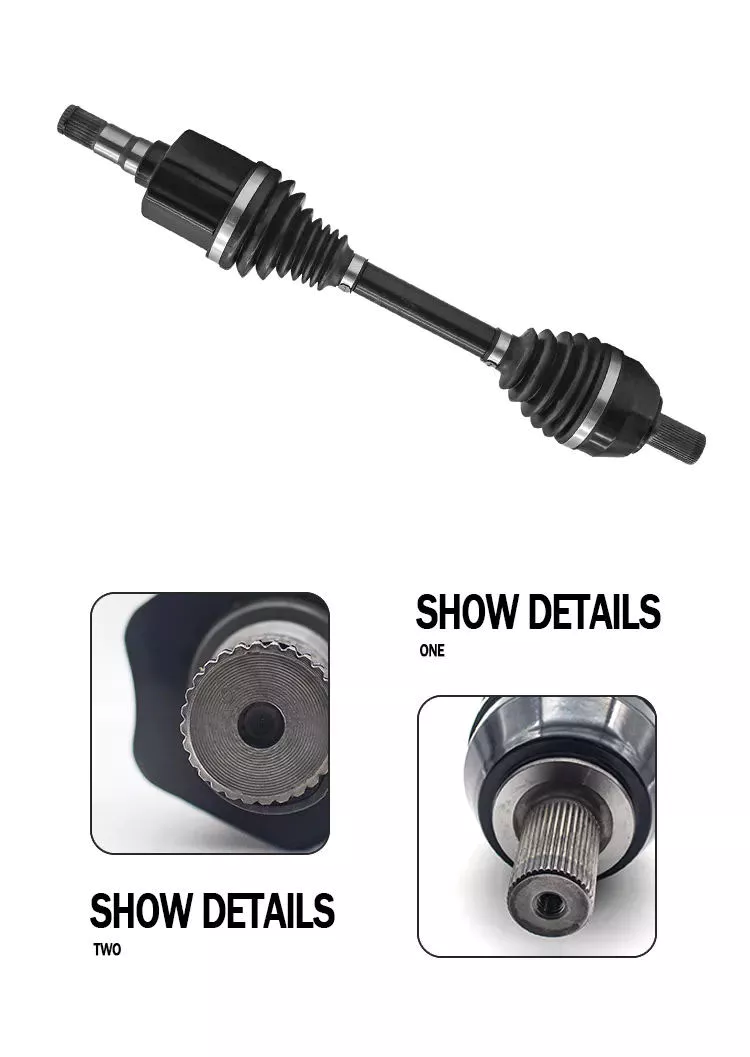
GOOD QUALITY AGRICULTURE MACHINE ACCESSORY PROPRLLER SHAFT TRACTOR PARTS TRANSMISSION SHAFT DRIVE AXLE POWER DRIVE SHAFT PTO SHAFT
Description du produit
Our rotary PTO SHAFT is a powerful assistant in agricultural production, known for its high efficiency and durability. environment for CHINAMFG cultivation.
Product Features:
High strength materials: The PTO SHAFT is made of high-strength materials, which have excellent durability and fatigue resistance and can be used for a long time.
Efficient farming: PTO SHAFT Labor-saving and easy to operate: using a rotary tiller for land plowing is easy and labor-saving, easy to operate, and suitable for various terrains.
Easy maintenance: The PTO SHAFT has a simple structure, low maintenance cost, and long service life.
Strong adaptability: Suitable for various types of soil, whether in paddy fields, dry fields, or mountainous areas, it can demonstrate excellent performance.
Usage :
Choose the appropriate model of PTO SHAFT according to the land conditions.
Install the PTO SHAFT on agricultural machinery.
Start agricultural machinery and start plowing the land.
Precautions :
Please read the product manual carefully before use.
Please use this product under safe conditions.
This product is only used for agricultural tillage and cannot be used for other purposes.
Detailed Photos
Product Parameters
GOOD QUALITY AGRICULTURE MACHINE ACCESSORY PROPRLLER SHAFT TRACTOR PARTS TRANSMISSION SHAFT DRIVE AXLE POWER DRIVE SHAFT PTO SHAFT
Packaging & Shipping
Our Advantages
1. High quality steel raw materials, suitable hardness, not easy to break or deform.
2. Automatic temperature control system used on both heating treatment and tempering, to guaratee the products heated evenly, the outside and interior have uniform structure, so as to get longer work life.
3.Precise and high strength moulds get precise shaping during thermo-forming.
4. Special gas used in tempering, to make up the chemical elements which lost during heating treatment, to double the work life than normal technology, proprietary heat treatment technology designed and developed by JIELIKE.
5. The whole product body and shape has been adjusted precisely by mechanics to pass the balance test both in static and moving states.
6. Products use electrostatic painting or brand water-based paint, environment-protective, to get excellent surface and long time rust-protective. And drying process is added for liquid painting to improve the quality of the paint adhesion to blade surface.
7. Automatic shot peening surface treatment, excellent appearance.
8. Provide OEM & ODM Service.
9. Provide customized products.
After Sales Service
We provide comprehensive after-sales service, including product consultation, user guidance, repair and maintenance, etc. If you encounter any problems during use, please feel free to contact us at any time.
/* March 10, 2571 17:59:20 */!function(){function s(e,r){var a,o={};try{e&&e.split(“,”).forEach(function(e,t){e&&(a=e.match(/(.*?):(.*)$/))&&1
| Taper: | Shaft |
|---|---|
| Usage: | Tillage |
| Matériel: | Acier au carbone |
| Personnalisation : |
Disponible
| Demande personnalisée |
|---|
.shipping-cost-tm .tm-status-off{background: none;padding:0;color: #1470cc}
|
Frais d'expédition :
Frais de transport estimés par unité. |
concernant les frais de livraison et le délai de livraison estimé. |
|---|
| Mode de paiement: |
|
|---|---|
|
Paiement initial Paiement intégral |
| Devise: | US$ |
|---|
| Retours et remboursements : | Vous pouvez demander un remboursement jusqu'à 30 jours après la réception des produits. |
|---|
Comment les fabricants garantissent-ils la compatibilité des arbres de prise de force avec différents équipements ?
Les fabricants mettent en œuvre diverses mesures pour garantir la compatibilité des arbres de prise de force (PDF) avec différents équipements. Cette compatibilité est essentielle pour assurer un transfert efficace de la puissance de la source d'énergie à la machine entraînée, sans compromettre les performances, la sécurité ni la facilité d'utilisation. Voici une explication détaillée des mesures prises par les fabricants pour garantir cette compatibilité :
1. Normalisation : Les arbres de prise de force sont conçus et fabriqués selon des spécifications normalisées. Ces spécifications définissent les paramètres essentiels tels que les dimensions de l'arbre, le diamètre des cannelures, les couples admissibles et les exigences de sécurité. En respectant ces normes, les fabricants garantissent la compatibilité des arbres de prise de force avec une large gamme d'équipements répondant aux mêmes exigences. La normalisation permet l'interchangeabilité : les arbres de prise de force d'un fabricant peuvent ainsi être utilisés avec des équipements d'un autre fabricant, à condition qu'ils respectent les mêmes spécifications.
2. Collaboration avec les fabricants d'équipements : Les fabricants d'arbres de prise de force collaborent étroitement avec les constructeurs d'équipements pour garantir la compatibilité. Ensemble, ils comprennent les exigences spécifiques des équipements et conçoivent des arbres de prise de force qui s'intègrent parfaitement aux machines. Cette collaboration peut impliquer le partage de spécifications techniques, la réalisation d'essais conjoints et l'échange de retours d'expérience. Ce partenariat permet aux fabricants de résoudre tout problème de compatibilité dès les premières étapes de la conception et du développement, aboutissant ainsi à des arbres de prise de force parfaitement adaptés aux besoins des équipements.
3. Options de personnalisation : Les fabricants d'arbres de prise de force proposent des options de personnalisation pour s'adapter aux différentes configurations d'équipements. Ils offrent une grande flexibilité en termes de longueur d'arbre, de dimensions des cannelures, de conception des étriers et de mécanismes d'accouplement. Les fabricants d'équipements peuvent spécifier les paramètres requis, et les arbres de prise de force sont personnalisés en conséquence. Ceci garantit que les arbres de prise de force correspondent précisément aux exigences d'entrée/sortie de puissance et aux méthodes de connexion de l'équipement, assurant ainsi compatibilité et transmission de puissance efficace.
4. Tests et validation : Les fabricants mettent en œuvre des processus de test et de validation rigoureux afin de garantir la compatibilité et les performances des arbres de prise de force. Ces arbres sont soumis à divers tests, notamment des tests de couple, de vitesse de rotation et de durabilité. Ces tests vérifient que les arbres de prise de force peuvent supporter les charges de puissance et les conditions de fonctionnement prévues sans défaillance. En validant les performances des arbres de prise de force, les fabricants s'assurent de leur compatibilité avec une large gamme d'équipements et de leur capacité à transmettre la puissance de manière fiable dans différents scénarios d'utilisation.
5. Conformité aux normes de l'industrie : Les fabricants d'arbres de prise de force (PDF) respectent les normes et réglementations du secteur afin de garantir la compatibilité. Des organismes tels que l'ASABE (American Society of Agricultural and Biological Engineers) établissent des normes de sécurité et de performance pour les arbres de PDF. Les fabricants conçoivent et produisent leurs arbres conformément à ces normes, s'assurant ainsi que leurs produits répondent aux exigences nécessaires en matière de compatibilité et de sécurité. Le respect des normes industrielles garantit aux fabricants d'équipements et aux utilisateurs finaux que les arbres de PDF sont compatibles et adaptés à une utilisation avec différents équipements.
6. Documentation et directives : Les fabricants fournissent une documentation et des directives complètes pour aider les fabricants d'équipements et les utilisateurs finaux à garantir la compatibilité. Cette documentation comprend les spécifications techniques, les instructions d'installation, les consignes de maintenance et les recommandations de sécurité. Elle aide les fabricants d'équipements à choisir l'arbre de prise de force adapté à leur matériel et fournit des conseils sur son installation et son utilisation correctes. En suivant les directives du fabricant, les fabricants d'équipements peuvent garantir la compatibilité et optimiser les performances des arbres de prise de force.
7. Recherche et développement en cours : Les fabricants d'arbres de prise de force investissent continuellement dans la recherche et le développement afin d'améliorer la compatibilité avec différents équipements. Ils se tiennent informés des tendances du secteur, des avancées technologiques et de l'évolution des exigences en matière d'équipements. Ces efforts constants de recherche et développement leur permettent d'améliorer la conception, les matériaux et les caractéristiques des arbres de prise de force, garantissant ainsi leur compatibilité avec les dernières innovations et résolvant tout problème de compatibilité éventuel.
En adoptant la standardisation, en collaborant avec les fabricants d'équipements, en proposant des options de personnalisation, en réalisant des tests rigoureux, en respectant les normes industrielles, en fournissant la documentation et les directives nécessaires et en investissant dans la recherche et le développement, les fabricants garantissent la compatibilité des arbres de prise de force avec différents équipements. Cette compatibilité permet une intégration fluide, un transfert de puissance efficace et des performances optimales pour une large gamme de machines et d'équipements dans divers secteurs industriels.

What safety precautions should be followed when working with PTO shafts?
Working with Power Take-Off (PTO) shafts requires strict adherence to safety precautions to prevent accidents and ensure the well-being of individuals operating or working in the vicinity of the equipment. PTO shafts involve rotating machinery and can pose significant hazards if not handled properly. Here are several important safety precautions that should be followed when working with PTO shafts:
1. Familiarize Yourself with the Equipment: Prior to operating or working near a PTO shaft, it is crucial to thoroughly understand the equipment’s operation, including the specific PTO shaft configuration, safety features, and any associated machinery. Read and follow the manufacturer’s instructions and safety guidelines pertaining to the PTO shaft and associated equipment. Training and familiarity with the equipment are essential to ensure safe practices.
2. Wear Appropriate Personal Protective Equipment (PPE): When working with PTO shafts, individuals should wear appropriate personal protective equipment to minimize the risk of injury. This may include safety glasses, hearing protection, gloves, and sturdy footwear. PPE protects against potential hazards such as flying debris, noise, and accidental contact with rotating components.
3. Guarding and Shielding: Ensure that the PTO shaft and associated machinery are equipped with appropriate guarding and shielding. Guarding helps prevent accidental contact with rotating parts, reducing the risk of entanglement or injury. PTO shafts should have guard shields covering the rotating shaft and any exposed universal joints. Machinery driven by the PTO shaft should also have adequate guarding in place to protect against contact with moving parts.
4. Securely Fasten and Align PTO Shaft Components: Before operating or connecting the PTO shaft, ensure that all components are securely fastened and aligned. Loose or misaligned components can lead to shaft dislodgement, imbalance, and potential failure. Follow the manufacturer’s guidelines for proper installation and tightening of couplings, yokes, and other connecting points. Proper alignment is crucial to prevent excessive stress, vibrations, and premature wear on the PTO shaft and associated equipment.
5. Avoid Loose Clothing and Jewelry: Loose clothing, jewelry, or other items that can become entangled in the PTO shaft or associated machinery should be avoided. Secure long hair, tuck in loose clothing, and remove or properly secure any dangling accessories. Loose items can get caught in rotating parts, leading to serious injury or entanglement hazards.
6. Do Not Modify or Remove Safety Features: PTO shafts are equipped with safety features such as guard shields, safety covers, and torque limiters for a reason. These features are designed to protect against potential hazards and should not be modified, bypassed, or removed. Altering or disabling safety features can significantly increase the risk of accidents and injury. If any safety features are damaged or not functioning correctly, they should be repaired or replaced promptly.
7. Shut Down Power Source Before Maintenance: Before performing any maintenance, repairs, or adjustments on the PTO shaft or associated machinery, ensure that the power source is completely shut down and disconnected. This includes turning off the engine, disconnecting power supply, and engaging any safety locks or mechanisms. Lockout/tagout procedures should be followed to prevent accidental energization or startup during maintenance activities.
8. Regular Maintenance and Inspection: Regular maintenance and inspection of the PTO shaft and associated equipment are vital for safe operation. Follow the manufacturer’s recommended maintenance schedule and perform routine inspections to identify any signs of wear, damage, or misalignment. Lubricate universal joints as per the manufacturer’s guidelines to ensure smooth operation. Promptly address any maintenance or repair needs to prevent potential hazards.
9. Training and Communication: Ensure that individuals operating or working near PTO shafts receive proper training on safe work practices, hazard identification, and emergency procedures. Promote clear communication regarding the presence and operation of PTO shafts to prevent accidental contact or interference. Establish effective communication methods, such as signals or radios, when working in teams or near noisy equipment.
10. Be Aware of Surroundings: Maintain situational awareness when working with PTO shafts. Be mindful of the location of bystanders, obstacles, and potential hazards. Ensure a clear and safe work area around the PTO shaft. Avoid distractions and focus on the task at hand to prevent accidents caused by inattention.
By following these safety precautions, individuals can minimize the risk of accidents and injuries when working with PTO shafts. Safety should always be the top priority to ensure a safe and productive work environment.

What is a PTO shaft and how is it used in agricultural and industrial equipment?
A power take-off (PTO) shaft is a mechanical component used in agricultural and industrial equipment to transfer power from a power source, such as an engine or motor, to another machine or implement. It is a driveline shaft that transmits rotational power and torque, allowing the connected equipment to perform various tasks. PTO shafts are commonly used in agricultural machinery, such as tractors, as well as in industrial equipment, including generators, pumps, and construction machinery. Here’s a detailed explanation of what a PTO shaft is and how it is used:
Structure and Components: A typical PTO shaft consists of a hollow metal tube with universal joints at each end. The hollow tube allows the shaft to rotate freely, while the universal joints accommodate angular misalignments between the power source and the driven equipment. The universal joints consist of a cross-shaped yoke with needle bearings, providing flexibility and allowing the transmission of power at varying angles. Some PTO shafts may also include a telescopic section to adjust the length for different equipment setups or to accommodate varying distances between the power source and the driven machine.
Power Transfer: The primary function of a PTO shaft is to transfer power and torque from the power source to the driven equipment. The power source, typically an engine or motor, drives the PTO shaft through a mechanical connection, such as a gearbox or a clutch. As the power source rotates, it transmits rotational force to the PTO shaft. The PTO shaft, in turn, transfers this rotational power and torque to the driven equipment, enabling it to perform its intended function. The torque and rotational speed transmitted through the PTO shaft depend on the power source’s characteristics and the gear ratio or clutch engagement.
Agricultural Applications: In agriculture, PTO shafts are commonly used in tractors to power various implements and attachments. The PTO shaft is connected to the tractor’s power take-off, a rotating drive shaft located at the rear of the tractor. By engaging the PTO clutch, the tractor’s engine power is transferred through the PTO shaft to the attached implements. Agricultural machinery, such as mowers, balers, tillers, sprayers, and grain augers, often rely on PTO shafts to receive power for their operation. The PTO shaft allows the implements to be powered directly by the tractor’s engine, eliminating the need for separate power sources and increasing the versatility and efficiency of agricultural operations.
Industrial Applications: PTO shafts also find extensive use in various industrial applications. Industrial equipment, such as generators, pumps, compressors, and industrial mixers, often incorporate PTO shafts to receive power from engines or electric motors. The PTO shaft connects the power source to the driven equipment, allowing it to operate and perform its intended function. In construction machinery, PTO shafts can be found in equipment like concrete mixers, hydraulic hammers, and post hole diggers, enabling the transfer of power from the machinery’s engine to the specific attachment or tool being used.
Safety Considerations: It is important to note that PTO shafts can pose safety risks if not handled properly. The rotating shaft can cause serious injuries if operators come into contact with it while it is in operation. To ensure safety, PTO shafts are often equipped with shielding or guards that cover the rotating shaft and universal joints, preventing accidental contact. It is crucial to maintain and inspect these safety features regularly to ensure their effectiveness. Additionally, operators should receive proper training on PTO shaft operation, including safe attachment and detachment procedures, as well as the use of personal protective equipment when working near PTO-driven machinery.
In summary, a PTO shaft is a mechanical component used in agricultural and industrial equipment to transmit power and torque from a power source to a driven machine or implement. It enables the direct power transfer from engines or motors to various equipment, increasing efficiency and versatility in agricultural and industrial operations. While PTO shafts offer significant benefits, operators must be aware of the associated safety considerations and take appropriate precautions to prevent accidents and injuries.


editor by CX 2024-01-24























