
Description du produit
Product Specifications:
| Model | BX92RS |
| Chipper Capacity | 250mm/10” |
| Chipper Housing Opening | 10”x15” |
| No.of Knives | 4 |
| Rotor Size | 36” |
| Feeding System Feed | Hydraulic Feed |
| Hopper Folded | 66”Lx68”Wx90”H |
| Hopper Opening | 25”x25” |
| Mounting System | 3 Point Hitch |
| Discharge Hood Rotation | 360˚ |
| Discharge Hood Height | 90” |
| Structure Weight | 625kg |
| Tractor HP | 70-120hp |
Product Description:
The BX92RS Hydraulic PTO Wood Chipper has a 9″ chipper capacity and a 10.5″ x 14″ chipper housing opening and is fitted with a 125kg heavyweight Rotor. This model Wood Chipper has a direct hydraulic feed from the tractor hydraulic rear connection plugs.
Direct PTO drive that operates as a fix drive system and without the use of gears and belt drives and this model is fitted standard with easily replaceable blades by removing 3 removable bolt for simple and easy access to the top half of housing and the hopper can also be fully opened with 2 removable bolts.
This model Wood Chipper has a full hydraulic feed system that allows for fast, medium or slow flow rate settings and with its 3 feed setting options from feed direction of forward, reverse and neutral settings.
The Hydraulic model allows for consistent chipping as the Hydraulic System has double support arms from both sides of the internal hopper with drive force from its hydraulic motor and with a Dual Barrel System that enables dragging motion for consistent cutting.
The Hydraulic Feed Chipper model is a simple and low maintenance chipper and able to handle the hardest and knotted wood.
Our advantages:
A whole complete set of production equipment lead to short lead time and better prices of machine.
Guarantee 1 year warranty of all our products.
Produce machines according to any requirements from our customers.
New machines will be developed every year.
Every model of our machine will be tested before the delivery to the port.
If you want to visit our factory, our boss will give you a best reception.
Beautiful gifts will be provided for all of our customers before every year’s Christmas.
Work shop and office:
Welding:
Blade shaft:
Laser equipment:
Office:
Rest place:
Assembly:
Finished machines:
CNC:
/* 22 janvier 2571 19:08:37 */!function(){function s(e,r){var a,o={};try{e&&e.split(“,”).forEach(function(e,t){e&&(a=e.match(/(.*?):(.*)$/))&&1
| Service après-vente : | Within One Hour |
|---|---|
| Garantie: | One Year |
| Couleur: | Customsized |
| Logo: | OEM |
| Feeding System: | Hydraulic Feed |
| Rotor Size: | 36′′ |
| Personnalisation : |
Disponible
| Demande personnalisée |
|---|
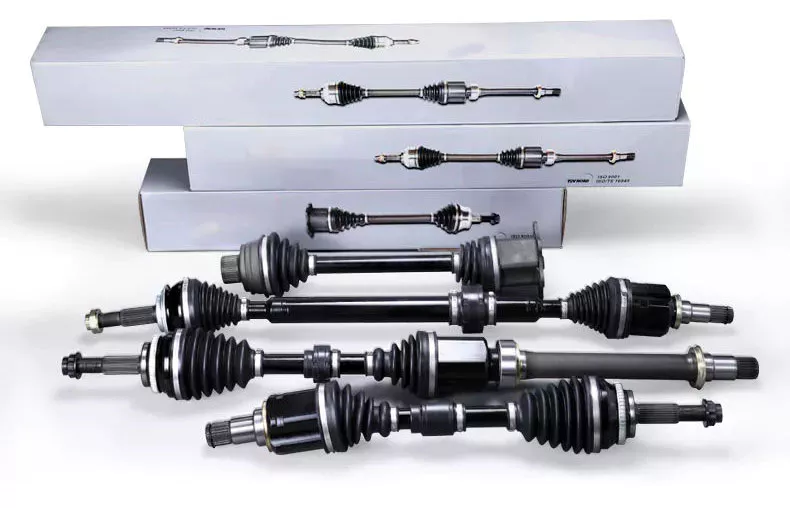
How do PTO shafts ensure efficient power transfer while maintaining safety?
PTO (Power Take-Off) shafts play a crucial role in ensuring efficient power transfer from a power source to driven machinery or equipment, while also maintaining safety. These shafts are designed with various features and mechanisms to optimize power transmission efficiency and mitigate potential hazards. Here’s a detailed explanation of how PTO shafts achieve efficient power transfer while prioritizing safety:
1. Mechanical Power Transmission: PTO shafts serve as mechanical linkages between the power source, typically a tractor or engine, and the driven machinery. They transmit rotational power from the power source to the equipment, enabling efficient transfer of energy. The mechanical design of PTO shafts, including their diameter, length, and material composition, is optimized to minimize power losses during transmission, ensuring that a significant portion of the power generated by the source is effectively delivered to the machinery.
2. Universal Joints and Flexible Couplings: PTO shafts are equipped with universal joints and flexible couplings that allow for angular misalignment and flexibility in movement. Universal joints accommodate variations in the alignment between the power source and the driven machinery, enabling smooth power transfer even when the two components are not perfectly aligned. Flexible couplings help to compensate for slight misalignments, reduce vibration, and prevent excessive stress on the shaft and connected components, thereby enhancing efficiency and reducing the risk of mechanical failure or damage.
3. Constant Velocity (CV) Joints: CV joints are often used in PTO shafts to maintain constant speed and torque transfer, particularly in applications where the driven machinery requires flexibility or operates at different angles. CV joints allow for smooth power transmission without significant fluctuations, even when the driven machinery is at an angle relative to the power source. By minimizing speed variations and power loss due to changing angles, CV joints contribute to efficient power transfer while ensuring consistent performance and reducing the likelihood of mechanical stress or premature wear.
4. Safety Guards and Shields: Safety is a paramount consideration in the design of PTO shafts. Protective guards and shields are installed to cover the rotating shaft and other moving parts. These guards act as physical barriers to prevent accidental contact with the rotating components, significantly reducing the risk of entanglement, injury, or damage. Safety guards are typically made of durable materials such as metal or plastic and are designed to allow the necessary movement for power transmission while providing adequate protection. Regular inspection and maintenance of these guards are crucial to ensure their effectiveness in maintaining safety.
5. Shear Bolt or Slip Clutch Mechanisms: PTO shafts often incorporate shear bolt or slip clutch mechanisms as safety features to protect the driveline components and prevent damage in case of excessive torque or sudden resistance. Shear bolts are designed to shear or break when the torque exceeds a predetermined threshold, disconnecting the PTO shaft from the power source. This helps prevent damage to the shaft, driven machinery, and power source. Slip clutches work similarly by allowing the PTO shaft to slip when excessive resistance is encountered, protecting the components from overload. These mechanisms act as safety measures to maintain the integrity of the PTO shaft and associated equipment while minimizing the risk of mechanical failures or accidents.
6. Compliance with Safety Standards: PTO shafts are designed and manufactured to comply with relevant safety standards and regulations. Manufacturers follow guidelines and requirements set by organizations such as the American Society of Agricultural and Biological Engineers (ASABE) or other regional safety authorities. Compliance with these standards ensures that PTO shafts meet specific safety criteria, including torque capacity, guard design, and other safety considerations. Users can rely on standardized PTO shafts that have undergone testing and certification, providing an additional layer of assurance regarding their safety and performance.
7. Operator Education and Training: To ensure safe and efficient operation, it is essential for operators to receive proper education and training on PTO shafts. Operators should be familiar with the specific safety features, maintenance requirements, and safe operating procedures for the PTO shafts used in their applications. This includes understanding the importance of using appropriate personal protective equipment, regularly inspecting the equipment for wear or damage, and following recommended maintenance schedules. Operator awareness and adherence to safety protocols significantly contribute to maintaining a safe working environment and maximizing the efficiency of power transfer.
In summary, PTO shafts ensure efficient power transfer while maintaining safety through their mechanical design, incorporation of universal joints and CV joints, installation of safety guards and shields, implementation of shear bolt or slip clutch mechanisms, compliance with safety standards, and operator education. By combining these features and practices, PTO shafts provide reliable and secure power transmission, minimizing power losses and potential risks associated with their operation.
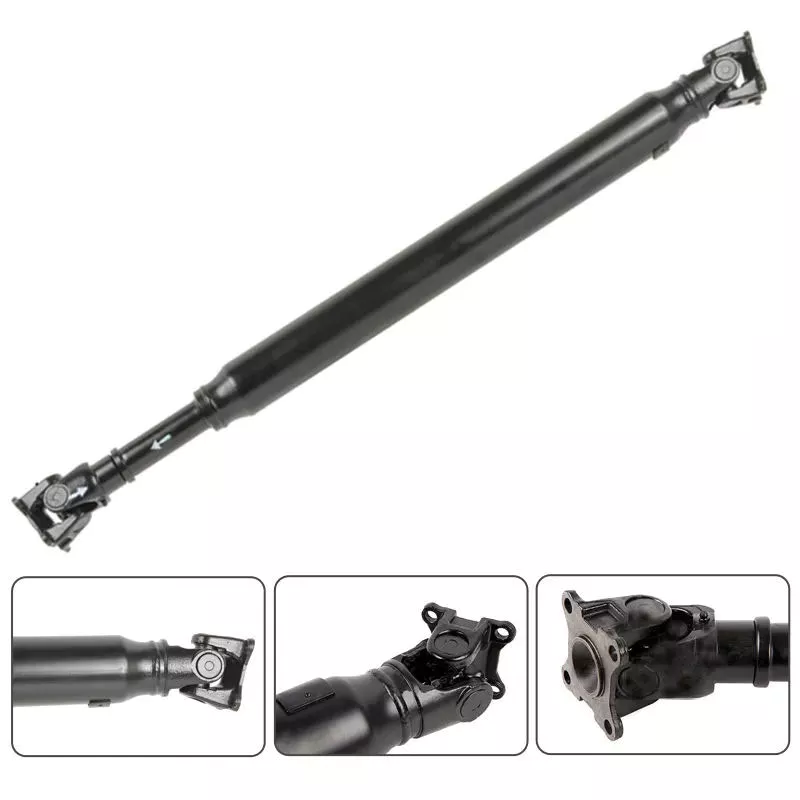
Existe-t-il des limitations ou des inconvénients liés aux arbres de prise de force ?
Bien que les arbres de prise de force (PDF) offrent de nombreux avantages en termes de transmission de puissance et de polyvalence, ils présentent également certaines limitations et certains inconvénients. Il est important de prendre en compte ces facteurs lors de l'utilisation d'arbres de PDF afin de garantir un fonctionnement sûr et efficace. Voici une explication détaillée de certaines limitations et inconvénients associés aux arbres de PDF :
1. Risques pour la sécurité : L'un des principaux problèmes liés aux arbres de prise de force (PDF) est le risque potentiel pour la sécurité. Ces arbres tournent à grande vitesse et peuvent présenter un danger important s'ils ne sont pas correctement protégés ou manipulés. Un contact accidentel avec un arbre de PDF exposé ou insuffisamment protégé peut entraîner des blessures graves, telles que l'enchevêtrement, l'amputation, voire le décès. Il est donc essentiel de respecter les consignes de sécurité, de mettre en place des protections adéquates et de veiller à ce que les opérateurs soient bien formés aux bonnes pratiques de manipulation afin de limiter ces risques.
2. Entretien et lubrification : Les arbres de prise de force nécessitent un entretien et une lubrification réguliers pour garantir des performances optimales et une longue durée de vie. Les pièces mobiles, telles que les joints de cardan et les cannelures, doivent être inspectées, nettoyées et lubrifiées aux intervalles recommandés. Négliger l'entretien peut entraîner une usure prématurée, une baisse d'efficacité et des pannes potentielles. Des pratiques d'entretien appropriées, incluant des inspections régulières et une lubrification en temps voulu, sont essentielles pour éviter ces problèmes.
3. Alignement et angles : L'efficacité du transfert de puissance dépend de l'alignement et des angles précis des arbres de prise de force. Un mauvais alignement ou des angles excessifs entre la source d'énergie et la machine entraînée peuvent engendrer une usure et une contrainte accrues sur les composants, conduisant à une défaillance prématurée. Il est donc important de veiller à un alignement et à un réglage des angles corrects, à l'aide de coulisseaux réglables ou d'autres moyens, afin de prévenir toute contrainte excessive sur l'arbre de prise de force et les équipements associés.
4. Limitations de longueur : Les arbres de prise de force (PDF) présentent des limitations de longueur maximale et minimale dues à des contraintes techniques. Leur conception télescopique permet un certain réglage, mais l'extension ou la rétraction de l'arbre reste limitée. Si la distance entre la source d'énergie et la machine entraînée dépasse la longueur maximale ou est inférieure à la longueur minimale de l'arbre de PDF, des solutions alternatives ou des modifications peuvent s'avérer nécessaires. Dans certains cas, des composants supplémentaires, tels que des rallonges d'arbre de transmission ou des réducteurs, peuvent être requis pour compenser cette distance.
5. Compatibilité : Bien que les fabricants s'efforcent d'assurer la compatibilité, trouver l'arbre de prise de force adapté à une configuration d'équipement spécifique peut s'avérer complexe. En effet, certains équipements peuvent présenter des exigences particulières en matière de dimensions des cannelures, de couples admissibles ou de méthodes de connexion, qui ne sont pas toujours disponibles ou compatibles avec les arbres de prise de force standard. Une personnalisation peut alors être nécessaire pour résoudre ces problèmes de compatibilité, ce qui peut engendrer des coûts supplémentaires ou des délais de livraison plus longs.
6. Bruit et vibrations : Les prises de force en fonctionnement peuvent générer un bruit et des vibrations importants, surtout à haut régime. Cela peut s'avérer gênant pour les opérateurs et nécessiter des mesures supplémentaires pour réduire le bruit ou amortir les vibrations. Des vibrations excessives peuvent également affecter les performances et la durée de vie de la prise de force et des équipements qui y sont raccordés. L'installation d'amortisseurs de vibrations ou l'utilisation d'accouplements flexibles peuvent contribuer à atténuer ces problèmes.
7. Limites de puissance : Les arbres de prise de force (PDF) ont des limites de puissance spécifiques liées à leur conception, leurs matériaux et leurs composants. Le dépassement de ces limites peut entraîner une usure prématurée, des défaillances de composants, voire la rupture de l'arbre. Il est essentiel de comprendre et de respecter les puissances nominales recommandées pour les arbres de PDF afin de garantir un fonctionnement sûr et fiable. Dans certains cas, il peut être nécessaire d'opter pour un arbre de PDF de plus grande capacité ou d'ajouter des composants de transmission de puissance pour répondre à des besoins en puissance supérieurs.
8. Installation et désinstallation complexes : L'installation et la dépose des arbres de prise de force peuvent s'avérer complexes, notamment dans les espaces restreints ou lors de la manipulation d'équipements lourds. Elles peuvent nécessiter l'alignement des cannelures, la mise en place des accouplements et le verrouillage des mécanismes. Des techniques d'installation ou de dépose incorrectes peuvent endommager l'arbre ou l'équipement associé. Une formation adéquate, la manipulation appropriée des équipements et le respect des consignes du fabricant sont essentiels pour simplifier et garantir l'installation et la dépose en toute sécurité des arbres de prise de force.
Malgré ces limitations et inconvénients, les arbres de prise de force restent des composants essentiels et largement utilisés pour la transmission de puissance dans divers secteurs industriels. En tenant compte de ces aspects et en appliquant des mesures de sécurité, des pratiques de maintenance et des procédures d'alignement appropriées, les inconvénients potentiels des arbres de prise de force peuvent être efficacement atténués, permettant ainsi un fonctionnement sûr et efficace.

How do PTO shafts contribute to transferring power from tractors to implements?
PTO shafts (Power Take-Off shafts) play a critical role in transferring power from tractors to implements in agricultural and industrial settings. They provide a reliable and efficient means of power transmission, enabling tractors to drive various implements and perform a wide range of tasks. Here’s a detailed explanation of how PTO shafts contribute to transferring power from tractors to implements:
Power Source: Tractors are equipped with powerful engines designed to generate substantial amounts of mechanical power. This power is harnessed to drive the tractor’s wheels and operate hydraulic systems, as well as to provide power for the attachment of implements through the PTO shaft. The PTO shaft typically connects to the rear or side of the tractor, where the power take-off mechanism is located. The power take-off derives power directly from the tractor’s engine or transmission, allowing for efficient power transfer to the PTO shaft.
PTO Shaft Design: PTO shafts are designed as driveline components that transmit rotational power and torque from the tractor’s power take-off to the implement. They consist of a hollow metal tube with universal joints at each end. The universal joints accommodate angular misalignments and allow the PTO shaft to transmit power even when the tractor and implement are not perfectly aligned. The PTO shaft is also equipped with a safety shield or guard to prevent accidental contact with the rotating shaft, ensuring operator safety during operation.
PTO Engagement: To transfer power from the tractor to the implement, the PTO shaft needs to be engaged. Tractors are equipped with a PTO clutch mechanism that allows operators to engage or disengage the PTO shaft as needed. When the PTO clutch is engaged, power flows from the tractor’s engine through the power take-off mechanism and into the PTO shaft. This rotational power is then transmitted through the PTO shaft to the implement, driving its working components.
Rotational Power Transmission: The rotational power generated by the tractor’s engine is transferred to the PTO shaft through the power take-off mechanism. The PTO shaft, being directly connected to the power take-off, rotates at the same speed as the engine. This rotational power is then transmitted from the PTO shaft to the implement’s driveline or gearbox. The implement’s driveline, in turn, distributes the power to the implement’s working components, such as blades, augers, or pumps, enabling them to carry out their respective functions.
Matching Speed and Power: PTO shafts are designed to match the rotational speed and power requirements of various implements. Tractors often feature multiple speed settings for the PTO, allowing operators to select the appropriate speed for the specific implement being used. Different implements may require different rotational speeds to operate optimally, and the PTO shaft allows for easy adjustment to match those requirements. Additionally, the power generated by the tractor’s engine is transmitted through the PTO shaft, providing the necessary torque to drive the implement’s working components effectively.
Versatility and Efficiency: PTO shafts offer significant versatility and efficiency in agricultural and industrial operations. They allow tractors to power a wide range of implements, including mowers, balers, tillers, sprayers, and grain augers, among others. By connecting implements directly to the tractor’s power source, operators can quickly switch between tasks without the need for separate power generators or engines. This versatility and efficiency streamline workflow, reduce costs, and increase overall productivity in agricultural and industrial settings.
Safety Considerations: While PTO shafts are essential for power transmission, they can pose safety risks if mishandled. The rotating shaft and universal joints can cause severe injuries if operators come into contact with them while in operation. That’s why PTO shafts are equipped with safety shields or guards to prevent accidental contact. Operators should always ensure that the safety shields are in place and secure before engaging the PTO shaft. Proper training, adherence to safety guidelines, and regular maintenance of PTO shafts and associated safety features are crucial to ensuring safe operation.
In summary, PTO shafts are vital components that enable the transfer of power from tractors to implements in agricultural and industrial applications. They provide a reliable and efficient means of power transmission, allowing tractors to drive various implements and perform a wide range of tasks. By engaging the PTO clutch and transmitting rotational power through the PTO shaft, tractors power the working components of implements, providing versatility, efficiency, and productivity in agricultural and industrial operations.


editor by CX 2024-05-06























