
Description du produit
Premium Agricultural Machinery Transmission, Driveline, Pto Shaft
| Product No | Pto Shaft |
| Use For | Agricultual Machinery |
| OEM | Acceptable |
| Tube Types for PTO Shaft | Triangle,Lemon.Star |
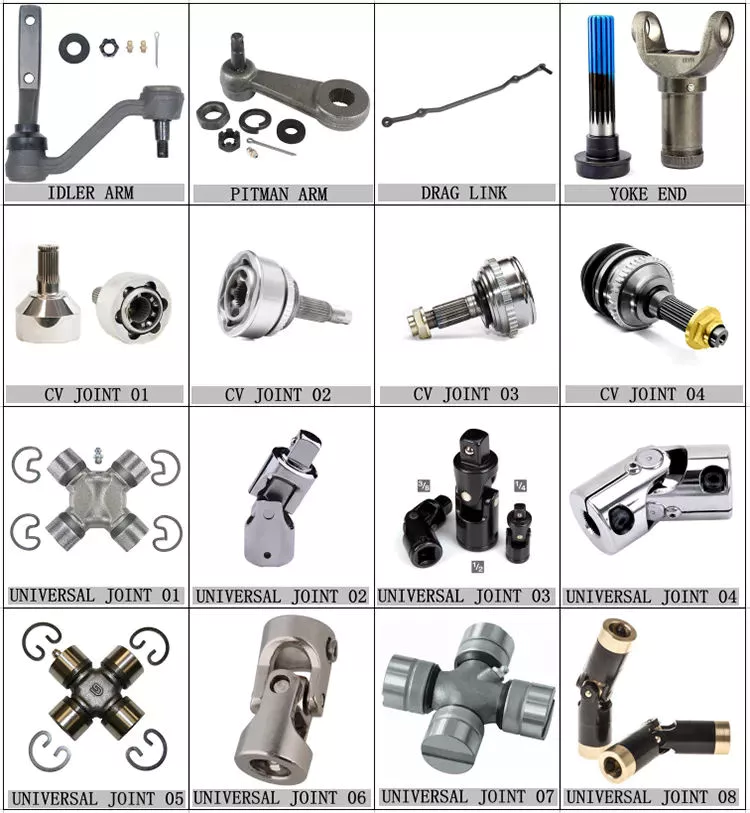
| Universal Joint | Series1-8 |
| Colors of PTO Shaft | Base on Customer’s requirement |
| PTO Shaft Series | Series1-8 |
| Type de joug | Available Options |
| Equipment End Connection Way | CV,Clutch,Yoke |
| Garantie | 1 Year |
Product Specifications
Detailed Photos
Profil de l'entreprise
HangZhou Rongwang Industry and Trade Co., Ltd. was established in 2007. The company develops and produces gearboxes, transmission shafts, and related accessories for various types of lawn mowers, rotary tillers, excavators, and other agricultural machinery. The products are sold to various countries in Europe and America. The company currently has processing and testing equipment such as machining centers, CNC machine tools, and coordinate measuring instruments, and has a strong research and development team, as well as complete after-sales support services.
The company is committed to meeting and surpassing customer needs with a rigorous work style, providing high-performance and high-quality products. We warmly welcome domestic and foreign enterprises to come and discuss cooperation. The company is willing to take on a new look and constantly innovate. Sincere and enthusiastic service, as always, close communication and cooperation with colleagues at home and abroad, working hand in hand to create brilliance.
Applicatio
Corporate Purpose
The company always adheres to the business philosophy of “integrity, excellence, innovation, and progress” , striving for survival with quality and development with technology.The employees of Rongwang Industry and Trade have many years of experience in mechanical processing and manufacturing, while also absorbing advanced technology and processes from both domestic and foreign countries.And has passed ISO9001 quality system certification certification.
Rongwang Enterprise Purpose: To create excellent enterprises with excellent products, discounted prices, and excellent services.
Vision:Power the industry, Transmit the world.Rongwang Machinery aims to be the leader in the power transmission industry.Mission: To provide trustworthy and affordable products for our customers.”Trustworthy”means high quality and safe products.We are trying to offer lower cost products without sacrificing quality.
/* 22 janvier 2571 19:08:37 */!function(){function s(e,r){var a,o={};try{e&&e.split(“,”).forEach(function(e,t){e&&(a=e.match(/(.*?):(.*)$/))&&1
| Matériel: | Alloy Steel |
|---|---|
| Load: | Arbre de transmission |
| Stiffness & Flexibility: | Flexible Shaft |
| Journal Diameter Dimensional Accuracy: | IT6-IT9 |
| Axis Shape: | Straight Shaft |
| Shaft Shape: | Real Axis |
| Exemples : |
US$ 20/Piece
1 pièce (commande minimale) | |
|---|
| Personnalisation : |
Disponible
| Demande personnalisée |
|---|
Comment les arbres de transmission gèrent-ils les variations de vitesse et de couple en cours de fonctionnement ?
Les arbres de transmission sont conçus pour supporter les variations de vitesse et de couple en fonctionnement grâce à des mécanismes et des configurations spécifiques. Ces mécanismes leur permettent de s'adapter aux exigences changeantes de la transmission de puissance tout en assurant un fonctionnement fluide et efficace. Voici une explication détaillée du fonctionnement des arbres de transmission face aux variations de vitesse et de couple :
1. Accouplements flexibles :
Les arbres de transmission intègrent souvent des accouplements flexibles, tels que des joints de cardan ou des joints homocinétiques, pour compenser les variations de vitesse et de couple. Ces accouplements offrent une certaine flexibilité et permettent à l'arbre de transmission de transmettre la puissance même lorsque les composants menant et mené ne sont pas parfaitement alignés. Les joints de cardan sont constitués de deux étriers reliés par un palier en forme de croix, permettant un mouvement angulaire entre les sections de l'arbre de transmission. Cette flexibilité compense les variations de vitesse et de couple ainsi que les défauts d'alignement. Les joints homocinétiques, couramment utilisés dans les arbres de transmission automobiles, maintiennent une vitesse de rotation constante tout en s'adaptant aux variations d'angles de fonctionnement. Ces accouplements flexibles permettent une transmission de puissance fluide et réduisent les vibrations et l'usure dues aux variations de vitesse et de couple.
2. Joints coulissants :
Dans certaines conceptions d'arbres de transmission, des joints coulissants sont intégrés pour compenser les variations de longueur et s'adapter aux changements de distance entre les composants menant et mené. Un joint coulissant est constitué d'une section tubulaire intérieure et extérieure, munie de cannelures ou d'un mécanisme télescopique. Lorsque l'arbre de transmission subit des variations de longueur dues aux mouvements de la suspension ou à d'autres facteurs, le joint coulissant permet à l'arbre de s'allonger ou de se raccourcir sans affecter la transmission de puissance. En autorisant un mouvement axial, les joints coulissants contribuent à prévenir le blocage ou les contraintes excessives sur l'arbre de transmission lors des variations de vitesse et de couple, garantissant ainsi un fonctionnement fluide.
3. Équilibrer :
Les arbres de transmission sont équilibrés afin d'optimiser leurs performances et de minimiser les vibrations dues aux variations de vitesse et de couple. Un déséquilibre de l'arbre de transmission peut engendrer des vibrations qui affectent le confort des occupants du véhicule et augmentent l'usure de l'arbre et de ses composants. L'équilibrage consiste à redistribuer la masse le long de l'arbre de transmission pour obtenir une répartition uniforme du poids, réduisant ainsi les vibrations et améliorant les performances globales. L'équilibrage dynamique, qui consiste généralement à ajouter ou à retirer de petites masses, garantit un fonctionnement optimal de l'arbre de transmission, même sous des charges de vitesse et de couple variables.
4. Sélection des matériaux et conception :
Le choix des matériaux et la conception des arbres de transmission sont essentiels pour gérer les variations de vitesse et de couple. Ces arbres sont généralement fabriqués à partir de matériaux à haute résistance, tels que l'acier ou les alliages d'aluminium, choisis pour leur capacité à supporter les forces et les contraintes liées aux variations des conditions de fonctionnement. Le diamètre et l'épaisseur de paroi de l'arbre sont également déterminés avec précision afin de garantir une résistance et une rigidité suffisantes. De plus, la conception prend en compte des facteurs tels que la vitesse critique, la rigidité en torsion et la prévention des résonances, contribuant ainsi au maintien de la stabilité et des performances lors des variations de vitesse et de couple.
5. Lubrification :
Une lubrification adéquate est essentielle pour que les arbres de transmission supportent les variations de vitesse et de couple. La lubrification des articulations, telles que les joints de cardan ou les joints homocinétiques, réduit la friction et la chaleur générées en fonctionnement, assurant un mouvement fluide et minimisant l'usure. Une lubrification appropriée contribue également à prévenir le grippage des composants, permettant à l'arbre de transmission de mieux absorber les variations de vitesse et de couple. Un entretien régulier de la lubrification est nécessaire pour garantir des performances optimales et prolonger la durée de vie de l'arbre de transmission.
6. Surveillance du système :
Il est important de surveiller les performances du système d'arbre de transmission afin de déceler tout problème lié aux variations de vitesse et de couple. Des vibrations inhabituelles, des bruits anormaux ou des changements dans la transmission de puissance peuvent indiquer des problèmes potentiels au niveau de l'arbre de transmission. Des inspections et des contrôles d'entretien réguliers permettent de détecter et de résoudre rapidement les problèmes, contribuant ainsi à prévenir d'autres dommages et à garantir que l'arbre de transmission continue de supporter efficacement les variations de vitesse et de couple.
En résumé, les arbres de transmission supportent les variations de vitesse et de couple en fonctionnement grâce à l'utilisation d'accouplements flexibles, de joints coulissants, de procédures d'équilibrage, d'une sélection et d'une conception appropriées des matériaux, d'une lubrification et d'une surveillance du système. Ces mécanismes et pratiques permettent à l'arbre de transmission de compenser les défauts d'alignement, les variations de longueur et les fluctuations de la demande de puissance, garantissant ainsi une transmission de puissance efficace, un fonctionnement régulier et une usure réduite dans diverses applications.

How do drive shafts contribute to the efficiency of vehicle propulsion and power transmission?
Drive shafts play a crucial role in the efficiency of vehicle propulsion and power transmission systems. They are responsible for transferring power from the engine or power source to the wheels or driven components. Here’s a detailed explanation of how drive shafts contribute to the efficiency of vehicle propulsion and power transmission:
1. Power Transfer:
Drive shafts transmit power from the engine or power source to the wheels or driven components. By efficiently transferring rotational energy, drive shafts enable the vehicle to move forward or drive the machinery. The design and construction of drive shafts ensure minimal power loss during the transfer process, maximizing the efficiency of power transmission.
2. Torque Conversion:
Drive shafts can convert torque from the engine or power source to the wheels or driven components. Torque conversion is necessary to match the power characteristics of the engine with the requirements of the vehicle or machinery. Drive shafts with appropriate torque conversion capabilities ensure that the power delivered to the wheels is optimized for efficient propulsion and performance.
3. Constant Velocity (CV) Joints:
Many drive shafts incorporate Constant Velocity (CV) joints, which help maintain a constant speed and efficient power transmission, even when the driving and driven components are at different angles. CV joints allow for smooth power transfer and minimize vibration or power losses that may occur due to changing operating angles. By maintaining constant velocity, drive shafts contribute to efficient power transmission and improved overall vehicle performance.
4. Lightweight Construction:
Efficient drive shafts are often designed with lightweight materials, such as aluminum or composite materials. Lightweight construction reduces the rotational mass of the drive shaft, which results in lower inertia and improved efficiency. Reduced rotational mass enables the engine to accelerate and decelerate more quickly, allowing for better fuel efficiency and overall vehicle performance.
5. Minimized Friction:
Efficient drive shafts are engineered to minimize frictional losses during power transmission. They incorporate features such as high-quality bearings, low-friction seals, and proper lubrication to reduce energy losses caused by friction. By minimizing friction, drive shafts enhance power transmission efficiency and maximize the available power for propulsion or operating other machinery.
6. Balanced and Vibration-Free Operation:
Drive shafts undergo dynamic balancing during the manufacturing process to ensure smooth and vibration-free operation. Imbalances in the drive shaft can lead to power losses, increased wear, and vibrations that reduce overall efficiency. By balancing the drive shaft, it can spin evenly, minimizing vibrations and optimizing power transmission efficiency.
7. Maintenance and Regular Inspection:
Proper maintenance and regular inspection of drive shafts are essential for maintaining their efficiency. Regular lubrication, inspection of joints and components, and prompt repair or replacement of worn or damaged parts help ensure optimal power transmission efficiency. Well-maintained drive shafts operate with minimal friction, reduced power losses, and improved overall efficiency.
8. Integration with Efficient Transmission Systems:
Drive shafts work in conjunction with efficient transmission systems, such as manual, automatic, or continuously variable transmissions. These transmissions help optimize power delivery and gear ratios based on driving conditions and vehicle speed. By integrating with efficient transmission systems, drive shafts contribute to the overall efficiency of the vehicle propulsion and power transmission system.
9. Aerodynamic Considerations:
In some cases, drive shafts are designed with aerodynamic considerations in mind. Streamlined drive shafts, often used in high-performance or electric vehicles, minimize drag and air resistance to improve overall vehicle efficiency. By reducing aerodynamic drag, drive shafts contribute to the efficient propulsion and power transmission of the vehicle.
10. Optimized Length and Design:
Drive shafts are designed to have optimal lengths and designs to minimize energy losses. Excessive drive shaft length or improper design can introduce additional rotational mass, increase bending stresses, and result in energy losses. By optimizing the length and design, drive shafts maximize power transmission efficiency and contribute to improved overall vehicle efficiency.
Overall, drive shafts contribute to the efficiency of vehicle propulsion and power transmission through effective power transfer, torque conversion, utilization of CV joints, lightweight construction, minimized friction, balanced operation, regular maintenance, integration with efficient transmission systems, aerodynamic considerations, and optimized length and design. By ensuring efficient power delivery and minimizing energy losses, drive shafts play a significant role in enhancing the overall efficiency and performance of vehicles and machinery.
How do drive shafts contribute to transferring rotational power in various applications?
Drive shafts play a crucial role in transferring rotational power from the engine or power source to the wheels or driven components in various applications. Whether it’s in vehicles or machinery, drive shafts enable efficient power transmission and facilitate the functioning of different systems. Here’s a detailed explanation of how drive shafts contribute to transferring rotational power:
1. Vehicle Applications:
In vehicles, drive shafts are responsible for transmitting rotational power from the engine to the wheels, enabling the vehicle to move. The drive shaft connects the gearbox or transmission output shaft to the differential, which further distributes the power to the wheels. As the engine generates torque, it is transferred through the drive shaft to the wheels, propelling the vehicle forward. This power transfer allows the vehicle to accelerate, maintain speed, and overcome resistance, such as friction and inclines.
2. Machinery Applications:
In machinery, drive shafts are utilized to transfer rotational power from the engine or motor to various driven components. For example, in industrial machinery, drive shafts may be used to transmit power to pumps, generators, conveyors, or other mechanical systems. In agricultural machinery, drive shafts are commonly employed to connect the power source to equipment such as harvesters, balers, or irrigation systems. Drive shafts enable these machines to perform their intended functions by delivering rotational power to the necessary components.
3. Power Transmission:
Drive shafts are designed to transmit rotational power efficiently and reliably. They are capable of transferring substantial amounts of torque from the engine to the wheels or driven components. The torque generated by the engine is transmitted through the drive shaft without significant power losses. By maintaining a rigid connection between the engine and the driven components, drive shafts ensure that the power produced by the engine is effectively utilized in performing useful work.
4. Flexible Coupling:
One of the key functions of drive shafts is to provide a flexible coupling between the engine/transmission and the wheels or driven components. This flexibility allows the drive shaft to accommodate angular movement and compensate for misalignment between the engine and the driven system. In vehicles, as the suspension system moves or the wheels encounter uneven terrain, the drive shaft adjusts its length and angle to maintain a constant power transfer. This flexibility helps prevent excessive stress on the drivetrain components and ensures smooth power transmission.
5. Torque and Speed Transmission:
Drive shafts are responsible for transmitting both torque and rotational speed. Torque is the rotational force generated by the engine or power source, while rotational speed is the number of revolutions per minute (RPM). Drive shafts must be capable of handling the torque requirements of the application without excessive twisting or bending. Additionally, they need to maintain the desired rotational speed to ensure the proper functioning of the driven components. Proper design, material selection, and balancing of the drive shafts contribute to efficient torque and speed transmission.
6. Length and Balance:
The length and balance of drive shafts are critical factors in their performance. The length of the drive shaft is determined by the distance between the engine or power source and the driven components. It should be appropriately sized to avoid excessive vibrations or bending. Drive shafts are carefully balanced to minimize vibrations and rotational imbalances, which can affect the overall performance, comfort, and longevity of the drivetrain system.
7. Safety and Maintenance:
Drive shafts require proper safety measures and regular maintenance. In vehicles, drive shafts are often enclosed within a protective tube or housing to prevent contact with moving parts, reducing the risk of injury. Safety shields or guards may also be installed around exposed drive shafts in machinery to protect operators from potential hazards. Regular maintenance includes inspecting the drive shaft for wear, damage, or misalignment, and ensuring proper lubrication of the U-joints. These measures help prevent failures, ensure optimal performance, and extend the service life of the drive shaft.
In summary, drive shafts play a vital role in transferring rotational power in various applications. Whether in vehicles or machinery, drive shafts enable efficient power transmission from the engine or power source to the wheels or driven components. They provide a flexible coupling, handle torque and speed transmission, accommodate angular movement, and contribute to the safety and maintenance of the system. By effectively transferring rotational power, drive shafts facilitate the functioning and performance of vehicles and machinery in numerous industries.


editor by CX 2024-04-30























