
Descripción del Producto
Descripción del Producto
Un eje de toma de fuerza (TDF) es un dispositivo mecánico que se utiliza para transmitir potencia desde un tractor u otra fuente de energía a un implemento acoplado, como una segadora, una cultivadora o una empacadora. Generalmente situado en la parte trasera del tractor, el eje de toma de fuerza es accionado por el motor del tractor a través de la transmisión.
El propósito principal del eje de la toma de fuerza es suministrar una fuente de potencia rotatoria al implemento, permitiéndole realizar su función. Para conectar el implemento al eje de la toma de fuerza, se utiliza una junta universal, que permite el movimiento entre el tractor y el implemento, manteniendo una transferencia de potencia constante.
Estas son nuestras ventajas en comparación con productos similares de China:
1. Los yugos forjados hacen que los ejes PTO sean lo suficientemente fuertes para su uso y funcionamiento;
2. Tamaños internos estándar para confirmar una instalación suave;
3. Certificados CE e ISO para garantizar la calidad de nuestros productos;
4. Paquete fuerte y profesional para confirmar la buena situación cuando recibe la mercancía.
Especificaciones del producto
In farming, the most common way to transmit power from a tractor to an implement is by a driveline, connected to the PTO (Power Take Off) of the tractor to the IIC(Implement Input Connection). Drivelines are also commonly connected to shafts within the implement to transmit power to various mechanisms.
The following dimensions of the PTO types are available.
Type B:13/8″Z6(540 min)
Type D:13/8″Z21(1000 min)
Coupling a driveline to a PTO should be quick and simple because in normal use tractors must operate multiple implements. Consequently, yokes on the tractor-end of the driveline are fitted with a quick-disconnect system, such as push-pin or ball collar.
Specifications for a driveline, including the way it is coupled to a PTO, depend CHINAMFG the implement.
Yokes on the llc side are rarely disconnected and may be fastened by quick-lock couplings (push-pin or ball collar).
Taper pins are the most stable connection for splined shafts and are commonly used in yokes and torque limiters. Taper pins are also often used to connect internal drive shafts on drivelines that are not frequently disconnected.
Torque limiter and clutches must always be installed on the implement side of the primary driveline.
Embalaje y envío
Perfil de la empresa
HangZhou Hanon Technology Co., ltd es una empresa moderna especializada en el desarrollo, producción, ventas y servicios de piezas agrícolas como ejes de toma de fuerza y cajas de engranajes y piezas hidráulicas como cilindros, válvulas, bombas de engranajes y motores, etc.
Nos adherimos al principio de "Alta Calidad y Satisfacción del Cliente", utilizando tecnología y equipos de vanguardia para garantizar todos los estándares técnicos de transmisión. Nos basamos en el principio de "las personas primero", esforzándonos al máximo para crear un entorno agradable y una plataforma de alto rendimiento para cada empleado. Para que todos puedan participar activamente en Hanon Machinery.
Preguntas frecuentes
1.WHAT’S THE PAYMENT TERM?
Cuando le coticemos, confirmaremos con usted la forma de transacción, FOB, CIF, etc.<br> Para productos de producción en masa, debe pagar un depósito de 30% antes de producir y un saldo de 70% contra una copia de los documentos. La forma más común es mediante T/T.
2.HOW TO DELIVER THE GOODS TO US?
Generalmente le enviaremos las mercancías por mar.
3.How long is your delivery time and shipment?
30-45days
| Tipo: | Pto Shaft |
|---|---|
| Uso: | Procesamiento de productos agrícolas, infraestructura agrícola, labranza, cosechadora, siembra y fertilización, trilla de grano, limpieza y secado. |
| Material: | 45cr Steel |
| Fuente de energía: | Pto Dirven Shaft |
| Peso: | 8-15kg |
| Servicio postventa: | Online Support |
| Muestras: |
US$ 20/Pieza
1 pieza (pedido mínimo) | |
|---|
| Personalización: |
Disponible
| Solicitud personalizada |
|---|
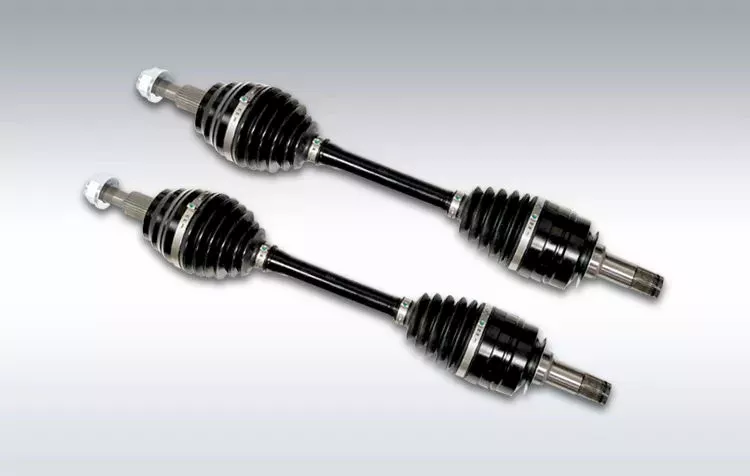
How do PTO shafts handle variations in length and connection methods?
PTO (Power Take-Off) shafts are designed to handle variations in length and connection methods to accommodate different equipment setups and ensure efficient power transfer. PTO shafts need to be adjustable in length to bridge the distance between the power source and the driven machinery. Additionally, they must provide versatile connection methods to connect to a wide range of equipment. Here’s a detailed explanation of how PTO shafts handle variations in length and connection methods:
1. Diseño telescópico: PTO shafts often feature a telescoping design, allowing them to be adjusted in length to suit different equipment configurations. The telescoping feature enables the shaft to extend or retract, accommodating varying distances between the power source (such as a tractor or engine) and the driven machinery. By adjusting the length of the PTO shaft, it can be properly aligned and connected to ensure optimal power transfer. Telescoping PTO shafts typically consist of multiple tubular sections that slide into one another, providing flexibility in length adjustment.
2. Splined Shafts: PTO shafts commonly employ splined shafts as the primary connection method between the power source and driven machinery. Splines are a series of ridges or grooves along the shaft that interlock with corresponding grooves in the mating component. The splined connection allows for torque transfer while maintaining alignment between the power source and driven machinery. Splined shafts can handle variations in length by extending or retracting the telescoping sections while still maintaining a solid connection between the power source and the driven equipment.
3. Adjustable Sliding Yokes: PTO shafts typically feature adjustable sliding yokes on one or both ends of the shaft. These yokes allow for angular adjustment, accommodating variations in the alignment between the power source and driven machinery. The sliding yokes can be moved along the splined shaft to achieve the desired angle and maintain proper alignment. This flexibility ensures that the PTO shaft can handle length variations while ensuring efficient power transfer without placing excessive strain on the universal joints or other components.
4. Universal Joints: Universal joints are integral components of PTO shafts that allow for angular misalignment between the power source and driven machinery. They consist of a cross-shaped yoke with bearings that transmit torque between connected shafts while accommodating misalignment. Universal joints provide flexibility in connecting PTO shafts to equipment that may not be perfectly aligned. As the PTO shaft length varies, the universal joints compensate for the changes in angle, allowing for smooth power transmission even when there are variations in length or misalignment between the power source and driven machinery.
5. Coupling Mechanisms: PTO shafts utilize various coupling mechanisms to securely connect to the power source and driven machinery. These mechanisms often involve a combination of splines, bolts, locking pins, or quick-release mechanisms. The coupling methods can vary depending on the specific equipment and industry requirements. The versatility of PTO shafts allows for the use of different coupling methods, ensuring a reliable and secure connection regardless of the length variation or equipment configuration.
6. Opciones de personalización: PTO shafts can be customized to handle specific length variations and connection methods. Manufacturers offer options to select different lengths of telescoping sections to match the specific distance between the power source and driven machinery. Additionally, PTO shafts can be tailored to accommodate various connection methods through the selection of splined shaft sizes, yoke designs, and coupling mechanisms. This customization enables PTO shafts to meet the specific requirements of different equipment setups, ensuring optimal power transfer and compatibility.
7. Safety Considerations: When handling variations in length and connection methods, it is essential to consider safety. PTO shafts incorporate protective guards and shields to prevent accidental contact with rotating components. These safety measures must be appropriately adjusted and installed to provide adequate coverage and protection, regardless of the PTO shaft’s length or connection configuration. Safety guidelines and regulations should be followed to ensure the proper installation, adjustment, and use of PTO shafts in order to prevent accidents or injuries.
By incorporating telescoping designs, splined shafts, adjustable sliding yokes, universal joints, and versatile coupling mechanisms, PTO shafts can handle variations in length and connection methods. The flexibility of PTO shafts allows them to adapt to different equipment setups, ensuring efficient power transfer while maintaining alignment and safety.
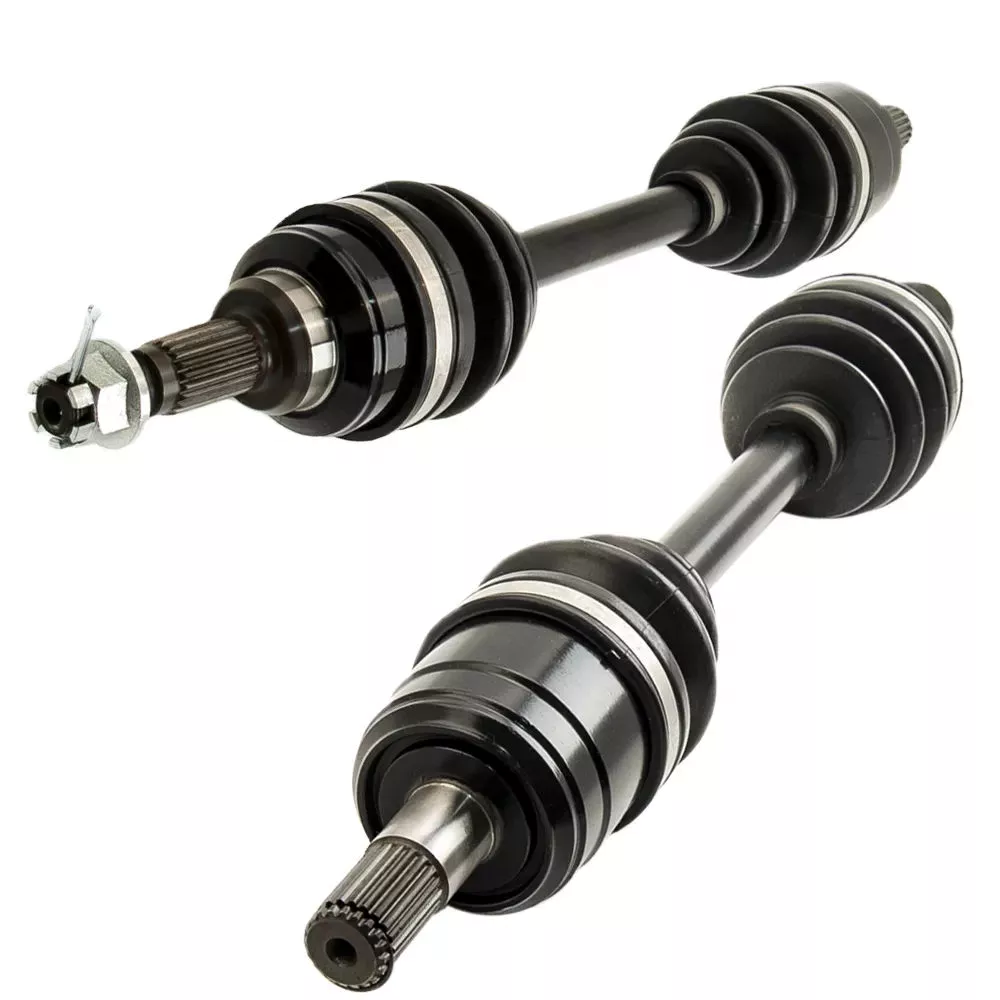
Can PTO shafts be customized for specific machinery and power requirements?
Yes, PTO (Power Take-Off) shafts can be customized to meet the specific machinery and power requirements of different applications. Manufacturers offer customization options to ensure that PTO shafts are precisely tailored to the power source, driven machinery, and the intended application. Here’s a detailed explanation of how PTO shafts can be customized:
1. Shaft Length: PTO shafts can be customized in terms of length to accommodate different equipment configurations. The length of the PTO shaft is critical to ensure proper alignment and connection between the power source and driven machinery. Manufacturers can provide PTO shafts with adjustable or fixed-length options, allowing for flexibility in meeting specific length requirements. Customizing the shaft length ensures that the PTO shaft fits the equipment properly, optimizing power transfer efficiency and reducing the risk of misalignment or excessive stress.
2. Spline Sizes: PTO shafts are available with different spline sizes to match the input and output shafts of various equipment. Spline size customization allows the PTO shaft to seamlessly connect to the power source and driven machinery. Manufacturers can offer different spline configurations, such as 1-3/8 inch, 1-3/4 inch, or metric sizes, to accommodate specific machinery requirements. Customizing the spline size ensures a proper fit and secure connection, enabling efficient power transfer without the need for additional adapters or modifications.
3. Yoke Designs: PTO shafts can be customized with different yoke designs to match the connection points on the power source and driven machinery. The yoke is the component that attaches to the shaft and connects to the equipment. Manufacturers can provide various yoke designs, such as round, triangular, or splined yokes, to ensure compatibility with specific machinery. Customizing the yoke design allows for a secure and reliable connection, aligning the PTO shaft with the equipment’s input/output shafts and optimizing power transmission efficiency.
4. Torque Ratings: PTO shafts can be customized to handle specific torque requirements based on the power demands of the application. Torque is the rotational force that the PTO shaft needs to transmit from the power source to the driven machinery. Manufacturers can design PTO shafts with different torque ratings by using appropriate materials, dimensions, and reinforcement techniques. Customizing the torque rating ensures that the PTO shaft can safely and reliably handle the required power levels without premature wear or failure.
5. Coupling Mechanisms: PTO shafts can be customized with different coupling mechanisms to match the connection requirements of specific equipment. Coupling mechanisms are the means by which the PTO shaft connects and disconnects from the power source and driven machinery. Manufacturers can provide various coupling options, such as quick-release couplings, shear pin couplings, or mechanical lock couplings, to accommodate different machinery designs and operational needs. Customizing the coupling mechanism ensures ease of use, secure attachment, and quick disengagement when necessary.
6. Protective Features: PTO shafts can be customized with additional protective features to enhance safety and durability. These features may include guard shields, safety covers, or slip clutches. Guard shields and safety covers provide physical protection by enclosing the rotating shaft and preventing accidental contact, reducing the risk of injuries. Slip clutches offer overload protection by allowing the PTO shaft to slip or disengage when excessive torque or resistance is encountered, preventing damage to the shaft and associated equipment. Customizing the protective features ensures compliance with safety regulations and addresses specific safety requirements of the machinery or application.
7. Material Selection: PTO shafts can be customized with different materials based on the application’s demands. Manufacturers can offer a range of material options, such as steel, aluminum, or composite materials, with varying strength, weight, and corrosion resistance properties. Customizing the material selection allows for optimizing the PTO shaft’s performance, considering factors like operating conditions, environmental exposure, and weight restrictions.
By providing customization options such as shaft length, spline sizes, yoke designs, torque ratings, coupling mechanisms, protective features, and material selection, manufacturers can ensure that PTO shafts are specifically tailored to meet the machinery and power requirements of different applications. Customized PTO shafts facilitate seamless integration, efficient power transfer, and reliable operation, enhancing the overall performance and productivity of the equipment.
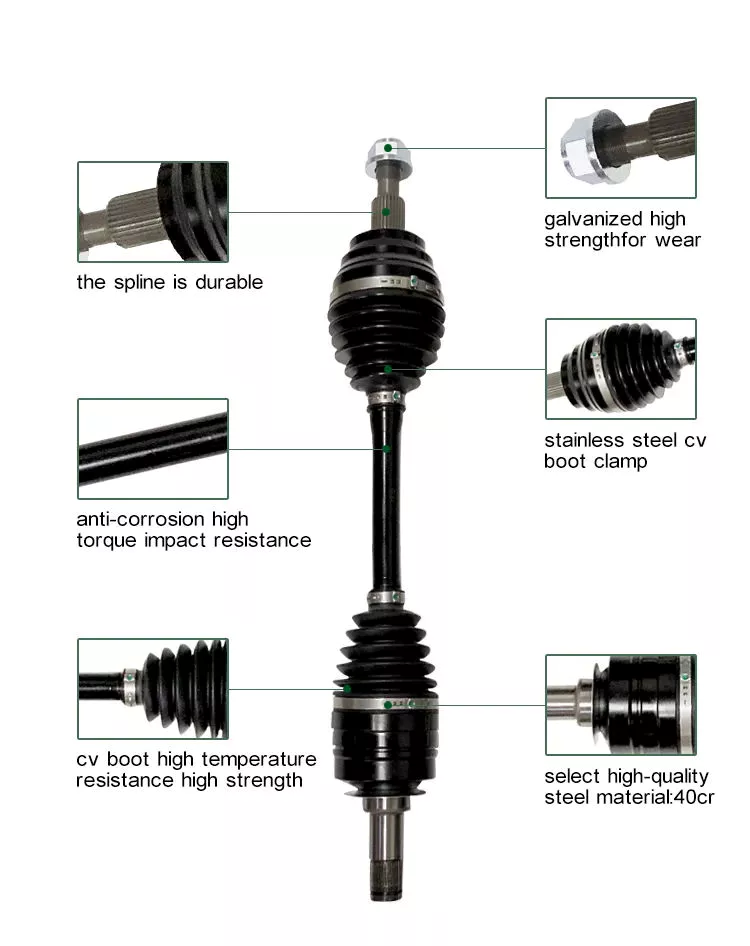
¿Podría explicar los diferentes tipos de ejes de toma de fuerza (PTO) y sus aplicaciones?
Los ejes de toma de fuerza (PTO) se presentan en varios tipos, cada uno diseñado para aplicaciones y requisitos específicos. Los diferentes tipos de ejes PTO ofrecen versatilidad y compatibilidad con una amplia gama de maquinaria e implementos. A continuación, se explican los tipos más comunes de ejes PTO y sus aplicaciones:
1. Eje de toma de fuerza estándar: El eje de toma de fuerza estándar, también conocido como eje estriado, es el tipo más común en maquinaria agrícola e industrial. Consiste en un eje de acero macizo con estrías o ranuras a lo largo de su longitud. El eje de toma de fuerza estándar suele tener seis estrías, aunque existen variantes con cuatro u ocho. Este tipo de eje se utiliza ampliamente en tractores y diversos implementos, como segadoras, empacadoras, cultivadoras y desbrozadoras rotativas. Las estrías proporcionan una conexión segura entre la fuente de energía y la maquinaria accionada, garantizando una transmisión de potencia eficiente.
2. Perno de seguridad del eje de la toma de fuerza: Los ejes de toma de fuerza con perno de seguridad están diseñados con un mecanismo que permite la separación del eje en caso de sobrecarga o impacto repentino, protegiendo así los componentes de la transmisión. Estos ejes incorporan un mecanismo de perno de seguridad que conecta la toma de fuerza del tractor con la maquinaria accionada. En caso de carga excesiva o resistencia repentina, el perno de seguridad se rompe, desconectando el eje de toma de fuerza y evitando daños a la transmisión. Los ejes de toma de fuerza con perno de seguridad se utilizan comúnmente en equipos que pueden encontrar obstáculos repentinos o situaciones de alta tensión, como trituradoras de madera, desbrozadoras de tocones y cortadoras rotativas de alta resistencia.
3. Embrague de fricción del eje de la toma de fuerza: Los ejes de toma de fuerza con embrague de fricción incorporan un mecanismo que permite un acoplamiento y desacoplamiento suaves de la transmisión de potencia. Estos ejes suelen incluir un disco de fricción y una placa de presión, similar a un sistema de embrague convencional. El embrague de fricción permite acoplar o desacoplar gradualmente la transmisión de potencia, reduciendo las cargas de impacto y minimizando el desgaste de los componentes de la transmisión. Los ejes de toma de fuerza con embrague de fricción se utilizan habitualmente en aplicaciones donde se requiere un control preciso del acoplamiento de potencia, como en bombas hidráulicas, generadores y mezcladoras industriales.
4. Eje de toma de fuerza de velocidad constante (CV): Los ejes de toma de fuerza de velocidad constante (CV PTO), también conocidos como ejes homocinéticos, están diseñados para soportar grandes ángulos de desalineación sin afectar la transmisión de potencia. Utilizan un mecanismo de junta universal que permite una transferencia de potencia fluida incluso cuando la maquinaria accionada se encuentra inclinada con respecto a la fuente de energía. Los ejes CV PTO se utilizan frecuentemente en aplicaciones donde la maquinaria requiere un amplio rango de movimiento o articulación, como en cargadoras articuladas, manipuladores telescópicos y pulverizadores autopropulsados.
5. Eje de toma de fuerza telescópico: Las tomas de fuerza telescópicas son ajustables en longitud, lo que permite flexibilidad en la configuración del equipo y variar las distancias entre la fuente de alimentación y la maquinaria accionada. Consisten en dos o más ejes concéntricos que se deslizan uno dentro del otro, permitiendo extender o retraer la toma de fuerza según sea necesario. Las tomas de fuerza telescópicas se utilizan comúnmente en aplicaciones donde la distancia entre la toma de fuerza del tractor y el implemento varía, como en implementos frontales, quitanieves y remolques autocargables. El diseño telescópico facilita la adaptación a diferentes configuraciones de equipo y minimiza el riesgo de que la toma de fuerza se arrastre por el suelo.
6. Eje de la toma de fuerza de la caja de engranajes: Los ejes de toma de fuerza con reductora están diseñados para adaptar la transmisión de potencia entre diferentes velocidades o direcciones de rotación. Incorporan un mecanismo de engranajes que permite reducir o aumentar la velocidad, así como cambiar el sentido de giro. Estos ejes se utilizan habitualmente en aplicaciones donde la maquinaria accionada requiere una velocidad o dirección de rotación diferente a la de la toma de fuerza del tractor. Algunos ejemplos son los sinfines para grano, las mezcladoras de pienso y los equipos industriales que requieren relaciones de velocidad específicas o capacidad de inversión de giro.
Es importante tener en cuenta que la disponibilidad y las aplicaciones específicas de los distintos tipos de ejes de toma de fuerza (TDF) pueden variar según factores regionales y propios de cada sector. Además, ciertas máquinas o implementos pueden requerir ejes de TDF especializados o personalizados para cumplir con requisitos específicos.
En resumen, los distintos tipos de ejes de toma de fuerza (TDF), como los estándar, de perno de seguridad, de embrague de fricción, de velocidad constante (VC), telescópicos y de caja de engranajes, ofrecen versatilidad y compatibilidad con diversas máquinas e implementos. Cada tipo de eje de TDF está diseñado para satisfacer necesidades específicas, como la eficiencia en la transferencia de potencia, la seguridad, el acoplamiento suave, la tolerancia a la desalineación, la adaptabilidad y el ajuste de velocidad y dirección. Comprender los diferentes tipos de ejes de TDF y sus aplicaciones es fundamental para seleccionar el eje adecuado para la maquinaria prevista y garantizar un rendimiento y una fiabilidad óptimos.

editor by CX 2023-09-28























