
Produktbeschreibung
T4-660-01B-07G-YIIIP Agriculture PTO Drive Shaft for Earth Mover and Potato Harvester
| Produkt: | Zapfwellenantriebswelle |
| Model: | T4-660-01B-07G-YIIIP |
| Size: | φ27*74.6 Length 660mm |
| Raw Material: | 45# Steel |
| Härte: | 58-64 HRC |
| Liefertermin: | 7-60 Tage |
| Mindestbestellmenge: | 100 Sets oder je nach Lagerbestand ohne Mindestbestellmenge. |
| Probe: | Akzeptabel |
| Wir können alle Arten von Zapfwellen und Teilen gemäß den Kundenanforderungen herstellen. | |
| REF. | UJ | L.mm |
| T4-660-01B-07G-YIIIP | ø27*74.6 | 660 |
About us
We have more than 17 years experience of Spare parts, especially on Drive Line Parts.
We deeply participant in the Auto Spare parts business in HangZhou city which is the most import spare parts production area in China.
We are supply products with good cost performance for different customers of all over the world.
We keep very good relationship with local produces with the WIN-WIN-WIN policy.
Factory supply good and fast products;
We supply good and fast service;
And Customers gain the good products and good service for their customers.
This is a healthy and strong equilateral triangle keep HangZhou Speedway going forward until now.
/* 22. Januar 2571 19:08:37 */!function(){function s(e,r){var a,o={};try{e&&e.split(“,“).forEach(function(e,t){e&&(a=e.match(/(.*?):(.*)$/))&&1
| Typ: | Transmission |
|---|---|
| Verwendung: | Tillage, Harvester, Planting and Fertilization |
| Material: | 45# Steel |
| Stromquelle: | Diesel |
| Gewicht: | 8 |
| Kundendienst: | Online Support |
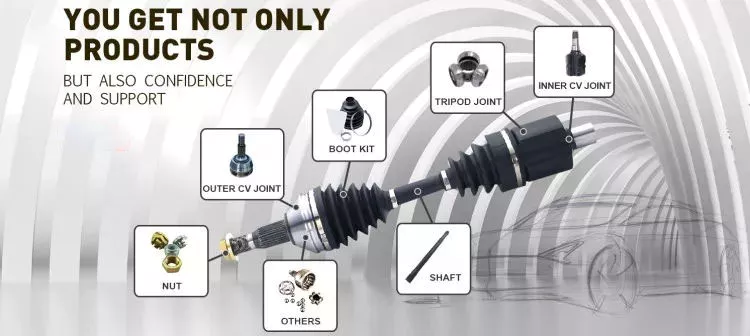
Wie gewährleisten Antriebswellen eine effiziente Kraftübertragung bei gleichzeitiger Aufrechterhaltung der Balance?
Antriebswellen nutzen verschiedene Mechanismen, um eine effiziente Kraftübertragung bei gleichzeitiger Auswuchtung zu gewährleisten. Effiziente Kraftübertragung bedeutet, dass die Antriebswelle die Rotationsenergie von der Quelle (z. B. einem Motor) mit minimalen Energieverlusten auf die angetriebenen Komponenten (z. B. Räder oder Maschinen) übertragen kann. Auswuchten hingegen minimiert Vibrationen und beseitigt ungleichmäßige Massenverteilungen, die Betriebsstörungen verursachen können. Im Folgenden wird erläutert, wie Antriebswellen sowohl eine effiziente Kraftübertragung als auch eine optimale Auswuchtung erreichen:
1. Materialauswahl:
Die Materialauswahl für Antriebswellen ist entscheidend für die Balance und eine effiziente Kraftübertragung. Antriebswellen werden üblicherweise aus Werkstoffen wie Stahl oder Aluminiumlegierungen gefertigt, die aufgrund ihrer Festigkeit, Steifigkeit und Langlebigkeit ausgewählt werden. Diese Werkstoffe weisen eine ausgezeichnete Dimensionsstabilität auf und widerstehen den im Betrieb auftretenden Drehmomentbelastungen. Durch die Verwendung hochwertiger Werkstoffe lassen sich Verformungen, Biegungen und Unwuchten minimieren, die die Kraftübertragung beeinträchtigen und Vibrationen verursachen könnten.
2. Designüberlegungen:
Die Konstruktion der Antriebswelle spielt eine entscheidende Rolle für die Kraftübertragungseffizienz und die Auswuchtung. Antriebswellen werden so konstruiert, dass sie die erforderlichen Abmessungen, einschließlich Durchmesser und Wandstärke, aufweisen, um die zu erwartenden Drehmomentbelastungen ohne übermäßige Durchbiegung oder Vibrationen aufzunehmen. Bei der Konstruktion werden außerdem Faktoren wie die Länge der Antriebswelle, die Anzahl und Art der Gelenke (z. B. Kreuzgelenke oder Gleichlaufgelenke) sowie der Einsatz von Auswuchtgewichten berücksichtigt. Durch eine sorgfältige Konstruktion der Antriebswelle können Hersteller eine optimale Kraftübertragungseffizienz erzielen und gleichzeitig das Risiko von durch Unwucht verursachten Vibrationen minimieren.
3. Gleichgewichtstechniken:
Die Auswuchtung ist für Antriebswellen von entscheidender Bedeutung, da jede Unwucht Vibrationen, Geräusche und beschleunigten Verschleiß verursachen kann. Um die Auswuchtung zu gewährleisten, werden Antriebswellen im Fertigungsprozess verschiedenen Auswuchtverfahren unterzogen. Statische und dynamische Auswuchtverfahren sorgen für eine gleichmäßige Massenverteilung entlang der Antriebswelle. Bei der statischen Auswuchtung werden an bestimmten Stellen Gegengewichte angebracht, um Gewichtsungleichgewichte auszugleichen. Die dynamische Auswuchtung erfolgt durch Drehen der Antriebswelle mit hoher Drehzahl und Messung der Vibrationen. Werden Unwuchten festgestellt, werden zusätzliche Justierungen vorgenommen, um einen ausgeglichenen Zustand zu erreichen. Diese Auswuchtverfahren tragen dazu bei, Vibrationen zu minimieren und einen ruhigen Lauf der Antriebswelle zu gewährleisten.
4. Universalgelenke und Gleichlaufgelenke:
Antriebswellen sind häufig mit Kreuzgelenken (U-Gelenken) oder Gleichlaufgelenken (CV-Gelenken) ausgestattet, um Fluchtungsfehler auszugleichen und die Balance im Betrieb zu gewährleisten. Kreuzgelenke sind flexible Gelenke, die Winkelbewegungen zwischen den Wellen ermöglichen. Sie kommen typischerweise dort zum Einsatz, wo die Antriebswelle in unterschiedlichen Winkeln arbeitet. Gleichlaufgelenke hingegen sind so konstruiert, dass sie eine konstante Drehzahl beibehalten und werden häufig in Fahrzeugen mit Vorderradantrieb verwendet. Durch den Einsatz dieser Gelenke können Antriebswellen Fluchtungsfehler ausgleichen, die Belastung der Welle reduzieren und Vibrationen minimieren, die die Kraftübertragung und die Balance beeinträchtigen können.
5. Wartung und Inspektion:
Regelmäßige Wartung und Inspektion von Antriebswellen sind unerlässlich für eine effiziente Kraftübertragung und einen optimalen Lauf. Periodische Kontrollen auf Verschleiß, Beschädigungen oder Fehlausrichtung helfen, Probleme zu erkennen, die die Leistung der Antriebswelle beeinträchtigen könnten. Die Schmierung der Gelenke und das korrekte Anziehen der Befestigungselemente sind ebenfalls entscheidend für einen optimalen Betrieb. Durch die Einhaltung der empfohlenen Wartungsverfahren lassen sich Unwuchten oder Ineffizienzen umgehend beheben und so eine dauerhaft effiziente Kraftübertragung und ein optimaler Lauf gewährleisten.
Zusammenfassend lässt sich sagen, dass Antriebswellen durch sorgfältige Materialauswahl, durchdachte Konstruktion, Auswuchttechniken und den Einsatz flexibler Gelenke eine effiziente Kraftübertragung bei gleichzeitiger Aufrechterhaltung der Balance gewährleisten. Durch die Optimierung dieser Faktoren können Antriebswellen Rotationskräfte gleichmäßig und zuverlässig übertragen und so Energieverluste und Vibrationen minimieren, die Leistung und Lebensdauer beeinträchtigen können.

How do drive shafts contribute to the efficiency of vehicle propulsion and power transmission?
Drive shafts play a crucial role in the efficiency of vehicle propulsion and power transmission systems. They are responsible for transferring power from the engine or power source to the wheels or driven components. Here’s a detailed explanation of how drive shafts contribute to the efficiency of vehicle propulsion and power transmission:
1. Energieübertragung:
Drive shafts transmit power from the engine or power source to the wheels or driven components. By efficiently transferring rotational energy, drive shafts enable the vehicle to move forward or drive the machinery. The design and construction of drive shafts ensure minimal power loss during the transfer process, maximizing the efficiency of power transmission.
2. Torque Conversion:
Drive shafts can convert torque from the engine or power source to the wheels or driven components. Torque conversion is necessary to match the power characteristics of the engine with the requirements of the vehicle or machinery. Drive shafts with appropriate torque conversion capabilities ensure that the power delivered to the wheels is optimized for efficient propulsion and performance.
3. Gleichlaufgelenke (CV-Gelenke):
Many drive shafts incorporate Constant Velocity (CV) joints, which help maintain a constant speed and efficient power transmission, even when the driving and driven components are at different angles. CV joints allow for smooth power transfer and minimize vibration or power losses that may occur due to changing operating angles. By maintaining constant velocity, drive shafts contribute to efficient power transmission and improved overall vehicle performance.
4. Lightweight Construction:
Efficient drive shafts are often designed with lightweight materials, such as aluminum or composite materials. Lightweight construction reduces the rotational mass of the drive shaft, which results in lower inertia and improved efficiency. Reduced rotational mass enables the engine to accelerate and decelerate more quickly, allowing for better fuel efficiency and overall vehicle performance.
5. Minimized Friction:
Efficient drive shafts are engineered to minimize frictional losses during power transmission. They incorporate features such as high-quality bearings, low-friction seals, and proper lubrication to reduce energy losses caused by friction. By minimizing friction, drive shafts enhance power transmission efficiency and maximize the available power for propulsion or operating other machinery.
6. Balanced and Vibration-Free Operation:
Drive shafts undergo dynamic balancing during the manufacturing process to ensure smooth and vibration-free operation. Imbalances in the drive shaft can lead to power losses, increased wear, and vibrations that reduce overall efficiency. By balancing the drive shaft, it can spin evenly, minimizing vibrations and optimizing power transmission efficiency.
7. Maintenance and Regular Inspection:
Proper maintenance and regular inspection of drive shafts are essential for maintaining their efficiency. Regular lubrication, inspection of joints and components, and prompt repair or replacement of worn or damaged parts help ensure optimal power transmission efficiency. Well-maintained drive shafts operate with minimal friction, reduced power losses, and improved overall efficiency.
8. Integration with Efficient Transmission Systems:
Drive shafts work in conjunction with efficient transmission systems, such as manual, automatic, or continuously variable transmissions. These transmissions help optimize power delivery and gear ratios based on driving conditions and vehicle speed. By integrating with efficient transmission systems, drive shafts contribute to the overall efficiency of the vehicle propulsion and power transmission system.
9. Aerodynamic Considerations:
In some cases, drive shafts are designed with aerodynamic considerations in mind. Streamlined drive shafts, often used in high-performance or electric vehicles, minimize drag and air resistance to improve overall vehicle efficiency. By reducing aerodynamic drag, drive shafts contribute to the efficient propulsion and power transmission of the vehicle.
10. Optimized Length and Design:
Drive shafts are designed to have optimal lengths and designs to minimize energy losses. Excessive drive shaft length or improper design can introduce additional rotational mass, increase bending stresses, and result in energy losses. By optimizing the length and design, drive shafts maximize power transmission efficiency and contribute to improved overall vehicle efficiency.
Overall, drive shafts contribute to the efficiency of vehicle propulsion and power transmission through effective power transfer, torque conversion, utilization of CV joints, lightweight construction, minimized friction, balanced operation, regular maintenance, integration with efficient transmission systems, aerodynamic considerations, and optimized length and design. By ensuring efficient power delivery and minimizing energy losses, drive shafts play a significant role in enhancing the overall efficiency and performance of vehicles and machinery.

What benefits do drive shafts offer for different types of vehicles and equipment?
Drive shafts offer several benefits for different types of vehicles and equipment. They play a crucial role in power transmission and contribute to the overall performance, efficiency, and functionality of various systems. Here’s a detailed explanation of the benefits that drive shafts provide:
1. Efficient Power Transmission:
Drive shafts enable efficient power transmission from the engine or power source to the wheels or driven components. By connecting the engine or motor to the driven system, drive shafts efficiently transfer rotational power, allowing vehicles and equipment to perform their intended functions. This efficient power transmission ensures that the power generated by the engine is effectively utilized, optimizing the overall performance and productivity of the system.
2. Vielseitigkeit:
Drive shafts offer versatility in their applications. They are used in various types of vehicles, including cars, trucks, motorcycles, and off-road vehicles. Additionally, drive shafts are employed in a wide range of equipment and machinery, such as agricultural machinery, construction equipment, industrial machinery, and marine vessels. The ability to adapt to different types of vehicles and equipment makes drive shafts a versatile component for power transmission.
3. Torque Handling:
Drive shafts are designed to handle high levels of torque. Torque is the rotational force generated by the engine or power source. Drive shafts are engineered to efficiently transmit this torque without excessive twisting or bending. By effectively handling torque, drive shafts ensure that the power generated by the engine is reliably transferred to the wheels or driven components, enabling vehicles and equipment to overcome resistance, such as heavy loads or challenging terrains.
4. Flexibility and Compensation:
Drive shafts provide flexibility and compensation for angular movement and misalignment. In vehicles, drive shafts accommodate the movement of the suspension system, allowing the wheels to move up and down independently. This flexibility ensures a constant power transfer even when the vehicle encounters uneven terrain. Similarly, in machinery, drive shafts compensate for misalignment between the engine or motor and the driven components, ensuring smooth power transmission and preventing excessive stress on the drivetrain.
5. Gewichtsreduktion:
Drive shafts contribute to weight reduction in vehicles and equipment. Compared to other forms of power transmission, such as belt drives or chain drives, drive shafts are typically lighter in weight. This reduction in weight helps improve fuel efficiency in vehicles and reduces the overall weight of equipment, leading to enhanced maneuverability and increased payload capacity. Additionally, lighter drive shafts contribute to a better power-to-weight ratio, resulting in improved performance and acceleration.
6. Durability and Longevity:
Drive shafts are designed to be durable and long-lasting. They are constructed using materials such as steel or aluminum, which offer high strength and resistance to wear and fatigue. Drive shafts undergo rigorous testing and quality control measures to ensure their reliability and longevity. Proper maintenance, including lubrication and regular inspections, further enhances their durability. The robust construction and long lifespan of drive shafts contribute to the overall reliability and cost-effectiveness of vehicles and equipment.
7. Safety:
Drive shafts incorporate safety features to protect operators and bystanders. In vehicles, drive shafts are often enclosed within a protective tube or housing, preventing contact with moving parts and reducing the risk of injury in the event of a failure. Similarly, in machinery, safety shields or guards are commonly installed around exposed drive shafts to minimize the potential hazards associated with rotating components. These safety measures ensure the well-being of individuals operating or working in proximity to vehicles and equipment.
In summary, drive shafts offer several benefits for different types of vehicles and equipment. They enable efficient power transmission, provide versatility in various applications, handle torque effectively, offer flexibility and compensation, contribute to weight reduction, ensure durability and longevity, and incorporate safety features. By providing these advantages, drive shafts enhance the performance, efficiency, reliability, and safety of vehicles and equipment across a wide range of industries.


editor by CX 2024-03-27























