
Produktbeskrivelse
| Tractor Pto Shaft |
1. Product Description
|
2. More Products
3. The Structure Of PTO Shaft
4. Installing Process
5. Packing and Shipping
6.Our Company
HangZhou CHINAMFG Tech.Machinery Co.,Ltd was founded in 2003. It is located at HangZhou County, HangZhou City, closed to 204 National Road.Our main products: 1. all kinds of drive shaft 2.all kinds of gera box 3. Farm machinery: IMT500 inorganic fertilizer spreader, HMT05S organic fertilizer spreader, 3M rotovator , 3M wet-paddy field rotary, King 185 deep cultviating machine and so on. 4.The machinery parts: many kinds of Gear, Shaft, Flang, ,Gear box, Laser parts, Stamping parts and so on.
7. FAQ
1. Q: Are your products forged or cast?
A: All of our products are forged.
2. Q: What’s your MOQ?
A: 20 PCS for each type. We accept the sample order.
3. Q: What’s the horse power of the pto shaft are available?
A: We provide a full range of pto shaft, ranging from 16HP-200HP.
4. Q: How many splined specification do you have ?
A: We produce 1 1/8″-Z6, 1 3/8″-Z6, 1 3/4″-Z6, 1 3/8″- Z21, 1 3/4″-Z20, 8X42X48X8 and 8X32X38X6 splines.
5. Q: How about the warranty?
A: We guarantee 1 year warranty. With quality problems, we will send you the new products for free within next shipment.
6. Q: What’s your payment terms?
A: T/T, L/C, D/A, D/P….
7. Q: What is the delivery time?
A: 40 days after receiving your advanced deposit.
| Materiale: | Kulstofstål |
|---|---|
| Indlæs: | Drivaksel |
| Stivhed og fleksibilitet: | Stivhed / Stiv aksel |
| Akseform: | Lige skaft |
| Udseende Form: | Rund |
| Design: | Tilpasset |
| Tilpasning: |
Tilgængelig
| Tilpasset anmodning |
|---|
How do manufacturers ensure the compatibility of PTO shafts with different equipment?
Manufacturers employ various measures to ensure the compatibility of PTO (Power Take-Off) shafts with different equipment. Compatibility is crucial to ensure that PTO shafts can effectively transfer power from the power source to the driven machinery without compromising performance, safety, or ease of use. Here’s a detailed explanation of how manufacturers ensure compatibility:
1. Standardisering: PTO shafts are designed and manufactured based on standardized specifications. These specifications outline the essential parameters such as shaft dimensions, spline sizes, torque ratings, and safety requirements. By adhering to standardized designs, manufacturers ensure that PTO shafts are compatible with a wide range of equipment that meets the same standards. Standardization allows for interchangeability, meaning that PTO shafts from one manufacturer can be used with equipment from another manufacturer as long as they conform to the same specifications.
2. Collaboration with Equipment Manufacturers: PTO shaft manufacturers often collaborate closely with equipment manufacturers to ensure compatibility. They work together to understand the specific requirements of the equipment and design PTO shafts that seamlessly integrate with the machinery. This collaboration may involve sharing technical specifications, conducting joint testing, and exchanging feedback. By working in partnership, manufacturers can address any compatibility issues early in the design and development process, resulting in PTO shafts that are tailored to the equipment’s needs.
3. Tilpasningsmuligheder: PTO shaft manufacturers offer customization options to accommodate different equipment configurations. They provide flexibility in terms of shaft length, spline sizes, yoke designs, and coupling mechanisms. Equipment manufacturers can specify the required parameters, and the PTO shafts can be customized accordingly. This ensures that the PTO shafts precisely match the equipment’s power input/output requirements and connection methods, guaranteeing compatibility and efficient power transfer.
4. Testing and Validation: Manufacturers conduct rigorous testing and validation processes to ensure the compatibility and performance of PTO shafts. They subject the shafts to various tests, including torque testing, rotational speed testing, and durability testing. These tests verify that the PTO shafts can handle the expected power loads and operating conditions without failure. By validating the performance of the PTO shafts, manufacturers can ensure that they are compatible with a wide range of equipment and can reliably transfer power under different operating scenarios.
5. Compliance with Industry Standards: PTO shaft manufacturers adhere to industry standards and regulations to ensure compatibility. Organizations such as the American Society of Agricultural and Biological Engineers (ASABE) establish safety and performance standards for PTO shafts. Manufacturers design and produce their shafts in accordance with these standards, ensuring that their products meet the necessary requirements for compatibility and safety. Compliance with industry standards provides assurance to equipment manufacturers and end-users that the PTO shafts are compatible and suitable for use with different equipment.
6. Documentation and Guidelines: Manufacturers provide comprehensive documentation and guidelines to assist equipment manufacturers and end-users in ensuring compatibility. This documentation includes technical specifications, installation instructions, maintenance guidelines, and safety recommendations. The documentation helps equipment manufacturers select the appropriate PTO shaft for their equipment and provides guidance on proper installation and use. By following the manufacturer’s guidelines, equipment manufacturers can ensure compatibility and optimize the performance of the PTO shafts.
7. Løbende forskning og udvikling: PTO shaft manufacturers continuously invest in research and development to enhance compatibility with different equipment. They stay updated with industry trends, technological advancements, and evolving equipment requirements. This ongoing research and development enable manufacturers to improve the design, materials, and features of PTO shafts, ensuring compatibility with the latest equipment innovations and addressing any compatibility challenges that may arise.
By employing standardization, collaborating with equipment manufacturers, offering customization options, conducting thorough testing, complying with industry standards, providing documentation and guidelines, and investing in research and development, manufacturers ensure the compatibility of PTO shafts with different equipment. This compatibility allows for seamless integration, efficient power transfer, and optimal performance across a wide range of machinery and equipment in various industries.
Er der nogen begrænsninger eller ulemper forbundet med PTO-aksler?
Selvom PTO-aksler (Power Take-Off) tilbyder adskillige fordele med hensyn til kraftoverførsel og alsidighed, har de også visse begrænsninger og ulemper. Det er vigtigt at overveje disse faktorer, når man bruger PTO-aksler, for at sikre sikker og effektiv drift. Her er en detaljeret forklaring af nogle begrænsninger og ulemper forbundet med PTO-aksler:
1. Sikkerhedsfarer: En af de primære bekymringer vedrørende PTO-aksler er potentialet for sikkerhedsrisici. PTO-aksler roterer med høje hastigheder og kan udgøre en betydelig risiko, hvis de ikke er korrekt beskyttet eller håndteret. Utilsigtet kontakt med en eksponeret eller utilstrækkeligt afskærmet PTO-aksel kan resultere i alvorlige skader, herunder sammenfiltring, amputation eller endda dødsfald. Det er afgørende at følge sikkerhedsretningslinjerne, implementere korrekt afskærmning og sikre, at operatører er veluddannede i sikker håndteringspraksis for at mindske disse risici.
2. Vedligeholdelse og smøring: PTO-aksler kræver regelmæssig vedligeholdelse og smøring for at sikre optimal ydeevne og levetid. De bevægelige dele, såsom universalled og splines, skal inspiceres, rengøres og smøres med de anbefalede intervaller. Forsømmelse af vedligeholdelse kan føre til for tidligt slid, nedsat effektivitet og potentielle fejl. Korrekt vedligeholdelsespraksis, herunder regelmæssige inspektioner og rettidig smøring, er afgørende for at afbøde disse problemer.
3. Justering og vinkler: Kraftoverføringsaksler er afhængige af korrekt justering og vinkler for at sikre effektiv kraftoverførsel. Forkert justering eller for store vinkler mellem kraftkilden og det drevne maskineri kan forårsage øget slid og belastning på komponenterne, hvilket fører til for tidlig svigt. Det er vigtigt at sikre korrekt justering og vinkeljustering ved hjælp af justerbare glidegafler eller andre midler for at forhindre overdreven belastning på kraftoverføringsakslen og tilhørende udstyr.
4. Længdebegrænsninger: Kraftudtagsaksler har begrænsninger på deres maksimale og minimale længde på grund af tekniske begrænsninger. Teleskopdesignet giver mulighed for justering, men der er en praktisk grænse for, hvor meget akslen kan forlænges eller trækkes tilbage. Hvis afstanden mellem kraftkilden og det drevne maskineri overstiger den maksimale eller falder til under den minimale længde af kraftudtagsakslen, kan alternative løsninger eller ændringer være nødvendige. I nogle tilfælde kan yderligere komponenter såsom drivakselforlængere eller gearkasser være nødvendige for at bygge bro over afstanden.
5. Kompatibilitet: Selvom producenter stræber efter at sikre kompatibilitet, kan der stadig være udfordringer med at finde den rigtige PTO-aksel til specifikke udstyrskonfigurationer. Udstyr kan have unikke krav med hensyn til spline-størrelser, momentværdier eller tilslutningsmetoder, der muligvis ikke er let tilgængelige eller kompatible med standard PTO-aksler. Tilpasning kan være nødvendig for at løse disse kompatibilitetsproblemer, hvilket kan resultere i øgede omkostninger eller leveringstider.
6. Støj og vibrationer: Kraftudtagsaksler kan under drift generere betydelig støj og vibrationer, især ved højere hastigheder. Dette kan være til gene for førere og kan kræve yderligere foranstaltninger for at reducere støjniveauet eller dæmpe vibrationer. For store vibrationer kan også påvirke den samlede ydeevne og levetid for kraftudtagsakslen og det tilsluttede udstyr. Implementering af vibrationsdæmpere eller brug af fleksible koblinger kan hjælpe med at afbøde disse problemer.
7. Effektgrænser: Kraftoverføringsaksler har specifikke effektgrænser baseret på deres design, materialer og komponenter. Overskridelse af disse effektgrænser kan føre til for tidligt slid, komponentfejl eller endda akselbrud. Det er afgørende at forstå og overholde de anbefalede effektmærkninger for kraftoverføringsaksler for at sikre sikker og pålidelig drift. I nogle tilfælde kan det være nødvendigt at opgradere til en kraftoverføringsaksel med højere kapacitet eller implementere yderligere kraftoverføringskomponenter for at imødekomme højere effektkrav.
8. Kompleks installation og fjernelse: Montering og afmontering af PTO-aksler kan være en kompleks proces, især i trange rum eller ved håndtering af tungt udstyr. Det kan kræve justering af splines, indkobling af koblinger og sikring af låsemekanismer. Forkerte monterings- eller afmonteringsteknikker kan føre til beskadigelse af akslen eller tilhørende udstyr. Korrekt træning, håndtering af udstyr og overholdelse af producentens retningslinjer er afgørende for at forenkle og sikre sikker montering og afmontering af PTO-aksler.
Trods disse begrænsninger og ulemper er PTO-aksler fortsat meget anvendte og værdifulde komponenter til kraftoverførsel i forskellige industrier. Ved at tage hensyn til disse overvejelser og implementere passende sikkerhedsforanstaltninger, vedligeholdelsespraksis og justeringsprocedurer kan de potentielle ulemper ved PTO-aksler effektivt afbødes, hvilket muliggør sikker og effektiv drift.

How do PTO shafts contribute to transferring power from tractors to implements?
PTO shafts (Power Take-Off shafts) play a critical role in transferring power from tractors to implements in agricultural and industrial settings. They provide a reliable and efficient means of power transmission, enabling tractors to drive various implements and perform a wide range of tasks. Here’s a detailed explanation of how PTO shafts contribute to transferring power from tractors to implements:
Strømkilde: Tractors are equipped with powerful engines designed to generate substantial amounts of mechanical power. This power is harnessed to drive the tractor’s wheels and operate hydraulic systems, as well as to provide power for the attachment of implements through the PTO shaft. The PTO shaft typically connects to the rear or side of the tractor, where the power take-off mechanism is located. The power take-off derives power directly from the tractor’s engine or transmission, allowing for efficient power transfer to the PTO shaft.
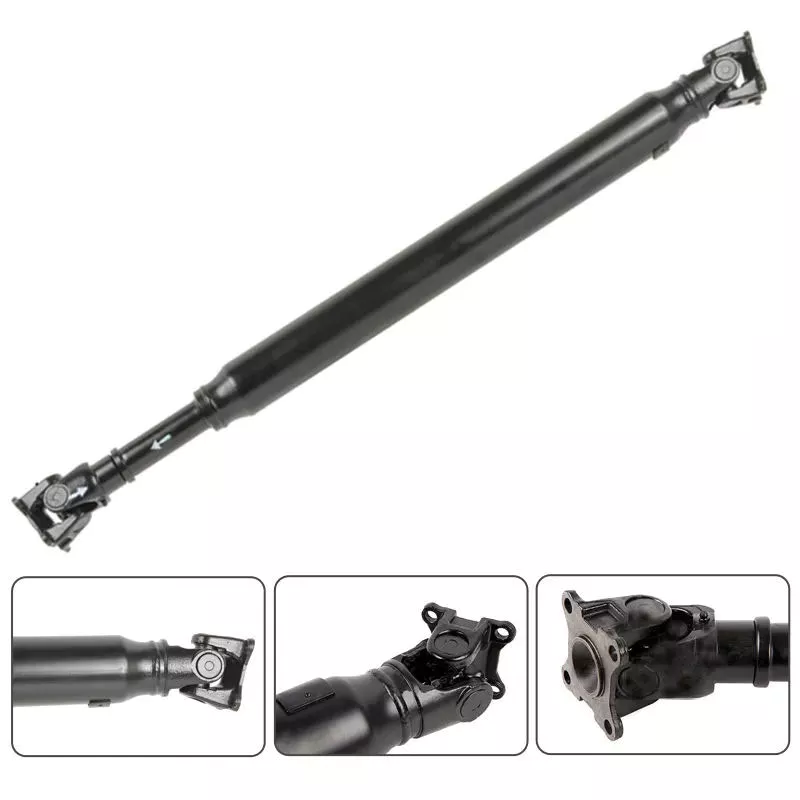
PTO Shaft Design: PTO shafts are designed as driveline components that transmit rotational power and torque from the tractor’s power take-off to the implement. They consist of a hollow metal tube with universal joints at each end. The universal joints accommodate angular misalignments and allow the PTO shaft to transmit power even when the tractor and implement are not perfectly aligned. The PTO shaft is also equipped with a safety shield or guard to prevent accidental contact with the rotating shaft, ensuring operator safety during operation.
PTO Engagement: To transfer power from the tractor to the implement, the PTO shaft needs to be engaged. Tractors are equipped with a PTO clutch mechanism that allows operators to engage or disengage the PTO shaft as needed. When the PTO clutch is engaged, power flows from the tractor’s engine through the power take-off mechanism and into the PTO shaft. This rotational power is then transmitted through the PTO shaft to the implement, driving its working components.
Rotational Power Transmission: The rotational power generated by the tractor’s engine is transferred to the PTO shaft through the power take-off mechanism. The PTO shaft, being directly connected to the power take-off, rotates at the same speed as the engine. This rotational power is then transmitted from the PTO shaft to the implement’s driveline or gearbox. The implement’s driveline, in turn, distributes the power to the implement’s working components, such as blades, augers, or pumps, enabling them to carry out their respective functions.
Matching Speed and Power: PTO shafts are designed to match the rotational speed and power requirements of various implements. Tractors often feature multiple speed settings for the PTO, allowing operators to select the appropriate speed for the specific implement being used. Different implements may require different rotational speeds to operate optimally, and the PTO shaft allows for easy adjustment to match those requirements. Additionally, the power generated by the tractor’s engine is transmitted through the PTO shaft, providing the necessary torque to drive the implement’s working components effectively.
Versatility and Efficiency: PTO shafts offer significant versatility and efficiency in agricultural and industrial operations. They allow tractors to power a wide range of implements, including mowers, balers, tillers, sprayers, and grain augers, among others. By connecting implements directly to the tractor’s power source, operators can quickly switch between tasks without the need for separate power generators or engines. This versatility and efficiency streamline workflow, reduce costs, and increase overall productivity in agricultural and industrial settings.
Safety Considerations: While PTO shafts are essential for power transmission, they can pose safety risks if mishandled. The rotating shaft and universal joints can cause severe injuries if operators come into contact with them while in operation. That’s why PTO shafts are equipped with safety shields or guards to prevent accidental contact. Operators should always ensure that the safety shields are in place and secure before engaging the PTO shaft. Proper training, adherence to safety guidelines, and regular maintenance of PTO shafts and associated safety features are crucial to ensuring safe operation.
In summary, PTO shafts are vital components that enable the transfer of power from tractors to implements in agricultural and industrial applications. They provide a reliable and efficient means of power transmission, allowing tractors to drive various implements and perform a wide range of tasks. By engaging the PTO clutch and transmitting rotational power through the PTO shaft, tractors power the working components of implements, providing versatility, efficiency, and productivity in agricultural and industrial operations.


editor by CX 2023-10-01























