
Descrição do produto
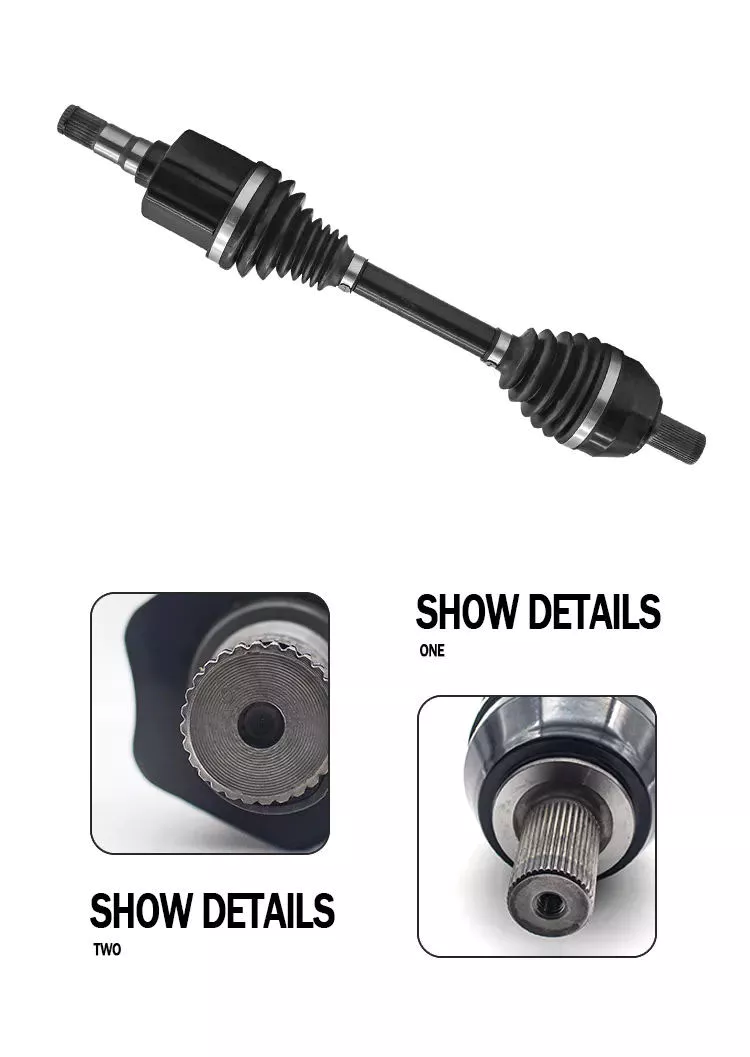
| Tractor Pto Shaft |
1. Product Description
|
2. More Products
3. The Structure Of PTO Shaft
4. Installing Process
5. Packing and Shipping
6.Our Company
HangZhou CHINAMFG Tech.Machinery Co.,Ltd was founded in 2003. It is located at HangZhou County, HangZhou City, closed to 204 National Road.Our main products: 1. all kinds of drive shaft 2.all kinds of gera box 3. Farm machinery: IMT500 inorganic fertilizer spreader, HMT05S organic fertilizer spreader, 3M rotovator , 3M wet-paddy field rotary, King 185 deep cultviating machine and so on. 4.The machinery parts: many kinds of Gear, Shaft, Flang, ,Gear box, Laser parts, Stamping parts and so on.
7. FAQ
1. Q: Are your products forged or cast?
A: All of our products are forged.
2. Q: What’s your MOQ?
A: 20 PCS for each type. We accept the sample order.
3. Q: What’s the horse power of the pto shaft are available?
A: We provide a full range of pto shaft, ranging from 16HP-200HP.
4. Q: How many splined specification do you have ?
A: We produce 1 1/8″-Z6, 1 3/8″-Z6, 1 3/4″-Z6, 1 3/8″- Z21, 1 3/4″-Z20, 8X42X48X8 and 8X32X38X6 splines.
5. Q: How about the warranty?
A: We guarantee 1 year warranty. With quality problems, we will send you the new products for free within next shipment.
6. Q: What’s your payment terms?
A: T/T, L/C, D/A, D/P….
7. Q: What is the delivery time?
A: 40 days after receiving your advanced deposit.
| Material: | Aço carbono |
|---|---|
| Carregar: | Eixo de transmissão |
| Rigidez e flexibilidade: | Rigidez / Eixo Rígido |
| Formato do eixo: | Eixo reto |
| Formato da aparência: | Redondo |
| Projeto: | Personalizado |
| Personalização: |
Disponível
| Solicitação personalizada |
|---|
How do manufacturers ensure the compatibility of PTO shafts with different equipment?
Manufacturers employ various measures to ensure the compatibility of PTO (Power Take-Off) shafts with different equipment. Compatibility is crucial to ensure that PTO shafts can effectively transfer power from the power source to the driven machinery without compromising performance, safety, or ease of use. Here’s a detailed explanation of how manufacturers ensure compatibility:
1. Padronização: PTO shafts are designed and manufactured based on standardized specifications. These specifications outline the essential parameters such as shaft dimensions, spline sizes, torque ratings, and safety requirements. By adhering to standardized designs, manufacturers ensure that PTO shafts are compatible with a wide range of equipment that meets the same standards. Standardization allows for interchangeability, meaning that PTO shafts from one manufacturer can be used with equipment from another manufacturer as long as they conform to the same specifications.
2. Collaboration with Equipment Manufacturers: PTO shaft manufacturers often collaborate closely with equipment manufacturers to ensure compatibility. They work together to understand the specific requirements of the equipment and design PTO shafts that seamlessly integrate with the machinery. This collaboration may involve sharing technical specifications, conducting joint testing, and exchanging feedback. By working in partnership, manufacturers can address any compatibility issues early in the design and development process, resulting in PTO shafts that are tailored to the equipment’s needs.
3. Opções de personalização: PTO shaft manufacturers offer customization options to accommodate different equipment configurations. They provide flexibility in terms of shaft length, spline sizes, yoke designs, and coupling mechanisms. Equipment manufacturers can specify the required parameters, and the PTO shafts can be customized accordingly. This ensures that the PTO shafts precisely match the equipment’s power input/output requirements and connection methods, guaranteeing compatibility and efficient power transfer.
4. Testing and Validation: Manufacturers conduct rigorous testing and validation processes to ensure the compatibility and performance of PTO shafts. They subject the shafts to various tests, including torque testing, rotational speed testing, and durability testing. These tests verify that the PTO shafts can handle the expected power loads and operating conditions without failure. By validating the performance of the PTO shafts, manufacturers can ensure that they are compatible with a wide range of equipment and can reliably transfer power under different operating scenarios.
5. Compliance with Industry Standards: PTO shaft manufacturers adhere to industry standards and regulations to ensure compatibility. Organizations such as the American Society of Agricultural and Biological Engineers (ASABE) establish safety and performance standards for PTO shafts. Manufacturers design and produce their shafts in accordance with these standards, ensuring that their products meet the necessary requirements for compatibility and safety. Compliance with industry standards provides assurance to equipment manufacturers and end-users that the PTO shafts are compatible and suitable for use with different equipment.
6. Documentation and Guidelines: Manufacturers provide comprehensive documentation and guidelines to assist equipment manufacturers and end-users in ensuring compatibility. This documentation includes technical specifications, installation instructions, maintenance guidelines, and safety recommendations. The documentation helps equipment manufacturers select the appropriate PTO shaft for their equipment and provides guidance on proper installation and use. By following the manufacturer’s guidelines, equipment manufacturers can ensure compatibility and optimize the performance of the PTO shafts.
7. Pesquisa e Desenvolvimento em Andamento: PTO shaft manufacturers continuously invest in research and development to enhance compatibility with different equipment. They stay updated with industry trends, technological advancements, and evolving equipment requirements. This ongoing research and development enable manufacturers to improve the design, materials, and features of PTO shafts, ensuring compatibility with the latest equipment innovations and addressing any compatibility challenges that may arise.
By employing standardization, collaborating with equipment manufacturers, offering customization options, conducting thorough testing, complying with industry standards, providing documentation and guidelines, and investing in research and development, manufacturers ensure the compatibility of PTO shafts with different equipment. This compatibility allows for seamless integration, efficient power transfer, and optimal performance across a wide range of machinery and equipment in various industries.

Existem limitações ou desvantagens associadas aos eixos de tomada de força (PTO)?
Embora os eixos de tomada de força (PTO) ofereçam inúmeras vantagens em termos de transferência de potência e versatilidade, eles também apresentam certas limitações e desvantagens. É importante considerar esses fatores ao usar eixos de tomada de força para garantir uma operação segura e eficiente. Aqui está uma explicação detalhada de algumas limitações e desvantagens associadas aos eixos de tomada de força:
1. Riscos à segurança: Uma das principais preocupações com os eixos de tomada de força (TDF) é o potencial de riscos à segurança. Os eixos de TDF giram em alta velocidade e podem representar um risco significativo se não forem devidamente protegidos ou manuseados com cuidado. O contato acidental com um eixo de TDF exposto ou inadequadamente protegido pode resultar em ferimentos graves, incluindo emaranhamento, amputação ou até mesmo fatalidades. É crucial seguir as diretrizes de segurança, implementar proteções adequadas e garantir que os operadores sejam bem treinados em práticas de manuseio seguro para mitigar esses riscos.
2. Manutenção e Lubrificação: Os eixos da tomada de força (TDF) requerem manutenção e lubrificação regulares para garantir desempenho ideal e maior vida útil. As peças móveis, como juntas universais e estrias, precisam ser inspecionadas, limpas e lubrificadas nos intervalos recomendados. Negligenciar a manutenção pode levar ao desgaste prematuro, à diminuição da eficiência e a possíveis falhas. Práticas adequadas de manutenção, incluindo inspeções regulares e lubrificação oportuna, são essenciais para mitigar esses problemas.
3. Alinhamento e ângulos: Os eixos da tomada de força (TDF) dependem de alinhamento e ângulos corretos para garantir a transferência eficiente de potência. O desalinhamento ou ângulos excessivos entre a fonte de energia e o equipamento acionado podem causar maior desgaste e tensão nos componentes, levando a falhas prematuras. Garantir o alinhamento e o ajuste de ângulo corretos, utilizando garfos deslizantes ajustáveis ou outros meios, é importante para evitar estresse excessivo no eixo da TDF e nos equipamentos associados.
4. Limitações de comprimento: Os eixos da tomada de força (TDF) têm limitações quanto ao seu comprimento máximo e mínimo devido a restrições de engenharia. O design telescópico permite algum ajuste, mas existe um limite prático para o quanto o eixo pode se estender ou retrair. Se a distância entre a fonte de energia e a máquina acionada exceder o comprimento máximo ou for menor que o comprimento mínimo do eixo da TDF, soluções alternativas ou modificações podem ser necessárias. Em alguns casos, componentes adicionais, como extensões do eixo de transmissão ou caixas de engrenagens, podem ser necessários para compensar a distância.
5. Compatibilidade: Embora os fabricantes se esforcem para garantir a compatibilidade, ainda podem existir desafios na busca pelo eixo de tomada de força (TDF) adequado para configurações específicas de equipamentos. Os equipamentos podem ter requisitos exclusivos em termos de dimensões das estrias, classificações de torque ou métodos de conexão que podem não estar prontamente disponíveis ou serem incompatíveis com eixos de TDF padrão. A personalização pode ser necessária para solucionar esses problemas de compatibilidade, o que pode resultar em aumento de custos ou prazos de entrega.
6. Ruído e vibrações: Eixos de tomada de força (TDF) em operação podem gerar ruídos e vibrações significativas, especialmente em altas velocidades. Isso pode ser incômodo para os operadores e exigir medidas adicionais para reduzir os níveis de ruído ou amortecer as vibrações. Vibrações excessivas também podem afetar o desempenho geral e a vida útil do eixo da TDF e dos equipamentos conectados. A implementação de amortecedores de vibração ou o uso de acoplamentos flexíveis podem ajudar a mitigar esses problemas.
7. Limites de potência: Os eixos de tomada de força (TDF) possuem limites de potência específicos, baseados em seu projeto, materiais e componentes. Exceder esses limites de potência pode levar ao desgaste prematuro, falhas de componentes ou até mesmo à quebra do eixo. É crucial compreender e respeitar as classificações de potência recomendadas para os eixos de TDF, a fim de garantir uma operação segura e confiável. Em alguns casos, pode ser necessário atualizar para um eixo de TDF de maior capacidade ou implementar componentes adicionais de transmissão de potência para atender a requisitos de potência mais elevados.
8. Instalação e remoção complexas: A instalação e remoção de eixos de tomada de força (TDF) pode ser um processo complexo, especialmente em espaços confinados ou ao lidar com equipamentos pesados. Pode exigir o alinhamento de estrias, o encaixe de acoplamentos e a fixação de mecanismos de travamento. Técnicas inadequadas de instalação ou remoção podem danificar o eixo ou o equipamento associado. Treinamento adequado, manuseio correto dos equipamentos e o cumprimento das diretrizes do fabricante são essenciais para simplificar e garantir a instalação e remoção seguras dos eixos de TDF.
Apesar dessas limitações e desvantagens, os eixos de tomada de força (PTO) continuam sendo componentes valiosos e amplamente utilizados para a transmissão de potência em diversos setores industriais. Ao considerar esses aspectos e implementar medidas de segurança adequadas, práticas de manutenção e procedimentos de alinhamento, as possíveis desvantagens dos eixos de PTO podem ser mitigadas de forma eficaz, permitindo uma operação segura e eficiente.

How do PTO shafts contribute to transferring power from tractors to implements?
PTO shafts (Power Take-Off shafts) play a critical role in transferring power from tractors to implements in agricultural and industrial settings. They provide a reliable and efficient means of power transmission, enabling tractors to drive various implements and perform a wide range of tasks. Here’s a detailed explanation of how PTO shafts contribute to transferring power from tractors to implements:
Fonte de alimentação: Tractors are equipped with powerful engines designed to generate substantial amounts of mechanical power. This power is harnessed to drive the tractor’s wheels and operate hydraulic systems, as well as to provide power for the attachment of implements through the PTO shaft. The PTO shaft typically connects to the rear or side of the tractor, where the power take-off mechanism is located. The power take-off derives power directly from the tractor’s engine or transmission, allowing for efficient power transfer to the PTO shaft.
PTO Shaft Design: PTO shafts are designed as driveline components that transmit rotational power and torque from the tractor’s power take-off to the implement. They consist of a hollow metal tube with universal joints at each end. The universal joints accommodate angular misalignments and allow the PTO shaft to transmit power even when the tractor and implement are not perfectly aligned. The PTO shaft is also equipped with a safety shield or guard to prevent accidental contact with the rotating shaft, ensuring operator safety during operation.
PTO Engagement: To transfer power from the tractor to the implement, the PTO shaft needs to be engaged. Tractors are equipped with a PTO clutch mechanism that allows operators to engage or disengage the PTO shaft as needed. When the PTO clutch is engaged, power flows from the tractor’s engine through the power take-off mechanism and into the PTO shaft. This rotational power is then transmitted through the PTO shaft to the implement, driving its working components.
Rotational Power Transmission: The rotational power generated by the tractor’s engine is transferred to the PTO shaft through the power take-off mechanism. The PTO shaft, being directly connected to the power take-off, rotates at the same speed as the engine. This rotational power is then transmitted from the PTO shaft to the implement’s driveline or gearbox. The implement’s driveline, in turn, distributes the power to the implement’s working components, such as blades, augers, or pumps, enabling them to carry out their respective functions.
Matching Speed and Power: PTO shafts are designed to match the rotational speed and power requirements of various implements. Tractors often feature multiple speed settings for the PTO, allowing operators to select the appropriate speed for the specific implement being used. Different implements may require different rotational speeds to operate optimally, and the PTO shaft allows for easy adjustment to match those requirements. Additionally, the power generated by the tractor’s engine is transmitted through the PTO shaft, providing the necessary torque to drive the implement’s working components effectively.
Versatility and Efficiency: PTO shafts offer significant versatility and efficiency in agricultural and industrial operations. They allow tractors to power a wide range of implements, including mowers, balers, tillers, sprayers, and grain augers, among others. By connecting implements directly to the tractor’s power source, operators can quickly switch between tasks without the need for separate power generators or engines. This versatility and efficiency streamline workflow, reduce costs, and increase overall productivity in agricultural and industrial settings.
Safety Considerations: While PTO shafts are essential for power transmission, they can pose safety risks if mishandled. The rotating shaft and universal joints can cause severe injuries if operators come into contact with them while in operation. That’s why PTO shafts are equipped with safety shields or guards to prevent accidental contact. Operators should always ensure that the safety shields are in place and secure before engaging the PTO shaft. Proper training, adherence to safety guidelines, and regular maintenance of PTO shafts and associated safety features are crucial to ensuring safe operation.
In summary, PTO shafts are vital components that enable the transfer of power from tractors to implements in agricultural and industrial applications. They provide a reliable and efficient means of power transmission, allowing tractors to drive various implements and perform a wide range of tasks. By engaging the PTO clutch and transmitting rotational power through the PTO shaft, tractors power the working components of implements, providing versatility, efficiency, and productivity in agricultural and industrial operations.


editor by CX 2023-10-01























