
Produktbeskrivelse
Produktbeskrivelse
Som professionel fabrikant for propelakslen har vi +1000 items for all kinds of car, At present, our products are mainly sold in North America, Europe, Australia, South Korea, the Middle East and Southeast Asia and other regions, applicable models are European cars, American cars, Japanese and Korean cars, etc.
Our advantage:
1. Full range of products
2. MOQ qty: 1pcs/items
3. Delivery on time
4: Warranty: 1 YEAR
| OE NUMBER | 37140-0K030 |
| TYPE | TOYOTA Hilux Vigo front |
| MATERIAL | STEEL |
| BALANCE STHangZhouRD | G16,3200RMP |
/* 22. januar 2571 19:08:37 */!function(){function s(e,r){var a,o={};try{e&&e.split(“,”).forEach(function(e,t){e&&(a=e.match(/(.*?):(.*)$/))
| Eftersalgsservice: | 1year |
|---|---|
| Tilstand: | Ny |
| Farve: | Sort |
| Tilpasning: |
Tilgængelig
| Tilpasset anmodning |
|---|
.shipping-cost-tm .tm-status-off{background: none;padding:0;color: #1470cc}
|
Shipping Cost:
Estimated freight per unit. |
about shipping cost and estimated delivery time. |
|---|
| Payment Method: |
|
|---|---|
|
Initial Payment Full Payment |
| Currency: | US$ |
|---|
| Return&refunds: | You can apply for a refund up to 30 days after receipt of the products. |
|---|
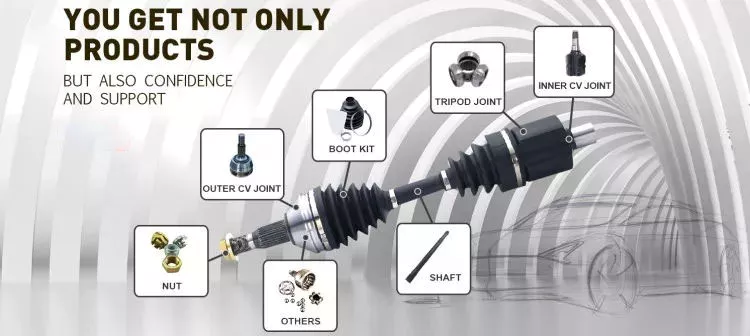
How do drive shafts ensure efficient power transfer while maintaining balance?
Drive shafts employ various mechanisms to ensure efficient power transfer while maintaining balance. Efficient power transfer refers to the ability of the drive shaft to transmit rotational power from the source (such as an engine) to the driven components (such as wheels or machinery) with minimal energy loss. Balancing, on the other hand, involves minimizing vibrations and eliminating any uneven distribution of mass that can cause disturbances during operation. Here’s an explanation of how drive shafts achieve both efficient power transfer and balance:
1. Material Selection:
The material selection for drive shafts is crucial for maintaining balance and ensuring efficient power transfer. Drive shafts are commonly made from materials such as steel or aluminum alloys, chosen for their strength, stiffness, and durability. These materials have excellent dimensional stability and can withstand the torque loads encountered during operation. By using high-quality materials, drive shafts can minimize deformation, flexing, and imbalances that could compromise power transmission and generate vibrations.
2. Designovervejelser:
The design of the drive shaft plays a significant role in both power transfer efficiency and balance. Drive shafts are engineered to have appropriate dimensions, including diameter and wall thickness, to handle the anticipated torque loads without excessive deflection or vibration. The design also considers factors such as the length of the drive shaft, the number and type of joints (such as universal joints or constant velocity joints), and the use of balancing weights. By carefully designing the drive shaft, manufacturers can achieve optimal power transfer efficiency while minimizing the potential for imbalance-induced vibrations.
3. Balancing Techniques:
Balance is crucial for drive shafts as any imbalance can cause vibrations, noise, and accelerated wear. To maintain balance, drive shafts undergo various balancing techniques during the manufacturing process. Static and dynamic balancing methods are employed to ensure that the mass distribution along the drive shaft is uniform. Static balancing involves adding counterweights at specific locations to offset any weight imbalances. Dynamic balancing is performed by spinning the drive shaft at high speeds and measuring any vibrations. If imbalances are detected, additional adjustments are made to achieve a balanced state. These balancing techniques help minimize vibrations and ensure smooth operation of the drive shaft.
4. Universal Joints and Constant Velocity Joints:
Drive shafts often incorporate universal joints (U-joints) or constant velocity (CV) joints to accommodate misalignment and maintain balance during operation. U-joints are flexible joints that allow for angular movement between shafts. They are typically used in applications where the drive shaft operates at varying angles. CV joints, on the other hand, are designed to maintain a constant velocity of rotation and are commonly used in front-wheel-drive vehicles. By incorporating these joints, drive shafts can compensate for misalignment, reduce stress on the shaft, and minimize vibrations that can negatively impact power transfer efficiency and balance.
5. Maintenance and Inspection:
Regular maintenance and inspection of drive shafts are essential for ensuring efficient power transfer and balance. Periodic checks for wear, damage, or misalignment can help identify any issues that may affect the drive shaft’s performance. Lubrication of the joints and proper tightening of fasteners are also critical for maintaining optimal operation. By adhering to recommended maintenance procedures, any imbalances or inefficiencies can be addressed promptly, ensuring continued efficient power transfer and balance.
In summary, drive shafts ensure efficient power transfer while maintaining balance through careful material selection, thoughtful design considerations, balancing techniques, and the incorporation of flexible joints. By optimizing these factors, drive shafts can transmit rotational power smoothly and reliably, minimizing energy losses and vibrations that can impact performance and longevity.
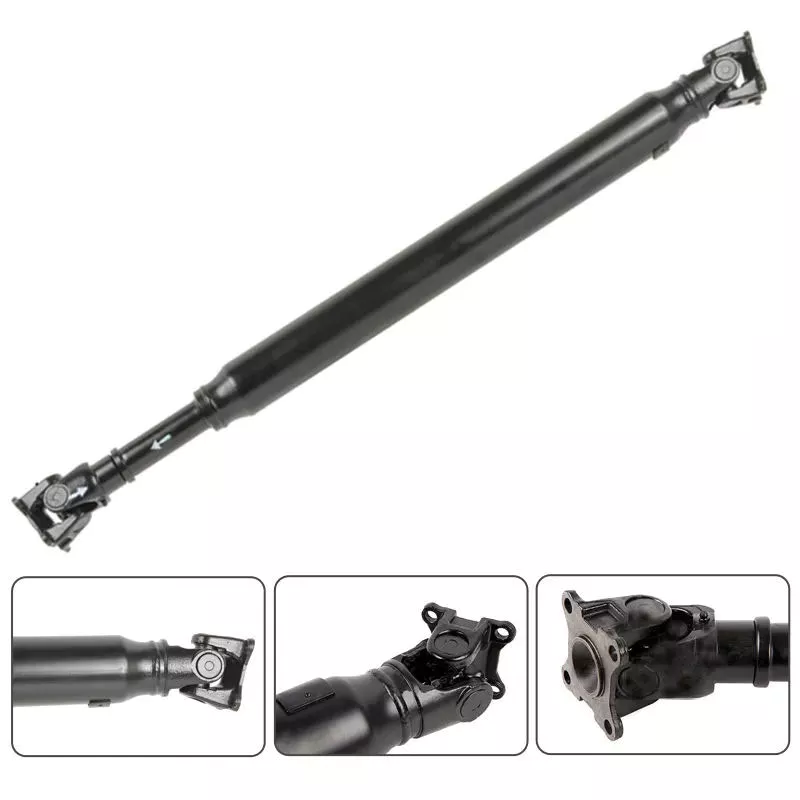
Can drive shafts be customized for specific vehicle or equipment requirements?
Yes, drive shafts can be customized to meet specific vehicle or equipment requirements. Customization allows manufacturers to tailor the design, dimensions, materials, and other parameters of the drive shaft to ensure compatibility and optimal performance within a particular vehicle or equipment. Here’s a detailed explanation of how drive shafts can be customized:
1. Dimensional Customization:
Drive shafts can be customized to match the dimensional requirements of the vehicle or equipment. This includes adjusting the overall length, diameter, and spline configuration to ensure proper fitment and clearances within the specific application. By customizing the dimensions, the drive shaft can be seamlessly integrated into the driveline system without any interference or limitations.
2. Material Selection:
The choice of materials for drive shafts can be customized based on the specific requirements of the vehicle or equipment. Different materials, such as steel alloys, aluminum alloys, or specialized composites, can be selected to optimize strength, weight, and durability. The material selection can be tailored to meet the torque, speed, and operating conditions of the application, ensuring the drive shaft’s reliability and longevity.
3. Joint Configuration:
Drive shafts can be customized with different joint configurations to accommodate specific vehicle or equipment requirements. For example, universal joints (U-joints) may be suitable for applications with lower operating angles and moderate torque demands, while constant velocity (CV) joints are often used in applications requiring higher operating angles and smoother power transmission. The choice of joint configuration depends on factors such as operating angle, torque capacity, and desired performance characteristics.
4. Torque and Power Capacity:
Customization allows drive shafts to be designed with the appropriate torque and power capacity for the specific vehicle or equipment. Manufacturers can analyze the torque requirements, operating conditions, and safety margins of the application to determine the optimal torque rating and power capacity of the drive shaft. This ensures that the drive shaft can handle the required loads without experiencing premature failure or performance issues.
5. Balancing and Vibration Control:
Drive shafts can be customized with precision balancing and vibration control measures. Imbalances in the drive shaft can lead to vibrations, increased wear, and potential driveline issues. By employing dynamic balancing techniques during the manufacturing process, manufacturers can minimize vibrations and ensure smooth operation. Additionally, vibration dampers or isolation systems can be integrated into the drive shaft design to further mitigate vibrations and enhance overall system performance.
6. Integration and Mounting Considerations:
Customization of drive shafts takes into account the integration and mounting requirements of the specific vehicle or equipment. Manufacturers work closely with the vehicle or equipment designers to ensure that the drive shaft fits seamlessly into the driveline system. This includes adapting the mounting points, interfaces, and clearances to ensure proper alignment and installation of the drive shaft within the vehicle or equipment.
7. Collaboration and Feedback:
Manufacturers often collaborate with vehicle manufacturers, OEMs (Original Equipment Manufacturers), or end-users to gather feedback and incorporate their specific requirements into the drive shaft customization process. By actively seeking input and feedback, manufacturers can address specific needs, optimize performance, and ensure compatibility with the vehicle or equipment. This collaborative approach enhances the customization process and results in drive shafts that meet the exact requirements of the application.
8. Compliance with Standards:
Customized drive shafts can be designed to comply with relevant industry standards and regulations. Compliance with standards, such as ISO (International Organization for Standardization) or specific industry standards, ensures that the customized drive shafts meet quality, safety, and performance requirements. Adhering to these standards provides assurance that the drive shafts are compatible and can be seamlessly integrated into the specific vehicle or equipment.
In summary, drive shafts can be customized to meet specific vehicle or equipment requirements through dimensional customization, material selection, joint configuration, torque and power capacity optimization, balancing and vibration control, integration and mounting considerations, collaboration with stakeholders, and compliance with industry standards. Customization allows drive shafts to be precisely tailored to the needs of the application, ensuring compatibility, reliability, and optimal performance.

Hvordan håndterer drivaksler variationer i længde og momentkrav?
Drivaksler er designet til at håndtere variationer i længde og momentkrav for effektivt at overføre rotationskraft. Her er en forklaring på, hvordan drivaksler håndterer disse variationer:
Længdevariationer:
Drivaksler fås i forskellige længder for at imødekomme varierende afstande mellem motoren eller kraftkilden og de drevne komponenter. De kan specialfremstilles eller købes i standardiserede længder, afhængigt af den specifikke anvendelse. I situationer, hvor afstanden mellem motoren og de drevne komponenter er længere, kan flere drivaksler med passende koblinger eller universalsamlinger bruges til at bygge bro over afstanden. Disse ekstra drivaksler forlænger effektivt den samlede længde af kraftoverføringssystemet.
Derudover er nogle drivaksler designet med teleskopsektioner. Disse sektioner kan forlænges eller trækkes tilbage, hvilket muliggør justering af længden for at imødekomme forskellige køretøjskonfigurationer eller dynamiske bevægelser. Teleskopiske drivaksler bruges almindeligvis i applikationer, hvor afstanden mellem motoren og de drevne komponenter kan ændre sig, f.eks. i visse typer lastbiler, busser og terrængående køretøjer.
Krav til moment:
Drivaksler er konstrueret til at håndtere varierende momentkrav baseret på motorens eller strømkildens effekt og kravene fra de drevne komponenter. Det moment, der overføres gennem drivakslen, afhænger af faktorer som motoreffekt, belastningsforhold og den modstand, som de drevne komponenter møder.
Producenter tager hensyn til momentkrav, når de vælger de passende materialer og dimensioner til drivaksler. Drivaksler er typisk lavet af højstyrkematerialer, såsom stål eller aluminiumlegeringer, for at modstå momentbelastningerne uden deformation eller svigt. Drivakslens diameter, vægtykkelse og design beregnes omhyggeligt for at sikre, at den kan håndtere det forventede moment uden overdreven udbøjning eller vibration.
I applikationer med høje momentkrav, såsom tunge lastbiler, industrimaskiner eller performancekøretøjer, kan drivaksler have yderligere forstærkninger. Disse forstærkninger kan omfatte tykkere vægge, tværsnitsformer optimeret til styrke eller kompositmaterialer med overlegen momenthåndteringsevne.
Derudover har drivaksler ofte fleksible samlinger, såsom universalsamlinger eller CV-samlinger. Disse samlinger tillader vinkelforskydninger og kompenserer for variationer i driftsvinklerne mellem motor, transmission og drevne komponenter. De hjælper også med at absorbere vibrationer og stød, hvilket reducerer belastningen på drivakslen og forbedrer dens momenthåndteringsevne.
Kort sagt håndterer drivaksler variationer i længde- og momentkrav gennem brugerdefinerede længder, teleskopiske sektioner, passende materialer og dimensioner samt inkludering af fleksible samlinger. Ved nøje at overveje disse faktorer kan drivaksler effektivt og pålideligt overføre kraft, samtidig med at de imødekommer de specifikke behov i forskellige applikationer.


redaktør af CX 2024-05-16























