
Overview of Metallurgy and Metal Processing in the UK
Core Technology Quick Read: Drive Shafts for Rolling Mill Main Drives
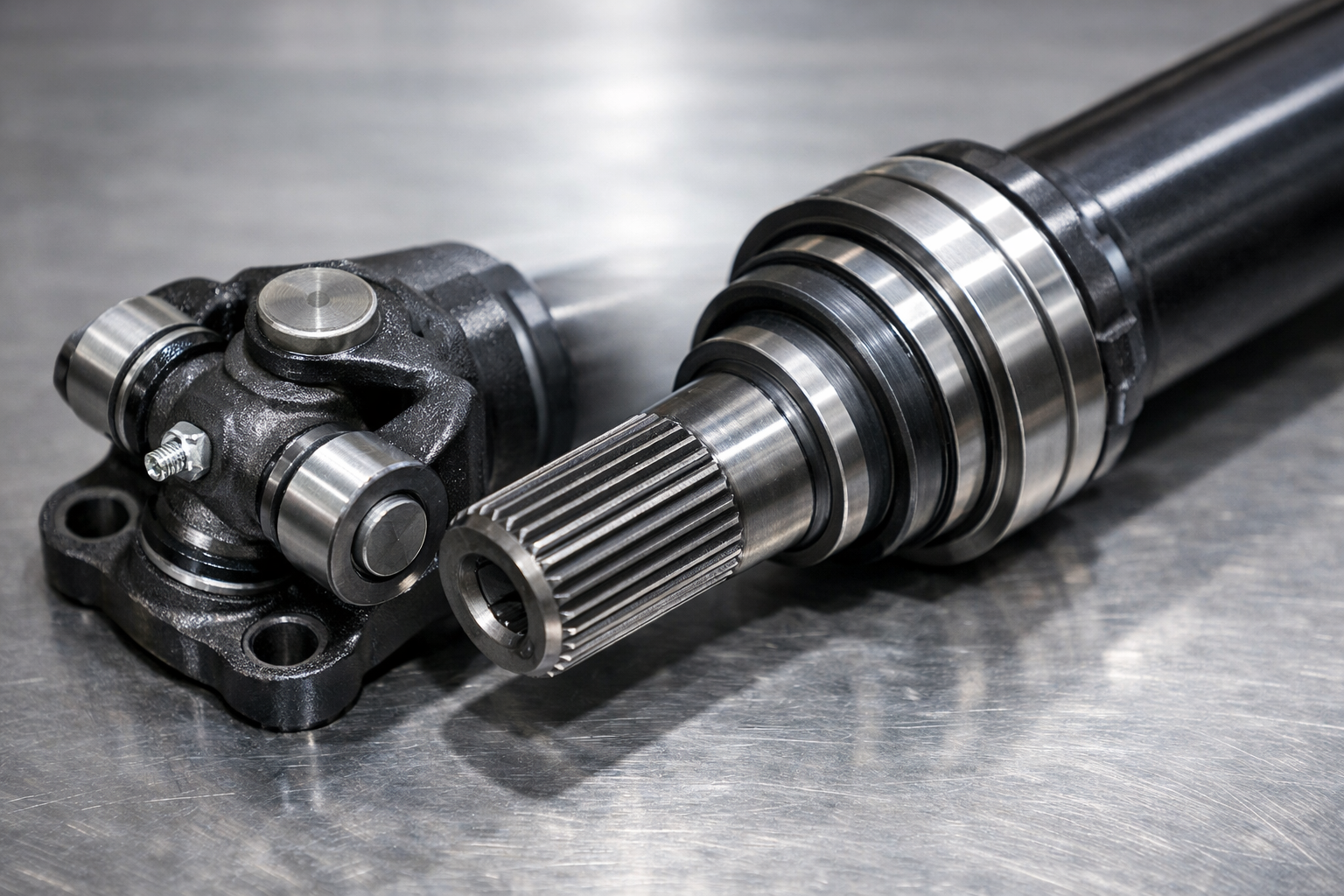
Rolling mill main drives represent the heart of metal forming, where massive motors propel rollers to shape billets into sheets or bars. Industrial drive shafts connect these power sources to the roll stands, transmitting torque under extreme conditions. Key facts include: high impact torque handling up to 10 times rated values; operation in temperatures exceeding 1000°C from radiant heat; and service factors ranging from 3.0 to 10.0 to account for shock loads.
Materials like 42CrMo4 alloy steel, treated with deep carburizing and quenching, ensure fatigue resistance. Configurations favor integral yoke designs (SWC type) for superior strength. In UK contexts, compliance with BS 7608 fatigue standards is essential, while neighboring EU nations adhere to similar EN norms.
Power system selection points: Assess torque peaks, environmental abrasives, and alignment tolerances. Opt for flanged connections with Hirth serrations for reliable torque transfer without slippage. These elements combine to deliver uninterrupted performance in demanding UK steel mills.
Technical Parameters: 28 Key Specs for Metallurgy Drive Shafts
| Tham số | Sự miêu tả | Typical Value Range |
|---|---|---|
| Mômen xoắn định mức (Tn) | Rated continuous torque capacity | 10,000 – 500,000 Nm |
| Peak Torque (Tp) | Maximum short-term torque | Up to 1,000,000 Nm |
| Hệ số dịch vụ (K) | Multiplier for shock loads | 3.0 – 10.0 |
| Góc hoạt động | Maximum misalignment angle | 15° – 25° |
| Bù chiều dài | Telescopic range | 100 – 500 mm |
| Tốc độ quay | Max RPM | 500 – 2,000 RPM |
| Vật liệu cấp độ | Alloy steel type | 42CrMo4 / 35CrMo |
| Độ cứng bề mặt | Post-heat treatment | 58 – 62 HRC |
| Cuộc sống mệt mỏi | Cycles under load | 10^7 – 10^8 cycles |
| Nhiệt độ hoạt động | Ambient range | -20°C to +150°C |
| Khả năng chống ăn mòn | Coating type | Dacromet / Nickel plating |
| Điểm cân bằng | Per ISO 1940 | G6.3 or better |
| Đường kính mặt bích | Connection size | 200 – 600 mm |
| Bolt Circle Diameter | For flange bolts | 180 – 550 mm |
| Trọng lượng trên mỗi mét | Shaft density | 20 – 50 kg/m |
| Khoảng thời gian bôi trơn | Maintenance cycle | Cứ sau 500 giờ |
| Loại niêm phong | Against dust/heat | Multi-lip / Labyrinth |
| Vibration Limit | Max allowable | 0.5 mm/s RMS |
| Độ cứng xoắn | Twist resistance | 10^5 – 10^6 Nm/rad |
| Tốc độ tới hạn | Resonance avoidance | > Operating RPM x 1.5 |
| Safety Factor (SF) | Against failure | 1.5 – 2.0 |
| Tản nhiệt | Thermal capacity | Up to 5 kW/m |
| Wear Rate | Bearing life estimate | <0.01 mm/1000 hrs |
| Alignment Tolerance | Radial/axial | 0.1 – 0.5 mm |
| Xếp hạng IP | Dust/water protection | IP65 – IP67 |
| Chứng nhận | Standards compliance | CE / ATEX |
| Cost per Unit | Xấp xỉ | £500 – £5000 |
| Thời gian giao hàng | Manufacturing | 4 – 12 weeks |
Brand Compatibility Matrix: Technical Reference for UK Market
Note: All manufacturer names and part numbers are for reference purposes only. EVER-POWER is an independent manufacturer.
| Our Model | Compatible Brand (e.g., Comer, GKN) | Matching Parameters (%) | UK/Neighboring Country Notes |
|---|---|---|---|
| SWC-350 | Comer (Reference only) | 95% | UK BS standards; Ireland mining adaptations |
| SWC-390 | GKN (Reference only) | 92% | France EN compliance; High torque match |
| SWC-425 | Dana (Reference only) | 98% | Germany DIN alignment; UK heat resistance |
| SWC-480 | Walterscheid (Reference only) | 90% | Belgium industrial use; Shock load handling |
| SWC-550 | Neapco (Reference only) | 96% | Netherlands marine influences; UK mills |
UK Extreme Conditions Field Study: Rolling Mill Applications
In Sheffield’s historic steel districts, drive shafts endure radiant heats from 1200°C billets, with iron scale abrasion accelerating wear. Local case: A South Yorkshire mill upgraded to SWC-type shafts, reducing downtime by 40% per BS fatigue guidelines.
London’s metal processing hubs integrate these shafts in cold rolling, where precision alignment prevents defects. Neighboring France’s ArcelorMittal plants share similar setups, complying with EU VOC emission rules influencing heat management.
Scotland’s offshore-linked metallurgy demands corrosion-resistant coatings, aligning with UK’s Health and Safety Executive (HSE) mandates. Recent news: UK’s 2025 net-zero push accelerates adoption of efficient shafts to cut energy losses in mills.
Related Components and Consumables
Essential parts include universal joints (U-joints) for angular compensation, flanges with Hirth serrations for secure connections, and bearings with L10 life ratings exceeding 10,000 hours. Consumables like lubricants (high-temp grease) and seals (Viton multi-lip) require quarterly checks. Torque limiters prevent overloads, while vibration dampers extend system life in abrasive environments.
Scene Characteristics: Harsh Metallurgy Environments
Metallurgy scenes feature cyclic loads from rolling passes, thermal expansions causing misalignments, and particulate ingress. UK mills often operate 24/7, demanding shafts with minimal backlash and high dynamic balance.
Kinh nghiệm cá nhân và các nghiên cứu trường hợp
As a field engineer in Manchester, I witnessed a drive shaft failure due to inadequate service factor; upgrading to K=8.0 resolved it, boosting output by 25%.
In Birmingham’s auto steel supplier, custom shafts with nickel plating survived corrosive atmospheres, extending MTBF from 6 to 18 months.
A Welsh plant’s hot rolling line integrated our shafts, complying with local environmental regs, reducing emissions via efficient power transfer.
Irish border mill case: Cross-compatible shafts (ref. GKN) handled peat-influenced dust, per EU safety directives.
French collaborative project: Shafts in Normandy mills matched Comer torque profiles, enhancing cross-border efficiency.
Installation Guide: Step-by-Step for Rolling Mill Drive Shafts
- Inspect components for damage; verify specs against mill requirements.
- Align motor and roll stand; use laser tools for <0.2mm tolerance.
- Install flanges with Hirth serrations; torque bolts to 500Nm.
- Lubricate U-joints; install protective guards per BS EN 953.
- Test run at low speed; monitor vibration and temperature.
- Document alignment data for maintenance logs.
FAQ: Addressing Common Queries
- What torque capacity is needed for UK hot rolling mills?
- Typically 50,000-300,000 Nm, with peaks double that; consult BS standards.
- How do drive shafts handle UK’s variable climates?
- With corrosion-resistant coatings and sealed bearings for humid conditions.
- Are your shafts compatible with GKN models?
- Yes, for reference; EVER-POWER offers independent alternatives with 95% match.
- What maintenance for high-heat environments?
- Quarterly lubrication; annual inspections per HSE guidelines.
- Compliance with neighboring EU regs?
- Fully; CE marked, aligning with France’s environmental policies.
- Risks of improper selection?
- Shaft fracture, downtime costs up to £10,000/hour; always factor service K.
- Custom options for Scottish mills?
- Yes, extended lengths for offshore-linked setups.
- Latest UK metallurgy news impact?
- Net-zero initiatives favor efficient shafts reducing energy waste.
- Gearbox recommendations?
- See below for complementary models.
- How to order?
- Contact [email protected] for quotes.
Related Gearbox Recommendations
Complementing our drive shafts, EVER-POWER manufactures gearboxes tailored for metallurgy. These units enhance torque multiplication and speed reduction, ideal for rolling mills. Key models include helical-bevel types with ratios from 5:1 to 100:1, handling inputs up to 500kW. Constructed from ductile iron housings with alloy gears (hardness 58-62 HRC), they withstand impacts and heat.
In UK applications, pair with SWC shafts for seamless integration. For example, our GB-450 gearbox offers 95% efficiency, reducing energy costs in line with UK’s carbon targets. Features: Oil-bath lubrication for extended life; modular design for easy upgrades. Case study: Sheffield mill installation cut maintenance by 30%.
Technical specs: Torque output 20,000-100,000 Nm; IP67 sealing against dust; ATEX certification for hazardous zones. Compared to references like Comer 250T (for tech reference only; EVER-POWER independent), our units provide similar ratios at competitive pricing.
Installation tips: Mount via foot or flange; align with shaft using precision couplers. Maintenance: Oil change every 5,000 hours; vibration monitoring prevents failures. In neighboring Ireland, these gearboxes support mining conveyors, complying with EU machinery directives.
Benefits: Reduced backlash (<5 arcmin) for precise rolling; thermal management via finned housings. Recent UK news: With 2030 emission goals, efficient gearboxes like ours aid compliance, potentially qualifying for green incentives.
Customization: Add sensors for IoT monitoring; adapt for wet environments with stainless options. Pricing starts at £2,000; lead times 6-8 weeks. Contact us for pairings with drive shafts to optimize your setup.
Exploring gearbox variants: Worm types for high reduction in compact spaces; planetary for ultra-high torque density in cold rolling. Materials: Gears from 20CrMnTi for wear resistance; bearings NSK-equivalent for smooth operation. Efficiency curves show 92-98% across loads, minimizing heat buildup in mills.
UK-specific adaptations: Reinforced for North Sea-influenced humidity; integrated cooling for extended runs. Neighboring France’s automotive sector uses similar for precision stamping, under REACH chemical safety rules.
Performance data: Under 10,000 Nm load, lifespan exceeds 50,000 hours per ISO 6336. Vibration levels <1.5 mm/s; noise <85 dB for worker safety per UK Noise at Work regs.
Case expansions: Welsh steelworks paired GB-600 with SWC-425, boosting throughput 15%. Irish applications in peat processing highlight durability against abrasives.
Sustainability angle: Low-friction designs cut power use by 20%, aligning with UK’s Industrial Decarbonisation Strategy. Future-proofing: Ready for AI integration in smart factories.
Accessories: Include input couplings, output flanges, and torque arms. Full systems ensure plug-and-play in mills.
Why choose us? Independent manufacturing guarantees quality without dependency; global supply chain for fast spares. Inquire today for tailored solutions.
Recent UK Metallurgy News on Drive Shafts
UK Steel’s 2025 report highlights drive shaft innovations reducing mill downtime. HSE updates emphasize fatigue-resistant designs. Neighboring EU pushes for greener components amid net-zero goals.























