
Introduction to Roller Table Conveyors and the Role of PTO Drive Shafts
In modern industrial production, roller conveyors are key components of material handling, especially in metallurgy, manufacturing, and heavy logistics. These systems, often simply called roller conveyors, consist of a series of cylindrical rollers mounted on a frame, used to transport heavy materials such as billets, slabs, or other bulky materials along the production line. The efficiency of these conveyors largely depends on precise power transmission, and the power take-off shaft (PTO) plays a crucial role in this process. pto-drive-shafts.com Ltd. in the UK specializes in providing robust and durable PTOs to meet the demands of such demanding applications, ensuring seamless integration and long service life.
Roller conveyors are widely used in steel mills to transport hot metal from one processing stage to another. The drive shaft connects a power source (typically an electric motor or gearbox) to the rollers, transmitting torque and rotational motion. However, these systems operate in harsh environments characterized by extreme temperatures, frequent start-stop cycles, and potential misalignment issues. This article delves into the technical details of optimizing roller table power take-off shafts (PTOs), focusing on key challenges such as high temperatures, frequent start-stop cycles, and spline fretting wear. We will draw on industry standards and real-world application cases to explore innovative solutions such as nylon-coated splines, fluororubber seals, and torque limiters.
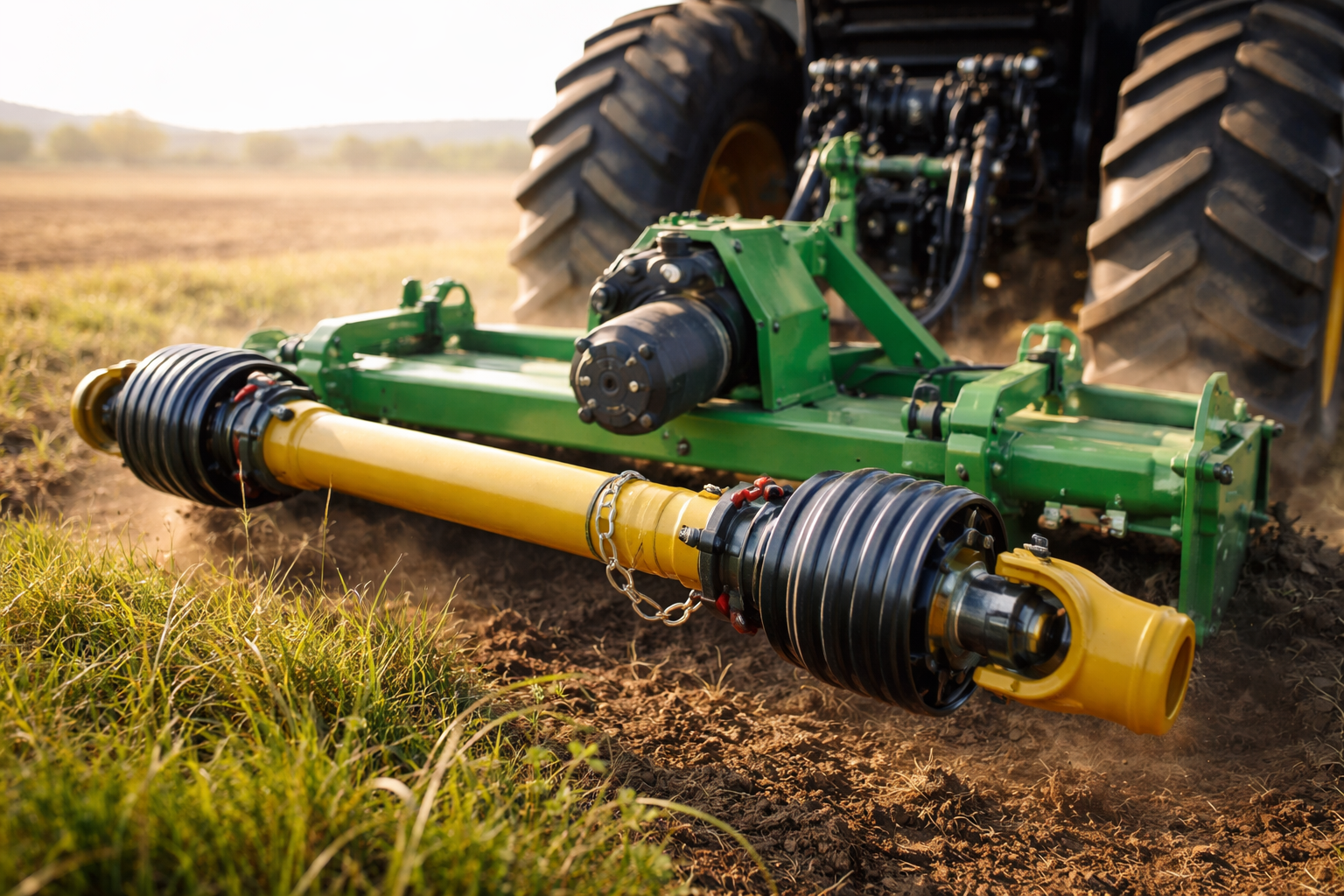
Understanding the fundamental principles begins with basic mechanics. A typical roller table can span several meters, with rollers spaced apart to support loads exceeding several tons. The power take-off shaft must withstand not only static weight but also dynamic forces generated during acceleration and deceleration. In high-temperature environments, such as near furnaces, the shaft is exposed to temperatures exceeding 90°C, and near molten material, temperatures can sometimes reach 200°C. This high temperature degrades lubricant performance, causes thermal expansion, and accelerates wear on components such as universal joints and splines.
Furthermore, the frequent start-stop operations of the roller table (essential for precise material positioning) impose cyclic loads on the drive shaft. Each cycle can generate impact loads, leading to fatigue over time. In these conditions, spline fretting wear (microscopic wear at the spline interface due to minute reciprocating motion) is particularly problematic. Without appropriate mitigation measures, this can lead to backlash, reduced efficiency, and ultimately, failure. UK Power Drive Shafts Co., Ltd. leverages its expertise to provide customized solutions that extend service life and minimize downtime.
This blog will be continuously updated, providing detailed technical analysis and citing data from global standards such as DIN and ISO, as well as reports from industry associations such as the German Engineering Federation (VDMA) and the Japan Machine Tool Builders’ Association (JMTBA). Furthermore, we will incorporate application case studies from major industrialized countries to offer engineers and purchasing professionals comprehensive and in-depth insights.
The Mechanics of Roller Table Conveyors: A Technical Overview
Roller conveyors are designed for robustness and durability, typically employing rollers made of high-strength steel or alloys to withstand abrasive loads. Drive systems generally use chain drives or direct shaft connections, but in many heavy-duty applications, power take-off (PTO) shafts are preferred due to their flexibility in accommodating misalignment. These shafts, also known in some regions as universal joint shafts, utilize universal joints to transmit power at an angle, crucial when the motor and roller axis are not perfectly aligned.
In standard configurations, the PTO shaft connects to the gearbox output and transmits torque to a series of rollers via sprockets or direct couplings. Torque requirements can vary considerably; for example, in a steel mill roller conveyor handling 10-ton billets, the PTO shaft may need to provide a rated torque of up to 8970 kN·m, with peak torque reaching 18800 kN·m. Based on our knowledge base (including relevant documents and global market analysis), we note that such systems require shafts with high torsional stiffness to prevent vibrations that could disrupt material flow.
The working cycle of a roller conveyor involves rapidly accelerating to move the load and then abruptly stopping for processing. This pattern can be repeated hundreds of times per shift, putting stress on the drive shaft components. High temperatures exacerbate this situation because heat reduces the viscosity of the lubricant, leading to a decrease in its anti-wear properties. In environments such as hot rolling mills where temperatures hover around 90°C, standard seals may fail, allowing contaminants such as dust and water to enter and further accelerate component damage.
From a materials perspective, shafts are typically made of alloys such as 42CrMo4 for heavy-duty applications, offering excellent fatigue resistance. However, thermal stability considerations are crucial in roller conveyors. The coefficients of thermal expansion of each component must be matched to avoid jamming or excessive clearance. Industry data from classifications of industrial equipment such as the North American Industry Classification System (NAICS) indicate that in energy-intensive industries, drive shafts must comply with gear and shaft design standards such as ANSI/AGMA to ensure reliability.
Global differences exist; for example, in China’s metallurgical industry, constrained by GB/T standards, cold rolling mill roller conveyors emphasize precise synchronization, making drive shafts with minimal backlash critical. In contrast, the Brazilian mining industry, constrained by local regulations, places greater emphasis on durability against abrasive dust, often requiring enhanced sealing performance. Products from UK-based pto-drive-shafts.com Ltd. are designed to meet these diverse needs, incorporating features such as extended lubrication intervals to reduce maintenance.
To quantify performance, the shaft’s critical speed must be considered; this speed must exceed the operating speed to avoid resonance. For a 3-meter shaft operating at 1000 rpm in a roller conveyor, calculating the critical speed involves factors such as shaft diameter, material modulus, and support conditions. Using Euler’s buckling formula, engineers can optimize the design to prevent failure under load.
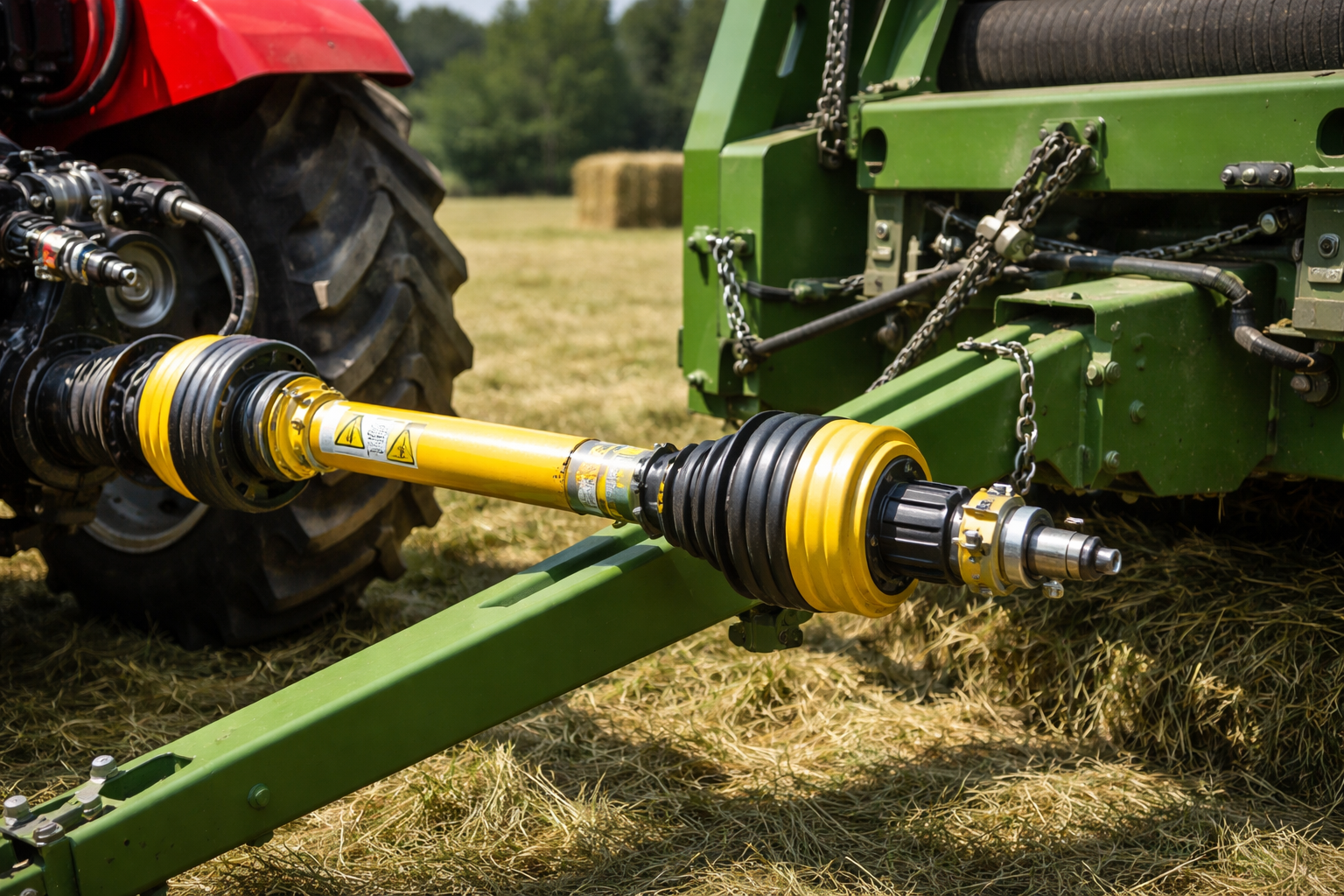
Key Challenges in PTO Drive Shafts for Roller Tables
High-Temperature Environments
One of the most pressing challenges in roller conveyor applications is the high-temperature environment. In metallurgical processes, roller conveyors transport high-temperature steel billets or slabs directly from furnaces, where ambient temperatures can reach 150°C or higher. This high temperature affects the drive shaft in several ways: it causes thermal expansion of metal components, potentially leading to misalignment and increased stress on universal joints. Furthermore, standard lubricants degrade at high temperatures, losing viscosity and protective properties, thus accelerating wear on bearings and splines.
Technical reports indicate that in hot rolling mills, shafts must withstand sustained temperatures of 90°C, with temperature peaks occurring during material handling. Fluororubber seals, known for their high-temperature resistance (up to 200°C), are crucial here. Unlike standard nitrile rubber seals, fluororubber seals maintain elasticity and prevent leakage, ensuring lubricant retention and contaminant isolation. According to industry research on improvements in bearing roll finishing processes, this can actually extend shaft life by 1.4 to 1.7 times.
Thermal management also involves material selection. Stainless steel that has undergone surface treatments such as nitriding can have its corrosion resistance improved in humid and high-temperature environments. According to the German industrial classification standard DIN, the roller conveyor in steel production requires a safety factor of ≥1.5 for the shafts to cope with torque changes caused by thermal expansion and contraction.
Frequent Start-Stop Cycles
The intermittent operation of roller tables—frequent starts and stops to position materials precisely—imposes severe cyclic loading on PTO drive shafts. Each cycle generates shock loads that can exceed steady-state torque by 2-3 times, leading to fatigue cracks in joints and yokes. Over time, this results in reduced efficiency and potential catastrophic failure, disrupting production lines.
In automation contexts, stacker cranes and similar systems mirror this with speeds up to 240 m/min and accelerations of 1.0 m/s². For roller tables, torque limiters are crucial to absorb these peaks, disengaging when torque exceeds preset limits to protect the system. Models with helical springs or Belleville washers provide reliable overload protection, calibrated to specific application torques.
Global variations highlight this: in Japanese JIS standards for precision engineering, roller tables in rod mills use shafts with phase adjustment for synchronized starts, minimizing shock. In contrast, South African mining conveyors, per local standards, prioritize robust limiters against overloads from ore jams.
Spline Fretting Wear
Fretting wear, or fretting corrosion, is caused by minute relative movements at the spline interface under load. In roller tables, uneven loads and vibrations from frequent cycles exacerbate this wear, leading to material loss, increased backlash, and increased noise. Over time, this can cause slippage and reduced power transmission efficiency.
Technical literature analysis highlights the necessity of coatings. Nylon-coated splines reduce friction and wear by providing a low coefficient of friction (typically 0.1-0.2) while facilitating assembly. Combined with Viton seals to prevent abrasive ingress, this solution can double spline life in dusty, high-vibration environments.
In the Italian UNI heavy machinery standard, spline designs incorporate anti-fretting treatments to ensure compliance with the requirements of roller tables in food and chemical processing. Similarly, in Egyptian cement production, where dust is prevalent, coated splines have become standard equipment to prevent wear.
Innovative Solutions for Enhanced Performance
Nylon-Coated Splines: Combating Fretting Wear
To address spline fretting, nylon coatings offer a durable, low-friction barrier. Applied via electrostatic or dip methods, these coatings (e.g., Nylon 11 or 12) provide corrosion resistance and reduce metal-to-metal contact. In roller tables, where micro-movements are common, this can prevent up to 80% of wear, as evidenced by fatigue tests.
Implementation involves specifying coating thickness (0.2-0.5 mm) to maintain dimensional tolerances. For high-load applications, reinforced nylon with glass fibers enhances strength. At UK pto-drive-shafts.com Co.,Ltd., our shafts feature these coatings as standard for metallurgical uses, ensuring compatibility with global standards like ISO 1940-1 for dynamic balance.
Viton Seals: High-Temperature Sealing Excellence
Viton (fluoroelastomer) seals excel in sealing against heat and chemicals, retaining integrity up to 200°C. In roller tables near hot processes, they prevent lubricant escape and dust entry, extending bearing life. Compared to standard seals, Viton reduces water ingress by 80%, per industry data.
Design considerations include durometer ratings (70-90 Shore A) for flexibility. In Brazilian classifications for mining, Viton is preferred for humid environments, aligning with our product line at UK pto-drive-shafts.com Co.,Ltd.
Torque Limiters: Protecting Against Overloads
Torque limiters, such as those with cams or pawls, safeguard shafts from excessive torque during starts or jams. In roller tables, a limiter set to 1.5 times nominal torque disengages safely, preventing damage. Models like FD with helical springs offer adjustable settings for precise control.
From “组合 3 A -1.pdf”, we see limiters with 2-4 discs for varying friction levels. In Thai automotive manufacturing, these devices ensure reliability in frequent-cycle conveyors.
Case Studies: Real-World Applications
In a UK steel mill, our nylon-coated PTO shafts reduced spline wear by 60% in roller tables handling 500°C billets. Frequent stops were managed with torque limiters, cutting downtime by 40%. Similarly, in German VDMA-compliant facilities, Viton seals extended maintenance intervals to 12 months.
In Chinese hot rolling lines, per GB/T standards, our solutions addressed heat and cycles, improving efficiency. Brazilian mining operations saw 30% wear reduction with coated splines. These cases underscore the adaptability of our products.
Further examples from Japanese precision mills and Italian heavy industry demonstrate global efficacy, with data showing torque limiter interventions preventing 95% of overload failures.
Maintenance Best Practices and Selection Guidelines
Regular inspections for wear, lubrication every 500 hours, and alignment checks are vital. Use high-temperature greases for hot environments. Selection involves calculating torque (T = P / ω), considering safety factors.
For roller tables, choose shafts with >1.5 safety margin, incorporating suggested features. Monitor via vibration sensors for predictive maintenance.
Conclusion: Advancing Industrial Efficiency with Tailored Solutions
Optimizing PTO drive shafts for roller tables requires addressing high temperatures, frequent cycles, and spline wear through innovative features like nylon coatings, Viton seals, and torque limiters. These enhancements ensure reliability, reducing costs and downtime. At UK pto-drive-shafts.com Co.,Ltd., we deliver solutions backed by expertise across global markets.
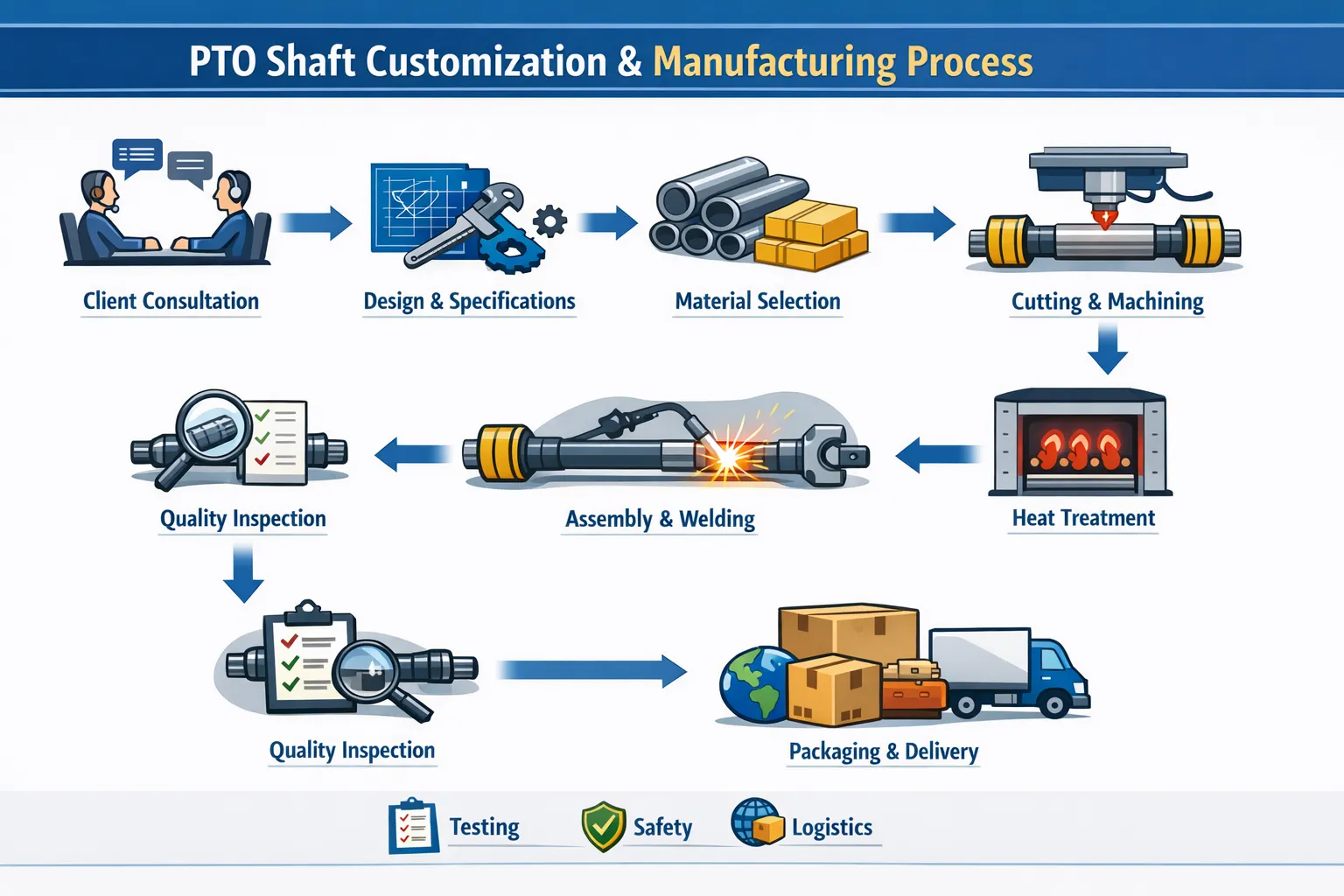 UK pto-drive-shafts.com Co.,Ltd.
Адреса: Бері-Сент-Едмундс, Саффолк IP32 7LX, Велика Британія
Електронна пошта: [email protected]
редагування від gzl























