
✉ Get a Free Quote — [email protected]
Response within 24 hours · UK and Global Shipping Available
Why Shaft Series Selection Is Not a Simple Decision
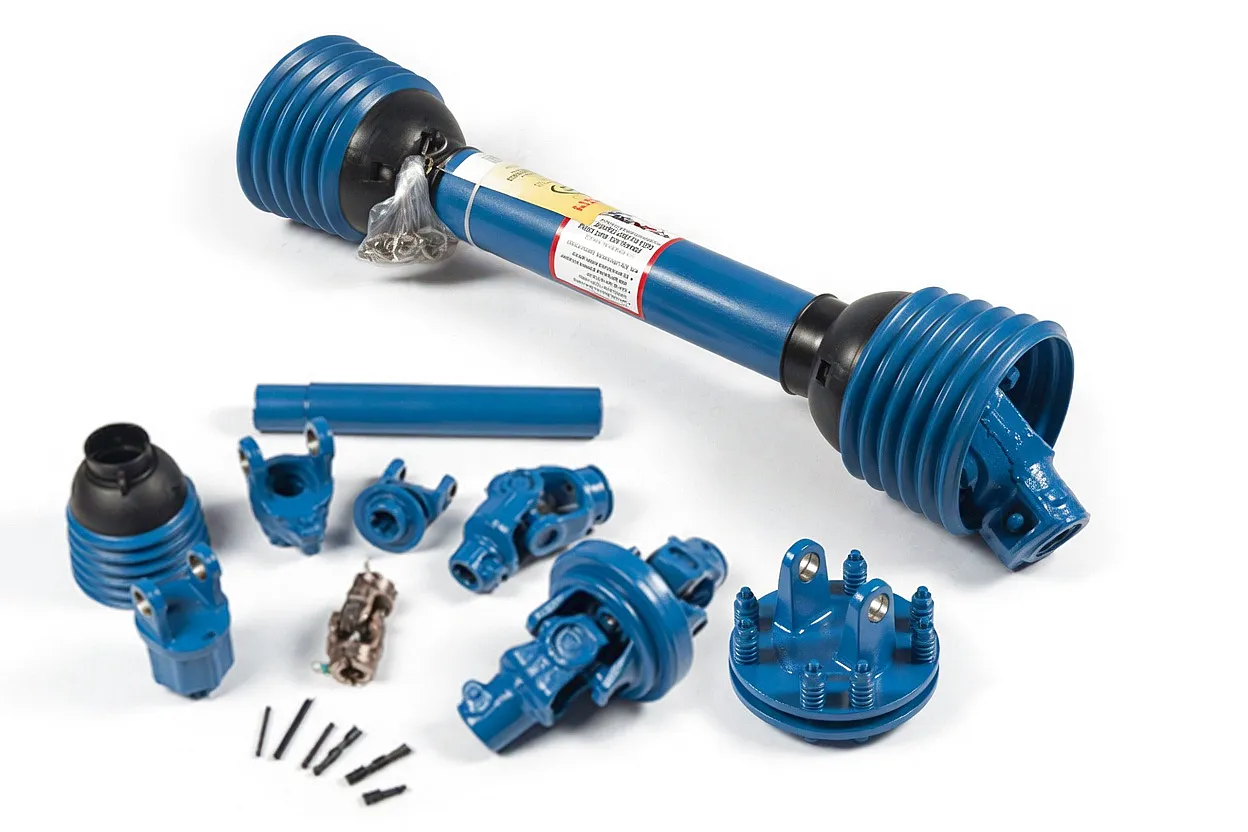 Walk into any agricultural dealership in the Midlands or flip through a machinery catalogue serving the Yorkshire Wolds, and you will find a bewildering range of PTO shafts listed by series number, cross-kit size, and rated torque — none of which automatically tells you which is right for your tractor. The challenge is genuine: a mismatched PTO shaft does not merely underperform, it introduces mechanical stress that accumulates invisibly until a coupling fractures mid-harvest. For farmers running John Deere or Massey Ferguson tractors across the East Anglian flatlands, or estate managers operating Fendt units on hilly terrain in Shropshire, shaft selection is as fundamental as choosing the right tyre pressure or engine oil grade. This guide draws on real engineering practice to decode the numbering systems, explain the physics behind rated torque, and walk you through every factor that determines the right PTO shaft series for your specific machine and implement combination — including operating angles, spline profiles, overload protection type, and the often-overlooked role of shaft length and telescoping range.
The stakes are particularly high for UK contractors who service multiple client farms with diverse implement fleets. A single driveline failure during the oilseed rape harvest can cost thousands of pounds in missed contracting fees, emergency sourcing, and downtime. Understanding the engineering logic behind PTO shaft series designations — and knowing how to cross-reference them against your tractor’s PTO output torque — turns a potentially expensive guessing game into a confident, data-driven decision. What follows is the complete technical framework you need, structured for both the experienced machinery manager and the farm buyer approaching this equipment category for the first time.
How a PTO Shaft Actually Transfers Power
The Mechanical Principle Behind Every Series
Universal Joint Assembly
The universal joint — or Cardan joint — forms the functional heart of every PTO drive shaft. It accommodates the angular misalignment that inevitably exists between the tractor’s PTO stub and the implement’s input gearbox. The joint achieves this by converting rotational torque through a cross-shaped trunnion bearing, allowing torque to flow through operating angles typically between 0° and 25°, depending on the series specification. The key mechanical insight is that velocity output from a single universal joint is not perfectly constant at angles above 0°; it oscillates at twice the rotational frequency. This is why high-quality PTO shafts are designed as double-jointed systems, with the two joints phased so their velocity variations cancel out — producing smooth, constant-velocity power delivery to the implement regardless of the working angle.
Telescoping Tube System
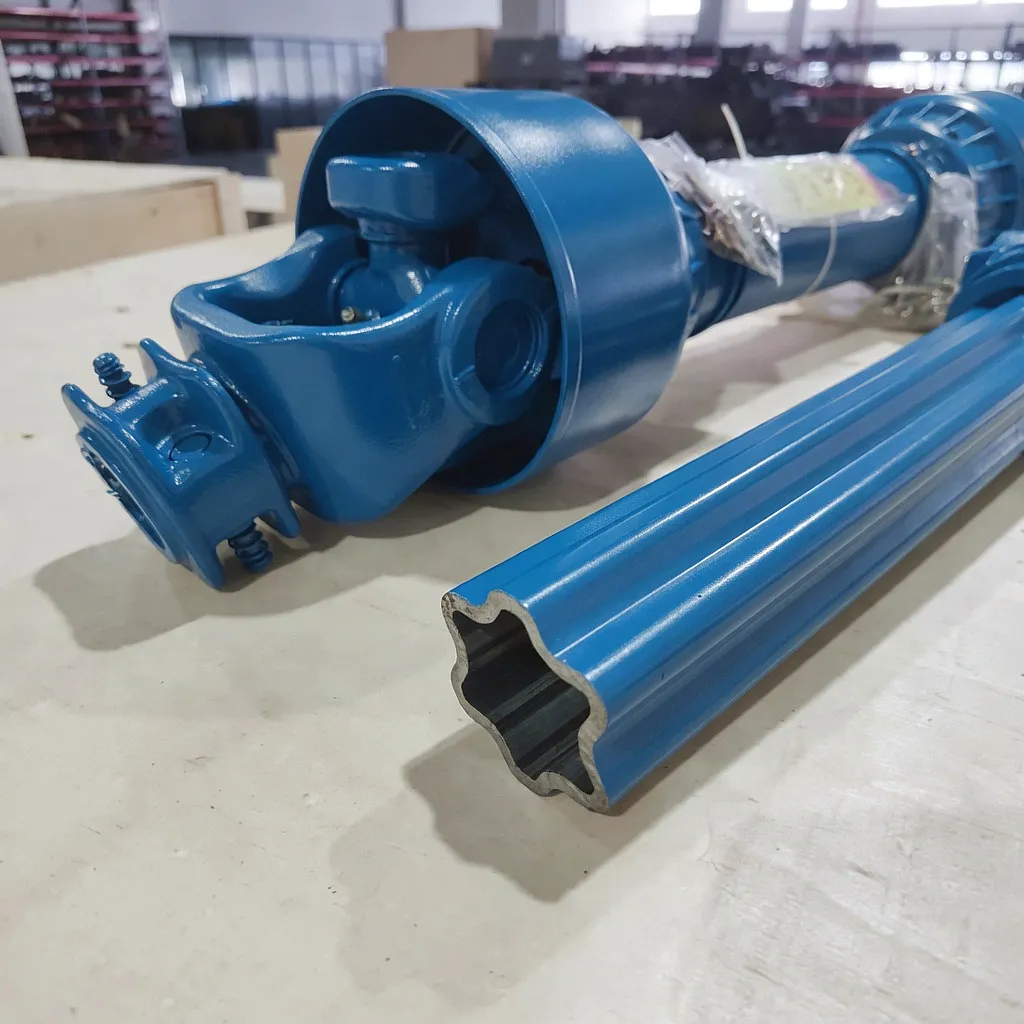
Between the two universal joint assemblies sits the telescoping tube system — typically a square, star-profile, or splined profile outer tube mated with an inner tube of the corresponding profile. This section absorbs the length changes that occur during implement articulation, headland turns, and three-point linkage movements. The profile geometry directly influences torque capacity and sliding friction: lemon-shaped profiles are common in lighter series, while star-profile and splined tubes are used in heavier series where transmitted torques exceed 1,500 N·m. Correct tube overlap at minimum and maximum extension is a critical installation parameter — insufficient overlap at maximum extension creates a catastrophic separation risk. Most reputable manufacturers specify a minimum overlap of approximately one-third of the tube’s total working length.
Overload Protection Devices
Every professional-grade PTO shaft must incorporate an overload protection device to guard against sudden torque spikes — a stone strike in a rotary tiller, a frozen section in a forage harvester, or an abrupt clutch engagement. The three main types are the shear bolt coupling (simplest and cheapest to reset, used widely across the UK market), the friction clutch (reusable, self-resetting, used in higher-cycle applications like spreaders and tedders), and the ratchet or cam-type torque limiter (instantaneous overload protection, preferred for high-value PTO-driven equipment). Series selection must account for the protection type appropriate to your implement’s torque signature and the frequency with which overloads are expected to occur in your operating environment.
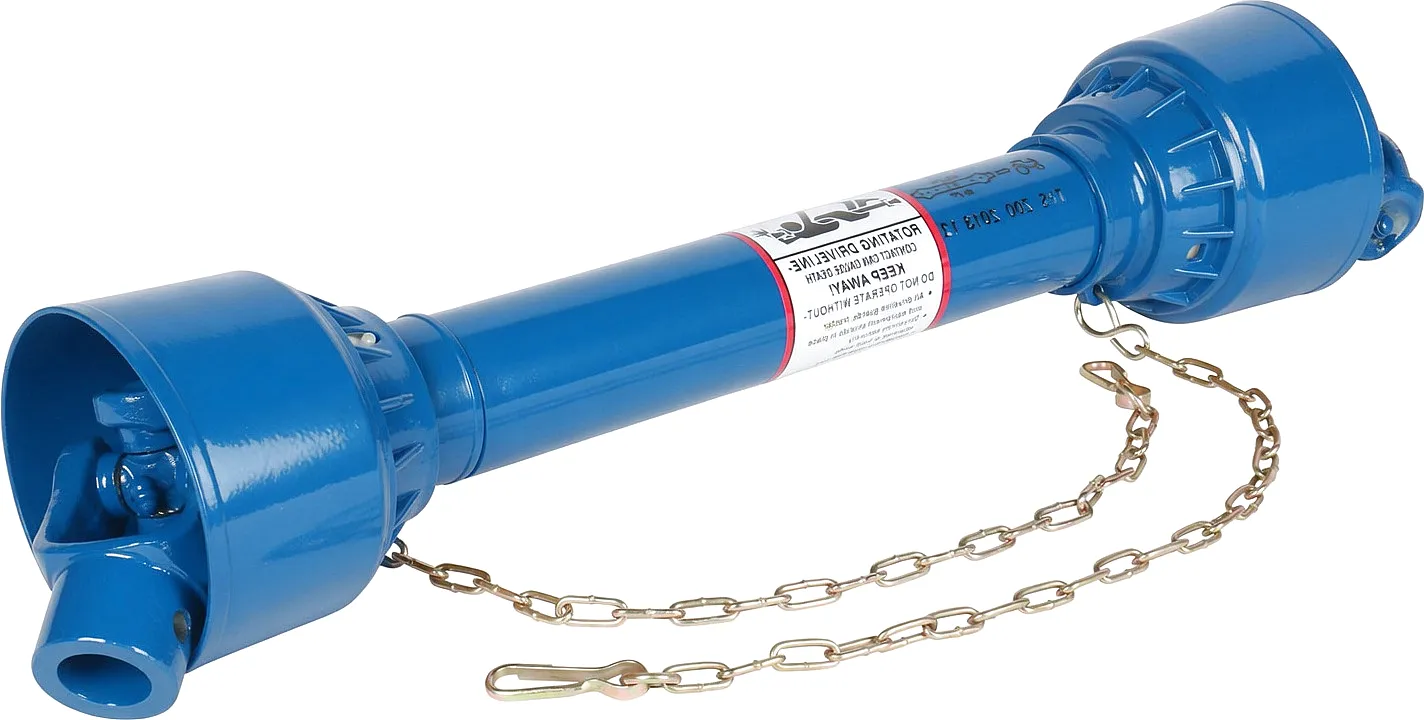
Cross-type universal joint assembly — the core of every PTO driveline series
Decoding the PTO Shaft Series Numbering System
From Series 4 to Series 8W — What the Numbers Mean in Practice
The most widely used classification system for agricultural PTO drive shafts follows a series designation that correlates directly to the cross-kit size — the trunnion bearing assembly at the heart of each universal joint. The cross-kit size determines the torque capacity of the joint, because a physically larger trunnion has a greater moment arm and bearing surface area, allowing it to transmit higher torques without premature bearing failure. In practice, the series designations most commonly encountered across UK farms and contractor fleets span from Series 4 through Series 8W, with overlapping torque ranges that require careful matching against your tractor’s published PTO output and the implement’s input torque demand. Choosing too light a series risks bearing failure under peak load; specifying too heavy a series adds unnecessary cost, weight, and inertia — the last of which is a real concern when shaft mass affects the dynamic balance of lighter PTO-driven tools.
| Серія | Cross-Kit Size (mm) | Rated Torque (N·m) | Peak Torque (N·m) | Максимальний робочий кут | Профіль труби | Typical Application (UK) |
|---|---|---|---|---|---|---|
| Серія 4 | 27 x 74.6 | 490 | 980 | 25° | Lemon / Square | Small horticultural tractors, compact utility |
| Series 5 | 30.2 x 92 | 810 | 1,620 | 25° | Lemon / Square | 50–80 HP tractors, mowers, spreaders |
| Серія 6 | 30.2 x 106.5 | 1,200 | 2,400 | 25° | Star / Lemon | 80–120 HP, balers, rotary tillers, tedders |
| Series 7 | 35 x 106.5 | 1,800 | 3,600 | 25° | Star-Profile | 120–180 HP, large round balers, forage wagons |
| Series 8 | 39.5 x 118.8 | 2,700 | 5,400 | 25° | Splined | 180–300 HP, large combinable crop equipment |
| Series 8W | 48 x 135 | 3,700 | 7,400 | 25° | Heavy Splined | 300+ HP, high-output slurry tankers, large shredders |
* Rated torque figures represent continuous running values under standard ISO 5673 conditions. Peak values are intermittent; prolonged peak-torque operation will reduce service life.
Materials That Define Shaft Longevity
Why Metallurgy Matters in Agricultural Driveline Engineering
👥 Cross-Kit Bearing Steel
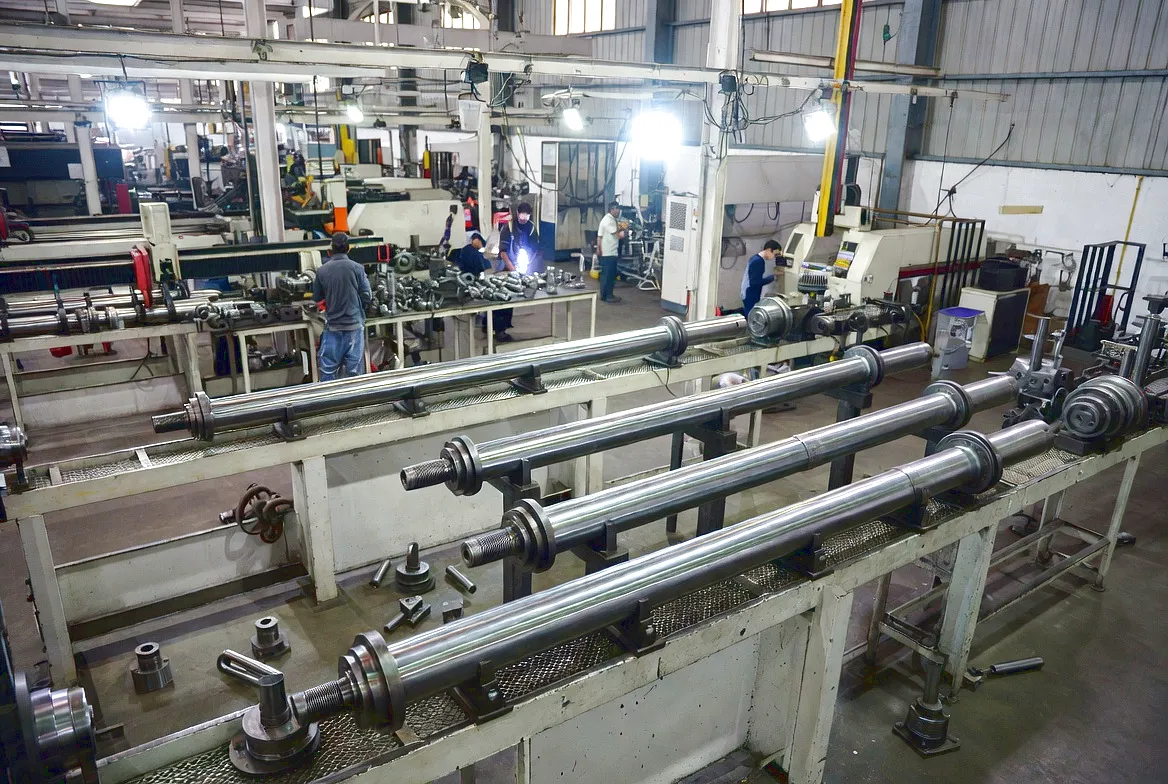
Trunnion crosses are manufactured from high-carbon chromium bearing steel — typically 100Cr6 (AISI 52100) — through a precision forging and heat-treatment process. The steel undergoes carburisation or induction hardening to achieve a surface hardness of 58–62 HRC while maintaining a tough, ductile core. This dual-hardness structure is essential: the hard surface resists wear from the needle roller bearings that ride on the trunnion journals, while the tough core absorbs the bending and shock loads that arise during peak-torque events. Any compromise in the heat-treatment profile — through inadequate case depth or uneven cooling — creates micro-crack initiation sites that shorten service life dramatically. Reputable manufacturers control this process to tolerances tighter than ±0.05 mm on journal diameter.
🏭 Tube Steel Specification
Telescoping tubes are cold-drawn from seamless carbon steel — typically S355J2 or equivalent to BS EN 10210 — to achieve the tight dimensional tolerances needed for smooth sliding action and accurate torque transmission through the profiled section. Cold-drawing refines the grain structure of the steel, improving tensile strength and fatigue resistance compared to hot-rolled equivalents. For heavier series (7, 8, 8W), some manufacturers specify alloy steels containing small additions of chromium, molybdenum, or vanadium to elevate yield strength above 500 MPa — important when tube wall thickness is constrained by assembly geometry. The inner and outer tube surfaces are then surface-treated with a phosphate coating and grease impregnation to minimise sliding friction and resist corrosion in the field environments typical across England and Scotland, where morning dew and muddy conditions are the norm rather than the exception.
☕ Safety Guard Material
The safety guard — the rotating outer cover mandated by PUWER 1998 regulations for UK machinery — is injection-moulded from high-density polyethylene (HDPE) or polypropylene, chosen for their combination of chemical resistance, UV stability, and impact strength at low temperatures. Guard design must prevent contact with the rotating shaft assembly across all operational configurations, including when the shaft is at maximum working angle. In recent years, manufacturers have developed multi-piece guard systems that allow the shield to flex with the shaft angle without cracking — an important reliability improvement for UK operators working in sub-zero winter temperatures on livestock farms from Cumbria to the Welsh Marches, where brittle guard fracture has historically led to unsafe exposed driveline conditions.
Technical Advantages That Separate Premium Shafts From Budget Alternatives
Constant-Velocity Power Delivery
Properly phased double-jointed shaft assemblies eliminate the torsional vibration that single-joint configurations introduce at working angles above 8°. This smooth torque delivery extends the service life of the driven implement’s gearbox and reduces fatigue in the tractor’s PTO stub shaft bearings — a substantial hidden saving over a working season.
Precision Telescoping Range
Premium PTO shafts are engineered with a telescoping range matched to the specific tractor–implement distance variation expected during operation. Cold-drawn tube profiles maintain dimensional accuracy across the full sliding range, preventing binding that wastes power and generates heat. The minimum overlap safety margin is clearly marked on the tube, enabling quick field checks without tools.
Intelligent Overload Protection
Factory-calibrated torque limiters allow operators to pre-set the disengagement torque to a value between 80% and 120% of the implement’s rated input torque. This precise setting — versus the approximate adjustment possible with budget alternatives — significantly reduces the number of nuisance trips during normal operation while still providing genuine protection against damaging overloads.
Extended Greasing Intervals
High-quality needle roller bearings, paired with precision-sealed bearing caps and lithium-complex grease, extend re-greasing intervals to 50 hours of operation — compared to 8–10 hours on lower-specification shafts. For UK arable contractors running 14-hour harvest days across Lincolnshire or Suffolk, this difference in maintenance frequency translates directly into more productive hours and fewer unscheduled stops.
Regulatory Compliance by Design
CE-marked PTO shafts compliant with Machinery Directive 2006/42/EC and ASABE S203.11 coupling standards arrive with safety guards pre-fitted and pull-out chains ready to anchor to the tractor. For UK buyers, this built-in compliance with PUWER 1998 removes the administrative and liability burden of sourcing and fitting after-market guards — a detail that RIDDOR-conscious farm managers in counties from Herefordshire to Northumberland treat as non-negotiable.
Weld-Free Yoke Integrity
Yoke-to-tube attachment methods matter more than most buyers realise. Premium shafts use mechanical interference fits and precision retaining rings rather than circumferential welds — which introduce residual thermal stresses and heat-affected zones that become fatigue crack initiation points under cyclic loading. Weld-free construction consistently demonstrates superior fatigue life in third-party durability testing, justifying the additional manufacturing cost over the service life of the assembly.
Where PTO Shafts Work Hardest: UK Application Scenarios
From the Somerset Levels to the Lincolnshire Wolds — Industry-Specific Deployment
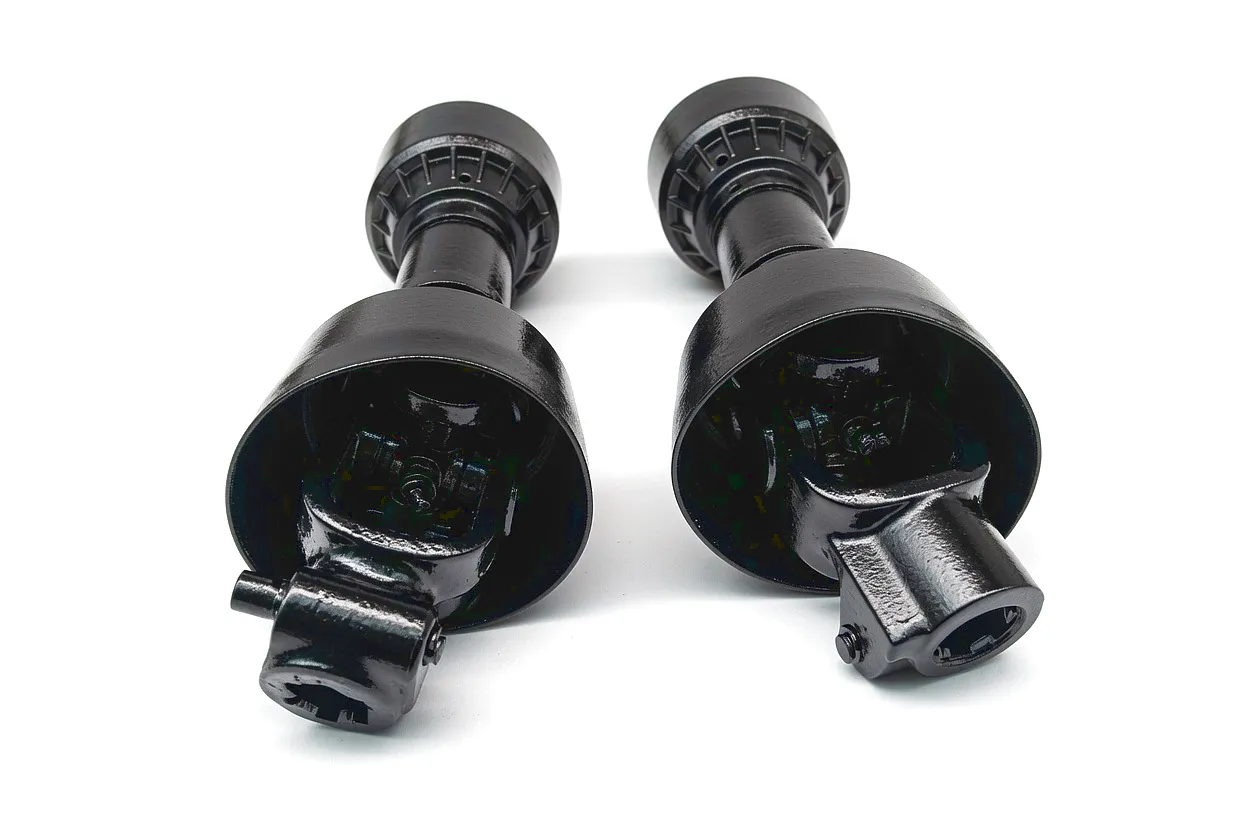
The operational environments across Great Britain are more diverse than the uniform flatlands of continental agriculture. A PTO drive shaft working a grassland contractor’s flail mower on the steep slopes of the Lake District faces fundamentally different angular stresses than the same nominal series driving a seed drill across the chalk downlands of Wiltshire. Understanding the specific demands of your application — not just the nominal HP class — is what allows a well-specified shaft to deliver a five-year service life where a poorly matched equivalent fails before the end of its second season.
The Practical Selection Framework: Six Steps to the Right Series
Rather than working backwards from a series number that a colleague or dealer recommends, the most reliable approach to PTO shaft selection works forward from first principles. The following framework is the same process used by agricultural machinery engineers at OEM suppliers and by independent machinery consultants working across the UK dealer network. It prevents both under-specification — which causes early failure — and over-specification — which wastes budget and adds unnecessary rotating mass. Applied rigorously, it delivers a shaft specification that performs reliably for the life of the implement to which it is fitted, requiring only routine maintenance rather than early replacement.
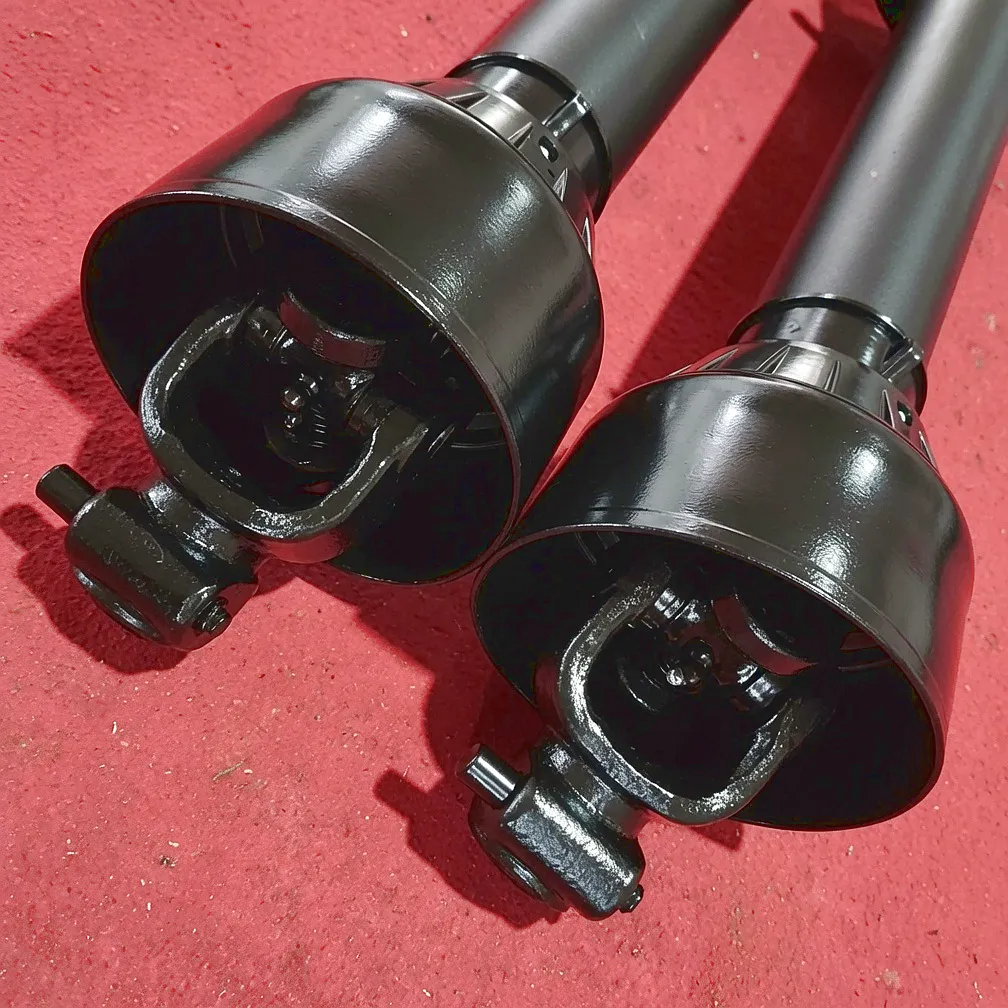
Identify Your Tractor’s PTO Torque Output
Locate the tractor’s operator manual or OECD test report. Find the PTO power at rated speed (540 or 1,000 RPM) and convert to torque using: Torque (N·m) = [Power (kW) × 9,549] / Speed (RPM). This gives you the maximum torque the driveline must handle under full-load conditions.
Apply the Application Load Factor
Multiply the calculated torque by a load factor that reflects the shock character of your application: 1.5 for smooth continuous loads (pumps, generators); 2.0 for medium shock loads (spreaders, mowers); 2.5–3.0 for high shock loads (rotary tillers, chippers, flail mowers on stony ground). The result is your design torque for shaft selection.
Match the Design Torque to a Series
Cross-reference your design torque against the table above. Select the lightest series whose rated torque exceeds your design torque — this gives optimum performance-to-weight ratio. Where two series overlap in torque range, the terrain conditions and operating angles encountered on your farm should guide the final choice toward the heavier series if in doubt.
Verify the Shaft Length and Telescoping Range
Measure the distance between the tractor PTO stub and the implement input shaft at minimum and maximum linkage positions. The shaft’s collapsed length must be shorter than the minimum distance, and the extended length must cover the maximum distance with at least one-third of the tube in overlap. If standard shaft lengths don’t fit, a custom-length shaft should be ordered — a service routinely provided by quality manufacturers like Ever Power.
Confirm the Coupling and Spline Specification
Check the tractor PTO stub diameter and spline count against ASABE S203.11 / ISO 500 standards. Common configurations are 1-3/8 inch 6-spline (standard on tractors up to approximately 65 HP), 1-3/8 inch 21-spline (common 540E economy option on modern tractors), and 1-3/4 inch 20-spline (standard on 1,000 RPM PTO systems). Implement input specifications must also be checked; they may differ from the tractor PTO spec, requiring mixed-spline yoke configurations.
Choose the Right Overload Protection Type
Match the protection type to your application: shear bolt for low-frequency overload environments where cost is the primary consideration; friction clutch for medium-frequency applications where self-resetting is valuable; cam-and-pawl ratchet coupler for high-frequency shock loading where instant disconnection is critical. Factor in the cost of the protection device against the value of the implement it is guarding — a £45 friction clutch on a £6,000 power harrow is straightforward economics.
Ever Power: Manufacturing Precision at Every Series Level
Factory Capability · Customisation · Global Supply Chain
Ever Power has built its reputation as a specialist PTO drive shaft manufacturer on the twin pillars of engineering precision and genuine customisation capability. Where many suppliers offer a catalogue of standard sizes with limited ability to deviate, Ever Power’s vertically integrated manufacturing operation allows the team to design, machine, heat-treat, assemble, and test bespoke shaft assemblies from Series 4 through Series 8W within commercially viable lead times — a capability that has made Ever Power a preferred supplier for agricultural OEMs, implement manufacturers, and specialist contracting businesses across Europe and the UK. The company’s investment in CNC turning centres with sub-0.01 mm positional accuracy, multi-axis grinding facilities, and automated hardness testing ensures that every cross-kit and tube assembly shipped from the factory meets or exceeds the rated torque specifications published in the product data sheets.
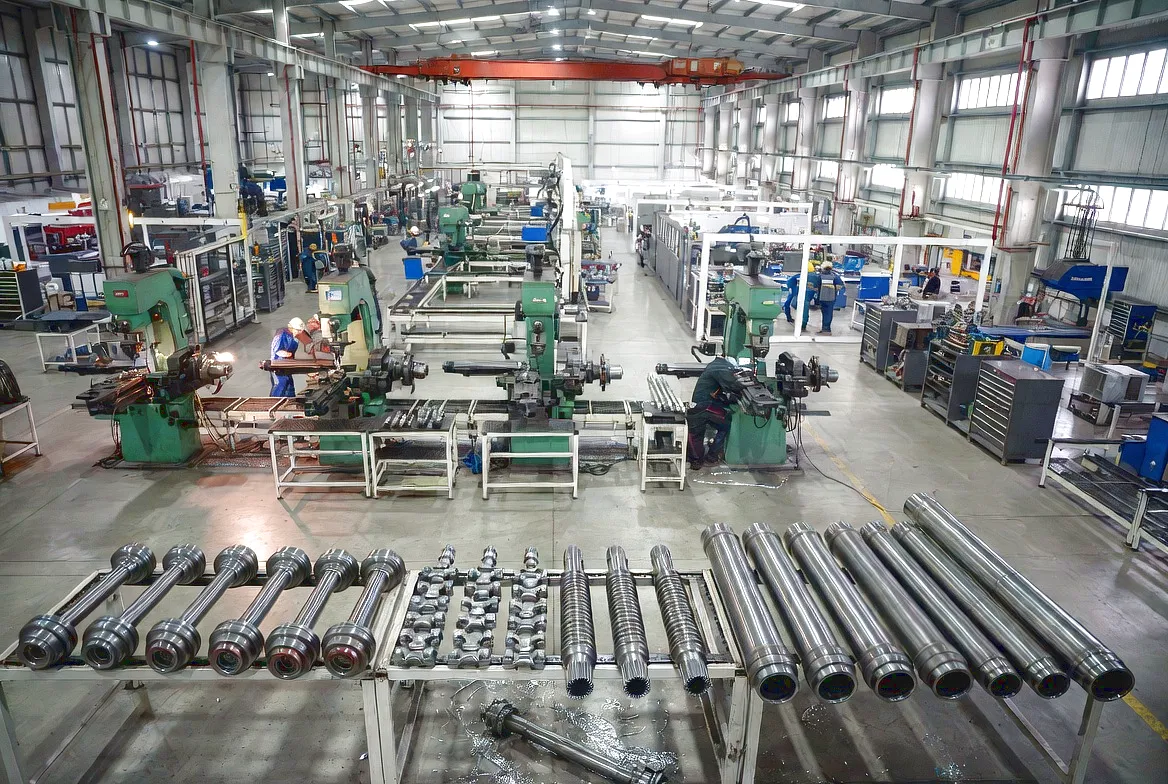
The customisation services available from Ever Power cover every dimension of PTO shaft specification: non-standard tube lengths (including shafts up to 3,000 mm collapsed length), mixed-spline yoke configurations (for example, 1-3/8 inch 6-spline on the tractor end and 1-3/4 inch 20-spline on the implement end), alternative tube profiles for unusual torque-to-weight requirements, and application-specific overload protection devices pre-calibrated to customer-specified torque settings. This level of customisation means that UK machinery distributors, farm engineering workshops, and agricultural contractors in specialist sectors — from precision horticultural operations in the Fenlands to large-scale estate contracting businesses in the Scottish Borders — can source purpose-made shaft assemblies rather than relying on approximate catalogue matches. The Ever Power supply chain team also offers scheduled stocking arrangements for high-volume UK customers, reducing lead time and ensuring replacement shaft availability during peak operational periods such as harvest and spring planting.
✉ Request a Custom Shaft Quote
Email: [email protected] · OEM enquiries welcome · Custom lead times from 7 working days
Customer Success Story: Sheffield Contracting Group
Case Study · South Yorkshire · Agricultural Contracting
Replacing a Failing Shaft Fleet Ahead of the Spring Season
Sheffield Contracting Group operates a mixed arable and grassland contracting business across South Yorkshire and the neighbouring parts of Nottinghamshire and Derbyshire. With a fleet of six large modern tractors — ranging from 150 to 240 HP — and a diverse implement suite including three power harrows, two large variable-chamber round balers, and a pair of high-output slurry tanker units, the business places heavy demands on its PTO drivelines across a twelve-month working calendar.
By January 2024, the contracts manager — James Holford — had identified a pattern of premature universal joint failures across three of the company’s power harrow shafts. The shafts in question were Series 6 assemblies purchased from a budget European supplier, all showing needle roller bearing wear at less than two seasons of use. With the spring cereals preparation window opening in March, James needed both a reliable replacement shaft supply and a longer-term sourcing solution.
After approaching Ever Power through a UK agricultural parts distributor, the engineering team conducted a torque analysis based on the tractors’ PTO output data and the power harrows’ documented input torque demand. The analysis confirmed that the power harrow application — high shock loads in stony ground typical of the South Yorkshire Coal Measures geology — warranted Series 7 shafts with friction clutch torque limiters rather than the Series 6 shear-bolt assemblies previously in use. Ever Power supplied six custom Series 7 shafts with 1-3/8 inch 21-spline tractor-end yokes and 1-3/4 inch 20-spline implement-end yokes, matched to the mixed coupling configuration across Sheffield Contracting’s fleet. Custom tube lengths were specified to suit two different tractor–harrow distance combinations. Delivery was completed within nine working days of order confirmation — in time for the March cultivation window with no disruption to the spring programme.
What Our UK Customers Say
“We switched to Ever Power Series 7 shafts on our round balers two seasons ago and the difference is unmistakable. The friction clutch trips far less often than the shear-bolt setup we had before, and we haven’t had a single joint failure across four balers in two full harvest seasons. The 50-hour greasing interval is a genuine productivity gain during the August rush.”
Arable Contracting Manager, North Yorkshire
“Getting a custom shaft length to match our specific Fendt 724 to Väderstad combination was something we couldn’t get sorted locally. Ever Power had the exact spline configuration we needed, built to the non-standard length, and shipped to our depot in Lincolnshire inside ten days. The quality is clearly a step above what we’d been buying from general agricultural factors. We won’t go back.”
Farm Manager, Holbeach, Lincolnshire
“Our wood chip supply business operates in some demanding conditions in the Trossachs — rocky ground, steep angles, and green wood that generates enormous peak torques on the chipper drum. Ever Power specified a Series 8 shaft with cam-and-pawl overload protection for us, explained exactly why they recommended it over the Series 7 we’d been looking at, and the logic was sound. Two seasons in and the shaft is performing exactly as described. Their technical team clearly knows what they’re talking about.”
Director, Highland Biomass Solutions, Stirlingshire
Часті запитання
Straight answers to the questions UK farmers and machinery managers ask most often
Ready to Select the Right PTO Shaft for Your Operation?
Tell us your tractor model, implement type, and operating conditions. Ever Power’s engineering team will identify the correct series, protection type, and coupling specification — and provide a precise commercial quote for standard or custom shaft assemblies delivered to your UK address.
✉ Get Your PTO Shaft Quote Today
[email protected] · Ever Power · UK Delivery Available · CE Certified
редагування від gzl























