
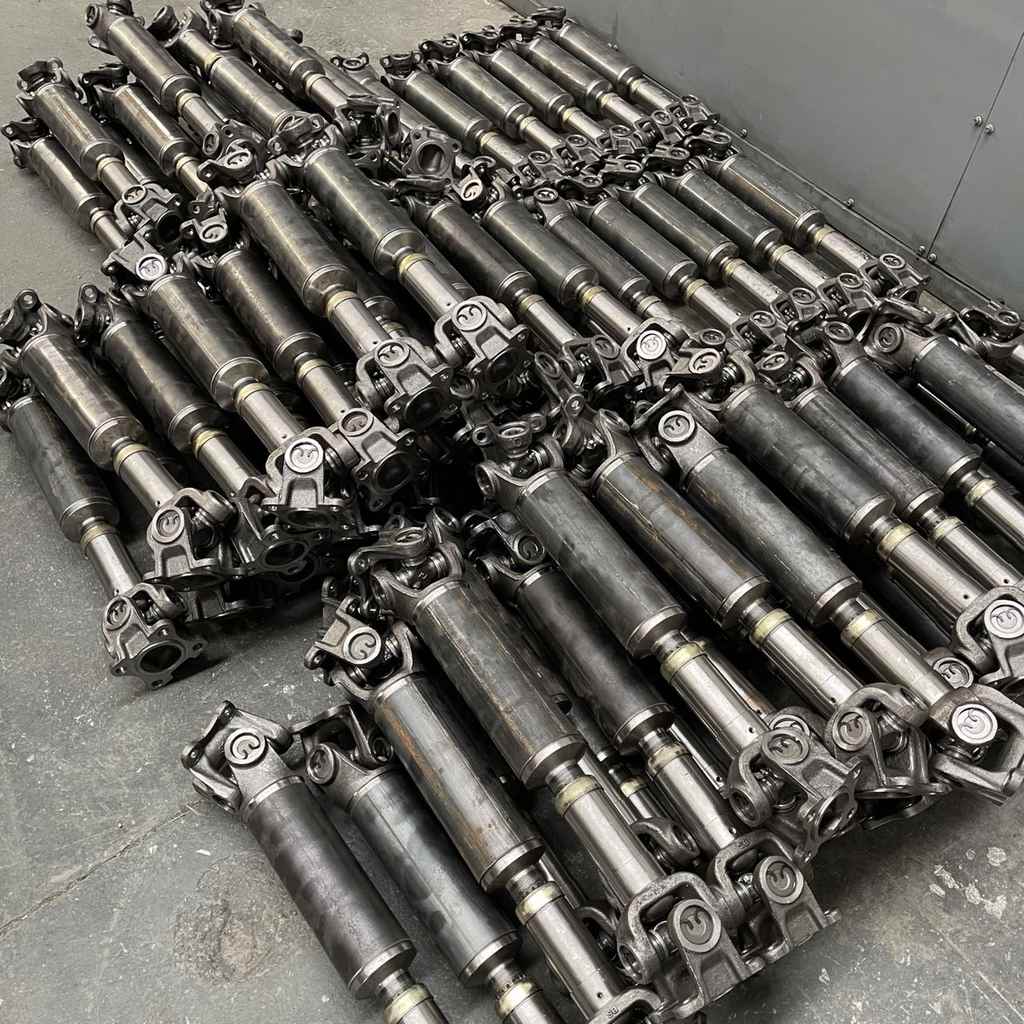
 Few mechanical innovations have shaped the landscape of British and global industry quite like the power take-off shaft. Originally conceived as a simple solution for transferring engine torque to auxiliary equipment, the PTO shaft has undergone more than a century of engineering refinement. Today, it sits at the heart of agricultural machinery, industrial processing plants, and heavy construction equipment from the Midlands to the Scottish Highlands. Understanding its history is not merely an academic exercise — it is the foundation upon which modern procurement decisions, maintenance strategies, and engineering specifications are built.
The term “PTO” refers to any mechanism that transfers mechanical power from a primary source — typically a vehicle or stationary engine — to a secondary piece of equipment without requiring a separate power source. This principle, seemingly straightforward on paper, has demanded extraordinary levels of material science, precision machining, and systems engineering to realise in practice. Whether you are specifying components for a farming operation in Yorkshire or a mining site in South Wales, the PTO shaft’s lineage directly informs how it performs under load, how it tolerates misalignment, and how long it will serve before requiring replacement.
Need a PTO Shaft for Your Application?
Request a Custom Quote from Ever Power
Our UK-serving engineering team responds within 24 hours. All specifications, torque ratings, and custom dimensions welcome.
The Origins: Steam, Horses, and Early Drive Technology
The conceptual roots of the power take-off can be traced to the late nineteenth century, when the mechanisation of agriculture was beginning to challenge centuries of horse-drawn tradition. Steam traction engines, which became increasingly prevalent on British farms throughout the 1870s and 1880s, were primarily designed for drawing ploughs and threshing machines. However, engineers quickly identified a limitation: the engine’s mechanical energy was largely locked within its rotating crankshaft, inaccessible to any attached implement. Early solutions involved leather belts, flat pulleys, and crude wheel-drive arrangements, but these were neither reliable nor efficient under field conditions in the English countryside.
It was the introduction of the internal combustion engine at the turn of the twentieth century that set the stage for a more formalised approach to auxiliary power transmission. British manufacturers, including those based in Birmingham and Coventry, were at the forefront of early tractor development, and the challenge of transmitting engine torque to implements without excessive mechanical losses became a defining engineering question of the era. The answer, though it would take several more decades to standardise, was already gestating in workshop drawings and experimental prototypes across the Midlands.
Key Milestones in PTO Development
International Harvester’s First PTO
The Mogul 8-16 tractor featured a rudimentary power take-off that could drive a grain binder directly — a watershed moment in mechanised farming.
ASAE Standardisation at 540 rpm
The American Society of Agricultural Engineers established 540 rpm as the standard PTO output speed, creating interoperability that transformed the implement market on both sides of the Atlantic.
1,000 rpm High-Speed Standard Introduced
As tractor engines grew more powerful, the industry introduced a second standard at 1,000 rpm. This opened the door for high-power implements including large balers, grain dryers, and industrial pumping systems.
Independent PTO and Electronics Integration
Tractor manufacturers introduced electronically controlled, independent PTO systems that could engage and disengage without stopping the tractor. UK firms including those in Sheffield’s steel corridor contributed critical alloy components to this wave.
Standardisation and the Birth of Universal Interoperability
 The commercial value of the PTO shaft was severely limited in its early decades by a lack of standardisation. Every manufacturer produced spline profiles, shaft diameters, and rotational speeds to their own proprietary dimensions, making it impossible for British farmers to attach implements from different makers to a single tractor. The economic consequences were significant — operators were effectively locked into single-brand ecosystems, and the secondary market for used implements was fragmented. It was the growing influence of agricultural engineering bodies in both the United Kingdom and North America that finally forced the issue, with the 1927 ASAE standard for a 1-3/8 inch, six-spline shaft running at 540 rpm becoming the first universally adopted specification.
In the United Kingdom, the adoption of this standard was accelerated by the post-war mechanisation drive of the late 1940s and 1950s. The government’s desire to expand domestic food production following wartime rationing pushed the Ministry of Agriculture to incentivise tractor ownership. With thousands of new tractors entering British fields from manufacturers including David Brown, Massey Ferguson, and Ford’s Basildon plant, a standardised PTO connection was not merely convenient — it was an economic imperative. By the mid-1950s, virtually every tractor sold in England, Scotland, and Wales came equipped with a standardised 540 rpm PTO stub shaft.
The introduction of the 1,000 rpm standard in 1958 represented a further leap in engineering ambition. As tractor power outputs climbed from 40 hp toward 100 hp and beyond, the 540 rpm standard began to show its limitations. At high power levels, the torque transmitted through a 540 rpm shaft demanded increasingly large shaft diameters and heavier universal joints. The 1,000 rpm alternative allowed the same power to be transmitted at higher speed and lower torque, enabling lighter, more compact driveline components — a critical advantage for manufacturers seeking to reduce both weight and cost across their implement ranges.
Working Principle of the Modern PTO Shaft
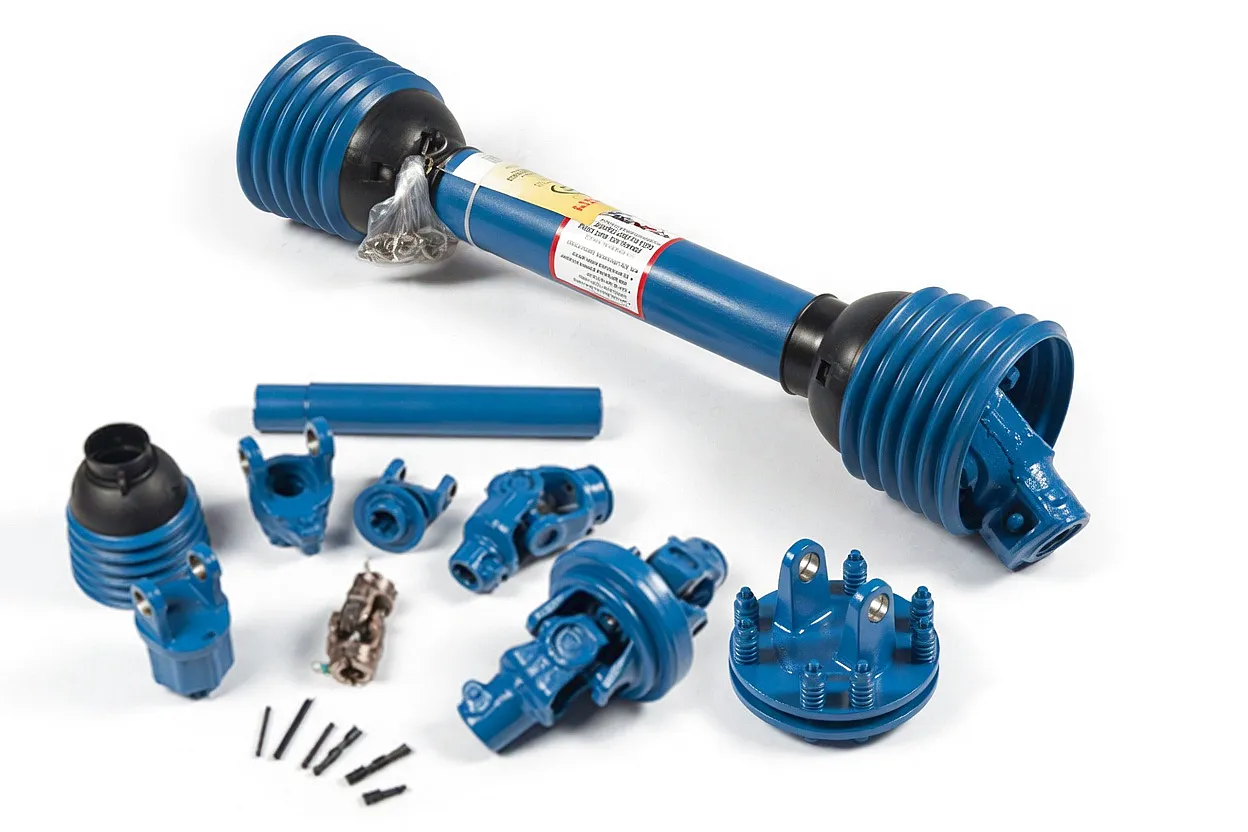
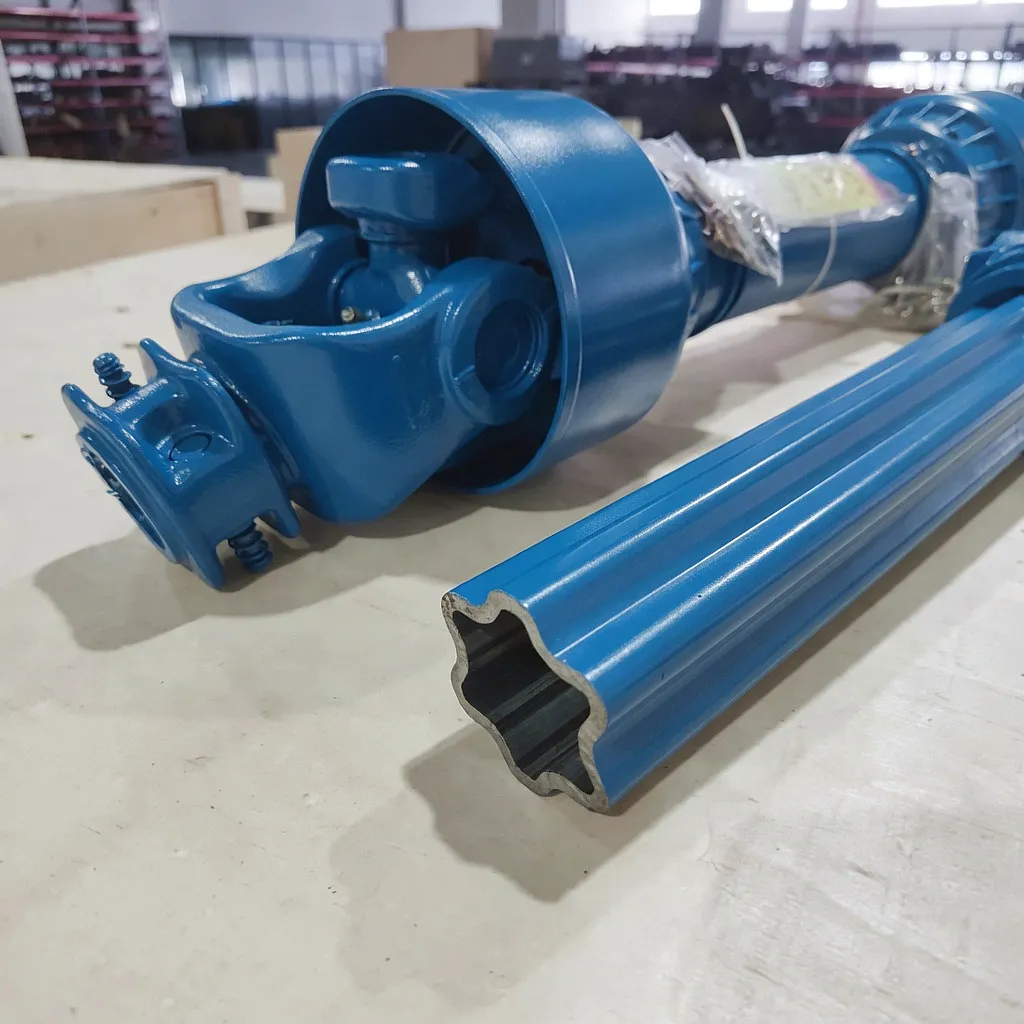
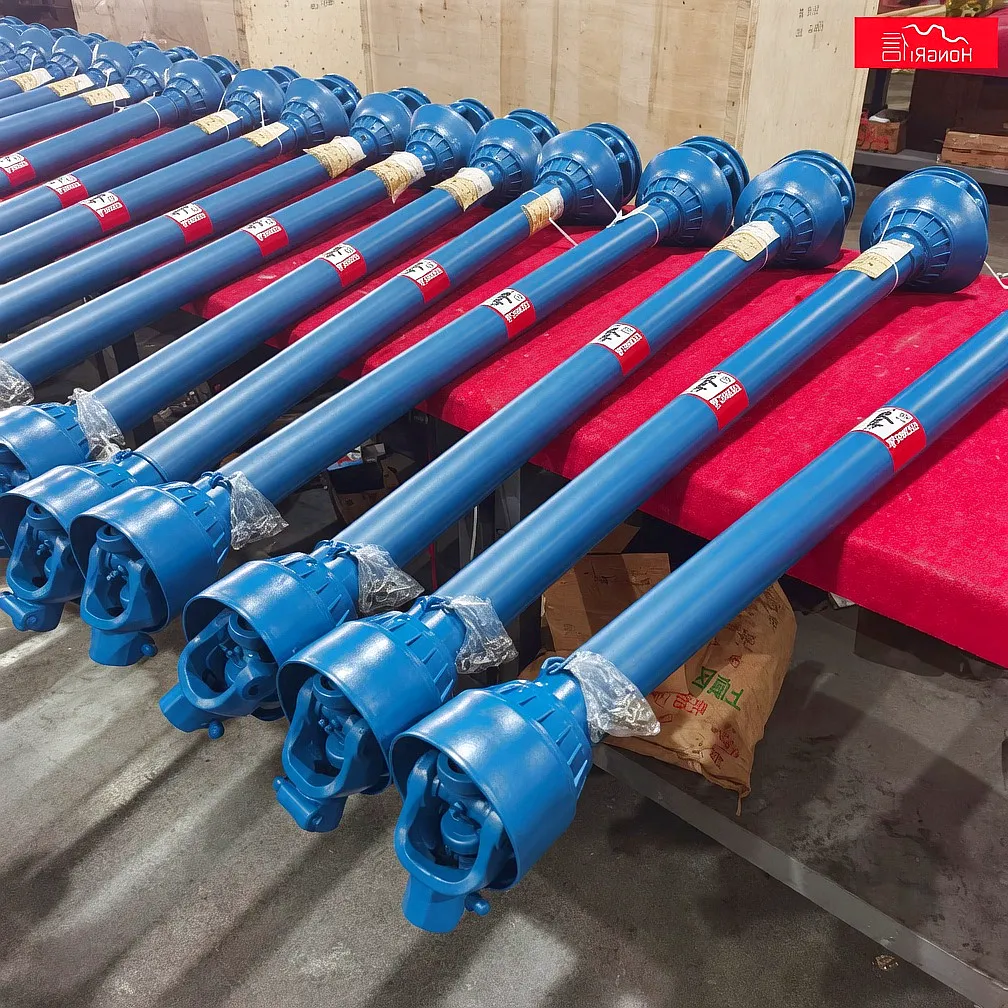 At its mechanical core, a PTO shaft is a rotating steel driveshaft that connects a power source’s output stub shaft to the input shaft of an implement or machine. Power is transferred through a series of mechanical interfaces: the spline connection at each end (which provides torsional engagement while allowing axial movement), and one or more universal joints (U-joints) that accommodate angular misalignment between the tractor and the implement. The telescoping outer and inner tubes — typically constructed from cold-drawn seamless steel or high-strength alloy tubing — allow the shaft’s working length to adapt as the implement rises, falls, or pivots in relation to the tractor during operation.
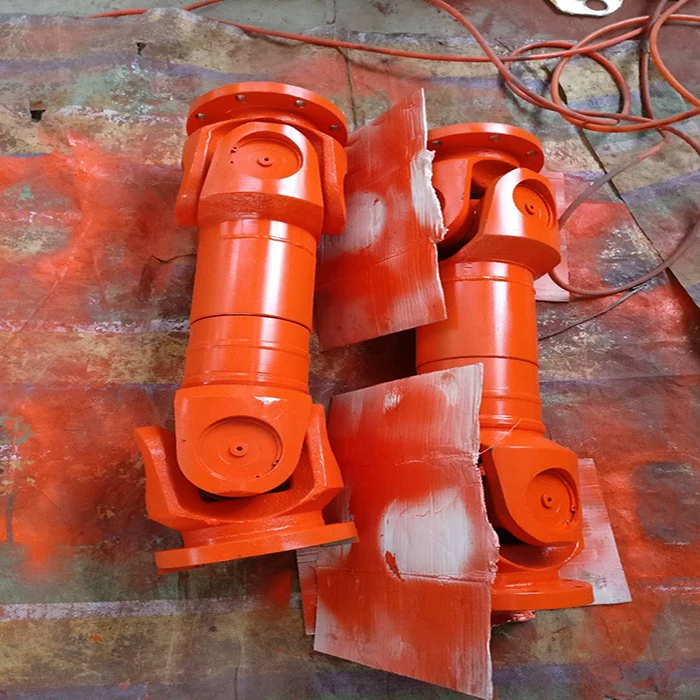
The universal joints themselves are arguably the most mechanically sophisticated element of the assembly. A standard Cardan (or cross-type) universal joint permits angular deflection of up to approximately 15–17 degrees during operation, though modern wide-angle joints used in front PTO applications can accommodate angles exceeding 35–40 degrees. Each joint consists of a cross-shaped trunnion (the spider) supported in four needle bearing cups pressed into the yoke bores. These needle bearings must withstand enormous combined loads — simultaneously handling radial forces from the transmitted torque, axial thrust from the telescoping action, and impact loads caused by sudden engagement or ground-driven shock inputs.
Spline Engagement
Male splines on the stub shaft engage female splines in the yoke, transmitting full torque while permitting minor axial float to prevent binding under load.
Universal Joints
Cardan or constant-velocity joints accommodate angular misalignment, absorb shock loads, and transmit torque smoothly even when the driving and driven axes are not colinear.
Telescoping Tubes
Overlapping inner and outer tubes with precision-profiled cross-sections (lemon, star, or trilobular) allow the shaft to extend and retract without losing torque transmission or structural integrity.
Core Materials in Modern PTO Shaft Manufacturing
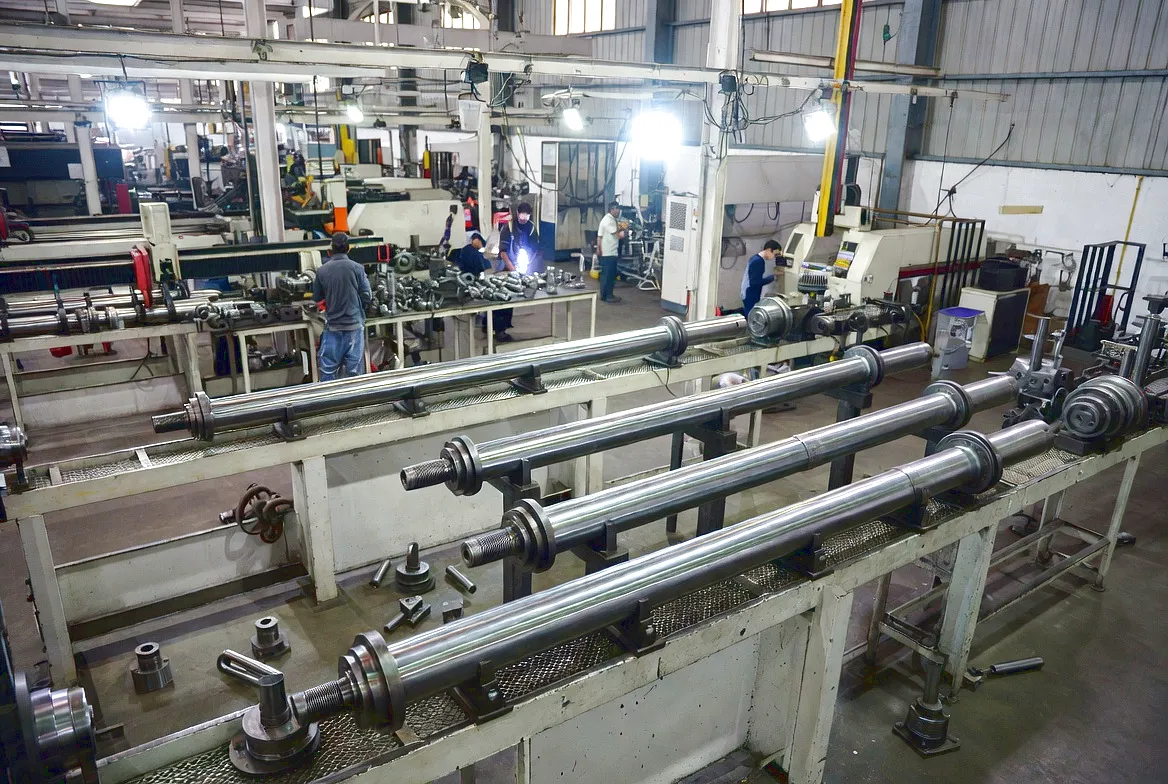
The material science behind a high-performance PTO shaft has evolved dramatically from the mild steel forgings of the early twentieth century. Today’s precision drive shafts draw on a palette of engineered alloys and surface treatments, each selected to meet specific performance requirements. The evolution of these material choices closely mirrors the arc of British steel and metallurgical expertise, from Sheffield’s famous alloy steel heritage through to the advanced heat treatment capabilities now concentrated in the West Midlands manufacturing corridor.
20CrMnTi / SAE 8620 Alloy Steel
Case-hardening alloy steels provide the optimal combination of surface hardness (58–62 HRC after carburising) and core toughness. The surface resists wear from spline engagement cycles, while the tough core absorbs shock loading from sudden tractor engagement. These steels dominate the driveshaft tube and spider trunnion applications.
High-Tensile Structural Tube (S355 / S420)
Cold-drawn seamless tube formed from European structural grades provides the outer and inner driveshaft tubes with consistent wall thickness tolerances of ±0.1 mm. The seamless production process eliminates weld seam stress risers that are a leading cause of fatigue failure in high-cycle driveshaft applications.
Needle Bearing Grade Steel (SUJ2 / 100Cr6)
Through-hardened bearing steel for needle roller elements delivers surface hardness of 60–65 HRC and an extremely fine carbide microstructure. This material class is fundamental to achieving the multi-thousand-hour service intervals expected of premium PTO shaft assemblies in continuous agricultural and industrial service.
Polymer Safety Guards (HDPE / PPE Composite)
Modern PTO shafts incorporate moulded polymer safety shields that rotate freely around the spinning shaft, preventing operator entanglement. These guards must comply with BS EN ISO 4254-1 requirements in the UK market, and are formed from high-density polyethylene or polypropylene compounds reinforced with glass fibre for durability in outdoor environments.
Product Technical & Performance Parameters
| Параметр | 540 rpm Standard | 1,000 rpm Standard | Custom / Heavy Duty |
|---|---|---|---|
| Rated Torque (Nm) | Up to 2,200 Nm | Up to 4,500 Nm | Up to 12,000+ Nm |
| Shaft Speed (rpm) | 540 / 540E | 1,000 / 1,000E | Variable (by spec) |
| Профіль сплайну | 1-3/8 in, 6-spline | 1-3/8 in, 21-spline | DIN / SAE custom |
| Максимальний робочий кут | Up to 15 deg (standard U-joint) | Up to 15 deg (standard U-joint) | Up to 40 deg (wide angle) |
| Матеріал трубки | S355 seamless steel | S355 / 20CrMnTi alloy | 42CrMo4 / custom alloy |
| Обробка поверхні | Zinc phosphate + paint | Carburised + tempered | Induction hardened / PVD |
| Service Life (hours) | 1,500 – 3,000 h | 2,000 – 5,000 h | 5,000+ h (engineered) |
| Compliance Standard | ISO 500 / BS EN ISO 4254 | ISO 500 / DIN 9611 | Customer specification |
| Захист від перевантаження | Optional friction / ratchet | Optional shear bolt / slip | Integrated torque limiter |
Why PTO Shaft Quality Matters
A substandard PTO shaft does not simply wear out — it fails unexpectedly, often under full load, causing costly equipment downtime and potential safety hazards. The engineering margins built into a precision-grade drive shaft are the product of decades of field failure analysis and materials development. Operators across England, from Lincolnshire’s intensive arable farms to the heavy industrial estates of the West Midlands, know that specifying the right shaft from the outset is far cheaper than managing an unplanned failure mid-season or mid-shift.
CE Marked
UK Market Ready
Core Technical Advantages of the Modern PTO Drive Shaft
The engineering advancements incorporated into contemporary PTO shaft designs translate directly into operational benefits that matter to procurement engineers, plant managers, and equipment operators alike. Understanding these advantages allows buyers to make informed comparisons between entry-level and premium-grade products, and to identify the specifications that genuinely matter for their specific application loads and duty cycles.
High Power Density
Modern alloy steel driveshaft assemblies transmit power densities that would have been unimaginable with early mild steel designs. A compact 1,000 rpm shaft assembly can handle over 200 kW of continuous mechanical power while remaining light enough for a single technician to handle during installation.
Integrated Overload Protection
Precision-calibrated torque limiters — available as friction disc, shear bolt, or ratchet-type mechanisms — disengage the driveline in milliseconds when torque exceeds the set threshold. This prevents catastrophic gearbox and implement damage when a baler encounters a blockage or a flail mower strikes buried stone, protecting capital investments that can run well into six figures.
Wide-Angle and CV Joint Options
Constant velocity joints eliminate the cyclic velocity variation inherent in standard Cardan joint designs, reducing vibration, noise, and driveline fatigue at higher operating angles. For front PTO applications, narrow headland manoeuvres, and articulated vehicle configurations, CV joint assemblies dramatically extend component life compared with standard double-Cardan arrangements.
Sealed Bearing Packs and Extended Intervals
Modern sealed needle bearing cups with premium lip seals extend greasing intervals from the traditional 8–10 hour cycles to 100 hours or beyond in standard agricultural conditions. For industrial applications in Birmingham’s fabrication plants or Teesside’s process industry, long-interval bearings directly translate into reduced planned maintenance shutdowns and lower total cost of ownership across multi-year service agreements.
Industrial and Agricultural Application Scenarios
The PTO shaft’s ability to transmit reliable mechanical power across a flexible, misalignment-tolerant interface makes it the preferred power transmission solution across an extraordinary range of industries. In the United Kingdom, demand for high-specification PTO drive shafts comes from operators and OEMs in sectors as diverse as intensive agriculture in East Anglia, offshore support vessel deck machinery along the Scottish coastline, aggregates processing plants in the Pennines, and emergency vehicle ancillary drives manufactured in the Midlands. Each application brings specific requirements for torque capacity, speed, duty cycle, environmental exposure, and regulatory compliance.
🌿 Agricultural Machinery
From combine harvesters processing barley crops across Cambridgeshire’s vast arable plains to rotary tillers working the heavy clay soils of the Vale of York, PTO drive shafts are the primary mechanical link between the tractor and virtually every powered implement. Balers, mowers, slurry spreaders, forage harvesters, and grain augers all depend on correctly specified driveshafts to deliver rated implement performance over a full working season.
🏭 Industrial Processing
In Sheffield’s remaining steel processing operations and Birmingham’s precision engineering factories, PTO-style driveshafts appear as intermediate shaft sections in conveyor drives, mixer assemblies, and packaging machinery. Their ability to tolerate misalignment and absorb shock loads without transmitting them upstream to gearboxes or motors makes them invaluable in high-vibration industrial environments where rigid couplings would lead to premature bearing failure.
🚗 Construction Equipment
Road planers, trench excavators with powered rock-cutting heads, and concrete mixing plants operating across major UK infrastructure projects — from HS2 groundworks in the Midlands to road improvement schemes across Northern England — all utilise heavy-duty PTO drive shaft assemblies. These applications demand shafts rated for continuous high-torque operation under constant vibration, often in environments contaminated with abrasive dust and water ingress.
⛽️ Forestry and Waste Management
Tractor-driven wood chippers, stump grinders, and commercial shredders used across British forestry estates and local authority waste management operations present some of the most demanding duty cycles encountered by any PTO shaft. Sudden blockages and restart under load impose torque spikes many times the rated operating torque, making precision torque limiters and heavy-section driveline components an absolute technical necessity in this sector.
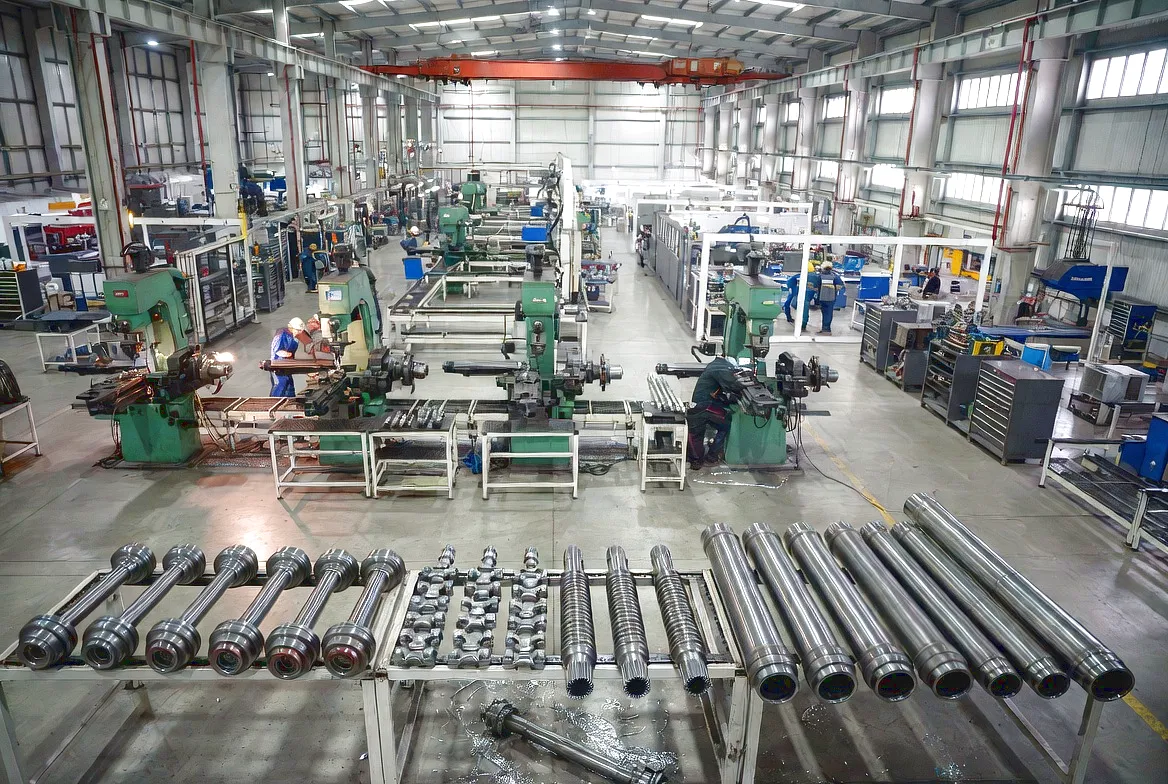
Customer Success Story
Rotherham, South Yorkshire
Heavy Steel Processing
Reducing Driveline Downtime by 68% at a Rotherham Steel Component Manufacturer
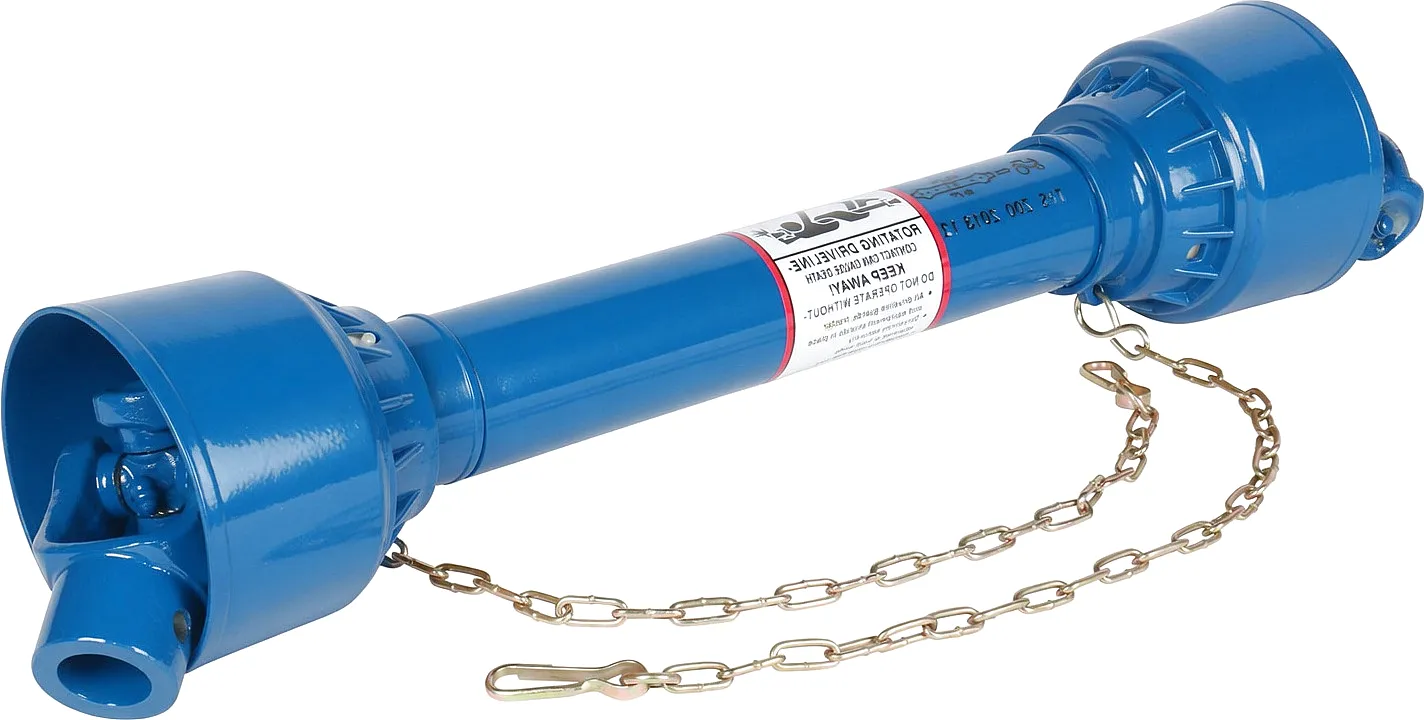 Meridian Steel Profiles Ltd, a medium-sized steel section fabrication business operating on the outskirts of Rotherham, South Yorkshire, had been experiencing persistent driveline failures on the PTO-driven material feed conveyors that supply their cold-rolling mill. The original shaft assemblies — sourced from a generic distributor — were failing at the universal joint spiders approximately every 600 to 900 operating hours, causing unplanned shutdowns that cost the business an estimated £18,000 per incident in combined production loss, emergency engineering labour, and expedited parts costs.
Following an introduction through a local engineering network, Meridian’s maintenance director contacted Ever Power’s technical sales team and provided a full operating profile: continuous duty at 820 rpm, intermittent torque spikes reaching 3,400 Nm during billet re-engagement, an operating angle of up to 11 degrees, and an environment with heavy steel swarf contamination and regular high-pressure washdown cycles. Ever Power’s engineers specified a custom-built heavy-duty shaft assembly using 42CrMo4 alloy steel tubes, induction-hardened splines, and IP68-rated sealed bearing packs, complemented by a precision-set friction torque limiter calibrated to protect the downstream gearbox at 3,200 Nm.
After 18 months of continuous operation with the Ever Power assembly installed, Meridian’s maintenance records show zero unplanned driveline failures, a measured bearing greasing interval extension from 40 hours to 200 hours, and a total documented cost saving of approximately £112,000 against the previous 18-month failure pattern. The procurement team has since standardised Ever Power PTO shaft assemblies across four additional feed conveyor positions on the same production floor.
“The custom torque limiter specification was exactly what we needed. Ever Power’s engineering team understood our duty cycle from the first conversation, and the 42CrMo4 shaft assembly has been running without a single issue for over a year. Our maintenance costs on that line have dropped dramatically.”
“We’ve purchased agricultural PTO drive shafts from several suppliers over the years, but Ever Power’s attention to material traceability and dimensional accuracy is in a different class. The IP68-rated bearing packs have held up perfectly through two full winter seasons on our Lincolnshire operation.”
“As a Birmingham-based OEM producing industrial mixing equipment, we need driveshaft suppliers who can quote, manufacture, and deliver to our production schedule. Ever Power has consistently hit our lead time requirements and the technical documentation provided with each batch supports our CE marking process without any gaps.”
Часті запитання
Real questions from UK engineers, procurement teams, and agricultural operators — answered directly.
+
What is the difference between a 540 rpm and a 1,000 rpm PTO shaft, and which one do I need for my UK farm machinery?
The 540 rpm standard suits lower-power implements up to around 65 kW, with a 1-3/8 inch 6-spline stub shaft. The 1,000 rpm standard handles higher power applications above 65 kW and uses a 1-3/8 inch 21-spline shaft — it can transmit the same power at higher speed with lower torque, enabling lighter, more compact driveline components. Most modern British tractors above 100 hp are equipped with both PTO speeds, selectable via the operator’s cab. Check your implement’s input shaft requirement before ordering — mixing standards will result in mechanical incompatibility.
+
How much does a custom heavy-duty PTO drive shaft typically cost for an industrial application in the UK, and can I get an urgent quote?
Custom heavy-duty PTO shaft pricing varies considerably based on shaft length, material grade, joint specification, and torque limiter type. For standard agricultural replacement shafts, prices typically begin at £80–£200 per assembly. Industrial and custom-engineered units with alloy steel tubes, induction-hardened splines, and IP-rated bearings can range from £350 to well over £1,500 depending on specification. For an accurate price tailored to your application, please contact Ever Power’s sales team directly — quotations are typically returned within 24 hours.
+
Where can I find a reliable PTO shaft supplier in the Birmingham or Sheffield area who stocks industrial-grade driveshaft components?
Ever Power supplies UK customers in Birmingham, Sheffield, and across the wider Midlands and Yorkshire regions through both UK-held stock and direct factory despatch. Standard agricultural and industrial PTO shaft assemblies are available for next-day delivery to most UK mainland postcodes. Custom-engineered assemblies for Birmingham OEMs and Sheffield industrial operators are available with agreed lead times, with expedited manufacturing slots available for urgent requirements. Contact the sales team to discuss your stock and delivery needs.
+
What safety standards and compliance certifications should a UK buyer look for when purchasing a PTO shaft for agricultural use?
In the UK, PTO shafts for agricultural machinery must comply with BS EN ISO 4254-1 (Agricultural machinery — Safety) and the relevant provisions of the UK Supply of Machinery (Safety) Regulations 2008 (retained post-Brexit). The shaft assembly should carry CE or UKCA marking (UKCA became the primary UK conformity mark following EU Exit) and be accompanied by a Declaration of Conformity. Safety guards must meet the specific dimensional and retention requirements set out in ISO 500. Ever Power supplies full documentation packages including Declaration of Conformity with all CE/UKCA-marked assemblies.
+
How do I correctly measure the length of a replacement PTO shaft for my tractor and implement combination?
Measuring a PTO shaft replacement correctly is critical to avoiding both over-extension (which causes joint stress) and under-extension (which causes bottoming out of the telescoping tubes). You need three measurements: (1) the compressed length — measure with the implement hitched and at its shortest working distance from the tractor; (2) the extended length — measure with the implement at maximum separation; and (3) the overlap — confirm the inner and outer tubes maintain at least one-third of the inner tube’s length in overlap at maximum extension. If in doubt, send your measurements to Ever Power’s technical team, who can recommend the correct shaft series.
+
Who are the most trusted PTO shaft suppliers for heavy construction equipment operators working on infrastructure projects across northern England?
For heavy construction applications — road planers, trenchers, articulated dump truck auxiliary drives — the supplier needs to combine heavy-duty engineering capability with fast UK delivery and genuine technical support. Ever Power serves construction equipment operators across northern England, including Yorkshire, Lancashire, County Durham, and Northumberland, with custom-engineered PTO shaft assemblies rated for continuous operation in construction-class duty cycles. We would welcome a conversation about your specific application requirements and lead time expectations.
© Ever Power | PTO Drive Shaft Specialists | Serving UK and Global B2B Markets
редагування від gzl























