
Produktbeskrivning
Detaljerade foton
Our goal is to provide high-quality, modern design, reasonable prices, and good after-sales product services
Företagsprofil
Factory View
Vanliga frågor
| 1- If you are interested in purchasing products,please contact our responsible person,online or telephone communication
Most friends contact our responsible person to inquire: 2-About the price The price in the information is our company’s approximate wholesale price, 3-About delivery We will confirm the way of cooperation and cooperation reached for you to 4-About cooperation We are in line with the production of excellence, honest and trustworthy busi- 5- how can we guarantee quality? Always a pre-production sample before mass production; |
/* 22 januari 2571 19:08:37 */!function(){function s(e,r){var a,o={};try{e&&e.split(“,”).forEach(function(e,t){e&&(a=e.match(/(.*?):(.*)$/)))
| Eftermarknadsservice: | 12 månader |
|---|---|
| Garanti: | 12 månader |
| Typ: | Variable Timing Wheel |
| Certifiering: | TUV |
| Applicable: | Truck, Car, Machinery |
| Quality: | Top |
| Anpassning: |
Tillgänglig
| Anpassad förfrågan |
|---|
Kan drivaxlar anpassas för användning i både fordons- och industrimiljöer?
Ja, drivaxlar kan anpassas för användning i både fordons- och industrimiljöer. Även om det kan finnas vissa skillnader i design och specifikationer baserat på de specifika tillämpningskraven, förblir de grundläggande principerna och funktionerna för drivaxlar tillämpliga i båda sammanhangen. Här är en detaljerad förklaring:
1. Kraftöverföring:
Drivaxlar tjänar det primära syftet att överföra rotationskraft från en kraftkälla, såsom en motor, till drivna komponenter, som kan vara hjul, maskiner eller andra mekaniska system. Denna grundläggande funktion gäller både fordons- och industrimiljöer. Oavsett om det handlar om att leverera kraft till hjulen på ett fordon eller överföra vridmoment till industrimaskiner, förblir den grundläggande principen för kraftöverföring densamma för drivaxlar i båda sammanhangen.
2. Designöverväganden:
Även om det kan finnas variationer i design baserat på specifika tillämpningar, är de centrala designövervägandena för drivaxlar likartade i både fordons- och industriella miljöer. Faktorer som vridmomentkrav, driftshastigheter, längd och materialval beaktas i båda fallen. Fordonsdrivaxlar är vanligtvis konstruerade för att hantera fordonets dynamiska drift, inklusive variationer i hastighet, vinklar och fjädringsrörelser. Industriella drivaxlar kan å andra sidan vara konstruerade för specifika maskiner och utrustning, med hänsyn till faktorer som lastkapacitet, driftsförhållanden och uppriktningskrav. De underliggande principerna för att säkerställa korrekta dimensioner, hållfasthet och balans är dock viktiga i både fordons- och industriella drivaxlar.
3. Materialval:
Materialvalet för drivaxlar påverkas av de specifika kraven för tillämpningen, oavsett om det gäller fordonsindustrin eller industrin. I fordonsindustrin tillverkas drivaxlar vanligtvis av material som stål eller aluminiumlegeringar, valda för sin styrka, hållbarhet och förmåga att motstå varierande driftsförhållanden. I industriella miljöer kan drivaxlar tillverkas av ett bredare utbud av material, inklusive stål, rostfritt stål eller till och med speciallegeringar, beroende på faktorer som lastkapacitet, korrosionsbeständighet eller temperaturtolerans. Materialvalet skräddarsys för att möta tillämpningens specifika behov samtidigt som effektiv kraftöverföring och hållbarhet säkerställs.
4. Ledkonfigurationer:
Både fordons- och industriella drivaxlar kan ha olika kopplingskonfigurationer för att tillgodose de specifika kraven i tillämpningen. Universalkopplingar (U-kopplingar) används ofta i båda sammanhangen för att möjliggöra vinkelrörelse och kompensera för feljustering mellan drivaxeln och drivna komponenter. Konstant hastighet (CV) kopplingar används också, särskilt i fordonsdrivaxlar, för att bibehålla en konstant rotationshastighet och tillgodose varierande arbetsvinklar. Dessa kopplingskonfigurationer anpassas och optimeras baserat på de specifika behoven hos fordons- eller industriella tillämpningar.
5. Underhåll och service:
Även om underhållsrutiner kan variera mellan fordons- och industrimiljöer, är vikten av regelbunden inspektion, smörjning och balansering fortfarande avgörande i båda fallen. Både fordons- och industridrivaxlar gynnas av regelbundet underhåll för att säkerställa optimal prestanda, identifiera potentiella problem och förlänga drivaxlarnas livslängd. Smörjning av leder, inspektion av slitage eller skador och balanseringsprocedurer är vanliga underhållsuppgifter för drivaxlar i både fordons- och industriapplikationer.
6. Anpassning och anpassning:
Drivaxlar kan anpassas och anpassas för att möta de specifika kraven för olika fordons- och industritillämpningar. Tillverkare erbjuder ofta drivaxlar med olika längder, diametrar och kopplingskonfigurationer för att passa ett brett utbud av fordon eller maskiner. Denna flexibilitet möjliggör anpassning av drivaxlar för att passa de specifika vridmoment-, hastighets- och dimensionskraven för olika tillämpningar, oavsett om det gäller fordons- eller industrimiljöer.
Sammanfattningsvis kan drivaxlar anpassas för användning i både fordons- och industrimiljöer genom att beakta de specifika kraven för varje applikation. Även om det kan finnas variationer i design, material, kopplingskonfigurationer och underhållspraxis, förblir de grundläggande principerna för kraftöverföring, designöverväganden och anpassningsalternativ tillämpliga i båda sammanhangen. Drivaxlar spelar en avgörande roll i både fordons- och industriapplikationer, vilket möjliggör effektiv kraftöverföring och tillförlitlig drift i ett brett spektrum av mekaniska system.
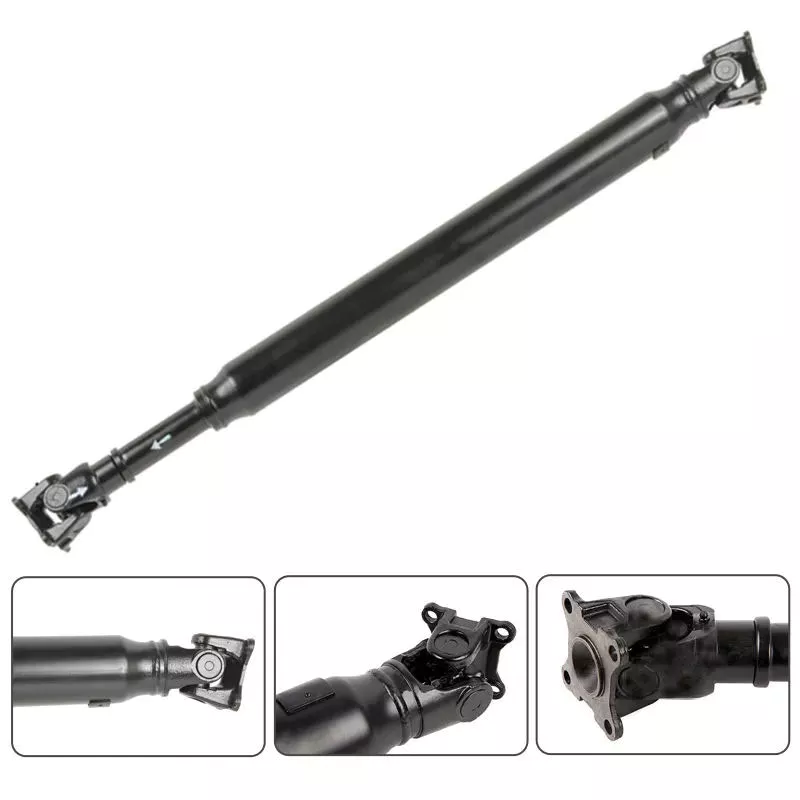
Can drive shafts be customized for specific vehicle or equipment requirements?
Yes, drive shafts can be customized to meet specific vehicle or equipment requirements. Customization allows manufacturers to tailor the design, dimensions, materials, and other parameters of the drive shaft to ensure compatibility and optimal performance within a particular vehicle or equipment. Here’s a detailed explanation of how drive shafts can be customized:
1. Dimensional Customization:
Drive shafts can be customized to match the dimensional requirements of the vehicle or equipment. This includes adjusting the overall length, diameter, and spline configuration to ensure proper fitment and clearances within the specific application. By customizing the dimensions, the drive shaft can be seamlessly integrated into the driveline system without any interference or limitations.
2. Material Selection:
The choice of materials for drive shafts can be customized based on the specific requirements of the vehicle or equipment. Different materials, such as steel alloys, aluminum alloys, or specialized composites, can be selected to optimize strength, weight, and durability. The material selection can be tailored to meet the torque, speed, and operating conditions of the application, ensuring the drive shaft’s reliability and longevity.
3. Joint Configuration:
Drive shafts can be customized with different joint configurations to accommodate specific vehicle or equipment requirements. For example, universal joints (U-joints) may be suitable for applications with lower operating angles and moderate torque demands, while constant velocity (CV) joints are often used in applications requiring higher operating angles and smoother power transmission. The choice of joint configuration depends on factors such as operating angle, torque capacity, and desired performance characteristics.
4. Torque and Power Capacity:
Customization allows drive shafts to be designed with the appropriate torque and power capacity for the specific vehicle or equipment. Manufacturers can analyze the torque requirements, operating conditions, and safety margins of the application to determine the optimal torque rating and power capacity of the drive shaft. This ensures that the drive shaft can handle the required loads without experiencing premature failure or performance issues.
5. Balancing and Vibration Control:
Drive shafts can be customized with precision balancing and vibration control measures. Imbalances in the drive shaft can lead to vibrations, increased wear, and potential driveline issues. By employing dynamic balancing techniques during the manufacturing process, manufacturers can minimize vibrations and ensure smooth operation. Additionally, vibration dampers or isolation systems can be integrated into the drive shaft design to further mitigate vibrations and enhance overall system performance.
6. Integration and Mounting Considerations:
Customization of drive shafts takes into account the integration and mounting requirements of the specific vehicle or equipment. Manufacturers work closely with the vehicle or equipment designers to ensure that the drive shaft fits seamlessly into the driveline system. This includes adapting the mounting points, interfaces, and clearances to ensure proper alignment and installation of the drive shaft within the vehicle or equipment.
7. Collaboration and Feedback:
Manufacturers often collaborate with vehicle manufacturers, OEMs (Original Equipment Manufacturers), or end-users to gather feedback and incorporate their specific requirements into the drive shaft customization process. By actively seeking input and feedback, manufacturers can address specific needs, optimize performance, and ensure compatibility with the vehicle or equipment. This collaborative approach enhances the customization process and results in drive shafts that meet the exact requirements of the application.
8. Compliance with Standards:
Customized drive shafts can be designed to comply with relevant industry standards and regulations. Compliance with standards, such as ISO (International Organization for Standardization) or specific industry standards, ensures that the customized drive shafts meet quality, safety, and performance requirements. Adhering to these standards provides assurance that the drive shafts are compatible and can be seamlessly integrated into the specific vehicle or equipment.
In summary, drive shafts can be customized to meet specific vehicle or equipment requirements through dimensional customization, material selection, joint configuration, torque and power capacity optimization, balancing and vibration control, integration and mounting considerations, collaboration with stakeholders, and compliance with industry standards. Customization allows drive shafts to be precisely tailored to the needs of the application, ensuring compatibility, reliability, and optimal performance.

What is a drive shaft and how does it function in vehicles and machinery?
A drive shaft, also known as a propeller shaft or prop shaft, is a mechanical component that plays a critical role in transmitting rotational power from the engine to the wheels or other driven components in vehicles and machinery. It is commonly used in various types of vehicles, including cars, trucks, motorcycles, and agricultural or industrial machinery. Here’s a detailed explanation of what a drive shaft is and how it functions:
1. Definition and Construction: A drive shaft is a cylindrical metal tube that connects the engine or power source to the wheels or driven components. It is typically made of steel or aluminum and consists of one or more tubular sections with universal joints (U-joints) at each end. These U-joints allow for angular movement and compensation of misalignment between the engine/transmission and the driven wheels or components.
2. Power Transmission: The primary function of a drive shaft is to transmit rotational power from the engine or power source to the wheels or driven components. In vehicles, the drive shaft connects the transmission or gearbox output shaft to the differential, which then transfers power to the wheels. In machinery, the drive shaft transfers power from the engine or motor to various driven components such as pumps, generators, or other mechanical systems.
3. Torque and Speed: The drive shaft is responsible for transmitting both torque and rotational speed. Torque is the rotational force generated by the engine or power source, while rotational speed is the number of revolutions per minute (RPM). The drive shaft must be capable of transmitting the required torque without excessive twisting or bending and maintaining the desired rotational speed for efficient operation of the driven components.
4. Flexibel koppling: The U-joints on the drive shaft provide a flexible coupling that allows for angular movement and compensation of misalignment between the engine/transmission and the driven wheels or components. As the suspension system of a vehicle moves or the machinery operates on uneven terrain, the drive shaft can adjust its length and angle to accommodate these movements, ensuring smooth power transmission and preventing damage to the drivetrain components.
5. Length and Balance: The length of the drive shaft is determined by the distance between the engine or power source and the driven wheels or components. It should be appropriately sized to ensure proper power transmission and avoid excessive vibrations or bending. Additionally, the drive shaft is carefully balanced to minimize vibrations and rotational imbalances, which can cause discomfort, reduce efficiency, and lead to premature wear of drivetrain components.
6. Safety Considerations: Drive shafts in vehicles and machinery require proper safety measures. In vehicles, drive shafts are often enclosed within a protective tube or housing to prevent contact with moving parts and reduce the risk of injury in the event of a malfunction or failure. Additionally, safety shields or guards are commonly installed around exposed drive shafts in machinery to protect operators from potential hazards associated with rotating components.
7. Maintenance and Inspection: Regular maintenance and inspection of drive shafts are essential to ensure their proper functioning and longevity. This includes checking for signs of wear, damage, or excessive play in the U-joints, inspecting the drive shaft for any cracks or deformations, and lubricating the U-joints as recommended by the manufacturer. Proper maintenance helps prevent failures, ensures optimal performance, and prolongs the service life of the drive shaft.
In summary, a drive shaft is a mechanical component that transmits rotational power from the engine or power source to the wheels or driven components in vehicles and machinery. It functions by providing a rigid connection between the engine/transmission and the driven wheels or components, while also allowing for angular movement and compensation of misalignment through the use of U-joints. The drive shaft plays a crucial role in power transmission, torque and speed delivery, flexible coupling, length and balance considerations, safety, and maintenance requirements. Its proper functioning is essential for the smooth and efficient operation of vehicles and machinery.


editor by CX 2024-05-10























