
PTO Drive Shafts · Port Automation · UK Industrial Supplier
Industrial Drive Shaft for Port Automation: Engineering Reliability into Automated Straddle Carriers and AGV Systems
Marine-grade drive shafts engineered for non-stop container terminal operations — serving UK port fleets and global logistics infrastructure with precision custom engineering.
When the Container Terminal Never Sleeps, Neither Does the Drivetrain
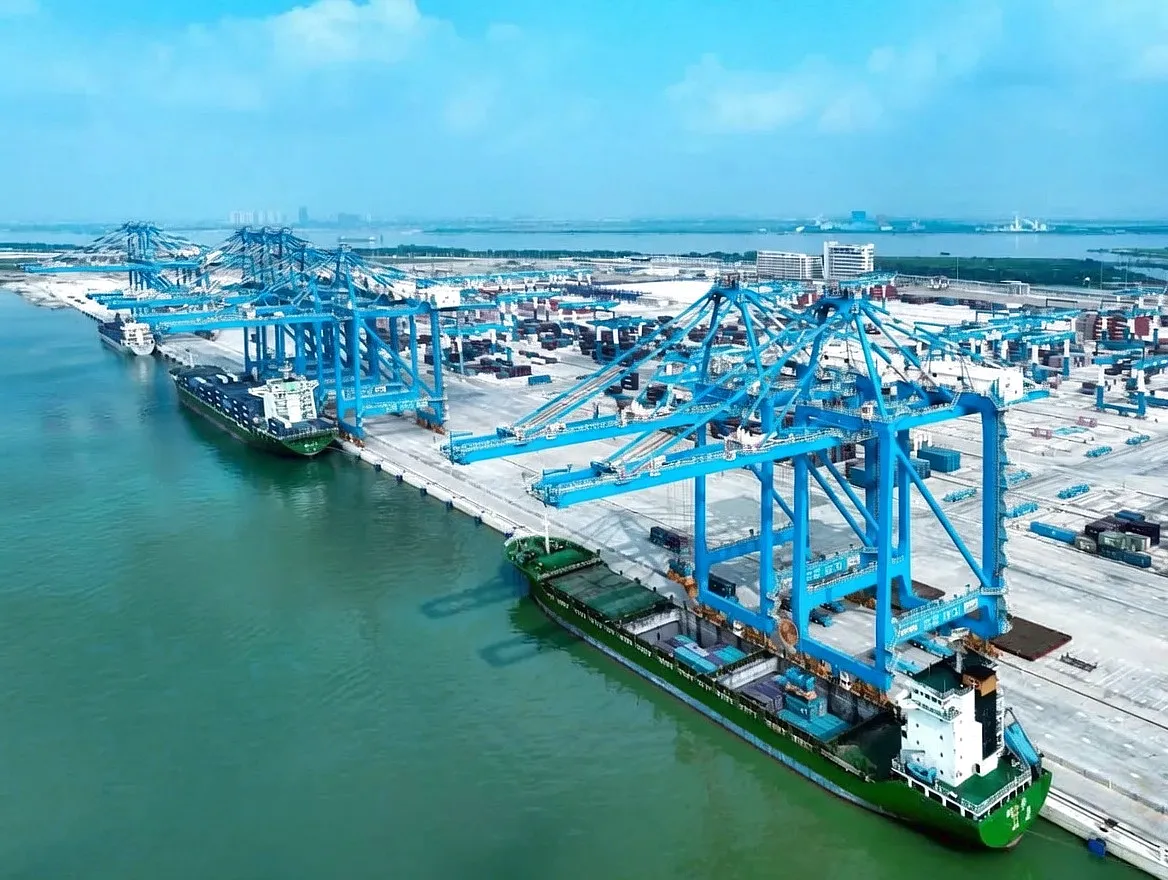 Britain’s container terminals are under pressure like never before. The Port of Felixstowe processes around four million TEUs annually; Southampton handles more than two and a half million. Across Liverpool, Tilbury, and London Gateway, automation is no longer a future aspiration — it is the operating reality of today. Automated straddle carriers glide between stack rows around the clock, AGV convoys transfer containers from ship to yard without pause, and a single unplanned mechanical failure can cascade into port-wide delays costing tens of thousands of pounds within hours. At the mechanical core of every automated straddle carrier and every guided vehicle is a PTO drive shaft quietly transmitting thousands of newton-metres of torque under conditions that would destroy a lesser component. Understanding what separates a port-grade industrial shaft from a standard industrial unit is the starting point for any terminal engineer responsible for fleet reliability — and the answers have direct implications for maintenance budgets, operational availability, and total cost of ownership.
At pto-drive-shafts.com, our engineering team has spent more than 18 years developing precision drive shaft assemblies for industries where downtime is genuinely not an option. Port automation sits at the extreme end of that spectrum. The combination of salt-laden coastal air, continuous operation cycles, heavy shock loading from container pick-and-place movements, and the space constraints of a compact AGV chassis all create demands that require purpose-built engineering — not adapted agricultural or construction-grade catalogue items. This article walks through each of those demands in detail, explains the materials and design features that address them, and outlines why Ever Power’s custom industrial shaft solutions are specified by terminal operators from the UK to the Far East.
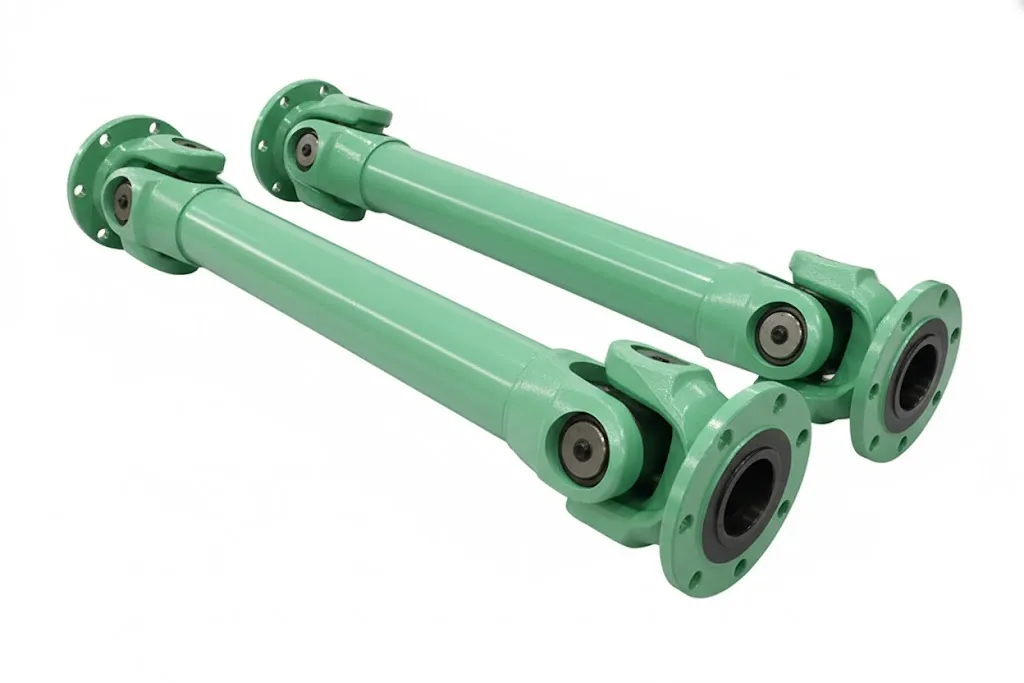
The Most Demanding Environment in Industrial Drivetrain Engineering
Three compounding factors make port automation uniquely hostile to drivetrain components
Salt Spray & Coastal Corrosion
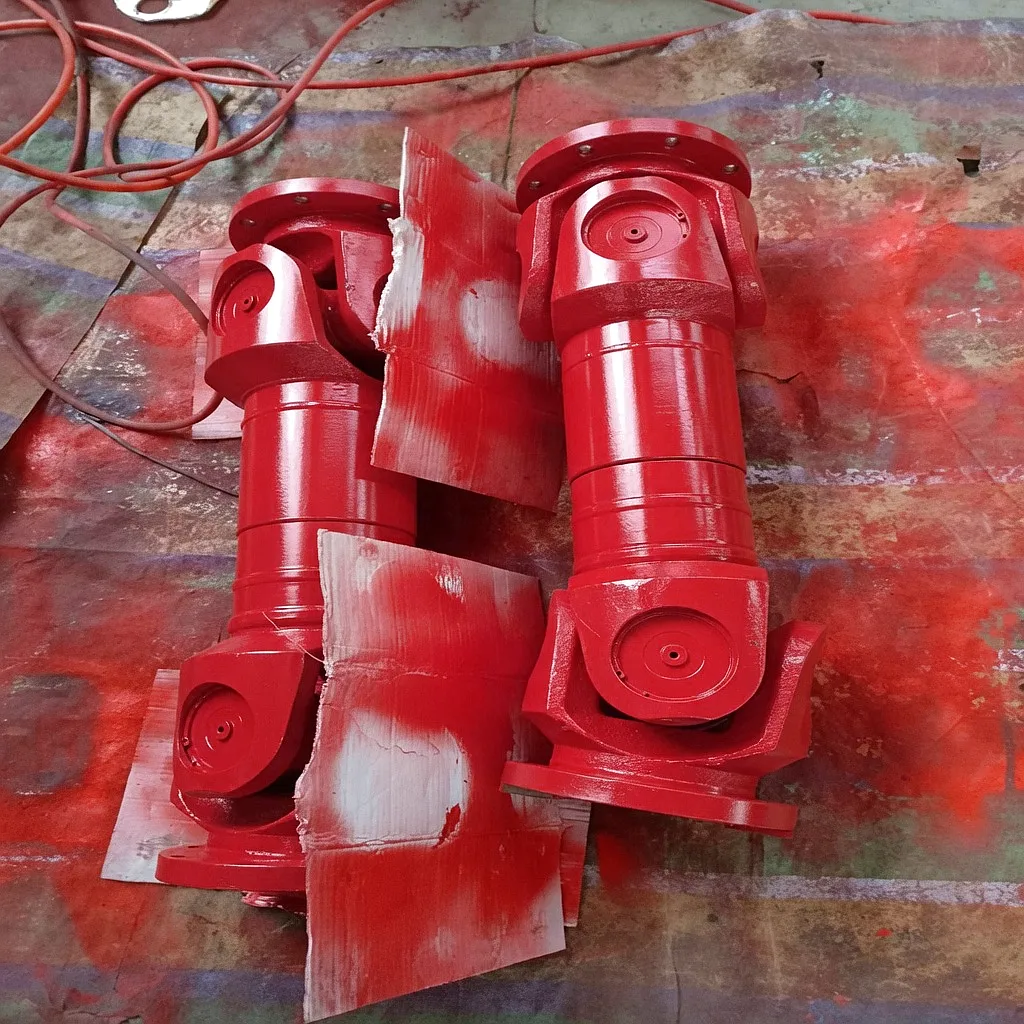 Every UK port sits on tidal water. Airborne salt, condensation cycles, and direct spray exposure accelerate metal corrosion at a rate that is orders of magnitude higher than inland industrial sites. A industrial shaft running on a harbour-side straddle carrier faces atmospheric conditions classified as C5 — the most severe corrosion category in ISO 12944. Standard agricultural or construction-grade shafts are not built for this. Marine-grade surface treatments, sacrificial coatings, and fully sealed bearing assemblies are not optional extras in this environment; they are fundamental engineering requirements that define whether a shaft survives its first season or lasts a decade. Unprotected steel components at coastal UK ports can show visible corrosion within weeks during winter operational periods, and bearing contamination from salt-water ingress typically presents as dramatically accelerated spalling and pitting of needle surfaces within 1,500–2,000 hours of exposure — less than half the expected service interval of a properly sealed marine-specification assembly.
Continuous 24-Hour Cyclic Loading
Port AGVs and automated straddle carriers operate across multiple shifts with no meaningful rest periods between them. A industrial shaft in this application accumulates duty-cycle hours at a rate that would take several years to replicate in a typical agricultural or manufacturing context — and the thermal cycling that accompanies these continuous runs creates its own set of challenges for grease consistency, seal compression, and bearing pre-load. Fatigue-life calculations for port-specification shafts must be based on actual continuous-operation loading rather than the standard intermittent-duty assumptions that underpin most industrial shaft ratings. Cross-joint angles must be carefully managed to minimise secondary torsional couples at operating speed, and the entire assembly must be designed around maintenance intervals that align with narrow terminal shutdown windows — often just two to four hours overnight — rather than the longer planned shutdowns available in conventional manufacturing environments.
Container Pick-and-Place Shock Loads
Every time an automated straddle carrier grabs or sets down a loaded 40-foot container — potentially weighing 30 tonnes or more — a significant shock impulse travels through the entire drivetrain. Repeated thousands of times per week, these impulses generate fatigue cycles that concentrate stress at the most vulnerable connection points: the shaft-to-flange joints. This is precisely why Hirth serration flanges have become the standard of choice in demanding port applications. The gear-tooth mesh of the Hirth coupling transmits torque through the tooth profile geometry rather than bolt friction alone, providing superior resistance to the loosening and shear forces that progressively destroy conventional bolted flange connections when subjected to repeated shock impulses. Engineering data from operating fleets shows that bolted DIN flanges in high-shock straddle carrier applications can develop detectable bolt loosening within 3,000 operating cycles — a failure mode that Hirth geometry eliminates by design.
How a Industrial Shaft Functions Within an Automated Port Vehicle
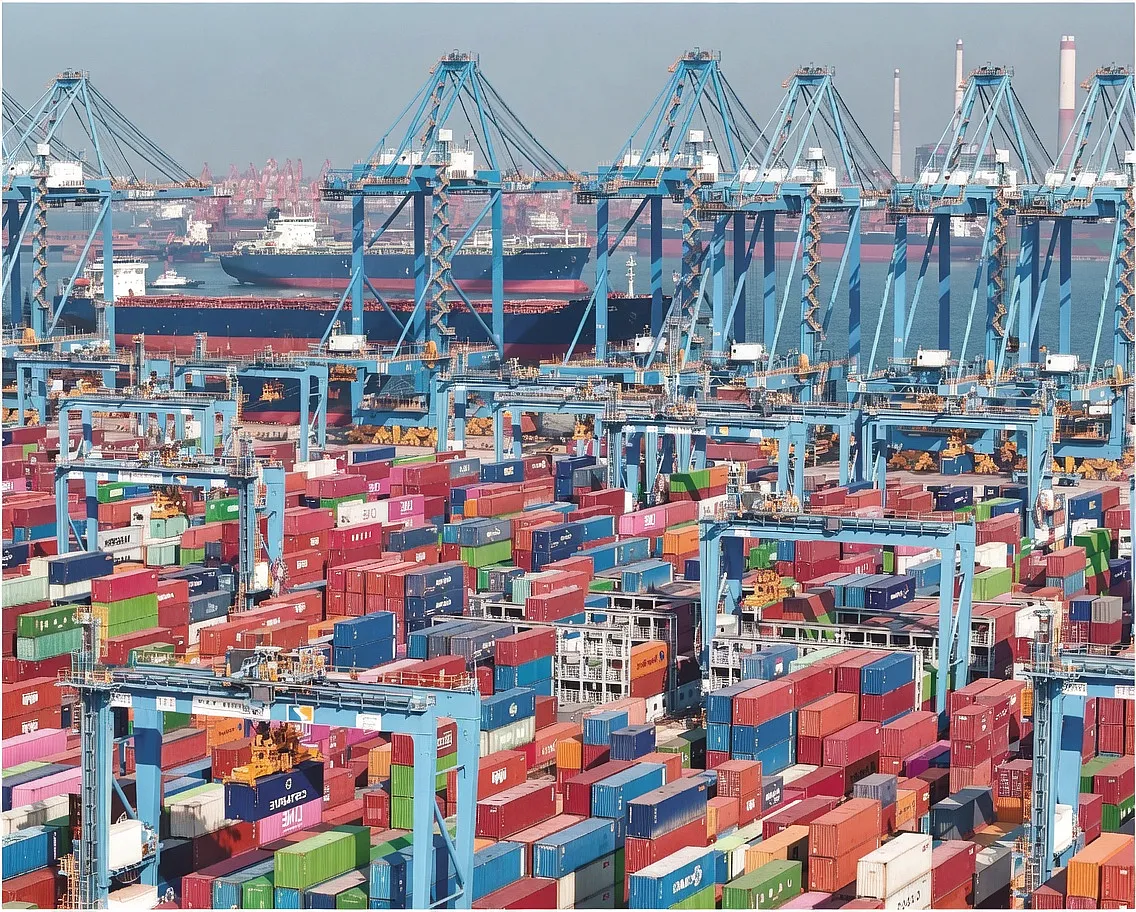 In a port AGV or automated straddle carrier, the primary power source — typically a diesel generator set, a high-voltage electric motor, or increasingly a hydrogen fuel cell — delivers rotational energy to the vehicle’s drivetrain. The industrial shaft acts as the mechanical bridge between the power generation stage and the working components: the hydraulic pump banks that power the spreader and lifting gear, the traction drive systems, and the steering mechanism. A single vehicle may carry two or three industrial shaft assemblies, each serving a different power delivery function and each subject to slightly different operating angles, torque ranges, and environmental exposure levels. Getting this assembly right is not a matter of selecting the nearest catalogue reference — it requires a thorough understanding of the specific installation geometry, duty cycle, and environmental exposure of the individual vehicle and its operational context.
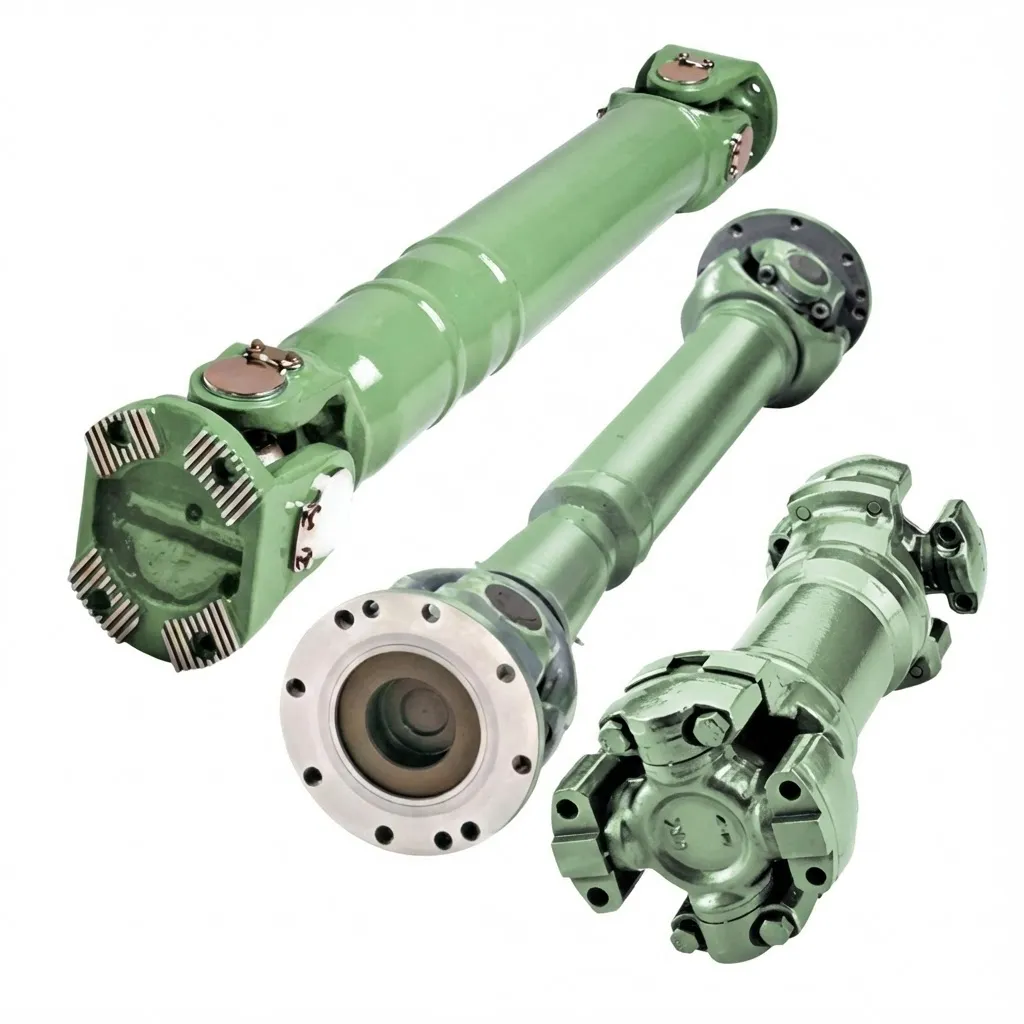
The cardan joint (universal joint) at each end of the industrial shaft assembly permits angular misalignment between the driving and driven components. In a straddle carrier, the suspension geometry shifts constantly as the vehicle traverses uneven yard surfaces, meaning the working angle of the joints fluctuates in real time. The industrial shaft’s sliding spline section — typically a triangular or star profile in high-torque port applications — allows for axial length compensation as this geometry changes. When the operating angle is not equal at both joints, the output speed fluctuates twice per revolution, generating secondary couples that increase bearing and joint wear over time. Correct installation angle design, with equal and opposing joint angles wherever practical, is a core part of Ever Power’s application engineering service for every port automation customer.
Industrial Shaft Assembly — Core Component Functions
| Component | Primary Function | Port-Specific Requirement |
|---|---|---|
| Cardan (Universal) Joint | Transmits torque through angular misalignment | Fully sealed against salt water and sand ingress |
| Cross Bearing (Trunnion) | Carries rotational load at each joint centre | Multi-layer labyrinth seal; marine-grade grease |
| Sliding Spline (Telescope) | Allows axial length compensation under load | Triple-lip wiper seal; corrosion-resistant profile |
| Hirth Serration Flange | Transmits torque via tooth geometry, not friction | Resists shock-induced loosening; fast re-assembly |
| Shaft Tube / Body | Carries torque and bending load along shaft length | 42CrMo4 alloy steel; C5-M anti-corrosion coating |
Marine-Grade Materials & Engineering Specifics
What separates a port-specification industrial shaft from a standard industrial unit
⚙ Alloy Steel with Marine Coating Systems
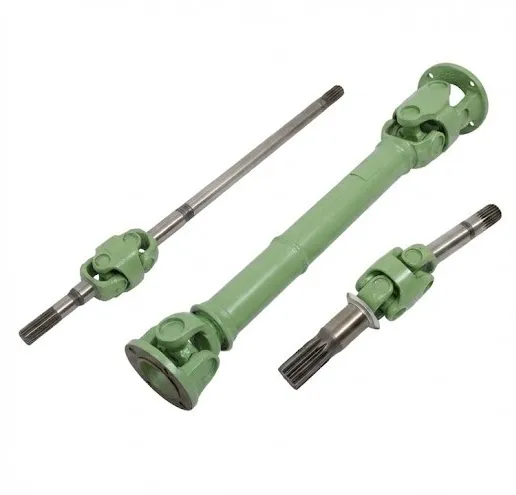 Shaft tube and yoke forgings begin with 42CrMo4 or equivalent high-strength alloy steel, selected for its combination of toughness, fatigue resistance, and machinability at operating temperatures from -30°C to +100°C. After precision machining and induction heat treatment, external surfaces receive a multi-stage corrosion protection system: zinc phosphate conversion coating, followed by an epoxy primer, and a marine-grade topcoat with UV resistance. For the most exposed open-yard straddle carrier applications, hot-dip galvanising of yoke bodies prior to painting is available as a further upgrade. The resulting coating system exceeds 5,000 hours of neutral salt spray exposure per ISO 9227, meeting C5-M classification for marine atmospheric conditions — the same standard applied to offshore and marine structures. This is not a cosmetic upgrade; it is the difference between a component that lasts three years and one that lasts ten in a UK port environment.
🔒 Multi-Layer Labyrinth Seal Technology
The cross-bearing assembly is the most contamination-vulnerable point in any industrial shaft. In a standard agricultural shaft, a single rubber lip seal provides adequate protection because the operating environment, while dusty, is not chemically aggressive. In a port environment, saline water is a bearing lubricant’s worst enemy, dramatically accelerating oxidation and washing away protective grease films within hours of exposure. Ever Power’s port-specification cross-bearing kits incorporate a three-stage labyrinth seal: a primary rubber lip seal, an intermediate non-contact labyrinth baffle, and an outer deflector shield. This arrangement creates a tortuous ingress path for contaminants before they can reach the bearing needle rollers, dramatically extending service intervals even under direct spray conditions. The bearing kits are pre-charged with marine-grade NLGI Grade 2 lithium-complex grease offering high water-washout resistance — tested to ASTM D1264 standards. Field data from terminal operators using this specification consistently show cross-bearing service intervals in excess of 8,000 operating hours.
📏 Hirth Serration Flange Connections
The Hirth serration — sometimes called a Hirth coupling or curvic coupling — is a precision-machined radial face-gear pattern cut into the mating flange surfaces. When the flanges are drawn together by their clamping bolts, the tooth geometry self-centres the joint and creates a mechanical interlock that transmits torque across the tooth faces. The bolts then need only maintain the axial clamping force — they are not in shear. This distinction is critical in port automation applications, where repeated shock impulses from container operations would progressively loosen and eventually shear conventional through-bolt connections. Hirth geometry also provides highly repeatable angular positioning on reassembly, which means shaft removal and reinstallation for maintenance can be completed far more quickly — and with greater positional accuracy — than with a conventional bolt-circle flange. In a terminal where the overnight maintenance window may be only two or three hours, this is a practical operational advantage that has a direct impact on fleet availability.
Technical Performance Parameters — Port Automation Industrial Shaft Range
| Параметр | Стандартный промышленный | Port Automation Spec | Единица |
|---|---|---|---|
| Номинальный крутящий момент | 500 – 8,000 | 2,000 – 12,000 | Нм |
| Peak Shock Torque Factor | 1.5 × nominal | 3.0 × nominal | factor |
| Operating Speed Range | 0 – 2,400 | 0 – 3,200 | обороты в минуту |
| Max Continuous Joint Angle | up to 25° | up to 15° (continuous) | degrees |
| Устойчивость к солевому туману | 500 – 1,000 h | 5,000+ h (ISO 9227) | hours |
| Рабочая температура | -20 to +80 °C | -30 to +100 °C | °С |
| Bearing Seal Rating | IP54 | IP67 | IP Class |
| Фланцевое соединение | DIN bolt-circle | Hirth serration or DIN (custom) | — |
Indicative values. All specifications confirmed by application-specific engineering review before order. Custom ranges available on request.
Application Scenarios in Modern Container Terminals
Where Ever Power port-grade industrial shafts are specified and deployed
Automated Straddle Carriers
The hydraulic pump drive shaft in an automated straddle carrier is one of the highest-duty PTO applications in any industrial setting. The shaft must deliver continuous torque to the hydraulic system while the vehicle tracks across uneven concrete, pivots on the spot, and performs thousands of container lifts per day. Ever Power supplies matched shaft assemblies with anti-vibration profiles engineered to the specific pump mounting geometry of leading straddle carrier OEM platforms. Each assembly comes with full dimensional verification documentation to support operator maintenance records and audit requirements.
Port AGVs (Automated Guided Vehicles)
Modern port AGVs — whether battery-electric or diesel-hybrid — use industrial shafts to link the central power unit to traction and auxiliary hydraulic circuits. Because AGV layouts are highly compact and the power train path is frequently non-linear, the industrial shaft must accommodate tight installation angles without sacrificing torque capacity or service life. Ever Power’s application engineers work directly from OEM chassis drawings to design shaft assemblies that fit within the package envelope while meeting all torque, angle, and environmental performance targets.
Quayside & Ship-to-Shore Cranes
Ship-to-shore (STS) cranes and rubber-tyred gantry cranes (RTGs) incorporate drive shaft assemblies in their travel drive systems and hydraulic auxiliary circuits. These are among the largest industrial shaft applications in any industrial context, with torque requirements that can exceed 10,000 Nm. Ever Power manufactures heavy-duty shaft assemblies for these machines using thick-wall seamless tube profiles and large-bore Hirth flange connections, supplied with full material traceability for port authority approval and asset documentation processes.
Reach Stackers & Container Handlers
In busy interchange yards and ferry terminals around the UK coast, reach stackers remain a practical and flexible container handling tool alongside full automation. These machines subject industrial shafts to demanding duty — high torque at low speed during lifting, rapid directional reversals, and frequent speed changes that generate torsional peaks in the drivetrain. Ever Power’s reach stacker shaft range is designed with reinforced yoke sections and oversized cross-bearing assemblies specifically to handle these demanding cyclic load profiles.
Why Terminal Operators Choose Ever Power Industrial Shafts
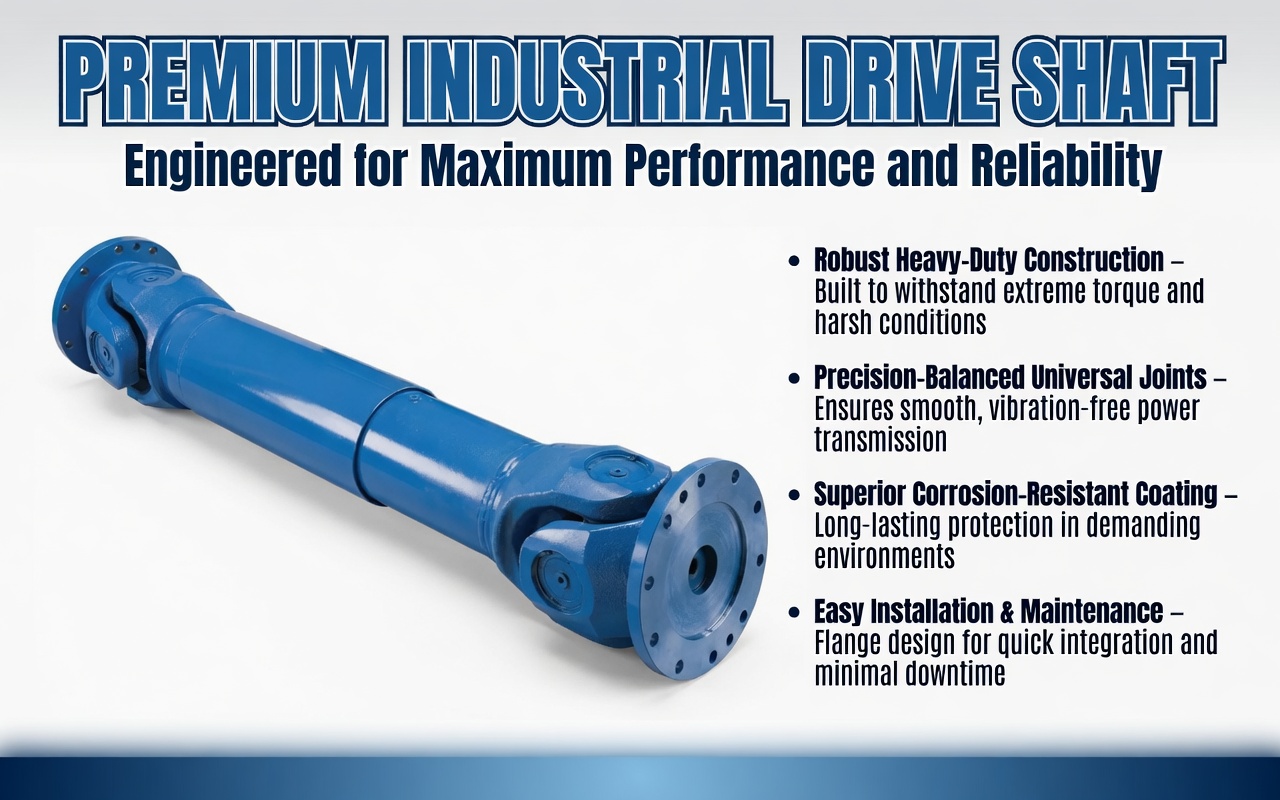 The specification decision for a port-grade industrial shaft is not one that terminal engineers and procurement teams take lightly. Downtime costs, maintenance complexity, and the long operational lifespan of port equipment — often 15 to 25 years for major machinery — mean that the initial component choice has implications that extend far beyond the unit price. Ever Power’s engineering approach addresses each of the key decision criteria that experienced procurement teams consider when evaluating drive shaft suppliers for demanding port automation environments.
✅
Full Custom Engineering
No two port vehicles have identical drivetrain geometry. Every Ever Power shaft assembly is designed from scratch to your specific flange pattern, operating angle, and torque data — not modified from a standard catalogue reference that happens to be close.
🔥
Extended Service Life
Marine-grade sealing and C5-M surface protection systems deliver verified field service life that consistently exceeds standard industrial shaft specifications by a factor of two to three in active UK port environments — reducing replacement frequency and spares stockholding.
📈
Lower Total Cost of Ownership
The Hirth serration flange system reduces maintenance time per shaft change by up to 40% compared with conventional bolt-circle flanges. When a maintenance window is two hours, that 40% time saving is the difference between completing the job and missing the next operating shift.
📋
Full Traceability Documentation
Every shaft assembly leaves our facility with material certificates, dimensional inspection records, and test reports. For port-authority-governed applications and ISO 9001-audited terminals, this documentation is not a premium add-on — it is fulfilled by Ever Power as standard practice.
🕨
Fast Delivery to UK Terminals
With established logistics partners and strategic semi-finished stock, Ever Power can supply emergency replacement shaft assemblies within 48–72 hours’ despatch lead time for standard port automation configurations, minimising costly unplanned downtime at operating UK terminals.
Supplying UK Port Operators from Felixstowe to Liverpool
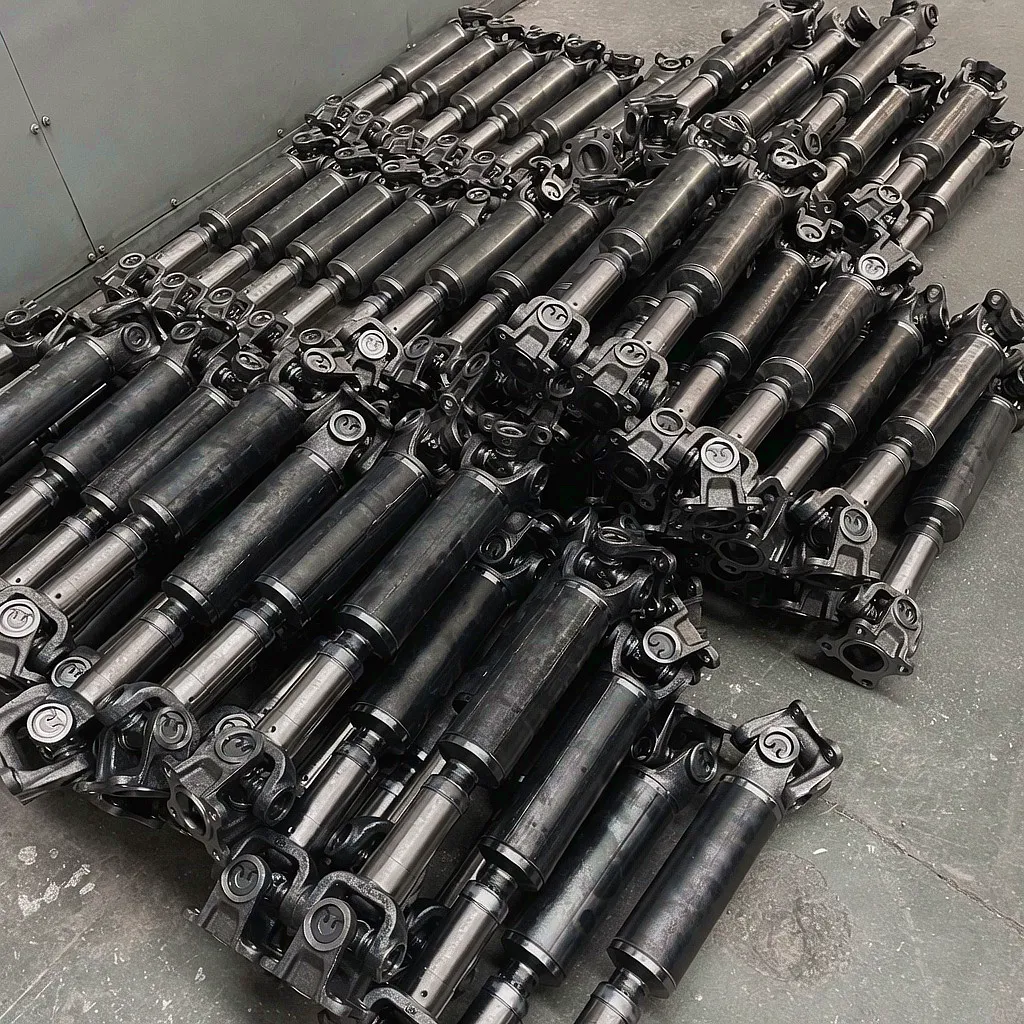 Britain’s container port infrastructure is among the most strategically important in Europe, and the push towards full terminal automation is accelerating year on year. The Port of Felixstowe — the UK’s largest container terminal, handling nearly half of the country’s containerised seaborne trade — has been progressively deploying automated straddle carriers since the late 2010s. Competitors including London Gateway in Essex, Southampton’s container terminal in Hampshire, Merseyside’s Liverpool port facilities, and the deep-water berths at Tilbury and Immingham are all following similar automation paths. Ever Power works with UK-based terminal operators, OEM service departments, and independent maintenance contractors to supply port-specification industrial shaft assemblies that meet or exceed original equipment specifications — supporting planned maintenance programmes and emergency breakdown recovery alike.
For UK procurement teams, working with Ever Power means access to a manufacturing partner with a genuine understanding of the British port engineering environment: familiarity with CE and UKCA marking requirements, the ability to provide documentation aligned with UK port authority approval processes, commercial terms including Sterling invoicing, and UK-based technical contact points. Our export team manages all shipping and customs logistics, with door-to-terminal delivery available for all UK mainland port locations. Enquiries from UK customers receive priority processing with a target response time of three to five working days from initial technical enquiry to preliminary quotation.
Port of Felixstowe
UK’s largest container port · Suffolk
London Gateway
Deep-water automated terminal · Essex
Port of Southampton
South coast gateway · Hampshire
Port of Liverpool
Northern England · Merseyside
Customer Success Story
Fleet industrial shaft upgrade — UK Container Terminal, Port of Felixstowe
Container Terminal Operations
Automated Straddle Carrier Fleet · 28 Units
Fleet Industrial Shaft Replacement — 28-Unit Automated Straddle Carrier Upgrade Programme
The Challenge
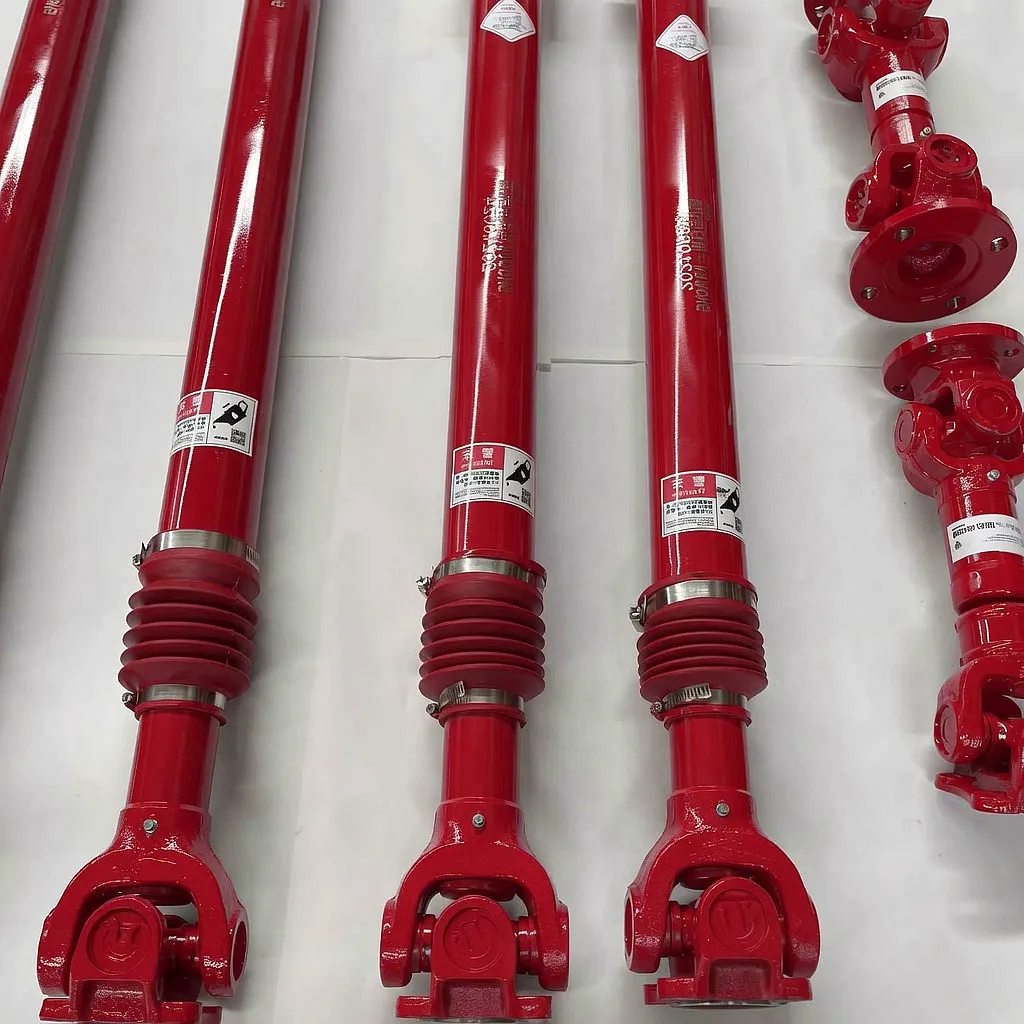 A major terminal operations company running a fleet of 28 automated straddle carriers at the Port of Felixstowe was experiencing unacceptably high industrial shaft cross-bearing failure rates. The original equipment shafts, sourced from a European industrial supplier, used standard agricultural-grade cross-bearing kits with single-lip rubber seals. The salt-laden coastal environment at the Suffolk terminal was defeating these seals within 2,500 to 3,000 operating hours — well short of the 8,000-hour service interval targets set by the terminal’s maintenance management system. Each unscheduled bearing failure required pulling a carrier out of service, at an estimated combined cost of £4,200 per incident in direct labour, spare parts, and yard throughput disruption — not counting the scheduling pressure placed on the remaining fleet to compensate for the unavailable machine.
The Solution
Ever Power’s application engineering team conducted a full dimensional survey of the existing shaft assemblies and reviewed the failure mode data from 18 months of maintenance records provided by the terminal’s engineering department. The recommendation was to replace all cross-bearing kits with Ever Power’s marine-grade labyrinth seal specification, pre-charged with a compatible high-water-resistance lithium-complex grease. As a pilot programme, the six highest-duty carriers also received a Hirth serration flange upgrade to evaluate the impact on joint reliability under peak shock loading. The remaining 22 carriers received the upgraded cross-bearing kits fitted to their existing shaft bodies, significantly reducing the total project cost while still directly addressing the confirmed primary failure mode. All 28 shaft assemblies were delivered to the terminal within six weeks of order confirmation, with full fitting documentation prepared for the terminal’s in-house maintenance crew.
The Results
After 14 months of post-upgrade operation, the terminal’s maintenance records recorded zero unscheduled industrial shaft cross-bearing failures across the entire fleet — compared with an average of 11 failures per quarter under the previous specification. The six Hirth-flange pilot carriers completed their first scheduled bearing service at 9,200 operating hours, comfortably exceeding the 8,000-hour target and validating the flange upgrade approach. The terminal’s engineering manager calculated that the upgrade delivered approximately £38,000 in avoided breakdown costs during the first 12 months alone, against a total project investment of just under £22,000. The return on the investment was achieved within the first year of operation, and the terminal subsequently specified Ever Power marine-grade cross-bearing kits as the replacement standard across the entire company’s UK fleet of straddle carrier and container handler assets.
0
Unscheduled failures over 14 months
9,200h
First service interval achieved
£38k
Avoided breakdown costs — Year 1
1.7 : 1
ROI achieved within 12 months
What Our Clients Say
Feedback from port operators and fleet maintenance engineers
“
We’d been battling cross-bearing failures on our straddle carrier fleet for two full seasons. After switching to Ever Power’s marine-specification shaft assemblies, we went an entire operational year without a single unscheduled drivetrain stoppage. The labyrinth seal system is genuinely superior to anything else we’ve evaluated in this environment.
★★★★★ James Holt, Senior Maintenance Engineer
UK Container Terminal, Port of Felixstowe
“
The custom engineering service is what sets Ever Power apart. We sent over our AGV drivetrain CAD drawings and received back a complete shaft proposal — with full joint angle calculations and a torque application review — within five working days. No other supplier came close on response time or technical depth.
★★★★★ Marcus van den Berg, Fleet Engineer
Port of Rotterdam Terminal Division, Netherlands
“
Sourcing industrial shafts for our STS crane travel drives has always been a long-lead-time headache. Ever Power quoted us a 6-week delivery on a fully custom heavy-duty assembly and delivered in five weeks. The machining quality on the Hirth flanges was exceptional. We’ve already placed a second order for our RTG fleet.
★★★★★ Ahmed Al-Rashid, Procurement Manager
GCC Terminal Operations, Abu Dhabi
Custom Manufacturing & Engineering Partnership
 Ever Power’s manufacturing facility operates across a 28,000-square-metre production complex with CNC machining centres dedicated to drive shaft component production. The Hirth serration grinding line uses multi-axis CNC gear-grinding equipment capable of achieving tooth profile tolerances within ±2 microns, ensuring the self-centring accuracy that makes Hirth couplings reliable under high-shock operating conditions. Material input is controlled from certified mill sources with full traceability, and all forgings undergo ultrasonic testing before entering the machining process. The quality management system is certified to ISO 9001:2015, and export quality inspections include dimensional verification against the customer-approved drawing on every single shaft assembly that leaves the factory floor.
Customisation is not a premium add-on at Ever Power — it is our standard operating model. The product range offers full design flexibility across flange bolt-circle diameter, yoke bore profile, overall installed length, joint angle range, sliding spline length, and surface treatment specification. For port operators upgrading existing fleets, we routinely supply shaft assemblies that are dimensionally identical to the original equipment but upgraded internally with marine-grade sealing systems and improved bearing specifications. For new vehicle or vessel designs, our application engineers are available to collaborate from the earliest design stages, contributing torque analysis, angle optimisation, and installation envelope reviews that help OEM designers achieve the best possible drivetrain layout for their platform.
Whether you are sourcing a single shaft replacement on an urgent basis, procuring a full fleet set for a planned maintenance programme, or developing technical specifications for a new automated vehicle class, the process with Ever Power begins with a direct technical conversation. Send your drawings, operating conditions, and performance requirements — our engineering team will respond with an engineered proposal, not a catalogue reference number and a discount code.
Custom Capability at a Glance
● Hirth Serration Grinding
Profile tolerance ±2 µm · All sizes custom-machined
● Marine Coating Systems
C5-M rated · 5,000+ h ISO 9227 salt spray
● Labyrinth Seal Assembly
IP67-rated bearing assembly · Custom grease spec
● Torque Range
500 – 12,000 Nm nominal · Higher on request
● Standard Lead Time
4–6 weeks standard · 2–3 weeks urgent
● Quality System
ISO 9001:2015 · Full material traceability
Часто задаваемые вопросы
Technical and commercial answers for port terminal engineers and UK procurement teams
The Container Terminal Depends on Every Component in the Chain
Port automation has raised the engineering performance bar for every piece of drivetrain equipment operating in a terminal environment. The industrial shaft is a component where specification quality has a direct and measurable impact on terminal throughput, fleet availability, and maintenance cost.
© pto-drive-shafts.com · Ever Power Industrial Drive Shafts · Specialist Port Automation Drivetrain Solutions · UK & Global Supply
отредактировано gzl























