
Core Technology Brief
Insulated Power Transmission: Our composite shaft technology (CFRP/GFRP) provides reliable electrical insulation (>15kV), eliminating the need for complex grounding brushes and preventing electrical discharge damage to generator bearings.
Supercritical Dynamics: By utilizing high-modulus carbon fibers, we have increased the first bending natural frequency to over 35Hz, enabling spans of up to 4 meters without intermediate support bearings, simplifying the nacelle structure.
Misalignment Compensation: Integrated dual diaphragm or flexible coupling elements compensate for angular displacements of ±1.5° and axial displacements of ±10mm caused by base bending under extreme wind shear conditions.
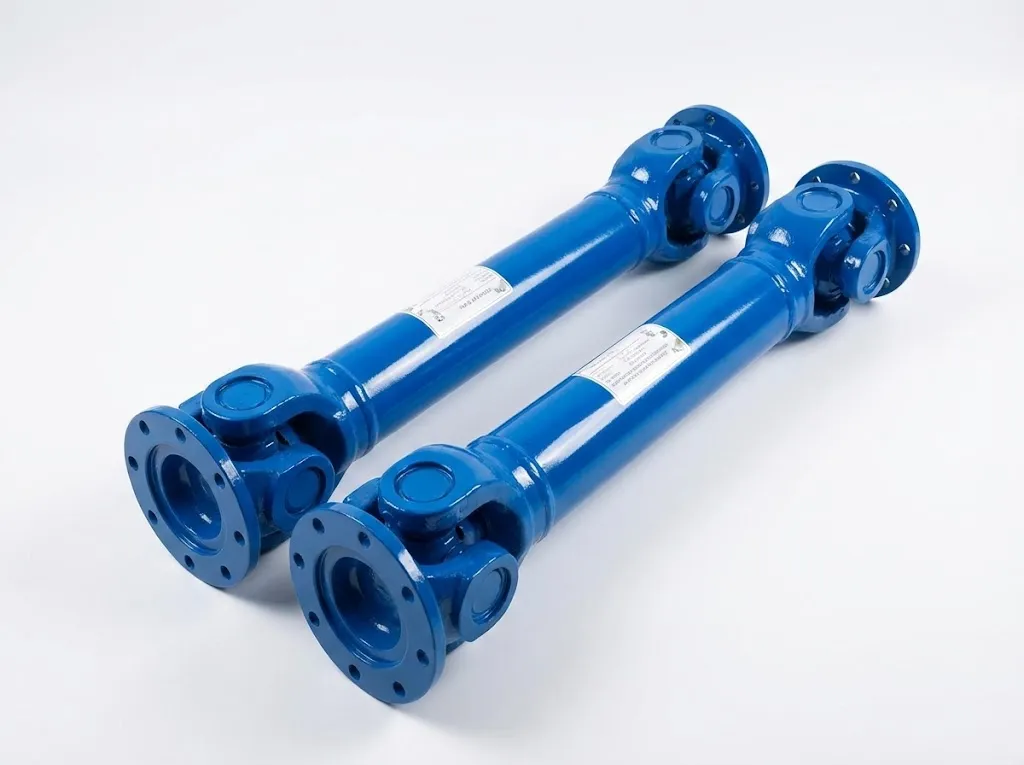
5 Critical Engineering Facts for UK Wind Operators
- Fatigue Life: Designed for >10^8 load cycles with a Service Factor (Ka) of 2.5 to accommodate North Sea gust profiles.
- Temperature Range: Operates consistently from -40°C (Highlands winter) to +60°C (Nacelle internal ambient).
- Weight Reduction: Up to 70% lighter than traditional steel cardan shafts, reducing parasitic load on the gearbox output shaft.
- Rezistență la coroziune: Components undergo 1000-hour Salt Spray Test (ISO 9227) standard, essential for offshore (C5-M) environments.
- Conformitate: Fully aligned with Supply of Machinery (Safety) Regulations 2008 and DNV-GL-ST-0361 Standard for mechanical power transmission.
The Physics of Failure: Why Standard Shafts Fail in Wind Turbines
1. The Electrical Erosion Menace (EDM)
In doubly fed induction generator (DFIG) systems (typically used in 1.5 MW to 3 MW wind turbines), the high-frequency switching of the converter generates common-mode voltage in the generator rotor. If a conductive steel shaft is used, this parasitic current flows along the path of least impedance to the ground—usually through the high-speed stage bearings of the gearbox. The resulting micro-arc discharge (electrical discharge machining) creates groove-like patterns on the bearing raceways, leading to premature and catastrophic bearing failure.
Soluția noastră: We utilize a non-conductive composite spacer tube. The glass/carbon matrix is inherently insulating. This physical break in the conductive path is more reliable than grounding brushes, which wear out and require maintenance access in cramped nacelles.
2. Resonant Vibration in Extended Spans
As turbines scale up, the distance between the gearbox and generator increases to allow for service access. A steel shaft spanning over 2.5 meters creates a “sag” that lowers its critical speed. If the shaft’s natural frequency coincides with the operating range (typically 1500-1800 RPM), resonance occurs. To counteract this, steel shafts require heavy intermediate bearings.
Soluția noastră: Carbon fiber’s specific modulus is 4-5 times that of steel. This allows us to manufacture single-piece shafts up to 4.5 meters that remain sub-critical (operate well below their first natural frequency) without intermediate support. This reduces weight, parts count, and maintenance points.
3. Dynamic Bedplate Deformation
A wind turbine nacelle is not a rigid block. Under a 50-year gust event, the bedplate twists. The gearbox and generator, mounted on elastomeric dampers, move independently. A rigid coupling would transfer massive reaction forces into the bearings.
Soluția noastră: Our High-Speed Shafts utilize optimized flexible elements (titanium or composite diaphragms) that offer low reaction forces under misalignment, preserving the drivetrain’s B10 bearing life.
Data: 14 noiembrie 2024
Locaţie: Offshore Substation, 40km off Grimsby Coast
Subiect: Vibration Analysis on Turbine G-14 (Retrofit Project)
We were commissioned to investigate a persistent 1x frequency vibration problem in a 3.6 MW generator set. The previous maintenance team had replaced the generator bearings twice within 18 months. The vibration data was perplexing – the vibration peaks only occurred during partial load operation, not at full power generation.
After an on-site inspection during a period of improved weather, we found the culprit: the existing steel universal joint’s splined shaft had seized. The “lifetime lubrication” seals had failed, likely due to salt ingress, causing the splines to wear and seize. This meant the shaft could not axially compensate for the generator’s thermal expansion.
We replaced it with our W-series composite coupling shaft. Because there are no sliding splines (instead using flexible diaphragms), the friction variable was completely eliminated. We increased the turbine speed to 1600 rpm. The vibration levels immediately dropped from 8.2 mm/s to 1.4 mm/s. It’s moments like these – standing in the shaking engine room, watching the readings turn green – that reinforce our belief that using composite materials is the right choice in harsh environments like the North Sea.
— Chief Engineer, James H.
Technical Specifications: WP-Series Wind Turbine Shafts
The following parameters represent our standard capabilities. Custom engineering is available for specific nacelle geometries.
| ID-ul parametrului | Descriere | Unitate | Range / Value |
|---|---|---|---|
| WP-TRQ-NOM | Cuplu nominal (Tn) | kNm | 2.5 – 25.0 |
| WP-TRQ-MAX | Peak Shock Torque (Tmax) | kNm | 45.0 – 75.0 |
| WP-SPD-OP | Operating Speed Range | RPM | 0 – 2200 |
| WP-SPD-CRIT | Critical Speed (1st Bending) | RPM | > 3200 |
| WP-LEN-MIN | Minimum Compressed Length | mm | 850 |
| WP-LEN-MAX | Maximum Extended Length | mm | 4800 (Single Piece) |
| WP-DIA-TUBE | Tube Outer Diameter | mm | 120 – 280 |
| WP-WGT-ASSY | Total Assembly Weight | kg | 45 – 120 (Ref 3m Length) |
| WP-MIS-ANG | Angular Misalignment Capacity | deg | ± 1.5 Continuous |
| WP-MIS-AX | Compensare axială | mm | ± 15 (Membrane Type) |
| WP-MAT-TUBE | Tube Material Composite | – | High-Modulus Carbon/Epoxy |
| WP-MAT-FLG | Materialul flanșei | – | 42CrMo4 QT Steel |
| WP-INS-VAL | Electrical Insulation Value | kV | > 15.0 |
| WP-TEMP-OP | Temperatura de funcționare | °C | -40 to +70 |
| WP-FAT-LIF | Design Fatigue Life | Cycles | 10^8 |
| WP-BAL-GRD | Balancing Grade (ISO 1940) | – | G 6.3 (Precision G 2.5) |
| WP-SF-SERV | Service Factor (Wind) | – | 2.0 – 3.0 |
| WP-CONN-STD | Flange Interface Standard | – | DIN / ISO 7646 / Custom |
| WP-TORS-STF | Rigiditate torsională | MNm/rad | 0.15 – 0.85 |
| WP-LAT-STF | Lateral Stiffness | N/mm | Variable (Tunable) |
| WP-COAT-MET | Metal Coating Spec | – | Zinc-Nickel / Geomet 321 |
| WP-SALT-TST | Rezistență la coroziune | Ore | > 1000 (NSS) |
| WP-BOLT-GRD | Flange Bolt Grade | – | 10.9 / 12.9 Dacromet |
| WP-FAIL-MOD | Failure Mode Design | – | Leak-before-break (Safe) |
| WP-DOC-REQ | Documentation Standard | – | EN 10204 3.1 |
| WP-NDT-CHK | Inspecție NDT | – | 100% Ultrasonic (Flanges) |
| WP-UV-PROT | UV Protection | – | PU Topcoat (White/Grey) |
| WP-MAINT-INT | Interval de întreținere | Years | Maintenance-Free (Visual Only) |
| WP-ADP-FLG | Adaptor Plates | – | Available for Retrofit |
| WP-WAR-STD | Standard Warranty | Years | 2 (Extended 5) |
Compliance & Regional Adaptability: United Kingdom & Europe
Our manufacturing protocols are strictly aligned with the high standards demanded by the UK and Northern European wind energy sector.
Regulatory Alignment
- Health & Safety Executive (HSE): Our designs prioritize “Safety by Design” to minimize maintenance interactions in the nacelle, supporting HSE guidelines for reducing work-at-height risks.
- Machinery Directive 2006/42/EC & UK Supply of Machinery (Safety) Regulations 2008: All rotating assemblies are supplied with full Declarations of Incorporation (DoI).
- DNV-GL-ST-0361: We verify safety factors against DNV standards for mechanical power transmission in wind turbines.
Regional Application Profiles
- Grimsby & Hull (Offshore Hubs): Our salt-spray resistant coatings are specifically formulated for the high-salinity atmosphere of the North Sea logistics corridor.
- Scottish Highlands (Onshore): The low-temperature embrittlement resistance of our bonding agents ensures reliability during Highland winters where temperatures drop below -15°C.
- Ireland & Western Approaches: Enhanced gust-load damping capabilities to handle the high turbulence intensity characteristic of the Atlantic edge.
Comprehensive Drivetrain Support: Gearboxes & Accessories
While the high-speed shaft is our specialty, a robust drivetrain requires synchronization from blade to grid. UK PTO-Drive-Shafts Co., Ltd. also manufactures and supplies precision gearboxes tailored for the renewable sector.
Planetary Pitch & Yaw Drives
We produce compact, high-torque-density planetary gearboxes essential for turbine yaw systems (orienting the nacelle) and pitch systems (adjusting blade angles). These units share the same metallurgical DNA as our shaft flanges—utilizing 42CrMo4 steel for maximum shock resistance.
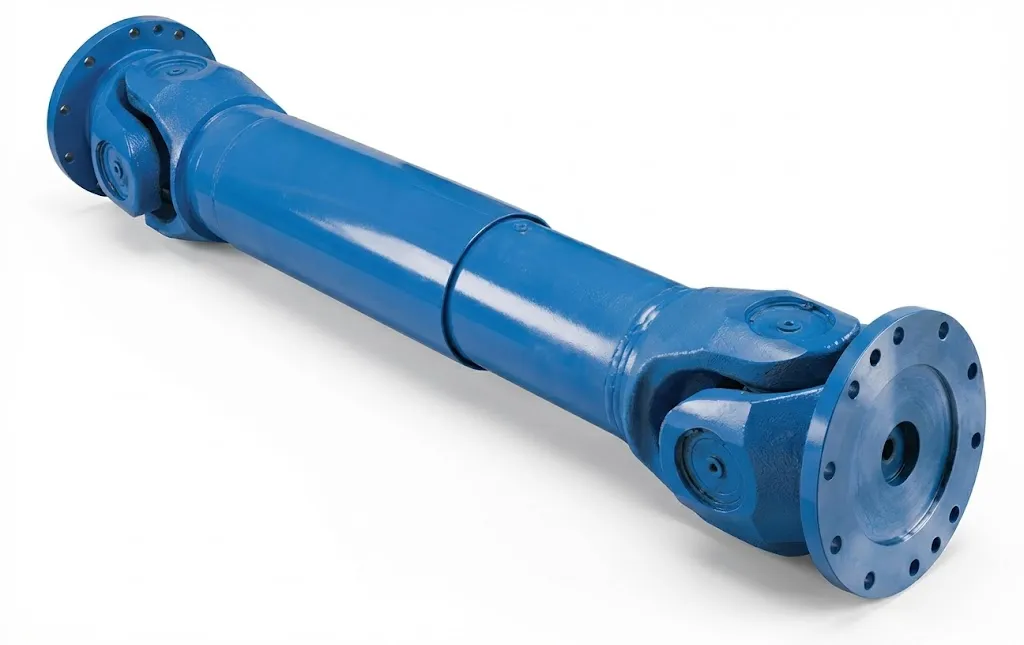
Related Components
- Shrink Discs: Hydraulic and mechanical shrink discs for secure, keyless shaft-to-gearbox connection.
- Limitatoare de cuplu: Safety couplings to disconnect the generator in milliseconds during grid short-circuit events.
- Condition Monitoring Sensors: Wireless torque and vibration sensors pre-embedded in our composite arbori.
Întrebări frecvente (tehnice)
How does the composite shaft handle the ‘Common Mode Voltage’ better than insulated bearings?
Insulated bearings (ceramic coated) are a good line of defense, but the coating can be damaged during installation or wear over time. Our composite shaft physically removes the conductor from the equation, providing an air-gap equivalent of over 15kV insulation. It solves the root cause (the path) rather than just treating the symptom (the bearing surface).
Can you retrofit a steel arbore cardanic with a composite one on an existing 10-year-old turbine?
Yes. We design custom flange adaptors that bolt directly to your existing gearbox and generator interfaces. The composite shaft will be lighter, which actually extends the life of your existing bearings by reducing radial load.
What is the lead time for a custom 3.2-meter replacement shaft delivered to Aberdeen?
For standard flange patterns, we hold semi-finished composite tubes in stock. We can bond and balance a custom length typically within 3-4 weeks. For emergency “turbine down” situations, we have a rapid response protocol (7-10 days) subject to capacity.
How do you verify the bond strength between the steel flange and carbon tube?
Every shaft undergoes a proof-torque test to 1.5x nominal torque before shipping. Our adhesive technology is derived from aerospace standards, and we use a double-redundant mechanical interlock design for added safety.
Industry Updates: Wind Energy UK
Dogger Bank Phase C Enters Commissioning
The final phase of the world’s largest offshore wind farm has begun commissioning. Operators are emphasizing the importance of resilient supply chains for O&M components.
New Carbon Recycling Standards for Blades & Shafts
Zero Waste Scotland has released new guidelines for composite material recycling. Our shafts are designed with thermoplastic resins that offer easier end-of-life recycling pathways compared to traditional thermosets.
Grid Stability Upgrades in East Anglia
National Grid’s upgrade to the transmission network requires tighter frequency response from wind farms, increasing the mechanical demand on drivetrain torque control.























